
Persimmon: growing the crop from the soil to the cold store

Savvas Pastopoulos, Agronomist MSc, Pastopoulos Agronomics, Neos Mylotopos, Pella, Greece
In Greece the persimmon is moving from the household garden to the commercial orchard. The crop has three traps that do not forgive: it is among the most salt-sensitive fruit trees, excess nitrogen can, under certain conditions, reduce yield instead of raising it, and storage quality is decided by soil calcium, not by sprays.
1. Where the Greek crop stands
Two cultivars dominate the Greek plantings: Rojo Brillante, which requires a deastringency treatment before consumption, and Jiro, eaten directly after harvest [1].
In Spain, production went in twenty years from quantities too small to appear in ministry statistics to 500,000 tonnes. The country now ranks third worldwide after China and Korea, with 90% of production in Valencia and based on Rojo Brillante [5].
And one observation that bears directly on planning in Greece: the shift towards PCNA cultivars, which need no deastringency, is proving difficult even in Spain, because compatible rootstocks adapted to Mediterranean soils are lacking [5].
2. Soil, climate and the water question
Persimmon tolerates some waterlogging, but excess water leads to increased shoot growth, higher incidence and severity of root rots, nutrient imbalances, some elements become toxic under waterlogged conditions, and leaching of nutrients from the root zone [2]. Where the depth of well-drained soil is marginal, mounds are used, though they dry out faster and may require up to 20% more water [2].
Persimmon is sensitive to irrigation water quality. The Australian handbook from Queensland sets conductivity preferably below 0.65 dS/m and chloride below 80 mg/L [2]. No Greek limit has been published for the crop, and the value serves as an orientation indicator. Every new water source is tested before use and existing sources are tested regularly.
In the leaf, the chloride standard has been set conservatively at 0.4%, because above 0.8% yield and fruit quality are adversely affected [2].
The practical measure: where water is marginal, heavier irrigations are required from time to time so that accumulated salts are flushed out of the root zone [2], and rootstocks with some salinity tolerance are chosen. In Israel, pulse irrigation is also used to alleviate salinity problems [2].
Soil pH governs availability. Maintaining pH between 6.5 and 7.0 and soil calcium above 8.0 meq/100 g can increase fruit firmness by 20% and storage life by two to three weeks [2].
Calcium uptake is determined in the window from budbreak to fruit set. There is a strong correlation between the mean minimum temperature of the six weeks preceding fruit set and leaf calcium; minimum temperatures of 10 °C and below markedly reduce uptake [2].
Uptake is also reduced by soil moisture stress, soil waterlogging and high humidity [2].
One error identified in practice: poor calcium uptake has been linked to micro-tube irrigation systems where the soil profile was insufficiently wetted during the critical period from flowering to three months after fruit set [2]. What matters is the wetted profile, not the emitter rating.
3. Cultivars and the four astringency groups
Persimmon cultivars are classified by two independent criteria that combine into four groups [4]:
- Astringency at harvest, astringent (A) or non-astringent (NA).
- Effect of pollination on flesh colour, pollination-constant (PC), where fertilisation does not change the colour, or pollination-variant (PV), where the flesh darkens around the seeds and stays pale without them.
| Group | Meaning | Examples and practical consequence |
|---|---|---|
| PCNA | Non-astringent, pollination-constant | Jiro, Fuyu, Maxim. Eaten firm straight from the tree. No deastringency needed |
| PVA | Astringent, pollination-variant | Rojo Brillante. Deastringency treatment is obligatory |
| PVNA | Non-astringent only when seeds form | Quality depends on pollination, commercially unstable |
| PCA | Astringent regardless of pollination | Hachiya and similar. Eaten only fully soft or after treatment |
There is also Ribera Sun, a spontaneous mutation of Rojo Brillante with fruit about 30% larger in volume and weight, grown in exactly the same way. The cultivar is covered in detail in The persimmon cultivar Rojo Brillante.
4. Planting, spacing and training
The spacings that follow come from the Mediterranean guide of CIHEAM, with Italian and Spanish data, and depend on cultivar vigour, soil fertility and training system [3]. In Greek practice they are checked against the working width of the machinery on the holding:
| Vigour | Open vase | Central leader | Palmette |
|---|---|---|---|
| Moderate | 5.0 × 4.0 to 5.0 × 4.5 | 5.5 × 4.5 to 5.5 × 5.0 | 4.5 × 3.0 to 4.5 × 3.5 |
| High | 5.0 × 4.5 to 5.0 × 5.0 | 5.5 × 5.0 to 5.5 × 5.5 | 4.5 × 3.5 to 4.5 × 4.0 |
| Very high | 5.0 × 5.0 to 5.5 × 5.5 | 5.5 × 5.5 to 6.0 × 6.0 | 4.5 × 4.0 to 4.5 × 4.5 |
On shallow or poor soils, with moderately vigorous cultivars, spacing can come down to 4.5 × 4.5 m [3]. Pruning has its own article: Pruning persimmon in the cultivar Rojo Brillante.
The spacings in the table come from a foreign source, with Italian and Spanish data, and are given as indicative and not as a planting recommendation. They do not transfer unchanged to every orchard: they depend on the soil and its fertility, the rootstock, cultivar vigour, the training system, water availability and the working width of the machinery on the holding.
The spacings of the trial plantings in the Giannitsa district are recorded as an observation of the first seasons and not as tested practice. They have not yet been judged in full bearing.
The final planting distance is decided under the grower's responsibility, after an on-site assessment by a licensed agronomist and a soil analysis. Planting is a decision that cannot be undone, and Pastopoulos Agronomics accepts no liability for the use of the information in this article.
5. Pollination and fruit drop
Growth starts late, in April, and flowering occurs in the first ten days of June. Fruit set and productivity are positively correlated with pollination where it occurs [3]. Rojo Brillante, however, like Kaki Tipo, shows very high parthenocarpic fruit set [3], it sets abundant fruit without fertilisation, and that is precisely why it is grown without a pollinator. The same holds for Jiro, which in the plantings of the Giannitsa district sets abundant fruit with no pollinator.
Fruit drop in persimmon is mainly a nutritional and hormonal matter, not a pollination one. Two documented causes:
- Excess nitrogen. Rates above the optimum increase fruit drop and reduce final yield [2]. The optimum is not a fixed number and the conditions are set out in section 6.
- Excess phosphorus. Above 235 kg/ha, phosphorus causes nutritional imbalance and impairs zinc uptake; zinc deficiency causes drop of young fruit [3].
6. Nutrition
6.1 Nitrogen is not a friend
Nitrogen is the main regulator of yield and quality. In the Queensland handbook both very low and very high rates reduced yield, through poorer set and increased fruit drop [2]. That reduction holds under certain conditions and is not an automatic consequence of every high rate.
Three points define when a rate is genuinely excessive:
- The measure is the leaf, not the bag. The sufficiency range is 1.8 to 2.2% nitrogen in the leaf, and above 2.2% storage life falls sharply [2]. Without leaf analysis the word "excessive" has no measure.
- The optimum shifts with conditions. The Australian handbook gives an optimum of 80 to 90 kg/ha, the Mediterranean guide gives 100 to 150 kg/ha with no such warning [3]. A rate that is excessive in one setting is normal in the other, so there is no absolute threshold.
- The relationship is not linear. Very low rates also reduce yield [2], so the conclusion is not "less nitrogen is better" but that an optimum exists and there is loss on either side of it.
Higher rates give slightly larger fruit but lower total yield, and at the same time reduce sugars, firmness and storage life [2]. It is one of the few cases where the grower pays twice: for the fertiliser, and in the quality lost.
6.2 The two schools, and why they disagree
| Source | Nitrogen | Phosphorus | Potassium |
|---|---|---|---|
| Australian handbook [2] | 80 to 90 kg/ha, optimum | not reported | not reported |
| Mediterranean guide [3] | 100 to 150 kg/ha | 50 to 70 kg P₂O₅/ha | 70 to 100 kg K₂O/ha |
| Annual removal, per tree [3] | 502 g | 104 g P₂O₅ | 436 g K₂O |
To this removal add 509 g CaO and 95 g MgO per tree [3]. At a density of 500 trees per hectare, 502 g of nitrogen per tree corresponds to roughly 250 kg N/ha, far above what either guide recommends applying. The difference is normal: a large part returns to the soil through leaf fall and prunings.
6.3 The limits of leaf analysis
| Index, one month before harvest | Target value |
|---|---|
| Leaf nitrogen | 1.8 to 2.2%. Above 2.2% storage life is greatly reduced; above 2.5% quality deteriorates [2] |
| Leaf potassium | 1.5 to 2.0% for maximum productivity and quality [2] |
| Calcium to potassium ratio | greater than 1.5 [2] |
| Calcium to nitrogen ratio | greater than 1.5 [2] |
| Leaf chloride | below 0.4% [2] |
Foliar applications of calcium and boron have only a small effect on fruit quality and storage life. Responses are variable and inconsistent, up to ten applications may be needed for any effect, the products are very expensive, and reliable field data on their efficacy is often not available [2].
Shelf life, by contrast, is strongly correlated with leaf calcium, which is governed by soil pH and soil calcium [2]. The investment belongs in the soil, not in the sprayer.
Potassium needs care in the opposite direction. Once exchange sites are saturated, surplus potassium leaches and displaces calcium and magnesium, accumulating in the subsoil [2]. Its effects on quality are variable, sugars and firmness increased only in some seasons [2]. The subject is analysed in Antagonisms and synergies among plant nutrients.
Calcium and magnesium are not remobilised within the plant, so they must be continuously available in the soil through the growing season [3]. Soil-applied boron increased fruit size and advanced ripening, with no phytotoxicity even at high rates [3].
7. Diseases and pests
In Europe the persimmon remains a hardy species and is not an attractive host for very damaging pests [3]. That does not mean it has no problems, it means they are few, specific, and usually underestimated.
7.1 Two fungal genera dominate
In Florida, where the crop has been evaluated systematically since the 1980s, the two major limitations on production are fungi of the genus Botryosphaeria and of the genus Cercospora [4]. Leaf spot fungi cause premature defoliation and stress the tree [4].
Susceptibility varies considerably by cultivar. In evaluations at Monticello, Florida, resistance to wood damage by Botryosphaeria scored from 3.5 to 8.0 on a ten-point scale depending on cultivar [4], and some cultivars are described explicitly as prone to premature defoliation or to late-season pathogens [4].
7.2 Scales and the other pests
In Europe the damaging pests are the Mediterranean fruit fly and the sesia [3]. In Florida the recorded pests are wood borers, psylla, and soft and armoured scales [4].
Five pests of direct relevance to Greek persimmon are covered separately on the site, with phenology and treatment timing:
- The Mediterranean fruit fly, Ceratitis capitata
- The wax scale of fig and persimmon, Ceroplastes
- Persimmon fruit damage by Pseudococcus comstocki
- The orange spiny whitefly, Aleurocanthus spiniferus
- The brown marmorated stink bug, Halyomorpha halys


8. Harvest and postharvest
8.1 The order of things
In non-astringent cultivars harvest is by colour: the disappearance of green and the development of yellow to orange-red indicates marketable fruit [4]. They are eaten firm and are easier to store and market.
In astringent cultivars such as Rojo Brillante, fruit is harvested firm and given a deastringency treatment. The internationally established protocol, from the IVIA work in Valencia, is 95 to 98% CO₂ for 24 hours at 20 °C and 90% relative humidity. In Japan an alternative is used: spraying with 35 to 40% ethyl alcohol and holding in a sealed container for 10 days at 20.5 °C [4].
8.2 How long it keeps
| Category | Storage behaviour |
|---|---|
| Astringent | Harvested soft or close to it, therefore they do not store well [4] |
| Non-astringent | Up to 30 days at room temperature. Colour intensifies, sugars stay the same, weight falls 7 to 10% [4] |
| Individually wrapped, refrigerated | In Japan, individually wrapped in thin polyethylene and stored at 0 °C for 4 to 5 months, with quality retained [4] |
Only fruit free of imperfections stores well over a long period [4]. And early cultivars such as Izu have a shorter shelf life than late ones such as Fuyu [4].
8.3 The calyx, where everything meets
The calyx stops growing in July, while the flesh continues to enlarge until harvest. A cavity forms on one side of the calyx, causing uneven ripening, poor storage, and, above all, a site for disease infection [4]. It appears more often in non-astringent cultivars, and is less likely where the calyx is large relative to the fruit at flowering [4].
In commercial packinghouses in Valencia, losses on Rojo Brillante fruit were attributed to three fungi, with pathogenicity confirmed by Koch's postulates: Lasiodiplodia theobromae, Neofusicoccum mediterraneum and Neofusicoccum luteum [6]. Symptoms were irregular brownish soft lesions, mainly under and surrounding the calyx, expanding rapidly at room temperature, turning dark, and producing abundant white to grey mycelium [6].
The connection: all three species belong to the Botryosphaeriaceae, the same umbrella genus recorded as a major limitation in Florida [4]. The damage starts at the calyx region. Handling at harvest, stem cutting, selecting fruit without calyx separation, and packinghouse hygiene count as much as field sprays.
9. The key points
What to take away
- Water quality is checked before planting. Conductivity below 0.65 dS/m and chloride below 80 mg/L [2].
- With marginal water, periodic heavier irrigations to flush salts out of the root zone [2].
- Nitrogen above the optimum can reduce yield, sugars, firmness and storage life [2]. The optimum is set by leaf analysis, with a sufficiency range of 1.8 to 2.2% in the leaf, not by a fixed rate.
- Storage quality is built in the soil: pH 6.5 to 7.0 and calcium above 8.0 meq/100 g give +20% firmness and two to three weeks more life [2].
- Foliar calcium and boron have only a small effect, with variable results and up to ten applications needed [2].
- Too much phosphorus blocks zinc and drops the small fruit [3].
- There are no rootstocks that confer dwarfing, very high-density plantings are ruled out [3].
- A pollinator only where the cultivar requires one. In Rojo Brillante seeds are unwanted.
- Early autumn defoliation stops ripening [4].
- Postharvest rots start at the calyx and are caused by Botryosphaeriaceae [6].
10. Sources
The numbers in the text refer to the list below.
- [1] Persimmon: how the new plantings are made, first producer group founded in Pella (in Greek). AgroTypos. Source for the dominance of Rojo Brillante and Jiro in the Greek plantings.
- [2] Sweet persimmon grower's handbook, Persimmon nutrition and Key issues. Queensland Department of Primary Industries, Persimmon information kit, reprint with information current in 2005 (and the soil, water and nutrition chapter). Source for conductivity below 0.65 dS/m and chloride below 80 mg/L in irrigation water, heavier irrigations to flush salts, pulse irrigation in Israel, the 0.4% leaf chloride standard, optimum nitrogen of 80 to 90 kg/ha, the leaf range of 1.8 to 2.2% with storage life greatly reduced above 2.2%, the calcium to potassium and calcium to nitrogen ratios above 1.5, pH 6.5 to 7.0 with soil calcium above 8.0 meq/100 g giving +20% firmness and two to three weeks of storage, the small effect of foliar calcium and boron, the critical period of calcium uptake and the role of temperatures below 10 °C, mounds, and the effects of waterlogging.
- [3] Bellini, E. and Giordani, E. Cultural practices for persimmon production. Options Méditerranéennes, Series A, number 51, CIHEAM. Source for the absence of rootstocks that confer dwarfing, planting distances by training system and vigour, the low fertilisation demand, rates of 100 to 150 kg N/ha, 50 to 70 kg P₂O₅/ha and 70 to 100 kg K₂O/ha, annual removal per tree, the effect of phosphorus above 235 kg/ha on zinc uptake, the parthenocarpic fruit set of Rojo Brillante, and the description of persimmon as a hardy species in Europe.
- [4] Sarkhosh, A., Andersen, P. C. and Huff, D. M. Japanese Persimmon Cultivars in Florida. SP101/MG242, UF/IFAS Extension, revised edition. Source for the classification into astringent and non-astringent and into pollination-constant and pollination-variant, Botryosphaeria and Cercospora as the major limitations, premature defoliation delaying or stopping ripening, the pests, the sugars, storage up to 30 days at room temperature with 7 to 10% weight loss, Japanese storage at 0 °C for 4 to 5 months, deastringency with 35 to 40% ethyl alcohol, and calyx separation in July as an entry point for infection.
- [5] Badenes, M. L., Gil-Muñoz, F. and Blasco, M. (2022). Persimmon production in Spain. Acta Horticulturae 1338:17-20, ISHS. Source for Spanish production of 500,000 tonnes, 90% of production in Valencia, third place worldwide after China and Korea, and the difficulty of expanding PCNA cultivars for lack of compatible rootstocks adapted to Mediterranean soils.
- [6] Palou, L., Montesinos-Herrero, C., Besada, C. and Taberner, V. (2013). Postharvest fruit rot of persimmon (Diospyros kaki) in Spain caused by Lasiodiplodia theobromae and Neofusicoccum spp. Journal of Phytopathology. Source for the three pathogens causing postharvest rot in commercial packinghouses in Valencia, the position of the lesions under and around the calyx, rapid expansion at room temperature, and confirmation of pathogenicity by Koch's postulates.
This text is for information only. The fertilisation rates and nutrient ranges given are indicative and drawn from foreign literature, obtained under different soil and climate conditions. They are not a recommendation to apply. Final rates are set after soil, water and leaf analysis and an on-site assessment.
Plant protection products. Any use is governed exclusively by the approvals of the competent authority of the country of use and by the product label. The approvals listed at fyto.plantprotect.gr are issued by the Greek Ministry of Rural Development and Food and are valid in Greece only; they do not apply to other countries. Foreign publications frequently cite active substances that are not permitted in the European Union.
Foliar sprays: spraying trees carrying fruit can cause fruit marking and leaf burn. A prior trial on a limited number of trees is required, with the same product at the same rate, followed by 5 to 7 days of observation before general application. Spraying is done in the late afternoon or early morning, never in a heatwave and never on foliage under water stress.
Every intervention is carried out at the user's own responsibility, following an on-site assessment by a licensed agronomist. Pastopoulos Agronomics accepts no liability for the use of the information in this text.
Related articles
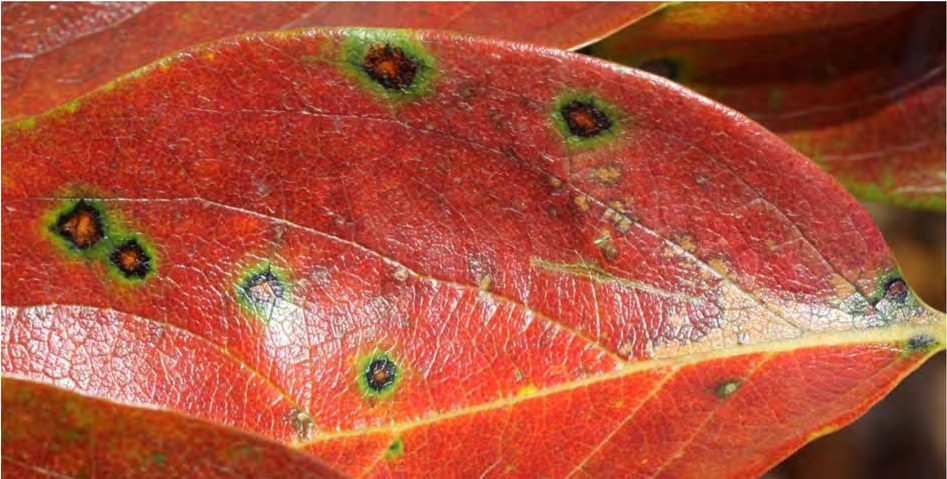
Pests and diseases of persimmon (Diospyros kaki) in Europe and Greece: epidemiology, differential diagnosis and action thresholds
Circular leaf spot (Plurivorosphaerella nawae), the pathogen that adapted to the semi-arid climate of Valencia and is not a quarantine organism, with the comparison between Spain and Korea and the role of drip irrigation. Angular leaf spot, Pestalotiopsis, anthracnose, and the twelve species of Diaporthe, Eutypella and Botryosphaeriaceae identified inside the wood. Postharvest rots: why Alternaria black spot became the limit of storage life after 1-MCP, and how extra irrigation before harvest is paid for in the cold room two months later. Crown gall, vascular wilt, root rots and phytoplasmas. Mealybugs and ants, wax scale, mussel scale, the orange spiny whitefly as a quarantine organism, fruit flies. Herbicide toxicity mistaken for a fungal leaf spot, a differential diagnosis table with fifteen pairs, action thresholds with the sampling method, and the four exotic pathogens threatening the Mediterranean. Thirteen photographs, five from Greek orchards.
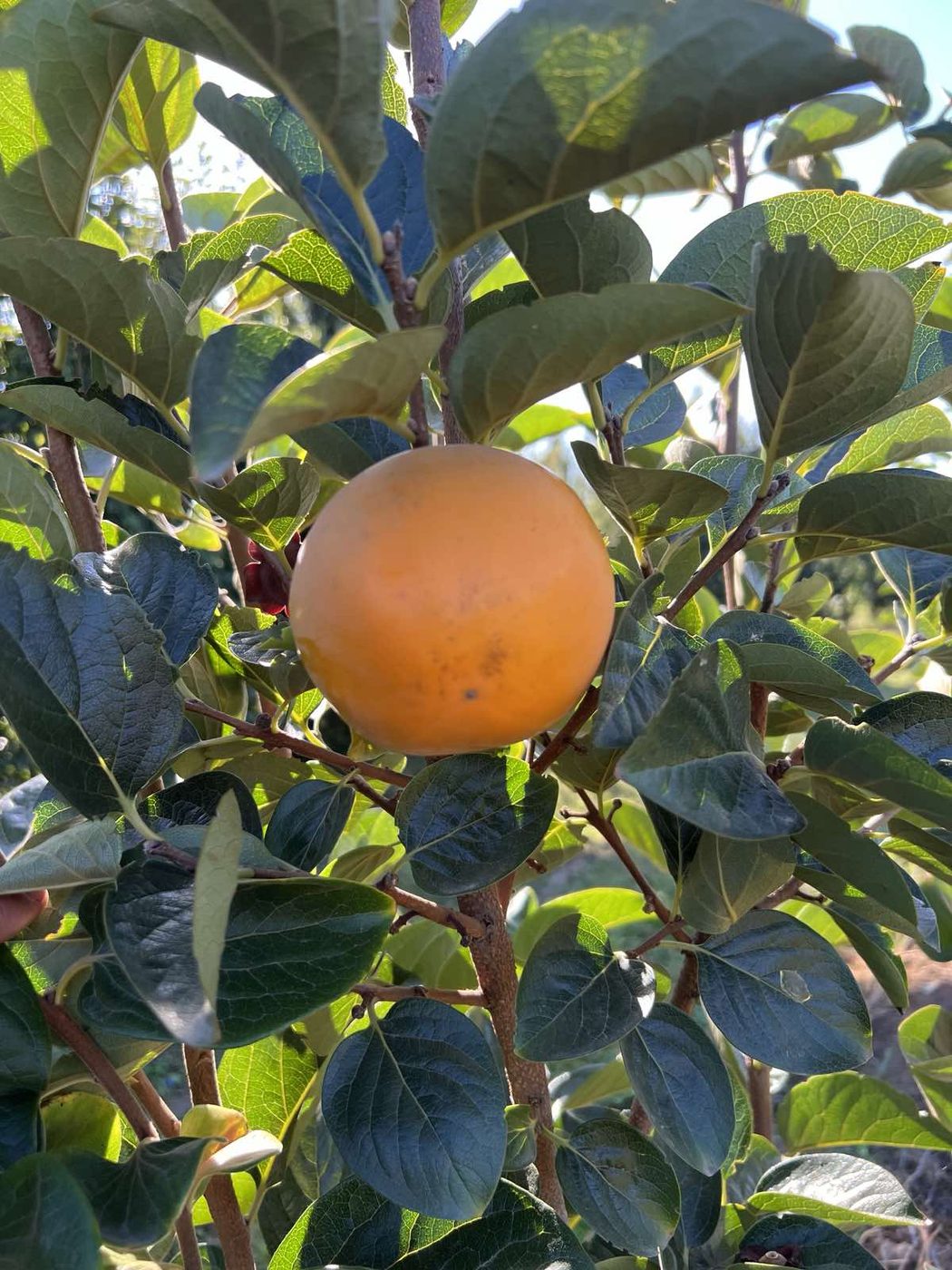
The Maxim persimmon cultivar: rights, ripening and key information
A protected Spanish cultivar of the Genesis Exotic group, distributed under licence. The fruit is not astringent at any stage, not even unripe, so no deastringency chamber is needed, the tree resembles Jiro and ripening falls in mid-September.
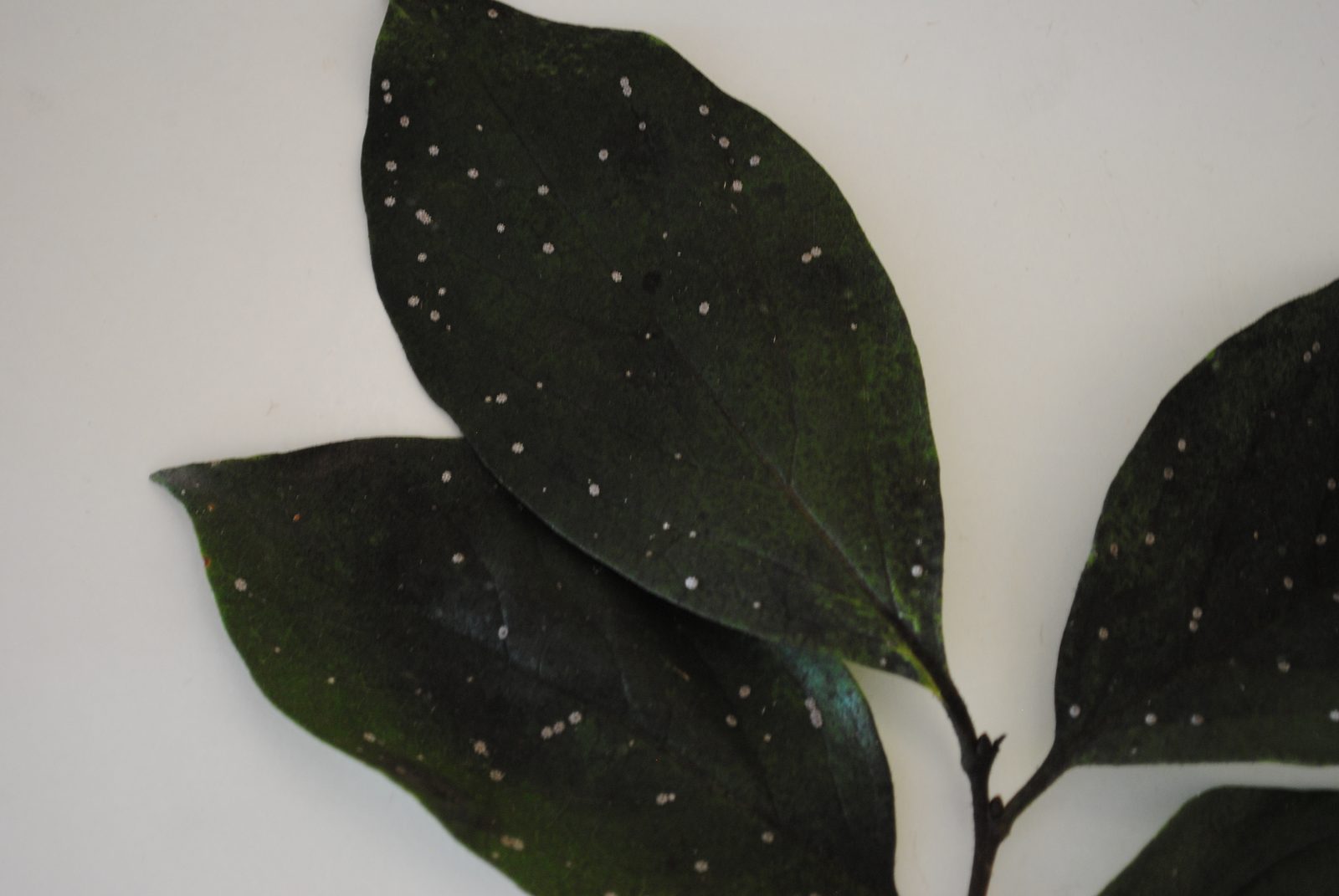
The fig wax scale, Ceroplastes rusci, on fig and persimmon
No synthetic active substance is authorised against it on fig or persimmon in Greece - only paraffin oils, maltodextrin and potassium salts of fatty acids, all of which act physically. That makes the crawler stage the whole of the treatment window, and coverage more important than dose.