
Wood-decay fungi on peach: Phellinus is an indicator, not a killer
In recent years it has become common to find peach and nectarine trees dying inside the block and, a little later, bracket “mushrooms”, the fruiting bodies of basidiomycete fungi, pushing out of the dead or half-dead trees. What does that picture mean, and how worried should a grower be?
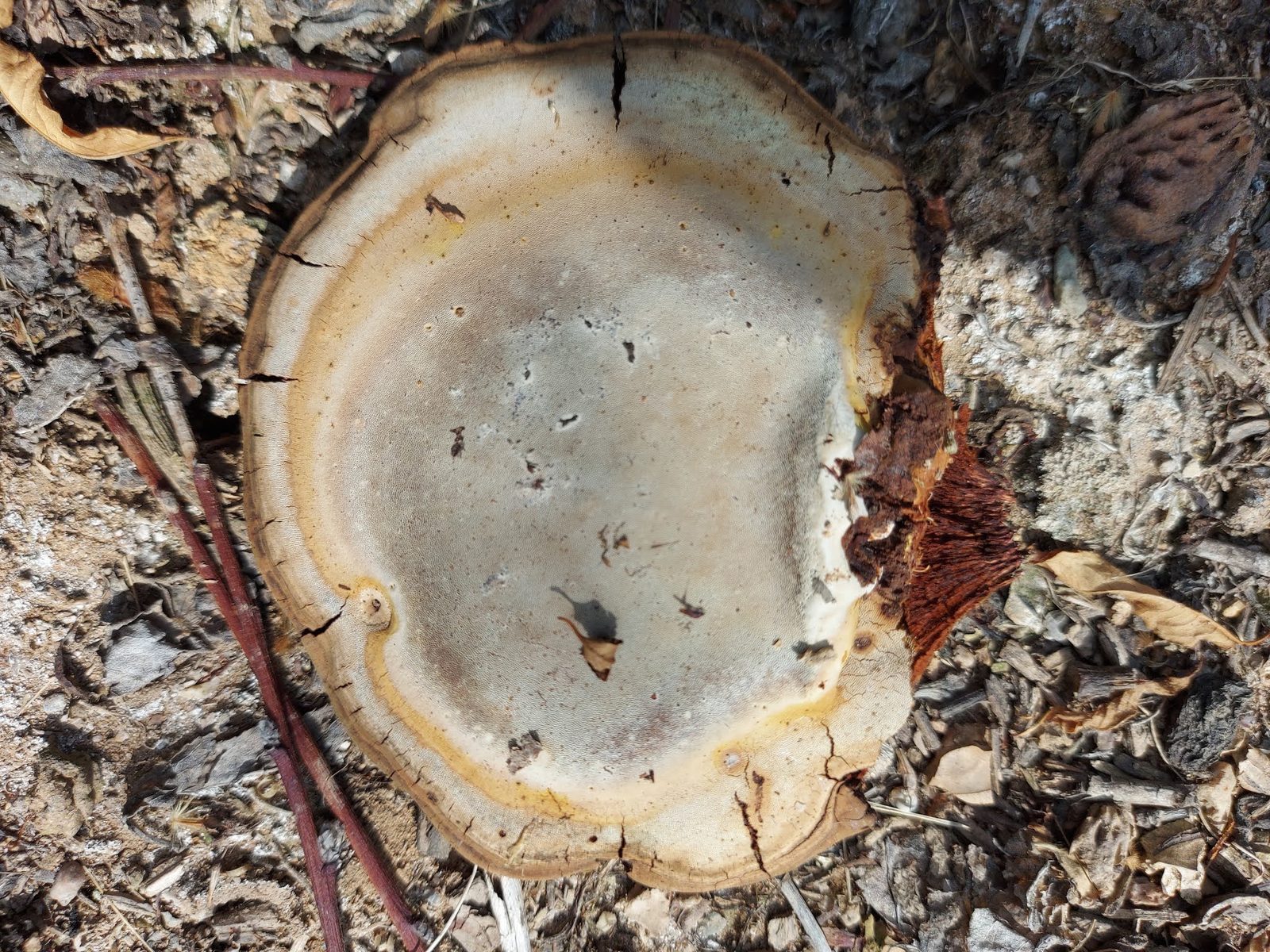
First, the obvious: trees die for many reasons
Rodents, fungi, insects, bacteria, viruses, root asphyxiation, frost damage. Any of them can kill one tree or many. In most cases the brackets seen on half-dead wood are saprophytic: they arrived afterwards, they did not kill the tree. They are the consequence, not the cause.
There is, however, one group that is not merely passing through.
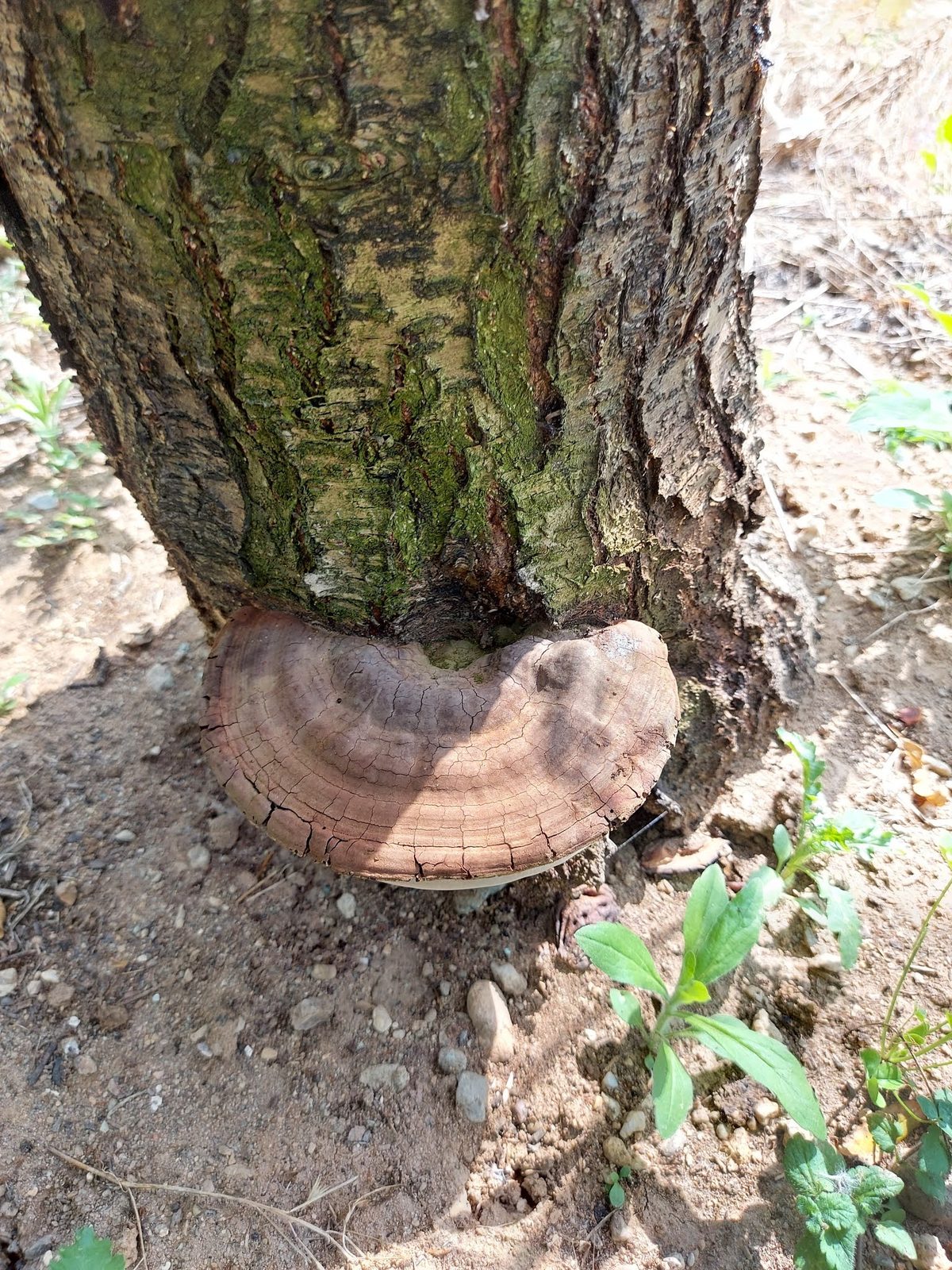
Identification: on stone fruit it is not P. igniarius
Phellinus igniarius in the strict sense is a species of willow, poplar and birch. On Prunus, peach, nectarine, plum, apricot, the species encountered is Phellinus tuberculosus, more widely known as Phellinus pomaceus. It is one of the few wood-decay fungi to show narrow host specificity: it lives almost exclusively on Prunus.
This is not a point of nomenclature. It means that the fungus lives inside your orchard, does not blow in from the neighbouring woodland, and that the source of inoculum is the old and dead trees on the holding itself.

How aggressive is it really
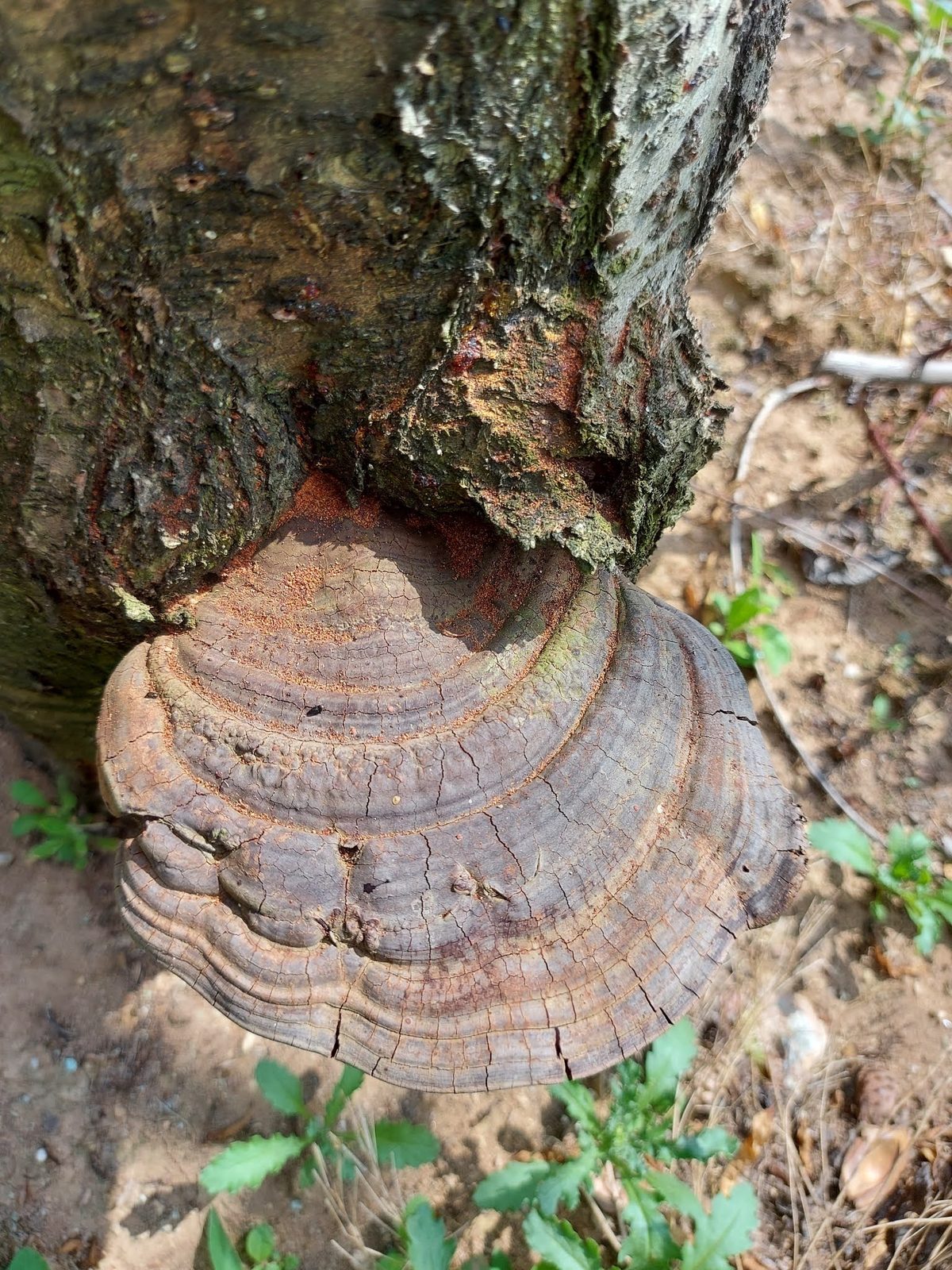
The literature is clear, and it agrees with what is seen in the field: the fungus is not strongly pathogenic, but it causes serious decay in trees already suffering from other stresses. It attacks the heartwood and produces a white rot that hollows out the scaffold limbs from within.
In California, where the question was studied systematically in prune orchards, P. tuberculosus was found in every orchard over 12 years old that was examined, and most limb breakage was attributed to extensive decay caused by it. There the problem announces itself in the worst possible way: the trees split open at harvest, with the crop still on them.
What to do in practice
- Small cuts, not large ones. The best protection is never to create a large wound in the first place. Renewal pruning every year, rather than heavy intervention every fifth year.
- Prune in dry weather. Spores are carried by rain and wind and find fresh cuts.
- Seal large cuts where they cannot be avoided.
- Remove and burn dead trees and infected limbs. For as long as they remain on the holding they produce spores every year.
- Leave no stumps or old wood along the field margins.
- Deal with the underlying stress. The fungus exploits an opening; it does not create one. Root asphyxiation, nutrient deficiency, overcropping and frost damage are what create the opening.
Related: wound and pruning-cut sealants, the result observed one year after application. The video is in Greek; turn on subtitles and auto-translation in the YouTube player.
Sources
- Phellinus wood rot, or “Why do my trees blow up at harvest?”, Sacramento Valley Orchards, University of California Cooperative Extension.
- Peach (Prunus persica), Wood Decay. Pacific Northwest Plant Disease Management Handbook.
- Prune and Plum (Prunus spp.), Wood Decay. Pacific Northwest Plant Disease Management Handbook.
- Phylogenetic Relationships among Species of Phellinus sensu stricto, Cause of White Trunk Rot of Hardwoods. Forests 6(11):4191. For the relationship between P. tuberculosus and P. pomaceus and for host specialisation on Prunus.
Photographs: Pastopoulos Agronomics archive, May 2021.
Related articles

The dry shoot disease of peach
Dead annual shoots with the leaves still attached, buds that fail to break, and since 2021 an epidemic on the plain of Giannitsa. The cause is the fungus Diaporthe amygdali. In detail: the distinction from the blind shoot, the fusicoccin that kills the shoot, the entry points at leaf fall, the susceptibility of ten clingstone cultivars and the year’s programme.

Peach diseases and pests: identification from symptoms, with a diagnostic tool
Brown rot, leaf curl, shot hole, scab, rust, bacterial spot and canker, Armillaria, Phytophthora, Diaporthe amygdali, plum pox, and the pests: peach twig borer, oriental fruit moth and summer fruit tortrix with degree-days from orchards in Pella, spider mites, Comstock mealybug, flat-headed root borer, goat moth. A tool that compares field symptoms against the profiles of 33 causes, with photographs and the one feature that separates them.
Chilling hours: the three models and when each one tells the truth
Chilling Hours, Utah Chill Units or Dynamic Chill Portions, what each measures, which suits which climate and season, why a chill portion does not convert into hours, and how the divergence between the three is read. The calculation itself lives in a separate tool.