
Apricot nutrition

Savvas Pastopoulos, Agronomist MSc, Pastopoulos Agronomics, Neos Mylotopos, Pella, Greece
Apricot nutrition is decided at a few specific points within the growing season, and each nutrient has a period of its own. Leaf analysis has a window of a few weeks, and a sample taken outside it compares to no published range. Nitrogen fertilisation above a certain level raises yield, but it lowers fruit firmness and accelerates the darkening of the dried product in storage. Potassium is the element removed in the greatest quantity with the fruit, and its demand follows the enlargement of that fruit. Calcium accumulates almost entirely within four weeks of fruit set, and beyond that point no intervention raises it appreciably. What follows, for each of these, is the measured evidence, the period in which it is decided, and the quantities as set by the regulations of the countries that have binding limits for the crop.
Rates are given per hectare. The Greek edition uses stremmata, where 1 hectare equals 10 stremmata, so 100 kg N per hectare corresponds to 10 kg N per strema. Leaf concentrations are percentages of dry weight for macronutrients and ppm of dry weight for micronutrients.
1. Leaf analysis: when, which leaf, and against what
Leaf analysis in apricot has a narrow window, and this is the point on which every source agrees independently of the others.
| Source | When | Which leaf | How many |
|---|---|---|---|
| ELGO manual [1] | Early July in lowland areas, mid-July in semi-mountainous areas | From the middle of annual shoots of moderate vigour, with the petiole, at 1.5 to 2 m, four leaves per tree from the four sides | 60 to 80 |
| Chalkidiki [2] | Early July | Not further specified | Not stated |
| Argolida [5] | Mid-July, after harvest, once new shoots had completed spring growth | Fully expanded, from the middle of non-bearing shoots, at 1 to 2 m | 20 per tree, 60 per plot |
| Switzerland [6] | 75 to 105 days after full bloom | From the middle of current-season shoots, with the petiole, at most two per tree | About 100 |
| California [7] | June to July | From non-fruiting spurs, two to five months old, at 1.2 to 1.8 m | 40 to 100 per block |
The Californian source puts a number on what a deviation costs: for August or September samples, 0.2 percentage points are subtracted from nitrogen and 0.2 from potassium before any comparison is made [7]. A shift of that size is larger than the gap between two adjacent sufficiency classes, so a sample taken out of season cannot be read, however well the analysis itself was done.
What the result is compared against
The apricot sufficiency ranges in circulation in Greece [1] come from foreign manuals, chiefly a German plant nutrition handbook of 1988 [3] and an American review of 1980 [4]. No Greek calibration has been made. There is, however, one Greek measurement, covering 24 commercial orchards in Chalkidiki of the cultivar Tirynthos, sampled in early July, which gives the ranges found in orchards yielding 5 to 20 t/ha [2]:
| Element | Range | Median | Element | Range | Median |
|---|---|---|---|---|---|
| Nitrogen | 2.30 to 3.10 % | 2.80 % | Boron | 13.3 to 24.7 ppm | 19.9 ppm |
| Phosphorus | 0.10 to 0.15 % | 0.13 % | Manganese | 39.5 to 272.0 ppm | 74.5 ppm |
| Potassium | 0.66 to 2.38 % | 1.74 % | Zinc | 15.5 to 34.5 ppm | 21.0 ppm |
| Calcium | 1.74 to 3.49 % | 2.48 % | Iron | 62.5 to 131.0 ppm | 88.3 ppm |
| Magnesium | 0.62 to 1.48 % | 0.95 % | Copper | 9.5 to 16.0 ppm | 12.0 ppm |
These ranges concern an early cultivar in one district and do not become thresholds. Their usefulness lies elsewhere: they show the order of magnitude in which normally producing orchards in that region sit.
Without locally calibrated thresholds, a single analysis says little. It gains value when it is repeated in the same orchard, at the same time of year, on the same leaf, so that it is compared against itself. Change from year to year is information; an absolute value set against a foreign threshold is conjecture.
2. Nitrogen: how much, when, and what each choice costs
The only published series of nitrogen rates in apricot was conducted in South Australia, on twelve-year-old trees of the cultivar Moorpark, on a sandy soil, over three years [8][9]. The rates were 0, 250, 500, 750, 1,000 and 1,250 g of nitrogen per tree per year, split 30 per cent at budburst, 30 per cent six weeks later and 40 per cent after harvest.
Fresh yield peaked at 1,000 g per tree in the second and third years [8]. Quality moved the other way: firmness fell as the rate rose, the flesh ripened uniformly only at 0 and 250 g, and dried fruit darkened faster in storage as nitrogen rose, in all three years. The authors recommend below 500 and ideally below 250 g per tree [9].
Low fertilisation has its own cost, and it is not omitted: at 0 and 250 g, total soluble solids were lower than at 750 and 1,250 g [9]. Maturity was also delayed by four to eight days at the higher rates [8]. Choosing between the two ends is a commercial decision that depends on where the fruit is going.
After only three years, the pH of the topsoil in the first 15 cm had fallen to 4.7 at the 1,250 g rate, against 6.7 in the zero-nitrogen control [8]. The nitrogen source was ammonium nitrate. On a calcareous soil the decline is slower, but the assumption that every Mediterranean apricot orchard sits on calcareous ground does not hold: across the 24 Greek orchards measured, calcium carbonate started at zero and pH at 5.18 [2].
What the Greek survey shows
In those same 24 orchards, where nitrogen was applied to all of them at the same rate, 200 kg per hectare in a single February application, leaf nitrogen showed no relationship with yield. Across its entire range, from 2.30 to 3.10 per cent, yield moved by 0.7 t/ha, one sixth of a standard deviation, and downwards [2]. This is an observation rather than an experiment, but it indicates that increasing nitrogen was not the factor that differentiated yield across those orchards.
When within the season
- In the Australian experiment nitrogen was split 30 per cent at budburst, 30 per cent six weeks later and 40 per cent after harvest [8]. Because apricot flowers before the leaves emerge, no dose fell before bloom.
- A French experiment on the cultivar Bergeron showed that shifting application from before to after harvest did not change yield, though it tended to lower soluble solids and colouring [10].
- Emilia-Romagna prohibits any nitrogen, mineral or organic, before the start of flowering and after 15 October, and does not allow more than 60 kg per hectare in a single dose [12]. Piedmont prohibits nitrogen from leaf fall until the end of February [13].
- Campania places demand in three windows, from flowering to fruit set, during fruit enlargement, and during summer flower bud differentiation, and requires the production nitrogen to be split across them [18].
What all of them share is splitting. The whole annual dose in one application, and before bloom at that, is recommended by none of the sources above.
3. Potassium and calcium
An Italian study followed calcium accumulation in the apricot fruit alongside the transpiration of the fruit itself, and found that calcium accumulates linearly and reaches 80 per cent of its final content within the first four weeks of fruit development, rising slowly thereafter to about 6 mg per fruit at harvest [11].
The explanation is in the same work. Fruit transpiration peaks immediately after fruit set and falls to a minimum about three weeks later [11]. Calcium moves only with the transpiration stream and is not redistributed within the plant as nitrogen and potassium are, so when the stream to the fruit stops, its supply stops with it.
Calcium management is decided within a window of four weeks from fruit set. What counts inside it is calcium availability in the soil and the uninterrupted functioning of transpiration, which means continuity of irrigation and the avoidance of water stress. An intervention a month later no longer raises fruit calcium.
Fruit calcium is also linked to the browning of the flesh around the stone. A French study on the cultivar Bergeron found that high nitrogen increased vegetative growth, yield and mean fruit weight, and at the same time aggravated the incidence of the disorder, with fruit nitrogen positively correlated with it at every evaluation time [10]. Increased potassium, by contrast, improved soluble solids and colouring without affecting the disorder.
In the Greek survey of 24 orchards, leaf potassium and calcium were the only two of the ten elements that emerged as statistically significant predictors of yield. From the lower to the upper end of the potassium range yield moves by 6 t/ha, and across calcium by 4.3 [2].
There is also a ceiling on potassium, at least for one cultivar. The Greek manual notes that in Bebecou heavy potassium fertilisation overturns the potassium to calcium ratio and causes spotting at the apex of the fruit [1]. The observation is not supported by any published experiment and is recorded as a recommendation of that source, but it is consistent with what the Italian study shows about calcium.
4. Quantities: what leaves with the fruit and what is applied
Piedmont publishes removal coefficients specifically for apricot: 6.0 kg nitrogen, 2.0 kg P2O5 and 7.0 kg K2O per tonne of fruit, covering the fruit only [13]. The Spanish guide gives whole-tree figures, that is fruit plus leaves, branches, trunk and roots, of 5.1 kg nitrogen per tonne in total and 3.7 kg net, with 1.32 P2O5 and 5.68 K2O [15]. An Italian regional document gives the two bases separately: fruit only about 0.9 nitrogen, 0.5 P2O5 and 3.6 K2O per tonne, whole plant about 5.5, 1.3 and 5.3 [16].
What is constant across every source is that potassium leaves in greater quantity than nitrogen, and always in a multiple of the phosphorus. At a yield of 20 t/ha, the highest of these coefficients gives a removal of about 120 kg of nitrogen and 140 kg of K2O per hectare.
The rates set by regulation
| Source | For a yield of | Nitrogen | P2O5 | K2O |
|---|---|---|---|---|
| Emilia-Romagna, binding [12] | 16 to 20 t/ha | 100 kg/ha | 25 to 80 kg/ha by soil endowment | 50 to 130 kg/ha by soil endowment |
| Emilia-Romagna, binding [12] | 10 to 16 t/ha | 75 kg/ha | 15 to 80 kg/ha | 35 to 120 kg/ha |
| Switzerland, recommended [17] | 15 t/ha | 45 kg/ha | 20 kg/ha | 60 kg/ha |
| Switzerland, recommended [17] | 20 t/ha | 60 kg/ha | 25 kg/ha | 75 kg/ha |
| Switzerland, recommended [17] | 25 t/ha | 75 kg/ha | 30 kg/ha | 90 kg/ha |
| France, binding [14] | 20 t/ha | 114 kg/ha | not given | not given |
| Piedmont, maximum permitted [13] | any yield | 135 kg/ha | not given | not given |
The French rule is a formula rather than a fixed figure: nitrogen equals 90 kg per hectare plus 1.2 kg for every tonne of expected yield per hectare, from the fourth leaf year onwards [14]. The Spanish guide uses the same structure with a lower constant term, 50 kg per hectare plus 1.2 kg per tonne [15]. The two countries agree on the variable part and disagree on the fixed one.
For the same yield of 20 t/ha, Switzerland recommends 60 kg N per hectare and France imposes 114. Neither is backed by a published apricot experiment. That distance is the real measure of what is known, and it is why no single recommendation is offered here.
The soil properties of the 24 Greek orchards measured span a wide range: pH from 5.18 to 8.30, calcium carbonate from 0.00 to 17.60 per cent, electrical conductivity 0.21 to 3.10 mmhos/cm, and organic matter from 1.00 to 1.60 per cent [2]. Two consequences for fertilisation: a calcareous substrate cannot be taken for granted, and organic matter is low across the whole range, with not one orchard above 1.6 per cent.
Key conclusions
What leaves with every tonne of fruit. For the fruit alone, the Italian coefficients give 6.0 kg nitrogen, 7.0 kg K2O and 2.0 kg P2O5 per tonne [13]. For the whole tree, that is including leaves, branches, trunk and roots, the Spanish guide gives 5.1 kg nitrogen in total and 3.7 kg net, 5.68 kg K2O and 1.32 kg P2O5 per tonne [15]. In every case potassium leaves in greater quantity than nitrogen, and phosphorus in a fraction of either. At 20 t/ha this means a removal of roughly 120 kg nitrogen, 140 kg K2O and 40 kg P2O5 per hectare.
When each element is taken up. The right period is not the same for all of them, and for two of them it has never been measured in apricot.
A first ranking comes from the Italian coefficients themselves, by comparing removal in the fruit against uptake by the whole plant [16]. The arithmetic is ours:
potassium: 3.6 of the 5.3 kg K2O per tonne end up in the fruit, that is 68%
phosphorus: 0.5 of the 1.3 kg P2O5, that is 38%
nitrogen: 0.9 of the 5.5 kg, that is only 16%
That distribution gives the shape of the season. Potassium demand follows the mass of the fruit, because two thirds of the uptake ends there. Nitrogen demand belongs five sixths to the tree, that is to the leaves, shoots, trunk and roots, which is why it is spread across the whole growing season rather than concentrated on the fruit. Phosphorus sits in between, but in a quantity about a quarter that of potassium.
| Element | The right period | Why then | How well documented |
|---|---|---|---|
| Calcium | From fruit set to four weeks later. Beyond that the curve is almost flat [11]. | Calcium moves only with the transpiration stream and is not redistributed within the plant as nitrogen and potassium are. Transpiration of the fruit itself peaks immediately after fruit set and falls to a minimum about three weeks later, closing the route in [11]. Inside the window what counts is availability in the soil and uninterrupted irrigation, because water stress stops transpiration and the supply with it. | Measured in apricot, together with the mechanism. Eighty per cent of the final content enters in the first four weeks, and at harvest the fruit holds about 6 mg. |
| Nitrogen | After bloom and split. In the only experiment, 30 per cent at budburst, 30 per cent six weeks later and 40 per cent after harvest [8]. Prohibited before the start of flowering and after 15 October [12], and from leaf fall to the end of February [13]. | Only 16 per cent of the uptake ends in the fruit. The rest goes to the tree, whose growth lasts the whole season, which is why no source concentrates the dose at a single point. Shifting application from before to after harvest changed neither yield nor vegetative growth nor mean fruit weight, though it tended to lower soluble solids and colouring [10]. | The split is experimental, the timing limits regulatory. The largest share in the experiment, 40 per cent, was applied after harvest, but the experiment did not compare different splitting schemes against each other. |
| Potassium | During fruit enlargement. It is one of the three windows of peak demand, alongside the flowering to fruit set period and summer flower bud differentiation [18]. | Sixty-eight per cent of the uptake ends in the fruit, a higher share than any other element, so demand follows the mass of the fruit and peaks while it is growing. The same interval decides the two quality attributes that potassium improved in the French experiment, soluble solids and colouring [10]. | The three windows are a regional regulatory recommendation and the distribution is our own arithmetic from published coefficients. No potassium uptake curve by phenological stage has been measured in apricot. |
| Phosphorus | No specific stage emerges from any source. In the Italian schemes the rate is set by soil endowment rather than by stage [12]. | The total quantity is small, about a quarter that of potassium, and phosphorus moves slowly in the soil, so the soil itself acts as the reserve and the moment of application matters less than the level of that reserve. | No measured uptake curve exists for apricot. In the Greek orchards that were measured, leaf phosphorus moved within a narrow range, 0.10 to 0.15 per cent [2]. |
- The leaf analysis window is July, and for lowland orchards the first half of it. A sample out of season compares to nothing.
- Without local thresholds, the analysis earns its value when it is repeated in the same orchard in the same way and compared against itself.
- In the only nitrogen rate experiment, yield peaked far above the rate that preserves firmness and the colour of the dried fruit. The choice is commercial.
- Low nitrogen has its own cost, in soluble solids.
- Splitting the nitrogen is common to every source. The whole dose at once, before bloom, is recommended by none.
- Potassium improves sugars and colour without aggravating the browning of the flesh, unlike nitrogen.
- For the same yield, foreign regulations differ by almost a factor of two in nitrogen. No single recommendation follows from them.
For the scale of the crop: according to the Annual Agricultural Statistical Survey of the Hellenic Statistical Authority for the reference year 2023, the Greek apricot area was 9,410 hectares and production was 155,600 tonnes, up 17.8 per cent on 2022 [19].
Sources: 2 12 13 14 15 16 17 19
5. Sources
The numbers in the text refer to the list below.
- [1] Ministry of Productive Reconstruction, Environment and Energy and ELGO Dimitra, Institute of Plant Breeding and Genetic Resources, Department of Deciduous Fruit Trees of Naoussa (2015). Fertilisation Manual for Deciduous Fruit Trees (in Greek). Scientific editor Dr T. Sotiropoulos. Source for the apricot sampling protocol, for the sufficiency ranges in circulation in Greece, and for the warning about potassium in Bebecou. Read in full, with the tables taken from a photograph of the printed pages, because within the file they are images.
- [2] Almaliotis, D., Velemis, D., Bladenopoulou, S. and Karapetsas, N. (2006). Apricot yield in relation to leaf nutrient levels in northern Greece. Acta Horticulturae 701:669-673. Soil Science Institute, N.AG.RE.F., Thermi, Thessaloniki. Source for the 24 orchards in Chalkidiki, the cultivar Tirynthos, the early July sampling, the rate of 200 kg N per hectare in February, the ranges and medians of the ten elements, the effect of each element on yield, the significance of potassium and calcium, and the range of soil properties. The full paper was read, with all tables.
- [3] Bergmann, W. (1988). Ernährungsstörungen bei Kulturpflanzen. Gustav Fischer Verlag, Stuttgart, 762 pp. Source for the German apricot sufficiency ranges against which the authors of the Greek study compare their measurements. The book was not obtained; the values were read as quoted verbatim in the Greek study.
- [4] Shear, C.B. and Faust, M. (1980). Nutritional ranges in deciduous tree fruits and nuts. Horticultural Reviews 2:142-163. Source for the American apricot sufficiency ranges against which the authors of the Greek study compare their measurements. The review was not obtained; the values were read as quoted verbatim in the Greek study.
- [5] Roussos, P.A., Karabi, A., Anastasiou, L., Assimakopoulou, A. and Gasparatos, D. (2023). Apricot Tree Nutrient Uptake, Fruit Quality and Phytochemical Attributes, and Soil Fertility under Organic and Integrated Management. Applied Sciences 13(4):2596. Source for the mid-July sampling protocol in Bebecou and Diamantopoulou orchards in Argolida. The full text was read; the table of per-element concentrations is an image within the page and was not read, so no concentration figure is taken from it.
- [6] Kuster, T., Eicher, O., Leumann, L., Müller, U., Poulet, J. and Rutishauser, R. (2017). Fertilisation en arboriculture, chapter 13 of the Principes de fertilisation des cultures agricoles en Suisse. Recherche Agronomique Suisse 8(6). Source for the Swiss sampling protocol at 75 to 105 days after full bloom. The full chapter was read.
- [7] Beutel, J., Uriu, K. and Lilleland, O. Leaf Analysis for California Deciduous Fruits. In: Soil and Plant Tissue Testing in California, University of California, Division of Agricultural Sciences, Bulletin 1879. Source for the July sampling of non-fruiting spur leaves and for the instruction to subtract 0.2 percentage points of nitrogen and potassium from August and September samples. Read in full.
- [8] Rettke, M.A., Pitt, T.R., Maier, N.A. and Jones, J.A. (2006). Growth and yield responses of apricot (cv. Moorpark) to soil-applied nitrogen. Australian Journal of Experimental Agriculture 46(1):115-122. Source for the six nitrogen rates, the split, the yield peak at 1,000 g per tree, the delay in maturity and the fall of topsoil pH to 4.7. The publisher's full abstract was read; the full text is behind a paywall.
- [9] Rettke, M.A., Pitt, T.R., Maier, N.A. and Jones, J.A. (2006). Quality of fresh and dried fruit of apricot (cv. Moorpark) in response to soil-applied nitrogen. Australian Journal of Experimental Agriculture 46(1):123-129. Source for the loss of firmness, the uniform ripening only at the two lowest rates, the darkening of dried fruit, the lower soluble solids at low rates, and the recommendation below 500 and ideally below 250 g per tree. The publisher's full abstract was read.
- [10] Bussi, C., Besset, J. and Girard, T. (2003). Effects of fertilizer rates and dates of application on apricot (cv. Bergeron) cropping and pitburn. Scientia Horticulturae 98(2):139-147. Source for the finding that application before or after harvest did not change yield, for the aggravation of pitburn incidence by high nitrogen, for the positive correlation with fruit nitrogen, and for the improvement in soluble solids and colouring from potassium. The publisher's abstract was read.
- [11] Montanaro, G., Tataranni, G., Mazzeo, M. and Dichio, B. (2010). Transpiration and calcium accumulation in apricot fruit. Acta Horticulturae 862:429-432. Source for the linear accumulation of calcium to 80 per cent of its final content within the first four weeks of fruit development, for the roughly 6 mg per fruit at harvest, and for the peak of fruit transpiration immediately after fruit set. The publisher's abstract was read. The work concerns apricot only.
- [12] Regione Emilia-Romagna, Direzione Generale Agricoltura, Caccia e Pesca. Disciplinari di Produzione Integrata 2024, Norme tecniche di coltura, ALBICOCCO. Source for the binding nitrogen, phosphorus and potassium rates for apricot by yield class and soil endowment, and for the timing restrictions on nitrogen. The full sheet was read and verified as identical to the 2022 edition.
- [13] Regione Piemonte. Disciplinari Produzione Integrata, Allegato I, Fertilizzazione, 2019. Source for the apricot removal coefficients of 0.6 nitrogen, 0.2 P2O5 and 0.7 K2O per 100 kg of fruit, for the statement that they cover the fruit only, and for the maximum permitted 135 kg N per hectare. The full annex was read; the conversion to kilograms per tonne is ours.
- [14] Ministere de l'Agriculture, Bureau Qualite (2024). Exportations par les productions vegetales, table de reference pour le calcul de l'item Bilan azote de la Haute Valeur Environnementale. Source for the French nitrogen formula for apricot from the fourth leaf year onwards. The full table was read.
- [15] Espada Carbo, J.L. Abonado de los frutales caducifolios, chapter 25 of the Guia Practica de la Fertilizacion Racional de los Cultivos en Espana. Source for the whole-tree removals of 5.1 and 3.7 kg nitrogen, 1.32 P2O5 and 5.68 K2O per tonne, and for the nitrogen calculation formula. The full chapter was read.
- [16] Servizio Agrometeorologico Regionale AMAP, Regione Marche. Calcolo del bilancio azotato, vite, olivo e fruttiferi. Source for the separate apricot coefficients on a fruit-only and on a fruit, wood and leaves basis. Read in full; the assignment of the two sets of coefficients to the two bases follows from the document's own explanatory note, and the conversion to kilograms per tonne is ours.
- [17] Bertschinger et al. (2003), Swiss orchard fertilisation principles. Source for the recommended rates in a mature apricot orchard at three yield levels. The original was not located; the values were read as reproduced, with a full citation, in a thesis that quotes them.
- [18] Regione Campania, Assessorato Agricoltura. Disciplinari di Produzione Integrata, Tecniche Agronomiche, 2026 update, ALBICOCCO sheet. Source for the three windows of nutrient demand within the growing season. The full sheet was read; it contains neither quantities nor leaf sufficiency ranges.
- [19] Hellenic Statistical Authority (2025). Annual Agricultural Statistical Survey, reference year 2023, press release of 26 June 2025. Source for the area of 9,410 hectares and the production of 155,600 tonnes. The full release was read; it contains no breakdown by regional unit.
The nutrient quantities given here are indicative and do not constitute a fertilisation recommendation. They derive largely from foreign regulations and experiments, whose transfer to any other soil and climate is stated in the text as uncertain. The final rate is determined after soil and leaf analysis and on-site assessment by a licensed agronomist, taking into account the age, rootstock, cultivar, crop load and history of the particular orchard.
Any foliar spray, of a nutrient or of any other product, applied to trees carrying fruit risks marking the fruit and scorching the foliage. A prior test on a limited number of trees, with the same product at the same rate, followed by a wait of five to seven days, is required before general application. Spraying is done in the late afternoon or early morning, never during a heatwave and never on foliage under water stress.
Plant protection products are used solely on the basis of the approvals of the Greek Ministry of Rural Development and Food and the instructions on the label. Those approvals are valid in Greece only and do not apply in any other country. Approved uses can be checked at fyto.plantprotect.gr, which is in Greek and valid in Greece only. Every intervention is carried out at the user's own responsibility, following on-site assessment by a licensed agronomist. Pastopoulos Agronomics accepts no liability for the use of the information in this article. Errors and omissions are not excluded.
Related articles
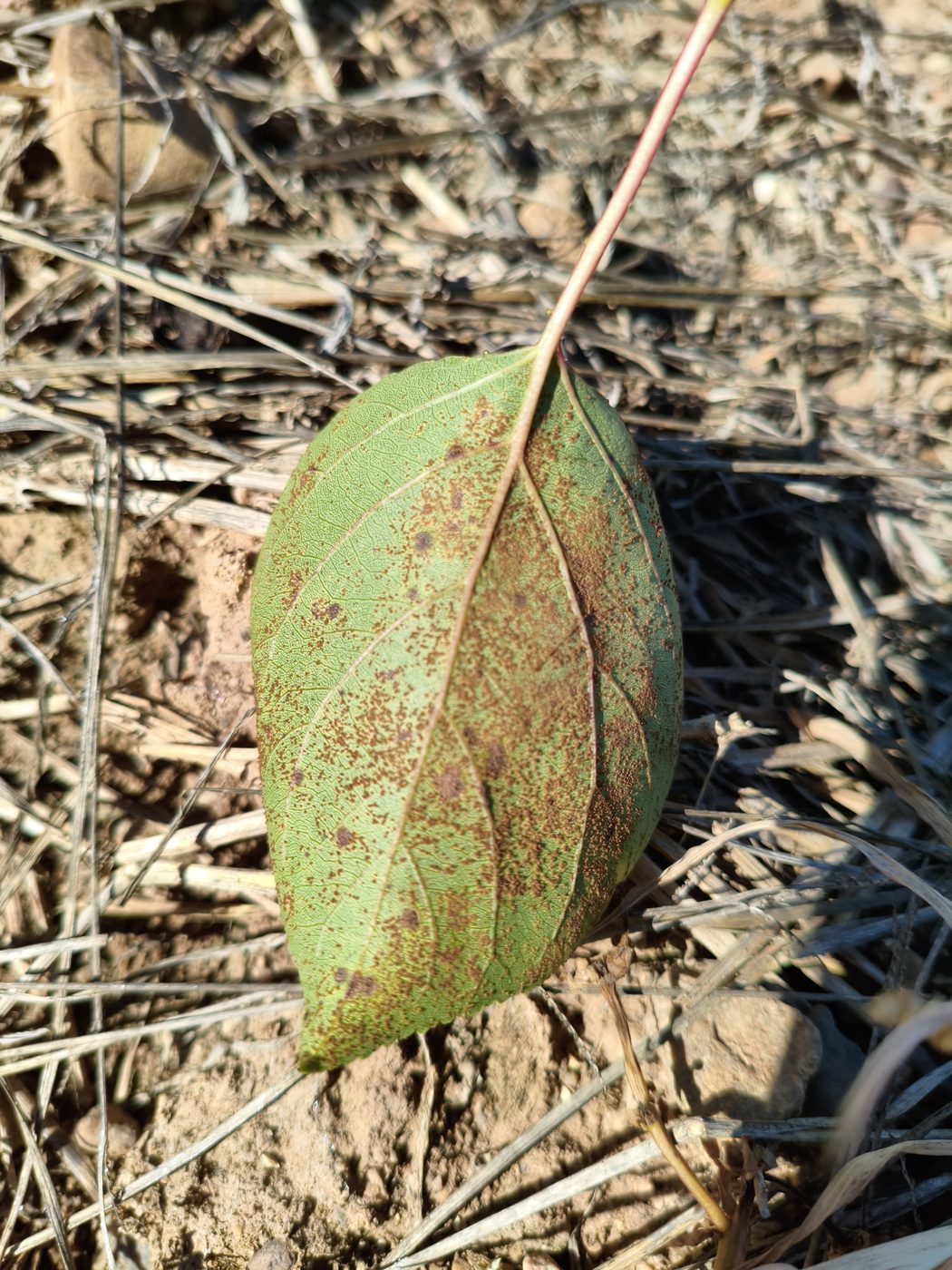
Apricot pests and diseases: identification from symptoms, with a diagnostic tool
Rust with field photographs, brown rot, shot hole, scab, powdery mildew, bacterial spot and canker, Eutypa dieback, silver leaf with and without a fungus, Phytophthora, Armillaria, plum pox and phytoplasma, and the pests: peach twig borer, oriental fruit moth, medfly, flatheaded root borer, mealybug, scale. The pruning dilemma, the three cuts that sort out a dead tree, and a tool that compares symptoms against the profiles of 34 causes.
Nutrient antagonisms and synergies, with a per-element tool
The arrow diagram in every fertiliser leaflet does not stand up scientifically. The antagonisms are real, but they act on two separate levels, in the soil and inside the plant, and the same element can be antagonistic on one and synergistic on the other. With a tool showing the documented relationships of each element.
Zeolite in agriculture: what is documented and what is not
It is a cation exchanger, it holds ammonium and potassium, not nitrate. The rates that work are tens of tonnes per hectare, not hundreds of kilos. And erionite is a Group 1 carcinogen.