
Fertiliser and organic matter calculator

Savvas Pastopoulos, Agronomist MSc, Pastopoulos Agronomics, Neos Mylotopos, Pella, Greece
Three calculations that are made by eye every day, and for that reason come out wrong. How many kilograms of fertiliser are needed for a given nutrient target, how much was actually applied over the whole season, and how much organic matter it really takes to lift the percentage in the soil. The last one usually gives an answer that comes as a surprise.
This calculator works in hectares and kg/ha. The Greek edition works in stremmata and «units» (1 unit = 1 kg of nutrient per stremma). One hectare equals 10 stremmata.
Fertiliser calculator
Enter the grade of the fertiliser at hand and the nutrient target in kg/ha.
What went on this season, the year's nutrient total
List every fertiliser applied during the season and the kilograms of each. The result is what the field has actually received.
enter 1 if the figures are already kg per hectare
Organic matter calculator
How far manure lifts organic matter when it is placed around each tree. Enter the band that is covered and the kilograms per tree.
on the material as delivered
the share that stays permanently
the area around the trunk where the material is spread and incorporated
tonnes per cubic metre
so that the total per hectare comes out as well
Disclaimer. The calculations are indicative and rest on average figures from the literature. They do not replace a soil analysis, a manure analysis or the judgement of an agronomist on site. The author accepts no liability for damage arising from an application based solely on the results of this tool.
How the calculations work
The fertiliser
The calculation is a division: the nutrient required is divided by the share of that nutrient in the product.
The critical point: a compound fertiliser rarely meets all three targets at once. One of them is hit and the others are missed. That is why the calculator shows what is short and what is in excess, and suggests straight fertilisers to make up the difference.
The season's account
The second tool performs the same arithmetic in reverse. The products applied and the kilograms of each are entered, and the output is how much nutrient the field finally received. Where the figures are total kilograms for the whole block, the area in hectares is declared and the result is reduced to the hectare.
This is the check that almost nobody carries out. Three or four applications across the season, each one reasonable on its own, frequently add up to twice the nitrogen target. The sum only becomes visible once it is written down.
- Calcium nitrate. It goes on for the calcium, and it is easily forgotten that it carries 15.5% nitrogen. In dessert peaches that hidden nitrogen softens the fruit.
- Fertigation. The small doses at each irrigation look negligible, but over twenty applications they become the largest part of the season.
The manure
Here the calculation has three steps.
- What the soil weighs. One hectare is 10,000 square metres. At a depth of 20 centimetres and a bulk density of 1.4 tonnes per cubic metre, that soil weighs 2,800 tonnes.
- How much organic matter is required. To raise it by 1%, 28,000 kg of organic matter are needed.
- How much manure that corresponds to. And here comes the factor that is routinely ignored: not all the organic matter stays in the soil. Most of it is mineralised within the first year. What remains permanently is the share given by the humification coefficient, roughly 0.5 for rotted manure and up to 0.75 for mature compost [1].
With cattle manure at 22% organic matter and a coefficient of 0.5, raising organic matter by one percentage point takes roughly 250 tonnes per hectare.
That is why the calculator works per tree and not per hectare. Two hundred and fifty tonnes to the hectare is a figure that never gets applied. But 20 kg placed in a band of 1.5 × 1.5 metres around the trunk raises organic matter by 0.35 of a point in the 630 kg of soil in that band, from 1.50% to 1.85%. That is measurable and achievable, and it is exactly where the absorbing roots are.
It cannot be done in a single application. At a realistic rate of 30 tonnes per hectare a year, it takes eight to nine years. Anyone promising a rise in organic matter within one season has either not done the arithmetic or is selling something.
The figures the calculator uses
| Material | Organic matter % as delivered | Humification coefficient |
|---|---|---|
| Cattle manure, well rotted | 20 to 25 | 0.50 |
| Sheep or goat manure | 28 to 35 | 0.50 |
| Poultry manure | 30 to 40 | 0.50 |
| Pig manure | 18 to 22 | 0.50 |
| Mature compost | 25 to 35 | 0.75 |
| Biosol 8-1-1, mycelial biomass [4] | 85 | ~0.30 estimate |
| Agrohumic, 100% leonardite [5] | 68 to 78 | ~0.95 estimate |
The last two rows were added on request, but the calculator will return a figure that cannot be applied. Both products are sold in 25 kg bags and are used at rates of 200 to 1,000 kg per hectare. Raising organic matter by one percentage point would take tonnes, a cost of hundreds of thousands of euros per hectare.
This is not a shortcoming of the product, it is a misreading of its purpose. Biosol supplies slow-release organic nitrogen and stimulates mycorrhiza. The leonardite in Agrohumic is already humified, which is why its coefficient is close to 1, and it works through humic and fulvic acids: release of locked nutrients, pH buffering, dissolution of salts. None of that has anything to do with bulk building of organic matter, which is the work of manure, compost and crop residues.
The humification coefficients for these two preparations are estimates made here, not values declared by the manufacturer: low for Biosol because it is fresh biomass with a very narrow C/N ratio that mineralises quickly, very high for leonardite because the material is geologically stabilised. The organic matter contents are the declared ones.
The figures are indicative and come from the international literature [2]. The organic matter content of a manure varies widely with moisture, the length of rotting and whether it contains bedding. Where an analysis of the manure is available, the measured value should be entered, the calculator allows it.
- The annual loss. Soil mineralises part of its organic matter every year. The real time required is longer than the calculator shows.
- The nutrients in the manure. Two hundred and fifty tonnes of manure carry a great deal of nitrogen, phosphorus and potassium. These must be deducted from the fertiliser programme, otherwise the result is over-fertilisation.
- Salts and heavy metals. Large rates, poultry manure above all, raise salinity.
- The contribution of the crop. Roots, leaf fall, green manuring and pruning residues all add organic matter at no transport cost.
Sources
- [1] Organic matter and humus, the concept of effective organic matter and the humification coefficients. Source for the definition of the humification coefficient as the ratio of effective to fresh organic matter, and for the values of 0.50 for farmyard manure and 0.75 for mature compost.
- [2] University of Nebraska Extension, Composting Manure and Other Organic Materials and AHDB, Using farmyard manure. Sources for the typical organic matter and moisture contents by type of manure and for how these change during rotting.
- [3] Hellenic Ministry of Rural Development and Food, database of approved plant protection products.
- [4] Biosol 8-1-1 + 85% organic matter, commercial technical data sheet. Source for the 8-1-1 composition, the 85% organic matter content, the origin from dried mycelial biomass and the slow release of the nutrients.
- [5] Agrohumic, commercial technical data sheet. Source for the 100% leonardite composition, the organic matter content of 68-78%, the C/N ratio of 7.8 and the pH of 6.5-7.
Where a plant protection product is combined in the same application, its approval for the crop should be checked [3].
The calculator is a tool for orientation. The final fertilisation programme is set after soil and leaf analysis and an on-site assessment by an agronomist.
The results of this tool are indicative. They do not replace a soil analysis, a manure analysis or an on-site assessment by a licensed agronomist, and no fertilisation or plant protection decision should rest on them alone.
Plant protection products and fertilisers are used only in accordance with their label: approved crops, approved rates, pre-harvest intervals and safety precautions.
Approvals issued by the Hellenic Ministry of Rural Development and Food are valid in Greece only. In every other country the national register applies. Pastopoulos Agronomics accepts no liability for any damage or loss arising from the use of the information on this page.
Related articles
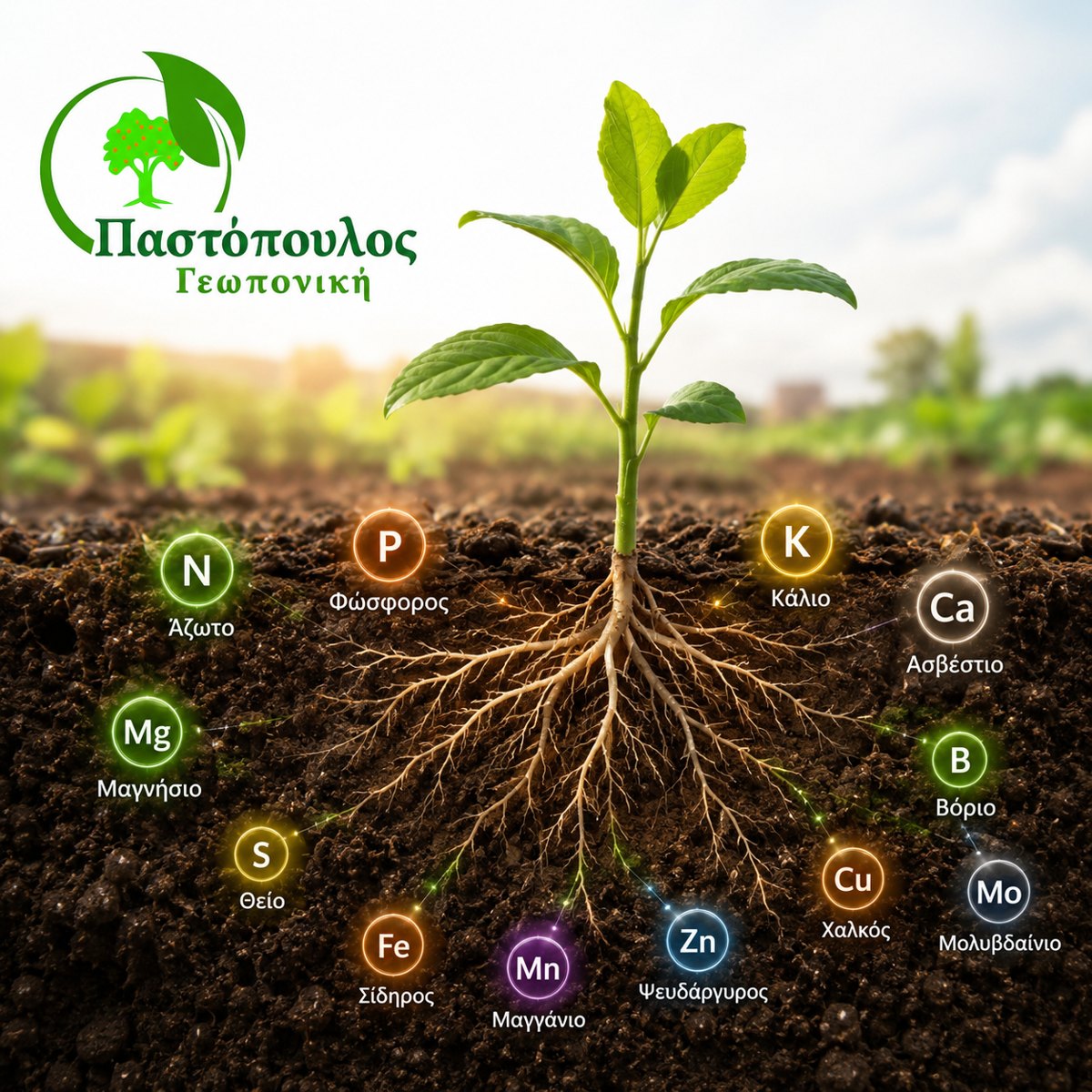
Nutrient antagonisms and synergies, with a per-element tool
The arrow diagram in every fertiliser leaflet does not stand up scientifically. The antagonisms are real, but they act on two separate levels, in the soil and inside the plant, and the same element can be antagonistic on one and synergistic on the other. With a tool showing the documented relationships of each element.
Zeolite in agriculture: what is documented and what is not
It is a cation exchanger, it holds ammonium and potassium, not nitrate. The rates that work are tens of tonnes per hectare, not hundreds of kilos. And erionite is a Group 1 carcinogen.
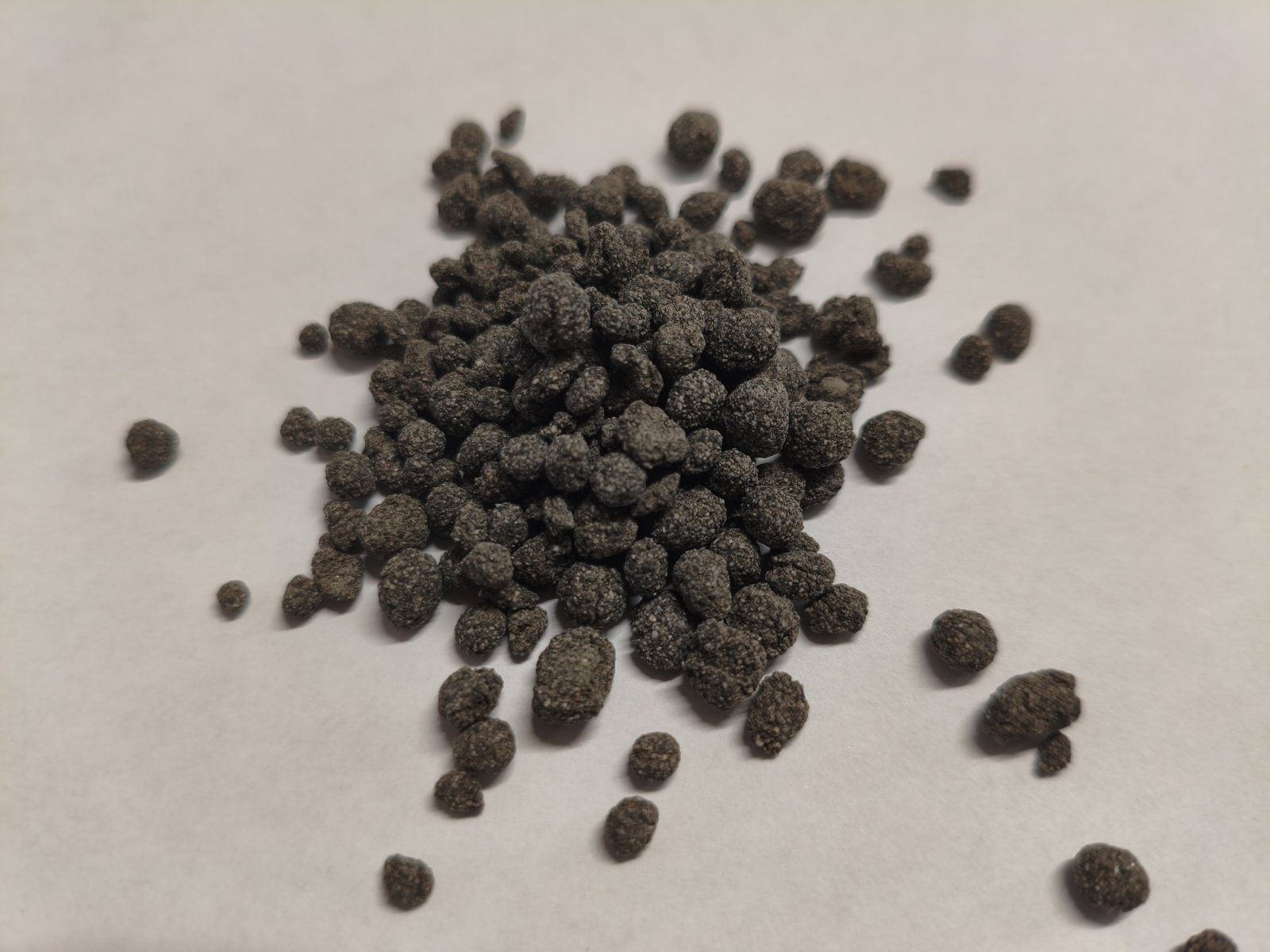
Leonardite in agriculture: properties, rates and what the law says
Leonardite is oxidised lignite with up to 85% humic acids, but pH below 3, up to 6% sulphur and almost no phosphorus. What the analyses and meta-analyses show, where it delivers and where it does not, and what Regulation (EU) 2019/1009 and the organic farming rules require.