
Pests and diseases of persimmon (Diospyros kaki) in Europe and Greece: epidemiology, differential diagnosis and action thresholds

Savvas Pastopoulos, Agronomist MSc, Pastopoulos Agronomics, Neos Mylotopos, Pella, Greece
Persimmon is being planted in Greece continuously and the area is increasing year on year, with new orchards all over Greece and with growers organising around the crop [20]. The phytopathological problems are increasing along with the area. Greek orchards already record mealybugs under the calyx, wax scales, mussel scale, sooty mould on the foliage and Mediterranean fruit fly attack. What follows is what is recognised in each case, what it is separated from and where the action threshold lies.
- Greek persimmon growing today, and the three reasons the problems grow together with the area
- Circular leaf spot, Plurivorosphaerella nawae: epidemiology, infection window and the role of the irrigation system
- Angular leaf spot, Pseudocercospora kaki, and Pestalotiopsis leaf spot: separation by lesion shape and number
- Anthracnose of fruit and shoots, Colletotrichum spp.: latent infection from fruit set to harvest
- Cankers, twig blight and wood diseases, Diaporthe, Eutypella and Botryosphaeriaceae: entry through pruning wounds
- Grey mould, Botrytis cinerea, and sooty mould: two problems associated with the calyx
- Postharvest rots in storage: alternaria black spot, stem-end rots and wound rots
- Diseases of the collar and the root system: crown gall, vascular wilt and root rots
- Phytoplasmas in declining persimmon: yellowing, reddening and dieback with no finding at the root
- Mealybugs, Planococcus citri and Pseudococcus spp., and the decisive contribution of ants
- Soft scales, wax scales Ceroplastes spp. and mussel scale: three groups needing different management
- Orange spiny whitefly, Aleurocanthus spiniferus: a Union quarantine pest already present in Greece
- Fruit flies, Ceratitis capitata and Bactrocera dorsalis, and brown marmorated stink bug Halyomorpha halys
- Eriophyid mites, thrips, leafhoppers, defoliating moths and earwigs: monitoring and thresholds
- Abiotic damage mistaken for disease: herbicide toxicity, sunburn, cracking and physiological fruit drop
- Differential diagnosis: causes that give almost the same picture, and the feature that separates them
- Action thresholds, sampling units and the annual monitoring calendar
- Exotic persimmon pathogens at risk of introduction into the Mediterranean, and their common entry route
- Sources
1. Greek persimmon growing today, and the three reasons the problems grow together with the area
A 2023 account of the new orchards in Pella gives the shape of the orchard [20]: cultivars Rojo Brillante and Jiro, palmette at 3.5 by 2 metres for growers coming from peach and plum, open vase at 4 by 5 metres for the rest, that is 500 to 700 trees per hectare, bearing from the third year. The cultural background is covered in the article on growing persimmon.
These orchards are for the most part young, and age is the factor that explains why the problems grow together with the area. Three things happen to every crop that passes from the young planting phase into the mature orchard phase, and all three have already happened to persimmon elsewhere in the Mediterranean.
Inoculum accumulates. Foliar and fruit pathogens overwinter in fallen leaves and dead wood. A three year old tree has neither leaf litter nor dead wood. A fifteen year old tree has both. In South Africa, which has grown persimmon in a Mediterranean climate since 1998, orchards began to show dieback and cankers at fifteen years of age [12].
Density closes the canopy. At 3.5 by 2 metres the planting closes quickly. Foliage dries later, spray penetration falls, and the wetting hours each fungus needs are reached more easily.
Pathogens travel with planting material. Circular leaf spot did not exist in Spain before the crop grew there. It appeared when the crop grew, in Valencia in 2008, and the first formal report was published in 2010 [5].
2. Circular leaf spot, Plurivorosphaerella nawae: epidemiology, infection window and the role of the irrigation system
The pathogen is Plurivorosphaerella nawae, formerly Mycosphaerella nawae, EPPO code MYCONA [7]. It was first described in Japan in 1929 and is prevalent in Korea. In Spain it was detected in 2008 in Valencia province [5], and in Italy it was reported in 2021 [6].
Symptoms are necrotic leaf spots, chlorosis and premature defoliation. The fungus infects the leaves only. The fruit, however, ripens early, softens and drops as a consequence of defoliation, and that is where the severe economic losses come from [2].
2.1 Where the inoculum overwinters, and under what conditions ascospores are released
The fungus reproduces in pseudothecia formed in the leaf litter. Ascospores mature in spring and are released when temperature and moisture coincide. In the Spanish measurements, made in a wind tunnel under controlled temperature [3]:
- Release begins around 10 °C and increases exponentially to 16 °C. Because persimmon vegetative growth starts above 10 °C, temperature is not a limiting factor when susceptible tissue is available.
- With 0.1 to 0.5 mm of water, that is with dew, very few ascospores are released. With 1 to 50 mm significant numbers are released. 1 mm is enough, and larger volumes of water do not increase the number further.
The mechanism explains why the measure works, and at the same time shows exactly where the advantage is lost:
- The inoculum reservoir is on the ground, inside the previous season's fallen leaves under the trees. That is where the pseudothecia form and where the ascospores mature through the winter [3].
- Release needs water on that leaf litter, not water in general. One millimetre is enough, and larger amounts do not raise spore numbers any further [3].
- Flood irrigation wets the whole soil surface, therefore the whole leaf litter, at every spring watering, which is precisely when susceptible new growth is available to infect.
- Drip wets a strip and leaves the rest of the litter dry. It puts no water on the canopy, so it adds no wetness hours to the leaves either.
Three things follow for a Greek orchard. The first is that Greek persimmon growing is already largely on drip, and that is an advantage worth not losing. The second is that the same mechanism cancels the advantage where irrigation is by microsprinkler or by overhead sprinkler, because those wet the litter and the canopy at the same time. The third is that leaf litter management works in the same direction as drip: the less litter left under the trees in spring, the smaller the reservoir the season starts from [2].
2.2 Infection period and latent period: the difference between Spain and Korea
The difference between the two countries is the central finding, and it shows exactly how dangerous it is to import a foreign calendar.
| Parameter | Spain, semi-arid [3] [4] | Korea, humid subtropical [6] |
|---|---|---|
| Ascospore release period | End of March to mid July, with most in April and May | Early May to early September, with 96.5% from mid June to mid July |
| Infection period | April to June, with mean temperatures 12 to 24 °C | Mid May to late July, range 17 to 24 °C |
| Symptom appearance | 120 to 127 days after full bloom | From late August, peaking September to mid October |
| Latent period | Up to four months | 33 to 34 days for a 15 May infection, 11 days for a 15 August one |
| Role of rain | Positively correlated, but symptoms also with less than 1 mm, and even without rain | Over 90% of spores within two hours of wetting |
The Spanish conclusion is that the fungus adapted to semi-arid conditions by altering its period of inoculum production to coincide with rains and with the availability of susceptible tissue. Temperatures were limiting neither for release nor for infection, and ascospores disseminated and infected under relatively dry conditions [2] [4].
2.3 What is documented to work and what does not
Three things are documented and transfer, because they do not depend on any Greek product approval.
Post-infection sprays are ineffective. In Spain preventive spring applications showed good efficacy, while post-infection ones did not work [2]. With a latent period of four months, by the time the lesion appears the season has already been decided.
The leaf litter is the inoculum. Removing infected leaf litter is described as critical for reducing inoculum, and it is the main measure in organic production, where conventional fungicides are not available. The litter can be incorporated and decomposed in the soil by ploughing or similar tillage. Burning and composting are also effective, but more costly [2].
Forecasting is feasible. The ascospore discharge test detects physiologically mature ascospores in the leaf litter one to two weeks before they are released. The technique is now used in Spain within a decision support system that predicts the onset of release and the infections that follow [2]. It is the kind of tool Greece would need before, not after, a first epidemic.
In Spain the disease has in recent years been managed with three to four sprays covering the spring infection period [2]. The active substances used there are not named here, because approvals are national. What is permitted on persimmon in Greece is shown only by the Ministry database [22].
3. Angular leaf spot, Pseudocercospora kaki, and Pestalotiopsis leaf spot: separation by lesion shape and number
Two further leaf spots attack the foliage and neither touches the flesh of the fruit. Their damage is indirect and delayed, as with circular leaf spot: they strip the canopy before its time, so the current crop stays smaller and the tree fails to build the carbohydrates that finance next year's flowering [1].
3.1 Angular leaf spot, Pseudocercospora kaki

The cause is a species of Pseudocercospora, most likely Pseudocercospora kaki [1], which is also recorded in Taiwan as one of the common persimmon pathogens [14]. The shape of the lesion is the feature: the veins stop its spread, so the spot comes out angular rather than round.
Survival is as hyphae inside the leaves and leaf bases, and spores last five to six months in fallen leaves. Dissemination is chiefly by water [1]. Two details transfer as they stand, because they do not depend on climate: there is a varietal difference in susceptibility, with Izu appearing susceptible, and the disease is worse under netting, evidently because netting holds humidity and slows leaf drying.
3.2 Pestalotiopsis spp. leaf spot, with shoot cankers in Spain
It produces large greyish brown circular lesions with concentric rings, usually one to three per leaf, with small black fruiting bodies visible on the lesion surface. When lesions cover more than one third of the leaf, defoliation follows. It also attacks the calyx sepals, one to four per fruit, with brown to black necrotic areas, and this leads to premature ripening and fruit drop [1].
The European connection is direct: in Spain the disease also causes cankers on shoots, and the pathogenicity of Pestalotiopsis diospyri was demonstrated on sweet persimmon there [1]. Pestalotiopsis clavispora is also isolated from postharvest stem-end rots in Spain [8], so the genus works both in the field and in the cold store.
4. Anthracnose of fruit and shoots, Colletotrichum spp.: latent infection from fruit set to harvest

The nomenclature needs care, because three names circulate for things that are not the same. In China, where persimmon is native, Colletotrichum gloeosporioides is described as the major pathogen of the crop in almost all areas where it is extensively grown, with economically important losses [13]. The small scattered specks are attributed to the same species, while the sunken lesions on leaves and fruit are attributed to Colletotrichum kaki [1]. True persimmon anthracnose, however, is today attributed to Colletotrichum horii, a species reported in Asia, Oceania and South America, which causes lesions on fruit and shoots and requires intensive spray programmes [2]. It is not established in Europe, and section 18 treats it as a threat.
The interesting finding is that these specks are associated with a stress factor that confines the disease to this form instead of letting it become full anthracnose, something also shown in avocado [1].
The mechanism is the same as in every latent fruit infection. The fruit is susceptible from fruit set to harvest, the fungus penetrates the peel and remains dormant until ripening, and wakes when the fruit ripens, is injured or is stressed [1]. C. gloeosporioides overwinters as mycelium in and on diseased tissue, its conidia are water-borne and spread by splashing rain, so infection is highest during the wettest periods of the growing season [13].
The factors linked to anthracnose severity are all cultural and transfer intact [1]: orchard age above twenty years, large trees that are hard to spray in the upper third, light pruning that holds moisture on leaves, fruit left unpicked acting as a spore source, prunings left under the tree, and proximity to abandoned orchards of other hosts. The genus Colletotrichum attacks avocado, mango, banana, fig and others, so in Greece the neighbouring fig is the practical equivalent of the Australian avocado.
5. Cankers, twig blight and wood diseases, Diaporthe, Eutypella and Botryosphaeriaceae: entry through pruning wounds

The most obvious symptom is not the canker but sporadic and delayed budbreak in spring. New shoots emerge with small yellow leaves and an elongated, etiolated form. New laterals die back from the tip, and whole sub leaders die back towards the central leader without dormant buds breaking. One year old shoots show ink dark cankers, and a cut reveals internal wood that is necrotic or stained [1].
The Australian work left the cause open, with isolations of Phomopsis and Diplodia but no proof of pathogenicity [1]. The picture was clarified in South Africa, in a Mediterranean climate, where the crop was introduced in 1998 and fifteen year old orchards began to show dieback and cankers [12].
Two elements of the same work are directly usable. The first is the entry route: wood pathogens enter mainly through pruning wounds and sucker wounds, and their spores are air-dispersed [12]. In Australia a second route is added, the fresh leaf scars during leaf fall [1].
The second is the rootstock. Of the two orchards used for pathogenicity tests, one was grafted on Diospyros kaki and the other on Diospyros virginiana. Mean lesion length after four months ranged from 30.7 mm to 53.9 in the first and from 36.7 to 65.2 in the second, with a statistically significant difference in favour of D. kaki [12]. In Spain, correspondingly, Botryosphaeriaceae were detected on pruning wounds and in trunk cankers, but at low prevalence [2].
- Check nursery stock before planting. These species travel as endophytes, that is inside apparently healthy wood and with no external symptom. That is how they enter a new orchard before the first pruning cut is ever made.
- Choose the rootstock at planting. In the pathogenicity tests Diospyros kaki gave discolouration lengths of 30.7 to 53.9 mm and Diospyros virginiana 36.7 to 65.2, with a statistically significant difference in favour of the first [12]. The choice is made once and cannot be changed afterwards.
- Pruning is the main entry route. Spores are airborne and enter through cuts and through watershoot removal wounds [12]. When pruning is done matters as much as how: in dry weather, with no rain forecast for the following days, so that the cut has time to dry.
- Pruning order within the orchard. Young and healthy trees first, suspect and infected trees last, so that the tool does not carry inoculum towards the healthy ones.
- Disinfect pruning tools between trees, and without fail immediately after every infected tree.
- Cut back into healthy wood, below the limit of the discolouration. If the cut still shows a brown ring, the removal did not go low enough and the pathogen stays inside the tree.
- Remove and destroy infected wood. Dead wood left in the orchard or stacked at the edge of the field is not inert, it is the spore source for next season.
- Cultivar matters. Fuyu is described as far more susceptible than Jiro [1].
- The susceptible period does not end with pruning. In Australia a second entry route is recorded, the fresh leaf scars at leaf fall [1].
6. Grey mould, Botrytis cinerea, and sooty mould: two problems associated with the calyx
6.1 Grey mould, Botrytis cinerea
Botrytis cinerea produces discrete grey lesions on young leaves and calyces, which enlarge, coalesce and lead to premature senescence and leaf fall. Calyx damage significantly reduces fruit size, and infected petals sticking to the young fruit leave scars [1].
The only quantitative figure is also the most useful: four to six hours of free water on the plant surface are required for spores to germinate and infect [1]. In the field it ranks as a minor disease, more frequent in cooler climates. In the cold store it changes weight: in Spain grey mould is one of the pathogens causing latent stem-end rots and is also isolated from fruit after storage [8].
6.2 Sooty mould: a symptom of sap sucking insects, not a disease of the plant

Sooty mould is not a disease of the plant. It is fungi of the genera Capnodium, Fumago, Scorias and others, growing on the honeydew of sap sucking insects without penetrating the tissue [1]. The damage is twofold and entirely indirect: it reduces the light reaching leaf and calyx, hence photosynthesis and fruit size, and it downgrades the fruit commercially.

The conclusion is categorical: if the insects are controlled, sooty mould is controlled, and the single most important measure is restricting the movement of ants into the canopy [1]. For fruit already covered, cleaning is done with water and detergent and light brushing, and some growers have built semi automated washing systems using pressurised water [1].
7. Postharvest rots in storage: alternaria black spot, stem-end rots and wound rots
Here the Mediterranean experience is the fullest that exists, because Spain and Israel store large volumes of astringent cultivars and have measured the problem.
7.1 Alternaria black spot, Alternaria alternata, the main postharvest disease
Black spot is by a considerable margin the most important postharvest disease of Rojo Brillante in Spain, irrespective of season and orchard, in both latent and wound infections [8]. In Israel it is the main factor that impairs quality and reduces the storability of Triumph [9].
The figures are serious. In commercial Spanish packinghouses in the Valencia area, losses of up to 30% of fruit from black spots on the peel have been observed [8].
This bears directly on Greek practice. In the article on deastringency the storage limit for Rojo Brillante at 1 °C with 1-MCP is given as about 40 days. At 40 days black spot has not had time to show. The observed limit is therefore not only a matter of firmness: it is also the point at which black spot does not have time to become visible. Anyone who tries to push storage to three months will meet the Spanish problem.
7.2 Where and when the fruit is infected, and the role of irrigation
Three findings change how the problem is handled, and none of them concerns the cold store.
Inoculum is everywhere and present all season. In Spain the various inoculum sources were broadly distributed within affected orchards, and A. alternata conidia proved highly tolerant of dry periods, so airborne inoculum was available throughout the growing season [2].
Latent infections concentrate at the end. They were most frequent during the three-month period before harvest [2]. That defines the window in which protecting the fruit makes sense.
The damage starts at the stem end, and irrigation defines it. In Israel it was shown that the fungus colonises the upper, stem-end tissue and not the bottom end. The stem end produces more ethylene and carbon dioxide in early stages, and in later stages has greater cracked area and reduced chlorophyll [10].
7.3 Latent pathogens and wound pathogens: two groups needing different management
| Group | Species | Where and when they enter |
|---|---|---|
| Latent pathogens | Alternaria alternata, Botrytis cinerea, Lasiodiplodia theobromae, Neofusicoccum spp., Pestalotiopsis clavispora, Colletotrichum gloeosporioides | In the field, on flowers or young fruit. They produce mostly stem-end rots |
| Wound pathogens | Penicillium expansum, and much less often Cladosporium cladosporioides. Add Rhizopus spp. | Through injuries and microwounds in the skin, during harvest and grading |
Species list from the Spanish survey [8].
The most useful figure for management is that Rhizopus stops growing below 8 to 10 °C, so the speed of precooling is the critical measure, with a target of 10 °C [1].
7.4 What is permitted in the European Union, and how much the timing of the intervention matters
In Spain and the other European Union countries no conventional fungicide is permitted for postharvest treatment of persimmon, so control relies on a combination of alternative methods [8]. The same holds in Australia [1]. What applies in Greece is shown only by the Ministry database [22].
Two results deserve particular attention. The first concerns deastringency itself. In trials with short 48 hour gaseous treatments, carbon dioxide at 95 kPa reduced black spot by 30 to 40% after 40 days at 1 °C, but the reduction had disappeared by 82 days. After 10 days at 20 °C no treatment significantly reduced incidence, and severity was in some cases higher on treated fruit [11]. The treatment the grower already applies to remove astringency is not simultaneously protection against rot.
The second concerns the timing of the field intervention. In Israel, a preharvest application fourteen days before harvest, combined with the commercial chlorine dip, reduced the infected area by 60% compared with the dip alone, while the corresponding application thirty days after fruit set gave only 3% [9]. Timing, that is, matters twenty times more than the intervention itself. The chlorine dip is an Israeli commercial practice and is not an approved postharvest treatment for persimmon in the European Union.
- Control irrigation in the final weeks. The extra water that sizes the fruit up also enlarges the stem-end cracks through which Alternaria enters [10]. It is the measure with the highest return, because it acts before infection and costs nothing.
- The fruit is picked whole, clear of the stem. Fleshy tissue left on the fruit is an entry point [1], and it is exactly where stem-end rots begin.
- Avoid injury at harvest and grading, with padding in the trays and fewer drop points along the line. Wound pathogens do not enter without a wound, so every bruise avoided is an infection that does not happen.
- Hold the fruit three to five days before grading, so that symptoms develop on bruised fruit [1] and those fruit leave before entering the store along with the sound ones.
- Dry wet surfaces before packing and cool rapidly. The time between harvest and the cold room is time that works for the pathogen.
- Sanitise trays, the grading line and the store regularly. Inoculum builds up on the line, and the whole season's crop passes over that same line.
- Storage is monitored, not taken for granted. Alternaria black spot symptoms appear after two to three months at 0 °C [9], that is long after the fruit entered the store apparently clean. Sampling inside the store is the only way the problem shows up while there is still time to move the batch.
8. Diseases of the collar and the root system: crown gall, vascular wilt and root rots
8.1 Crown gall, Agrobacterium tumefaciens

The cause is the soilborne bacterium Agrobacterium tumefaciens, which infects mainly through wounds, that is at grafting and transplanting. The bacterium survives in soil for two years and more waiting for a host [1]. The disease hits young plants hardest and often kills them, while older ones weaken but usually survive.
Two points are reassuring. First, Diospyros kaki is the most resistant species of the genus to crown gall. Second, the disease is described as minor and rarely seen in persimmon orchards [1]. The measure with the best return is avoiding new wounds and, on ground with a history, growing grasses for up to three years before replanting.
8.2 Vascular wilt at the collar, and the identification problem
Collar wilt is attributed to the bacterium Pseudomonas solanacearum, under its former name [1]. That organism is today named Ralstonia solanacearum, is on the EPPO A2 list and is a Union quarantine pest, listed in Annex II B of Regulation (EU) 2019/2072 [19] [21].
The picture described is useful as a symptom, independently of the cause. In young trees wilt is rapid, preceded by heavy leaf fall, and the leaves that remain hang almost vertically. In older trees the decline is slow, about two years, without yellowing, with small pale leaves, sparse foliage, sunburn on bare branches, and prolific flowering with fruit that never reaches marketable size. Wilt usually shows in late summer, when crop load is heaviest, and a transverse cut at the collar shows extensive staining of the outer growth rings [1].
8.3 Root rots and Phytophthora
The symptoms are pale yellow foliage, weak flushes, and in severe infections rapid death, with black roots and rotted fine root tips. In Australia Cylindrocladium and Pythium species are implicated, while it is notable that Phytophthora is rarely isolated from persimmon roots despite repeated attempts [1]. In Spain root rot problems caused by Armillaria mellea and Rosellinia necatrix were recorded, but at low prevalence [2]. In Taiwan Phellinus noxius, Ganoderma lucidum and again Rosellinia necatrix are recorded [14].
One reference figure places the problem at its proper scale: it is common for a persimmon orchard to lose 5 to 10% of its trees over ten years [1].
In Greek conditions, with an irrigated orchard and often heavy soils, Phytophthora at the collar deserves more attention than the Australian literature gives it, and it is separated from the other root rots by the pattern in the field: Phytophthora gives patches where water stands, while the other causes give scattered individual trees. Collar rots in fruit trees generally are analysed in a separate article.
The measures are purely managerial and transfer: transplanting young trees promptly so the root system does not spiral in the pot, mounded rows and drainage at problem points, annual mulching, and monitoring soil moisture with an instrument rather than by estimate [1].
9. Phytoplasmas in declining persimmon: yellowing, reddening and dieback with no finding at the root
This is the newest addition to the list and appears in no manual of the crop. In Mehriz, Yazd province, Iran, that is in semi-arid conditions comparable to the Mediterranean, persimmon trees were found with yellowing, reddening, dieback and general decline [15].
By polymerase chain reaction, from symptomatic trees only, two different phytoplasmas were identified, 'Candidatus Phytoplasma omanense' of the 16SrXXIX group and 'Ca. P. australasiae' of the 16SrII-D subgroup, in some cases as a multiple infection in the same tree. The researchers explicitly call for a systematic survey to establish the extent of the phenomenon [15].
Sources: 15
10. Mealybugs, Planococcus citri and Pseudococcus spp., and the decisive contribution of ants

Mealybug is the pest of greatest practical importance for persimmon, and it is the pest Greek growing has already met: infestation of persimmon fruit by Pseudococcus comstocki has been recorded and is analysed in a separate article. Three species are recorded on persimmon, Planococcus citri, Pseudococcus longispinus and Pseudococcus calceolariae [1], all three present in the Mediterranean. Planococcus citri is also recorded as a significant persimmon pest in Taiwan [14].

The biology of Planococcus citri, as given for Queensland: adult female about 3 mm, covered in white mealy wax, life cycle four to six weeks in summer, with the female laying up to 600 eggs over about a fortnight and hatching in a week [1].
What decides management is not the mealybug but the ants. Ants feed on the honeydew, carry mealybugs from fruit to fruit and drive off their natural enemies. The finding is explicit: high ant densities dramatically reduce parasitism and predation, while low densities appear to have little effect [1].

The technical detail of trunk banding is worth writing down, because it is usually done wrong: the sticky material is not applied to the bark. A band of straight trunk is first wrapped with soft padding 100 mm wide, with a 20 to 30 mm overlap, and the gel goes onto the padding [1]. The bark is then not damaged and the band is easy to renew.
Three natural enemies are recorded, and all are commercially available in Europe [1]: Cryptolaemus montrouzieri, which needs six to eight weeks after release to bring the population under control, Leptomastix dactylopii, which is a parasitoid of Planococcus citri only and will not touch the other species, and Anagyrus, which parasitises first and second instars. The specificity of Leptomastix is the reason species identification comes before any release decision. The biology, temperature requirements and release rates of beneficials are analysed in a separate article, with Greek data.
11. Soft scales, wax scales Ceroplastes spp. and mussel scale: three groups needing different management
The species of immediate Greek relevance is the fig wax scale, Ceroplastes rusci, which attacks both fig and persimmon and has been recorded in Greece. It is analysed in a separate article, which is also where its Greek figures come from.
The other soft scales recorded on persimmon are the same species a Greek grower already knows from olive and citrus.
| Species | Adult female size | Generations per year, Australia | Action threshold, Australia |
|---|---|---|---|
| Black scale, Saissetia oleae | 3 to 5 mm, dome shaped, black to dark brown | 2 in southern districts, 3 to 4 in warmer ones | 5% or more of new season shoots infested |
| Nigra scale, Parasaissetia nigra | 3 to 4 mm, elongated oval | 4 to 6, cycle about 2 months in summer | general scale threshold, see section 17 |
| Green coffee scale, Coccus viridis | 3 to 4 mm, flat, yellow green | 3 to 4, cycle 6 to 9 weeks | sooty mould problem from 5% of laterals |
Sizes and cycles are species biology and transfer. The number of generations and the action thresholds are Australian and are given as an order of magnitude [1].
11.1 Mussel scale: an armoured scale with no honeydew

Mussel scale is an armoured scale and is recorded on persimmon [1]. It differs from everything above in three ways that change management.
- It produces no honeydew. So there is no sooty mould to draw attention and no ants to show the way. Detection comes only from looking at the fruit and the bark.
- The scale cover protects. The waxy cover makes most contact products ineffective at every stage except the crawlers, exactly as with wax scale.
- The damage is commercial. The flesh is not affected, but the fruit is rejected at grading and, for export, at phytosanitary inspection.
The general message of all the scales is that parasitism does the work when it is allowed to. Parasitism rates reaching 90% for one wasp on a wax scale and 85% for another in a particular region are recorded, and in wet weather the entomopathogenic fungus Verticillium lecanii causes up to 90% mortality in green coffee scale [1]. Those rates collapse under broad spectrum sprays and under ants.
Sources: 1
12. Orange spiny whitefly, Aleurocanthus spiniferus: a Union quarantine pest already present in Greece
Aleurocanthus spiniferus is the only species in this article that is simultaneously a quarantine pest, present in Greece and has persimmon among its hosts. It has been on the EPPO A2 list since 1994, transferred in 2009, and is a Union quarantine pest listed in Annex II B of Regulation (EU) 2019/2072 since 2019 [16] [21].
Its European distribution, according to the EPPO database, covers Greece, Italy including Sicily, Croatia, Montenegro, Albania, France including Corsica and Georgia, all with restricted distribution, while in Austria, Belgium and Czechia the species has been eradicated [16]. In Greece its presence was recorded in 2016 on Corfu [17]. In Italy it had appeared earlier, in Apulia.
Field identification is made from the puparium and not from the adult: black, oval, immobile bodies on the underside of the leaf, with characteristic spines, and abundant honeydew with heavy sooty mould below. The species is analysed in a separate article.
13. Fruit flies, Ceratitis capitata and Bactrocera dorsalis, and brown marmorated stink bug Halyomorpha halys
13.1 Mediterranean fruit fly, Ceratitis capitata

Persimmon is a host of Ceratitis capitata [1]. The species is analysed in a separate article.
13.2 Oriental fruit fly, Bactrocera dorsalis
Bactrocera dorsalis bears directly on European persimmon growing. In Italy it has been detected since 2022 in Campania, Emilia-Romagna, Lombardy, Trentino and Veneto, with the status "transient, under surveillance, under eradication". In Campania 114 specimens were caught in the infested zone by the end of September 2023, with about 3,300 traps under a national action plan, 1,000 mass trapping traps, and a ban on moving host fruit out of the zone [18]. It is also recorded as a significant persimmon pest in Taiwan [14].
The detail that concerns persimmon: in Emilia-Romagna three males were trapped inside a persimmon orchard, and the fruit sampled there was not found infested [18]. That is, the insect enters the orchard, but infestation of persimmon fruit was not documented in those surveys. This is a useful distinction and should not be inflated in either direction.
13.3 Brown marmorated stink bug, Halyomorpha halys
Halyomorpha halys has an extremely wide host range and is present in Greece. Its position in Greek fruit growing makes it an expected visitor to persimmon, with the typical picture of feeding punctures and sunken deformations under the skin. It is analysed in a separate article.
14. Eriophyid mites, thrips, leafhoppers, defoliating moths and earwigs: monitoring and thresholds
Eriophyid mites, with Aceria diospyri on persimmon, usually pass unnoticed. The only figure worth keeping is the speed: from egg to adult in one week under favourable conditions, with several generations a year and overwintering in axillary buds [1].
Thrips come with an admission worth transferring verbatim, because it is rare: there is no spray threshold and no number of thrips has been linked to economic damage, and the presence of thrips does not mean damage will follow, even in large numbers in flowers [1]. Monitoring is by beating branches onto a white surface and with yellow sticky traps.
Leafhoppers carry a threshold of 20% of green twigs infested, with a very useful addition: if more than half of the sampled egg rafts produce parasites, the population can be expected to decline on its own [1].
Defoliating moths justify intervention when defoliation exceeds, or is likely to exceed, 30%, and leaf rollers when more than 5% of flowers or fruit is infested [1]. In Taiwan Spodoptera litura is also recorded as a significant pest [14].
Earwigs, with Forficula auricularia, are the most misread group. They chew the leaf margin and disappear during the day, so the damage is attributed to other causes. They are also predators.
Snails are a Greek problem in fruit trees, and the white Mediterranean snail is analysed in a separate article.
15. Abiotic damage mistaken for disease: herbicide toxicity, sunburn, cracking and physiological fruit drop
In a new crop, where experience is missing, most of the questions reaching an agronomist do not concern pathogens.
15.1 Contact herbicide toxicity, pyraflufen-ethyl

Contact herbicides that act by oxidative destruction of the cell membrane, such as pyraflufen-ethyl, produce, when droplets drift, discrete necrotic spots at the point where each droplet landed. On persimmon the picture is strikingly misleading, because the spots are round and dark and resemble anthracnose or black spot.
Four features separate the toxicity from the pathogen, and none of them needs a laboratory:
- The distribution on the tree. Damage is densest low down, near the height of the spray boom, and thins out upwards. No fungal leaf spot behaves like that.
- The distribution in the block. It follows the row that was sprayed and the wind direction of that day, not the damp spots.
- The timing. Spots appear within a few days of the spray and do not enlarge afterwards. Fungal lesions enlarge and coalesce.
- The absence of progression. No new spots appear on leaves that emerged later.
15.2 Sunburn, cracking, surface scarring and physiological fruit drop
Fruit sunburn. Persimmon holds its fruit on the tree late, often after leaf fall has begun, so the fruit is exposed. The lesion is on the side facing the sun, pale at first and then brown, and has none of the margins that fungal lesions have.
Cracking. An abrupt change in water availability, whether rain after drought or irregular irrigation, splits the skin. The crack then becomes an entry for Alternaria, Penicillium and Rhizopus, so the final picture is rot and the cause is irrigation [10].
Surface scarring. Corky lines from rubbing on a branch or netting, from wind damage to young fruit, or from surface insect feeding. It is a commercial problem, not a pathological one.
Fruit drop after set. In persimmon physiological drop is heavy and is linked to the balance between crop load and growth, to the cultivar and to the pollination regime. Before a pathogen is sought, the physiological cause is ruled out. Cultivar questions are covered in a separate article on Maxim and in an article on Rojo brilliante, and pruning, which also determines canopy aeration, separately.
Sources: 10
16. Differential diagnosis: causes that give almost the same picture, and the feature that separates them
| Looks like | But is | The feature that separates them |
|---|---|---|
| Angular leaf spot | Circular leaf spot | Shape and size. Angular means a lesion up to 7 mm cut off along the veins. Circular means larger, round, with a halo like a dried watermark around it [1]. |
| Circular leaf spot | Pestalotiopsis leaf spot | The concentric rings and the number. Pestalotiopsis gives one to three large lesions per leaf with black fruiting bodies, and also attacks the calyx sepals [1]. |
| A leaf spot | Sooty mould | Sooty mould scrapes off, leaving healthy green tissue underneath. Every leaf spot leaves necrosis. |
| A fungal leaf spot on fruit and leaves | Contact herbicide toxicity | Distribution and timing. Denser low down, along the row that was sprayed, and the spots do not enlarge afterwards. |
| Anthracnose at the speck stage | Alternaria black spot | Timing and position. Anthracnose specks are visible on the tree and at harvest. Black spot appears in storage, usually from the stem end [8] [10]. |
| Alternaria black spot | Mediterranean fruit fly punctures | The cut. Under the puncture the flesh is soft and a larva may be present. Black spot is superficial at first. |
| Twig dieback from a canker | Frost damage | The cut. A canker gives bounded necrosis centred on a dead bud or a pruning cut. Frost gives damage with no centre, in the same height band across the whole block [12]. |
| Wilt from root rot | Vascular wilt at the collar | The transverse cut at the collar. Vascular wilt gives dark staining of the outer growth rings, root rot gives black rotted roots with no staining in the trunk [1]. |
| Nutrient deficiency or a root problem | Phytoplasma | The combination of yellowing, reddening, dieback and gradual decline, with no finding at the root. Confirmation is molecular only [15]. |
| Phytophthora at the collar | Crown gall | The galls. Crown gall produces tumorous growths from 0.5 cm upwards, Phytophthora produces rot and no gall [1]. |
| Scattered declining trees | Phytophthora in patches | The pattern in the field. Patches where water stands mean Phytophthora, scattered individual trees mean another cause. |
| Mealybug | Wax scale | Texture. Mealybug is soft, cottony and mobile. Wax scale is hard wax and immobile [1]. |
| Wax scale | Mussel scale | The honeydew. Mussel scale produces none, so there is neither sooty mould nor ants. The scale cover is elongated and curved like a mussel. |
| A whitefly | Orange spiny whitefly | The puparium, not the adult. Black oval immobile bodies with spines on the underside mean a quarantine pest and notification to the authority [16]. |
| Insect damage on the fruit | Sunburn | Position. Sunburn is always on the exposed side and has no puncture and no tunnel. |
17. Action thresholds, sampling units and the annual monitoring calendar
The table that follows gives sampling unit, frequency and threshold together, that is the entire method and not just a number [1].
| Pest | Sampling unit | Frequency | Action threshold, Australia |
|---|---|---|---|
| Mealybugs and ants | 20 random trees per hectare, 10 random fruit per tree | Weekly, all year | Economically serious from 25% of fruit carrying one or more adult females. Act when natural enemies are present on fewer than 20% of fruit. Control ants when present on more than 50% of shoots |
| Scales | 20 random trees per hectare, 10 random laterals per tree | Weekly, all year | At least 20 live scales on any lateral, or more than 5% of new season shoots infested |
| Leafhoppers | 5 random green twigs with fruit attached per tree | Fortnightly to every three or four weeks | 20% or more of green twigs infested |
| Defoliating moths | Search for egg masses and clusters of young larvae | Weekly, from budbreak to harvest | Defoliation exceeding, or likely to exceed, 30% |
| Leaf rollers | Flowers, fruitlets and maturing fruit | Fortnightly | More than 5% of flowers or fruit infested |
| Thrips | Beating foliage or flowers onto a white surface, and yellow sticky traps | Weekly count per trap | None exists. No number of thrips has been linked to economic damage |
Source for the whole table [1]. The months in the original are southern hemisphere and have been rendered as crop stages.
The order of checks through the year
The list that follows is not a spray calendar. It is the order in which checks and cultural operations are carried out, tied to the stage of the tree rather than to the month, because the difference from Pella to Crete runs to several weeks.
- Dormancy, from leaf fall to budbreak. This is the only period when the whole framework of the tree is visible. The wood is inspected for cankers, for staining in the cut and for branches that produced no growth last season. Infected wood is cut back into healthy wood, below the limit of the discolouration, and taken out of the orchard. Pruning is done in dry weather, with tools disinfected between trees, and in order from the healthy trees towards the suspect ones. The same period decides leaf litter management: the fallen leaves are the leaf spot inoculum reservoir for the whole season ahead [2].
- Budbreak and flowering. The first check is the evenness of budbreak. Buds that are late or do not open at all, and new shoots with small yellow leaves, are the first and often the only early symptom of twig blight. During wet spells at flowering, grey mould is watched on the flowers and the calyx. Trunk bands go on before the ants start climbing, not after honeydew appears. And the date of full bloom is recorded, because every window that follows is measured from it.
- From leaf emergence to July. This is the circular leaf spot infection window. The guide is not the calendar but rain events with temperatures above 10 °C, because that is when ascospores are released from the leaf litter [3]. Symptoms will appear 120 to 127 days after full bloom [4], that is long after infection. This is why a record of spring rainfall says more than looking at the leaves at the time. In parallel the weekly check for mealybug and scale runs, on 20 random trees per hectare [1].
- Three months before harvest. The window of latent Alternaria infections opens, and it produces no visible symptom in the field. Irrigation is decided here too: the extra water that sizes the fruit up also enlarges the stem-end cracks, and with them the risk in storage [2] [10]. What is decided here shows up two months after harvest, inside the cold room.
- Colour break and ripening. Peak for Mediterranean fruit fly, which finds the fruit receptive from colour break onwards. Peak also for mealybug, which gathers under the calyx. That check is made by lifting the calyx, on 10 random fruit per tree [1]: fruit that looks clean from the outside is not clean. In the same period fruit is checked for the first anthracnose specks.
- Harvest. The fruit is picked whole, clear of the stem, with no fleshy tissue left on it. Injury is avoided, with padding in the trays and fewer drop points along the line. Precooling is rapid, because the time from the field to the cold room works for the pathogen.
- Grading and storage. The fruit is held three to five days before grading, so that symptoms develop on bruised fruit and those fruit leave before entering the store along with the sound ones [1]. Inside the store the checking continues by sampling, because black spot appears after two to three months at 0 °C [9]. A store that is not checked shows the problem to the customer first.
- Leaf fall. The cycle closes where it opened. Fresh leaf scars are open gates for the wood pathogens [1], and the leaves coming down are next spring's inoculum. The decision about what happens to the litter is taken now, not in March.
18. Exotic persimmon pathogens at risk of introduction into the Mediterranean, and their common entry route
This section is not alarmism. It is the list the Spanish drew up after the circular leaf spot experience, that is by people who have already been surprised once [2].
| Organism | Where it occurs | Why it threatens the Mediterranean |
|---|---|---|
| Powdery mildew, Phyllactinia kakicola | Asia. Causes leaf lesions and defoliation | Powdery mildews are very well adapted to arid conditions and cause serious epidemics in many crops. Its introduction is described as a serious threat to Mediterranean production |
| Anthracnose, Colletotrichum horii | Asia, Oceania, South America | Causes lesions on fruit and shoots, and its control requires intensive spray programmes |
| Nalanthamala diospyri, syn. Cephalosporium diospyri | Southeastern USA, where it was described in 1936 | Infects the vascular tissues, causing wilt and eventually tree death. It caused a devastating epidemic on Diospyros virginiana. D. kaki and D. lotus are considered tolerant, but possible carriers |
| Black spot, Phyllosticta capitalensis | Taiwan, first reported in 2014 | Produces circular sunken black spots 1 to 2 mm across, randomly distributed on the surface of mature fruit. The picture is easily confused with Alternaria black spot and with insect punctures [14] |
19. Sources
The numbers in the text refer to the list below.
- [1] State of Queensland, Department of Agriculture and Fisheries (2017). Integrated Pest and Disease Management Manual for Persimmon, 2nd Edition, November 2017. Licensed under Creative Commons Attribution 4.0 International. Source for the biology and symptoms of the diseases and pests, for the action thresholds of Table 2, for the sizes and cycles of the scales, for the natural enemy data, and for eight of the thirteen photographs. Full text read. Images carrying a third party photographer credit were not used.
- [2] Vicent, A., Mira, J.L. and Bassimba, D.D.M. (2018). Fungal diseases of persimmon in semi-arid areas: adaptive strategies and future risks. Acta Horticulturae 1195:127-132. Source for the pathogen's adaptation mechanism to semi-arid conditions, for the ineffectiveness of post-infection sprays, for leaf litter management and the forecasting system, for the persistence of Alternaria inoculum and the three-month period of latent infections, for the root rots and Botryosphaeriaceae in Spain, and for the whole future risks section. Full text read.
- [3] Vicent, A., Bassimba, D.D.M. and Intrigliolo, D. (2011). Effects of temperature, water regime and irrigation system on the release of ascospores of Mycosphaerella nawae. Plant Pathology 60(5):890-908. Source for release beginning at 10 °C and increasing exponentially to 16 °C, for the 1 mm water threshold, and for the dramatic reduction of ascospores under drip irrigation compared with flood. Results read through review [2], not from the original.
- [4] Vicent, A., Bassimba, D.D.M., Hinarejos, C. and Mira, J.L. (2012). Inoculum and disease dynamics of circular leaf spot of persimmon caused by Mycosphaerella nawae under semi-arid conditions. European Journal of Plant Pathology 134(2):289-299. Source for the ascospore release period from late March to mid July peaking in April and May, for the infection period April to June at 12 to 24 °C, and for symptoms appearing 120 to 127 days after full bloom. Results read through review [2], not from the original.
- [5] Berbegal, M., Pérez-Sierra, A., Armengol, J., Park, C.S. and García-Jiménez, J. (2010). First report of circular leaf spot of persimmon caused by Mycosphaerella nawae in Spain. Plant Disease 94(3):374. Source for the first report of circular leaf spot in Spain and for its detection in Valencia in 2008.
- [6] Hassan, O. and Chang, T. (2025). Phylogeny, morphology, epidemiology, and control strategies for Plurivorosphaerella nawae, the causal agent of circular leaf spot in persimmon. Research in Plant Disease 31(1):1-16. Source for the whole Korean column of the comparison table: release period with 96.5% from mid June to mid July, infection range 17 to 24 °C, latent period of 33 to 34 days in May and 11 days in August, 90% of spores within two hours of wetting, and the absence of a resistant cultivar. Full text read.
- [7] EPPO Global Database. Plurivorosphaerella nawae (MYCONA). Source for the valid name and the synonym, and for the fact that the organism is not on the EPPO A1 or A2 lists and that no distribution record is maintained for it.
- [8] Palou, L., Montesinos-Herrero, C., Tarazona, I., Besada, C. and Taberner, V. (2015). Incidence and etiology of postharvest fungal diseases of persimmon (Diospyros kaki Thunb. cv. Rojo Brillante) in Spain. Plant Disease 99(10):1416-1425. Source for the separation of latent and wound pathogens with the species of each, for losses of up to 30% of fruit in Spanish packinghouses, for black spot becoming the main limiting factor after 1-MCP was adopted, and for the absence of approved postharvest fungicides in the European Union. Full text read.
- [9] Kobiler, I., Akerman, M., Huberman, L. and Prusky, D. (2011). Integration of pre- and postharvest treatments for the control of black spot caused by Alternaria alternata in stored persimmon fruit. Postharvest Biology and Technology 59(2):166-171. Source for latent infection in the orchard and symptom development two to three months after entry into storage at 0 °C, and for the difference between 60% and 3% for the preharvest application fourteen days before harvest versus thirty days after fruit set. Full text read.
- [10] Biton, E., Kobiler, I., Feygenberg, O., Yaari, M., Kaplunov, T., Ackerman, M., Friedman, H. and Prusky, D. (2014). The mechanism of differential susceptibility to alternaria black spot, caused by Alternaria alternata, of stem- and bottom-end tissues of persimmon fruit. Postharvest Biology and Technology 94:74-81. Source for colonisation at the stem end rather than the bottom end, for the greater cracked area and reduced chlorophyll there before harvest, and for increased irrigation enlarging the cracked area and the susceptibility to black spot. Full text read.
- [11] International Society for Horticultural Science (2018). Evaluation of short postharvest gaseous treatments for inhibition of Alternaria black spot of persimmon 'Rojo Brillante'. Acta Horticulturae 1195. Source for the 30 to 40% reduction at 40 days at 1 °C with 95 kPa carbon dioxide, for the loss of that reduction by 82 days, and for greater rot severity on treated fruit. Publisher abstract read.
- [12] Moyo, P., Mostert, L., Bester, M. and Halleen, F. (2016). Trunk disease fungi associated with Diospyros kaki in South Africa. Plant Disease 100(12):2383-2393. Source for the list of species isolated from cankers, pruning wounds and dieback, for the confirmation of their pathogenicity, for symptoms appearing in fifteen year old orchards in a Mediterranean climate, for pruning wounds as the main entry route, and for lesion lengths of 30.7 to 65.2 mm with a difference in favour of the Diospyros kaki rootstock. Full text read.
- [13] Zhang, J.-Z. (2008). Anthracnose of persimmon caused by Colletotrichum gloeosporioides in China. The Asian and Australasian Journal of Plant Science and Biotechnology 2(2):50-54. Source for C. gloeosporioides being the major persimmon pathogen in almost all areas of extensive cultivation in China, for overwintering as mycelium in diseased tissue, and for conidia being dispersed by splashing rain. Full text read.
- [14] Duan, C.-H., Chang, C.-M., Su, C.-C., Pan, H.-R. and Wang, C.-C. (2017). Phyllosticta capitalensis causes black spot on persimmon (Diospyros kaki) fruit in Taiwan. Australasian Plant Disease Notes 12:36. Source for the description of circular sunken black spots 1 to 2 mm across on mature fruit and for the list of common persimmon pathogens and pests in Taiwan. Full text read.
- [15] Esmaeilzadeh-Hosseini, S.A., Babaei, G., Mateeti, S.T., Pacini, F. and Bertaccini, A. (2025). Detection and identification of diverse phytoplasmas in declining persimmon plants. Microorganisms 13:645. Source for the symptoms of yellowing, reddening, dieback and decline in persimmon in Iran, and for the identification of the phytoplasmas 'Ca. Phytoplasma omanense' and 'Ca. P. australasiae' in symptomatic trees only. Full text read.
- [16] EPPO Global Database. Aleurocanthus spiniferus (ALECSN), categorisation and world distribution. Source for listing on the EPPO A2 list in 1994 with transfer in 2009, for listing in Annex II B of Regulation (EU) 2019/2072 from 2019, for the European distribution, and for the note that records before 2011 may concern Aleurocanthus camelliae.
- [17] Kapantaidaki, D.E. et al. (2019). Presence of the invasive whitefly Aleurocanthus spiniferus (Hemiptera: Aleyrodidae) in Greece. EPPO Bulletin 49(2). Source for the first record of the species in Greece, on Corfu. Publisher record read.
- [18] EPPO Reporting Service. Update on the situation of Bactrocera dorsalis in Italy. Source for the five Italian regions, for 114 specimens in Campania by the end of September 2023, for the traps of the national plan, for the status "transient, under eradication", and for the three males in a persimmon orchard in Emilia-Romagna with no fruit infestation.
- [19] EPPO Global Database. Ralstonia solanacearum (RALSSL), datasheet. Source for the former name Pseudomonas solanacearum corresponding to today's Ralstonia solanacearum, for listing on the A2 list and in Annex II B, and for the absence of persimmon from the host list.
- [20] Paisiadis, S. (2023). Persimmon: how the new plantings are done, first Producer Group founded in Pella. Agrotypos, 28 November 2023, in Greek. Source for the continuing expansion of the area in Pella, for the founding of the first Producer Group, for the cultivars and for the planting distances. A press account, not a scientific publication.
- [21] Commission Implementing Regulation (EU) 2019/2072. Source for the status of Union quarantine pests and for the fact that the EPPO A1 and A2 lists are not identical with Union quarantine status.
- [22] Greek Ministry of Rural Development and Food. Database of approved plant protection products, in Greek. Source for what is permitted on persimmon in Greece. Approvals are national, valid in Greece only, and they change, so the check is made before every intervention.
Plant protection products must be used strictly according to the approvals of the Greek Ministry of Rural Development and Food and the instructions on each product label [22]. Those approvals are valid in Greece only and do not apply in any other country. Readers outside Greece must consult their own national authority. This article recommends no active substance, no group of actives and no application rate. Interventions reported from foreign work are described as research results and are not recommendations.
The quantitative data comes from Spain, Israel, South Africa, Australia, Korea, China, Taiwan and Iran. The action thresholds are Australian and are given as an order of magnitude and as a sampling method, not as a recommendation. The months of the Australian sources are southern hemisphere and have been rendered as crop stages.
Any foliar spray on trees carrying fruit risks staining the fruit and burning the foliage. A prior test on a limited number of trees is required, with the same product and the same rate, and a wait of five to seven days before general application. Spraying is done in the late afternoon or early morning, never in a heatwave and never on water stressed foliage.
For regulated pests, such as the orange spiny whitefly, the oriental fruit fly and Ralstonia solanacearum, diagnosis and management belong exclusively to the competent plant health authority.
Every intervention is carried out at the user's own responsibility and following an on site assessment by a licensed agronomist. Pastopoulos Agronomics accepts no liability for the use of the information in this article.
Related articles
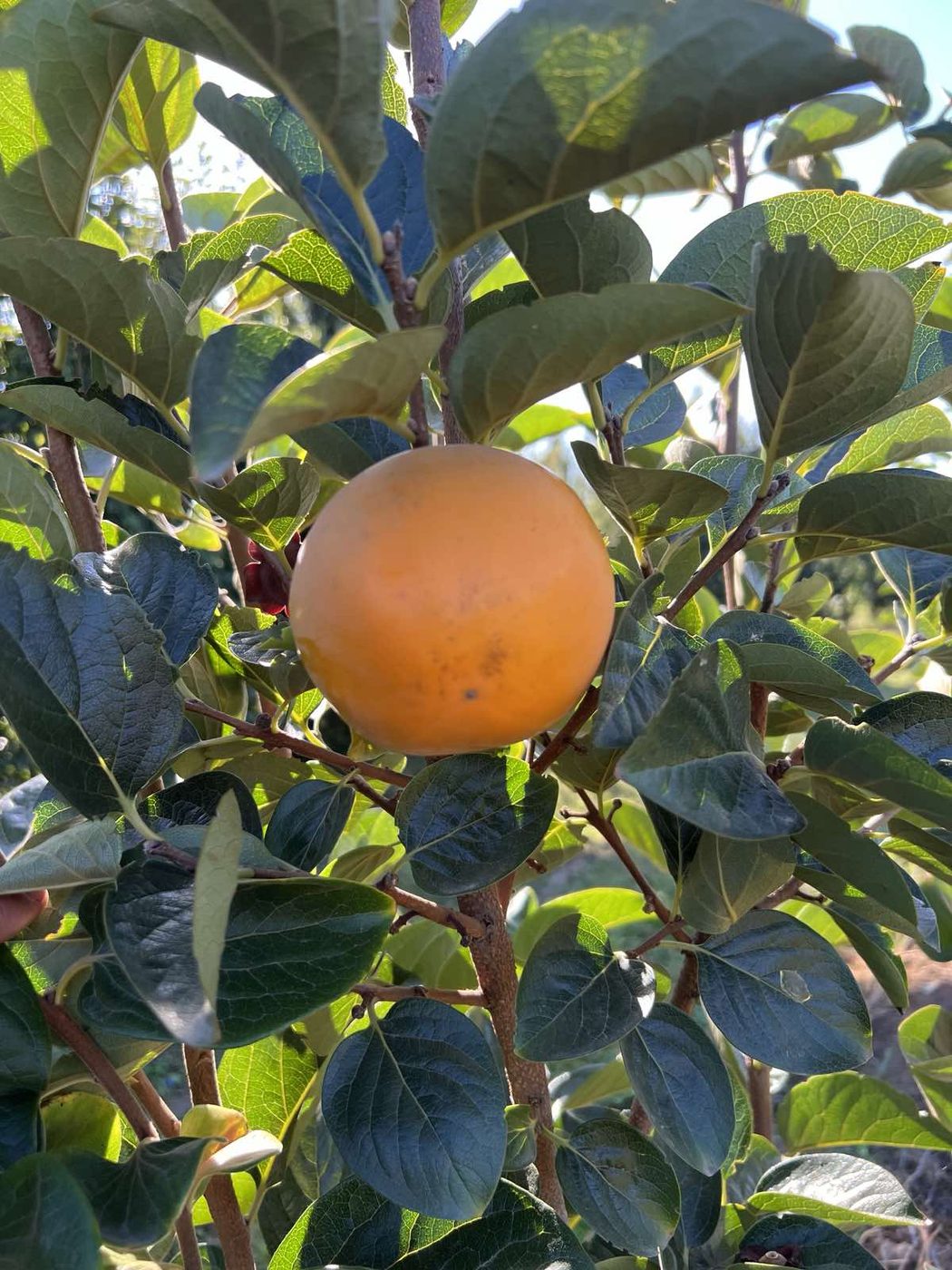
The Maxim persimmon cultivar: rights, ripening and key information
A protected Spanish cultivar of the Genesis Exotic group, distributed under licence. The fruit is not astringent at any stage, not even unripe, so no deastringency chamber is needed, the tree resembles Jiro and ripening falls in mid-September.
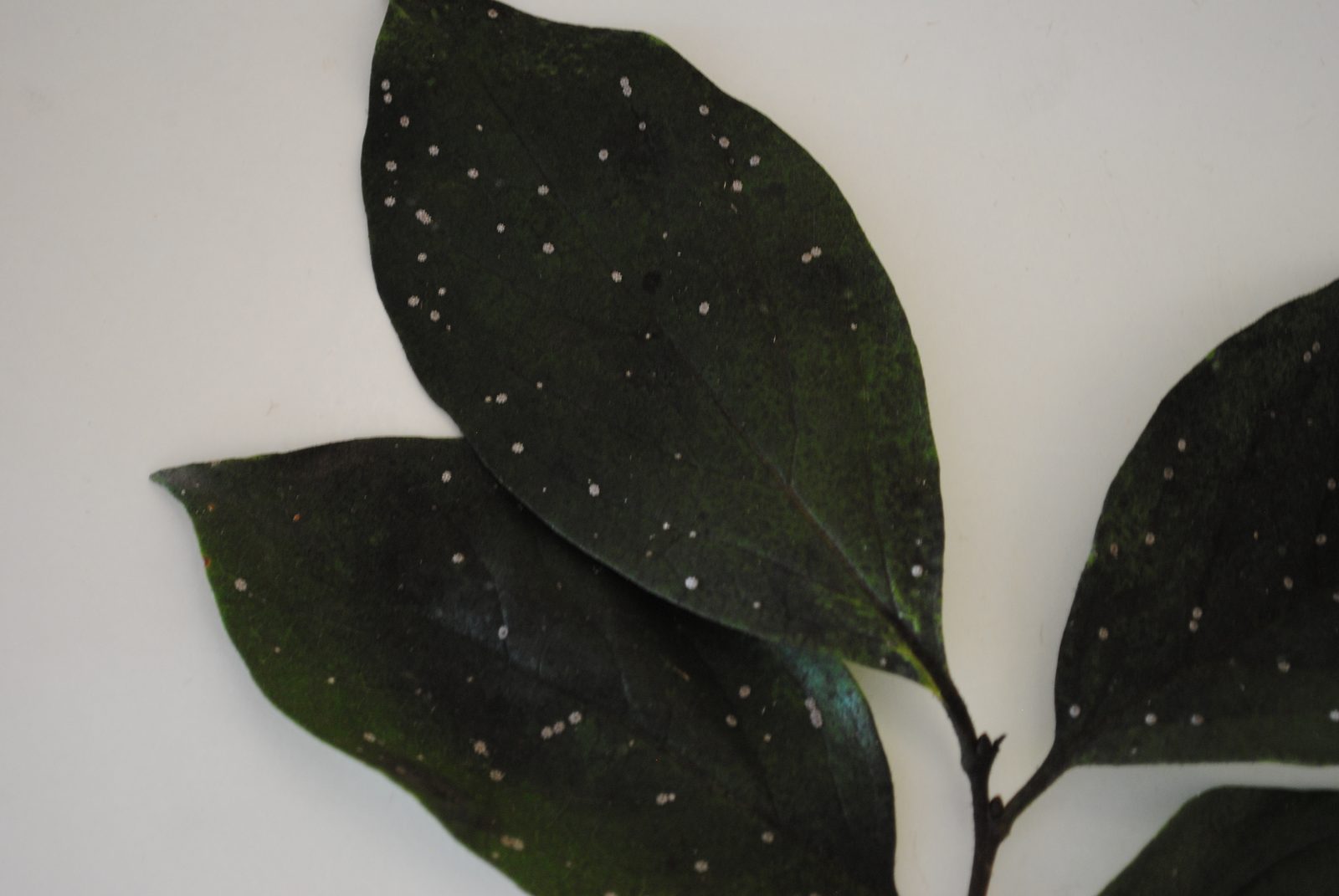
The fig wax scale, Ceroplastes rusci, on fig and persimmon
No synthetic active substance is authorised against it on fig or persimmon in Greece - only paraffin oils, maltodextrin and potassium salts of fatty acids, all of which act physically. That makes the crawler stage the whole of the treatment window, and coverage more important than dose.
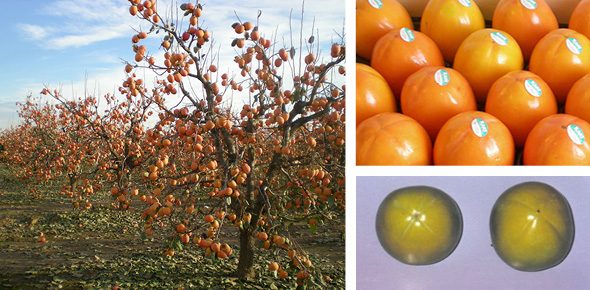
Removing astringency from Rojo Brillante persimmon
Rojo Brillante is harvested firm and intensely astringent. Astringency goes only when enough acetaldehyde accumulates to make the tannins insoluble. The mechanism, the CO2 and ethanol protocols as applied in Spain, and what goes wrong when the chamber leaks, the batch is uneven or the treatment runs too long.