
Phytophthora, or crown rot, in fruit trees
Savvas S. Pastopoulos, Agronomist MSc, Pastopoulos Agronomics, Giannitsa, Pella, Greece
Phytophthora, or crown rot, is a serious problem for agriculture worldwide, because beyond the crop it destroys the planting itself, which in tree fruit takes years to build again. Almost every fruit tree is affected, with peach, apple, cherry, apricot and walnut among the main hosts.
- Introduction
- What the pathogen actually is
- The species that matter here
- Biology and disease cycle
- The two forms of the disease in Greece
- Diagnosis and differential diagnosis
- Laboratory isolation
- Prevention: what is done before planting
- The first years after establishment
- What is done once an infection is confirmed
- References
1. Introduction
The disease known as crown rot or Phytophthora is caused by soilborne pathogens of the genus Phytophthora.
The symptoms produced are decline and death of the trees. Two pictures are described in the international literature: in the acute form the trees collapse and die shortly after the first warm weather of spring, with the leaves wilting, drying and staying attached to the tree, while chronic root infections are followed by reduced growth, early leaf fall and decline over several years. Young trees are more vulnerable, because they have a smaller root system and a smaller crown area [2] [5].
Symptoms may appear at any age and in a random pattern across the block; in the orchards of Pella, in the field observation on which this article draws, they usually appear on trees in the same row, because of the way the inoculum travels in the soil water. The mechanism is documented: the inoculum moves with the free water in the soil, and the oomycete is not active before the soil reaches or exceeds field capacity [7].
The way the disease spreads, and the appearance it produces, make early diagnosis difficult, so that treatment comes late and is therefore ineffective.
2. What the pathogen actually is
Although it looks like a fungus, and was classified among the fungi for decades, the genus Phytophthora belongs to the oomycetes (Oomycota), an entirely separate group of organisms. It is a genus of the kingdom Stramenopila (Chromista), which also contains the diatoms and the brown algae [8] [10].
The differences are not academic:
- Their cell wall is made of cellulose and not of chitin [8]. Analytical measurement in species of the order Peronosporales, to which Phytophthora belongs, gave roughly 32–35% cellulose and beta-1,3-glucans, with no detectable chitin [9].
- Their hyphae have no cross walls, and their life cycle is dominated by the diploid rather than the haploid phase [8].
- They produce motile zoospores, which swim in water [8].
This is exactly why most ordinary fungicides do not work. Biochemical targets such as chitin biosynthesis simply do not exist in the oomycetes [9], and Phytophthora species are not adequately controlled by most fungicides [6]. Specific compounds are needed, such as the phenylamides and the phosphonates [7]. A «general purpose» fungicide on a tree that is dying does essentially nothing.
Taxonomically, the genus Phytophthora is now placed in the kingdom Chromista, the phylum Oomycota, the class Oomycetes, the order Peronosporales and the family Peronosporaceae [10]. The older placement among the «Phycomycetes» and in the order Pythiales still appears in older handbooks, but it has been revised.
3. The species that matter here
The species involved in crown rot of fruit trees differ by crop group. In pome fruit (apple, pear) the main species is Phytophthora cactorum [16], and in the British literature the two forms described, crown rot on young rootstocks and collar rot on mature trees, that is, the same rot at two ages, are also attributed mainly to P. cactorum [14]. In stone fruit the species involved are P. cambivora, P. megasperma, P. drechsleri and P. syringae [16].
| Species | Thermal profile | Notes |
|---|---|---|
| Phytophthora syringae | Cool-loving | In the United Kingdom it is recorded as active at mean air temperatures of 0–16 °C, optimum 10–14 °C; it grows on fruit even at the 3–4 °C of cold storage [13] |
| Phytophthora cactorum | Warmer profile | In the United Kingdom active at 8–18 °C, optimum 12–18 °C [13]; the main species on pome fruit [14] [16] |
| Phytophthora megasperma | Not documented by the sources used here | Recorded on stone fruit together with P. cambivora and P. drechsleri [16] |
| Phytophthora citrophthora | Not documented by the sources used here | Greek isolates cause crown rot on peach rootstocks, with wide variation in virulence between isolates [19] |
| Phytophthora nicotianae | Warm-loving | EPPO synonyms: P. parasitica and P. nicotianae var. parasitica [10] |
The temperatures in the table are mean air temperatures from British records on apple [13] and not soil temperatures for Greek conditions; no published Greek soil-temperature threshold per species was found. For apple, one American source gives optimum growth of the pathogen at around 13.3 °C (56 °F) [15], while another gives increased activity in the range 13–21 °C (55–70 °F) [16].
A note on nomenclature: Phytophthora citricola also appears in the literature, a different species from P. citrophthora. Most of the isolates identified as P. citricola before 2009 most probably belong to Phytophthora plurivora, described as a new species by Jung and Burgess in 2009 [11].
References: 10 11 13 14 15 16 18 19
4. Biology and disease cycle
These are soil pathogens that survive adverse conditions in two kinds of resting spore: oospores, which are sexual, and chlamydospores, which are produced asexually. Both are round, thick-walled and built for long survival inside plant tissue or in the soil [8].
How infection happens, step by step
The oospores present in the soil germinate and release zoospores, which move in the soil moisture and infect the roots, the crown or the graft union [14]. Zoospores are fragile and sensitive to drying.
What decides the outcome is how long the wetness lasts. The University of California pest management guidelines for almond, apple, cherry, peach, apricot and plum repeat the same sentence: «periods of 24 hours or more of saturated soil favour Phytophthora infections» [1] [2] [3] [4] [5]. The corresponding guidelines for gardens and landscapes state that under favourable conditions 4 to 8 hours of saturation are enough [6]. More generally, Phytophthora species require free water for an extended period and are not active before the soil reaches or exceeds field capacity [7].
Zoospores do not move at random. They locate the host by taxis towards chemical, electrical and physical cues, and many components of root exudates have been shown to attract or repel them; the most attractive cue appears to be the mixture of compounds released by the main host, rather than single compounds [12].
After infection, the pathogen spreads within the bark and the outer layer of the wood, where reddish-brown zones form, often separated from healthy tissue by a dark line [6]. In advanced infections this zone may partly or completely girdle the trunk [15]. The process from infection to the appearance of symptoms is called incubation.
Then, in new rainy periods, fresh oospores are produced on the infected tissue and released into the soil, and the cycle closes [14].
References: 1 2 3 4 5 6 7 8 12 14 15
5. The two forms of the disease in Greece
In Greek orchards the disease shows up as two seasonal pictures. The distinction reflects field observation in the Pella area and does not correspond to any published Greek classification that could be checked; the thermal background of the two pictures, however, is documented in the international literature.
The spring form
It is fairly common and shows up in late winter or early spring. Young trees fail to break bud, while mature trees put out sparse, stunted, chlorotic growth that resembles the growth seen after waterlogging damage.
It is the more serious form: it appears without warning and over a large area, usually after a prolonged rainy period. It is attributed to the cool-loving species, first among them P. syringae, which in British records is active at mean air temperatures of 0–16 °C, optimum 10–14 °C [13]. The picture of abrupt collapse after the first warm weather of spring, with the leaves wilting and staying attached to the tree, is also described in the University of California guidelines for apple [2]. In Pennsylvania the greatest infection risk is placed around bloom (April) and at the beginning of dormancy (September) [15].
The summer form
In field observation it shows up in July and August. The main symptom is apoplexy: after partial chlorosis of the leaves, the trees dry abruptly. The affected trees stand singly within the orchard and usually appear along the same irrigation row. No published Greek measurement of the frequency or the timing of the summer form was found.
It is attributed to the relatively warm-loving species, such as P. cactorum, active at 8–18 °C, optimum 12–18 °C in British records [13], and P. citrophthora, whose Greek isolates cause crown rot on peach rootstocks with wide variation in virulence [19].

6. Diagnosis and differential diagnosis
Any death within an orchard is repeatedly put down to Phytophthora. Safe identification of the pathogen is done by laboratory isolation on a selective medium [34]. Other causes of death are:
- Drowning after flooding, root asphyxia
- Attack by wood-boring insects (such as Cossus spp.)
- The vascular wilts
- Crown gall, Agrobacterium tumefaciens
- Bacterial canker of stone fruit, Pseudomonas syringae
- The fungus Armillaria mellea
The main sign for recognition
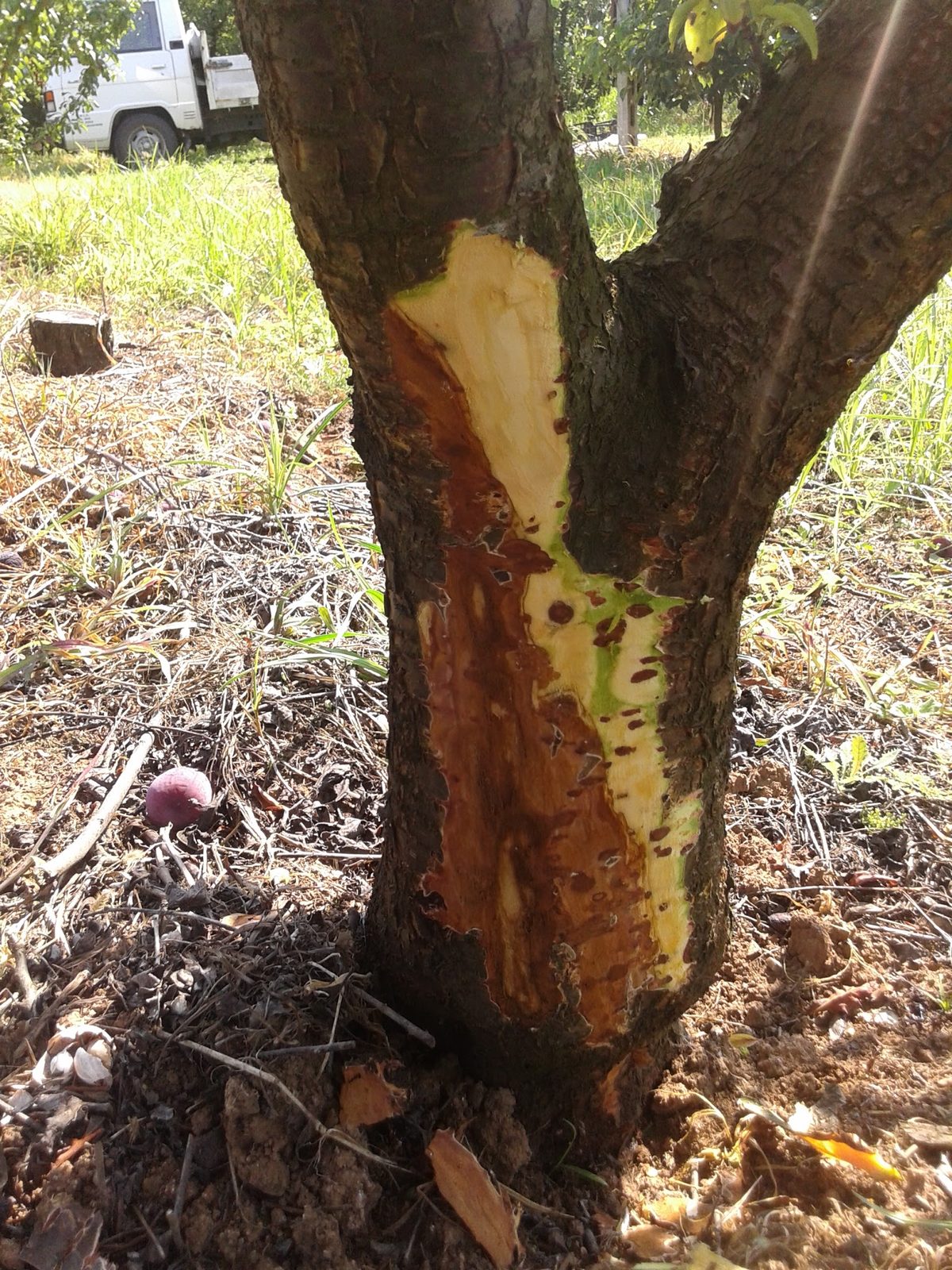
It is the lesion seen on the trunk, at soil level or a little below it. The international literature describes it as follows:
- Externally: a watery, «weeping» area on the trunk, with a characteristic orange-red to reddish-brown rot beneath the bark [14].
- Internally: reddish-brown, watery zones of dead tissue; in the inner bark and the outer layer of the wood these zones are often separated from healthy tissue by a dark line [6]. The cambium turns dull red to reddish-brown, with a clear margin against healthy tissue [7].
- The lesion may cover a small part of the trunk or lead to partial or complete girdling [15].
- Other accompanying symptoms: delayed bud break, leaf discolouration and twig dieback [15], scattered yellow leaves in mid-season and a thin canopy with low vigour [16].
The extension of the discolouration to as much as 60 cm above the soil, seen in Figure 8, is a field observation by the author on peach in the Pella area; no published measurement of the height of the lesion was found.
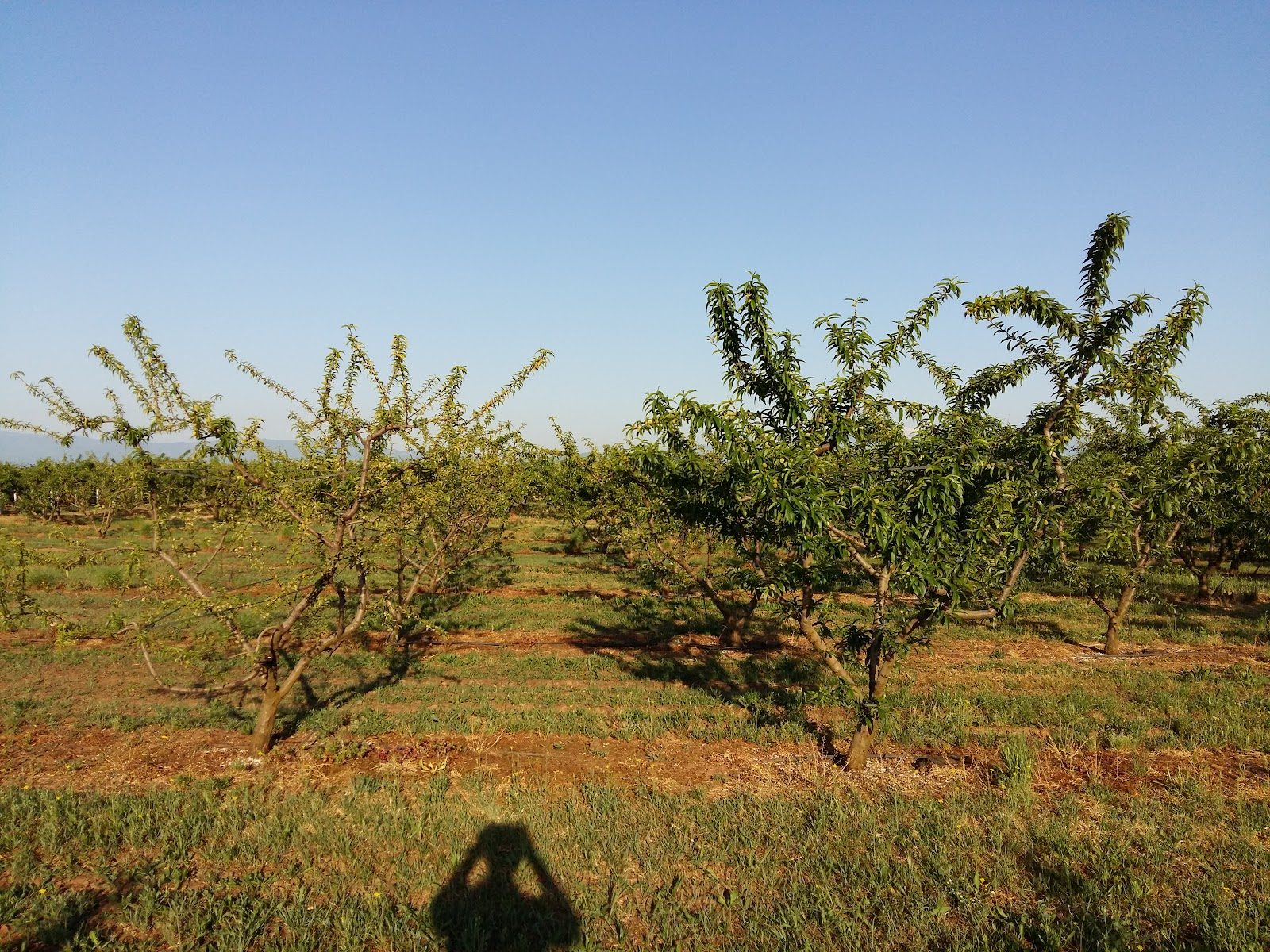
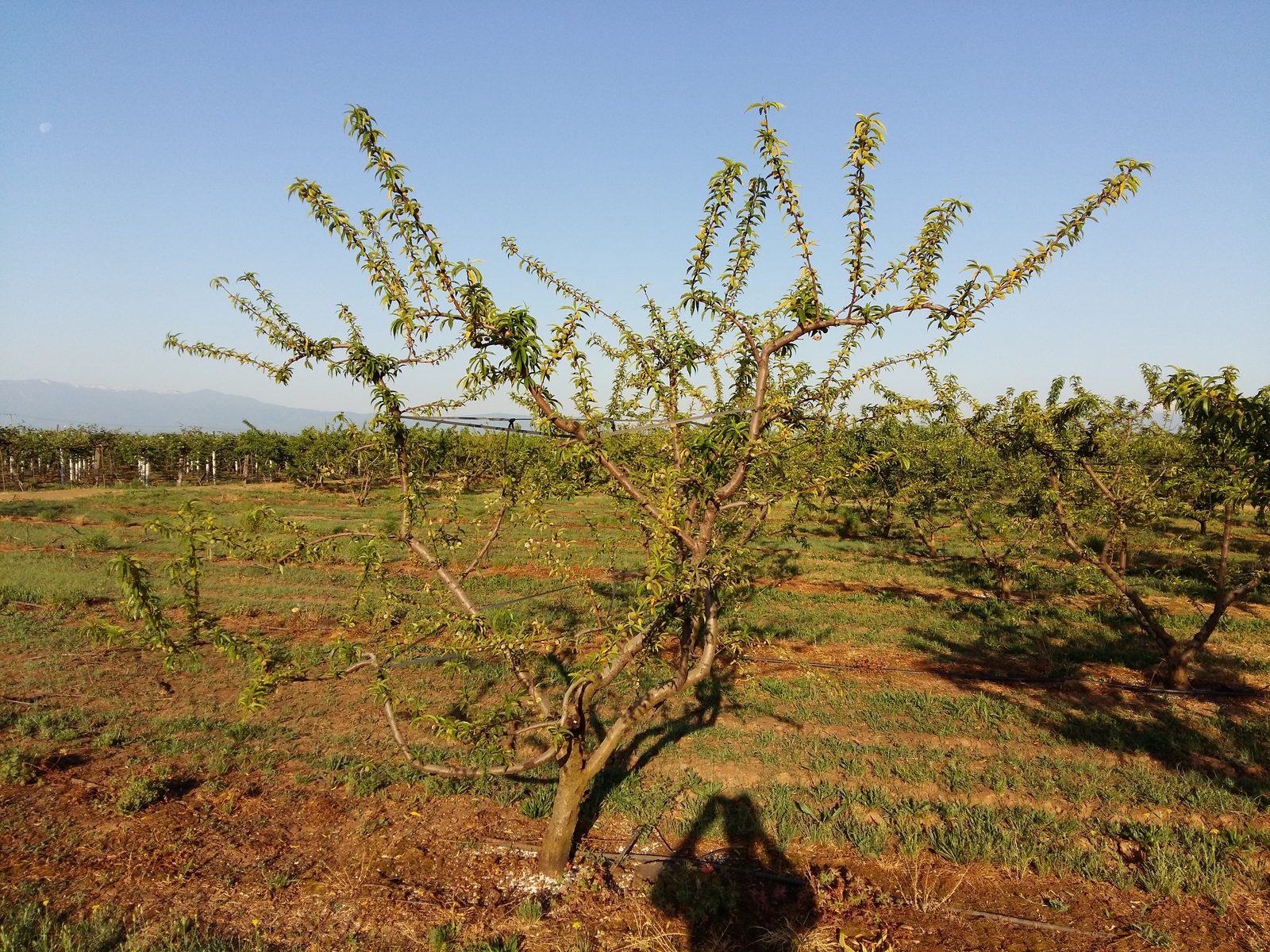
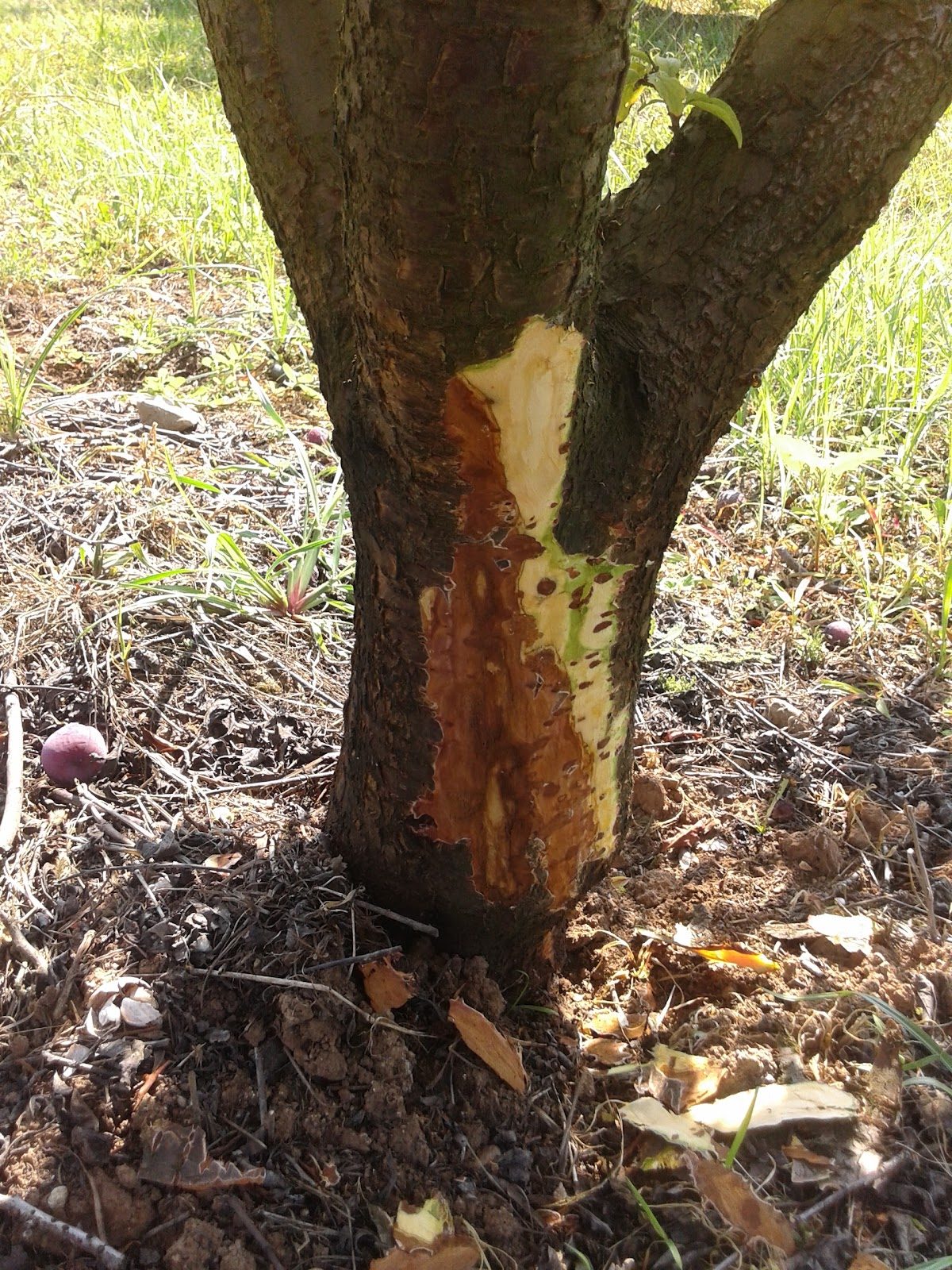
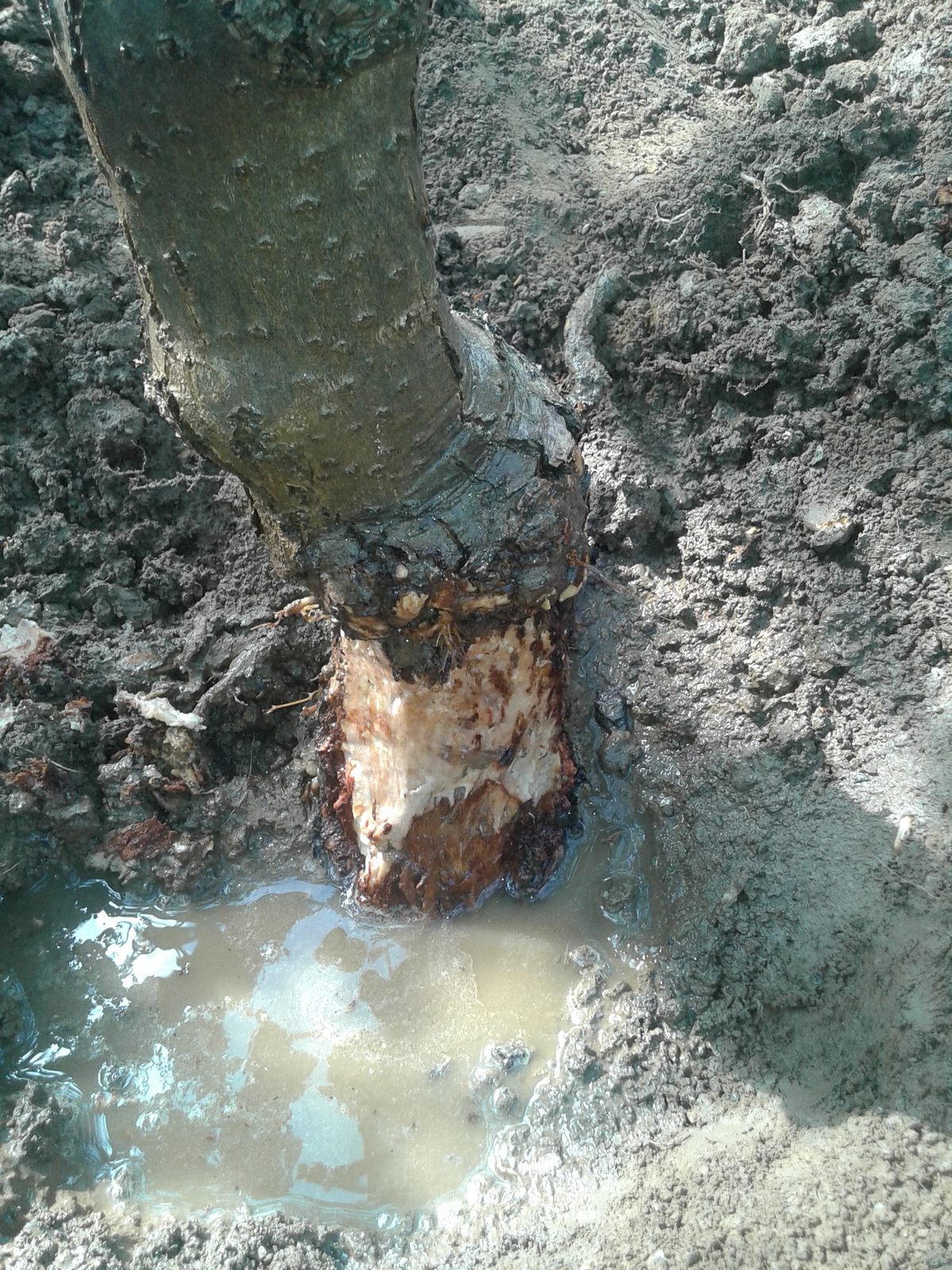


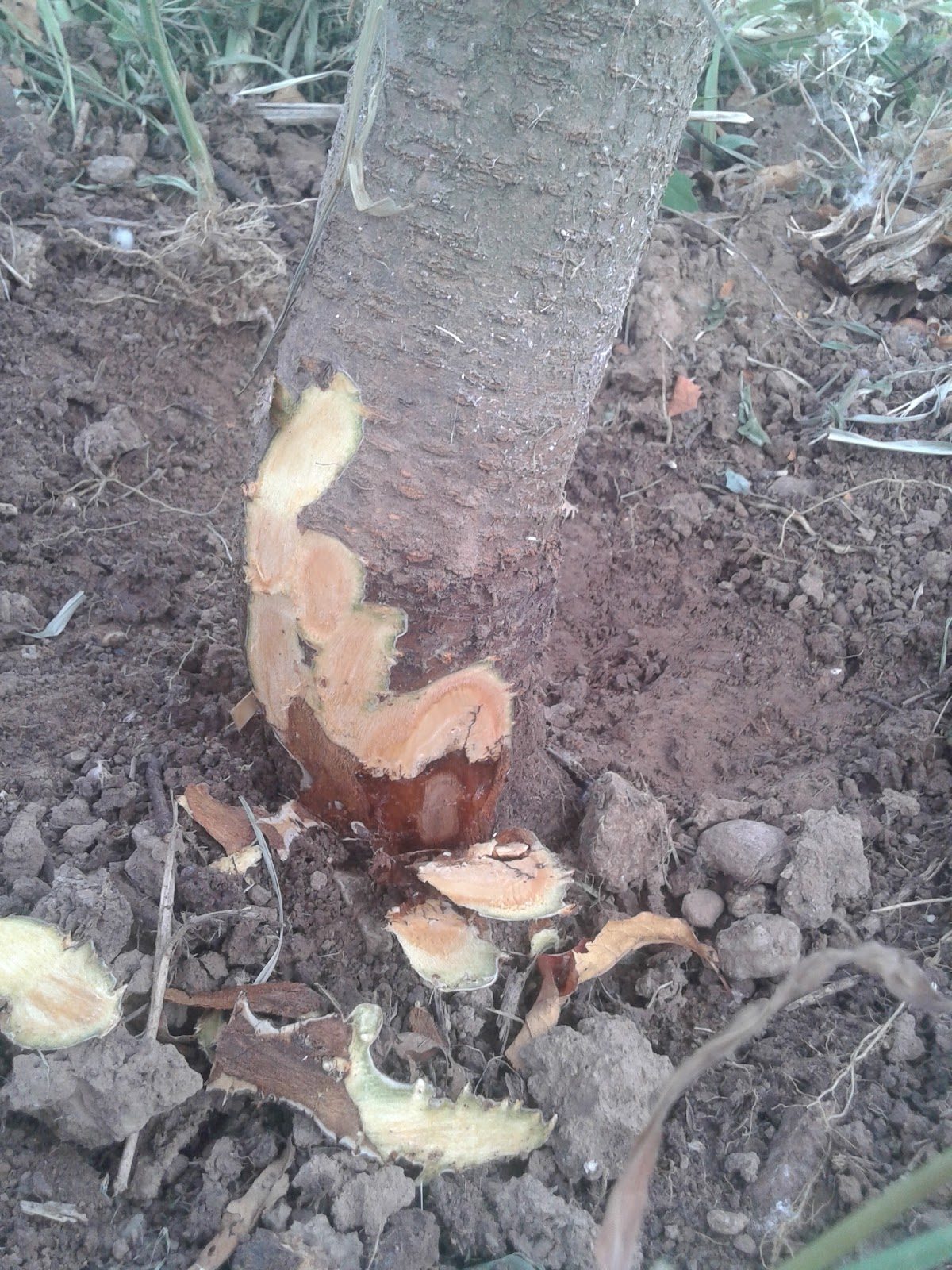
All the photographs above were taken by Savvas Pastopoulos.
When it shows that it is already too late
In the last stage before death, symptoms of small leaves, chlorosis, small fruit and stunted growth begin to appear. This picture corresponds to the chronic form described internationally, with reduced growth and early leaf fall over several years before the tree dies [5]. At this point the tree is usually heading towards apoplexy, that is, complete collapse.
7. Laboratory isolation
Isolation in the laboratory is a relatively simple procedure, provided a selective medium is used. Once the culture has grown, microscopic examination is needed to identify the species.
The procedure
- The standard selective medium is PARP: a corn meal agar base with pimaricin, ampicillin, rifampicin and PCNB. It is used for the selective isolation of Phytophthora and Pythium species [34].
- Isolation is made from a piece of infected tissue, from the trunk or the root, at the boundary between healthy and dead tissue, where the dark margin line is visible [6].
- Under the microscope the structures sought are the sporangia, together with the oospores and chlamydospores [8]; sporangium morphology is among the criteria used by laboratory identification keys [11].
The composition was corrected to the published PARP recipe [34].
8. Prevention: what is done before planting
Controlling diseases caused by the genus Phytophthora on trunks and roots is very difficult to impossible in most cases. The available fungicides do not kill the pathogen; they can only prevent it from establishing before it enters the plant [7]. Unfortunately, most attempts at treatment are made after the symptoms appear, that is, once the pathogen has already taken a large part of the trunk. Preventive measures are now the heart of the work, and the first of them is the choice of site: the University of California guidelines ask explicitly that sites with a history of root and crown rot be avoided, especially when susceptible rootstocks are planted [3].
8.1 Healthy planting material
A serious problem in Greece is contaminated nursery material. The lack of «virgin» ground and the continuous production of plants on the same blocks, without years of fallow, lead to infected plants. In field observation, blocks free of Phytophthora show the disease after new plantings, and the infected plants usually collapse in the first and second year. No published Greek measurement of the infection rate of nursery material was found; the international literature does document, however, that young trees are the most vulnerable, because they have a smaller root system and a smaller crown area [1] [5].
How the plants are chosen
- Plants are chosen that show no visible discolouration on the root system, and particularly on the trunk. The discolouration to look for is the reddish-brown, watery tissue with a dark margin against the healthy tissue [6] [15].
- The choice is made from the summer, in nurseries clean of weeds, with green and vigorous plants.
8.2 The choice of rootstock
The choice of rootstock is one of the strongest preventive tools, but it comes with a warning repeated word for word in the University of California guidelines for apricot, cherry, peach and plum:
| Group | Tolerance ranking | Origin of the ranking |
|---|---|---|
| Stone fruit, in general | Plum rootstocks are more resistant than peach rootstocks and than peach × almond hybrids | UC IPM guidelines for almond [1] |
| Plum, apricot | Marianna 2624: the most tolerant to Phytophthora; Marianna 2624 and Myrobalan 29C: «somewhat resistant» | UC IPM guidelines for almond and apricot [1] [4] |
| Cherry | Mazzard and Colt more resistant than Mahaleb | UC IPM guidelines for cherry [3] |
| Apple | MM 104 and MM 106 more susceptible than M 9 and M 26 | UC IPM guidelines for apple [2] |
| Apple | M.7 and MM.106 the most susceptible; M.9 the most resistant | Penn State Extension, Pennsylvania [15] |
| Peach, Greek data | Between GF677, PR204 and KID I no statistically significant difference in susceptibility was found against Greek isolates of P. citrophthora | Thomidis, Phytoparasitica 2002, Greece [19] |
| Pome fruit against stone fruit | Isolates from almond and citrus were not virulent at all on apple rootstocks, barely virulent on pear rootstocks and highly virulent on stone fruit rootstocks | Thomidis, Phytoparasitica 2001, Greece [18] |
The rankings in the first four rows come from California and the fifth from Pennsylvania; the last two are from experiments in Greece. None of them is a Greek ranking of commercial rootstocks against all Phytophthora species, and no such published ranking was found.
8.3 Planting
The documented rule is simple: trees are not planted deeper than they stood in the nursery, and the graft union is never covered with soil or mulch [6]. The same recommendation is also put as «the graft union should not be below the soil line» [16]. The older text gave a limit of 5–10 cm for the point where the roots branch; since no source was found for that particular figure, it was replaced by the documented rule.
Plants set deep are exposed in a wet year, or when the trunk is wetted by irrigation water, and 24 hours of saturated soil are enough for infection to be favoured [1]. Planting high keeps a large part of the trunk out of the soil moisture.
Once the plants are delivered, the roots are not cut back, unless it is strictly necessary; larger planting holes are preferable so that the roots fit.
In experiments at the Pomology Institute of Naoussa, on KID I peach seedlings, metalaxyl was the most effective compound against P. cactorum and P. citrophthora, followed by fosetyl-Al with limited effectiveness. The same work distinguishes two application methods: as a soil drench, neither dimethomorph nor cymoxanil inhibited growth, whereas at the 150 g/l application dimethomorph inhibited colonisation, as did metalaxyl and fosetyl-Al, only cymoxanil was ineffective in both methods [17].
Mind the distinction between the names. Metalaxyl is the racemic mixture and is approved in the European Union; the Hertfordshire database records an expiry of 30 September 2026 [22], but Commission Implementing Regulation (EU) 2026/1826 moved it to 30 June 2029 [36]. Metalaxyl-M is the active R-enantiomer and carries mefenoxam and R-metalaxyl as synonyms; it is approved in the European Union with an expiry of 31 May 2035 [21]. These are separate entries with separate dates. The Greek study used the racemic metalaxyl (the product Ridomil 2E) and not metalaxyl-M [17].
Root dipping is not an authorised use. The reference metalaxyl-M product in Greece (Ridomil Gold 465.2 SL, 46.52% metalaxyl-M) is authorised against downy mildews on vegetables, potato and grapevine, not on tree crops and not for crown rot [33]. Every application is checked in the database of the Greek Ministry of Rural Development and Food for the specific crop [30]. Combination products with mancozeb are not an option: mancozeb is no longer approved in the European Union and its approval has expired [23].
8.4 Berms
One of the most important preventive measures is planting on berms or ridges. The recommendation is repeated in the guidelines for apricot and cherry, so that water drains away from the crown [3] [4], and in the handbooks of the north-western United States, where planting on raised beds or mounds is described as the way to move excess water away from the crown and roots before the pathogen has a chance to become a problem [7].
8.5 Disinfecting planting holes, and biological products
Disinfecting the planting holes is not normally chosen. Where there is a history of infection in the block, priority goes to the cultural measures and to a product authorised for the specific crop [30].
Cheshunt is a complex of copper sulphate and ammonium carbonate, once used on seedlings against damping off; it is now described as obsolete and is not approved under Regulation (EC) 1107/2009 [27].
The database describes it as a 1:1 mixture of copper sulphate and ammonium carbonate [27]; the different ratio that circulates in the older literature is not confirmed by the source and is not reproduced here. In the European Union it is not lawful to prepare and use home-made preparations as plant protection products; for every application the authorised products of the Greek Ministry of Rural Development and Food apply [30].
Biological and supporting options
- Trichoderma harzianum and other Trichoderma species: available as microbial products. In the fungicide active substance index the entries for Trichoderma harzianum exist per strain (ITEM 908, T39, T78, TH315, TH35) and not for the species as a whole [35], and use requires a product authorised in Greece for the specific crop [30]. They are not a substitute for the preventive measures.
- Endomycorrhizae and symbiotic bacteria: the claims of higher yield, earlier maturity, lower water and fertiliser requirements and improved tolerance to Phytophthora, Armillaria and the vascular wilts were not documented by any source checked for the crops and conditions of this article, and were therefore removed. What is documented is that most fungicides do not adequately control Phytophthora species and that water management remains the critical measure [6].
8.6 Irrigation
Correct water management is the most important aspect of controlling root and crown rot [1]. In practice this means three things, all of them documented:
- Emitters are placed as far from the trunk as is practically feasible, without depriving the roots of water [6].
- The irrigation system is designed so that the trunk and the crown stay dry [3].
- Shorter and more frequent irrigations are preferred to few and prolonged ones, and irrigation is restricted in spring and autumn, when soil temperatures favour the disease [5].
In blocks with a history of Phytophthora, flood irrigation is unwise, since 24 hours of saturated soil are enough for infection to be favoured [4].
References: 1 2 3 4 5 6 7 15 16 17 18 19 20 21 22 23 27 30 33 35
9. The first years after establishment
On most blocks in Greece the basic rules of prevention are not followed. Even so, taking measures from the first year of the planting reduces the chance of serious infection.
Annual preventive work
- Checking and drying the contact point: the documented practice for suspect trees is removing the soil from the base of the trunk, scraping the surface of the discoloured area and exposing it so that it dries [15].
- Painting the trunk with Bordeaux paste: this is a traditional practice in Greek orchards, with no published measurement of effectiveness against crown rot that could be found. The rates that circulated in the older text were removed, as they came neither from a label nor from experimental work; the rate in force for any copper product is checked in the database of the Greek Ministry of Rural Development and Food [30].
The approval of copper compounds was entered in Part E of the Annex to Commission Implementing Regulation (EU) 540/2011 as row 10, approved from 1 January 2019 with an expiry of 31 December 2025, and with the restriction that only uses are allowed which result in a total application of at most 28 kg of copper per hectare over a period of 7 years, under Commission Implementing Regulation (EU) 2018/1981 [29].
Commission Implementing Regulation (EU) 2025/1489 of 24 July 2025 amended 540/2011, extending the approval periods of 19 active substances [28]. The Pesticide Properties Database of the University of Hertfordshire now records, for Bordeaux mixture and for copper sulphate, an EU approval expiry of 30 June 2029 [25] [26]. Copper sulphate is additionally a candidate for substitution, because it meets two of the «persistent – bioaccumulative – toxic» criteria [26].
Greek authorisation: in the copper oxide product NORDOX 75 WG (authorisation number 60765), approved by the Ministry, the Phytophthora indication concerns brown rot of citrus fruit, at a rate of 105 grams per 100 litres of spray solution, applied at the first autumn rains and up to two applications [31]. That product carries no crown rot indication on pome or stone fruit. The check is made each time in the authorisation database [30].
Preventive sprays
Preventive applications with phosphonates are the main chemical tool of prevention. Their mode of action is mixed: it includes direct toxicity to the pathogens, which lowers their populations, and stimulation of the plant's natural defence mechanisms [24]. Fosetyl-aluminium is systemic, is taken up by leaves and roots and inhibits spore germination [20]. Neither group kills the pathogen: both mefenoxam and fosetyl-Al can only prevent the organism from establishing before it enters the plant [7].
Both groups are approved in the European Union, but the expiry dates recorded in the Hertfordshire database have already been overtaken by extensions and must not be read as current. The database gives 31 October 2026 for fosetyl-aluminium [20] and 31 January 2026 for potassium phosphonates [24]; in fact Commission Implementing Regulation (EU) 2026/1826 of 28 July 2026 moved the fosetyl expiry to 31 January 2028 [36], and Commission Implementing Regulation (EU) 2025/2316 of 17 November 2025 moved the expiry of potassium phosphonates to 31 July 2029 [37].
The conclusion is not that the substances are at risk, but that a database entry is not the legal position in force: expiry dates are moved by implementing regulations, which the databases record with a delay. The picture given here is as recorded in September 2026 and is checked in the European Commission database of active substances before any programme is planned.
In Greece, the published label of the reference fosetyl-Al product (Aliette 80 WG) carries the indication «Phytophthora crown and root rot» on apple, pear and kiwifruit; on almond the indication is simply «Phytophthora», on a shared line with walnut and chestnut, without the crown and root qualifier [32]. Stone fruit, peach, cherry, plum, are not included on the label of that product; for any other fosetyl-Al product the check is made in the Ministry database [30]. Before any application, the current database of the Greek Ministry of Rural Development and Food must be checked for the specific crop [30].
References: 1 2 5 6 7 15 16 20 24 25 26 28 29 30 31 32
10. What is done once an infection is confirmed
In most cases the infection and the pathogen are recognised far too late. In its early stages the disease develops within the plant without symptoms, and that makes it impossible to find the infected trees in time.
The annual check
A sample check of the bark on a number of trunks across the block can be made once a year. In the British recommendation for apple, the check for trunk cankers is placed in late June, particularly when May of that year or of the previous year was wet [14]. That timing applies to British conditions and does not transfer unchanged to Greece. Covering the wounds that result is essential, otherwise the check itself creates entry points, and avoiding injury is named explicitly as a control measure [14].
The steps after confirmation
- Removing the diseased plants together with the root system and destroying them outside the orchard.
- Drying the focus. The documented intervention on a tree that can be saved is removing the soil from the base, scraping the discoloured surface and exposing it to the air so that it dries [15]. In British practice the lesion is cut out completely down to the wood, with the cut passing through the graft union, or a groove is cut down to the wood around the lesion [14].
- Chemical intervention only with a product authorised for the specific crop, and in the knowledge that the available fungicides do not kill the pathogen [7]; the check is made in the authorisation database [30].
- Changing the way of irrigating. Drip irrigation as far from the trunk as possible, without wetting the crown, is the documented direction [6], with a design that keeps trunk and crown dry [3] and with shorter, more frequent irrigations [5].
References: 1 3 5 6 7 14 15 30
11. References
The numbers in the text refer to the list below. Where only the abstract was used and not the full text, this is stated explicitly.
- [1] UC Statewide IPM Program. Phytophthora Root and Crown Rot, Almond. UC IPM Pest Management Guidelines. University of California. Source for the threshold «periods of 24 hours or more of saturated soil favour Phytophthora infections», for the statement that correct water management is the most important aspect of control, for the greater vulnerability of young trees because of their smaller root system and crown, and for the rootstock tolerance ranking in stone fruit (plum rootstocks more resistant than peach and than peach × almond hybrids; Marianna 2624 the most tolerant). Full text.
- [2] UC Statewide IPM Program. Phytophthora Root and Crown Rot, Apple. UC IPM Pest Management Guidelines. University of California. Source for the picture of the acute form on apple (trees collapse shortly after the first warm weather of spring and the leaves wilt, dry and stay attached), for the chronic form with reduced growth and early leaf fall, for the 24-hour saturated soil threshold, and for the susceptibility ranking of apple rootstocks (MM 104 and MM 106 more susceptible than M 9 and M 26). Full text.
- [3] UC Statewide IPM Program. Phytophthora Root and Crown Rot, Cherry. UC IPM Pest Management Guidelines. University of California. Source for the tolerance ranking on cherry (Mazzard and Colt more resistant than Mahaleb) together with the explicit reservation that «none are resistant to all pathogenic species», for the recommendation to avoid sites with a history of root and crown rot especially with susceptible rootstocks, for improving drainage with berms, and for designing the irrigation system so that trunk and crown stay dry. Full text.
- [4] UC Statewide IPM Program. Phytophthora Root and Crown Rot, Apricot. UC IPM Pest Management Guidelines. University of California. Source for the wording that the rootstocks Marianna 2624 and Myrobalan 29C are «somewhat resistant», for the explicit reservation that «none are resistant to all pathogenic species», for the 24-hour saturated soil threshold, and for planting on berms so that the crown drains. Full text.
- [5] UC Statewide IPM Program. Phytophthora Root and Crown Rot, Peach. UC IPM Pest Management Guidelines. University of California. Source for the statement that the success of rootstock choice depends on which Phytophthora species are present in the particular block and that «none are resistant to all pathogenic species», for the recommendation of shorter and more frequent irrigations and of restricting irrigation in spring and autumn, for the chronic picture of decline over several years, and for the 24-hour saturated soil threshold. Full text.
- [6] UC Statewide IPM Program. Phytophthora Root and Crown Rot, Home and Landscape. University of California. Source for the statement that under favourable conditions 4 to 8 hours of soil saturation are enough, for the rule that trees are not planted deeper than they stood in the nursery and that the graft union is never covered, for mound heights of up to about 60 cm (2 feet) with a gentle slope for trees, for placing emitters as far from the trunk as is practically feasible, for the reddish-brown zones separated from healthy tissue by a dark line, and for the statement that Phytophthora species are not adequately controlled by most fungicides. Full text.
- [7] Diagnosis and management of Phytophthora diseases. Pacific Northwest Plant Disease Management Handbook, Oregon State University and partner universities. Source for the statement that Phytophthora species require free water for an extended period and are not active before the soil reaches or exceeds field capacity, for the picture of the cambium turning dull red to reddish-brown with a clear margin against healthy tissue, for planting on raised beds or mounds, and for the critical finding that mefenoxam and fosetyl-Al do not kill the pathogen but only prevent it from establishing before it enters the plant. Full text.
- [8] Phytophthora basics. Forest Phytophthoras of the World, Oregon State University and USDA Forest Service. Source for the placement of the genus in the kingdom Stramenopila together with the diatoms and the brown algae, for the cell wall of cellulose rather than chitin, for the hyphae without cross walls and the dominance of the diploid phase, for the swimming zoospores, and for oospores (sexual) and chlamydospores (asexual) as thick-walled structures of long survival. Full text.
- [9] Mélida, H., Sandoval-Sierra, J. V., Diéguez-Uribeondo, J. and Bulone, V. (2013). Analyses of Extracellular Carbohydrates in Oomycetes Unveil the Existence of Three Different Cell Wall Types. Eukaryotic Cell 12(2). Source for the cell wall composition in the order Peronosporales, to which Phytophthora belongs: roughly 32–35% cellulose, beta-1,3-glucans and no detectable chitin, that is, for the fact that the «chitin biosynthesis» target does not exist in the oomycetes. Full text.
- [10] EPPO Global Database. Phytophthora nicotianae (PHYTNP). European and Mediterranean Plant Protection Organization. Source for the taxonomic hierarchy of the genus (kingdom Chromista, phylum Oomycota, class Oomycetes, order Peronosporales, family Peronosporaceae) and for the synonyms Phytophthora parasitica and P. nicotianae var. parasitica. Full text.
- [11] IDphy: Molecular and morphological identification of Phytophthora. Phytophthora plurivora. USDA APHIS and partner bodies. Source for the fact that the species was described by Jung and Burgess in 2009 (Persoonia 22:95–110) and for the finding that most isolates identified as Phytophthora citricola before 2009 most probably belong to P. plurivora. Full text of the identification sheet.
- [12] Kasteel, M., Ketelaar, T. and Govers, F. (2023). Fatal attraction: How Phytophthora zoospores find their host. Seminars in Cell & Developmental Biology 148–149:13–21. Source for the fact that zoospores show taxis towards chemical, electrical and physical cues, that many components of root exudates are attractive or repellent, and that the most attractive cue is the mixture of compounds released by the main host rather than single compounds. Abstract and introductory section.
- [13] NIAB. Disease cycle and epidemiology, Phytophthora. National Institute of Agricultural Botany, United Kingdom. Source for the thermal profiles of the two species under British conditions: P. syringae active at mean air temperatures of 0–16 °C with an optimum of 10–14 °C and growth on fruit at the 3–4 °C of cold storage, P. cactorum active at 8–18 °C with an optimum of 12–18 °C; also for the link between epidemics and rainfall in cold weather for P. syringae and in warm weather for P. cactorum. Full text.
- [14] NIAB. Crown rot and collar rot (Phytophthora cactorum, Phytophthora syringae). National Institute of Agricultural Botany, United Kingdom. Source for the attribution of both forms mainly to P. cactorum, for the cycle (oospores germinate and release zoospores which move in the soil moisture and infect roots, crown or graft union), for the watery «weeping» area with its characteristic orange-red to reddish-brown rot beneath the bark, for checking trunks in late June when May was wet, and for cutting the lesion out down to the wood with a cut passing through the graft union, as well as for avoiding injury. Full text.
- [15] Penn State Extension. Apple Crown and Collar Rot. Pennsylvania State University. Source for the susceptibility ranking of apple rootstocks in Pennsylvania (M.7 and MM.106 the most susceptible, M.9 the most resistant), for optimum growth of the pathogen at around 13.3 °C (56 °F), for the greatest risk around bloom in April and at the beginning of dormancy in September, for the symptoms (delayed bud break, leaf discolouration, twig dieback, partial or complete girdling of the trunk, watery reddish-brown dead tissue), and for the intervention of removing the soil from the base, scraping the discoloured surface and exposing it so that it dries. Full text.
- [16] Utah State University Extension. Phytophthora Crown and Collar Rot. Utah State University. Source for the distribution of the species by crop group (P. cactorum on apple and pear; P. cambivora, P. megasperma, P. drechsleri and P. syringae on stone fruit), for the range of increased activity of 13–21 °C (55–70 °F) in soils with high moisture, for cankers between the soil line and the crown roots and the scattered yellow leaves with a thin canopy, and for the rule that the graft union should not be below the soil line and that water is always directed away from the trunk. Full text.
- [17] Tsipouridis, K. and Thomidis, T. (2001). Effectiveness of metalaxyl, fosetyl-Al, dimethomorph, and cymoxanil against Phytophthora cactorum and P. citrophthora of peach tree. Phytopathologia Mediterranea 40:253–259. Greek study (Pomology Institute of Naoussa, KID I peach seedlings). Source for the effectiveness ranking: metalaxyl was the most effective, followed by fosetyl-Al with limited action, while as a soil drench neither dimethomorph nor cymoxanil inhibited growth and at the 150 g/l application dimethomorph inhibited colonisation whereas cymoxanil did not; also for the fact that the product tested was the racemic metalaxyl (Ridomil 2E) and not metalaxyl-M. The commercial product and the KID I rootstock are given in the full text and do not appear on the abstract page. Full text, open access.
- [18] Thomidis, T. (2001). Testing variability in pathogenicity of Phytophthora cactorum, P. citrophthora and P. syringae to apple, pear, peach, cherry and plum rootstocks. Phytoparasitica 29(1):47–49. Source for the finding that the isolates tested (P. cactorum and P. syringae from almond, P. citrophthora from citrus) were highly virulent on stone fruit rootstocks, barely virulent on pear rootstocks and not virulent at all on apple rootstocks, and for the reading of that finding as strict host specialisation. Abstract.
- [19] Thomidis, T. (2002). Variation in virulence of Greek isolates of Phytophthora citrophthora as measured by their ability to cause crown rot on three peach rootstocks. Phytoparasitica 30(2):191–193. Source for the finding that between the peach rootstocks GF677, PR204 and KID I no statistically significant difference in susceptibility was found against Greek isolates of P. citrophthora, and for the wide variation in virulence between isolates according to the host they came from. Abstract.
- [20] Pesticide Properties DataBase (PPDB). Fosetyl-aluminium. Agriculture and Environment Research Unit, University of Hertfordshire. Source for the EU status of fosetyl-aluminium: approved under Regulation (EC) 1107/2009 with an approval expiry of 31 October 2026; also for its systemic character, uptake through leaves and roots and inhibition of spore germination. Full text of the entry.
- [21] Pesticide Properties DataBase (PPDB). Metalaxyl-M. University of Hertfordshire. Source for the fact that mefenoxam and R-metalaxyl are synonyms of metalaxyl-M, for the EU status «approved» with an expiry of 31 May 2035, and for the classification among the acylalanine fungicides targeting RNA polymerase 1. Full text of the entry.
- [22] Pesticide Properties DataBase (PPDB). Metalaxyl. University of Hertfordshire. Source for the fact that racemic metalaxyl is a separate entry from metalaxyl-M, with EU status «approved» and an approval expiry of 30 September 2026. Full text of the entry.
- [23] Pesticide Properties DataBase (PPDB). Mancozeb. University of Hertfordshire. Source for the fact that mancozeb is not approved under Regulation (EC) 1107/2009 and its entry has expired, therefore combination products with mancozeb are not an option. Full text of the entry.
- [24] Pesticide Properties DataBase (PPDB). Potassium phosphonates. University of Hertfordshire. Source for the EU status of potassium phosphonates (approved, with a recorded expiry of 31 January 2026) and for their mixed mode of action, which includes direct toxicity to the pathogens and stimulation of the plant's natural defence mechanisms. Full text of the entry.
- [25] Pesticide Properties DataBase (PPDB). Bordeaux mixture. University of Hertfordshire. Source for the fact that Bordeaux mixture is a complex of copper sulphate and lime, approved under Regulation (EC) 1107/2009, with an EU approval expiry of 30 June 2029. Full text of the entry.
- [26] Pesticide Properties DataBase (PPDB). Copper sulphate. University of Hertfordshire. Source for the fact that copper sulphate is approved with an EU approval expiry of 30 June 2029 and that it is a candidate for substitution, meeting two of the «persistent – bioaccumulative – toxic» criteria. Full text of the entry.
- [27] Bio-Pesticides DataBase (BPDB). Cheshunt mixture. University of Hertfordshire. Source for the fact that Cheshunt is a complex of copper sulphate and ammonium carbonate once used on seedlings against damping off, that it is considered obsolete, and that it is not approved under Regulation (EC) 1107/2009 nor in the United Kingdom. Full text of the entry.
- [28] Commission Implementing Regulation (EU) 2025/1489 of 24 July 2025 amending Implementing Regulation (EU) No 540/2011. EUR-Lex. Source for the identity, the date (24 July 2025) and the subject of the regulation: extension of the approval periods of 19 active substances. The annex table did not render in the formats that were accessible, and for that reason the expiry date of the copper compounds is documented separately from entries [25] and [26]. Title and metadata; the annex did not render.
- [29] Commission Implementing Regulation (EU) 2018/1981 of 13 December 2018. EUR-Lex. Source for the entry of the copper compounds in Part E of the Annex to Implementing Regulation (EU) 540/2011 as row 10, with an approval date of 1 January 2019 and an initial expiry of 31 December 2025, and for the restriction «only uses resulting in a total application of at most 28 kg of copper per hectare over a period of 7 years may be authorised». Full text.
- [30] Greek Ministry of Rural Development and Food. Lists of Plant Protection Products and Biocides. Directorate for the Protection of Plant Production; the search is made in the database at 1click.minagric.gr. The official database in which it is checked, each time, which products are authorised, for which crop, at which rate and by which method of application; it is the source to which this article refers for every rate and every use. The authorisations it holds are valid in Greece only. Full text of the page; the database itself requires JavaScript.
- [31] Greek Ministry of Rural Development and Food. Authorisation of the product NORDOX 75 WG (copper oxide), authorisation number 60765. Source for the fact that in this particular copper product the Phytophthora indication concerns brown rot of citrus fruit, at a rate of 105 grams per 100 litres of spray solution, applied at the first autumn rains and up to two applications, and for the fact that it carries no crown rot indication on pome or stone fruit. Full text of the authorisation.
- [32] Bayer Hellas. Aliette 80 WG (fosetyl-Al 80%), published Greek label. Source, as the label of the holder of the Greek authorisation, for the fact that the «Phytophthora crown and root rot» indication exists on apple, pear and kiwifruit, that on almond, together with walnut and chestnut, the indication is simply «Phytophthora», and that stone fruit are not included in the table of authorised uses. The authorisation number is not given on the page and is not reproduced here. The rate in force and the spectrum are checked each time in the Ministry database [30]. Full text of the product page.
- [33] Syngenta Hellas. Ridomil Gold 465.2 SL (metalaxyl-M 46.52%), authorisation number 61165, published Greek label. Source, as the label of the holder of the Greek authorisation, for the fact that the reference metalaxyl-M product in the country is authorised against downy mildews on vegetables, potato and grapevine and does not include tree crops or any crown rot indication, therefore root dipping of fruit trees is not a covered use. Full text of the product page.
- [34] Bugwoodwiki. PARP selective medium. Center for Invasive Species and Ecosystem Health, University of Georgia. Source for the composition of the PARP selective medium (corn meal agar base with pimaricin, ampicillin, rifampicin and PCNB) and for its use in the selective isolation of Phytophthora and Pythium species. Full text.
- [35] Pesticide Properties DataBase (PPDB). Fungicide Index. University of Hertfordshire. Source for the fact that the entries for Trichoderma harzianum in the active substance database exist per strain (ITEM 908, T39, T78, TH315, TH35) and not for the species as a whole, that is, that approval status is judged strain by strain. Full text of the index.
- [36] Commission Implementing Regulation (EU) 2026/1826 of 28 July 2026 amending Implementing Regulation (EU) No 540/2011 as regards the extension of the approval periods of 21 active substances. Source solely for the two new expiry dates: fosetyl, 31 January 2028; metalaxyl, 30 June 2029. Annex, as also published in the Spanish official gazette (DOUE-L-2026-81203).
- [37] Commission Implementing Regulation (EU) 2025/2316 of 17 November 2025 amending Implementing Regulation (EU) No 540/2011 as regards the extension of the approval periods of 13 active substances. EUR-Lex. Source solely for the extension of the potassium phosphonates: Part B of the Annex, row 40, new expiry date 31 July 2029. Full text.
Related articles
Nutrient antagonisms and synergies, with a per-element tool
The arrow diagram in every fertiliser leaflet does not stand up scientifically. The antagonisms are real, but they act on two separate levels, in the soil and inside the plant, and the same element can be antagonistic on one and synergistic on the other. With a tool showing the documented relationships of each element.
Zeolite in agriculture: what is documented and what is not
It is a cation exchanger, it holds ammonium and potassium, not nitrate. The rates that work are tens of tonnes per hectare, not hundreds of kilos. And erionite is a Group 1 carcinogen.
Leonardite in agriculture: properties, rates and what the law says
Leonardite is oxidised lignite with up to 85% humic acids, but pH below 3, up to 6% sulphur and almost no phosphorus. What the analyses and meta-analyses show, where it delivers and where it does not, and what Regulation (EU) 2019/1009 and the organic farming rules require.