
Sweet cherry growing: crop protection and fertilisation
The sweet cherry is a particular species, with several characteristics that set it apart from the other members of the stone fruit family. This manual sets out the basic fertilisation and crop protection practices for sweet cherry according to the phenological stage.
Table 1. Recommended sprays for a healthy cherry orchard
In its original form, the programme was written as a calendar of months. A calendar of months does not transfer from holding to holding: the same cultivar flowers on a different date at Giannitsa, at Agia and in Rhodope, and the difference between the northern uplands and central Greece easily reaches two to three weeks.
For that reason every intervention here is tied to a phenological stage. Where a month is mentioned, it is mentioned as an indication and only for Northern Greece, for the cherry orchards of Pella and Imathia. For Thessaly and Central Greece the stages arrive earlier, for the upland zones later.
The timing in any given year is given by the agricultural warning bulletins of the competent Regional Plant Protection Centre, which are issued for sweet cherry in particular [2]. Every formulation mentioned here is checked before use in the approvals database of the Greek Ministry of Rural Development and Food, for the crop, the rate and the pre-harvest interval [1]. Those approvals are valid in Greece only.
Dormancy to bud swell, indicatively January and February in Northern Greece
- Sprays with copper formulations for the protection of the trees against bacterial canker of stone fruits and against fungal diseases such as shot hole, brown rot and cherry leaf spot. In the guidance of the Pacific Northwest of the United States the second winter copper spray against bacterial canker is placed “in early January”, after an autumn one before the rains [11]. The choice of rate and of combinations is made within the limits of the label [1].
- Sprays with calcium polysulphide (lime sulphur) or with winter oil on holdings where cottony scale or San José scale (Quadraspidiotus perniciosus) has been recorded. The UC IPM recommendation for sweet cherry is an intervention at the delayed dormant stage and only where a population or sooty mould was present the previous year, with the paraffinic oils controlling the scale in dormancy [14]. The same text gives three to four generations a year in California; the number of generations in Northern Greece is smaller, and the timing of the summer interventions follows the Greek bulletins and not the American calendar [2].
- A spray with zinc sulphate, where a deficiency has been established by soil or leaf analysis or where the soil pH is high. Deficiencies of zinc, iron, copper, manganese and boron are common in soils with a pH above 7.7, and zinc is fixed so strongly in the soil that it is corrected mainly through the leaves [21]. The sweet cherry is described explicitly as a species particularly sensitive to zinc deficiency [20].
- For earlier flowering and improved fruit set, combinations of specialised fertilisers are on the market; they are not named here, in order to avoid advertising.
- Towards the end of dormancy the notching of young trees is also carried out. The notch is made immediately above the bud that is intended to break, and reaches as far as the wood. Caution: not many notches on the same young tree. The combined application of growth regulators for the emergence of lateral branches is made only with a formulation approved for sweet cherry and at the dilution given on the label [1]; the mixing ratio with paint that circulated in the original form of the text does not correspond to any published approval and has been removed.
The original form of the article gave “zinc sulphate at 50 kg per hectare” without a source. The only figure that stands up in a published recommendation is expressed as metallic zinc: Washington State University gives for tree fruit approximately 16 kg of metallic zinc per hectare in a dormant spray, in the source, 14 pounds of metallic zinc per acre [20].
How much formulation this corresponds to depends on the form of the salt, the monohydrate of zinc sulphate has roughly half the content of the heptahydrate, and on the rate approved in Greece, which is checked each time in the database of the Greek Ministry of Rural Development and Food, valid in Greece only [1]. The timing: as late as possible within dormancy, but before the bud scales open, because the spray is then more effective and causes less damage [21].
Bud swell to white bud, indicatively March
- The first swelling of the buds on the early-flowering cultivars marks the start of the period. From bud swell until green tip the last spray with copper oxide is placed. In Northern Greece this stage usually appears in early March, but the date varies with the district and with the year and is checked in the agricultural warning bulletins [2].
- From green tip until white bud a single application with summer oil, an aphicide and a product against scale insects is placed, always in accordance with the approvals [1] and with the history of the holding. Not close to flowering, so that the flight of the bees is not affected.
- The first fungicide against blossom blight is placed in the same period. Caution with the combination with paraffinic oils: the crop protection guide of Washington State University states explicitly that “captan should not be applied with oil; captan applied before or after oil, within two weeks, may cause damage to sensitive cultivars” [8]. The interval of 14 days is the one that is documented; the value of 20 days that circulated in the original form of the text was not found in any source and has been corrected. In every case the label of the formulation prevails [1].
- In rainy periods the combination of a contact fungicide with a systemic one is the usual practice. At the start of flowering a systemic fungicide against blossom blight is required. Control is carried out with formulations approved for sweet cherry in Greece [1]; active substances that appear in the international listings for blossom blight of sweet cherry are, indicatively, cyprodinil, tebuconazole and the combination of azoxystrobin with difenoconazole [10].
- In parallel, concentrated amino acids are applied, or amino acids with boron, zinc, B vitamins and glycine betaine, for the reinforcement and the proper development of the flowers. If low temperatures prevail, a foliar application of phosphorus is made. This practice is field experience: no published measurement for sweet cherry under Greek conditions was found. What is documented is that the autumn application of boron is more effective than the spring one in raising the boron content of the flowers and in improving fruit set [18].
The UC IPM guidance for sweet cherry names the pathogens Monilinia fructicola and Monilinia laxa and places the start of the applications at the “popcorn” stage of flowering, with repetition every 14 days until flowering is complete. Under heavy rainfall the interval comes down to 10 days [10].
Infection is favoured by “rain or dew during bloom and moderate temperatures”, that is 14.4 to 25 °C, in the source, 58 to 77 degrees Fahrenheit [10]. These are Californian measurements. The temperature window is the physiology of the fungus and does transfer; the calendar does not transfer, because flowering of the sweet cherry in Northern Greece does not coincide with flowering in the San Joaquin Valley.
Full bloom to calyx fall, indicatively April
- At full bloom the spray against blossom blight is repeated, within the interval of 10 to 14 days that the rainfall pressure determines [10]. The spray is made preferably during the night hours, in combination with products that support fruit set, such as cold-extracted seaweed or glycine betaine.
- At petal fall a combined spray of a systemic fungicide together with a foliar product for the reduction of fruit drop is placed. This stage is at the same time the first of the three interventions recommended against cherry leaf spot: petal fall, calyx fall, and two weeks later [12].
- At calyx fall the application with an aphicide is placed, for the control of the black cherry aphid.
- From petal fall until the pea stage the calcium applications are placed. The rates are given separately below, because the published values differ from those that circulated in the original form of the text.
- Depending on the crop load that develops, the orchard is supported with foliar fertilisation throughout the development of the fruit. Caution with potassium: an excessive soil concentration of potassium competes with the uptake of calcium and magnesium and leads to a nutritional imbalance; Washington State University recommends that soil potassium be kept between 150 and 300 mg per kilogram of soil for precisely that reason [17]. Since the firmness of the cherry rests on calcium [26], this imbalance works indirectly against post-harvest behaviour. A direct measurement of “excessive potassium leading to poorer storage” was not found, and the original categorical wording has been rewritten as an antagonism between nutrients.
In its original form, the text stated that “captan is not permitted, because it reduces the fertility of the pollen”. The claim is overstated and has been rewritten.
The plant disease handbook of the Pacific Northwest of the United States writes: “Captan and ferbam reduced the germination of cherry pollen, while sulphur did not.” In the same paragraph, however: “no significant reductions in fruit set and development have been reported, even when the most inhibitory fungicides were used at full bloom” [9].
That is: the inhibition exists in the laboratory, the reduction in fruit set is not documented in the field. These are American studies, without any Greek repetition. The reason the combination of captan with paraffinic oils is indeed avoided is phytotoxicity on the sensitive cultivars and not the pollen [8].
The original form gave “calcium nitrate at 3 kg per tonne, calcium chloride at 1.5 to 2 kg per tonne of spray solution” without a source. The published values, with their country of origin, are:
- Oregon, USA: “six calcium applications starting at pit hardening”, with a solution of 0.1 to 0.15% calcium [22].
- Washington, USA: “0.5 to 1.0% CaCl₂ has been shown to be effective in reducing cracking, with correct application and timing” [23].
- Chile, cultivar Lapins on Colt rootstock: CaCl₂ at 0.8%, at three timings, 26, 39 and 62 days from full bloom. The first application gave 7% greater firmness at harvest, while the applications at 39 and 62 days reduced cracking on the thinned trees [26].
- Piedmont, Italy, cultivar Regina: four applications of calcium and potassium formulations from bud break to fruit set, with less cracking, lower weight loss and greater firmness after 14 days at 2 °C [27].
These figures are solution concentrations, not kilograms per hectare, and they come from the United States, Chile and Italy. No published Greek measurement was found. The range of 0.1 to 1.0% covers a tenfold difference, which is explained by the salt, by the number of applications and by the risk of scorching; the approved rate of the particular formulation in Greece is checked in the database of the Greek Ministry of Rural Development and Food, valid in Greece only [1].
Colour change to harvest, indicatively May
- The cultivars, depending on their ripening time, are sprayed with an aphicide and with a fungicide against brown rot before harvest. The intervals of 7 and 15 days that the original form gave are not a rule of the crop but a property of each formulation: the pre-harvest interval is set on the label and is checked in the approvals database [1]. Observing it is what keeps the residues below the limits.
- CAUTION with the spotted wing drosophila (Drosophila suzukii), the new pest of the sweet cherry in the late districts. When the risk begins had been written incorrectly: UC IPM states that “cherry fruit becomes susceptible to attack as soon as it begins to change colour, that is from green to yellow” [13]. Susceptibility therefore begins earlier than the red stage. The correct timing of the first intervention is, according to the same source, “when monitoring shows high populations in the traps and the fruit of the cultivar becomes susceptible, that is the colour begins to change from green to straw” [13]. Monitoring is carried out with adult traps and with a sample of 100 to 200 fruits for the examination of larvae [13].
- The European cherry fruit fly (Rhagoletis cerasi) is an equally serious pest, and here there is a Greek calibration. It is given separately below.
- Sprays with calcium increase the post-harvest resistance of the fruit [26] [27]. For silicon and potassium silicate formulations no work on sweet cherry was found that documents a reduction of cracking or an improvement of post-harvest behaviour, and their mention has been left as an open question and not as a recommendation. For glycine betaine, the concentration of “at least 70%” that the original form gave is a commercial specification without published documentation and has been removed; the Portuguese trial used glycine betaine at 1 mL per litre [24].
- After harvest a contact fungicide is applied against the summer infections by cherry leaf spot, anthracnose and shot hole, post-harvest applications “are useful in wet years” [12], together with an insecticide against the bark beetle and the peach twig borer. Holdings with a history of spider mite are sprayed with an acaricide. Spider mite can cause enormous damage on the holding. In the rotation of the fungicides the rule of at most two applications per year from the same FRAC group applies [12].
For Rhagoletis cerasi there is published work in commercial cherry orchards at Agia, Larissa, that is under Greek conditions and not in a transferred model [15]:
- The insect is univoltine, one generation a year.
- The lower development threshold is 5 °C, with an upper accumulation limit of 32 °C.
- The traps are hung at the accumulation of 400 degree days from 1 February. At Agia, in 2015, this occurred on 26 April.
- The intervention threshold was 10% of the traps with adults.
- Guiding the sprays from this system reduced the applications by 75%, with zero fruit infestation.
This is the kind of figure that replaces the month: it does not need to be “May”, it needs to be 400 degree days and 10% of the traps. The same calculation is made with the data of each holding.
After harvest, indicatively June
- After harvest, the tree begins to build up the carbohydrates and the nutrients that it consumed up to the ripening of the fruit. These are stored mainly in the roots and in the older shoots, while the buds are supplied for the following year. The principle is documented: “in the autumn, foliar application of nitrogen helps build reserves for the next season; soil application of nitrogen in the autumn is not recommended” [17].
- The foliar spray with urea of low biuret content is the practice that is best documented. Washington State University sets out two things: that the urea must have less than 0.25% biuret [19] [18], and that the rate reaches 22 kg of nitrogen per hectare in a single foliar application, in the source, “up to 20 pounds of nitrogen per acre”, with an effectiveness that “ranges from 30 to 80% depending on the weather conditions” [18]. The value of “4 to 6 kg of urea per tonne of spray solution” in the original form was not found in any source and has been replaced by the rate per unit area.
- The timing of the American recommendation does not transfer unchanged. The source writes “after harvest, between October and November, but before natural leaf fall, when the leaves begin to yellow” [18], an apple calendar for Washington State. In Greece the sweet cherry is harvested in May or June, so a whole summer of active foliage intervenes. What does transfer is the principle: foliar nitrogen while the foliage is still active and before natural leaf fall.
- In years with an excessive crop load the nitrogen fertilisation is reinforced. The “100 to 150 kg per hectare” of the original form was not found in any source and has been removed. The benchmark that does exist is Greek: the annual removal of nitrogen was measured at 85.6 kg per hectare in cherry orchards at Giannitsa [16]. Fertilisation is decided against that, together with leaf analysis.
- The use of base fertilisers after harvest is not advisable, because the phosphorus and the potassium are fixed and are not assimilable the following year. The mechanism is analysed in the section on phosphorus.
- Irrigation is essential throughout the summer. Insufficient irrigation favours heat stress, leaf drop and attacks by bark beetles and wood-boring insects. Double cherries, however, are not due to a lack of water, the box that follows analyses this.
- On cultivars susceptible to bacterial canker, copper formulations with penetrating action are used (chelated, gluconate, protein-complexed coppers and others). Caution: inorganic copper products are avoided in the summer, on active foliage and at high temperatures (hydroxide, Bordeaux mixture and others), because of the risk of phytotoxicity. This is not a regulatory prohibition: the permitted application stage is set by the label and by the approvals of the Greek Ministry of Rural Development and Food, valid in Greece only [1].
- On holdings with vigorous and undesirable growth, potassium sulphate is applied to the soil. The growth inhibiting formulations are covered in the section on young trees, approval on sweet cherry is the critical point.
The original form of the article attributed the formation of double fruits, called nychaki, the little claw, in Greek, to insufficient irrigation. The published research says the opposite.
Washington State University attributes the phenomenon to “high temperature during the previous season, that is while the flower buds are developing”, with a critical window for the cultivar Bing “from late July to early September”. The same work writes explicitly that the phenomenon “appears to be unrelated to the water stress of the tree”, and that the microsprinklers under the trees were ineffective, they raised the temperature slightly by raising the humidity [29].
What did work, in American commercial trials: evaporative cooling (a reduction in doubles of 50%), 20% shading (a reduction of 37%) and kaolin (a reduction of 45 to 52%) [29]. The conclusion for the Greek holding is not “more water”, it is less temperature at the bud in August. Irrigation remains essential for all the other reasons.
The summer period and bud differentiation, indicatively July to September
- In this period the sweet cherry suffers from the high temperatures. Its protection is important for the avoidance of sunburn on the scaffold branches and of bud desiccation. The spray with kaolin is the intervention that is best documented, and documented on sweet cherry itself: in the trials of Washington State University kaolin reduced double cherries by 45 to 52%, with a corresponding fall in the temperature of the tissue [29].
- The mechanism and the rates come from the apple: the sprayable sunburn protectants “reduce sunburn symptoms by up to 50%”, kaolin is applied at 28 to 56 kg per hectare, in the source, 25 to 50 pounds per acre, and at least three applications are recommended [30]. Sunburn necrosis appears when the temperature of the fruit surface exceeds 51.7 °C for as little as ten minutes, while browning begins at 46.1 to 48.9 °C [30]. These values are those of the apple; a corresponding threshold for the skin of the sweet cherry was not found.
- In this period the leaves are attacked by shot hole, cherry leaf spot and anthracnose and fall prematurely. Cherry leaf spot (Blumeriella jaapii) overwinters “in the fallen infected leaves” and “once unfolded, the leaves remain susceptible throughout the growing season, with susceptibility decreasing with age” [12].
- The original form of the text proposed “one application with dodine, dithianon or captan on a monthly basis”. The monthly frequency is not documented and conflicts with the resistance management rule, which allows at most two applications per year from the same FRAC group [12]. The active substances approved against cherry leaf spot include, in the Pacific Northwest handbook, captan and dodine [12]; both are approved substances in the European Union [5] [4], but approval for sweet cherry in Greece is checked separately in the database of the Greek Ministry of Rural Development and Food [1].
Leaf fall and dormancy, indicatively October to December
- The trees enter the process of dormancy, while with the first frosts leaf fall begins. The copper sprays are placed at leaf fall: the recommendation of the Pacific Northwest is an application “in October before the autumn rains, with a second application in early January”, with the note that it is worth “adjusting the timing so that it coincides with leaf fall” [11]. The phenological stage is leaf fall, not October, on upland Greek holdings leaf fall comes earlier than on the lowland ones.
- On holdings with a history of attacks by phytophthora, a soil drench and painting of the trunk are applied. The ratio “copper sulphate and ammonium bicarbonate at 1 to 6” was not found in any published source and has been removed. It is a traditional recipe without approval as a plant protection product; phytophthora is controlled with approved formulations [1] and, above all, with drainage. Painting of the trunk with a lime mixture remains an established Greek practice for protection against winter sunburn.
What follows comes from the Pacific Northwest of the United States, that is from a region with a wet winter, heavy pressure from the pathogen and decades of continuous copper use. It does not transfer unchanged. In Greece winter copper on stone fruit is an established and often irreplaceable practice.
What the source writes about the pathogens Pseudomonas syringae pv. syringae and P. amygdali pv. morsprunorum: “Copper-resistant bacteria have been detected in all the sweet cherry growing regions of the Pacific Northwest”, trees that received copper have been observed “with more disease than the unsprayed ones”, and “heavy use of copper products is not recommended, as soil concentrations can reach toxic levels after several decades of use” [11].
Instead of a prohibition, a ranking: winter copper is worth more on holdings with a history of cankers, on susceptible rootstocks such as CAB-6P, which is described as “more sensitive to bacterial canker than Mazzard” [28], on young plantings and after a year with frost damage or hail. It is worth less as an annual routine on the same holding, and the accumulation of copper in the soil is a real cost. No published Greek measurement of copper resistance on sweet cherry was found.
Fruit cracking, what the research shows
Rain-induced cracking close to harvest is the greatest economic problem of the sweet cherry worldwide. Since this article recommends sprays with calcium and mentions gibberellic acid, it is worth stating exactly what the international literature shows, because the results are not uniform, and on one point they are the opposite of what the original form of the text stated.
The publication of Oregon State University names two causes: “cracking has two causes, an external one, the free water on the surface of the fruit, and the internal water relations of the plant, independently of the water on the surface”. And it adds that heavy rainfall events of more than 38 millimetres of rain, in the source, “more than 1.5 inches” “particularly when the soils are close to field capacity, lead to an increase in cracking” [22]. This is an Oregon measurement; no corresponding Greek rainfall threshold was found.
Calcium contributes to the strength of the cell walls and of the membranes. A calcium chloride solution “can increase the cohesion of the cuticle and raise the concentration of solutes in the rain water, thereby reducing the ability of the water to cross the cuticle” [22]. In Chile, an application of CaCl₂ at 0.8% at 26 days from full bloom gave 7% greater firmness at harvest [26].
Pre-harvest sprays, however, sometimes deliver and sometimes do not. The main reason has been measured: the rain washes the calcium off the surface of the fruit. In a trial with the cultivars Selah, Skeena and Rainier, the washout increased linearly with the rain and reached up to 72% at 10 millimetres of rain, while at 2.5 and 5 millimetres it generally stayed below 50% [25].
That is, the very event that causes the cracking also removes the protection. In the field, repetition of the applications after every serious rainfall, and not a single “cover” that is taken for granted. Washington State University adds the mechanical solution as well: “losses from cracking can be reduced by drying the cherries with the fans of the sprayers or with a helicopter shortly after the rain” [23].
The original form of the article stated that sprays with gibberellic acid at colour change “have shown a reduction in the percentage of cracking”. The sources that were opened say the opposite for exactly that timing.
Oregon State University: “gibberellic acid (GA₃) can cause increased cracking if it is applied at the straw stage under conditions of high rainfall” [22]. The explanation it gives is that the reduction of transpiration is temporary and raises the internal water content of the fruit.
In a two-year trial at Carrazedo de Montenegro in Portugal, with the cultivar Skeena on Gisela 6 rootstock, the sprays “did not significantly affect the cracking index in either year”, but GA₃ at 10 mg per litre increased the cracking index in both years [24]. In the same trial CaCl₂ was applied at 5 grams per kilogram and glycine betaine at 1 mL per litre [24].
Gibberellic acid is therefore not a measure against cracking. It has other uses on sweet cherry, but the rate, the time of application and the cultivar change the outcome, and in a rainy year the risk is that the problem is made worse. Before any generalised application a trial on a limited area is needed, and a check of the approval of the formulation for sweet cherry [1].
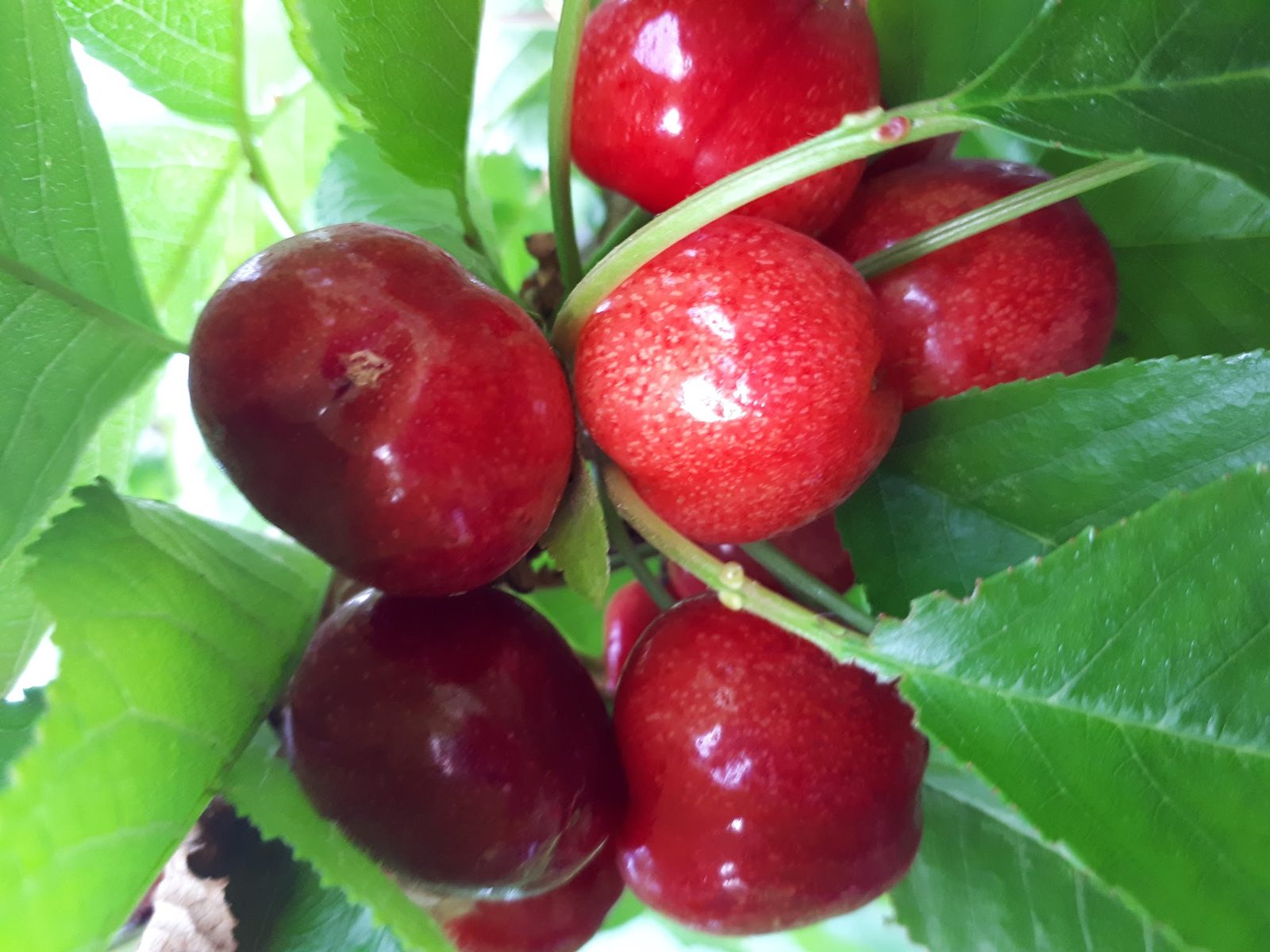
Fertilisation of the sweet cherry
The sweet cherry is a plant that requires particular knowledge of plant nutrition for the achievement of correct fertilisation. It requires deep and fertile soils with good drainage and a pH of 6.5, with 7.5 as the upper limit, although the rootstock Maxma 14 shows some tolerance of a higher pH as well. That tolerance is documented: the rootstock handbook of the Pacific Northwest attributes to Maxma 14 “tolerance of the chlorosis caused by iron deficiency on calcareous soils”, with generally wide adaptation to soil types but without tolerance of excessive moisture [28]. For the Greek calcareous soils this is its most useful characteristic.
| Element | Quantity | Check against a published source |
|---|---|---|
| Nitrogen (N) | 8 kg | Slightly above the upper end of the range of 1.4 to 7.2 kg of N per tonne given by WSU [17] |
| Phosphorus pentoxide (P₂O₅) | 2 kg | Consistent with the 8.94 kg of elemental phosphorus per hectare of the Greek measurement [16] |
| Potassium oxide (K₂O) | 5 kg | Gives a nitrogen to potassium ratio of 1.6 to 1, the same as the Greek measurement [16] |
| Magnesium (Mg) | 1 kg | No independent confirmation per tonne of fruit was found |
The column of quantities comes from Agrotypos [31] and is a commercial source, not experimental work. The third column has been added so that it is visible which figures also stand up in a published measurement.
In addition, the increase of the organic matter of the soil (manure) has to remain a continuous objective, because only in this way is sustainability gained in the production and in the life of the holding. The sweet cherry is fertilised late in the winter and is supported after harvest.
Fertilisation of the sweet cherry after flowering is avoided, because the harvest may be delayed and the fruit rendered sensitive to handling. This statement is field experience: no published measurement of delayed ripening from spring fertilisation on sweet cherry was found. In years with excessive fruiting, fertilisation may be carried out after calyx fall, with calcium nitrate or potassium nitrate or a compound fertiliser, always accompanied by irrigation or applied through fertigation.
In contrast with most fruit trees, the sweet cherry requires more nitrogen than potassium. This overturns the usual logic of “little nitrogen, much potassium” that applies, for example, in the apricot.
This point is documented by Greek research, in a Greek field. A study in commercial cherry orchards at Giannitsa, Pella, with the rootstocks MxM 14 and CAB-6P and the cultivars Early Bigi, Bigarreau Burlat and Lapins, calculated the annual removals at 85.6 kg of nitrogen, 42.7 kg of potassium, 8.94 kg of phosphorus and 12.0 kg of magnesium per hectare [16].
Expressing the potassium as the oxide (multiplication by 1.205, that is 42.7 to 51.4 kg of K₂O per hectare), the ratio of nitrogen to potassium comes out at 1.66 to 1, about 66% more nitrogen than potassium. The original form of the article gave “1.6 to 1” and “60%”; the calculation was redone and corrected. The value agrees with the removal table above, 8 kg of N to 5 kg of K₂O per tonne of fruit [31].
At the same time, potassium competes with calcium: an excessive soil concentration of potassium “competes with the uptake of calcium and magnesium, leading to a nutritional imbalance”, with a recommended range of soil potassium of 150 to 300 mg per kilogram [17]. Soil application of potassium is therefore avoided during the first two weeks from flowering, precisely the period in which the fruit needs calcium in order to build strong cell walls [26].
The decision on the method and the quantity of fertilisation has to be taken always in consultation with the agronomist. Incorrect fertilisation can bring about the opposite results. Properly, fertilisation has to be based on leaf analysis: “leaf analysis for total nitrogen is a good indicator of deficiency or excess”, with sampling from “recently matured leaves, from shoots of the current year without fruit”, and with the note that the nitrogen concentration starts close to 3% and falls below 1.0% in the autumn [17].
Young trees and juvenility
On young trees, over-fertilisation is avoided, since it delays the entry into fruiting. As a general rule, the application of 70 g of nitrogen in the first year is accepted, doubling in each subsequent year: 1st year 70 g, 2nd year 140 g, 3rd year 280 g and so on. This rule is field experience and not a published recommendation: no corresponding measured scale for young sweet cherry trees was found. If a soil analysis has been carried out beforehand, the formulation is decided in accordance with it. Otherwise, a compound fertiliser with more nitrogen is a good choice (20-10-10, 20-5-10 and others).
In dense plantings the reduction of the vegetative vigour of the tree is often necessary. This can be achieved by reducing nitrogen fertilisation to zero, and also by the application of potassium sulphate at the root, with the aim of disturbing the nitrogen–potassium balance in the rhizosphere.
Abroad, the application of prohexadione-calcium at the end of flowering is reported, or the application of paclobutrazol to the soil, for the containment of growth. The check in the pesticide properties database of the University of Hertfordshire gives the following:
- prohexadione-calcium: an approved substance in the European Union, with Greece on the list of member states. The typical crops recorded are, however, “cereals, turf, apple, pear, groundnut” sweet cherry is not included [6].
- paclobutrazol: an approved substance in the European Union, with Greece on the list [7]. This does not mean approval on sweet cherry.
The rate of “1 to 2 g at the root” in the original form does not correspond to any published approval or experimental work and has been removed. Approval by crop is national and is checked only in the database of the Greek Ministry of Rural Development and Food, valid in Greece only [1]. Application of a formulation on a crop for which it is not approved is made at the responsibility of the grower and creates a residue problem.
It has been observed repeatedly that a good many growers try to force young sweet cherry trees to grow, by fertilising them excessively. Unfortunately, such trees will grow quickly and will take a very long time to come into production, 6 to 8 years. This is a field observation without a published measurement, and it is given as such.
The benchmark is clear: in the rootstock handbook of the Pacific Northwest, Gisela 6 gives “a harvestable crop in the third leaf, with full production possible in the fifth” [28]. The distance between the third and the eighth year is the cost of over-fertilisation.
In the 3rd and 4th year in particular, the fertiliser applications have to be almost nil, unless the soil is entirely infertile. This applies mainly to the rootstocks MAXMA 14 and CAB 6P, which are both vigorous.
Cultivars on these rootstocks need, apart from the appropriate planting distances, the capacity to move quickly out of the juvenile phase in which they find themselves during the first years.
| Training system | Planting distances | Trees per hectare |
|---|---|---|
| Open vase | 5 × 5 m | 400 |
| Palmette hedgerow | 3.5 × 5 m | 570 |
| Spindle | 3 × 5 m | 660 |
These distances concern vigorous and semi-dwarfing rootstocks. For the truly dwarfing rootstocks the picture is entirely different: Gisela 5 is described with a vigour of 50 to 60% of full size and densities of 1,240 to 1,980 trees per hectare, in the source, “500 to 800 or more trees per acre” while Gisela 6 is given at 80 to 85% and 740 to 1,240 trees per hectare, that is 300 to 500 per acre in the source [28]. Maxma 14 is given at 85 to 90% of full size, with moderate precocity of bearing [28]. These densities are American and presuppose support and a corresponding irrigation schedule.
There are also a few exceptions, such as the cultivar Tsolakeiko, which comes into production very quickly. By contrast, the cultivars Grace Star, Sabrina, Samba, Crystalina, Rocket and others may need up to 8 years to come into production, especially if they are fertilised excessively at a young age. This classification too is a field observation; no comparative published study of the precocity of bearing of these particular cultivars under Greek conditions was found.
Table 2. Recommended fertiliser programmes for the sweet cherry
The table is indicative and the fertiliser rates may be varied according to the particular requirements of each holding (leaf analysis), in accordance with the opinion of a specialist agronomist.
The quantities that follow are field experience from Greek cherry orchards. They do not come from a published fertiliser experiment and are not presented as one. They are given because they are useful starting points, not because they have been measured.
The measure against which they are checked is the Greek measurement of nutrient removal: 85.6 kg of nitrogen, 51.4 kg of K₂O, 20.4 kg of P₂O₅ and 12 kg of magnesium per hectare per year [16]. Any programme that goes far above these, without a reason of soil enrichment, is fertilisation that the tree will not consume.
A. Self-fertile cultivars on semi-dwarfing rootstocks, and non-self-fertile cultivars with high fruit set percentages
Self-fertile cultivars, when planted on semi-dwarfing rootstocks such as Maxma 14 and Gisela 6, often suffer from over-cropping and small fruit size. This is due to under-fertilisation and to a poor balance between growth, foliage and crop load. They require strict pruning and the maintenance of a sufficient quantity of annual growth, for the production of carbohydrates and the nutrition of the crop. The same applies to certain non-self-fertile cultivars that nevertheless tend to over-crop, such as Georgia, Summit and others.
Proposal 1
Base fertilisation late in the winter, before bud break, with a compound fertiliser of the 2-1-2 type, approximately 1 kg of fertiliser per 30 kg of expected fruit.
In addition, only if there is a suspicion of excessive fruit set, thinning of the fruiting shoots by pruning is recommended, together with the addition of 500 g of calcium nitrate or potassium nitrate (if there is sufficient calcium in the soil), in two equal doses before flowering or after it. Excessive fertilisation may cause a delay in the harvest. The application of humic and fulvic acids to the soil every 10–15 days improves the supply of the elements to the plant.
Proposal 2
Application every 2–3 years, within dormancy, of phosphorus, potassium and magnesium. For example, 300 kg/ha of 0-46-0 in combination with 900 kg/ha of potassium magnesium sulphate 0-0-30 (alkaline soils). The application of nitrogen is made on an annual basis, in the form of ammonium nitrate sulphate (400 kg/ha) on the alkaline soils that are rich in calcium carbonate, or of calcium nitrate with boron (500 kg/ha) on soils poor in calcium. The nitrogen may be applied in two doses, half before flowering and half after harvest.
Check of magnitude: the 400 kg of ammonium nitrate sulphate correspond to approximately 104 kg of nitrogen per hectare, that is close to the 85.6 kg of the measured annual removal [16]. The 300 kg of 0-46-0 and the 900 kg of 0-0-30 per three years clearly exceed the removal and make sense only as enrichment of a calcareous soil that fixes phosphorus, not as annual nutrition.
* On soils with a high pH and a deficiency in trace elements, iron sulphate, borax and zinc sulphate are applied every 2–3 years, according to the deficiencies established. Foliar fertilisation with chelated compounds of the above elements is often more effective, because in soils with a pH above 7.7 these elements are strongly fixed [21].
B. Vigorous cultivars with low fruit set or heavy fruit drop
There are certain cultivars that do not set fruit satisfactorily, especially on lowland holdings, while at the same time they show particular vigour. Here a very moderate fertiliser programme is required, particularly in the first years and until full fruiting is reached. Excessive fertilisation, and above all nitrogen fertilisation, will prevent the plants from forming flower buds, while it will intensify the ceaseless growth of vigorous, strong shoots.
Proposal 3
On these holdings a conservative fertiliser programme every winter is recommended, with 500–800 g per tree, using a compound fertiliser with a low percentage of nitrogen, of the 1-1-2 or 1-1-3 type. Over-fertilisation may intensify the problem of unfruitfulness. During flowering, sprays of amino acids or of formulations with a high content of phosphorus and boron are recommended, together with the introduction of bees, in order to increase fruit set percentages.
For boron there is documentation of the timing: the autumn application of boron is more effective than the spring one in raising the boron levels in the flowers and in improving fruit set, at a rate of 1.1 to 1.8 kg of boron per hectare where a deficiency has been established, in the source, 1 to 1.6 pounds per acre [18]. This is a recommendation of Washington State.
In the event that excessive fruit set occurs after pollination, immediate fertilisation with topdressing fertilisers and foliar formulations is recommended, in order to achieve satisfactory quality.
C. Cherry orchards on vigorous and strong-growing rootstocks (CAB 6P, MAXMA 60)
This concerns self-fertile or non-self-fertile cultivars with high fruit set percentages. On vigorous and strong-growing rootstocks a single fertiliser application every winter is recommended. These rootstocks usually achieve high yields and very satisfactory fruit size with ease. Note on CAB 6P: it is described as “more sensitive to bacterial canker than Mazzard” [28], so on these holdings the winter protection of the wounds weighs more heavily.
Proposal 4
A single annual application of a compound fertiliser is recommended, according also to the needs of the holding. A balance between vegetative growth and fruiting must always be maintained, indicatively 1 kg of 15-5-20+TE, or 1 kg of 12-12-17, or 1 kg of 11-15-15 and others, for every 30 kg of fruit expected to be harvested. Otherwise, an application is made after flowering, provided that fruit set is good, with compound fertilisers that have potassium nitrate among their raw materials.
D. Cherry orchards on dwarfing rootstocks
On dwarfing rootstocks an entirely different approach to fertilisation is required. These rootstocks have a rather compact and shallow root system. They require frequent fertiliser applications in small doses, and it is preferable for these to be made through fertigation. The rootstock handbook confirms the greater requirement: Gisela 5 “does not perform well on heavy soils and needs good drainage” [28].
Proposal 5
On rootstocks such as Gisela 5, apart from the fact that an extremely close irrigation schedule is required, regular fertilisation in small quantities is also required. Thus, at the end of the winter an initial application with a compound fertiliser rich in nitrogen and trace elements is recommended, such as 20-5-10 for example, but at a small dose, 250–400 g per plant.
Before flowering a crystalline fertiliser of the 20-20-20 or 10-30-5 type is required in the form of fertigation, approximately 70–100 g per plant, together with amino acids or humic acids. After fruit set, and provided that it is satisfactory, fertilisation is required every 10–12 days together with the irrigation, at doses of 50–80 g per plant, of calcium nitrate and potassium nitrate alternately, always in combination with amino acids or humic acids. After harvest, 3 applications of nitrogen are required, mainly for the proper preparation of the plants for the following year.
After harvest, fertilisation with nitrogen and trace elements, mainly boron and zinc, is required. Only in this way is the proper build-up of the carbohydrate reserves needed for the following season secured. The principle is documented: “in the autumn, foliar application of nitrogen helps build reserves for the next season” [17], while for zinc “foliar sprays with zinc sulphate in the autumn and throughout the season have proved effective” on stone fruit, with the note that the autumn application improved only the levels in the buds and the flowers and needs to be repeated where the deficiency persists [18].
Practical field rule: with urea (46-0-0), approximately 7 grams per kilogram of harvested product. If the trees have yielded on average 50 kg of cherries, the fertiliser rate is 350 g of urea. Correspondingly, with ammonium nitrate the rate is 10 g per kilogram of fruit, and with ammonium nitrate sulphate 13 g.
These three figures are internally consistent: they all correspond to approximately 3.2 to 3.5 grams of elemental nitrogen per kilogram of fruit, that is 3.2 to 3.5 kg of nitrogen per tonne. This value falls within the published range of requirement of the sweet cherry, 1.4 to 7.2 kg of nitrogen per tonne of fruit, in the source, 2.7 to 14.4 pounds per US ton [17]. The empirical rule therefore does not conflict with the literature, without that meaning that it has been measured separately.
The application of the trace elements is made with boron and zinc formulations [18].
Phosphorus, the key element
The key element for the proper start of the production year in a cherry orchard is phosphorus. The phosphorus of the base fertilisation is strongly fixed at the surface of the soil, with the result that it is not available to the plants. Especially if it is applied early, all that is achieved is to leave it as a deposit in the field, without any benefit being seen in the crop.
The size of the problem is visible from the Greek data themselves: the annual removal of phosphorus was measured at just 8.94 kg of elemental phosphorus per hectare, that is approximately 20 kg of P₂O₅ [16]. Against that, a base fertilisation with 300 kg of 0-46-0 per hectare puts into the soil nearly one hundred and forty kilograms of P₂O₅. The difference is not lost, it stays in the soil, but in a form that the tree does not manage to use in the year in which it needs it.
In addition, the low soil temperatures during the period of flowering and of the start of growth limit the availability of phosphorus in the soil solution. This mechanism is given as an agronomic explanation and not as a measured quantity: no quantified measurement for a cherry orchard on a Greek calcareous soil was found.
Since the application of the fertiliser with incorporation at 20–30 cm will destroy the surface roots, the solution proposed is one of the two following:
- Application of extra monoammonium phosphate through the irrigation system, at the start of growth. The quantity of “100 g per tree” is field experience and does not correspond to a published recommendation; it is adjusted on the basis of the soil analysis and the age of the tree.
- Two foliar applications of phosphorus, caution, not of phosphonate ions, ten days after the appearance of the leaves. Here too this is field practice; no published trial of foliar phosphorus on sweet cherry with a measured response was found.
Sources: 16
1. The active substance fenbuconazole. It was mentioned as an option for the spray at petal fall. The check in the pesticide properties database of the University of Hertfordshire gives a status of “Not approved” for Regulation 1107/2009 and an expiry date of “Expired” [3]. The substance continues to appear in American listings for brown rot of the sweet cherry [10], which is precisely why it is easy for it to pass into a Greek text. It is not an option for a Greek cherry orchard.
2. The other active substances that were named. The substances cyprodinil, boscalid, pyraclostrobin, fluopyram, tebuconazole, trifloxystrobin, difenoconazole, fludioxonil, dodine, dithianon and captan are substances in force in the European Union, for dodine [4] and captan [5] this was confirmed separately. Approval, however, is by formulation and by crop, and it is national. None of them is to be used on sweet cherry without a check in the database of the Greek Ministry of Rural Development and Food [1], valid in Greece only, where the rate and the pre-harvest interval are checked at the same time. The names are given here so that the reader understands what is being asked for, not as a prescription.
3. Figures that went because no source was found: “zinc sulphate at 50 kg per hectare”, “promalin at 1 to 3 with plastic paint”, “captan within 20 days of the oil spray” (the documented value is 14 days [8]), “calcium nitrate at 3 kg per tonne”, “urea at 4 to 6 kg per tonne of solution”, “nitrogen fertilisation at 100 to 150 kg per hectare”, “paclobutrazol at 1 to 2 g at the root”, “copper sulphate and ammonium bicarbonate at 1 to 6”, “glycine betaine of at least 70%”.
4. Claims that were reversed: gibberellic acid does not reduce cracking at the timing that was described, it increases it [22] [24]; double cherries are not due to insufficient irrigation but to the temperature of the previous season [29]; susceptibility to Drosophila suzukii does not begin at the red stage but with the first change of colour [13]; and captan has no documented reduction of fruit set in the field [9].
During the check of the sources, the following were not found in any published work and are recorded as research gaps, not as knowledge:
- Greek rainfall thresholds for fruit cracking. The only value that exists is the one of 38 millimetres, from Oregon [22].
- A Greek measurement of the effectiveness of copper, or of resistance to it, for bacterial canker of the sweet cherry.
- A surface temperature threshold for sunburn on cherry. The available values are those of the apple [30].
- A trial of potassium silicate or of silicon oxides on sweet cherry, for cracking or for post-harvest behaviour.
- A measured scale of nitrogen fertilisation of young sweet cherry trees under Greek conditions.
- Experimental confirmation of Proposals 1 to 5 as fertiliser programmes.
7. Sources
The numbers within the text refer to the list below. Where only the abstract and not the full text was used, this is stated explicitly.
- [1] Υπουργείο Αγροτικής Ανάπτυξης και Τροφίμων, Κατάλογοι Φυτοπροστατευτικών Προϊόντων και Βιοκτόνων [Greek Ministry of Rural Development and Food, Lists of Plant Protection Products and Biocides] (in Greek). Directorate for the Protection of Plant Production. The only binding source for whether a formulation is approved on sweet cherry in Greece, for the approved rate and for the pre-harvest interval. Every rate and every active substance in this article is checked there before application, because the approvals change. The approvals it lists are valid in Greece only. Full text.
- [2] ΥΠΑΑΤ, Περιφερειακό Κέντρο Θεσσαλονίκης, Προστασίας Φυτών, Ποιοτικού και Φυτοϋγειονομικού Ελέγχου: Γεωργικές Προειδοποιήσεις [Greek Ministry of Rural Development and Food, Regional Centre of Thessaloniki for Plant Protection, Quality and Phytosanitary Control: Agricultural Warnings] (in Greek). Documents that agricultural warning bulletins are issued specifically for the sweet cherry of Central Macedonia, with phenological timing for each year. The source to which the article refers instead of a calendar of months. Full text.
- [3] Fenbuconazole (Ref: RH 7592). Pesticide Properties Database (PPDB), Agriculture & Environment Research Unit, University of Hertfordshire. Documents that fenbuconazole has the status “Not approved” under Regulation 1107/2009 and an expiry date of “Expired” the most serious finding of the check, since the substance was explicitly proposed in the original form of the article. Full text.
- [4] Dodine (Ref: BAS 365F). Pesticide Properties Database (PPDB), University of Hertfordshire. Documents that dodine is an approved substance in the European Union, with approval expiring on 15/07/2026 and Greece on the list of member states, at the level of the substance, not of the crop. Full text.
- [5] Captan (Ref: SR 406). Pesticide Properties Database (PPDB), University of Hertfordshire. Documents that captan is an approved substance in the European Union with expiry on 31/10/2039 and Greece on the list of member states. Full text.
- [6] Prohexadione-calcium (Ref: BAS 125W). Pesticide Properties Database (PPDB), University of Hertfordshire. Documents that the substance is approved in the European Union with expiry on 31/05/2026 and that the typical crops recorded are cereals, turf, apple, pear and groundnut, without sweet cherry. Full text.
- [7] Paclobutrazol (Ref: PP 333). Pesticide Properties Database (PPDB), University of Hertfordshire. Documents that the substance is approved in the European Union with expiry on 31/08/2026 and Greece on the list of member states, without documenting any use on sweet cherry. Full text.
- [8] Fruit and Leaf Injury. WSU Crop Protection Guide, Washington State University. Documents the interval of two weeks between captan and paraffinic oils and the risk of damage on sensitive cultivars, the value that corrected the “20 days” of the original text. Full text.
- [9] Fungicide and Pollen Interactions. Pacific Northwest Plant Disease Management Handbook. Documents that captan reduced the germination of cherry pollen in the laboratory, but that no significant reductions of fruit set have been reported in the field even with application at full bloom. Full text.
- [10] Brown Rot Blossom and Twig Blight, Cherry. UC IPM Pest Management Guidelines, University of California. The main source for the phenological timing of blossom blight: start at the popcorn stage, repetition every 14 days and every 10 in heavy rain, favourable temperatures of 14.4 to 25 °C, that is 58 to 77 degrees Fahrenheit in the source. It also gives the American list of active substances, within which fenbuconazole appears. Full text.
- [11] Cherry (Prunus spp.), Bacterial Canker. Pacific Northwest Plant Disease Management Handbook. Documents the pathogens, the timing of the copper sprays at leaf fall and in early January, and, critically, the existence of copper-resistant strains and the accumulation of copper in the soil. The source that turned “a necessary application” into a ranking of risk. Full text.
- [12] Cherry (Prunus spp.), Leaf Spot. Pacific Northwest Plant Disease Management Handbook. The main source for the biology of cherry leaf spot (Blumeriella jaapii) and for the timing of the applications at petal fall, calyx fall and two weeks later, as well as for the rule of two applications per year from the same FRAC group and the usefulness of post-harvest applications in wet years. Full text.
- [13] Spotted-Wing Drosophila, Cherry. UC IPM Pest Management Guidelines, University of California. Documents that the susceptibility of the cherry to Drosophila suzukii begins with the first change of colour from green to yellow or straw, and that sampling is carried out on 100 to 200 fruits, the correction of the “from the red stage”. Full text.
- [14] San Jose Scale, Cherry. UC IPM Pest Management Guidelines, University of California. Documents the timing of the intervention at the delayed dormant stage on the basis of the history of the holding, the control with paraffinic oils, and the three to four generations per year in California. Full text.
- [15] Development and Field Testing of a Spatial Decision Support System to Control Populations of the European Cherry Fruit Fly, Rhagoletis cerasi, in Commercial Orchards. Agronomy 9(10):568 (2019). Greek work in commercial cherry orchards at Agia, Larissa: a univoltine insect, a development threshold of 5 °C, trap hanging at 400 degree days from 1 February, an intervention threshold of 10% of the traps, a reduction of applications by 75%. The Greek calibration that replaced the month. Full text.
- [16] Assessing Nutrient Losses and Recycling in Sweet Cherry Orchards: A Yield-Based Approach. Agriculture 15(12):1312 (2025). Greek study in cherry orchards at Giannitsa, Pella, on the rootstocks MxM 14 and CAB-6P, with the cultivars Early Bigi, Bigarreau Burlat and Lapins. It gives the annual removals of 85.6 kg of N, 42.7 kg of K, 8.94 kg of P and 12.0 kg of Mg per hectare, the 51.8 kg of N and 6.2 kg of P per hectare that remain in the prunings and the leaves, and the redistribution of potassium from the leaves to the fruit in years of heavy crop load. Full text.
- [17] Nutrient Management in Sweet Cherries. WSU Tree Fruit, Washington State University. Documents the nitrogen requirement range of 2.7 to 14.4 pounds per US ton of fruit, the antagonism of excessive potassium with calcium and magnesium, the recommended soil potassium of 150 to 300 mg per kilogram, the recommendation for foliar and not soil nitrogen in the autumn, and the guidance on leaf sampling. Full text.
- [18] Fall Nutrient Sprays in Tree Fruit. WSU Tree Fruit, Washington State University. Documents the rate of 22 kg of nitrogen per hectare, that is up to 20 pounds per acre in the source, in a single foliar autumn application, the biuret limit below 0.25%, the effectiveness of 30 to 80% depending on the weather, the superiority of the autumn over the spring application of boron at a rate of 1.1 to 1.8 kg of boron per hectare, and the use of zinc sulphate on stone fruit. Full text.
- [19] Postbloom nutrient applications. WSU Crop Protection Guide, Washington State University. Documents the requirement for urea with less than 0.25% biuret in foliar applications. Full text.
- [20] Zinc. WSU Tree Fruit, Washington State University. Documents the rate of 16 kg of metallic zinc per hectare, that is 14 pounds per acre in the source, in dormant sprays, the only figure that supports the winter zinc of the article, and that the sweet cherry is particularly sensitive to zinc deficiency. Full text.
- [21] Nutrition, Micronutrients. Intermountain Tree Fruit Production Guide, Utah State University. Documents that deficiencies of zinc, iron, copper, manganese and boron are common in soils with a pH above 7.7, that zinc is strongly fixed and is corrected through the leaves, and that the dormant spray is more effective the later it is made, before the bud scales open. Full text.
- [22] Understanding and Preventing Sweet Cherry Fruit Cracking (EM 9227). Oregon State University Extension Service. Documents the two causes of cracking, the threshold of 38 millimetres of rain, the six calcium applications from pit hardening in a solution of 0.1 to 0.15%, and, critically, that gibberellic acid can INCREASE cracking when it is applied at the straw stage under high rainfall. Full text.
- [23] Cherry Rain Cracking. WSU Crop Protection Guide, Washington State University. Documents the concentration of 0.5 to 1.0% CaCl₂ as effective in reducing cracking, and the drying of the fruit with sprayer fans or a helicopter after rain. Full text.
- [24] Foliar Application of Calcium and Growth Regulators Modulate Sweet Cherry (Prunus avium L.) Tree Performance. Plants 9(4):410 (2020). Two-year trial at Carrazedo de Montenegro, Portugal, cultivar Skeena on Gisela 6: CaCl₂ at 5 g/kg, GA₃ at 10 mg/L, glycine betaine at 1 mL/L. Documents that the sprays did not significantly affect the cracking index, but that GA₃ INCREASED it in both years. Full text.
- [25] Towards precision spray applications to prevent rain-induced sweet cherry cracking: understanding calcium washout due to rain and fruit cracking susceptibility. Scientia Horticulturae. Documents that the washout of calcium increases linearly with the rain and reaches up to 72% at 10 millimetres, while at 2.5 and 5 millimetres it generally stays below 50%, on the cultivars Selah, Skeena and Rainier. The reason why calcium sprays do not always deliver. Abstract only, the full text was not accessible.
- [26] Calcium Sprays and Crop Load Reduction Increase Fruit Quality and Postharvest Storage in Sweet Cherry (Prunus avium L.). Agronomy 12(4):829 (2022). Trial in Chile, cultivar Lapins on Colt rootstock: CaCl₂ at 0.8% at 26, 39 and 62 days from full bloom. The first application gave 7% greater firmness at harvest, while the applications at 39 and 62 days reduced cracking on the thinned trees. Full text.
- [27] Enhancing Cracking Resistance and Post-Harvest Quality of Sweet Cherries (Prunus avium L.) Through Calcium and Potassium-Based Foliar Treatments. Horticulturae 11(1):30 (2025). Trial at Lagnasco, Piedmont, Italy, cultivar Regina: four applications of calcium and potassium formulations from bud break to fruit set, with reduced cracking, lower weight loss and greater firmness after 14 days at 2 °C. Full text.
- [28] Sweet cherry rootstocks for the Pacific Northwest (PNW 619). A Pacific Northwest Extension Publication. The main source for the rootstocks: Gisela 5 at 50 to 60% of full size with 1,240 to 1,980 trees per hectare and a need for good drainage, Gisela 6 at 80 to 85% with a harvestable crop in the third leaf and a full crop in the fifth, Maxma 14 at 85 to 90% with tolerance of the iron chlorosis of calcareous soils, and CAB-6P more sensitive to bacterial canker than Mazzard. Full text.
- [29] When and How to Reduce Doubling in Sweet Cherry. WSU Tree Fruit, Washington State University. Documents that double cherries are due to high temperature in the previous season, with a critical window of late July to early September for the cultivar Bing, and that the phenomenon is unrelated to the water stress of the tree. It also gives the reductions of 50% with evaporative cooling, 37% with 20% shading and 45 to 52% with kaolin. Full text.
- [30] Apple Sunburn. WSU Crop Protection Guide, Washington State University. Documents the kaolin rates of 28 to 56 kg per hectare with at least three applications, the reduction of symptoms by up to 50%, and the fruit surface temperature thresholds of 51.7 °C for necrosis and 46.1 to 48.9 °C for browning. The values concern apple, not sweet cherry. Full text.
- [31] Αγρότυπος, βάση φυτοπροστατευτικών και γεωργικών δεδομένων [Agrotypos, database of plant protection products and agricultural data] (in Greek). The origin of the table of nutrient removal per tonne of product (8 kg of N, 2 kg of P₂O₅, 5 kg of K₂O, 1 kg of Mg) that was present in the original form of the article. A commercial source, not experimental work; it is cited as such and is checked against the Greek measurement. Full text.
Related articles
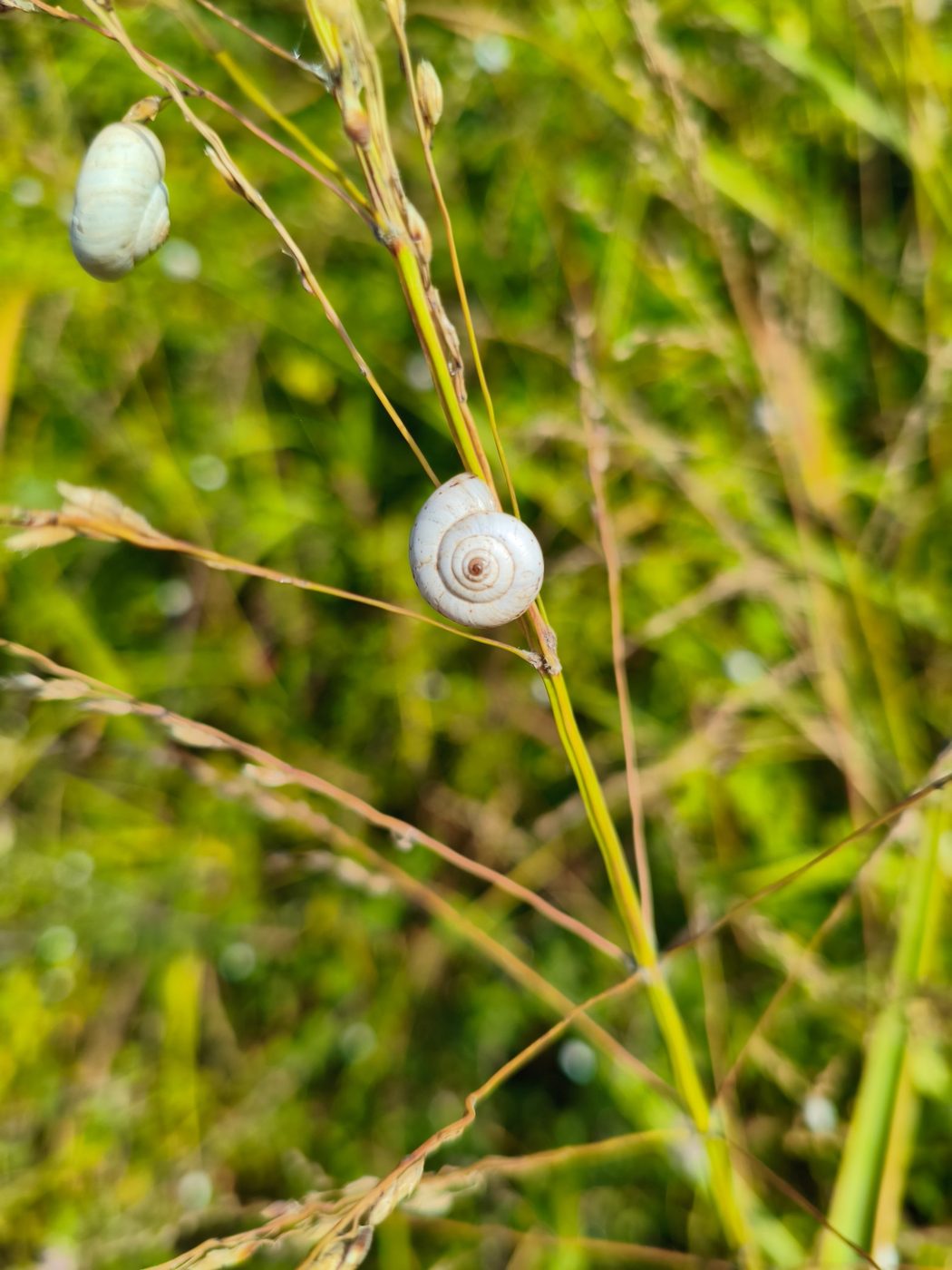
The white Mediterranean snail in tree crops
Theba pisana is native to the Mediterranean, not invasive, so there is no eradication programme to wait for. Identification, life cycle, the damage in tree crops, the single approved target in the Greek register, and why the nematode Phasmarhabditis killed the snail only at five times the label rate.
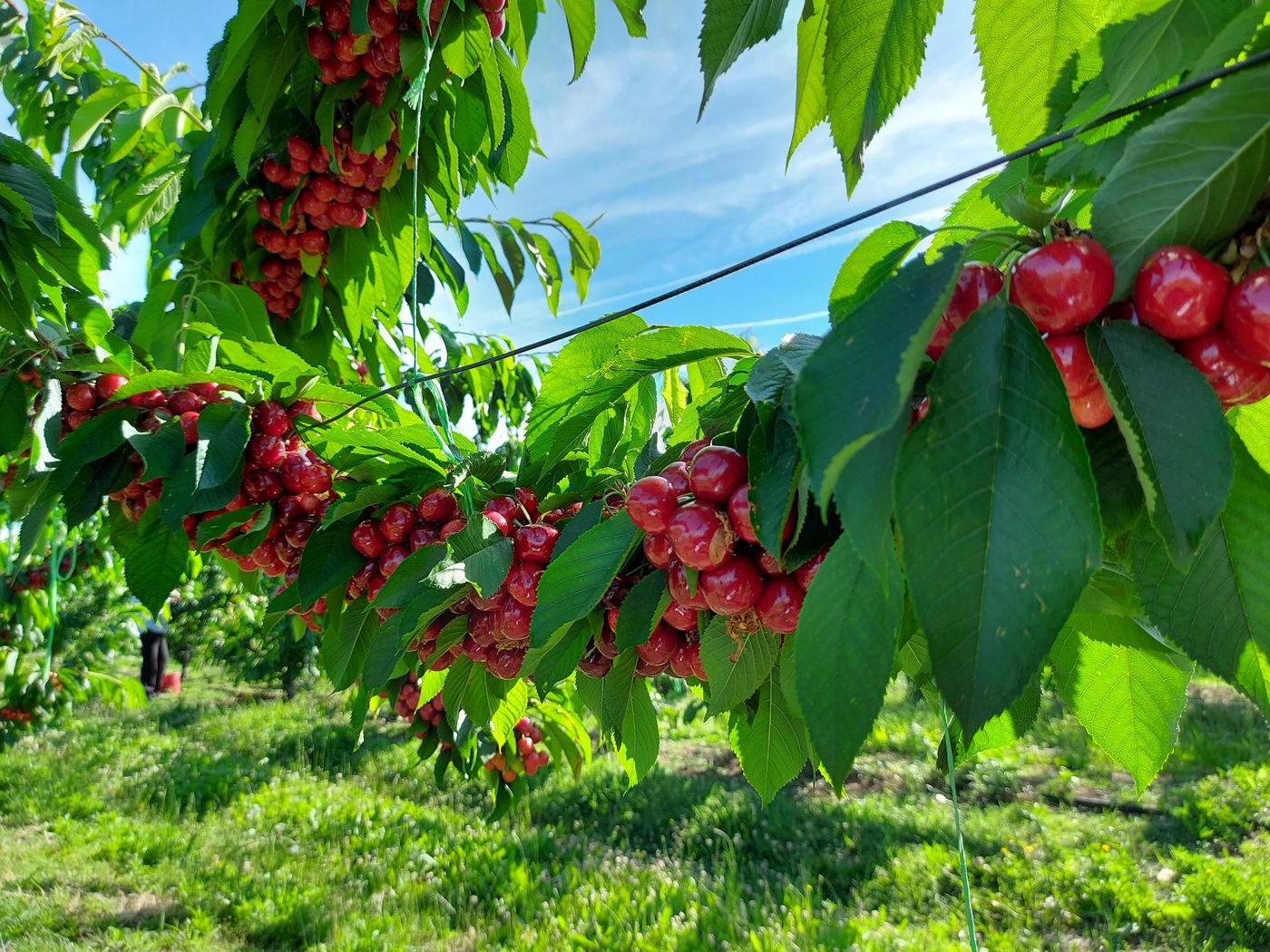
The Meda sweet cherry series
Six club varieties selected for at least 35 to 40 days of post-harvest life, for sea freight to China. Ripening, size, sugars and S genotypes as published, the two pairs that cannot pollinate each other, chilling figures with no model stated, and the fact that every measurement comes from covered plantings outside Greece.
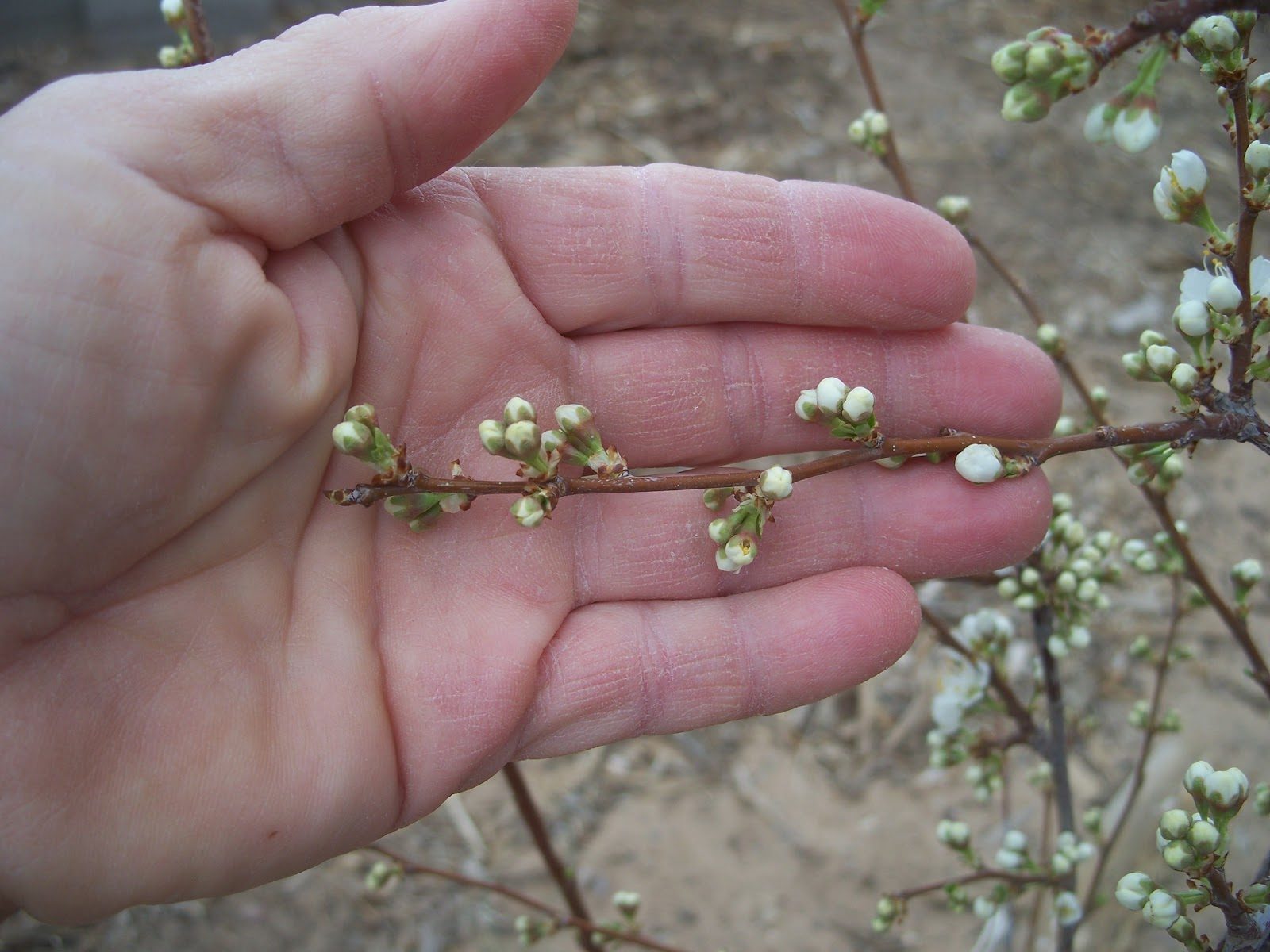
Chilling hours: the three models and when each one tells the truth
Chilling Hours, Utah Chill Units or Dynamic Chill Portions, what each measures, which suits which climate and season, why a chill portion does not convert into hours, and how the divergence between the three is read. The calculation itself lives in a separate tool.