
The brown marmorated stink bug, BMSB, Halyomorpha halys
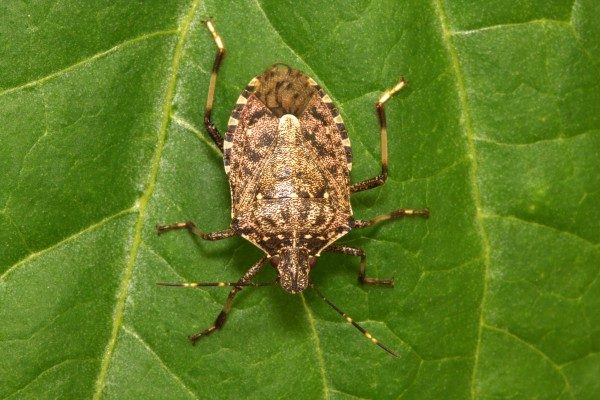
The brown marmorated stink bug is today one of the most serious insect problems facing tree fruit growing in northern Greece. It is a polyphagous species. It feeds on more than 170 plant species, and it turns up in forests, in houses and in orchards. Peach, kiwifruit, apple, pear, tomato and sweet cherry are all susceptible, but the most serious problems appear in kiwifruit.
1. Identity and history in Greece
The species is Halyomorpha halys (Stål, 1855), known internationally as the brown marmorated stink bug, or BMSB for short. It belongs to the family Pentatomidae and originates in East Asia.
How it is recognised
Adults are up to 17 mm long, brown, and their filiform antennae carry alternating white and brown segments. That last feature is the most reliable diagnostic character.
2. Biology of the insect
In Greece the insect has two overlapping generations a year. The adults emerge from their overwintering sites in April and begin feeding and reproducing immediately.
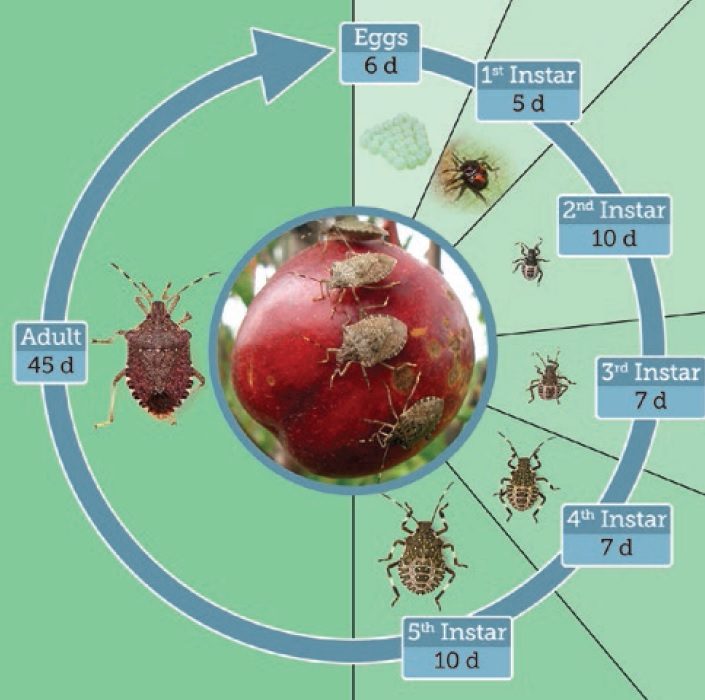
Eggs are laid in masses on the underside of the leaves. The nymphs pass through five instars before reaching the adult stage, each instar lasting about a week. The later instars and the adults both cause significant damage.
| Parameter | Value |
|---|---|
| Eggs per egg mass | about 28 (median) |
| Total fecundity per female | about 244 eggs over its lifetime, under laboratory conditions in Florida; in the field the figure is lower |
| Nymphal instars | 5 |
| Development from egg to adult | 538 degree-days |
| Additional for female maturation | 148 degree-days |
| Adult lifespan | up to one year (overwintering individuals) |
Because the adult can live for up to a year, after the first true generation both the “parents” and the “offspring” are feeding at the same time, which is why the population never appears to decline within the season. The insect overwinters in large aggregations as an adult, in sheltered places and in buildings.

3. The damage, crop by crop
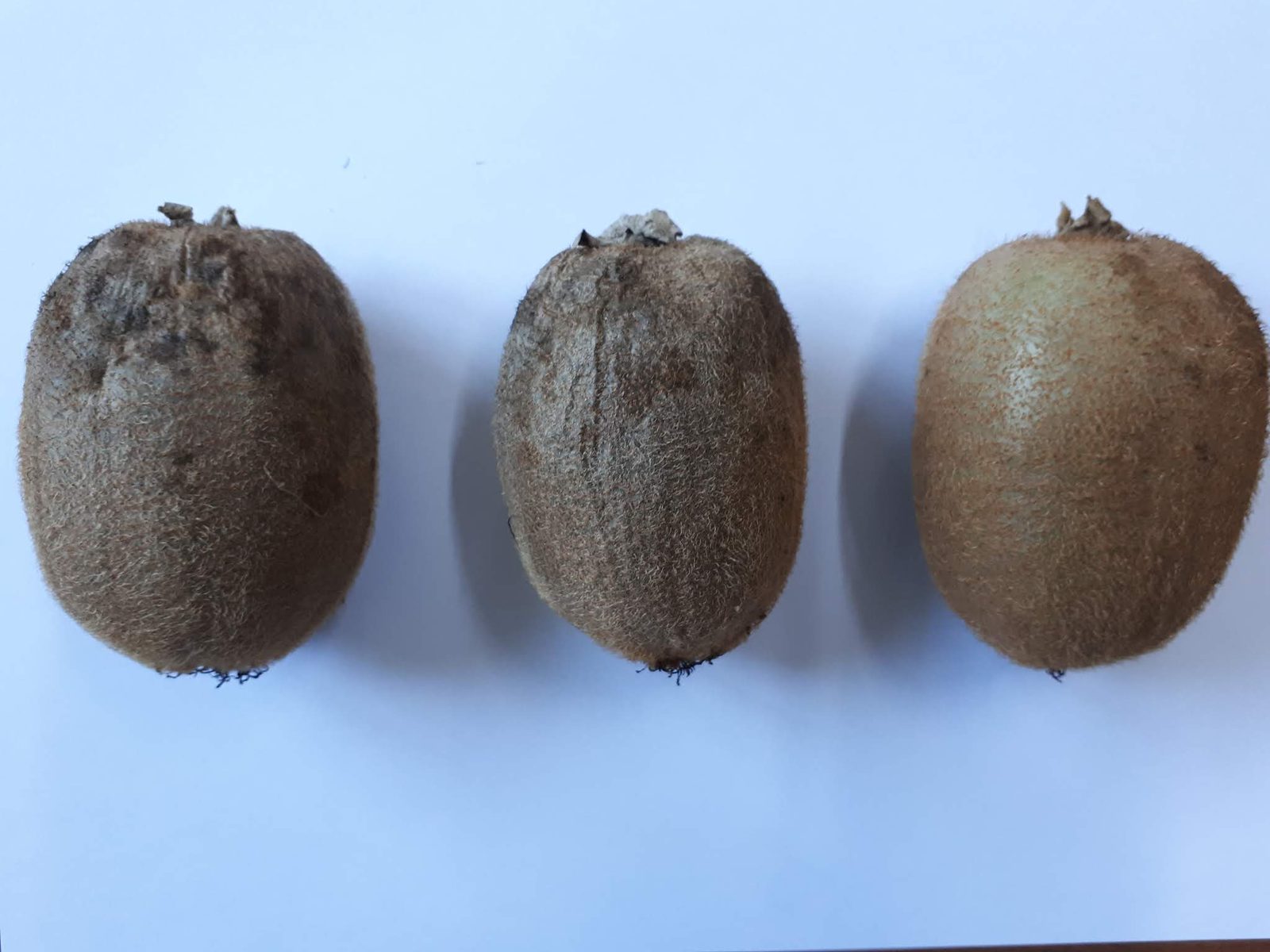
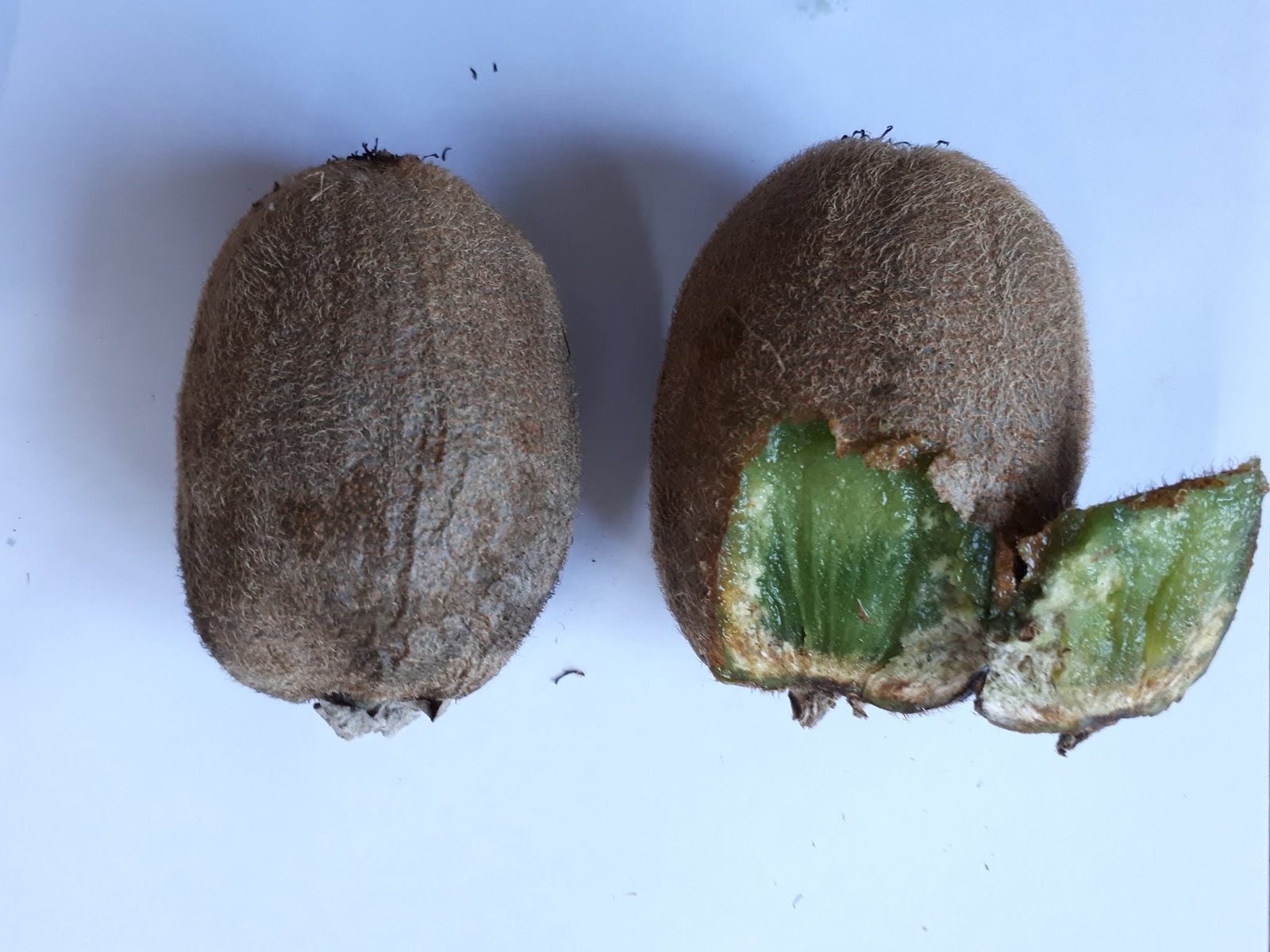
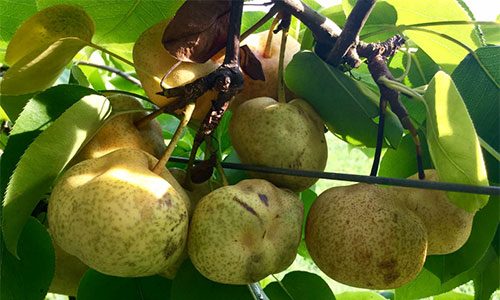
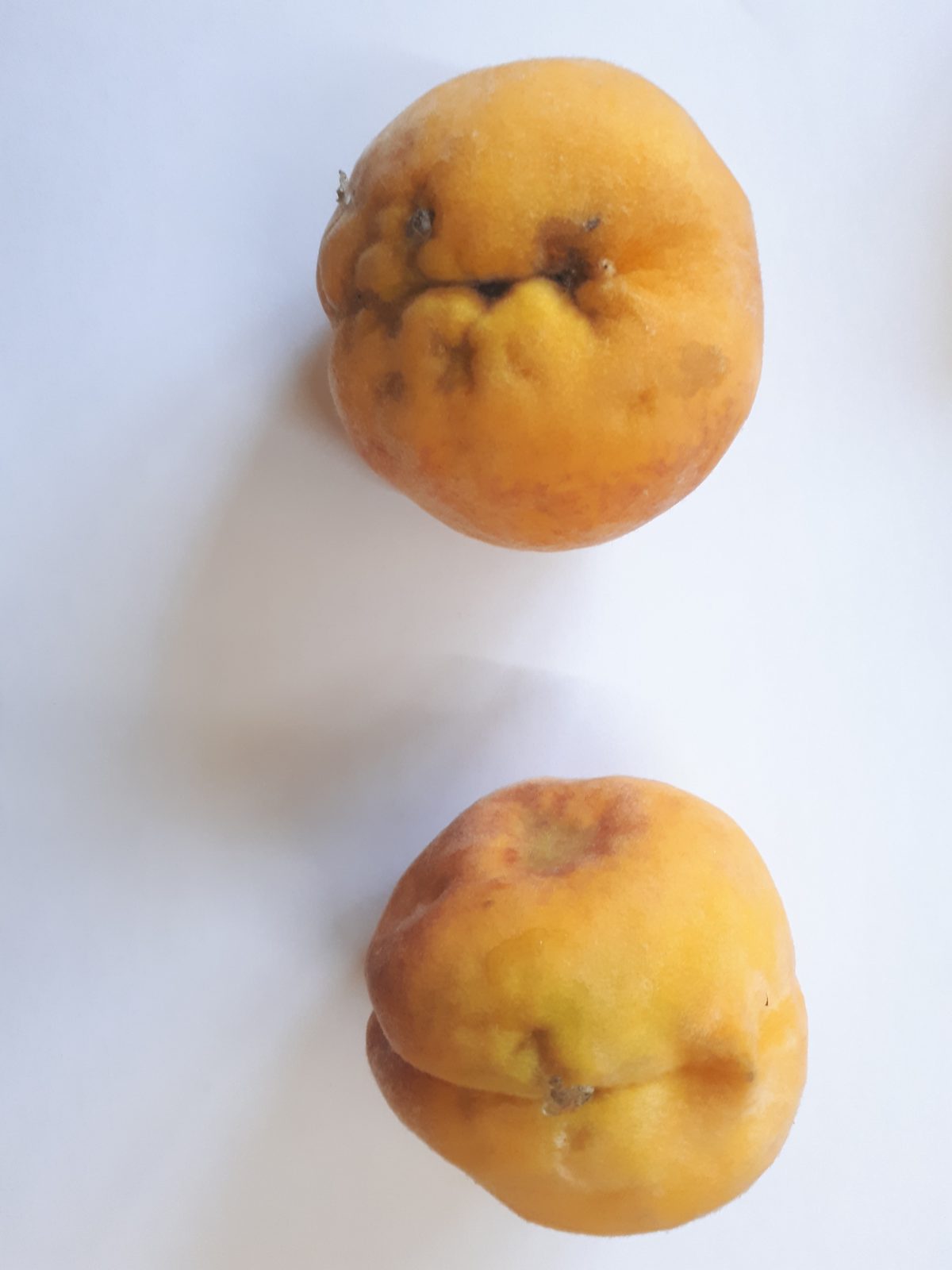
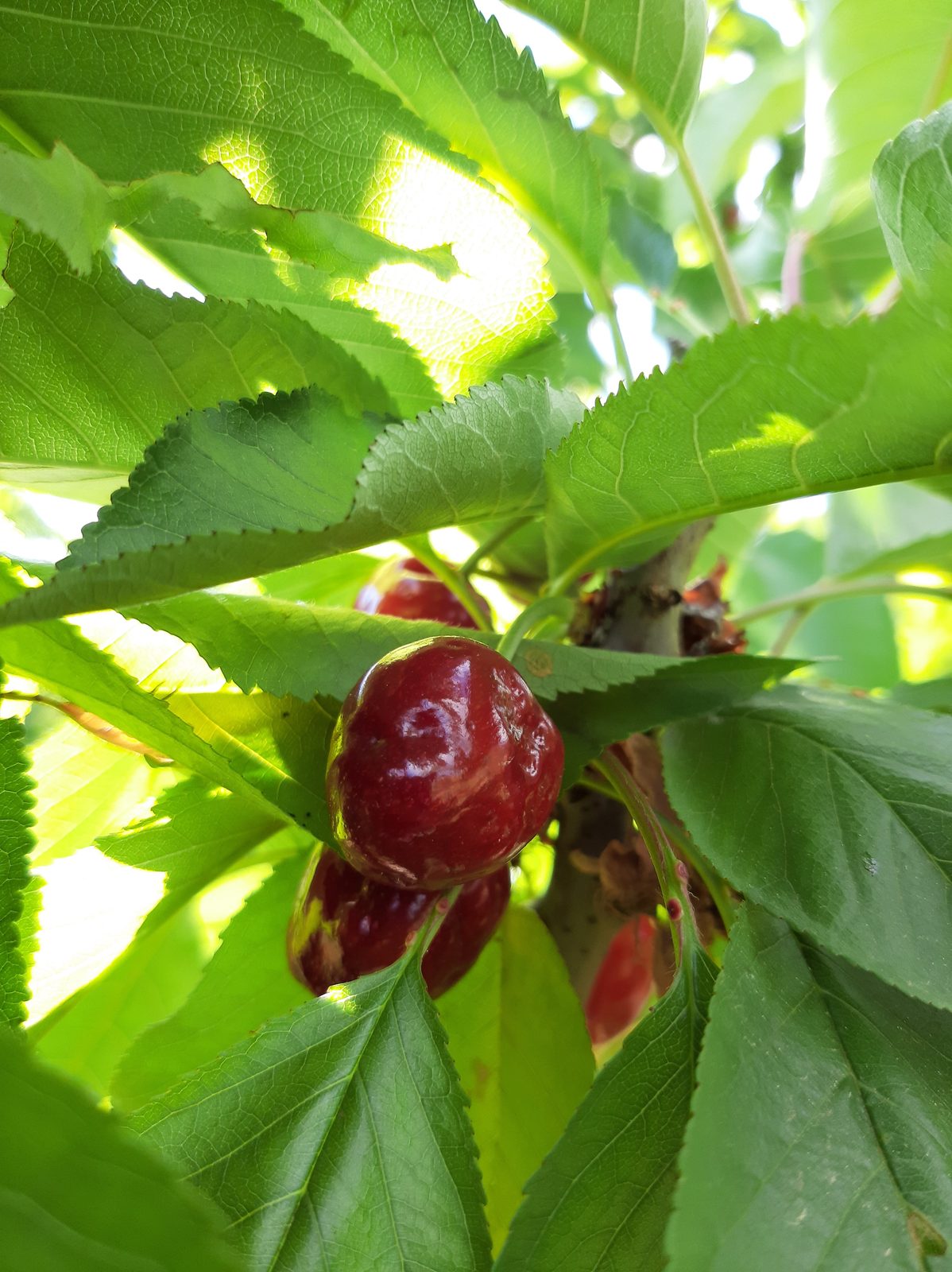
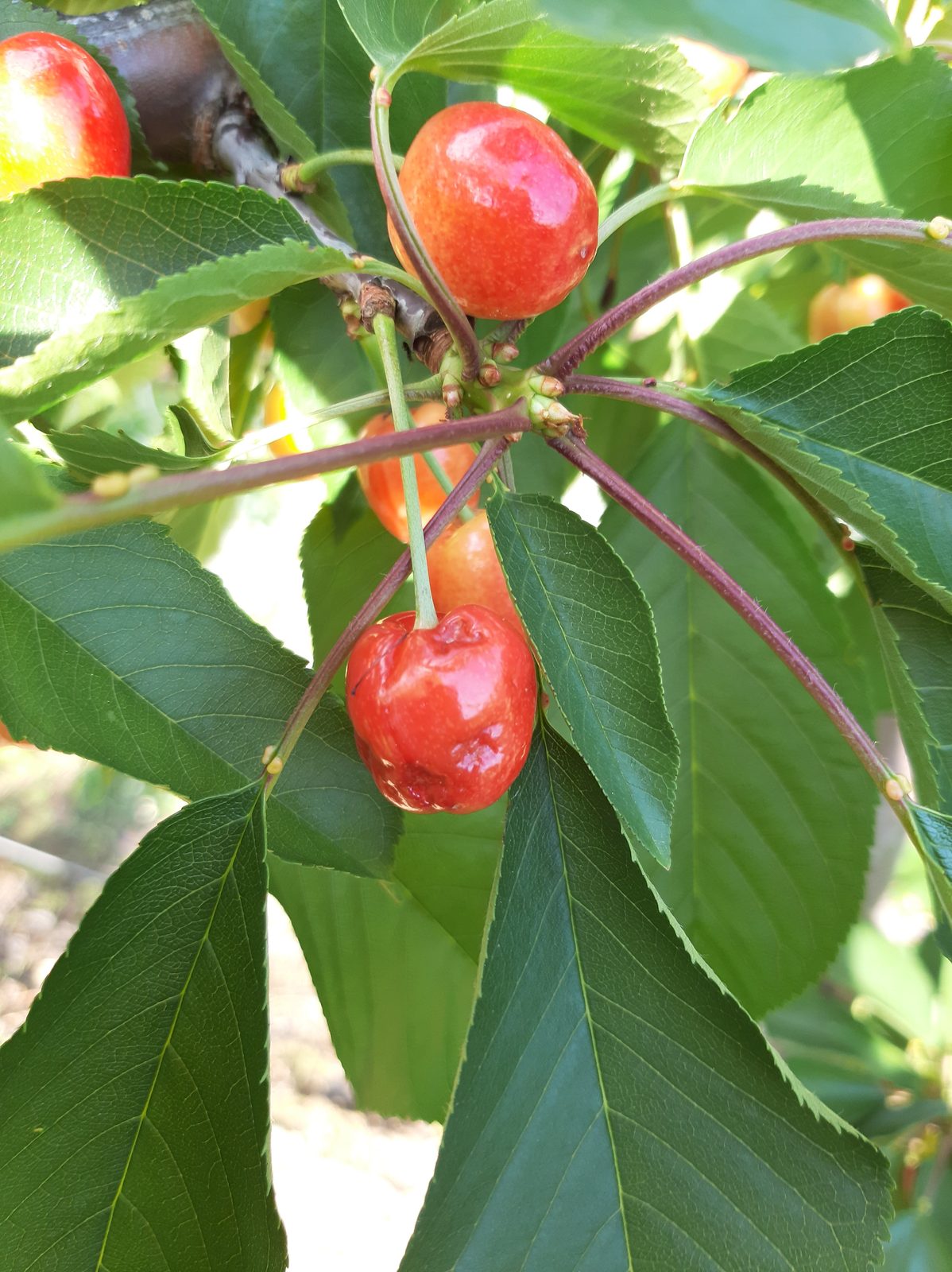
The insect punctures the fruit with its mouthparts; the flesh is degraded by the enzymes it releases inside and collapses. Eventually a dark discoloration and a depression of the skin appear on the outside.
Kiwifruit, the worst case
The fruit softens and drops to the ground. In most cases more than 6 to 10 soft fruit per vine are found on the ground. The problem does not stop in the field: affected fruit with no visible external symptom leaves with the healthy fruit and collapses inside the cold store.
The other fruit crops
- In general: deformation of the fruit, discoloration and collapse of the flesh.
- Sweet cherry: after attack the fruit shows blemishes and pitting.
- Peach and pear: severe deformation that makes the fruit unmarketable.
Where the attack starts
The attack usually starts around the perimeter of the holding, especially on the sides bordering woodland or uncultivated ground where various host plants grow. The whole control strategy rests on this, because it allows perimeter rather than whole-block sprays in the early stages.
4. What the Greek data show
Substantial Greek research has accumulated since 2018, much of it carried out in this very region.
Three years of pheromone-trap monitoring in four kiwifruit orchards (Dion, Neos Efesos, Episkopi, Meliki) showed:
- Adults emerging from overwintering in April.
- Two catch peaks: late July to mid-August, and late September.
- Confirmation of two overlapping generations, with a matching pattern in the second-instar nymphs.
- Imathia consistently showed higher populations than Pieria.
In practice, traps have to go up in April, not May, and the second peak in September coincides with the kiwifruit harvest.
Damage has also been documented on peach and olive in northern Greece (Damos, Soulopoulou and Thomidis, 2020), while the attack on kiwifruit in Greece was formally recorded in 2018.
5. Chemical control
Control of the insect is particularly difficult in kiwifruit, because of the lack of approved active substances. In practice, substances approved against other pests of the crop, such as etofenprox against Metcalfa pruinosa, have side activity and can reduce the population, with reported reductions reaching 60 to 70%.
The recommendations that circulated a few years ago no longer apply:
- Organophosphates: chlorpyrifos and chlorpyrifos-methyl were not renewed and their authorisations expired in February 2020. The class has essentially disappeared from tree fruit.
- Neonicotinoids: imidacloprid, thiamethoxam and clothianidin were banned for outdoor use in 2018 and were subsequently not renewed. Acetamiprid is the only neonicotinoid that remains approved in the EU, and it is under review.
- Pyrethroids: still available, but with restrictions and with high toxicity to beneficials. Their use disrupts the biological balance and can trigger outbreaks of secondary pests such as mites.
Before any application, the current database of approved plant protection products of the Greek Ministry of Rural Development and Food has to be checked for the specific crop and the specific pest. In other countries, the corresponding national authorisations apply.
In the crops where approved solutions exist, applications keep the population below damaging levels, but they do not eliminate it. The insect continually reinvades from the surrounding land, which is why chemical control on its own is not enough.
6. Biological control and traps
The native parasitoids already present in Greece
- Anastatus bifasciatus (Eupelmidae), 58% of all parasitoids recovered
- Ooencyrtus telenomicida (Encyrtidae)
From 529 eggs, 45 parasitoids emerged: a parasitism rate of 8.5%. It is encouraging that natural enemies are already present in the country, but 8.5% is not enough to control the population. It is, however, one more reason to avoid indiscriminate pyrethroid sprays, which kill them too.
The samurai wasp
The most significant results internationally have come from the use of the samurai wasp, Trissolcus japonicus. It parasitises the egg masses of the stink bug, destroying the population before it even hatches.

- In Italy, releases were approved in 2020 with the aim of liberating 120,000 parasitoids, and the programme continued in the following years. Mass-rearing techniques on cold-stored host eggs were developed in parallel.
- In northern Italy Trissolcus mitsukurii was also found, as well as the native Trissolcus kozlovi, which proved able to parasitise stink bug eggs.
- T. japonicus has now been found adventively, that is without having been released, in several European countries, among them France (2022 to 2023) and Serbia (2022).
- It has not yet been recorded in Greece, either as a release or adventively.
My own view remains that release of the beneficial should be carried out in Greece too, through a state programme. It is an exotic species, so official approval and a risk assessment are required. This is not something the individual grower can or should do.
Traps and mechanical means
What the grower can do today
- Pheromone traps for monitoring: set out from April, preferably on the perimeter of the holding, so that the invasion is detected before it reaches the interior.
- Exclusion netting (anti-insect): the most effective solution where it is economically feasible, particularly in kiwifruit with a high crop value.
- Perimeter strategy: since the attack starts at the boundaries, targeted perimeter sprays sharply reduce the volume applied and protect the beneficials in the interior.
- Cleanliness of the surroundings: removal of host plants from the boundaries and sealing of stores and buildings, where the insect overwinters in large aggregations.
7. Conclusion
The brown marmorated stink bug is no longer a “new” insect. It is established, with two generations a year and confirmed populations in Imathia and Pieria. Chemical control is being progressively narrowed and is not going to solve the problem on its own.
The outcome will be decided on three points: timely monitoring from April, protection of the beneficials already working in these orchards, and an organised release of the samurai wasp by the state. Failing that, the damage from the stink bug will be incalculable.
Savvas Pastopoulos
Agronomist MSc
Sources
- Milonas, P. G. and Partsinevelos, G. K. 2014. First report of brown marmorated stink bug Halyomorpha halys Stål (Hemiptera: Pentatomidae) in Greece. EPPO Bulletin 44(2):183-186.
- Thomidis, T. et al. 2021. First report of native parasitoids of Halyomorpha halys (Hemiptera: Pentatomidae) in Greece. Insects 12(11):984.
- Koutsogeorgiou, E. I. et al. Seasonal population dynamics and voltinism of the brown marmorated stink bug, Halyomorpha halys, in Northern Greece. Insect Science.
- Damos, P., Soulopoulou, P. and Thomidis, T. 2020. First record and current status of the brown marmorated stink bug Halyomorpha halys damaging peaches and olives in northern Greece. Journal of Plant Protection Research.
- The delineation of management zones of the Halyomorpha halys population based on its spatiotemporal distribution for precision agriculture purposes. Insects 16(4):336.
- Nielsen, A. L. and Hamilton, G. C. 2009. Life history of the invasive species Halyomorpha halys (Hemiptera: Pentatomidae) in northeastern United States. Annals of the Entomological Society of America 102(4):608-616. Source for the development degree-days.
- Medal, J. et al. 2013. Biology of the brown marmorated stink bug Halyomorpha halys (Heteroptera: Pentatomidae) in the laboratory. Florida Entomologist 96(3). Source for fecundity and egg mass size.
- EPPO Global Database, Halyomorpha halys, distribution in Greece.
- Implementing mass rearing of Trissolcus japonicus (Hymenoptera: Scelionidae) on cold-stored host eggs. On the Italian release programme.
- First detection of Trissolcus japonicus (Hymenoptera, Scelionidae) in southwestern France. Journal of Hymenoptera Research.
Related articles
Nutrient antagonisms and synergies, with a per-element tool
The arrow diagram in every fertiliser leaflet does not stand up scientifically. The antagonisms are real, but they act on two separate levels, in the soil and inside the plant, and the same element can be antagonistic on one and synergistic on the other. With a tool showing the documented relationships of each element.
Zeolite in agriculture: what is documented and what is not
It is a cation exchanger, it holds ammonium and potassium, not nitrate. The rates that work are tens of tonnes per hectare, not hundreds of kilos. And erionite is a Group 1 carcinogen.
Leonardite in agriculture: properties, rates and what the law says
Leonardite is oxidised lignite with up to 85% humic acids, but pH below 3, up to 6% sulphur and almost no phosphorus. What the analyses and meta-analyses show, where it delivers and where it does not, and what Regulation (EU) 2019/1009 and the organic farming rules require.