
Removing astringency from Rojo Brillante persimmon
Savvas Pastopoulos, Agronomist MSc, Pastopoulos Agronomic P.C., Neos Mylotopos, Pella, Greece
Rojo Brillante persimmon is harvested firm and intensely astringent, unfit for consumption. Astringency does not disappear with ripening in cold storage, nor with time: it disappears only when enough acetaldehyde accumulates inside the fruit to bind the soluble tannins. What follows explains the mechanism, gives the carbon dioxide and ethanol protocols as they are applied in Spain, and shows what goes wrong when the chamber is not gas-tight, when the batch is not uniform, and when the treatment runs longer than it needs to.
- What astringency is, and why it is not a taste
- Why Rojo Brillante stays astringent while Jiro does not
- The mechanism: acetaldehyde and tannin insolubilisation
- How much tannin the fruit carries and where the threshold lies
- The de-astringency methods compared
- The carbon dioxide protocol
- The factors that determine success
- The chamber: what it must have
- Safety, CO2 kills silently
- When residual astringency remains
- Internal browning from over-exposure
- Browning or pink spot, what mechanical damage reveals
- After de-astringency: storage and chilling injury
- The ethanol method and the combined system
- A low-cost solution for small quantities
- How to check whether astringency has gone
- The Greek context
- Sources
1. What astringency is, and why it is not a taste
Astringency does not belong to the five basic tastes. It is a tactile sensation. The American Society for Testing and Materials defines it as the complex of sensations due to shrinking and drying of the epithelium as a result of exposure to substances such as tannic acids [1].
In persimmon the mechanism is specific. Soluble tannins accumulate in the vacuoles of specialised cells, the tannin cells. In astringent fruit these vacuoles contain 10 to 12% tannins, while the surrounding parenchyma cells contain only traces and are rich in soluble sugars [1].
When the fruit is chewed, the tannin cells rupture and release their contents. The tannins meet salivary proteins and form insoluble protein-tannin complexes. Saliva loses its lubricating property and the surfaces of the mouth dry out. That is astringency.
Sources: 1
2. Why Rojo Brillante stays astringent while Jiro does not
Persimmon cultivars fall into four groups, on two criteria: whether they are astringent at harvest, and whether their behaviour depends on pollination [1] [3].
| Group | Behaviour | Cultivars |
|---|---|---|
| PCNA | Never astringent, regardless of seed presence. Eaten firm straight from the tree | Fuyu, Jiro, Hana Fuyu, O'Gosho |
| PVNA | Non-astringent when seeded; astringent if not pollinated | Kaki Tipo |
| PVA | Astringent even when pollinated. They lose astringency only in the zones around the seeds, where the flesh darkens | Rojo Brillante, Fuji, Tonewase |
| PCA | Always astringent while the fruit is firm | Hachiya, Triumph |
The difference comes down to the seeds. In PVNA cultivars the seeds release substantial amounts of acetaldehyde, so the fruit de-astringes by itself on the tree. In PVA cultivars the seeds produce a limited amount, which is why astringency disappears only locally, around the seed. In PCA cultivars production is practically nil [1].
3. The mechanism: acetaldehyde and tannin insolubilisation
Persimmon tannins are high molecular weight group B proanthocyanidins. Their structure was clarified by Matsuo and Itoo in 1978: the monomers forming the polymer are catechin, catechin-3-gallate, gallocatechin and gallocatechin-3-gallate, with C4-C8 bonds predominating [1]. In Rojo Brillante specifically, the prevailing units are epigallocatechin and epigallocatechin gallate [1].
The reaction
In the presence of acetaldehyde, soluble proanthocyanidins polymerise and become insoluble. In vitro trials showed that at pH 6 to 8 tannins react with acetaldehyde within a relatively short time and form a gel [1]. Inside the fruit, acetaldehyde acts as a bridge linking two proanthocyanidin molecules. The resulting complex is no longer soluble, does not bind salivary proteins and is therefore not perceived.
Where the acetaldehyde comes from
Two routes, both exploitable:
- Decarboxylation of pyruvic acid. When the fruit is placed under anaerobic conditions, its respiration turns fermentative. The keys are two enzymes: pyruvate decarboxylase and alcohol dehydrogenase [1].
- Oxidation of ethanol, endogenous or exogenous. This is why the ethanol vapour method also works.
Every de-astringency method, CO2, nitrogen, ethanol, hot water, vinegar, arrives at the same point: it induces anaerobic respiration and acetaldehyde accumulation [1] [5].
What was actually measured
In an study with three cultivars in a 99% CO2 atmosphere at 20 °C [4]:
| Compound | At the start | After 20 hours | After 92 hours |
|---|---|---|---|
| Acetaldehyde | 0.02 mg/100 g | 2 mg/100 g | 1.9 mg/100 g |
| Ethanol | 3 mg/100 g | 20 mg/100 g | 60 mg/100 g |
| Soluble tannins | 1.6 to 2.6% | small decrease | 0.02% (at 72 hours) |
Values from Vidrih and co-workers [4]. The cultivars were Kaki Tipo, Lycopersicon and Thiene, not Rojo Brillante, but the mechanism is the same.
Two entries in the table require attention. First, acetaldehyde increases a hundredfold within the first 20 hours and then levels off: the fuel of the reaction is produced early. Second, the tannins do not fall alongside it, they keep falling afterwards, because polymerisation takes time.
4. How much tannin the fruit carries and where the threshold lies
Soluble tannin content differs widely between cultivars, but also within the same cultivar according to ripening stage.
| Cultivar or category | Soluble tannins (% fresh weight) |
|---|---|
| Non-astringent cultivars, not detectable by sensory evaluation | about 0.03 |
| Giombo | 0.26 |
| Rojo Brillante, early season | 0.6 |
| Rojo Brillante, at harvest | 0.4 to 0.5 |
| Astringent cultivars in general, fully coloured fruit | 0.5 to 1.0 |
| Tsurunoko | up to 2.3 |
Values collated from the IVIA literature review [1].
The threshold is not fixed, and that is what matters
For years it was held that concentrations below 1% of fresh weight do not produce a sensation of astringency. Earlier work placed the edibility threshold at 0.1% [4].
In practice this means the laboratory figure does not replace a taste test on a sample from every batch before the consignment leaves.
5. The de-astringency methods compared
Six families of methods have been tested. All lead to acetaldehyde accumulation; they differ in time, cost, safety and, above all, in what is left of fruit firmness.
| Method | Conditions | Duration | Effect on the flesh |
|---|---|---|---|
| High CO2 | 95 to 100% CO2, 20 °C, RH ~90% | 24 hours | Stays firm, the "kaki persimon" type |
| Ethanol vapour | Above 20 °C, high humidity | 36 to 42 hours | Stays firm |
| Combined CO2 + ethanol | Patented combination | Shorter than ethanol alone | Stays firm; less browning |
| Ethanol in cartons | Spray with 30 to 40% ethanol, seal, 10 to 15 °C | 10 to 14 days | Good quality but commercially unviable |
| Nitrogen | High N2 concentration | Variable | Effectiveness depends on cultivar |
| Ethylene | Accelerated ripening | Days | Soft fruit, the "kaki classic" type, eaten with a spoon |
Conditions from sources [1] [2] [6] [7] [8]. The values are indicative and are adjusted to the cultivar and the condition of the fruit.
Effectiveness depends substantially on the cultivar. In some cultivars CO2 outperforms nitrogen, in others the reverse holds [1]. Today exposure to high CO2 concentrations is the method the industry uses.
6. The carbon dioxide protocol
The fruit is placed in a sealed chamber. A flow of CO2 displaces the air. Sensors monitor the concentration and a solenoid valve makes periodic injections so that the level is maintained throughout [1] [7].
The published conditions
| Source | CO2 | Temperature | Relative humidity | Duration |
|---|---|---|---|---|
| IVIA, recommendation for Rojo Brillante | 95 to 100% | 20 °C | not reported | 24 hours |
| Abelló Linde, technical leaflet | 90 to 95% | 20 to 24 °C | about 90% | 20 to 24 hours |
| Vidrih and co-workers, experimental | 99% | 20 °C | not reported | 20 hours, then 72 hours in air |
| Hladnik, in a polyethylene bag | 95% | room temperature | not reported | 24 hours, completed within 3 days |
The values are indicative and do not constitute a recommendation for application. Calibration is done per cultivar, per batch and per installation, with taste evaluation of the result. Sources [1] [4] [5] [7].
The convergence is striking: twenty-four hours, at 20 °C, with the chamber nearly pure CO2. The IVIA recommendation emerged from trials at different ripening stages and was found effective at all of them [1].
7. The factors that determine success
Concentration, and uniformity
Concentrations of 95 to 100% secure the highest level of effectiveness. What is critical, however, is not only the number on the sensor: it is homogeneous distribution of the gas inside the chamber. The formation of air pockets affects the process adversely, and concentrations below these levels leave fruit with residual astringency [1].
Temperature
Low temperatures slow down astringency removal. A comparison of application at 12 °C against 20 °C in Rojo Brillante showed clearly more effective de-astringency at the higher temperature [1]. The recommended temperature for the cultivar is 20 °C.
Conversely, when harvest takes place on cold days, the fruit must be acclimatised in the packhouse so that flesh temperature is not excessively low [1] [8].
Duration
Duration is the most easily adjusted parameter, and for that reason it tends to be extended in order to offset shortcomings in the control of temperature or concentration. That is reasonable, but it has a limit.
Ripening stage
Early and mid-season fruit, with high firmness, loses astringency more easily than fruit at advanced ripening stages at the end of the season [1]. The riper the fruit, the more treatment hours are required [3].
The practical conclusion is one: the chamber is filled with fruit of similar physiological condition. A non-uniform batch means that some fruit will be over-exposed while other fruit comes out astringent.
What has gone before
Fruit kept for prolonged periods at 15 °C de-astringes with more difficulty than freshly harvested fruit. The cause is structural: the flesh loses cohesion and CO2 diffusion is impeded [1]. If storage takes place at low temperature and the fruit retains high firmness, the problem does not appear, provided the fruit is acclimatised before entering the chamber.
Even cultural operations count: treatments to advance ripening or uncontrolled water stress in the orchard can undermine the effectiveness of the treatment [1].
8. The chamber: what it must have
The installation is not complex, but every element of it exists for a specific reason [7] [8]:
- Gas tightness. Without it, gas consumption soars and the concentration is not held.
- A CO2 sensor connected to a control panel and a solenoid valve, so that injections are made automatically.
- A gas distribution network inside the chamber, for uniform distribution.
- Internal recirculation fans, so that no dead zones remain.
- An extraction fan for ventilating the chamber before anyone enters.
- Heating, so that fruit temperature rises when it enters cold.
- A pressure relief valve.
- An impermeable floor sloping towards a drain that can be sealed.
Supply comes from cylinders or cylinder banks at about 57 bar, or from a cryogenic tank for larger consumption [7].
9. Safety, CO2 kills silently
This section is not procedural. A de-astringency chamber is, literally, a space without oxygen.
- The occupational exposure limit for carbon dioxide in Greece is 5,000 ppm, that is 0.5% by volume, for an eight-hour exposure [9]. The chamber operates at 950,000 ppm, two hundred times higher.
- CO2 is about 1.5 times heavier than air. It settles in pits, drains, basements and low points and stays there.
- It is colourless and odourless. There is no warning.
- At high concentrations it displaces oxygen and can cause death in less than fifteen minutes.
In practice the following are required.
- The chamber is fully ventilated with the extraction fan and with the door open before anyone enters [8].
- During treatment, entry is avoided, even for inspection [8].
- A fixed CO2 detector with an audible alarm in the chamber area and in adjacent spaces, in case of leakage.
- No work alone. Always a second person outside the space.
- Signage on the door and locking while the programme runs.
The commercial literature itself explicitly acknowledges the greater hazard of CO2 chambers compared with other methods, both inside the chamber and in the surrounding spaces in the event of a leak [8].
10. When residual astringency remains
It is the most frequent complaint and it has four usual causes, all of them controllable:
| Cause | How it is recognised | Correction |
|---|---|---|
| Low CO2 concentration | Generalised mild astringency throughout the batch | Check gas tightness and calibrate the sensor |
| Air pockets in the chamber | Astringent fruit at specific points in the stack | Recirculation fans, looser stacking |
| Low flesh temperature | Batches that entered cold from the field or the cold room | Acclimatisation before the chamber |
| Uneven ripening | Part of the batch fine, part astringent | Grading by ripening stage before loading |
11. Internal browning from over-exposure
It is the most serious commercial damage the treatment itself can cause, and it appears even without mechanical injury.
The picture is characteristic: browning around the core of the fruit, mainly in the zone near the calyx [3]. De-astringency itself constitutes oxidative stress for the fruit. When it is excessively prolonged, that stress manifests as browning, and is aggravated if the fruit is then stored at low temperature.
The mechanism is the release of CO2 from the fruit: with the attemperation period less acetaldehyde accumulates, which appears to be the precursor of the disorder. For the same reason, treatment at 12 °C instead of 20 °C gave milder browning [12]. In practice: one day at room temperature between the chamber and the cold store.
12. Browning or pink spot, what mechanical damage reveals
The distinction works as a diagnostic tool, because the appearance of the damage shows when the fruit was bruised.
| Appearance | When the impact occurred | What has been oxidised | How it develops |
|---|---|---|---|
| Browning, large brown zones | After de-astringency | The insoluble tannins, initially colourless, turn brown-red | Starts under the skin and spreads progressively inwards |
| Pink spot, isolated pink blotches | While the fruit was still astringent | The soluble tannins, which take on a pink hue | Stays localised at the point of impact, does not spread |
Distinction and mechanism from the IVIA work on Rojo Brillante [3]. The same behaviour was confirmed in most astringent cultivars, with different intensity per cultivar; non-astringent PCNA cultivars show low susceptibility.
The reasoning behind the recommendation is biochemical. CO2 treatment leads to an imbalance in the redox state of the fruit. If the oxidative stress of an impact on the line is added, the insoluble tannins oxidise and take on colour [3].
Sources: 3
13. After de-astringency: storage and chilling injury
Here Rojo Brillante has a peculiarity that costs money: it does not tolerate chilling.
| Condition | What happens |
|---|---|
| Below 11 °C | Chilling injury appears |
| At 15 °C | Maximum storage time up to 20 days |
| At 1 °C, unprotected | Less than 15 days, because of abrupt softening on transfer to marketing temperature |
| At 1 °C, with 1-MCP applied | Up to about 40 days |
Values from the synthesis of IVIA work [2]. 1-methylcyclopropene is an inhibitor of ethylene action; its availability and approval status must always be checked against the national legislation in force.
The symptoms of chilling injury
- Drastic loss of firmness, and the insidious part is that it is not visible while the fruit is in the cold room. It manifests after transfer to marketing temperature, usually within two or three days [1] [2].
- Hard, rubbery texture in some cases, instead of softening.
- Internal browning in the central region, with the formation of compact nodules in the upper part of the fruit.
- Calyx drop.
It is further noted that the increase in acetaldehyde and ethanol after treatment is greater when the fruit is stored at 1 °C than at 15 °C, which is interpreted as one more manifestation of chilling injury [2].
Postharvest fruit management is covered more generally in the article Postharvest nutrition in stone fruit.
14. The ethanol method and the combined system
The ability of alcohol to remove astringency from persimmon has been known in Japan for more than a hundred years [8].
The Japanese carton method
The fruit is placed in cartons of 5 to 15 kg, sprayed with an aqueous solution of 30 to 40% ethanol, sealed and stored for 10 to 14 days at 10 to 15 °C. The result is excellent, firm fruit with a gelatinous texture, sweet flavour and good orange colour, but commercially unviable, precisely because of the time involved [6].
The Spanish industrial version
The method developed for Rojo Brillante is based on holding the fruit in an atmosphere with a suitable ethanol concentration, high humidity and a temperature above 20 °C, for 36 to 42 hours depending on the condition of the fruit [8].
- Product consumption: 5 to 10 litres per tonne of fruit, depending on the tightness of the chamber and the stacking.
- Food-grade ethanol is used, in a ratio calculated so that any risk of ignition is avoided.
- The equipment comprises a network of dispersion nozzles, a dosing pump and a programmer.
The combined CO2 and ethanol system
It was developed precisely to combine the advantages of the two methods: shorter treatment time and greater effectiveness, which together substantially reduce the likelihood of internal browning. Its advantages are particularly significant at the end of the season, when de-astringency becomes difficult [8].
15. A low-cost solution for small quantities
For a grower without a chamber, there is a documented method tested at research level that does not require a large investment [5].
The fruit is placed in polyethylene bags 0.2 mm thick and heat-sealed. The bag is pierced at one corner, CO2 is introduced from the opposite corner through a tube from a cylinder, the air is displaced by successive flushes until the desired concentration is reached, and the bag is resealed.
What the trials showed
- A 24-hour exposure to extreme CO2 concentrations is enough to start the process, which completes within the following three days [5].
- Lower concentrations, around 70%, need more time but can give better flavour.
- Exposure to CO2 maintained or even temporarily increased firmness. In Triumph at 95% CO2, firmness after one, two and three days was 6.4, 6.7 and 9.6 kg/cm², against 2.6 kg/cm² in untreated fruit.
- At three storage temperatures (23, 16 and 4 °C) astringency had gone in all cultivars by day 7. Lower temperatures slowed the process down, but also slowed softening.
16. How to check whether astringency has gone
| Method | How it is done | Where it fits |
|---|---|---|
| Taste test | A sample of fruit from different points in the stack, by more than one person | The final judgement, always |
| Ferric chloride test | A few drops of solution on a cut surface of the fruit; the intensity of the black spots is proportional to astringency | Rapid qualitative check in the packhouse |
| Determination of soluble tannins | Hydrolysis with HCl and absorbance measurement at 550 nm | Laboratory, protocol calibration |
| Firmness with a penetrometer | Measurement at four points per fruit after removing the skin | Monitoring texture, not astringency |
Methods from sources [4] [5] and from current practice. The ferric chloride test is indicative and does not replace taste evaluation.
17. The Greek context
In Greece two persimmon cultivars are grown mainly, with completely different postharvest management: Rojo Brillante, which requires treatment before consumption, and Jiro, which goes straight to consumption after harvest [10].
This difference is not a varietal detail. It is a difference of investment model. Jiro needs nothing. Rojo Brillante needs a chamber, gas, sensors, safety measures and know-how, and in exchange gives a product with longer storage life and export potential.
For the picture of the crop and the cultivar, the blog already carries the articles The Rojo Brilliante persimmon cultivar, Persimmon, the crop and Pruning persimmon in the Rojo Brilliante cultivar.
The key conclusions
- Astringency is a tactile sensation, not a taste, and is not masked by sugar [1].
- Rojo Brillante belongs to the PVA group: it stays astringent even when pollinated, which is why treatment is mandatory [1].
- The documented protocol is 95 to 100% CO2, 24 hours, 20 °C, effective at all ripening stages [1].
- There is no universal numerical tannin threshold; fruit at 0.06% can be astringent to some consumers [1].
- Riper fruit needs more hours, so the chamber is filled with uniform batches [3].
- Excessive duration gives browning around the core and a fermented flavour [3] [5].
- The treatment is applied after the packing line, not before [3].
- Rojo Brillante suffers injury below 11 °C; at 15 °C it keeps for up to 20 days [2].
- A CO2 chamber is a space of lethal hazard and is treated as such [8] [9].
18. Sources
The numbers in the text refer to the list below.
- [1] Besada, C. and Salvador, A. Tecnología poscosecha del caqui. Chapter 12, Instituto Valenciano de Investigaciones Agrarias (IVIA), 2015. Main source for the PCNA/PCA/PVA/PVNA classification, the structure of the tannins as group B proanthocyanidins, the role of pyruvate decarboxylase and alcohol dehydrogenase, the 95-100% CO2 / 24 hours / 20 °C protocol, the comparison of 12 against 20 °C, the 0.06% tannin threshold and the two phases of insolubilisation.
- [2] Salvador, A., Arnal, L., Navarro, P. and Martínez-Jávega, J.M. (2006). Estado actual en la conservación de caqui 'Rojo Brillante'. Revista Iberoamericana de Tecnología Postcosecha 7(2):86-92. Source for chilling injury below 11 °C, the storage limits (20 days at 15 °C, less than 15 days at 1 °C, up to 40 days with 1-MCP), the 85% share of marketed persimmon sold as "kaki persimon" and the greater sensitivity of early-season fruit.
- [3] Besada, C., Novillo, P., Gil, R., Navarro, P. and Salvador, A. (2017). Causas de pardeamiento en caqui. Phytoma España 286, VI International Symposium on Persimmon. Source for the distinction between browning and pink spot according to the moment of impact, for browning around the core due to CO2 over-exposure, for the recommendation to apply the treatment after the packing line and for the need for uniform batches.
- [4] Vidrih, R., Simcic, M., Hribar, J. and Plestenjak, A. (1994). Astringency removal by high CO2 treatment in persimmon fruit (Diospyros kaki). Acta Horticulturae 368 (Postharvest 93):652-655. Biotechnical Faculty, University of Ljubljana. Source for the course of acetaldehyde (0.02 → 2 mg/100 g) and ethanol (3 → 20 → 60 mg/100 g), for the fall of soluble tannins to 0.02% at 72 hours, for the case of Kaki Tipo requiring 72 instead of 20 hours, and for the tannin determination method at 550 nm.
- [5] Hladnik, J. (2020). Removing astringency in persimmon with CO2 and the effect of prolonged softening process. IX International Symposium on Agricultural Sciences AgroReS 2020, Proceedings, pp. 78-85. Agricultural Institute of Slovenia. Source for the polyethylene bag method, for the sufficiency of a 24-hour exposure with completion within three days, for the firmness values in Triumph (6.4 / 6.7 / 9.6 against 2.6 kg/cm²), for the drop in soluble solids and for the "fermented flavour" after 14-21 days.
- [6] Kato, K. (1990). Astringency Removal and Ripening in Persimmons Treated with Ethanol and Ethylene. HortScience 25(2):205-207. Source for the Japanese carton method (spraying with 30-40% ethanol, sealing, 10-14 days at 10-15 °C) and for the finding that CO2 delays fruit ripening.
- [7] Abelló Linde S.A. BIOGON® C, CO2 para la desastringencia del caqui. Technical application leaflet. Source for the commercial protocol of 90-95% CO2 / 20-24 hours / 20-24 °C / about 90% RH and for the layout of the installation (relief valve, CO2 sensor, control panel, solenoid valve, distribution network, cylinders at 57 bar or cryogenic tank).
- [8] CIA. IBERICA BROGDEX S.A. (FOMESA group). Equipo para Eliminación de la Astringencia del KAKI. Commercial technical leaflet. Source for the ethanol vapour method (36-42 hours, above 20 °C, 5-10 litres per tonne), for the natural alcohol content of the fruit (150 mg/100 ml), for the combined CO2-ethanol system, for the disadvantages of CO2 (browning, cost, hazard), for the disappearance of residual astringency within two days and for the chamber specifications.
- [9] ELINYAE, Occupational Exposure Limit Values, under Presidential Decree 90/1999 (Greece). Source for the 5,000 ppm exposure limit value for carbon dioxide.
- [10] AgroTypos (28/11/2023). Persimmon: how the new plantings are made, first Producer Group founded in Pella (in Greek). Source for the two dominant cultivars in Greece (Rojo Brillante and Jiro) and for the first persimmon Producer Group in Pella targeting 25 hectares.
- [11] Database of approved plant protection products and biocides, plantprotect.gr, with data from the official database of the Greek Ministry of Rural Development and Food. Source for checking the approved uses on persimmon.
- [12] Fathi Najafabadi, A. (2021). Optimization of postharvest technology for 'Rojo Brillante' persimmon and introduction of new varieties in the Mediterranean area. Doctoral thesis, Universitat Politècnica de València, supervised by A. Salvador and C. Besada, IVIA. The relevant chapter was published in Scientia Horticulturae 268:109363 (2020). Full text. Source for the finding that the main factor in internal flesh browning is the temperature immediately after the CO2 treatment, for the browning after 41 days at 1 °C in fruit transferred directly into cold storage, for its prevention by a 24 hour attemperation period at 20 °C, for the role of acetaldehyde and for the milder browning when the treatment is carried out at 12 °C instead of 20 °C.
The conditions and protocols mentioned are indicative and do not constitute a recommendation for application. They come from studies and commercial applications in specific cultivars and conditions and do not transfer unchanged to every installation. Calibration is done per cultivar and per batch, with verification of the result.
Operating a chamber with a high carbon dioxide concentration carries a lethal risk of asphyxiation. Installation, commissioning and maintenance are carried out exclusively by a qualified technician, with an occupational risk assessment, permanent gas detection, signage and compliance with the legislation on confined spaces. No worker ever enters a chamber that has not been fully ventilated and checked.
Plant protection products and ripening regulators are used exclusively on the basis of national approvals and the product label [11]. The product label is read before every application. The approval status of substances such as 1-methylcyclopropene is always checked against the national database in force before any use. The approvals in the plantprotect.gr database are valid in Greece only; in every other country the corresponding national register applies.
For every foliar spray: spraying trees carrying fruit can cause fruit marking and leaf burn. A prior test on a limited number of trees is required, with the same product and the same rate, and a wait of 5 to 7 days before general application. Spraying is done in the late afternoon or early morning, never in a heatwave, never on foliage under water stress.
Every intervention is carried out at the user's own responsibility, following an on-site assessment by a licensed agronomist. Pastopoulos Agronomic P.C. accepts no liability for any damage arising from the application of the above.
Related articles
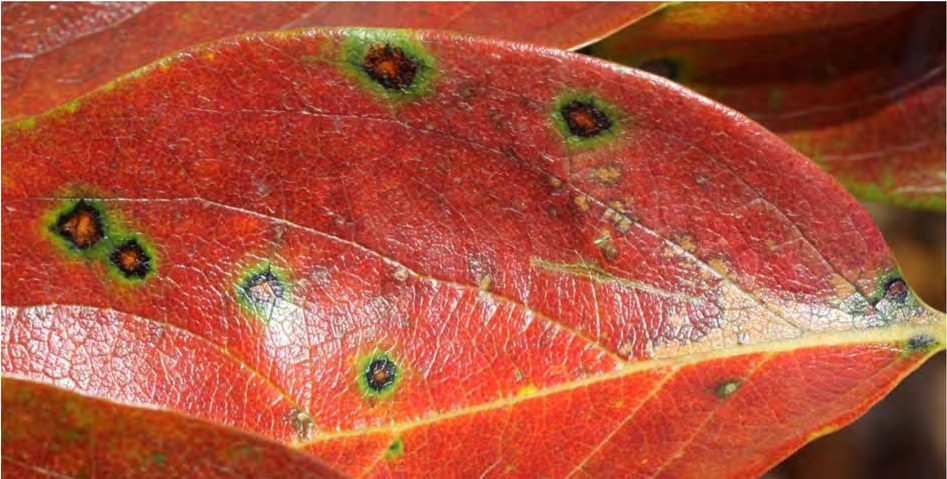
Pests and diseases of persimmon (Diospyros kaki) in Europe and Greece: epidemiology, differential diagnosis and action thresholds
Circular leaf spot (Plurivorosphaerella nawae), the pathogen that adapted to the semi-arid climate of Valencia and is not a quarantine organism, with the comparison between Spain and Korea and the role of drip irrigation. Angular leaf spot, Pestalotiopsis, anthracnose, and the twelve species of Diaporthe, Eutypella and Botryosphaeriaceae identified inside the wood. Postharvest rots: why Alternaria black spot became the limit of storage life after 1-MCP, and how extra irrigation before harvest is paid for in the cold room two months later. Crown gall, vascular wilt, root rots and phytoplasmas. Mealybugs and ants, wax scale, mussel scale, the orange spiny whitefly as a quarantine organism, fruit flies. Herbicide toxicity mistaken for a fungal leaf spot, a differential diagnosis table with fifteen pairs, action thresholds with the sampling method, and the four exotic pathogens threatening the Mediterranean. Thirteen photographs, five from Greek orchards.
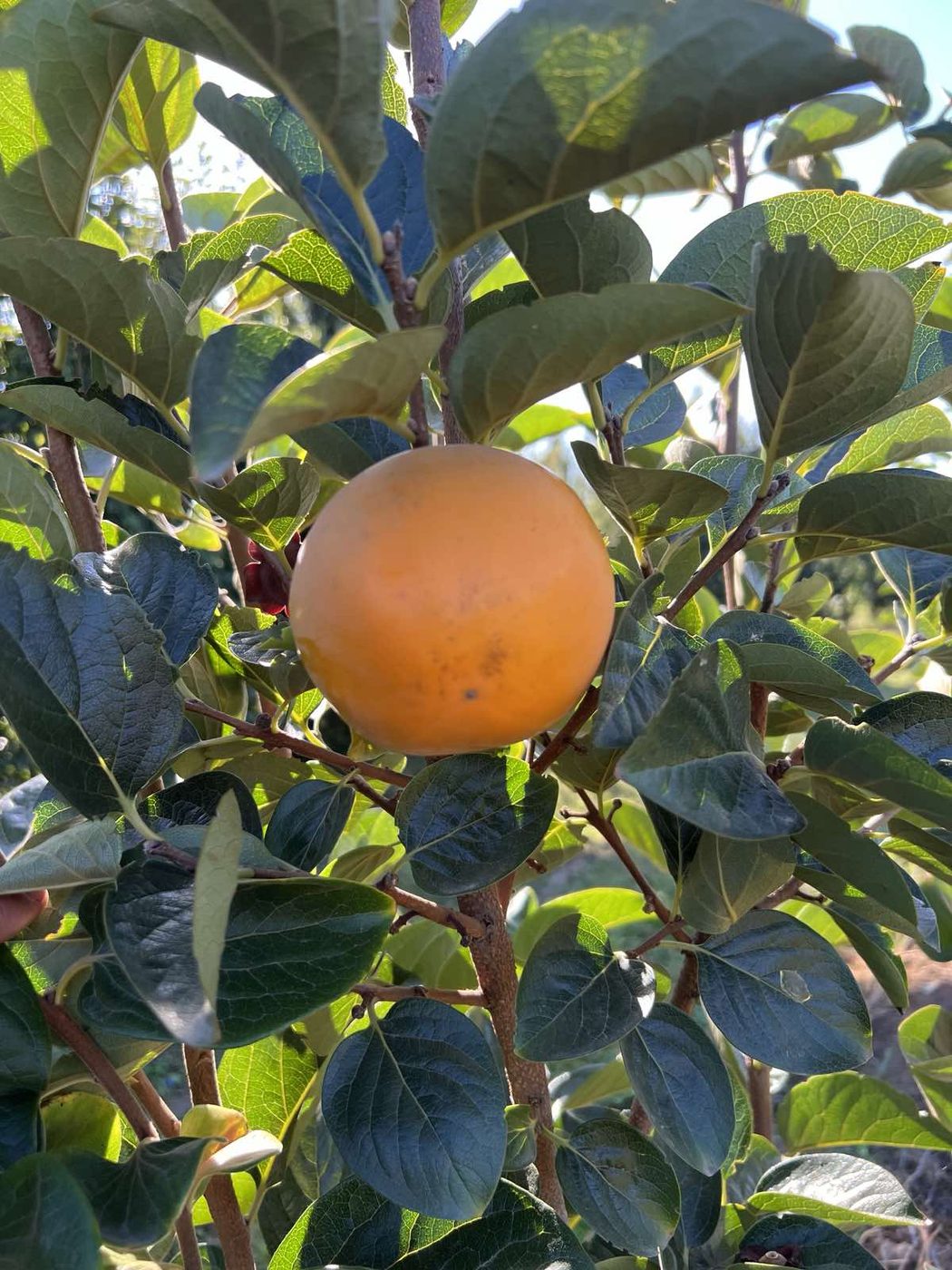
The Maxim persimmon cultivar: rights, ripening and key information
A protected Spanish cultivar of the Genesis Exotic group, distributed under licence. The fruit is not astringent at any stage, not even unripe, so no deastringency chamber is needed, the tree resembles Jiro and ripening falls in mid-September.
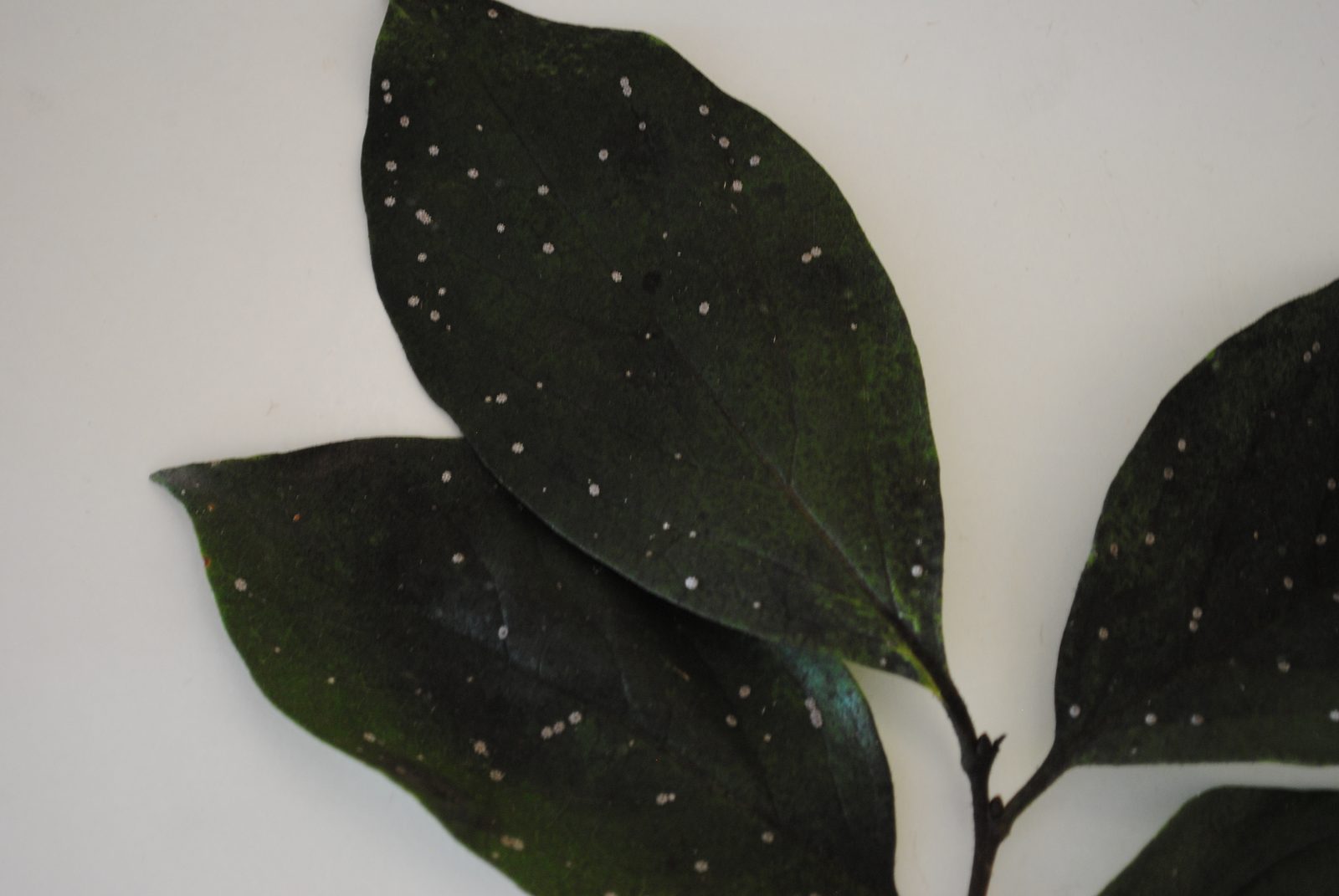
The fig wax scale, Ceroplastes rusci, on fig and persimmon
No synthetic active substance is authorised against it on fig or persimmon in Greece - only paraffin oils, maltodextrin and potassium salts of fatty acids, all of which act physically. That makes the crawler stage the whole of the treatment window, and coverage more important than dose.