
Annual cultural practice for apricot
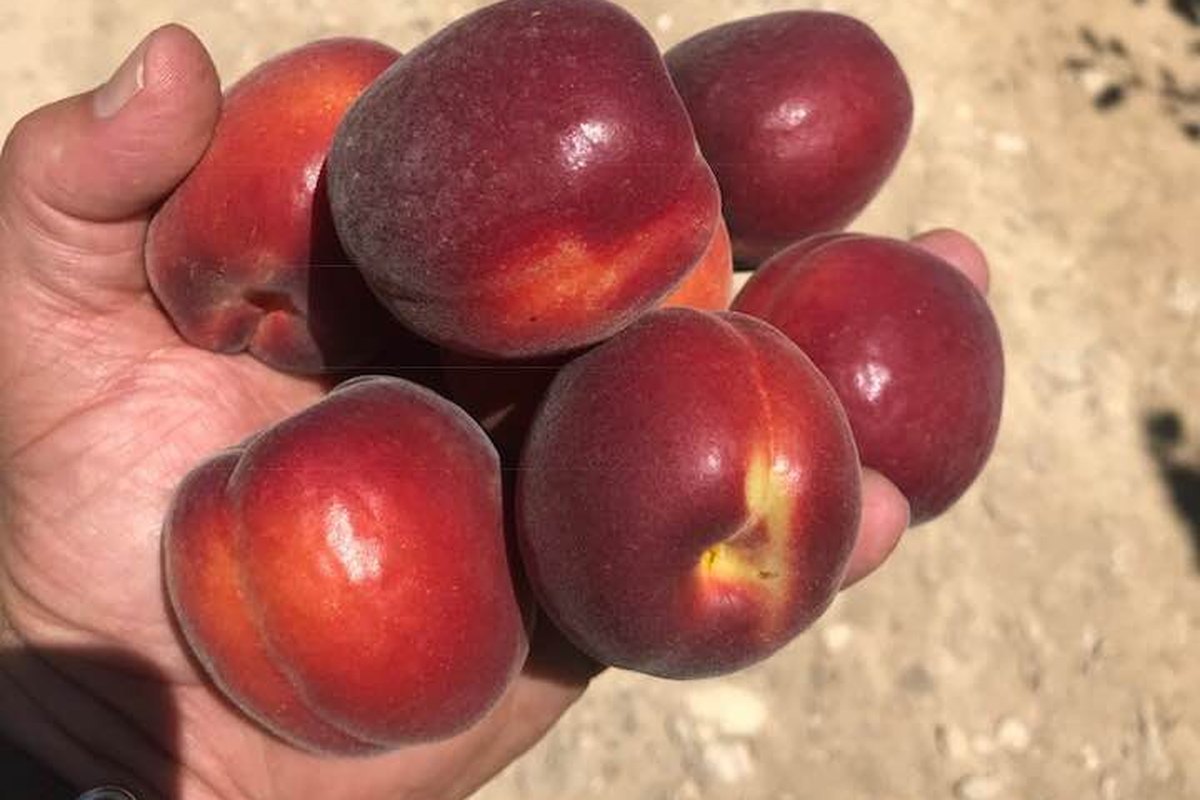
Savvas Pastopoulos, Agronomist MSc, Pastopoulos Agronomics, Neos Mylotopos, Pella, Greece
The apricot is a stone fruit and is relatively easy to grow compared with the other stone fruits. The single most important step towards a successful planting is the right choice of cultivars: they must suit the soil and climate of the district and must not be susceptible to Sharka, the discolouration of stone fruit caused by plum pox virus. The virus is recorded in mainland Greece, it is transmitted by grafting and non-persistently by aphids, and control of the aphids with aphicides or mineral oils is of limited effectiveness only, which is why the defence is certified healthy propagating material and the removal of infected trees [17]. Apricot prefers deep, fertile, well-drained soils. This guide sets out the basic fertilisation and crop protection practices for apricot, season by season.
Most of the documented rates and dates come from the California and Washington State manuals, because that is where published measurements for apricot and the rest of the stone fruits exist. The country, the crop and the cultivar are named inside each sentence. Where no Greek measurement was found, that is stated explicitly and is not filled in with an estimate.
Rates are always converted to hectares: 1 acre equals 0.4047 hectares, 1 pound equals 0.4536 kg. No rate in this article replaces the product label and the approvals database [25] of the Greek Ministry of Rural Development and Food, valid in Greece only, where the approval in force for apricot, the rate and the pre-harvest interval are checked on each occasion.
Table 1. Suggested sprays for a healthy orchard
Commission Implementing Regulation (EU) 2018/1981 renewed the approval of copper compounds as candidates for substitution, because their half-life in soil exceeds 120 days, and permits only uses that give a total of up to 28 kg of copper per hectare over seven years, with the option for Member States to set an annual ceiling of up to 4 kg per hectare [18].
The ceiling is therefore 4 kg of copper per hectare in any one year and 28 kg per hectare across the seven. A programme that puts copper on in January, in March, in June and another two or three times in the autumn adds up quickly. The total per hectare is worked out before the season, not after it. The approval period of the Regulation ran out on 31 December 2025, so what is in force today is checked in the database of the Greek Ministry of Rural Development and Food, valid in Greece only [25].
January – February
- Copper sprays. The documented winter target is shot hole: on apricot in California the buds are protected from Wilsonomyces carpophilus by a fungicide application during dormancy, from mid-November to mid-December, before the heavy winter rains begin [2]. For bacterial canker the same source is far more guarded: copper sprays at the start and at the end of leaf fall have been tried "with highly variable results", and copper resistance may play a part [3]. Bacterial canker appears almost exclusively in replant sites carrying ring nematode or in positions with a spring frost problem, and it is made worse on low, gravelly or sandy spots and on soils with a shallow impermeable horizon [3]; whatever improves the vigour of the tree, from irrigation through to nutrition, reduces the attack more than copper does.
- The greater susceptibility of the cultivars Kyoto, Bebeko and Farbaly to shot hole is recorded as a field observation in the Pella district; no published comparison by cultivar was found.
- Winter treatment for scale insects. For San José scale on stone fruit in California the manual gives a narrow-range winter oil, with about 80% control in light and moderate infestations and application before the end of January, while most individuals are at the black cap stage; in high populations an insect growth regulator is added [8]. Calcium polysulphide (lime sulphur) is not mentioned at all in the table of that same source, and for apricot in particular the California manual states flatly that sulphur is never applied to apricot [1] [6]. The old recommendation of lime sulphur on apricot is therefore undocumented, and the choice of product is made from the approvals database, valid in Greece only [25].
- Zinc. Soil application of zinc sulphate is not the route: "soil applications are usually ineffective unless very high rates are used, with the risk of damage or death of the tree and permanent contamination of the soil with phytotoxic levels of zinc" [12]. The documented route is foliar: for tree fruit in Washington State, where a deficiency has been established, 14 pounds of pure zinc per acre in a winter spray and 9 pounds post-harvest, that is about 15.7 and 10.1 kg of pure zinc per hectare, while the maintenance rate is 2 to 4 pounds per acre, that is 2.2 to 4.5 kg per hectare [12]. Zinc sulphate damages buds and fruit, which is why it is applied only before green tissue appears in spring or after harvest [12]. A pH threshold above 8 as a criterion for application is not documented in that source; no published value for stone fruit was found, and the decision rests on leaf analysis. The intervals of 20 days from any other application and of 15 days before or after pruning are field practice without a published measurement.
- Boron. The soil rate is worked out per hectare and then divided among the trees, never the other way round. The analysis is in the panel immediately below.
That basis is wrong, for the same reason set out in this site's article on boron in the olive: a rate given "per tree" is multiplied by the density of the planting and produces a completely different loading per hectare.
The documented basis. For apricot, peach and cherry, the broadcast soil application is 3 pounds of pure boron per acre once every three years [11]. Per hectare:
3 lb = 1.361 kg per acre · 1.361 ÷ 0.4047 = 3.36 kg per hectare
that is 3.36 kg of pure boron per hectare every three years, which in decahydrate borax at 11.3% boron corresponds to about 30 kg of borax per hectare every three years.
The check that was not being made. Sixty grams of borax per tree give, according to the density:
- 250 trees per hectare:
15 kg of borax = 1.70 kg of boron per hectare - 500 trees per hectare:
30 kg of borax = 3.39 kg of boron per hectare - 800 trees per hectare:
48 kg of borax = 5.42 kg of boron per hectare
The same "per tree" figure gives anything from 1.70 to 5.42 kg per hectare. And because the old recommendation was repeated every two years while the documented rate covers three, in a dense planting the annual loading reaches 1.70 kg per hectare against the 1.12 kg of the documented rate.
The margin. For apricot, peach and cherry leaves in mid-summer, deficiency is set below 20 mg per kg and excess above 50 mg per kg [11]. Between the two lie 30 mg per kg. No boron application is made without leaf analysis or the history of the holding, and the same source advises against supplying boron through the irrigation system, because of uneven distribution and the risk of phytotoxicity [11].
Sources: 11
March
- From mid-February the first bud swell is seen on the early-flowering cultivars. The last copper spray is placed before green tissue appears: while the tissue is minimal the risk of phytotoxicity is very low, but the appearance of green tissue has to be watched and raises that risk [16]. On apricot in particular, fixed copper products can cause phytotoxicity in the form of russeting of the fruit skin when they are applied after full bloom [6].
- From red tip through to pink tip the first treatment against blossom blight is made. On apricot the application at red tip is the most important one, because in this species the sepals are susceptible too, not only the remaining parts of the flower [1].
- How many sprays: the California manual for apricot gives two to three applications at bloom, according to the weather, with a 14-day interval that is shortened to 7 to 10 days when heavy rainfall continues or other conditions of high infection risk prevail [1]. Captan is not applied to apricot fruit, and sulphur is never applied to apricot [1] [6]; for captan the same source notes a further restriction, that it is not applied after 75% petal fall.
- The presence of scale insects in this period is assessed separately: monitoring is done with pheromone traps and with sticky tape on the trees in spring [8].
- As soon as the calyx slips, the treatment for shot hole goes on. The stages the manual sets are red tip, full bloom and petal fall, and the number of applications depends on the amount of rainfall [2]. For scab, Cladosporium carpophilum, with infections that start at bloom and lesions that appear weeks later, the protective applications are placed within three weeks of full bloom and again at five weeks, if the disease was severe in the previous season [7].
- Foliar calcium. The documented effect is not size but the health of the fruit: on peach in the Hawke's Bay district of New Zealand, pre-harvest calcium sprays at fortnightly intervals from early November until harvest raised skin calcium by at least 50% and significantly reduced the incidence and severity of brown rot, both in the field and post-harvest [19]. No published measurement of an increase in apricot fruit size from foliar calcium or from cytokinin products was found, and the references to it have been removed.
- Under prolonged low temperatures, amino acid products are applied. Amino acids act as osmoprotectants that stabilise membranes, enzymes and proteins, and the literature links them with a softening of stress, while recognising that the results differ by crop and by conditions [24]. No measurement on apricot under Greek conditions was found.
April
- In this period the fruit grows rapidly, while the dense canopy of the apricot develops at the same time. For calcium, the published rates that were found concern apple in Washington State: 2 to 4 pounds of pure calcium per acre per application from petal fall until the end of June, and up to 15 pounds per acre for the season [14], that is 2.2 to 4.5 kg of calcium per hectare per application and up to 16.8 kg per hectare for the season. The fortnightly programme through to harvest that is documented for peach [19] is the closest thing on a stone fruit.
- At low temperatures, amino acids or seaweed extracts are applied. The only aggregate figure that was found is a meta-analysis of 198 published studies with more than two thousand independent comparisons: a mean yield increase of 16.3%, with a 95% confidence interval from 13.5% to 19.1%, and with the response depending strongly on the method of application, roughly 19% to 21% for soil application against 15% for foliar, while in root and tuber crops the response was not statistically significant [23]. The meta-analysis does not concern apricot specifically. The references to "vitamin products" and to "a specific biostimulant" have been removed, because they correspond to no published measurement.
- Peach twig borer. In California the pheromone traps are set by 15 March in the San Joaquin Valley and on the central coast, and by 1 April in the Sacramento Valley [4]. The insect has three to four generations, the late ones appearing after apricot harvest [4]. After the first individual is caught, degree-day accumulation begins with a lower threshold of 50 °F and an upper one of 88 °F, that is 10 °C and 31.1 °C; the best control is achieved at about 400 Fahrenheit degree-days from the start of flight while the fruit is green, and at 300 once it has begun to colour, that is about 222 and 167 Celsius degree-days [4]. Those dates are Californian; no published Greek biofix date for peach twig borer was found, and setting the traps in early April in Pella is field practice. The greater susceptibility of the cultivars Pricia, Kyoto and Bebeko is recorded in the same way, as a field observation.
May
- Some cultivars begin to ripen in this period and the supply of potassium has to be adequate. The documentation that was found concerns foliar application: on the cultivar Canino in the Nubaria district of Egypt, sprays of five potassium sources at a concentration of 0.2%, in three applications, one at the second stage of fruit development on 1 May and two at the third stage at 15-day intervals, gave, with potassium nitrate, the highest yield and the greatest fruit weight, soluble solids of 14.8% to 14.9% and the lowest percentage of rot after 7 and 21 days in cold store [20]. The rate, the form, the country and the cultivar all count: the result does not transfer automatically to soil application, nor to the Greek cultivars. An improvement in colouring from foliar phosphorus-potassium products was not documented in any source that was checked.
- Fruit cracking. The review of the factors behind cracking places calcium deficiency as the principal nutritional variable, because of the part calcium plays in the structural cohesion of the cell wall, and mentions boron only as one among many micronutrients whose deficiency may contribute; for apricot in particular, the association recorded is with heavy rainfall during the period of rapid fruit growth, while an abrupt change from dry soil to abundant water raises turgor and cracking [21]. Stability of irrigation therefore comes before any fertiliser decision, and avoiding late fertilisation on cultivars with a history of cracking remains field practice.
- Ripe fruit rot. The threat of rain or heavy dews in the last two to three weeks before harvest is the signal for protection [26]. That is where the figure of 48 hours belongs, which an older version of this article wrongly attributed to blossom blight: at 67 °F, that is 19.4 °C, fruit rot symptoms appear within 48 hours of rain, while warm rains close to harvest can produce infection within a few hours [26]. The same source records strains of Monilinia fructicola resistant to thiophanate methyl in Californian apricot orchards and insists on rotation of modes of action; many products allow at most two pre-harvest applications with a minimum interval of 7 days [26]. The combination with an insecticide for peach twig borer is placed on the basis of degree-days [4], and what may be combined is checked on the labels and in the approvals database, valid in Greece only [25].
- After harvest no fungicide or insecticide treatment is automatically required, unless the grower and the agronomist judge it necessary.
June
- After harvest the tree begins to restock the carbohydrates it spent up to fruit ripening. That the nitrogen remobilised from reserves feeds the following season has been measured, but on apple: the remobilised nitrogen contributed 50% of the nitrogen of the shoots, 90% of the nitrogen of the spur leaves and 60% of the nitrogen of the fruit in the following season [13].
- Foliar urea, the documentation does not support the generalisation. The application window defined is after harvest, October into November, before natural leaf fall, while the leaves have not yet yellowed, so that uptake and transport to the roots, the trunk and the buds can be completed; effectiveness ranges from 30% to 80% according to the weather, and the single measured value given is 48% uptake in apple trees sprayed with 2% urea [13]. The urea must have a biuret content below 0.25% [13] [14]. The crop protection guide of the same state adds, however, for autumn foliar urea, that it is not effective on pear and on the rest of the stone fruits and may cause damage [14]. Anyone applying it does so as a trial on a few trees, inside the window before leaf fall.
- Irrigation is ESSENTIAL throughout the summer. The early post-harvest period in apricot is precisely the period of induction and differentiation of the flower buds that will carry the following season's crop, and the review of deficit irrigation strategies calls for non-limiting irrigation at that phase so that no yield is lost [22]. Insufficient irrigation also leads to sunburn of the bark, and sunburn is one of the wounds through which Cytospora enters [9].
- Copper in summer. The distinction the documentation draws is not "chelated against inorganic", but the metallic copper equivalent: fixed copper products can cause russeting when applied after full bloom, while other copper products with a lower metallic copper equivalent are reported as less phytotoxic in applications after bloom [6]. At the same time, the effectiveness of copper against bacterial canker is variable in any case [3].
July – August
- Apricot pruning can be done in these months. Cytospora canker is caused by Cytospora leucostoma, which is a relatively weak pathogen and cannot attack healthy, intact bark: its spores are carried by rain and wind from existing cankers and infect any wound in the bark, from sunburn, old bacterial canker, wood-boring insects or other damage [9]. The critical point: there is no known chemical control for Cytospora [9]. Management is two things: avoiding stress on the tree, and removal and destruction of the affected wood, and pruning inside the growing season is precisely what makes the cankered branches easy to recognise [9].
- Drought and heat reduce the chance of the cuts becoming infected by fungi and bacteria, but they raise the risk of sunburn at the points that are exposed. The documented answer to trunk sunburn is white interior plastic paint diluted one to one with water, which reflects the light and reduces the heating of the bark [10].
- On holdings with a history of bacterial disease, any copper treatment is made during the night or the cool hours, with a product and a rate taken from the approvals database, valid in Greece only [25], inside the annual copper ceiling [18] and in the knowledge that the effectiveness of copper against bacterial canker is variable [3].
- The susceptibility of certain cultivars to rust and the premature defoliation that follows is recorded as a field observation; no published measurement for Greek conditions was found.
October – November – December
- In these months the trees enter dormancy, and with the first frosts leaf fall begins. The dormant copper application is placed from mid-November to mid-December, before the heavy winter rains begin, and protects the buds from shot hole [2]. The number of applications and the form of copper are checked against the annual and seven-year ceilings [18] and against the approvals database, valid in Greece only [25].
- Phytophthora. Phytophthora infections are favoured by periods of 24 hours or more of saturated soil, and development of the disease is more likely in autumn and in spring, when soil temperatures favour the pathogen [5]. The documented management on apricot is cultural first: choice of site and rootstock, planting on a low berm so that water drains away from the crown, avoidance of over-irrigation in spring and autumn, good drainage and shorter, more frequent irrigations; the rootstocks Marianna 2624 and Myrobalan 29C are described as relatively resistant [5]. As chemical options the same source records fosetyl-Al, on non-bearing trees only, phosphorous acid and mefenoxam [5]. Which of these is approved in Greece for apricot, at what rate and with what pre-harvest interval, is checked on each occasion in the database of the Greek Ministry of Rural Development and Food, valid in Greece only [25].
- Protection of the trunk from sunburn is done with white interior plastic paint diluted one to one with water [10]; sunburn creates the wounds through which Cytospora enters [9].
That recommendation is withdrawn and is recorded here only as a traditional practice, for the following reasons:
- It is an improvised mixture, not an approved plant protection product. The disclaimer at the end of the article calls for approved products, the recommendation contradicted its own disclaimer.
- The "ratio of 1 to 6" defines no concentration: it does not say which substance to which, nor how much solution per tree. Without a concentration there is no rate.
- Copper does not break down. Regulation (EU) 2018/1981 classified it among the substances that are candidates for substitution because its half-life in soil exceeds 120 days, and it set a ceiling of 28 kg per hectare over seven years [18]. A soil drench places that copper directly in the root zone, where it accumulates.
In its place stands the cultural management of the previous section, drainage, berm, control of irrigation, choice of rootstock [5], and, where a product is needed, only what is approved for apricot in the database of the Greek Ministry of Rural Development and Food, valid in Greece only [25]. The same applies to the traditional painting of the trunk with copper sulphate and lime: the documented answer to sunburn is diluted white plastic paint [10].
The apricot holds its canopy until late autumn and stays active long after harvest. For as long as there are leaves, the tree transpires, photosynthesises and stores carbohydrates for the following season.
The early post-harvest period is the phase of induction and differentiation of the flower buds that secure the following season's crop, and for that reason irrigation there has to remain non-limiting [22]. The same review shows that a controlled reduction of water in the late post-harvest period, with a stem water potential between −1.5 and −2 MPa, raised water productivity by 13.2% and 25.6% without loss of yield, while below that threshold a yield reduction of 32% was recorded in the first season [22].
For the grower, irrigation continues through the autumn, into October even, as long as dry conditions prevail and rainfall is not sufficient. Otherwise storage is cut short prematurely and the fruiting buds of the following spring are put at risk.
Sources: 22
Fertilising the apricot
The apricot demands real knowledge of plant nutrition if fertilisation is to be done properly, along with deep, fertile, well-drained soils. The starting point is what the harvested crop removes.
| Element | Quantity |
|---|---|
| Nitrogen (N) | 4 kg |
| Phosphorus pentoxide (P₂O₅) | 1 kg |
| Potassium oxide (K₂O) | 4 kg |
| Magnesium (Mg) | 0.5 kg |
| Calcium (Ca) | 0.5 kg |
The values come from the Greek trade magazine Georgia – Ktinotrofia [Agriculture – Livestock Farming] (in Greek). They were not confirmed against an openly accessible published measurement for apricot and they carry no source number; they are used only as an order of magnitude for planning, not as a measured quantity.
Sources: 20
Raising the organic matter of the soil remains a standing objective, because that is the only route to sustainability in the crop and in the life of the holding. The apricot is fertilised in two doses, one in late winter and one after harvest. That split is documented: for peach, split spring and autumn nitrogen applications are at least as good as a single spring application [15]. In years of excessive crop load a further application can be made after calyx drop with calcium nitrate or potassium nitrate or a compound crystalline or granular fertiliser, always accompanied by irrigation or through fertigation, according to soil type.
Sources: 15
The decision on how and how much to fertilise is always taken in consultation with the agronomist. The wrong fertiliser programme can produce the opposite of the intended result. Fertilisation is planned with environmental protection and the sustainability of the holding in view, and it rests above all on leaf analysis, because a programme based on soil analysis alone can miss.
Table 2. Suggested fertiliser programmes for apricot
The table is indicative and the rates can vary with the particular requirements of each holding, on the advice of a specialist agronomist. The basis remains leaf analysis.
A. Self-fertile cultivars, and non-self-fertile cultivars with high set
Self-fertile cultivars tend to set excessively, and almost always far beyond what the tree itself can size. Heavy fertilisation has to be paired with strict pruning and thinning. Over-fertilisation reduces the post-harvest keeping quality of the fruit.
Programme 1
Base dressing in February or March with a compound fertiliser such as 11-15-15, 12-11-18+TE, 15-5-20+TE, 15-15-15, 12-12-17 and the like, at roughly 1 kg of fertiliser per 30 kg of expected crop.
This rule of thumb was not found in a published source and needs checking at high yields: at 30 tonnes of fruit per hectare it gives 1,000 kg of fertiliser per hectare, that is, with a fertiliser at 15% nitrogen, 150 kg of nitrogen per hectare, above the upper limit of 112 kg of the Penn State range [15]. At such yields the rate is cut back or a fertiliser lower in nitrogen is chosen.
After flowering and fruit drop, 500 to 800 grams of calcium nitrate and, where there is sufficient calcium in the soil, 250 grams of potassium nitrate per tree are added, in two equal doses. The per-tree quantities are first converted to a per-hectare basis: in a planting of 500 trees per hectare, the 800 grams of calcium nitrate become 400 kg per hectare, that is about 62 kg of nitrogen per hectare at a content of 15.5%, which together with the base dressing can take the season outside the range [15]. Over-fertilisation may delay the crop. Application of humic and fulvic acids to the soil every 10 to 15 days is field practice without a published measurement for apricot. After harvest, 80 grams of nitrogen per tree are applied as post-harvest nutrition, that is 40 kg of nitrogen per hectare in a planting of 500 trees, a quantity that counts inside the annual total, not on top of it [15].
Sources: 15
Programme 2
Application every 2 to 3 years, in December and January, of phosphorus, potassium and magnesium. For example, 200 kg per hectare of 0-46-0 combined with 900 kg per hectare of potassium magnesium sulphate 0-0-30 on alkaline soils. Nitrogen is applied annually in the form of ammonium sulphate nitrate, 400 kg per hectare, on the alkaline soils rich in calcium carbonate, or of calcium nitrate with boron, 500 kg per hectare, on soils poor in calcium. The nitrogen can be applied in two doses, half before flowering and half after harvest [15].
The nitrogen check works out: 400 kg of ammonium sulphate nitrate at 26% nitrogen give 104 kg of nitrogen per hectare, and 500 kg of calcium nitrate at 15.5% give 77.5 kg, both inside the range of 56 to 112 kg of the Penn State manual [15], on condition that no further nitrogen fertilisation is added in the same season.
The boron check does not work out on its own: the calcium nitrate with boron is applied annually, whereas the documented soil rate of boron is 3.36 kg of pure boron per hectare every three years [11]. The boron the fertiliser brings counts in the balance of the hectare together with the borax, and the content is read off the particular label, there is no single percentage that covers all products.
Programme 3
Where extreme earliness is the objective, nitrogen applications in late winter are not indicated. Instead, the greater part of the nitrogen is applied at the end of harvest and the remainder, together with phosphorus and potassium, in mid to late winter. That achieves proper storage for the following season and avoids excess nitrogen in the soil solution in spring. The split into a spring and an autumn dose is documented as at least equivalent to the single spring application on peach [15]; the particular 60% to 40% distribution is field practice without a published measurement, and the rule of the annual total stays the same.
Sources: 15
* On soils with high pH and established deficiencies, iron sulphate, borax and zinc sulphate are applied accordingly. For borax the three-year per-hectare basis applies [11], and for zinc the foliar route rather than the soil one [12].
B. Vigorous cultivars characterised by low set or heavy fruit drop
Some cultivars do not set satisfactorily, particularly on lowland holdings, while at the same time being notably vigorous. Here a very moderate fertiliser programme is required, especially in the early years and until full bearing is reached. Excessive fertilisation, nitrogen above all, keeps the trees from forming flower buds and intensifies the relentless growth of strong, vegetative shoots.
Programme 4
On these holdings a conservative winter dressing is suggested, at 500 to 800 grams per tree of a compound fertiliser low in nitrogen, of the 1-2-2 or 1-2-3 type. In a planting of 500 trees per hectare that is 250 to 400 kg of fertiliser per hectare, and the nitrogen is always worked out on that basis, against the annual range [15]. Over-fertilisation can make the cropping problem worse.
For boron and fruit set, the documentation places the foliar spray differently from the practice at bloom: the preferred season is early autumn after harvest, while the spring spray, at the stage before and during pink tip, most probably has a smaller effect [11]; the autumn application is reported as more effective than the spring one at raising the boron of the flowers and improving set [13]. The maintenance rate is 0.5 pounds of pure boron per acre, that is about 0.56 kg per hectare, and where a deficiency has been established 1 pound per acre, that is about 1.12 kg per hectare [11] [14]. The introduction of bees at flowering is established field practice; no quantitative measurement for apricot under Greek conditions was found.
Should set prove excessive after pollination, soil and foliar fertiliser applications are then indicated immediately, in order to achieve satisfactory quality.
After harvest the tree rebuilds its reserves, and post-harvest nutrition makes sense. The three elements, however, do not stand equally:
- Boron: documented. The autumn application is more effective than the spring one at raising the boron of the flowers and at fruit set [13], with early autumn after harvest as the preferred season [11].
- Zinc: partly. Zinc has low remobilisation and is strongly bound within the plant, and the autumn application improved only the levels in buds and flowers without affecting overall levels in the leaves, which is why persistent deficiency calls for more frequent applications [13].
- Foliar nitrogen: disputed for the stone fruits. Autumn foliar urea is described as ineffective on stone fruit, with a likelihood of damage [14]. Soil-applied post-harvest nitrogen fertilisation remains the documented route [15].
The use of urea in any case requires a biuret content below 0.25% [13] [14].
Zinc sulphate damages buds and fruit, and for that reason it is applied only before green tissue appears in spring or after harvest [12]. The first application on any new cultivar is made as a trial, on a few trees, and the response of the foliage is assessed before the application is extended across the whole holding.
The article recommended, on the susceptible cultivars, moving the application to after 15 October. The documentation says the opposite: late autumn applications of zinc sulphate have been associated with bud damage, particularly on trees of high vigour [12]. The date has been withdrawn.
Soil application is not an alternative way out: it is usually ineffective unless very high rates are used, with the risk of damage or death of the tree and permanent contamination of the soil with phytotoxic levels of zinc [12].
Sources: 12
Sources: 15
The micronutrients are applied as boron and zinc products, observing the test application of zinc described above [12] and the per-hectare basis for boron [11].
4. Sources
The numbers in the text refer to the list below. Where only the abstract was used and not the full text, that is stated explicitly.
- [1] UC IPM. Brown Rot Blossom and Twig Blight, Apricot, Pest Management Guidelines. University of California Statewide IPM Program. Source for the two to three bloom sprays according to the weather, for the importance of the application at red tip owing to the susceptibility of the apricot sepals, for the 14-day interval shortened to 7 to 10 in continuous heavy rain, and for the explicit prohibition of sulphur on apricot and of captan on its fruit. Full text.
- [2] UC IPM. Shot Hole Disease, Apricot, Pest Management Guidelines. University of California Statewide IPM Program. Source for shot hole (Wilsonomyces carpophilus) on apricot: dispersal of the spores by rain, winter protection of the buds from mid-November to mid-December before the heavy rains, treatment stages of red tip, full bloom and petal fall, and the dependence of the number of applications on the amount of rainfall. Full text.
- [3] UC IPM. Bacterial Canker, Apricot, Pest Management Guidelines. University of California Statewide IPM Program. Source for bacterial canker (Pseudomonas syringae): occurrence almost exclusively in replant sites with ring nematode or in positions subject to spring frost, aggravation on gravelly, sandy and shallow soils, greater susceptibility of trees 2 to 8 years old, the part played by vigour and nutrition, and the finding that copper sprays gave highly variable results with possible copper resistance. Full text.
- [4] UC IPM. Peach Twig Borer, Apricot, Pest Management Guidelines. University of California Statewide IPM Program. Source for peach twig borer: three to four generations with the late ones after apricot harvest, pheromone traps set by 15 March in the San Joaquin Valley and by 1 April in the Sacramento Valley, degree-days with thresholds of 50 and 88 degrees Fahrenheit, treatment at 400 degree-days on green fruit and at 300 on coloured fruit, and the alternative winter treatment against the larvae. Full text.
- [5] UC IPM. Phytophthora Root and Crown Rot, Apricot, Pest Management Guidelines. University of California Statewide IPM Program. Source for Phytophthora on apricot: periods of 24 hours or more of saturated soil as the infection condition, choice of site and rootstock, planting on a berm, avoidance of over-irrigation in spring and autumn, short and frequent irrigations, relative resistance of Marianna 2624 and Myrobalan 29C, and the recorded chemical options fosetyl-Al, phosphorous acid and mefenoxam. Full text.
- [6] UC IPM. General Properties of Fungicides, Apricot, Pest Management Guidelines. University of California Statewide IPM Program. Source for the explicit statement that sulphur is never applied to apricot, nor captan to its fruit, and for the distinction among the coppers: fixed copper products can cause russeting in applications after full bloom, while products with a lower metallic copper equivalent are reported as less phytotoxic at that phase. Full text.
- [7] UC IPM. Scab, Peach, Pest Management Guidelines. University of California Statewide IPM Program. Source for scab (Cladosporium carpophilum): spore production from bloom onwards at humidity above 70%, appearance of the lesions weeks after infection, and placement of the protective applications within three weeks of full bloom and again at five weeks when the disease was severe in the previous season. Full text.
- [8] UC IPM. San Jose Scale, Peach, Pest Management Guidelines. University of California Statewide IPM Program. Source for the winter treatment against San José scale on stone fruit: narrow-range oil with about 80% control in light and moderate infestations, application before the end of January at the black cap stage, addition of a growth regulator in high populations, and monitoring with pheromone traps and sticky tape. Calcium polysulphide is not mentioned in the table of that source. Full text.
- [9] UC IPM. Cytospora Canker, Prune, Pest Management Guidelines. University of California Statewide IPM Program. Source for Cytospora canker (Cytospora leucostoma): a weak pathogen that does not attack healthy intact bark, entry through wounds from sunburn, old bacterial cankers and wood-boring insects, dispersal by rain and wind, absence of any known chemical control, and management by avoidance of stress and removal of the affected wood within the growing season. Full text.
- [10] UC IPM. Whitewashing Trunks. University of California Statewide IPM Program. Source for protection of the trunk from sunburn with white interior plastic paint diluted in an equal part of water, which reflects the light and reduces the heating of the bark. The source mentions no lime or copper mixtures for this purpose. Full text.
- [11] Washington State University Tree Fruit. Boron. The principal source for boron on stone fruit: mid-summer leaf limits for apricot, peach and cherry, deficiency below 20 mg per kg, excess above 50, broadcast soil application of 3 pounds of pure boron per acre once every three years, foliar maintenance rate of 0.5 pounds per acre with early autumn after harvest as the preferred season and a smaller effect for the spring application, and the advice not to supply boron through the irrigation system because of uneven distribution and the risk of phytotoxicity. Full text.
- [12] Washington State University Tree Fruit. Zinc. The principal source for zinc on tree fruit: soil applications are usually ineffective unless very high rates are used, with the risk of damage or death of the tree and permanent contamination of the soil; foliar deficiency rates of 14 pounds of pure zinc per acre in winter and 9 pounds post-harvest, maintenance rate 2 to 4 pounds; zinc sulphate damages buds and fruit and is applied only before green tissue or after harvest; late autumn applications have been associated with bud damage on trees of high vigour. Full text.
- [13] Washington State University Tree Fruit. Fall Nutrient Sprays in Tree Fruit. Source for post-harvest foliar sprays: an October to November window before natural leaf fall so that uptake and transport to roots, trunk and buds can be completed; effectiveness of 30% to 80% according to the weather and 48% uptake in apple trees with 2% urea; the requirement for biuret below 0.25%; the contribution of remobilised nitrogen in the following season to shoots, spur leaves and fruit; greater effectiveness of the autumn than the spring boron application on flowers and fruit set; and the low remobilisation of zinc within the plant. Full text.
- [14] Washington State University Crop Protection Guide. Postbloom nutrient applications. Source for autumn foliar urea at 8 to 10 pounds of pure nitrogen per acre with biuret below 0.25%, for the explicit note that it is not effective on pear and on the rest of the stone fruits and may cause damage, for the calcium rates on apple, 2 to 4 pounds of pure calcium per acre per application from petal fall to the end of June and up to 15 pounds for the season, and for the boron rates, 1 pound per acre in deficiency and 0.5 for maintenance. Full text.
- [15] Penn State Extension. Nitrogen Fertilization of Peach Trees. Source for the typical annual nitrogen range on peach, 50 to 100 pounds per acre according to the soil, the severity of pruning and the crop load, for the regional recommendations of California, Michigan, Virginia, South Carolina and New Jersey, for the half rate on trees without a crop, and for the finding that split spring and autumn applications are at least as good as a single spring one. Full text.
- [16] Penn State Extension (2026). Disease Update: Dormant Copper Sprays and Orchard Sanitation. Source for dormant copper on stone fruit: the risk of phytotoxicity is very low while green tissue is minimal and requires watching from the moment green tissue appears, while very late applications after a warm spell lose effectiveness because the swollen buds shelter the spores. Full text.
- [17] EPPO Global Database. Potyvirus plumpoxi (plum pox virus, Sharka), Datasheet. Source for the main hosts, among them apricot (Prunus armeniaca), for transmission by grafting and other methods of vegetative propagation and non-persistently by aphids, for the record of the virus in mainland Greece, for the recommendation to produce and use healthy propagating material within a certification scheme together with removal of infected trees, and for the limited effectiveness only of aphicides and mineral oils. Full text.
- [18] Commission Implementing Regulation (EU) 2018/1981 of 13 December 2018 renewing the approval of the active substances copper compounds, as candidates for substitution. EUR-Lex. Source for the ceiling on total application of 28 kg of copper per hectare over a period of seven years, for the option of Member States to set an annual ceiling of up to 4 kg per hectare, for the classification of copper compounds as candidates for substitution owing to a half-life in soil of more than 120 days, and for the approval period from 1 January 2019 to 31 December 2025. Full text.
- [19] Elmer, P.A.G., Spiers, T.M. and Wood, P.N. (2007). Effects of pre-harvest foliar calcium sprays on fruit calcium levels and brown rot of peaches. Crop Protection 26(1):11–18. Source for the pre-harvest calcium sprays on peach in the Hawke's Bay district of New Zealand, at fortnightly intervals from early November until harvest: an increase in skin calcium of at least 50% and a significant reduction in the incidence and severity of Monilinia fructicola attack in the field and post-harvest. Abstract only.
- [20] Okba, S.K., Mazrou, Y., Elmenofy, H.M., Ezzat, A. and Salama, A.-M. (2021). New Insights of Potassium Sources Impacts as Foliar Application on 'Canino' Apricot Fruit Yield, Fruit Anatomy, Quality and Storability. Plants 10(6):1163. Source for the foliar application of potassium on the apricot cultivar Canino in the Nubaria district of Egypt: five potassium sources at a concentration of 0.2%, three applications, one at the second stage of fruit development and two at the third at 15-day intervals, with potassium nitrate giving the highest yield and the greatest fruit weight, soluble solids of 14.8% to 14.9% and the lowest percentage of rot after 7 and 21 days of cold storage. Full text.
- [21] La Spada, P., Dominguez, E., Continella, A., Heredia, A. and Gentile, A. (2024). Factors influencing fruit cracking: an environmental and agronomic perspective. Frontiers in Plant Science 15:1343452. Source for fruit cracking: the part played by calcium in the structural cohesion of the cell wall and its deficiency as the principal nutritional variable, the mention of boron only as one among many micronutrients whose deficiency may contribute, the association of heavy rainfall during the period of rapid growth with cracking in apricot, and the effect on turgor of an abrupt change from dry soil to abundant water. Full text.
- [22] Andreu-Coll, L. et al. (2024). Regulated Deficit Irrigation Perspectives for Water Efficiency in Apricot Cultivation: A Review. Agronomy 14(6):1219. Source for the irrigation of apricot after harvest: the early post-harvest period corresponds to the induction and differentiation of the following season's flower buds and requires non-limiting irrigation, while a controlled reduction in the late post-harvest period with a stem water potential between −1.5 and −2 MPa raised water productivity by 13.2% and 25.6% without loss of yield, with a yield reduction of 32% in the first season below that threshold. Full text.
- [23] Pérez-Oñate, C.J. et al. (2026). Crop yield responses to seaweed extract-based biostimulants depend on application strategy, formulation, and extraction methods: a meta-analysis. Frontiers in Plant Science 17:1803269. Source for the mean yield increase of 16.3% with a 95% confidence interval from 13.5% to 19.1%, across 198 published studies and more than two thousand independent comparisons, for the greater and more consistent response to soil application than to foliar, and for the non-significant responses in root and tuber crops. The meta-analysis does not concern apricot specifically. Full text.
- [24] Sun, W., Shahrajabian, M.H., Kuang, Y. and Wang, N. (2024). Amino Acids Biostimulants and Protein Hydrolysates in Agricultural Sciences. Plants 13(2):210. Source for the function of amino acids as osmoprotectants that stabilise membranes, enzymes and proteins, for the mechanisms operating through nitrogen and carbon metabolism and the hormonal profile, and for the finding that the results differ according to the crop and the conditions. It does not concern apricot specifically. Full text.
- [25] Υπουργείο Αγροτικής Ανάπτυξης και Τροφίμων. Κατάλογοι Φυτοπροστατευτικών Προϊόντων και Βιοκτόνων [Ministry of Rural Development and Food. Lists of Plant Protection Products and Biocides], Directorate for the Protection of Plant Production (in Greek). The source for the approval regime in force in Greece: which active substance and which product is approved for apricot, at what rate and with what pre-harvest interval. Every rate and every active substance mentioned in this article is checked here before application. These approvals are valid in Greece only; readers in other countries check the register of their own competent authority. Full text.
- [26] UC IPM. Ripe Fruit Rot, Apricot, Pest Management Guidelines. University of California Statewide IPM Program. Source for ripe fruit rot caused by Monilinia fructicola and M. laxa: appearance of symptoms within 48 hours of rain at 67 degrees Fahrenheit, infection within a few hours from warm rains close to harvest, the threat of rain or heavy dews in the last two to three weeks before harvest as the signal to treat, a limit of two pre-harvest applications with a minimum interval of 7 days on a number of products, and the record of strains resistant to thiophanate methyl in Californian apricot orchards. Full text.
Related articles
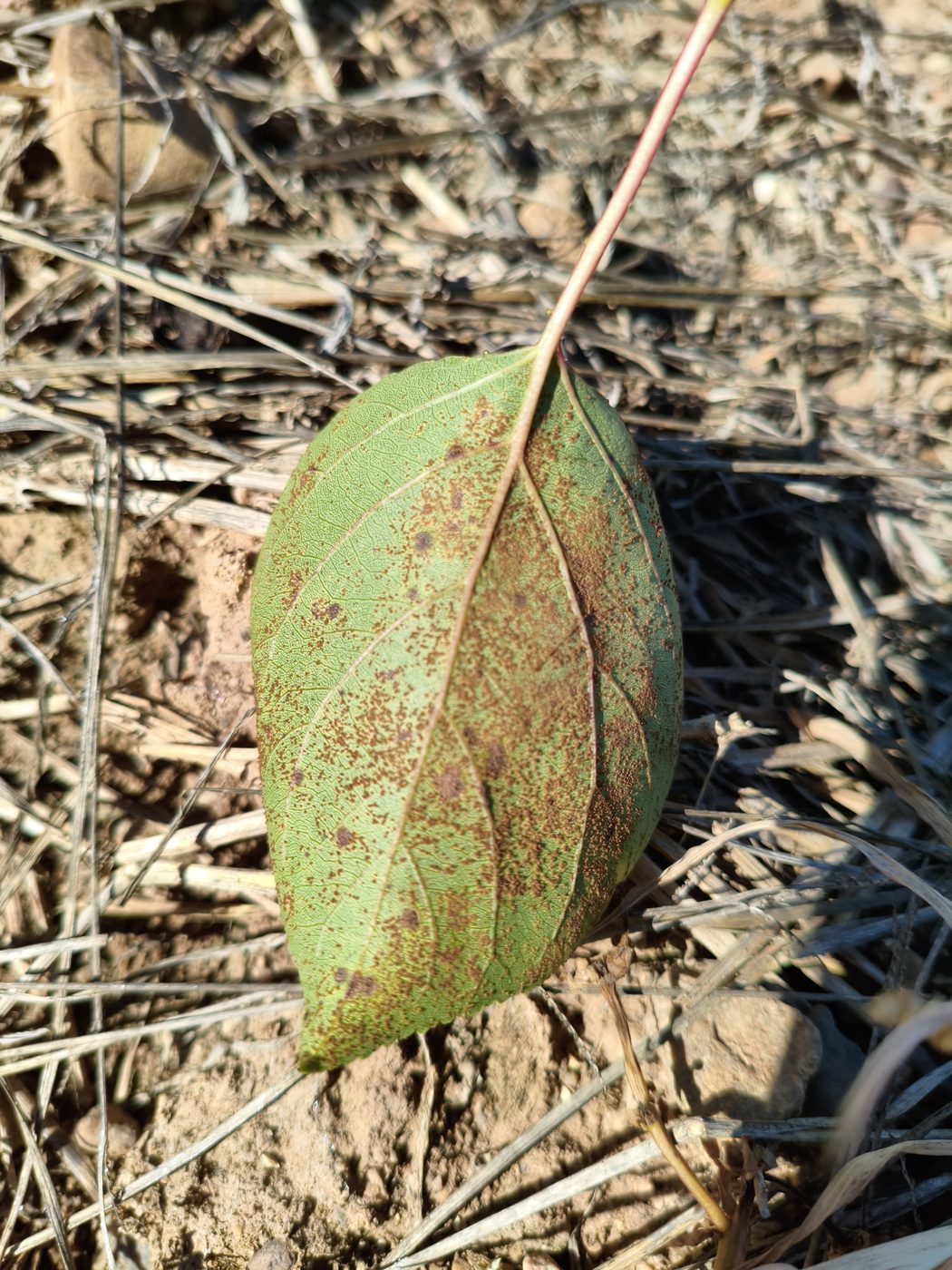
Apricot pests and diseases: identification from symptoms, with a diagnostic tool
Rust with field photographs, brown rot, shot hole, scab, powdery mildew, bacterial spot and canker, Eutypa dieback, silver leaf with and without a fungus, Phytophthora, Armillaria, plum pox and phytoplasma, and the pests: peach twig borer, oriental fruit moth, medfly, flatheaded root borer, mealybug, scale. The pruning dilemma, the three cuts that sort out a dead tree, and a tool that compares symptoms against the profiles of 34 causes.
Nutrient antagonisms and synergies, with a per-element tool
The arrow diagram in every fertiliser leaflet does not stand up scientifically. The antagonisms are real, but they act on two separate levels, in the soil and inside the plant, and the same element can be antagonistic on one and synergistic on the other. With a tool showing the documented relationships of each element.
Zeolite in agriculture: what is documented and what is not
It is a cation exchanger, it holds ammonium and potassium, not nitrate. The rates that work are tens of tonnes per hectare, not hundreds of kilos. And erionite is a Group 1 carcinogen.