
Almond pests and diseases: identification from symptoms, with a diagnostic tool

Savvas Pastopoulos, Agronomist MSc, Pastopoulos Agronomics, Neos Mylotopos, Pella, Greece
Almond in Greece loses yield to three causes above all: the almond seed wasp, which destroys the edible part of the fruit itself; red leaf blotch, which defoliates the tree through the summer; and spider mite, which is paid for the following year. All three share one property: by the time the symptom is visible, the intervention has already missed its window. This article covers the full range of almond pests and diseases, with emphasis on those three and on post-harvest infestation by storage moths, and includes an interactive symptom-based identification tool.
- Symptom-based identification tool
- Diseases and pests that get confused with one another
- The almond seed wasp
- Red leaf blotch
- Spider mites and other mites
- Blossom blight, anthracnose and the diseases of flowering
- Leaf spot diseases
- Cankers of twigs and scaffolds
- Crown, roots and vascular diseases
- Bacterial diseases, viruses and phytoplasmas
- Wood borers and other pests
- Storage moths and post-harvest infestation
- The year in one table
- Sources
1. Symptom-based identification tool
Select the organ, then whichever symptoms match. Results update on their own.
2. Diseases and pests that get confused with one another
Each row is a pair that gets confused in practice, together with the one feature that separates them without a laboratory.
| Looks like | But is | The feature that separates them |
|---|---|---|
| Red leaf blotch | Rust | Rust leaves dust on the fingers from the underside. Red leaf blotch does not, its lesion is solid and acquires a crusty texture. |
| Red leaf blotch | Shot hole | In shot hole the dead tissue drops out and leaves a hole. The red leaf blotch lesion stays in place all summer. |
| Spider mite | Rust mite (Aculus) | Spider mite gives bronzing with fine webbing on the underside; Aculus gives a silvery appearance with curling already in spring. |
| Spider mite | Nutrient deficiency or salinity | Spider mite starts from the dusty and water-stressed parts of the orchard, not uniformly across the planting. |
| Mummified fruit from the seed wasp | Mummified fruit from anthracnose | Open the fruit. The wasp leaves a white legless larva and a destroyed kernel; anthracnose leaves a sunken lesion with gumming on the pericarp and orange spore masses. |
| Seed wasp larva | Storage moth or twig borer larva | The seed wasp produces no silken webbing and leaves no granular frass. It is a hymenopteran, not a caterpillar. |
| Twig dieback from blossom blight | Dieback from Phomopsis | Blossom blight starts from a dead flower whose petals stay attached. Phomopsis starts from a canker bearing pycnidia and shows up as failure of buds to break. |
| Blossom blight canker | Bacterial hyperplastic canker | The bacterial canker is large, open and stays active for years, with swollen margins. The blossom blight canker is small and always forms around the base of a blighted flower. |
| Phytophthora crown rot | Armillaria root rot | Phytophthora gives reddish-brown tissue with a sharp boundary against healthy wood. Armillaria gives white mycelial plaques and rhizomorphs. |
| Phytophthora crown rot | Flatheaded root borer | The borer leaves tunnels with sawdust and is favoured by drought. Phytophthora is favoured by the opposite, by excess moisture. |
| Dieback in patches | Verticillium wilt | The pattern in the field. Phytophthora strikes along the planting line and where water collects; Verticillium appears on isolated, scattered trees. |
| Verticillium wilt | Insect damage at the crown | Cut a branch. Verticillium gives a brown ring or arc in the xylem, with no tunnels. |
3. The almond seed wasp
Eurytoma amygdali Enderlein (Hymenoptera: Eurytomidae) is the most serious pest of the crop in Greece [8]. It is not a caterpillar and it is not a beetle: it is a hymenopteran, related to the wasps, and the whole larval life is spent inside a single almond.

One generation per year, and a tail that lasts for years
The almond seed wasp has one generation per year [8]. Adults appear in spring. Using its ovipositor, the female pierces the pericarp of the immature almond, still green and soft at that stage, and deposits one egg on the nucellar tissue. The young larva feeds first on that tissue and later on the endosperm and the embryo [8].
In northern Greece, in the Thessaloniki and Chalkidiki areas, the larva completes its development from early June to late July. It then stays in diapause inside the infested almond until late December or late January [8].
Here lies the first practical problem: a proportion of the population, varying with the region, stays inside the infested almonds for two or more years [8]. The diapause is not uniform: laboratory work showed it is completed in two successive stages, and that its intensity differs with the cultivar the larva sits inside, after eight weeks at 20 °C most individuals from 'Truoito' fruit completed the first stage, but fewer than half of those from 'Retsou' fruit did [15]. The practical consequence is simple: a mummified fruit does not stop being dangerous because one winter has passed.
How many degree-days? The honest answer
The nearest model that exists is for a different species: for the apricot seed wasp, Eurytoma maslovskii, in Korea, the lower threshold for adult emergence in the field was estimated at 7.3 °C with a thermal constant of 336.7 degree-days from 1 January, and the predictions deviated by no more than three days from observed emergence [26]. It is given here as an illustration of what such a model would look like, not as a recommendation: the species, the host and the climate are all different.
The two-stage diapause described above most likely explains why no simple single-threshold model has been built: the time to complete diapause was in several cases found to be bimodally distributed and to depend on the cultivar [15].
When the adults emerge, the figures that do exist
Pupation takes place in late winter or early spring, and the adult leaves the fruit by chewing a circular hole one to two millimetres across in the pericarp [8].
| Region | First emergence | Peak | Flight duration | Phenological marker |
|---|---|---|---|---|
| Adiyaman, Turkey [11] | 24 to 27 March | 3 April (86 to 95% cumulative) | 15 to 17 days | Fruitlets at lentil size |
| Pella, Greece, 2026, own observation | 26 March | 4 April | not recorded | after petal fall |
| Provence, France [10] | 2 to 26 April by site and year | not reported | 12 to 27 days | not reported |
| Spain, regional aggregate [27] | mid-March | not reported | until late May | first eggs early May |
The difference between the "15 to 17 days" of Turkey and the "mid-March to late May" of Spain is not a contradiction: the first is an emergence curve for one orchard, the second the sum of many sites and altitudes. The two are not comparable.
Monitoring: cages and the pheromone
The established method is the emergence cage. Mummified almonds are collected before flowering and placed in a low cage under the trees, and the cage is checked to establish when the first adults appear [8]. In the Turkish work, tulle cages 110 centimetres long and 30 centimetres in diameter were used, with 200 infested fruits per cage and nine cages per orchard, on three trees and in three aspects [11]. The check is made every two or three days from mid-March.
The limitation of the method is known: the emergence date from the cages differs by a few days from that of the natural population, and is affected by the collection date of the fruit and by the position of the cages within the orchard [8].
The adult: how long it lives and how many eggs it lays
Oviposition begins one or two days after emergence. Drilling the pericarp and placing one egg take nine to thirty-four minutes. Outdoors, with the variability of the weather, fecundity was measured at about 23 eggs per female and lifespan at 4 to 25 days; under controlled conditions at 23 °C fecundity reached 129 eggs [16]. The two figures differ more than fivefold and show how strongly the population depends on the weather during the flight; the field-relevant number is the first. Males emerge two to four days before the females and the sex ratio is roughly one male to two females [10].
The host-marking pheromone, and why it matters
After ovipositing, the female deposits a host-marking pheromone on the surface of the fruit, which allows females to recognise which fruits have already been attacked and to oviposit only on the rest [9]. The result is a uniform distribution of the eggs and optimal exploitation of the available fruit by the insect.
For the grower this means something concrete: the infestation does not concentrate in a few fruits, it spreads. There is no focus that can be isolated, and a sample of fruit from any part of the tree is representative.
The damage and the cultivars
In some cultivars, such as 'Texas' (Mission), the oviposition itself causes heavy premature fruit drop [12]. The principal damage, however, is the consumption and destruction of the kernel by the larva.
Soft-shelled cultivars such as 'Retsou' are attacked every year and can lose up to 90% of the crop. By contrast, many cultivars such as 'Ferragnes' appear fairly resistant [8]. The mechanism is not chemical but mechanical: when the females appear in spring, the pericarp of those cultivars has already developed considerably and the endocarp is already very hard, which impedes penetration by the ovipositor [8].
Control: the mummified fruit comes first
The principal preventive measure is the collection and destruction of the mummified almonds that remain on the trees over winter with the larva inside them [8]. Collection is not done mechanically by shaking, because in most cultivars the infested fruits do not fall. It requires collection by hand or with a pole, and early, because through the winter months rain and wind throw many of the infested fruits to the ground, from where they are very hard to collect. The fruit is destroyed by burning or otherwise, so as to kill the larvae before the adults emerge the following spring [8].
In Spanish plantations where the mummified almonds were removed, 96% of edible almonds were harvested, against 18% where they were not [27]. The figure comes from a published abstract and is not accompanied by a description of the experimental design; it is given as an order of magnitude, not as a precise expectation. The measure pays off only when it is applied across all the orchards of an area, because the adult flies.
Chemical control: the target is the adult
Killing the larva inside the fruit is practically unattainable, since systemic insecticides are no longer registered on almond [8]. Furthermore, because the oviposition itself causes the fruit drop in susceptible cultivars, the strategy must be adulticidal and not larvicidal: the aim is to prevent oviposition, not to kill the larva after it [12].
The spray therefore targets the adults during the three to four weeks the flight lasts, at fourteen-day intervals [8].
- Adult emergence: from mid-March. In Adiyaman 24 to 27 March, peaking on 3 April [11]; in Spain from mid-March [27]; in Pella, Greece, in 2026, 26 March with a peak on 4 April.
- Phenological marker: fruitlets at lentil size, after petal fall [11]. It is a safer guide than the calendar date, because emergence shifts with region and year [10].
- First spray: one or two days after the first adult emergence [10], in sunny weather and during the warm hours of the day [39].
- The target is the adult, before oviposition. The larva is protected by the pericarp and the seed coat, and no systemic product is registered on almond any more [8]; in susceptible cultivars, moreover, the oviposition itself causes the fruit drop [12].
- Monitoring: an emergence cage with mummified fruit under the trees, checked every two or three days from mid-March [8][11].
- One application: 2 to 2.3% infested fruit
- Two applications two weeks apart: 0.2 to 2%
- Untreated control: 64 to 82%
The spray is applied in sunny weather and during the warm hours of the day, when the adults are active, not under cloud, when they stay still [39].
Sources: 8 9 10 11 12 13 14 15 16 26 27 28 39
4. Red leaf blotch
Red leaf blotch is the most prevalent foliar disease of almond across all Mediterranean growing regions [4].
The name: what changed and why it matters
Older Greek and Mediterranean literature gives the cause as Polystigma ochraceum or Polystigma fulvum. The valid name for the almond pathogen is Polystigma amygdalinum P.F. Cannon, established in the monograph of the genus [1] and used throughout the modern literature [3][4][5]. Polystigma rubrum, the type species of the genus, forms its orange-red stromata on leaves of Prunus spinosa and P. domestica, not on almond.
This is not a nomenclatural detail. Anyone searching the literature under the old name misses the whole of the last fifteen years of research, and with it the finding that changes the spray programme.
Monocyclic: one infection per year
The pathogen overwinters in the fallen infected leaves, where perithecia form. In spring ascospores are released and infect the young foliage. This is the only infection of the year: the disease is monocyclic and confined to the foliage [5].
The filiform spores visible inside the lesions in summer are not conidia. In a controlled experiment they failed to germinate in vitro and almond leaves inoculated with them never became infected; they are spermatia essential to the sexual process and not asexual spores [2]. The same work showed the fungus is most likely homothallic: single lesions arising from a single-ascospore infection produced perithecia as abundantly as coalescing ones.
spray after the lesions appear = zero effect. It is confirmed by the classic work, where applications before petal fall or after symptoms had appeared were found ineffective.
The infection window and the latent period
Ascospore release begins at flowering and continues for four to five weeks, with a maximum at petal fall [6]. The published dates differ appreciably by region, which is why the window is defined phenologically rather than by the calendar:
| Region | Ascospore release period |
|---|---|
| Fars province, Iran [6] | From flowering, for 4 to 5 weeks, with a maximum at petal fall |
| Catalonia, Spain [29] | Mainly April to June |
| Apulia, Italy [5] | Peak dispersal March to April |
| Thessaly, Greece [39] | From the emergence of the first leaves until mid-June |
The latent period is 30 to 40 days [7], with other work giving 30 to 35 days [4] and four to five weeks [6]. The estimates converge. What the grower sees in May or June is an infection that happened in March or April.
Lesions begin as minute spots and develop into blotches 10 to 22 millimetres across made of the fungal stromata intermixed with host tissue. They are at first yellow and successively turn orange, red, brown and finally dusky, acquiring a crusty texture [4]. Infection causes foliage hypertrophy and the infected leaves fall, with premature defoliation in severe epidemics.
Which weather brings the disease
In four years of monitoring in Apulia, Spearman correlations between disease severity and values accumulated from November to April were [5]:
The operative spray trigger proposed by the Spanish group is a minimum average temperature of 10 to 15 °C combined with rainfall above 15 millimetres [3].
How many sprays, and when
Five years of trials at Lleida in Spain compared two strategies [3]:
| Strategy | Trigger rule | Applications per season |
|---|---|---|
| Calendar-based | Every 14, 21 or 31 days from petal fall | 5 to 9 |
| Weather-based | 15 days after rainfall above 15 mm with a minimum average temperature of 10 to 15 °C | 2 to 4 |
In the untreated controls incidence reached 60 to 90% and severity 20 to 40%. The ranking of active substances by efficacy was [3]:
| Efficacy band | Active substances |
|---|---|
| 75 to 95% | fluopyram, trifloxystrobin, pyraclostrobin with boscalid, trifloxystrobin with tebuconazole, fenbuconazole, fluopyram with trifloxystrobin |
| 50 to 75% | penthiopyrad, fenpyrazamine, thiram, isopyrazam with difenoconazole, tebuconazole, cyproconazole, dodine |
| Below 50% | folpet, cyflufenamid, myclobutanil, captan, copper hydroxide, copper oxychloride |
Older Iranian work found that carbendazim and thiophanate-methyl at 500 µg/ml increased the level of infection [6]. That finding should not be ignored when a benzimidazole is chosen for another disease during the same period.
Reducing the primary inoculum
Because the inoculum comes exclusively from the previous season fallen leaves, any measure that destroys those leaves reduces the following year's disease: winter ploughing to incorporate the leaves and spraying the fallen leaves with urea. Greek practice cites urea rates of the order of 10 to 12%, but without a published trial to support them, they are given as practice, not as a recommendation.
Cultivars: what the data say about ours
The largest published cultivar evaluation in the Mediterranean was carried out in Andalusia, in ten experimental fields from 2004 to 2012, with 40 cultivars [4]. Severity is expressed as a percentage relative to the reference, 'Marcona' for the early-flowering group, 'Guara' for the late-flowering group.
| Cultivar | Red leaf blotch | Shot hole | Comment |
|---|---|---|---|
| Ferragnes | 34.0%, significantly less susceptible | 118.0%, similar to the reference | The best of our cultivars against red leaf blotch |
| Texas (Mission) | 108.8%, similar to the reference | 281.7%, significantly more susceptible | It does not escape red leaf blotch and it pays dearly for shot hole |
| Tuono | 100.0%, similar to the reference | 105.4%, similar | Identical genetic profile to 'Guara', and identical behaviour |
| Guara | Reference, described as highly susceptible | Reference | Susceptible to all four diseases monitored |
| Marcona | Less susceptible than most early-flowering cultivars | Least susceptible on the fruit, 2.8% | Its resistance to shot hole on the fruit is the strongest finding in the table |
| Francoli, Mardia, Tardona | 4.0% / 0.5% / 5.0% | 63.7% / 77.0% / 177.2% | The least affected by red leaf blotch in the whole trial |
In the Italian trial 'Ferragnes' showed 1.5% incidence and 'Guara' 46.7%, with 'Lauranne' at 42.7% [5]. 'Guara' is the one consistent signal across every Mediterranean dataset: susceptible in Italy, susceptible in Andalusia, highly susceptible in Catalonia.
5. Spider mites and other mites
In Mediterranean almond Tetranychus urticae is overwhelmingly dominant. In four years of recording in an almond orchard in south-west Spain, of 4,508 tetranychid specimens 96.7% belonged to Tetranychus, 2.7% to Eutetranychus banksii and only 0.6% to Bryobia rubrioculus. Populations peaked from July to September [30].

How many generations, how many degree-days
For spider mite, unlike the seed wasp and red leaf blotch, published degree-day models do exist, but they disagree with each other. The UC IPM phenology model database publishes two, side by side [31]:
| Model | Lower threshold | Degree-days egg to adult | Degree-days for a full generation |
|---|---|---|---|
| Carey and Bradley 1982 | 11.7 °C | 108.6 | 120.5 |
| Herbert 1982 | 10.0 °C | 144.5 | 169.8 |
| Panonychus ulmi, Herbert 1981 | 10.6 °C | 144.9 (females) | 161.8 |
The difference between the two twospotted mite models is 1.7 °C in the base and 41% in the degree-days. For practical use the safe statement is a range: a base of roughly 10 to 12 °C and roughly 120 to 170 degree-days per generation, with an explicit note that the sources disagree. In practice, in summer heat a generation is completed in less than a week and in California eight to ten generations are completed per season [18]; no corresponding record was found for Greek almond orchards.
The treatment threshold: presence-absence sampling
The UC IPM system for almond does not count individuals but leaves. Before 1 July the hot spots are sampled, the dusty and water-stressed positions, where mites appear first. After 1 July the whole orchard is sampled. Minimum sample: five trees, fifteen leaves per tree, that is seventy-five leaves, taken at random from inside and outside the canopy. Both sides of each leaf are examined with a hand lens, and what is recorded is the number of leaves bearing mites or eggs, and the number of leaves bearing predators, not the number of individuals [17].
| Trees | Leaves | Do not treat, predators present | Treat, predators present | Do not treat, no predators | Treat, no predators |
|---|---|---|---|---|---|
| 5 | 75 | up to 27 | 40 and above | up to 12 | 24 and above |
| 8 | 120 | up to 45 | 62 and above | up to 21 | 35 and above |
| 10 | 150 | up to 57 | 76 and above | up to 26 | 43 and above |
| 15 | 225 | up to 88 | 111 and above | up to 41 | 61 and above |
| 20 | 300 | up to 119 | 146 and above | up to 57 | 79 and above |
When the total falls between the two columns, more trees are sampled. In percentage terms, at 75 leaves the treatment threshold is approximately 53% infested leaves when predators are present and approximately 32% when they are not [32]. The presence of predators almost doubles the tolerance.
Monitoring is carried out at least every two weeks from March to early May, focusing on the lower interior of the canopy, and at least weekly from May to August [33].
What the infestation actually costs
The only mite-day experiment carried out on almond gave a result worth stating exactly as it is: spider mites did not significantly reduce current-season growth or yield. The following season, however, terminal shoot extension and mean leaf size were significantly reduced at 300 and 424 mite-days, and the increase in yield from one year to the next was significantly reduced at 424 mite-days, through reduced fruit set [19].
Water and dust: the strongest tool available
On water-stressed almond trees, mite development from egg to egg was 11% faster. Leaf surface temperatures on the stressed trees averaged 2.1 °C higher, and trees at 55% of evapotranspiration had significantly higher afternoon temperatures than those at 85 to 100%. Accumulated degree-hours did not differ between treatments, showing that the acceleration was purely a temperature effect and not a nutritional one [20].
That is the figure behind the recommendation to irrigate properly and damp down the dirt tracks: deficit irrigation at 55% of evapotranspiration raises canopy temperature by about 2 °C and speeds a mite generation by about 11%.
Resistance: why the Californian programme cannot be copied
This overturns an older optimism: in 1987, laboratory selection for abamectin resistance in Californian almond spider mite populations failed, there was no response to selection at all. The authors themselves noted that this did not preclude resistance appearing in other populations. Field reality in the Mediterranean proved them right [34].
A note on rotation: fenpyroximate belongs to the same IRAC group 21A as fenazaquin, for which ratios of 189 to 310 are already recorded in Cyprus. That is not a real rotation. The same applies to the pairs cyflumetofen with spirodiclofen (both IRAC 23) and hexythiazox with clofentezine (both IRAC 10A) [18].
The predators
Galendromus (Metaseiulus) occidentalis is about 0.36 millimetres long, pear-shaped, translucent or tinted by its last meal, and carries no dark spots, that is the field feature distinguishing it from Tetranychus, which always has them. It develops from egg to adult in six to twelve days, completes eight to ten generations a year, lives about thirty days and lays about twenty-one eggs. It survives best at relative humidity of 50% and above [35].
The sixspotted thrips, Scolothrips sexmaculatus, consumes about ten mite eggs or individuals per day as a larva and about sixty mites per day as an adult, and develops from egg to adult in about ten days [36].
The other mite: Aculus
The eriophyid Aculus fockeui causes leaf curling in spring and a silvery appearance by summer, which can cover the whole leaf surface. The tree loses vigour and drops its leaves early. The silvery appearance separates it from the bronzing of spider mite, and the curling already in spring from the summer appearance of spider mite.
Sources: 17 18 19 20 21 30 31 32 33 34 35 36
6. Blossom blight, anthracnose and the diseases of flowering
Blossom blight, brown rot
Monilia laxa causes necrosis and blighting of the flowers, and through the flowers it attacks twigs, branches and leaves [40]. The first symptoms appear on flowers infected through the petals or the sepals: they start as a spot, wilt, take on a brown discoloration and dry out entirely, while the inflorescence and the twig follow the same course.


High relative humidity during periods of spring rainfall is the primary cause of severe symptoms. At high humidity the infected organs are covered by ash-grey sporulation of the pathogen, visible to the naked eye [40].
Control rests on cultural measures and on sprays. Culturally, the pruning that removes the overwintering sites on branches and twigs. The right time is before leaf fall, because that is when the dried organs are visible [40]. Sprays are applied at three growth stages: at bud break, at pink bud and at full bloom, and are repeated in periods of low temperature with prolonged rainfall that extends the flowering period.
In detail on the biology and infection conditions in stone fruit, in the article Brown rot of stone fruit.
Anthracnose
Anthracnose, caused by species of Colletotrichum, is considered a re-emerging disease across the whole Mediterranean basin, as a consequence of new almond plantings in non-traditional areas with climatic and edaphic conditions that favour development. It has been described in Greece as well [23].
The characteristic symptoms appear on the green almonds: sunken, round, orange or brown lesions 5 to 12 millimetres in diameter producing abundant gum. At advanced stages whitish mycelium and orange masses of conidia form. The fruit mummifies and falls prematurely, while those remaining in the canopy through autumn and winter are the main inoculum source for the following year [23].
The disease is polycyclic, unlike red leaf blotch. Primary infections begin from late winter to early spring with the first rains. Sporulation, infection and development are favoured by wet weather and mild temperatures from 10 to 25 °C, with an optimum around 25 °C. Conidia are dispersed by splashing rain and secondary infections continue through the spring until the rains cease [23].
Fruit susceptibility decreases significantly with maturity: the fruitlet stage is the most susceptible. The same holds for leaves, where the youngest are the most vulnerable [23].
| Susceptibility category | Cultivars |
|---|---|
| Resistant or tolerant | Drake, Ferraduel, Nonpareil |
| Moderately susceptible | Aldrich, Carmel, Constanti, Guara, Harvey, Lauranne, Mission, Ne Plus Ultra, Padre, Price, Tuono, Wood Colony |
| Susceptible | Antoneta, Belona, Butte, Diamar, Desmayo Largueta, Ferragnes, Fritz, Marcona, Marinada, Merced, Monterey, Peerless, Prays, Sonora, Soleta, Texas, Thompson, Winters |
| Highly susceptible | Garrigues, Penta, Tarraco, Vairo |
The table comes from a consolidated review of studies in California, Australia and Spain [23]. Note that all commercial cultivars are susceptible; the grouping shows differences of degree, not immunity. And one finding of direct Greek interest: 'Ferragnes', the best choice against red leaf blotch and the seed wasp, is classified as susceptible to anthracnose. There is no cultivar that wins on everything.
In epidemic years the disease can cause a loss reaching up to 80% of the crop [23]. In Spain, sprays with folpet or with a commercial premixture of boscalid and pyraclostrobin starting at pink bud were the most effective, while applications of copper-based products in autumn immediately after leaf fall significantly reduced severity the following season [23]. Curative applications do not work: of 23 fungicides tested, none inhibited infection when applied 24 hours after inoculation [23].
7. Leaf spot diseases
Shot hole

Wilsonomyces carpophilus causes bud necrosis, necrotic lesions on leaves, shoots and fruit, and small cankers on the shoots. The diagnostic symptom is the dropping out of the lesion tissue and the appearance of shot holes. Gumming occurs in the lesions on the shoots. Moisture and rainfall are the primary factor for appearance and spread [40].
Note that infections on shoots and buds persist for more than one growing season and, because they produce spores over a long period within a season, can cause infection continuously [40]. Copper applications are recommended at leaf fall in autumn and repeated in winter; in spring, at petal fall, the application is repeated after three weeks.
'Texas' is significantly more susceptible to shot hole than the reference, with a relative severity of 281.7% [4]. It is the only one of the widely grown cultivars in Greece with such an extreme value, and it justifies particular attention in the autumn programme.
Rust
Caused by Tranzschelia species. It appears as leaf spots where at first yellow pustules and later dark brown sori develop. Characteristic are the yellowing of the leaves and leaf fall during the summer months. The fungus survives as urediniospores on the shoots and on leaves on the ground, and the fallen leaves are the main inoculum source for the following season. It is favoured by wind-driven rain that disperses the inoculum and by relatively high temperatures, between 20 and 25 °C. Control is achieved with two or three sprays [40].
Leaf curl
Taphrina deformans causes hyperplasia and curling of the tender leaves, leading to deformation with marked thickening of the blade at bud break, with leaf fall and weakening of the trees. The pathogen overwinters mainly as blastospores in the bud scales. Control is achieved with a single spray of a copper or dithiocarbamate product while the trees are dormant, recommended between leaf fall and bud swell [40].
Almond scab
Caused by Venturia carpophila. Characteristic spotting resembling apple scab, with dark brown or black velvety growth on leaves, shoots and fruit, and leaf fall. The pathogen overwinters as mycelium on infected shoots, where single-celled conidia form that are able to cause the new infections in spring. When the disease is severe on the fruit, spraying of the foliage is recommended during four to six weeks after petal fall [40].
Powdery mildews
Caused by Podosphaera tridactyla and related species. The initial symptoms are light chloroses that destroy the young leaves, and as the infection develops the whitish powdery growth of the pathogen appears. Unlike every other almond disease, powdery mildews are favoured by hot, dry conditions. Control is achieved with sprays at petal fall, one or two weeks later, and three weeks after the second, with approved products [40].
Hull rot
Caused by Rhizopus stolonifer. It causes dieback of shoots and fruiting wood and reduced yield and quality. It is severe in seasons when rain falls between hull split and harvest. Infected fruit blackens and carries enormous numbers of spores. Some remain attached to the gumming rachis and cannot be shaken off at harvest. These fruits mummify, remain on the trees and serve as overwintering sites for pests such as Ectomyelois ceratoniae, while also harbouring inoculum of Aspergillus species [24].
8. Cankers of twigs and scaffolds
Phomopsis twig canker
Fusicoccum amygdali, syn. Phomopsis amygdali, teleomorph Botryosphaeria dothidaea, attacks twigs, leaves and fruit. Following autumn infections, what is seen in spring is restricted bud break, annual twigs and stunted growth that later dies back. Cankers and twig necrosis, leaf spotting and gumming in the cankers are also seen, with wilting and subsequent drying of the twigs. Pycnidia of the pathogen form on the cankers and on the infected leaves [40].

Release and dispersal of the inoculum are favoured by moisture and above all by autumn and spring rainfall. The pathogen overwinters as mycelium and pycnidia on infected leaves and twig cankers [40].
Control rests primarily on cultural measures aimed at removing the infected twigs, which limits the inoculum in the overwintering organs as far as possible. Two or three chemical applications are also recommended, in autumn at leaf fall, when the scars are protected, and at bud break in spring depending on rainfall [40].
Eutypa dieback
Eutypa lata attacks the scaffolds of older stone fruit trees through large pruning cuts. The characteristic symptoms are swollen cankers on the scaffolds with depressions, splits and gumming that start at the positions of pruning cuts. Development and extension of the cankers result in decline, marked brown discoloration of the wood and drying of the scaffolds [40].
The main factor favouring the disease is the creation of wounds during pruning when wet conditions prevail due to rainfall. The pathogen can survive for many years in many different trees, cultivated or not, and even in dead wood, in the form of perithecia. Control consists of removing the dead scaffolds and painting the wounds [40].
9. Crown, roots and vascular diseases
The vascular bundle has two parts, and distinguishing them determines what is looked for and in which tissue.
- Xylem. Carries water and mineral nutrients upwards from the root to the leaves. This is where the vascular wilts and the vascular bacterial diseases move, and where the brown ring of the cross-section appears.
- Phloem, the sieve tissue. Carries the products of photosynthesis downwards. This is where aphids and the other sucking insects feed, where phytoplasmas establish, and the reason why calcium is not redistributed within the plant.
The term «vascular bundle» is used only where both parts are meant together, never as a synonym for the xylem.
Phytophthora: crown and root rots

Many species of Phytophthora have been identified in almond-growing areas in Greece: P. cactorum, P. citrophthora, P. cryptogea, P. megasperma, P. nicotianae var. parasitica and P. syringae are cited as examples [40]. Recent Australian records add P. acerina, P. hedraiandra, P. multivora and P. niederhauserii [25].
The symptom picture includes cankers, gumming, partial and complete collapse. Infection of young trees progresses rapidly and early in spring leads to death. The loss of many trees along the planting line is often an indication of the disease [40]. Infection of trees along the planting line is favoured by furrow irrigation, because of the transfer of inoculum from diseased to healthy trees; but sprinkler irrigation is also dangerous, especially on trees with wounds around the trunk [40].
The mechanism is simple: Phytophthora are oomycetes, not true fungi, and spread through water by motile zoospores that actively swim towards living roots. The duration of standing water in the orchard is critical. They also produce chlamydospores that persist in the soil for years until conditions become favourable [25].
Control is essentially preventive and begins at planting [25][40]:
- Site selection that is not subject to flooding. Surface water carries inoculum.
- Soil preparation: on heavy or poorly drained soil, planting on mounds or on sloping ground so that water drains away from the trunk.
- Rootstock selection: rootstocks with plum parentage are generally more resistant to colonisation by Phytophthora, while peach and almond hybrids are often susceptible.
- Planting with the graft union well above the soil. The scion is very susceptible.
- Water management: avoid wetting the trunk, move the drippers away from the base as the tree grows, avoid pooling.
- Replacing furrow irrigation with drip irrigation, which improves the situation in young almond orchards and is considered one of the most important preventive measures [40].
Chemically, in Australia phosphorous acid products and metalaxyl are registered on almond. Phosphorous acid is applied in autumn or spring when the tree is in leaf, and research shows that foliar sprays are more effective than soil applications on almond [25]. These are Australian registrations, not Greek ones, and neither set applies to any other country.
Root rots

Root rots are caused by basidiomycetes of the genus Armillaria, most commonly A. mellea, and by the ascomycete Rosellinia necatrix. The characteristic symptoms include root decay, wilting and collapse. Infection of young trees with the pathogen located at the base of the trunk or in the central cylinder leads quickly to severe wilting and death [40].
In infections of older trees by Armillaria, dry rot is seen in the bark of the roots, with peeling and exposure of the central cylinder, together with gumming symptoms. The presence of mycelial plaques and rhizomorphs and, less often, of the fruiting bodies, the mushrooms of the fungus around the base of the trunk, are important diagnostic elements. With Rosellinia, dry rot of the roots is seen with greyish-black mycelia on the secondary roots [40].
High soil moisture, weakening of the trees by waterlogging, and damage from insects or cultural practices all assist the development of root rots. Inoculum in the residues of forest land that was infected decomposes slowly and attacks new trees rapidly. New orchards are not established on land that was cleared without full and careful removal of the roots [40].
Verticillium wilt
Verticillium dahliae is present in the soil and infects through the fine roots, then follows the xylem, with a resulting overall effect on the appearance of the tree. The characteristic symptoms are brown discoloration of the wood, wilting and collapse, but also recovery [40].
Control is preventive. New orchards are not established on land previously cropped with annuals susceptible to the pathogen, such as cotton, tomato, aubergine and pepper. The pathogen survives in the residues of susceptible hosts and in many weeds in the form of microsclerotia, resistant for 10 to 15 years in the soil, so no rotation programme can be applied to clear the soil [40]. Soil solarisation has been tested successfully and is recommended on infected soils in summer before the planting is established, in strips about two metres wide for two months [40].
10. Bacterial diseases, viruses and phytoplasmas
Bacterial hyperplastic canker of almond
Pseudomonas amygdali appears to attack almond only. The disease, known in Greece for decades, is today found on many Aegean islands and also in Attica, on scattered trees. It has also been reported in Turkey and Afghanistan [40].
The characteristic symptom is cankers on twigs, scaffolds and the trunk, which lead to their drying. The cankers are distinguished from those of Monilia laxa because they are swollen and open and remain active for long periods. Rainfall is the main dispersal factor, with the bacteria carried in rain droplets from the cankers to infect almond trees through fresh wounds or through leaf scars in autumn. The pathogen does not survive epiphytically but only in the cankers; beyond rainfall, its spread from region to region is achieved through planting material [40].
Among the principal cultivars, 'Texas' is resistant, while 'Truoito' and 'Retsou' are very susceptible [40].
Bacterial canker of stone fruit
Pseudomonas syringae pv. morsprunorum attacks all stone fruit. The characteristic symptoms are cankers on branches and gum exudation. Discoloration of the bark below the cankers follows, with dieback of the organs above, necrosis of buds, twigs and branches, and brown discoloration of the bark and wood. Finally, stunted growth and partial or complete collapse complete the symptom picture. Tissue susceptibility to the pathogen is expressed in autumn with severe or mild symptoms, depending on the bacterial population at the time [40].
Control is achieved with sprays of Bordeaux mixture or copper oxychloride in autumn at the start of leaf fall, with a repeat when 75% have fallen. Pruning must be carried out in autumn before the rains begin [40]. In detail in the article Bacterial canker of stone fruit.
Crown gall
Agrobacterium tumefaciens has an extremely wide host range, attacking more than 600 plant species. The classic symptom is galls, which can reach 25 centimetres and are the result of uncontrolled cell proliferation. The presence of galls on the root system and at the base of the tree leads to general decline with partial collapse and drying of branches and scaffolds. It is spread with infected planting material and locally by soil, water and tools [40].
Control relies on the specialised bacterial antagonist K84, belonging to the non-pathogenic species Agrobacterium radiobacter, which is the most successful example of biological control in plant pathology. Preventive control rests on drenching young trees at transplanting with bacterial suspensions [40].
Bacterial spot
Xanthomonas arboricola pv. pruni attacks stone fruit and almond. Infected leaves develop small brown specks, often at the leaf tip and along the margins; in older lesions the dead tissue falls out or becomes tattered, and the leaf symptoms sometimes resemble shot hole. Infected fruit develop brown circular spots, often with brown gumming, and the shells and kernels are stained by the gumming, reducing quality [24]. In Australia the cultivars 'Fritz' and 'Ne Plus' were found particularly susceptible [24].
Almond leaf scorch
Xylella fastidiosa is a very serious disease that has not been identified in Greece, though it may be at the gates. The pathogen occurs worldwide and has an extremely wide host range, including stone fruit, citrus and grapevine but also many forest and ornamental species, while it has recently been reported on almond and olive in Italy [40]. In detail in the article Xylella fastidiosa.
Phytoplasmas
European stone fruit yellows, caused by Candidatus Phytoplasma prunorum, develops in the phloem. On almond specifically, chlorosis and rolling of the blade and enlargement of the leaf veins appear during the summer, with early leaf fall. Transmission takes place through the insect Cacopsylla pruni. The symptoms are not sufficient to confirm the pathogen in the field and laboratory diagnosis is required [40]. In detail in the article The virus diseases of sweet cherry in Greece, which also covers European stone fruit yellows.
Almond witches broom, caused by Candidatus Phytoplasma phoenicium, is an emerging phytoplasma attacking almond, peach and nectarine, which in Lebanon has caused the destruction of at least 100,000 stone fruit trees within ten years. The symptoms are early flowering, shortened internodes and broom-like growth ending in dieback of shoots and tops. Control is the use of certified nursery or propagation material and avoidance of imports from Middle Eastern countries and Iran [40].
Viruses
Prunus necrotic ring spot (PNRSV) takes its name from the characteristic perforation of leaves infected at bud break: ring spots form that gradually become necrotic and drop out, resembling the shot-hole symptom. The disease has an acute phase after infection and a chronic one with milder symptoms. The almond calico strain, which has been identified in Greece as well, causes intense chlorotic symptoms and restricted growth due to bud necrosis [40].
Prune dwarf (PDV) causes stunted growth with short internodes or mosaic symptoms. On almond the picture is characterised by variegation, perivenal or ring chloroses, deformations and stunted growth. Because both viruses are transmitted by pollen and by seed, their spread is easier. Diagnosis is achieved only in the laboratory with indicator plants and by ELISA [40].
11. Wood borers and other pests
Flatheaded root borer
Capnodis tenebrionis is among the most serious pests of stone fruit and almond in hot, dry sites. The larvae open broad tunnels in the crown and the main roots, destroying the bark and the conducting tissue. The tree first shows reduced growth and then dies, often abruptly within a single season. Drought and water stress are the strongest predisposing factor. The larva is legless and whitish, with a characteristically greatly enlarged prothorax. In detail in the article Capnodis tenebrionis.
Goat moth
Cossus cossus is a wood-boring moth that opens wide tunnels inside the wood of the trunk and the scaffolds. It is recognised by the coarse sawdust at the tunnel entrance, by the characteristic odour and by the large whitish to pinkish caterpillar. In detail in the article The goat moth: the borer that costs trees.
Peach twig borer
Anarsia lineatella overwinters as a first- or second-instar larva in small chambers on the shoots. In spring the larvae attack the tender shoot tips first, which dry and droop, and then the fruit, leaving tunnels with frass. Damage to the fruit is confused with that of the storage moths, but the twig borer also leaves its characteristic mark on the shoots, whereas the storage moths do not.
Bark beetles
Scolytids are as a rule secondary pests: they establish on trees already weakened by drought, by crown diseases or by poor nutrition. The presence of many exit holes on branches is not treated with an insecticide; it indicates that the primary cause of the weakening must be found. Infested branches are removed and destroyed before the adults emerge.
Stink bugs
Pentatomids sting the young fruit and cause gumming and deformation, while later in the season they can stain the kernel. For the brown marmorated stink bug, Halyomorpha halys, in detail in the article The brown marmorated stink bug, BMSB.
12. Storage moths and post-harvest infestation

Which species actually matter
Four moths are confused in practice. The practical key from the forewings [37]:
| Species | Wingspan | Forewing feature |
|---|---|---|
| Ephestia (Cadra) cautella | about 20 mm | Two transverse bands, the inner one straight, dark and continuous, with a pale band along its inner edge |
| Ephestia kuehniella | about 25 mm | Larger, slate-grey, the inner transverse band almost Z-shaped |
| Ephestia elutella | about 16 mm | Smaller; the outer band pale, well-defined, wavy, bordered each side by a narrow dark line |
| Plodia interpunctella | about 20 mm | Red-brown with a copper lustre and the inner third creamy white, the unmistakable two-tone wing |
In practice the adults reach the trap rubbed. The reliable feature is on the larva: Cadra cautella is separated from Plodia interpunctella by the presence of round, black pinacula [57].
Field or store?
The question has practical weight, because it determines where hygiene begins. The classification used internationally is clear about where the species reproduce [57]:
- Reproduce inside the store: Plodia interpunctella, Cadra cautella, Ephestia elutella, the carob moth Ectomyelois ceratoniae.
- Do NOT reproduce in the store: Amyelois transitella (navel orangeworm), which is a field pest and simply travels in with the produce.
The separation is not absolute, however. The Codex code of practice for dried figs gives the explicit instruction to cover drying trays to prevent fig moth egg-laying, that is, oviposition takes place before the produce reaches the store, in the open [22].
Amyelois transitella, the dominant pest in California, is not established in the European Union, although it has been intercepted in Italy on walnuts imported from California and in Austria. It does, however, meet the criteria to be regarded as a potential Union quarantine pest, and European conditions could support its establishment [58]. The equivalent Mediterranean role is filled by the carob moth Ectomyelois ceratoniae, which in Australia is recorded overwintering in exactly the mummified fruit left behind by hull rot [24].
Biology: the figures that set the store temperature
For Cadra cautella, the classic controlled-conditions study gave [41]:
The lower temperature limit is given at about 15 °C at 70% relative humidity, while other sources place it below 14 °C and a third gives stage-specific limits from 8.5 to 13 °C. They cannot be reconciled into one figure: the safe statement is roughly 13 to 15 °C. The female lays about 250 eggs, loosely within the commodity.
For Ephestia kuehniella there is the only published thermal constant in this group: a lower threshold of 9 °C and a thermal constant of 1,111 degree-days for total development, with the fastest development at 30 °C and no development completed at 10 or at 32.5 °C [42]. The same source gives the contrast that matters for the store manager: one generation per year in an unheated store, four to six generations in a heated mill [37].
The economic argument: insect damage and aflatoxin
This is why post-harvest entomology is not a secondary topic in almond.
In a study of stored peanuts, the correlations between the abundance of each species and aflatoxin were: Cadra cautella r = 0.91, Tribolium confusum r = 0.86, Ephestia elutella r = 0.86, Plodia interpunctella r = 0.75. The correlation of insect-damaged kernels with aflatoxin was r = 0.86 [44]. There are three mechanisms: the insects carry viable spores of aflatoxigenic fungi as they move around the store, the feeding damage opens entry routes, and their metabolism and respiration raise temperature and moisture locally. The data concern peanuts and not almonds, but it is the only source giving per-species correlations.
For almond specifically there is direct experimental evidence: navel orangeworm eggs were dusted with Aspergillus flavus and the larvae spread the fungus to the kernels as they fed and tunnelled. The damaged almonds showed significantly elevated colonisation and aflatoxin compared with undamaged controls, and aflatoxin occurred even in the absence of visible fungal growth [45].
The Codex code of practice for tree nuts states it plainly: special precautions must be taken to reject insect-damaged or early-split nuts, because they are associated with a high risk. The storage targets it sets are water activity below 0.70 at 25 °C, relative humidity below 70% where possible, and temperature 0 to 10 °C where possible [47].
Control with numbers
Temperature
Protective cooling: storage at 20 °C or below stops development of most stored-product insects, and storage at 10 °C protects the product from infestation. For quality of tree nuts the optimum refrigerated storage is 0 to 5 °C [43].
Disinfestation by cold: at 0 to 10 °C, periods exceeding two weeks are required. In specific measurements, at 0 °C the most tolerant stage needed about 10.4 days for 95% mortality and at 5 °C about 16 days; at 10 °C the larvae proved extremely tolerant, at 127 days for one species and 100 for the other [43].
Heat treatment: for Cadra cautella specifically, complete mortality was achieved after exposure at 60 °C for 10 to 33 minutes, depending on stage and relative humidity [43]. The general rule of thumb in circulation, 30 seconds at 60 °C, is far too optimistic for a real commodity, where heat penetration is slow.
Modified atmospheres
For Cadra cautella in 99.9% CO₂ at 25 °C, the times to 99% mortality were adults 37.5 hours, pupae 78.1 hours, larvae 99.9 hours [48]. In a comparison of CO₂ and ozone on E. cautella larvae, at 24 hours ozone at 22 ppm gave 100% mortality at both 25 and 35 °C, while 100% CO₂ at 35 °C gave 97.3 to 100%. At 72 hours all the gases gave 100% at both temperatures [49].
In hermetic storage of dried figs in 2.5-tonne containers, oxygen fell to 0.8% and CO₂ rose to 96%, giving complete mortality of insects and mites after five days [50].
Phosphine and resistance
Exposures of four or more days are generally required, depending on temperature, and use below 5 °C is not recommended. The eggs and pupae are usually the hardest stages, while larvae and adults succumb more easily [51].
In Greece, among 53 populations of seven species from storage facilities, 37.7% were found resistant to phosphine, with all Rhyzopertha dominica populations resistant. The study, however, included no Lepidoptera at all [53]. That is a data gap, not evidence of an absence of resistance in the storage moths.
Pheromone traps
The main sex pheromone component is (Z,E)-9,12-tetradecadienyl acetate (ZETA) and it is shared by Plodia interpunctella, Ephestia cautella and Ephestia kuehniella [54].
Under mating disruption, an 82% reduction was recorded in the number of male P. interpunctella captured in traps baited with unmated females, with industrial dispenser emission rates of 2 to 3 mg per day for every 100 cubic metres of treated space [56]. A useful detail: high-load lures of 10 mg still caught more males than the standard 1 mg lures even under disruption, so monitoring is not lost inside a disrupted space [56].
- Hygiene first. Cleaning before every new intake; every residue of last year's crop is a focus.
- Sorting at intake. Removal of insect-damaged and early-split nuts, this is the Codex rule and it is the cheapest measure against aflatoxin [47].
- Temperature and humidity. Below 20 °C development stops; at 10 °C the product is protected. Relative humidity below 70%, water activity below 0.70.
- ZETA traps for timing, with morphological confirmation where species identification is needed.
- Intervention, cold, heat, modified atmosphere or fumigation, only once the above have been applied, and in the knowledge that eggs and diapausing larvae are the tolerant stages.
Sources: 22 24 37 38 41 42 43 44 45 46 47 48 49 50 51 52 53 54 55 56 57 58 59
13. The year in one table
The table summarises when each problem is decided. It is not a spray programme: it is a programme of observation and decision. Active substances, rates and intervals follow solely from the national register and the product label.
| Period | What is decided | What is done |
|---|---|---|
| After harvest, autumn | Bacterial canker, shot hole, anthracnose, Phomopsis | Pruning in dry weather before the rains, removal of dead twigs and mummified fruit; copper at the start of leaf fall and a repeat at 75% |
| Leaf fall | Red leaf blotch, the primary inoculum | Incorporation or urea spraying of the fallen leaves; whatever is destroyed now does not infect in spring |
| Winter, dormancy | Seed wasp, leaf curl, European red mite, brown mite | Collection and destruction of the mummified almonds by hand or with a pole; a single spray for leaf curl during dormancy; dormant oil where justified |
| Mid-March | Start of the seed wasp flight | Setting up cages with mummified fruit and checking every two or three days |
| Flowering | Blossom blight, anthracnose | Applications at bud break, pink bud and full bloom, repeated if rain prolongs flowering |
| Flowering to petal fall | Red leaf blotch, the only window of the year | Protection starts. Trigger 15 days after rainfall above 15 mm with a minimum average temperature of 10 to 15 °C. After the lesions appear nothing can be done |
| Petal fall, fruitlets at lentil size | Seed wasp, the intervention | Spray one or two days after the first adult emergence, in sunny weather and during the warm hours; a second at 14 days if the flight continues |
| Sepal fall and four to six weeks after | Almond scab, powdery mildew | Foliage sprays where there is a history |
| March to early May | Spider mite, start of monitoring | Sampling every two weeks, five trees and fifteen leaves per tree, in the lower interior of the canopy. No preventive treatment |
| May to August | Spider mite, the decision | Weekly presence-absence sampling. Treatment only at the threshold, with IRAC group rotation and attention to abamectin resistance |
| Summer | Irrigation and dust | Avoiding water stress and damping down or surfacing the dirt tracks; it is the cheapest miticide available |
| Hull split to harvest | Hull rot, anthracnose, insect damage | Timely harvest; every day of delay raises the risk of insect damage and aflatoxin |
| Drying and intake into the store | Storage moths, aflatoxin | Covering the drying surfaces, cleaning the store before intake, sorting out and rejecting insect-damaged and early-split nuts |
| Storage | Population growth in the store | Below 20 °C development stops, at 10 °C the product is protected; relative humidity below 70%; ZETA traps for timing |
The five conclusions
- Red leaf blotch is won or lost within a six-week window around petal fall. It is monocyclic, the summer spores do not infect, and every spray after the lesions appear is wasted.
- For the almond seed wasp there is no degree-day model. Timing is set by an emergence cage and by the fruitlet stage. In Pella in 2026 emergence began on 26 March and peaked on 4 April.
- Collecting the mummified fruit is not a supplementary measure but the principal one. And because part of the population stays inside the fruit for two or more years, one good season is not enough.
- Spider mite is paid for the following year, through fruit set and not through bloom. The decision is made by counting leaves, not individuals, and the threshold almost doubles when predators are present.
- Post-harvest insect damage is not a question of quantity but of aflatoxin. Sorting at the store intake is the cheapest quality measure there is.
14. Sources
The numbers in the text refer to the list below. For each source it is stated whether the full text or only the abstract was used.
- [1] Cannon, P.F. (1996). Systematics and diversity of the Phyllachoraceae associated with Rosaceae, with a monograph of Polystigma. Mycological Research 100(12):1409–1427. Source for the valid name Polystigma amygdalinum and the replacement of P. ochraceum and P. fulvum. Not read; the citation was verified from two independent reference lists.
- [2] Habibi, A. and Banihashemi, Z. (2016). Mating system and role of pycnidiospores in biology of Polystigma amygdalinum, the causal agent of almond red leaf blotch. Phytopathologia Mediterranea 55(1):98–108. Source for the finding that the filiform spores are spermatia which neither germinate nor infect, and for homothallism. Abstract only.
- [3] Torguet, L., Zazurca, L., Martinez, G., Pons-Sole, G., Luque, J. and Miarnau, X. (2022). Evaluation of Fungicides and Application Strategies for the Management of the Red Leaf Blotch Disease of Almond. Horticulturae 8(6):501. Source for the ranking of fungicides by efficacy, for the rainfall threshold of 15 mm with 10 to 15 °C, and for the reduction from 5–9 to 2–4 sprays. Full text.
- [4] Ollero-Lara, A., Agusti-Brisach, C., Lovera, M., Roca, L.F., Arquero, O. and Trapero, A. (2019). Field susceptibility of almond cultivars to the four most common aerial fungal diseases in southern Spain. Crop Protection 121:18–27. Source for the relative susceptibility of 'Texas', 'Ferragnes', 'Tuono', 'Guara' and 'Marcona' to red leaf blotch, shot hole, blossom blight and leaf curl, and for the latent period of 30 to 35 days and lesions of 10 to 22 mm. Full text.
- [5] Lucchese, P.G. et al. (2026). Field Susceptibility of Almond Cultivars to Red Leaf Blotch Caused by Polystigma amygdalinum in Apulia (Italy) and Influence of Environmental Conditions. Plants 15(2):188. Source for monocyclicity, for the correlations with rainfall, humidity and temperatures of 10 to 20 °C, for the incidence of 1.5% on 'Ferragnes' against 46.7% on 'Guara', and for the phenological escape window of the late cultivars. Full text.
- [6] Banihashemi, Z. (1990). Biology and control of Polystigma ochraceum, the cause of almond red leaf blotch. Plant Pathology 39(2):309–315. Source for ascospore release from flowering for 4 to 5 weeks with a maximum at petal fall, for the increase in infection caused by carbendazim and thiophanate-methyl, and for the programme of one spray at petal fall with two repeats at 14-day intervals. Abstract only.
- [7] Zuniga, E. et al. (2018). A qPCR-based method for detection and quantification of Polystigma amygdalinum, the cause of red leaf blotch of almond. Phytopathologia Mediterranea. Source for the latent period of 30 to 40 days and for detection of the pathogen in asymptomatic leaves. Abstract only.
- [8] Kouloussis, N.A. (2013). The almond seed wasp, the most serious pest of the crop in Greece. Georgia–Ktinotrofia, issue 10/2013, pp. 34–38 (in Greek). Laboratory of Applied Zoology and Parasitology, School of Agriculture, Aristotle University of Thessaloniki. Source for the morphology and biology of the seed wasp, for the single generation per year, for larval development from early June to late July in northern Greece, for the multi-year diapause, for the losses by cultivar and for the control strategy. Full text.
- [9] Kouloussis, N.A. and Katsoyannos, B.I. (1991). Host discrimination and evidence for a host marking pheromone in Eurytoma amygdali. Entomologia Experimentalis et Applicata 58(2):165–174. Source for the host-marking pheromone and the uniform distribution of eggs. Citation taken from the reference list of source [8].
- [10] Duval, H. and Millan, M.M. (2010). Emergence dates of Eurytoma amygdali Enderlein adults in the south-east of France and control strategy. Options Mediterraneennes A-94:175–180. Source for the emergence dates at three sites over three years, for the flight duration of 12 to 27 days, for the protandry of 2 to 4 days and for the results of one and two sprays against an untreated control at 64 to 82%. Full text.
- [11] Caglar, O. and Isikber, A.A. (2021). Determination of the Pupal Development and Timing of Adult Emergence of Almond Seed Wasp in Commercial Almond Orchards of Adiyaman Province. KSU Journal of Agriculture and Nature 24(6):1279–1289. Source for the duration of the pupal stage, for first emergence on 24 to 27 March at the lentil-size fruitlet stage, for the peak on 3 April and for an emergence period of 15 to 17 days. It states explicitly that no degree-days were calculated. Full text.
- [12] Tzanakakis, M.E., Papadopoulos, N.T., Katsoyannos, B.I., Drakos, G.N. and Manolakis, E. (1997). Premature fruit drop caused by Eurytoma amygdali (Hymenoptera: Eurytomidae) on three almond varieties. Journal of Economic Entomology 90(6):1635–1640. Source for premature fruit drop caused by the oviposition itself in 'Texas' and 'Ferragnes' but not in 'Truoito', and for the recommendation to shift to an adulticidal strategy. Abstract only.
- [13] Krokos, F.D., Konstantopoulou, M.A. and Mazomenos, B.E. (2001). Alkadienes and Alkenes, Sex Pheromone Components of the Almond Seed Wasp Eurytoma amygdali. Journal of Chemical Ecology 27(11):2169–2181. Source for the identification of the two alkadienes as sex pheromone components. Abstract only.
- [14] Mazomenos, B.E., Athanassiou, C.G., Kavallieratos, N. et al. (2004). Evaluation of the Major Female Eurytoma amygdali Sex Pheromone Components for Male Attraction in Field Tests. Journal of Chemical Ecology 30(6):1245–1255. Source for the optimal 7:3 blend at 10 mg per trap and for the first report of male attraction to a synthetic pheromone in a eurytomid species. Abstract only.
- [15] Margaritopoulos, J.T. and Tzanakakis, M.E. (2006). Diapause completion in the almond seed wasp, Eurytoma amygdali, following early low temperature treatment. European Journal of Entomology 103(4):733–742. Source for the two successive diapause stages, for the bimodal distribution of completion times and for the difference between 'Truoito' and 'Retsou' fruit. Abstract only.
- [16] Plaut, H.N. (1971). On the biology of the adult of the almond wasp, Eurytoma amygdali End., in Israel. Bulletin of Entomological Research 61(2):275–281. Source for fecundity of 23 eggs per female outdoors against 129 under controlled conditions, for a lifespan of 4 to 25 days outdoors, for oviposition starting one or two days after emergence and for oviposition taking 9 to 34 minutes per egg. Abstract only.
- [17] UC Statewide IPM Program. Almonds, Webspinning Spider Mites, presence-absence sampling form, UC ANR Publication 3431. Source for the full sampling protocol and the table of decision boundaries with and without predators. Full text.
- [18] UC Statewide IPM Program. Webspinning Spider Mites, Almond, UC IPM Pest Management Guidelines: Almond, UC ANR Publication 3431. Source for the 8 to 10 generations per year, for the list of acaricides with their IRAC groups and for the rotation rule. Full text.
- [19] Welter, S.C., Barnes, M.M., Ting, I.P. and Hayashi, J.T. (1984). Impact of various levels of late-season spider mite (Acari: Tetranychidae) feeding damage on almond growth and yield. Environmental Entomology 13(1):52–55. Source for the absence of current-season damage, for the 300 and 424 mite-days and for the finding that fruit set, and not floral initiation, was affected. Abstract only.
- [20] Oi, D.H., Sanderson, J.P., Youngman, R.R. and Barnes, M.M. (1989). Developmental times of the Pacific spider mite (Acari: Tetranychidae) on water-stressed almond trees. Environmental Entomology 18(2):208–212. Source for the 11% acceleration of the generation and the 2.1 °C rise in leaf temperature under water stress at 55% of evapotranspiration. Abstract only.
- [21] Acaricide Resistance in Tetranychus urticae (Acari: Tetranychidae) Populations From Cyprus (2013). Journal of Economic Entomology 106(4):1848 onwards. Source for resistance ratios up to 3,822 for abamectin, 903 for acrinathrin and 310 for fenazaquin, and for the retained susceptibility to bifenazate. Abstract only; the author list was not verified.
- [22] Codex Alimentarius. CAC/RCP 65-2008, Code of Practice for the Prevention and Reduction of Aflatoxin Contamination in Dried Figs. Source for the instruction to cover drying trays to prevent fig moth egg-laying, and for the storage conditions. Full text.
- [23] Lopez-Moral, A., Agusti-Brisach, C., Lovera, M., Arquero, O. and Trapero, A. (2020). Almond Anthracnose: Current Knowledge and Future Perspectives. Plants 9(8):945. Source for the symptoms and lesion dimensions, for the secondary toxin syndrome and the impossibility of isolating the fungus from leaves, for polycyclicity and the 10 to 25 °C range, for the cultivar susceptibility table, for losses up to 80% and for the fungicide results. Full text.
- [24] Gouk, C. (2016). Almond diseases and disorders. Acta Horticulturae 1109:249–254. Source for hull rot caused by Rhizopus stolonifer, for the fruit that cannot be shaken off, for mummified fruit as overwintering sites of Ectomyelois ceratoniae and as carriers of Aspergillus inoculum, and for bacterial spot. Full text.
- [25] Oswald, B. and Sosnowski, M. Phytophthora diseases of almonds. SARDI, University of Adelaide, within the Hort Innovation project AL22002. Source for the Phytophthora species on almond, for the sharp boundary of the dead tissue, for aerial cankers and the role of the scaffold crotch, for rootstock selection and water management, and for phosphorous acid and metalaxyl. Full text.
- [26] Nguyen, H.N., Lee, I.J., Kim, H.J. and Hong, K.J. (2022). Temperature-Dependent Development of the Post-Diapause Periods of the Apricot Seed Wasp Eurytoma maslovskii: An Implication for Spring Emergence Prediction Models. Insects 13(8):722. Source for the degree-day model of the related species, with a threshold of 7.3 °C and a thermal constant of 336.7 degree-days from 1 January. It concerns a DIFFERENT species on a different host and is given only as an illustration. Publisher page with the thermal parameter table.
- [27] Phenology, biological and cultural control of the new almond pest Eurytoma amygdali (Hymenoptera, Eurytomidae) in Spain (2024). Spanish Journal of Agricultural Research 22(4), article 20852. Source for the flight from mid-March to late May as a regional aggregate, and for the comparison of 96% against 18% edible almonds with and without removal of mummified fruit. Abstract only; the author list was not recovered and the experimental design was not checked.
- [28] Study on the resistance of different almond varieties to Eurytoma amygdali Enderlein. Journal of Entomological Society of Iran 42(1). Source for the fewest ovipositor stings on 'Sahand' and 'Ferragnes'. Abstract only; the author list was not recovered.
- [29] Pons-Sole, G., Miarnau, X., Torguet, L., Lazaro, E., Vicent, A. and Luque, J. (2023). Airborne inoculum dynamics of Polystigma amygdalinum and progression of almond red leaf blotch disease in Catalonia, NE Spain. Annals of Applied Biology 183(1):33–42. Source for ascospore dispersal mainly from April to June in Catalonia and for the correlation with wet, mild days. Abstract only.
- [30] Gonzalez-Zamora, J.E. (2022). Pest mites and their interaction with Phytoseiidae and other arthropod predators in an almond orchard in South-West Spain. Experimental and Applied Acarology 88(2):165–177. Source for the dominance of Tetranychus at 96.7% of 4,508 specimens, for the July to September peak and for the abundance of Euseius stipulatus in a Mediterranean almond orchard. Full text via an open repository.
- [31] UC IPM Phenology Model Database. Twospotted Spider Mite and European Red Mite. Source for the two conflicting degree-day models for twospotted spider mite (Carey and Bradley 1982, Herbert 1982) and for the European red mite model (Herbert 1981). Full text.
- [32] Tollerup, K. and Higbee, B. (2020). Evaluation of a "Preventative" Strategy to Manage Spider Mites on Almond. Insects 11(11):772. Source for the 32% and 53% infested-leaf thresholds without and with predators, and for the limited effectiveness of the preventive strategy. Full text.
- [33] UC Statewide IPM Program. Monitor for Spider Mites, Bloom to Postbloom, Almond and Monitor Spider Mites, Fruit Development. Source for the sampling frequency and for the 1-to-10 ratio rule and the half-of-infested-leaves rule. Full text.
- [34] Hoy, M.A. and Conley, J. (1987). Selection for Abamectin Resistance in Tetranychus urticae and T. pacificus (Acari: Tetranychidae). Journal of Economic Entomology 80(1):221–225. Source for the failure to select abamectin resistance in Californian almond populations in 1987 and for the authors' own caveat. Abstract only.
- [35] UC IPM Natural Enemies Gallery. Western Predatory Mite. Source for size, the absence of dark spots, the 6 to 12 day cycle, the 8 to 10 generations and the 21 eggs per female. Full text.
- [36] UC IPM Natural Enemies Gallery. Sixspotted Thrips. Source for consumption of 10 mites per day by the larva and 60 by the adult, and for the 10-day cycle. Full text.
- [37] FAO. Towards integrated commodity and pest management in grain storage, Introduction to general taxonomy and biology of stored-product insect pests, FAO X5048E. Source for the forewing key to the four species, for the 250 eggs per female and for the one generation in an unheated store against four to six in a heated one. Full text.
- [38] Mohandass, S., Arthur, F.H., Zhu, K.Y. and Throne, J.E. (2007). Biology and management of Plodia interpunctella (Lepidoptera: Pyralidae) in stored products. Journal of Stored Products Research 43(2):302–311. Source for the cycle of 22.6 days on bran against 31.3 to 38.2 days on almonds, pistachios and walnuts at 28.3 °C, and for diapause induction at 20 °C and below. Full text.
- [39] Greek Ministry of Rural Development and Food, Regional Centres for Plant Protection, Quality and Phytosanitary Control. Agricultural warning bulletins for the almond crop, Volos and Kavala bulletins (in Greek). Source for the Greek red leaf blotch infection window from the emergence of the first leaves until mid-June, and for the duration of seed wasp activity and the recommendation to spray during the warm hours of a sunny day. Official Greek bulletins; not peer-reviewed.
- [40] The diseases of almond (2013). Georgia–Ktinotrofia, issue 10/2013, pp. 22–33, special feature on shelled nuts, AgroTypos (in Greek). Source for the symptomatology, development conditions, survival and control of the fungal, bacterial and viral diseases of almond in Greece, and for the Greek observations of recovery from Verticillium wilt in Magnesia. Full text. Note that the article uses the superseded names Polystigma fulvum and P. ochraceum, see source [1].
- [41] Burges, H.D. and Haskins, K.P.F. (1965). Life-cycle of the tropical warehouse moth, Cadra cautella (Wlk.), at controlled temperatures and humidities. Bulletin of Entomological Research 55(4):775–789. Source for the 29 to 30 day cycle at 30 to 32 °C, for the 145 days at 15.5 °C, for the temperature and humidity limits and for adult longevity. Full text.
- [42] Pakyari, H., Amir-Maafi, M., Moghadamfar, Z. and Zalucki, M. (2019). Estimating development and temperature thresholds of Ephestia kuehniella: toward improving a mass production system. Bulletin of Entomological Research 109(4):435–442. Source for the lower threshold of 9 °C and the thermal constant of 1,111 degree-days, and for the absence of completed development at 10 and at 32.5 °C. Abstract only; the figure is a linear-model estimate and not field-calibrated.
- [43] Johnson, J.A. and Valero, K.A. Control of Pests of Dried Fruits and Tree Nuts by Temperature Treatments, USDA-ARS, and Johnson, J.A. (2007). Survival of Indianmeal moth and navel orangeworm at low temperatures. Journal of Economic Entomology 100(4):1482–1488. Source for the mortality of Cadra cautella at 60 °C in 10 to 33 minutes, for the times to 95% mortality at 0, 5 and 10 °C, for protective cooling at 20 and 10 °C, and for diapausing larvae being the most tolerant stage. Full text.
- [44] Peanut Aflatoxin: Impact of Postharvest Insect Infestation and Storage Systems (2024). Insects 15(11):836. Source for the per-species correlations between insect abundance and aflatoxin, with Cadra cautella at r = 0.91, and for the spore-transfer mechanisms. It concerns peanuts, not almonds. Full text; the author list was not verified.
- [45] Palumbo, J.D., Mahoney, N.E., Light, D.M. et al. (2014). Spread of Aspergillus flavus by navel orangeworm (Amyelois transitella) on almond. Plant Disease 98(9):1194–1199. Source for the experimental spread of A. flavus by the larvae inside almonds and for aflatoxin appearing even in the absence of visible fungal growth. Abstract only.
- [46] Almond Board of California (2022). Industry Backgrounder, International Aflatoxin Tolerances. Source for the aflatoxin limits by market. Full text. The instrument now in force in the European Union is Commission Regulation (EU) 2023/915, later than this document; the limits should be confirmed directly against the Regulation.
- [47] Codex Alimentarius. CAC/RCP 59-2005, Code of Practice for the Prevention and Reduction of Aflatoxin Contamination in Tree Nuts. Source for the explicit requirement to reject insect-damaged and early-split nuts and for the storage targets, water activity below 0.70, relative humidity below 70%, temperature 0 to 10 °C. Full text.
- [48] Husain, M., Sukirno, S., Mehmood, K., Tufail, M., Rasool, K.G., Alwaneen, W.S. and Aldawood, A.S. (2017). Effectiveness of carbon dioxide against different developmental stages of Cadra cautella and Tribolium castaneum. Environmental Science and Pollution Research 24(14):12787–12795. Source for the times to 99% mortality in 99.9% CO₂, adults 37.5, pupae 78.1 and larvae 99.9 hours. Abstract only.
- [49] Husain, M., Rasool, K.G., Tufail, M., Alhamdan, A.M.A., Mehmood, K. and Aldawood, A.S. (2015). Comparative efficacy of CO₂ and ozone gases against Ephestia cautella larvae under different temperature regimes. Journal of Insect Science 15(1):126. Source for 100% mortality with ozone at 22 ppm in 24 hours and for 100% with all gases at 72 hours. Full text.
- [50] Navarro, S. and Athanassiou, C.G. (2012). The use of modified and controlled atmospheres for the disinfestation of stored products. Journal of Pest Science 85. Source for hermetic storage of dried figs at 0.8% oxygen and 96% CO₂ with complete mortality in five days, and for the LT99 values at 60 and 80% CO₂. Full text; volume and pages were not verified.
- [51] FAO. Manual of Fumigation for Insect Control, Phosphine, FAO Plant Production and Protection Paper 54. Source for the required exposures of four or more days, for not using it below 5 °C and for eggs and pupae being the hardest stages. Full text.
- [52] Gautam, S.G. and Opit, G.P. Phosphine resistance in eggs of Tribolium castaneum and Plodia interpunctella from almond storage facilities in the Central Valley of California. IOBC-WPRS Bulletin. Source for phosphine resistance in all populations tested from almond stores, with frequencies of 4 to 20%, and for the discriminating dose of 109.8 ppm on eggs. Abstract only; year, volume and pages were not verified.
- [53] Assessment of phosphine resistance in major stored-product insects in Greece using two diagnostic protocols (2024). Insects 15(10):802. Source for 37.7% resistant populations among 53 Greek populations of seven species, and for the fact that no Lepidoptera were included. Full text; the author list was not verified.
- [54] Ding, B.-J., Wang, H.-L., Al-Saleh, M.A., Lofstedt, C. and Antony, B. (2022). Bioproduction of (Z,E)-9,12-tetradecadienyl acetate (ZETA), the major pheromone component of Plodia, Ephestia, and Spodoptera species in yeast. Pest Management Science 78(3):1048–1059. Source for ZETA being the shared major pheromone component of all three storage species. Full text.
- [55] Diversity and Seasonal Dynamics of Stored-Product Insects in a Feed Manufacturing Facility in Greece (2025). Insects 16(12):1209. Source for Lepidoptera making up 45.11% of 9,047 insects in a Greek facility and for the impossibility of separating the species with a ZETA lure. Full text; the author list was not verified.
- [56] Ryne, C. et al., as summarised in the mating-disruption literature for stored-product moths. Source for the 82% reduction in male captures, for emission rates of 2 to 3 mg per day per 100 cubic metres, and for monitoring being retained with high-load lures under disruption. Secondary attribution; the original papers were not read.
- [57] Burks, C.S. and Johnson, J.A. (2012). Biology, Behavior, and Ecology of Stored Fruit and Nut Insects, chapter 3 in Stored Product Protection, K-State Research and Extension S156. Source for the round black pinacula that separate Cadra cautella from Plodia interpunctella, and for the division of the species into those that reproduce inside the store and those that do not. Full text.
- [58] EFSA PLH Panel (2021). Pest categorisation of Amyelois transitella. EFSA Journal 19(6):6666. Source for the species not being established in the European Union, for the interceptions in Italy and Austria and for the finding that it meets the criteria of a potential Union quarantine pest. Abstract only.
- [59] USDA APHIS ITP, LepIntercept. Pyralidae, Cadra cautella (Walker). Source for the more than 300 recorded hosts, for the explicit note that the common name "almond moth" does not mean almond is a primary host, and for the morphological characters of the larva. Full text.
Plant protection products are used solely on the basis of national approvals and the product label. The approvals issued by the Greek Ministry of Rural Development and Food are valid in Greece only and do not apply to any other country. The active substances named in this article come from published trials in other countries and are not a list of registered products for Greece or anywhere else, nor a recommendation to apply them. Rates, intervals and numbers of applications are indicative, and the final choice is made after an on-site assessment.
Foliar sprays: any spray on trees carrying fruit can cause staining of the fruit and scorching of the foliage. A prior test on a limited number of trees is required, with the same product at the same rate, and a wait of five to seven days before general application. The spray is applied in the late afternoon or early in the morning, never in a heatwave and never on foliage under water stress.
Specifically for the diagnostic tool: identification from symptoms is probabilistic. Errors or omissions in the data of the tool itself cannot be excluded. For quarantine organisms, diagnosis is made only by the competent authority.
Every intervention is made at the user's own responsibility, following an on-site assessment by a licensed agronomist. Pastopoulos Agronomics accepts no liability for any loss arising from the use of the information in this article.
Related articles
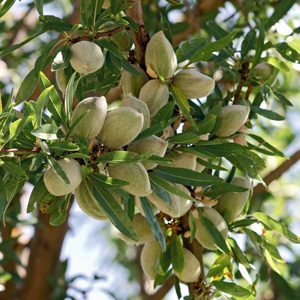
The almond blossom weevil: the pest that works in winter
Anthonomus amygdali destroys flower buds from November to February, with losses that reached 83% in Apulia. The Greek data is very thin. The cycle month by month, recognition in the field, the monitoring methods, and the two windows in which the insect is reachable, the autumn one and the spring one.

Almond nutrition: calculating the potassium and phosphorus requirement
The almond removes 76 kg of potassium and only 8 kg of phosphorus per tonne of kernel. Why the winter compound gets all three elements wrong, and how to calculate the real requirement from yield.
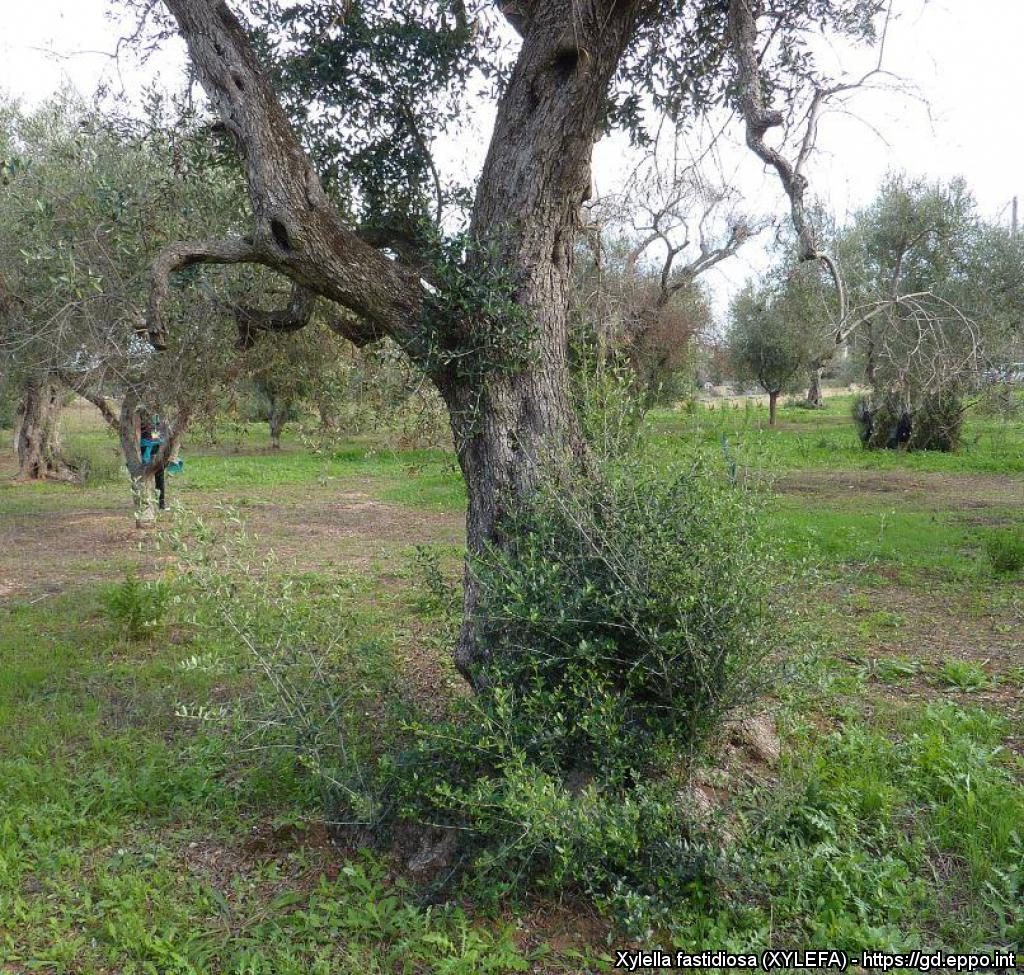
Xylella fastidiosa, a bacterium that threatens tree fruit growing as a whole
The bacterium that destroyed the olive groves of the Salento: how the biofilm kills the tree by thirst, why the nymph of the vector is the only accessible target, why there is no cure, and the two resistant olive cultivars that are now the one hopeful development.