
The virus diseases of sweet cherry in Greece

Savvas Pastopoulos, Agronomist MSc, Pastopoulos Agronomics, Neos Mylotopos, Pella, Greece
Sweet cherry (Prunus avium L.) is a species attacked by a large number of virus diseases. Some of these virus diseases are destructive for the crop, while others are either transient as regards their symptoms or cause damage of low economic importance. Viruses cannot be cured. Once a plant has been infected, it carries the virus for the whole of its life.
- What has to be known before anything else
- How they are transmitted, the five routes
- PNRSV, the necrotic ringspot virus
- PDV, the dwarf virus of stone fruits
- The PNRSV + PDV synergy
- The “rusty mottle” group: CNRMV, CRMV, CGRMV
- Little cherry: LChV-1 and LChV-2
- ACLSV, CVA and the “silent” viruses
- Cherry rasp leaf virus
- What has been found in Greece
- Diagnosis, when, what and how sampling is done
- What is done in practice
- Sources
1. What has to be known before anything else
According to Chatzicharisis and Kazantzis, two virus diseases are carried by insects. The usual routes of transmission, however, are through propagation material, pollen and pruning. The symptoms of virus diseases do not appear every year with the same frequency and intensity. Each sweet cherry cultivar has a different susceptibility to the various virus diseases.
- There is no cure, not even suppression. No spray exists that kills a virus inside the tree. The virus multiplies inside the cells of the plant itself, using the plant’s own machinery. The only thing that can be done is to control how it enters and how it spreads.
- The infection is systemic and permanent. The virus does not stay in one branch. It moves through the phloem into the whole tree, the roots included. Pruning out the symptomatic branch does not remove the virus.
- Absence of symptoms does not mean absence of virus. Many infected trees are latent, they show nothing, yet they are a source of inoculum for the neighbouring trees and for every scion taken from them.
In practice, the battle is won or lost at the moment of planting, with the choice of propagation material. Whatever is done afterwards is damage management.
Dozens of acronyms that differ by a single letter circulate in the sweet cherry literature. Three pairs cause confusion systematically:
- CRMV (Cherry rusty mottle virus) and CMV (Cucumber mosaic virus), they have no relation to each other. CMV is a virus of vegetable crops.
- PDV = Prune dwarf virus. The correct name is “Prune”, not “Prunus”, it comes from plum, where the virus was described for the first time.
- ACLSV = Apple chlorotic leaf spot virus. It is written with four letters, without an H.
2. How they are transmitted, the five routes
Each virus uses one or more of the routes below. Which route applies determines which measure is worth taking.
| Route | How it works and which viruses it concerns |
|---|---|
| Propagation material | The main route for all viruses without exception. An infected rootstock, an infected scion or an infected cutting carries the virus into every new tree. |
| Pollen | The virus is found inside or on the pollen grain and passes into the recipient tree during pollination. It concerns mainly the ilarviruses PNRSV and PDV, as well as CLRV. It is the reason a virus disease spreads within the orchard even without any pruning at all. |
| Seed | PNRSV and PDV are transmitted by the seed as well. This matters wherever rootstock seedlings are produced. |
| Insect vectors | Thrips carry infected pollen and in this way facilitate the spread of the ilarviruses. Mealybugs are true vectors of LChV-2. |
| Nematodes | Nematodes of the genus Xiphinema transmit CRLV from root to root. For this reason the infection appears in circular foci that enlarge radially. |
3. PNRSV, Prunus necrotic ringspot virus, the Necrotic Ringspot Virus
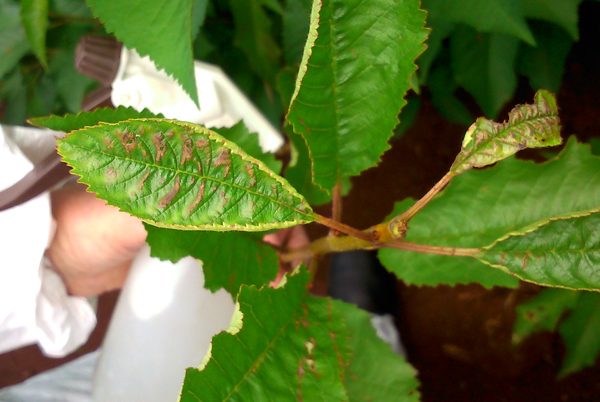
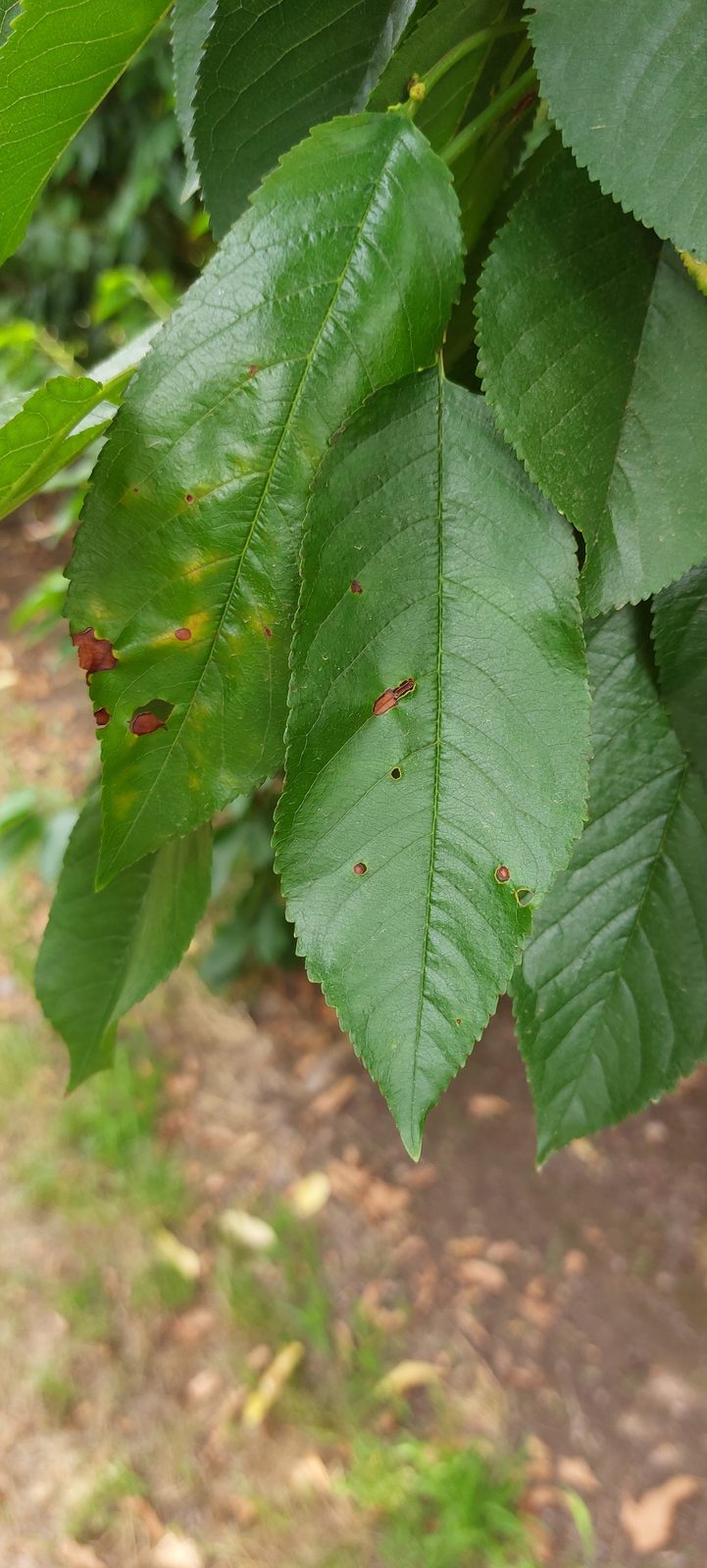
It is the most important virus of stone fruits and is distributed over the whole planet. It causes partial dwarfing of the tree, while the most important symptom is the necrotic spots on the leaves, resembling shot holes.
Its symptoms are easily confused with symptoms of shot hole disease, of the bacterium Pseudomonas syringae pv. morsprunorum, or of the dwarf virus (PDV). The virus is carried by propagation material, by mechanical means (pruning) and by pollen.
PNRSV belongs to the genus Ilarvirus, family Bromoviridae. The acronym ilar stands for “isometric labile ringspot”, isometric, labile particles that produce ringspot lesions. The lability of the particles is important in practice: it explains why the virus is not transmitted easily by simple mechanical contact but is transmitted exceptionally efficiently through pollen, where it is protected.
The role of thrips. PNRSV has no insect vector in the strict sense. Thrips, however, feed on the pollen of infected trees and carry it to the flowers of healthy trees, acting as carriers of infected pollen. This is the documented pathway. Transmission by mites or by nematodes has not been documented for PNRSV and should not be reported as possible.
In sweet cherry, PNRSV on its own is responsible for yield losses of up to 15%, according to the international literature; no corresponding Greek measurement exists. The figure looks moderate, but it underestimates the real damage for two reasons.
First, the virus harms the pollen itself. Experimental data on stone fruits show that infection with PNRSV and PDV affects the health of the pollen, that is, the infected tree is not only less productive, it is also a worse pollinator for its neighbours.
Second, it is rarely found on its own. PNRSV coexists very often with PDV, and then the picture differs substantially, as covered in chapter 5.

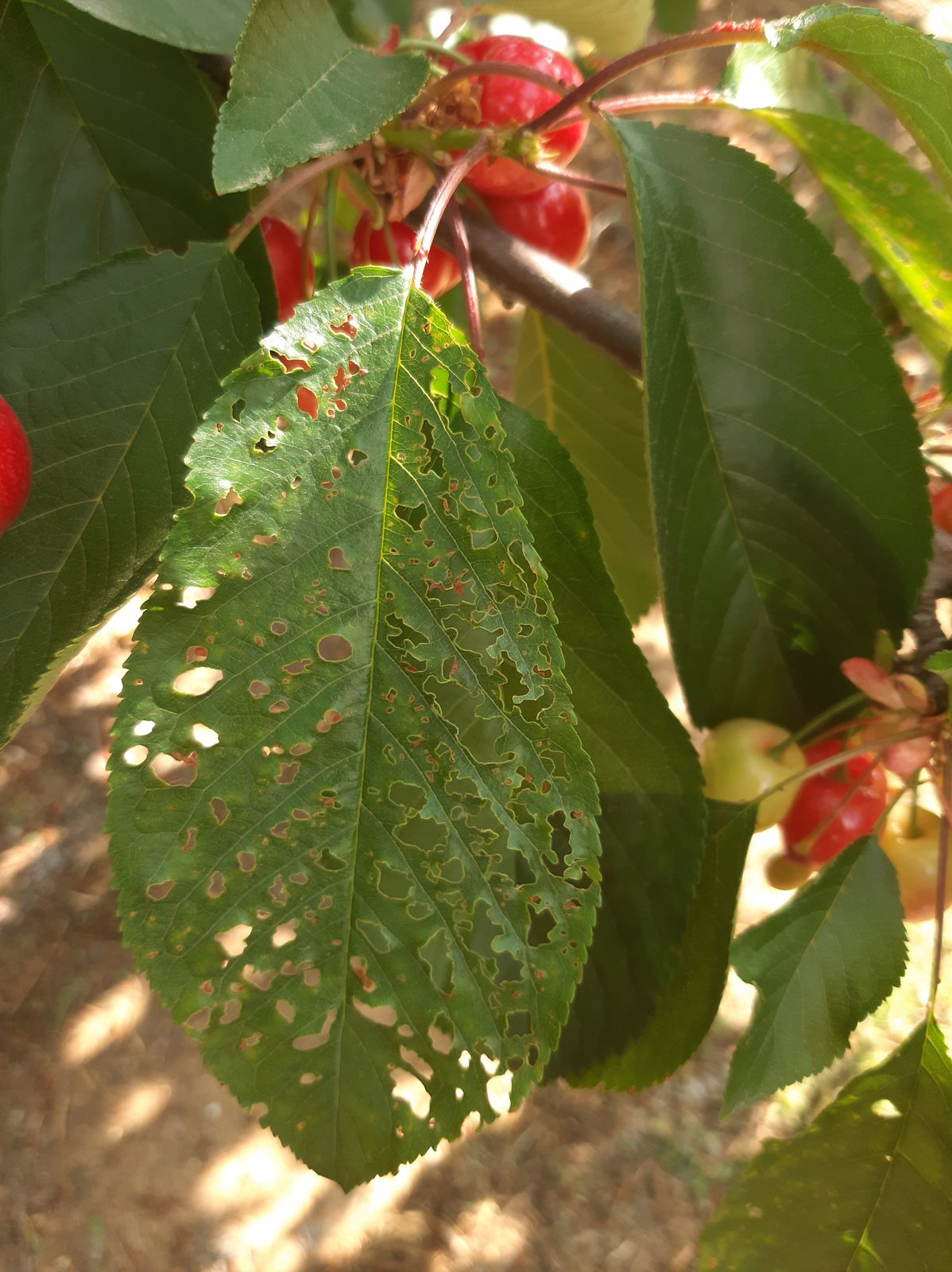
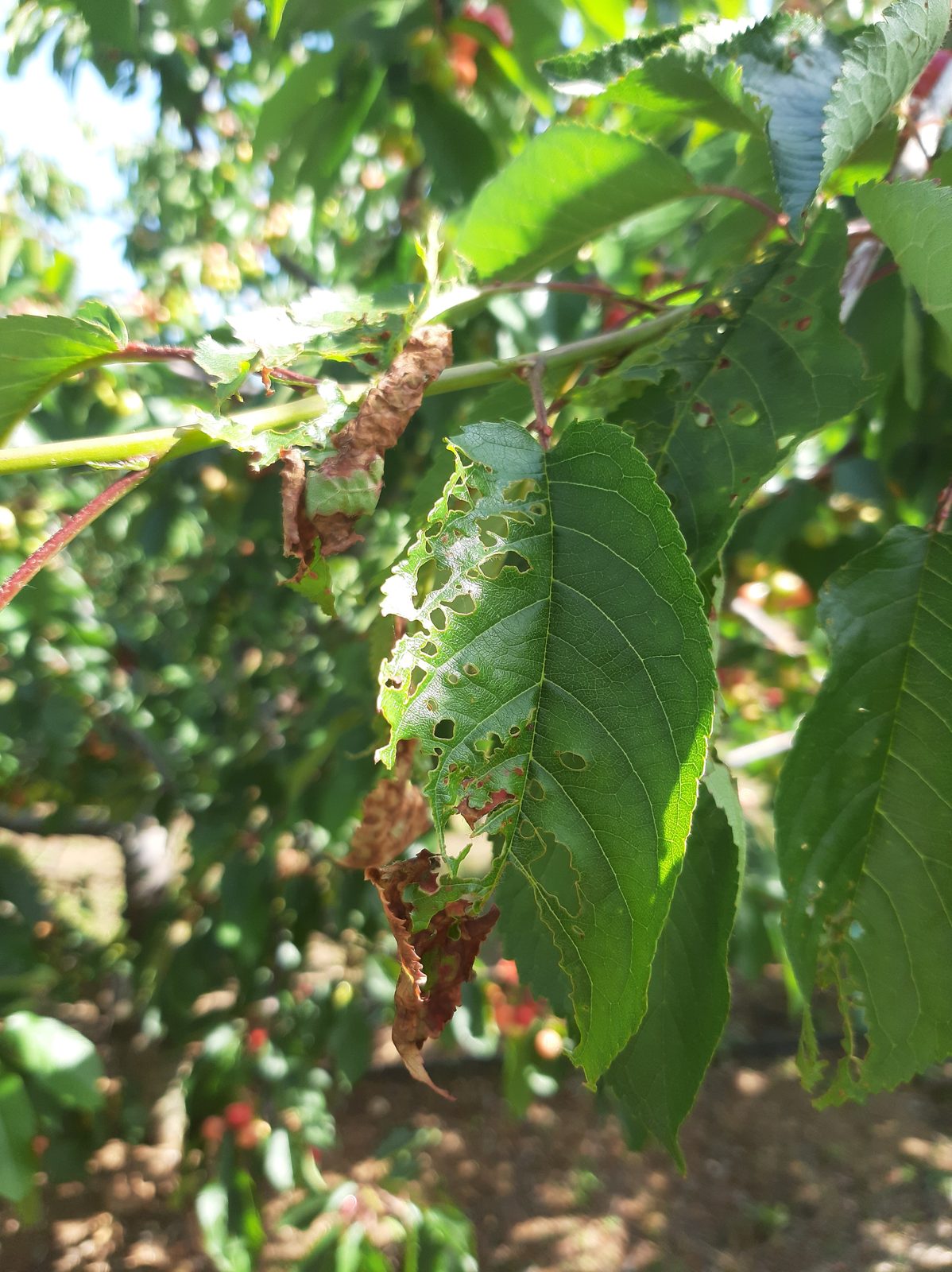

Confusion with shot hole disease (Wilsonomyces carpophilus) is the commonest mistake in the field. They are separated on four points:
- Distribution on the tree. Shot hole disease gives spots wherever water remained, therefore unevenly, with a preference for the lower and inner leaves. The virus gives symptoms uniformly over the whole tree, because it is present everywhere.
- Distribution in the orchard. Shot hole disease follows the rains and appears on all the trees. The virus appears on specific trees, the same ones every year.
- Halo. The lesion of shot hole disease often has a reddish zone around it. The viral lesion gives chlorotic rings or line patterns, particularly on the leaves of spring.
- Seasonality. The symptoms of the virus are strongest on the first spring growth and often fade on the summer growth. Shot hole disease follows moisture, not growth.
4. PDV, Prune dwarf virus, the Dwarf Virus of Stone Fruits
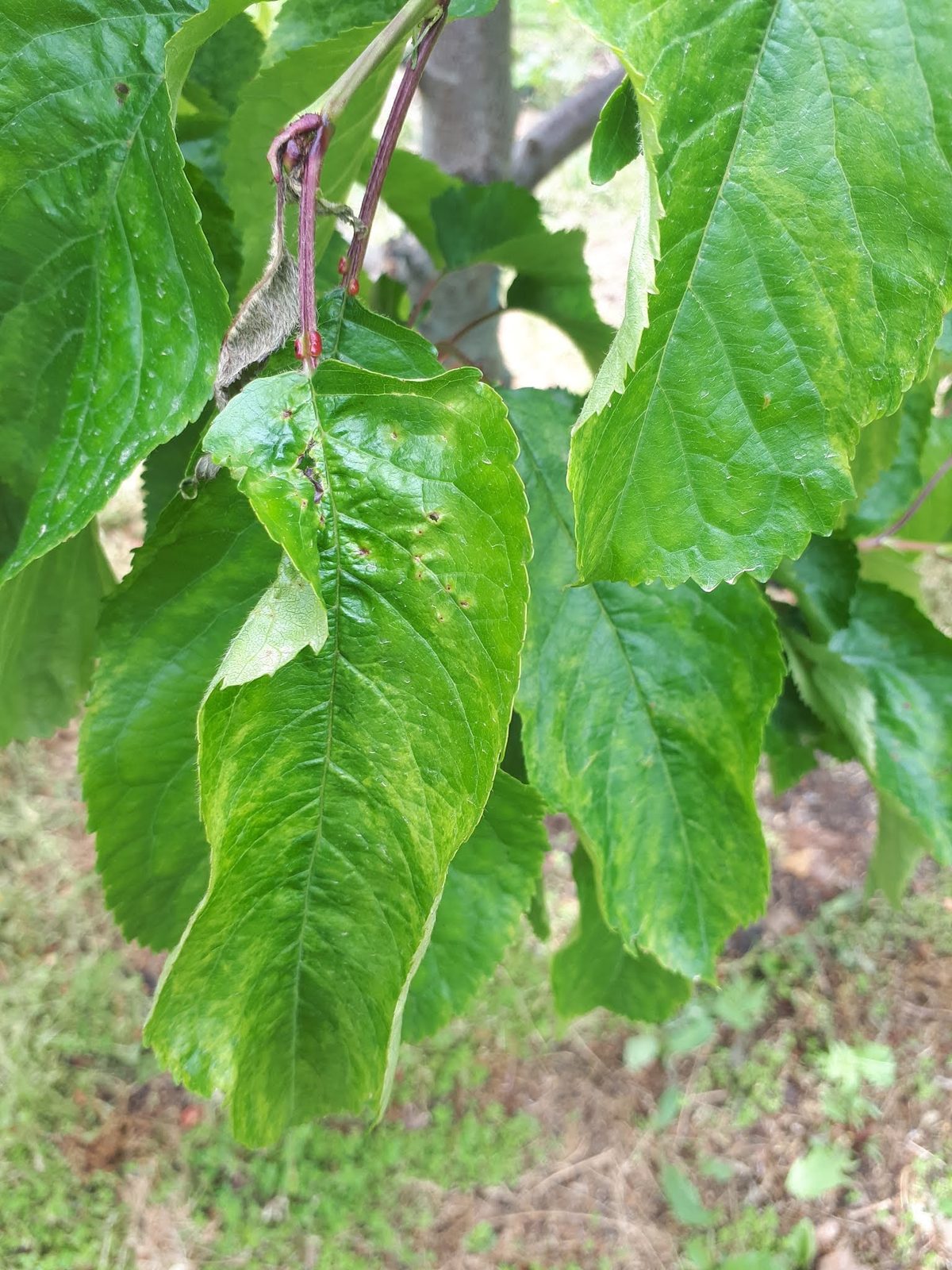
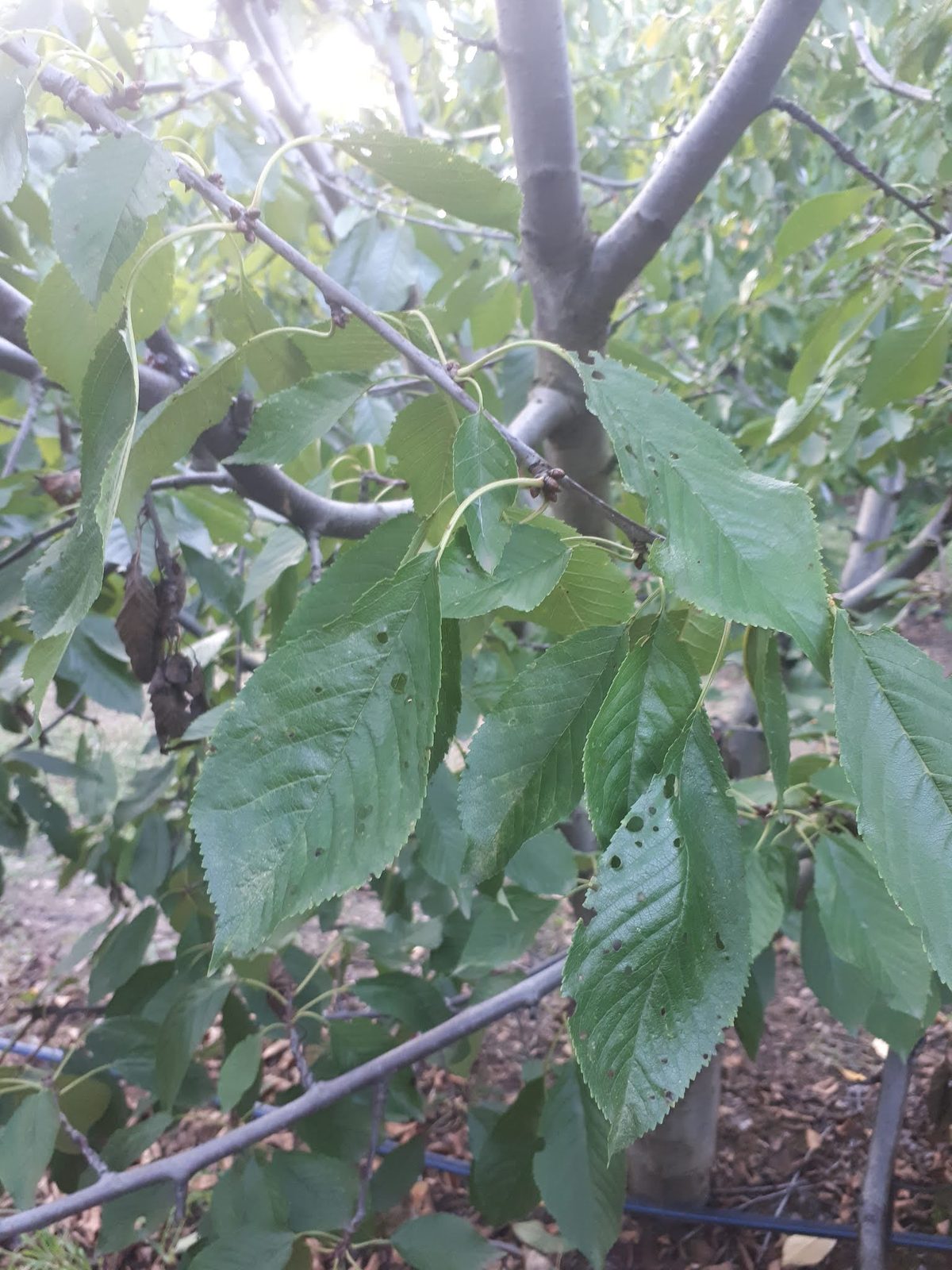
The virus is of the highest importance, as it causes dwarfing and a reduction of yield in trees of sweet cherry, peach, plum and apricot. The basic symptoms are the reduction of productivity, discolourations on the leaf and short internodes. The virus is transmitted by propagation material and by pollen, while it has no animal vector. Possibly the most important virus of sweet cherry in Greece and in South-eastern Europe.



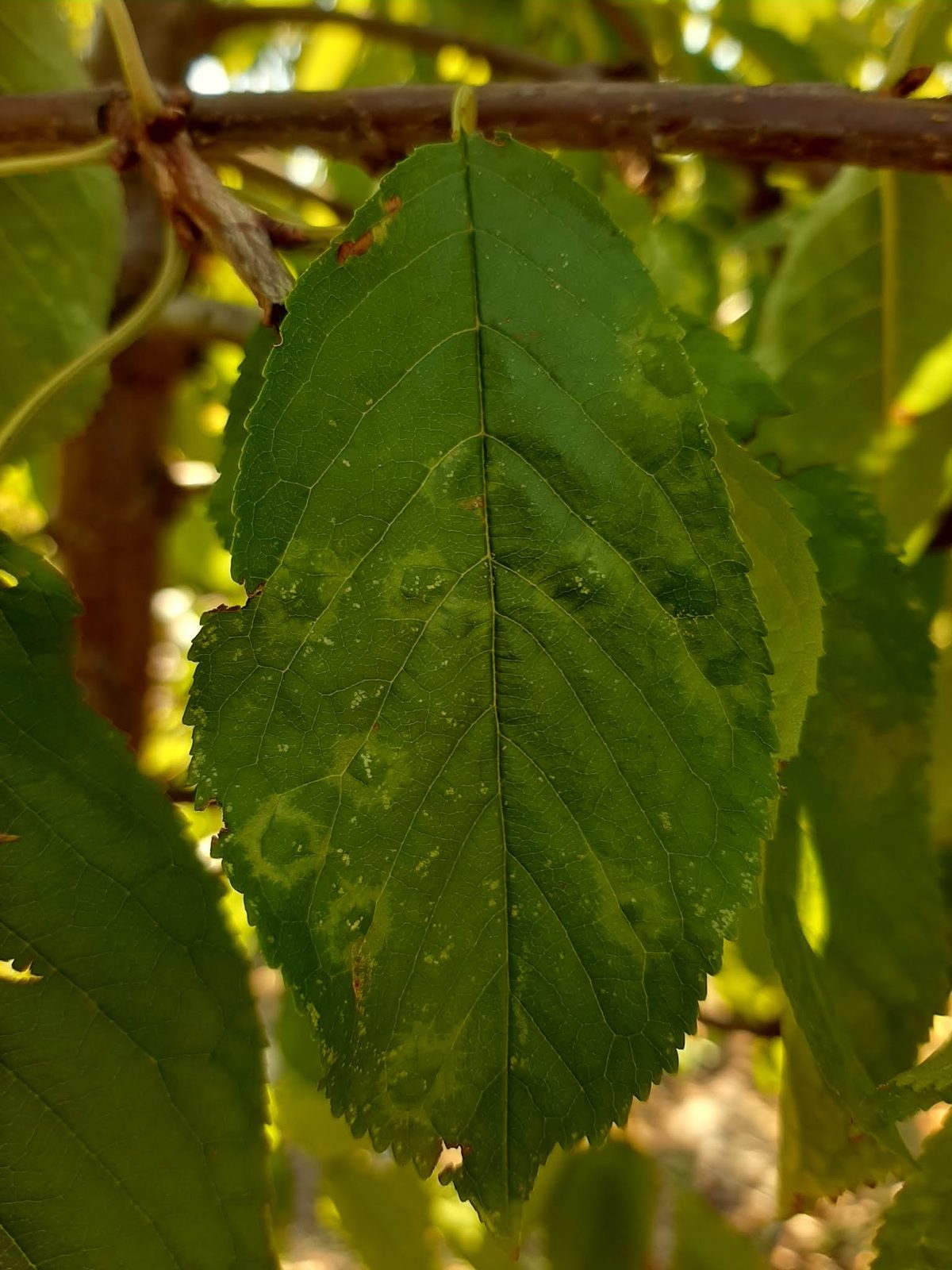
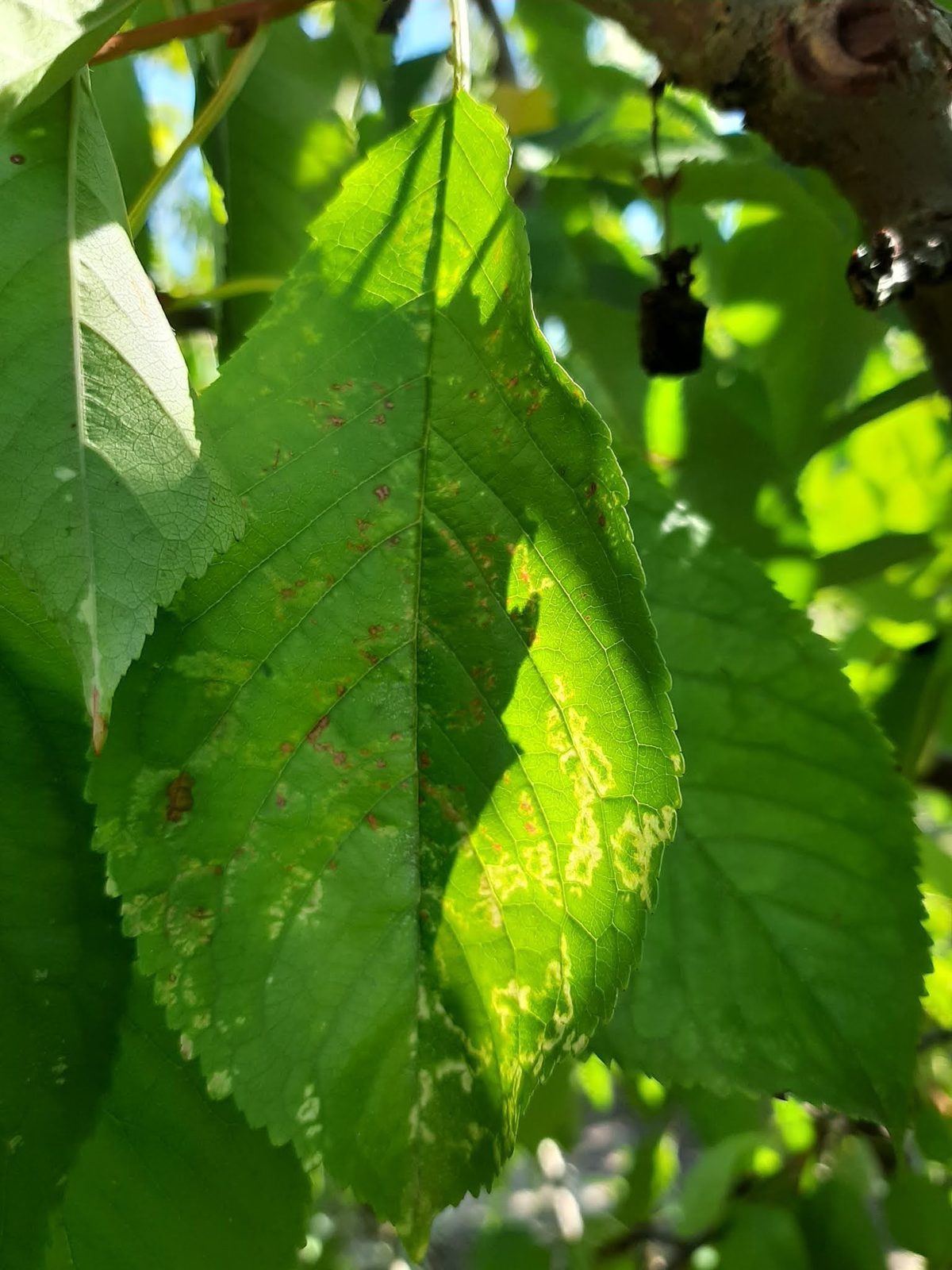
5. The PNRSV + PDV synergy
The two ilarviruses are found together so often that the mixed infection is regarded as a separate entity. A tree can often be infected by more than one virus disease.
Mixed infection by PNRSV and PDV does not simply add the two damages together. In peach their combination has been described as a separate disease, peach stunt disease, with yield losses reaching 55%, in records from outside Greece, while each of them separately stays at far lower levels.
In sweet cherry, the two viruses together have been linked with losses of the order of 18–30%. In sour cherry the mixed infection is known as “sour cherry yellows” and causes heavy leaf fall with complete stripping of the inner parts of the canopy.
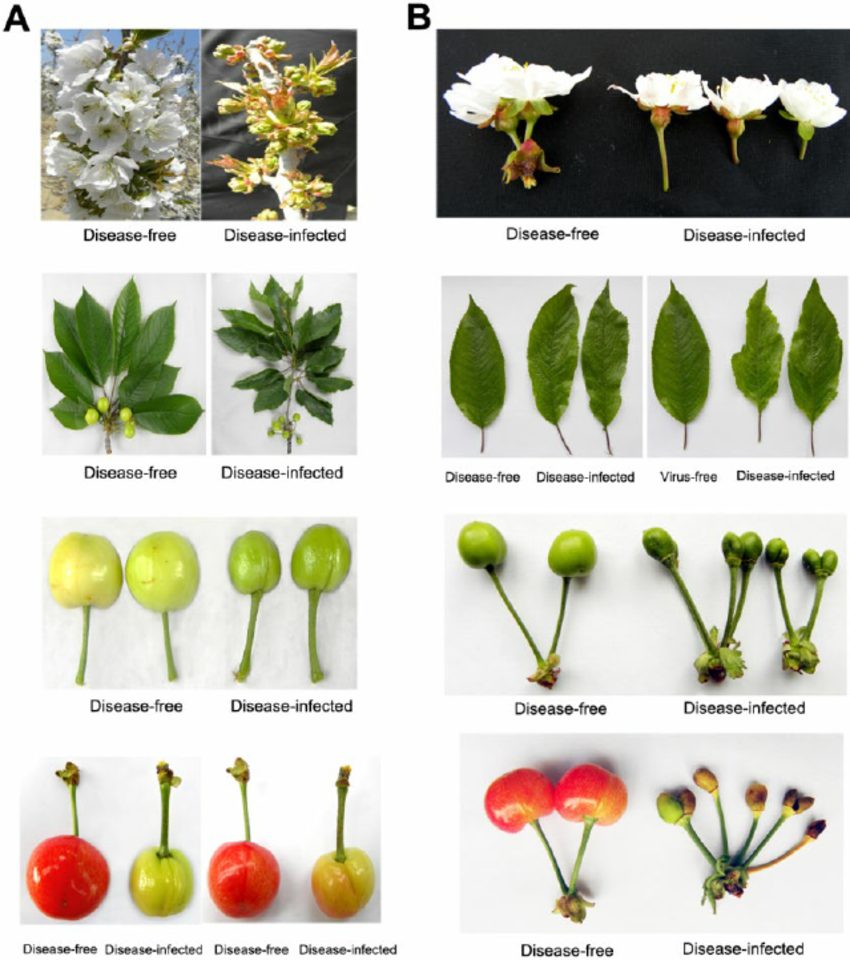
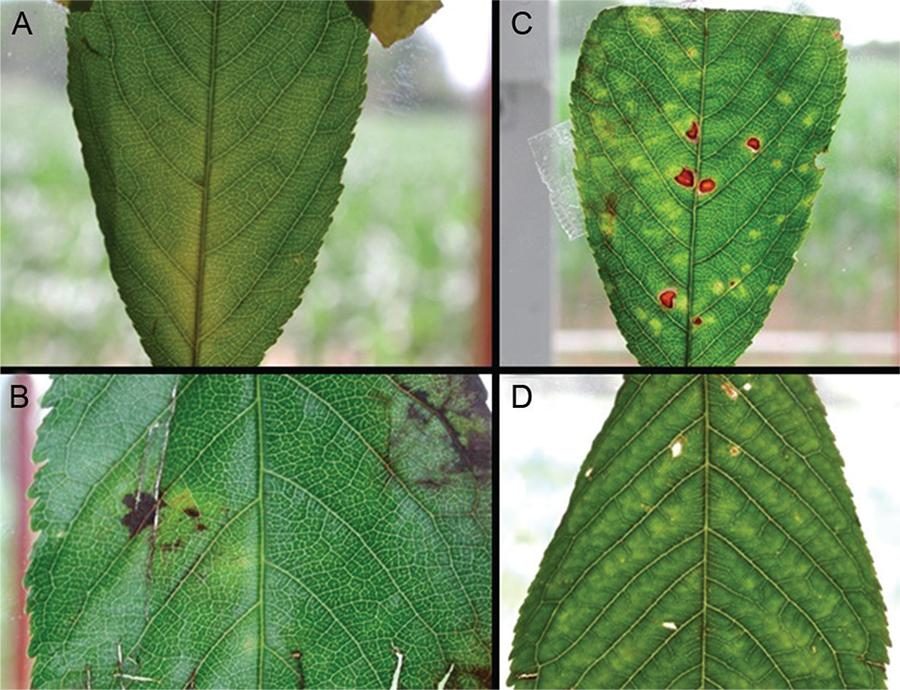
6. The “rusty mottle” group: CNRMV, CRMV and CGRMV
CNRMV (Cherry necrotic rusty mottle virus, the Brown Leaf Mottle Virus) and CRMV (Cherry rusty mottle virus) have not officially been reported in Greece; nevertheless, with the continuous import of plants from abroad it is possible that they have entered.
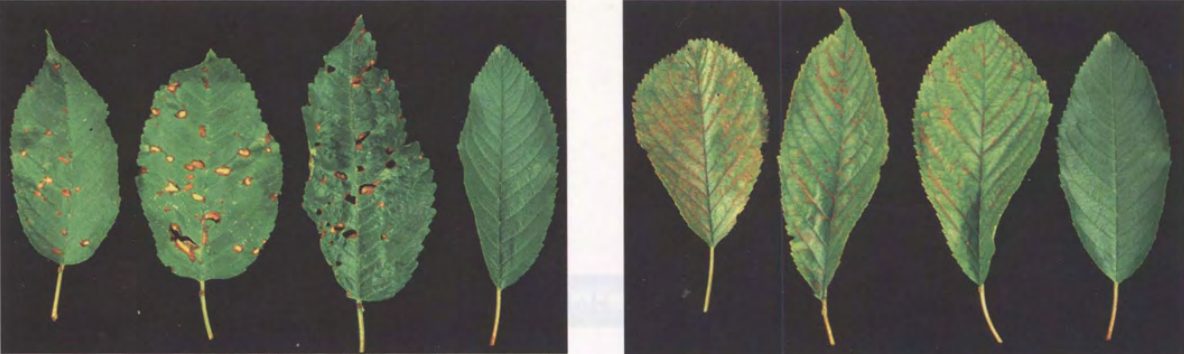
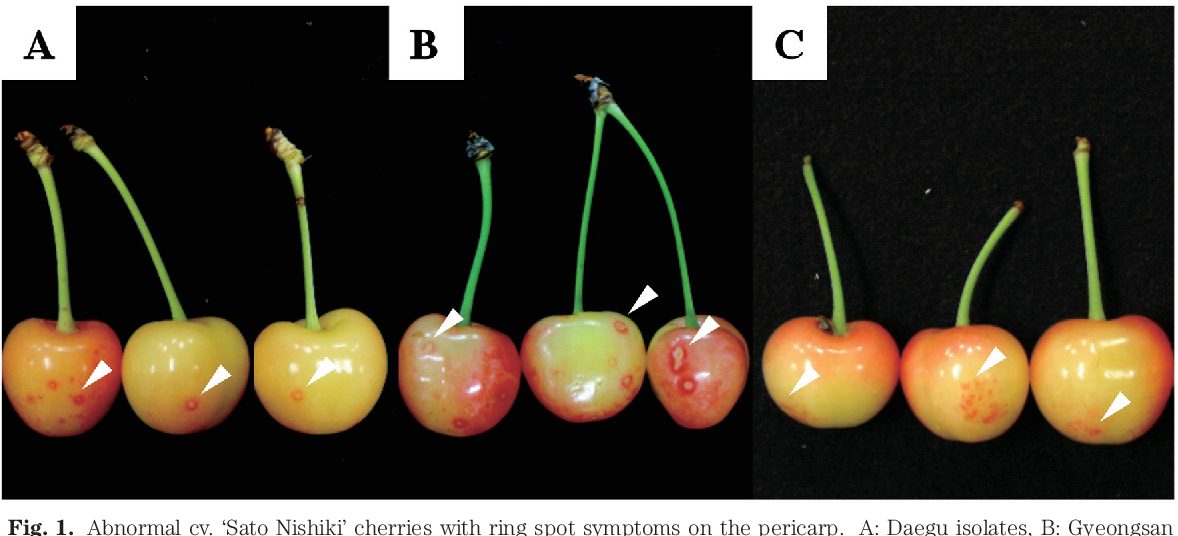
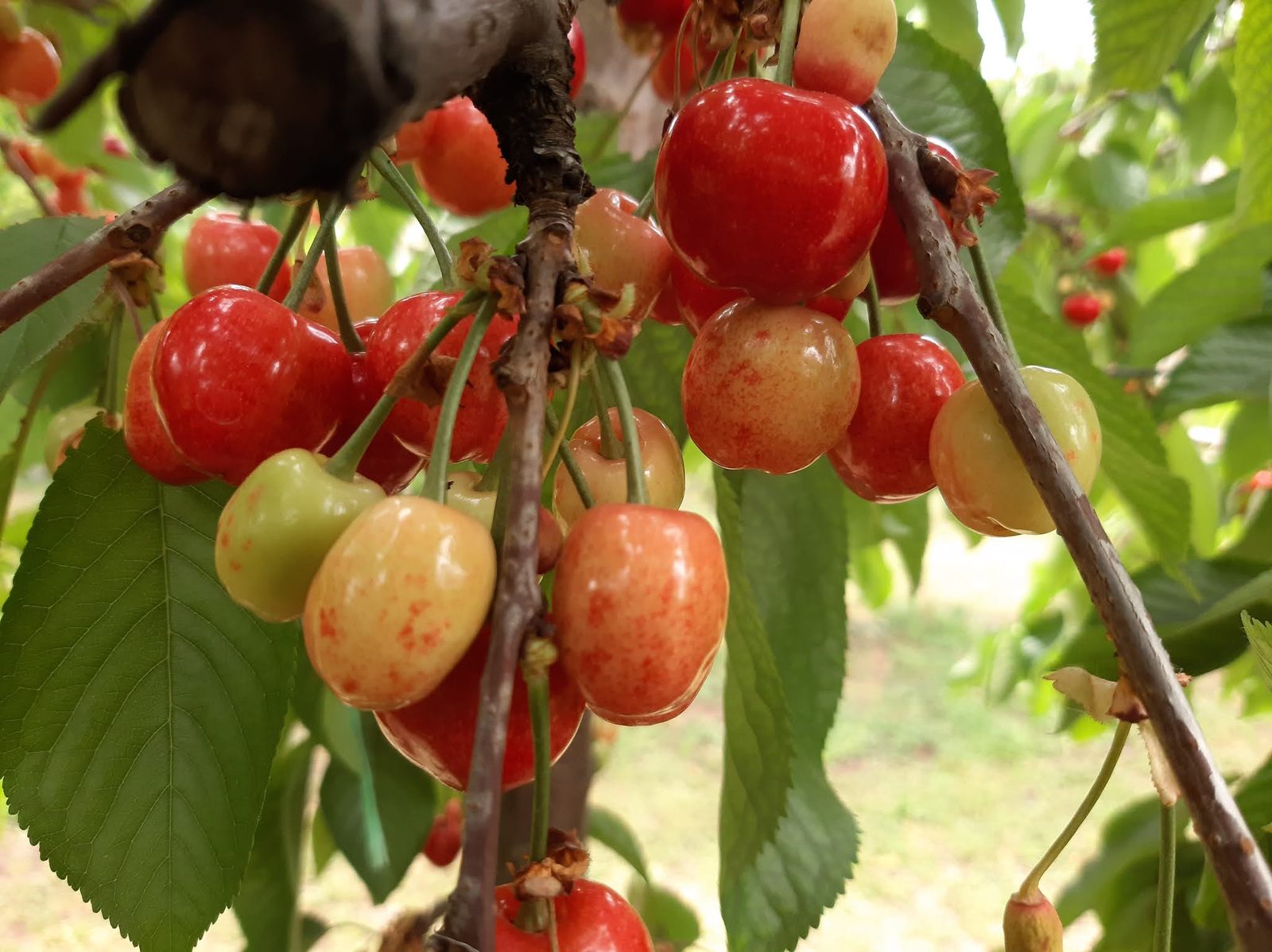
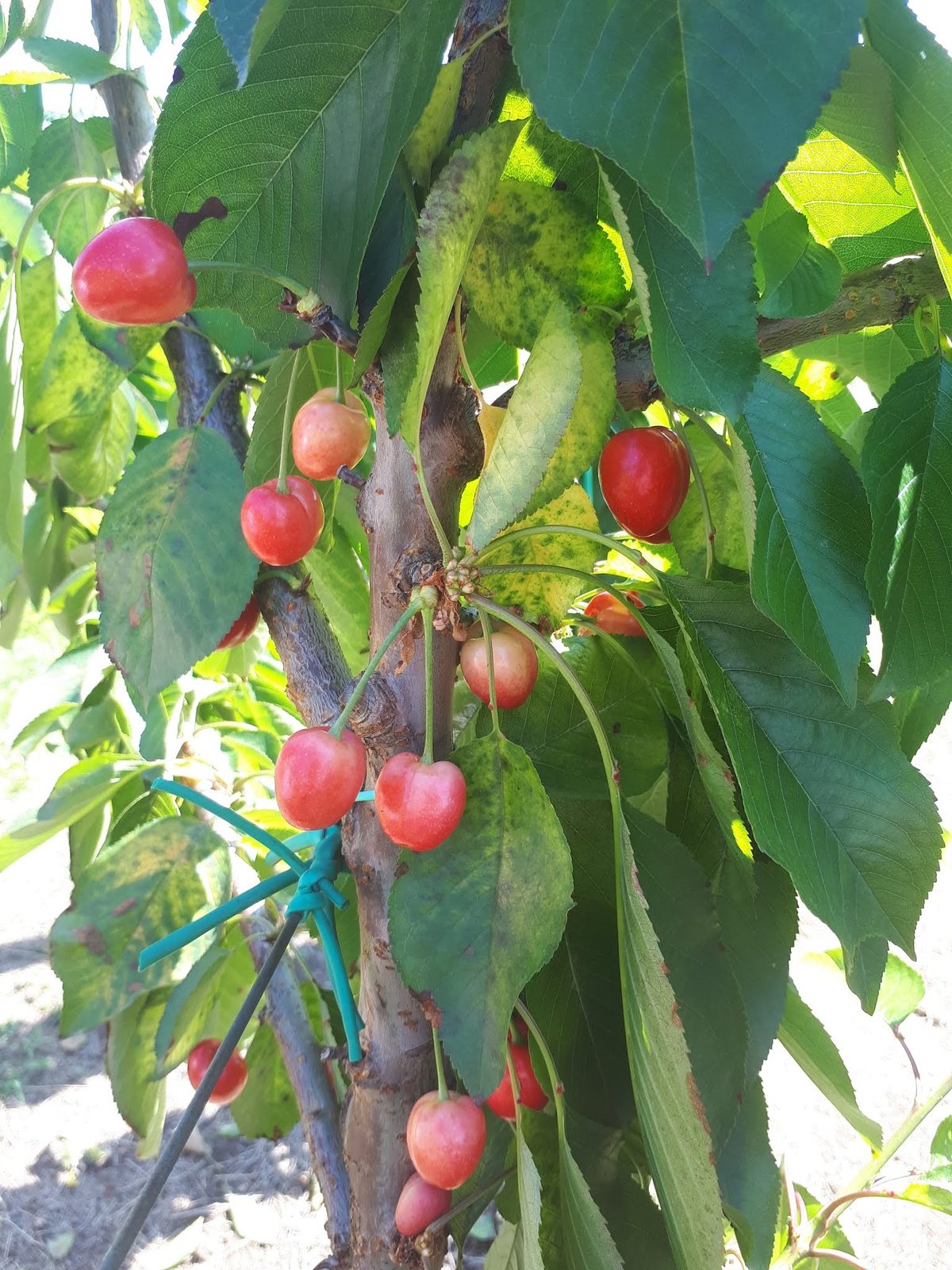
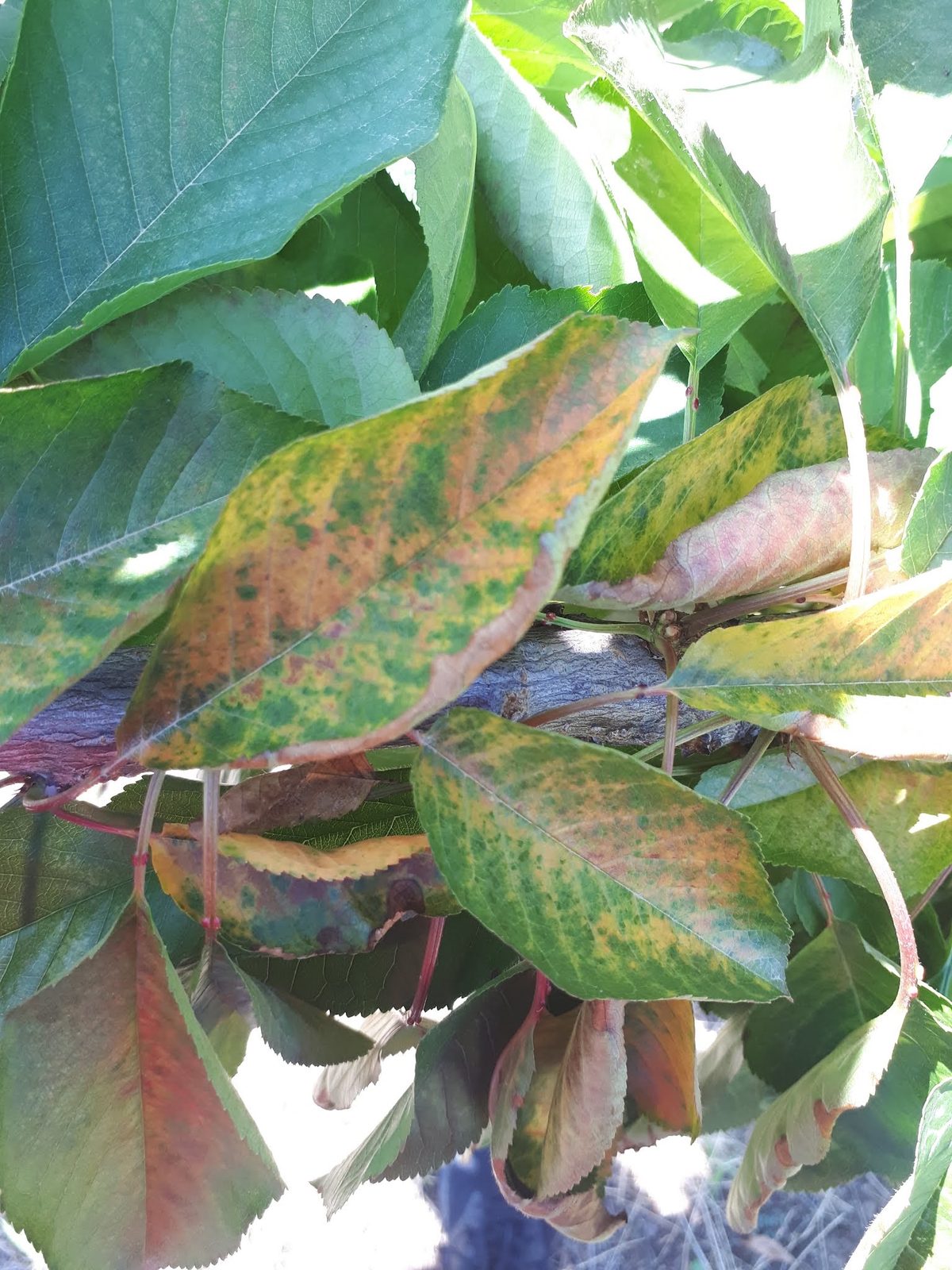
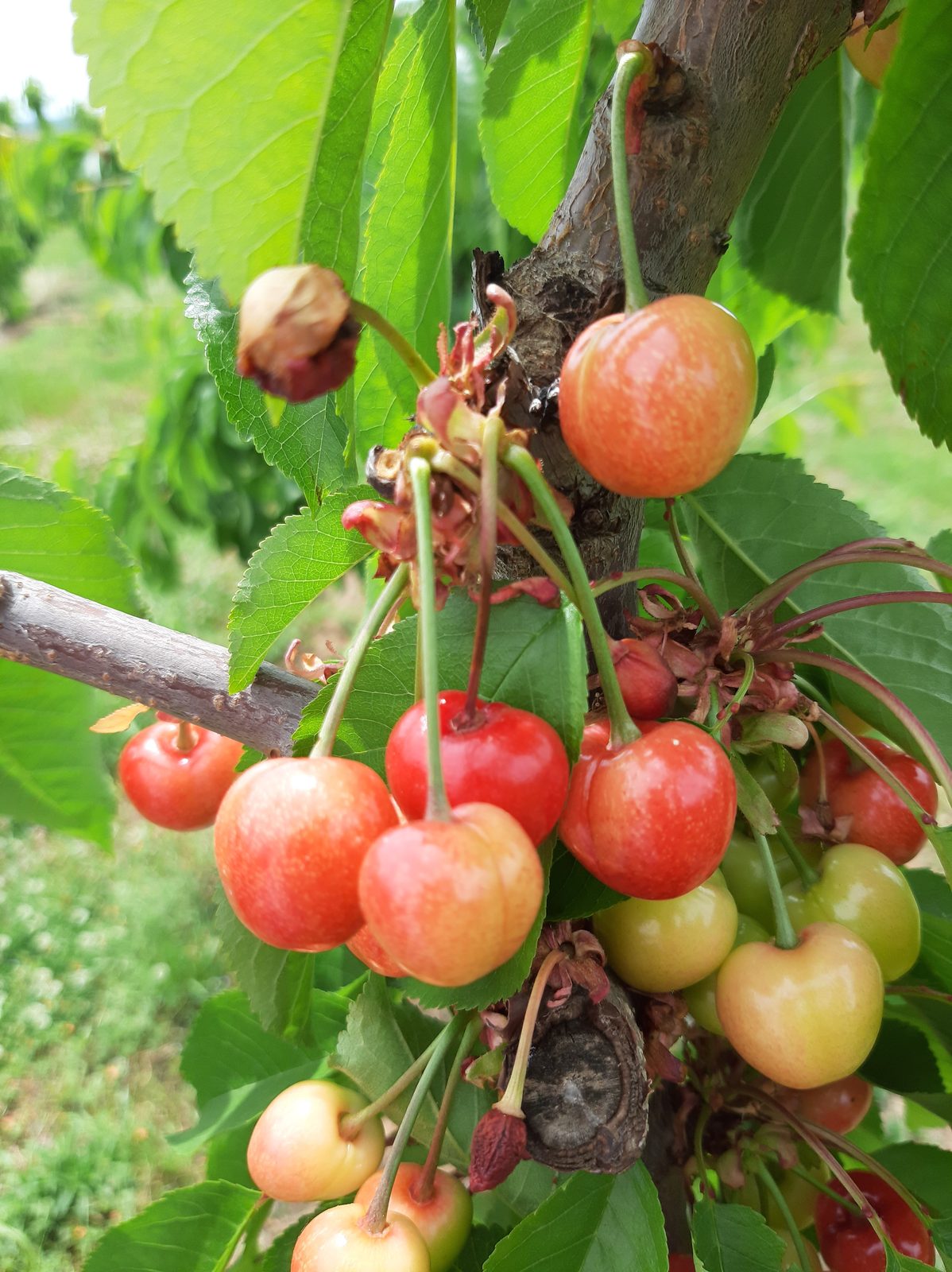
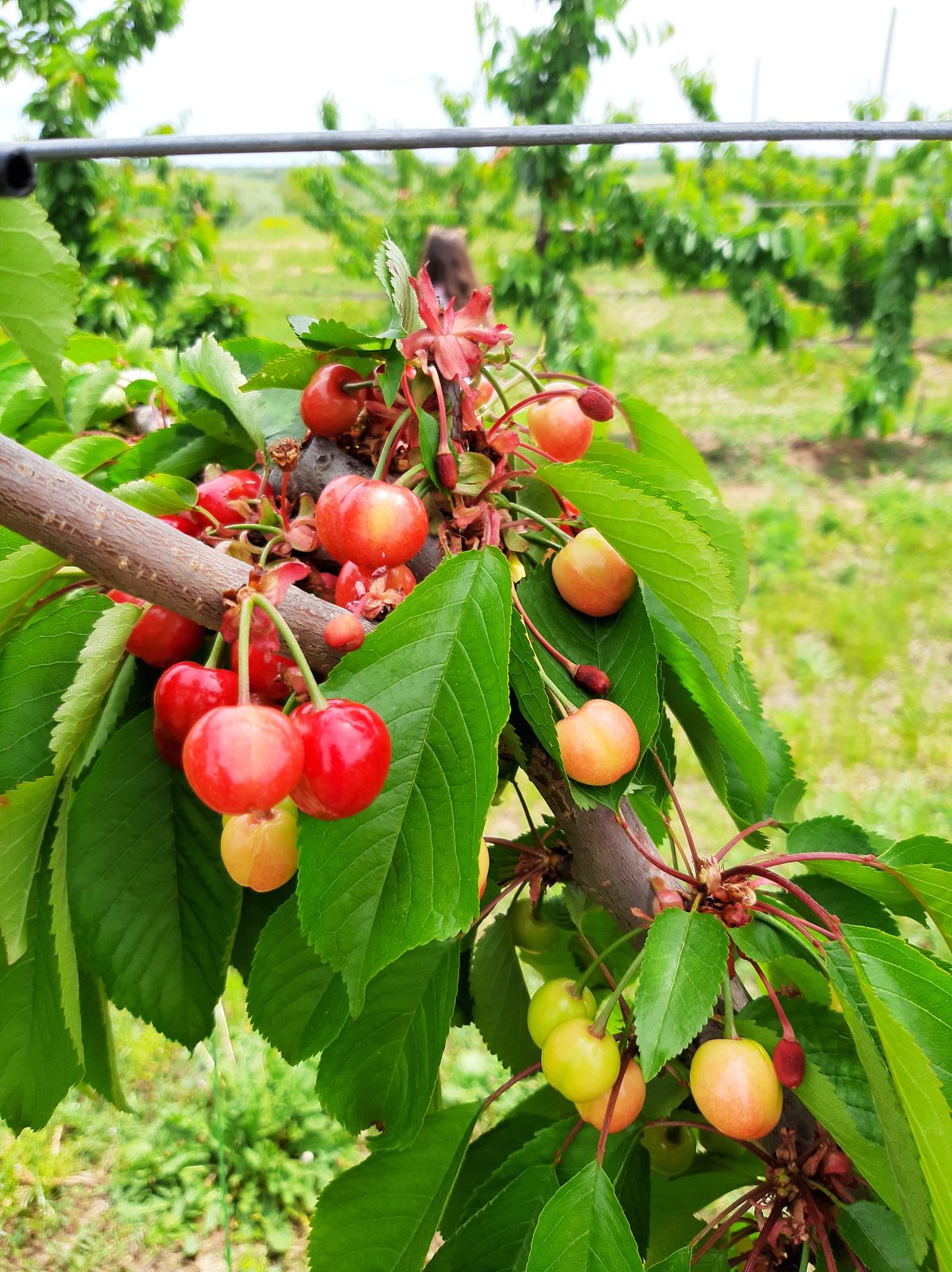
CRMV causes chlorotic spots and rings on the leaves, while CNRMV also causes necrotic spots that detach from the leaf and create holes, similar to those of shot hole disease but also to those of the necrotic ringspot virus. Towards the ripening of the fruits, the leaves display various other colourings as well, usually red and brown. The fruits grow and ripen unevenly. Significant leaf fall is usually recorded at the beginning of summer.
CNRMV, CRMV and CGRMV (Cherry green ring mottle virus) are not merely “similar”. They belong to the same genus, Robigovirus, family Betaflexiviridae. This genus was defined and accepted by the International Committee on Taxonomy of Viruses (ICTV) in 2016, following genomic analysis which showed that the viruses of the “rusty mottle” group of sweet cherry form four distinct phylogenetic groups.
The name comes from the Latin robigo, which means rust, from the characteristic symptoms of rusty mottling. In literature published before 2016 they are to be found classified elsewhere or not at all.

7. Little cherry: LChV-1 and LChV-2
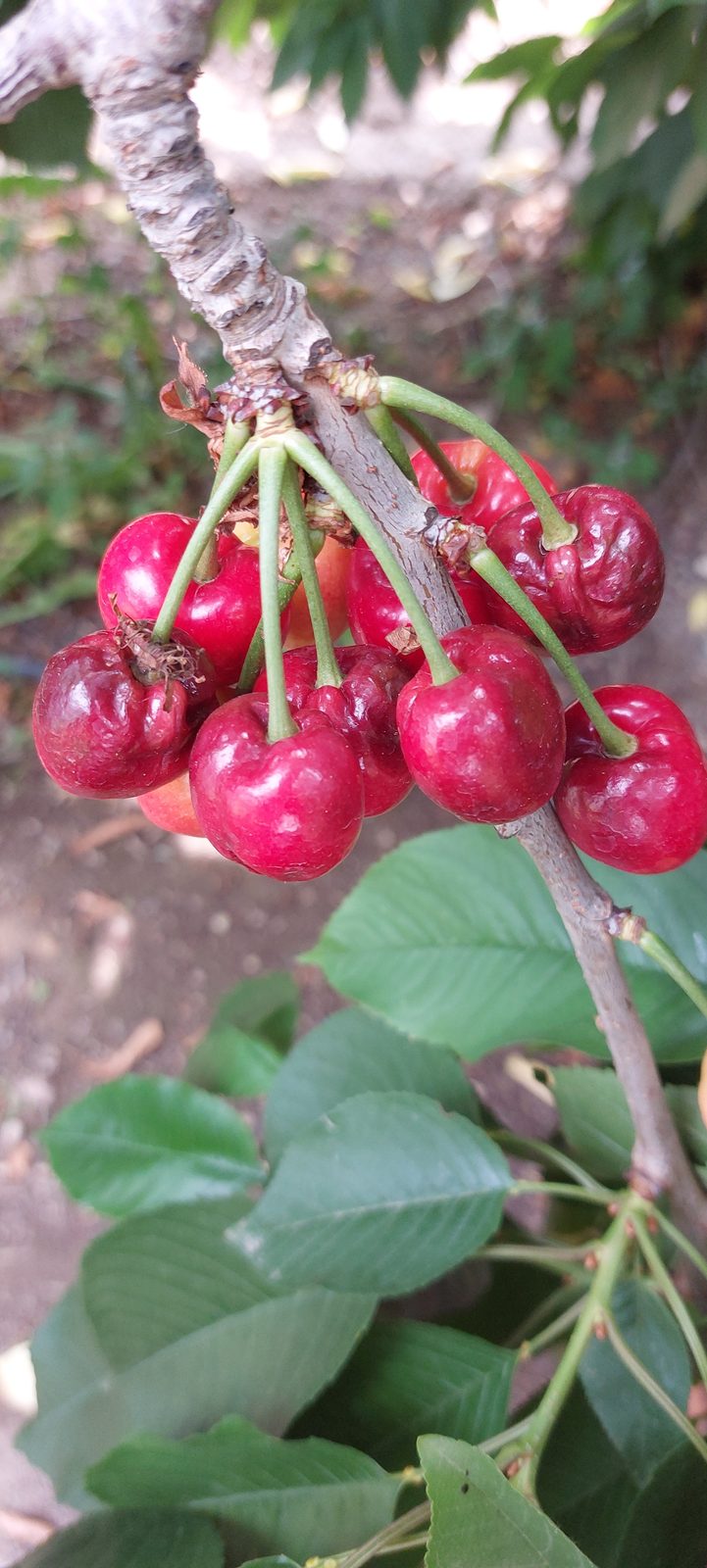
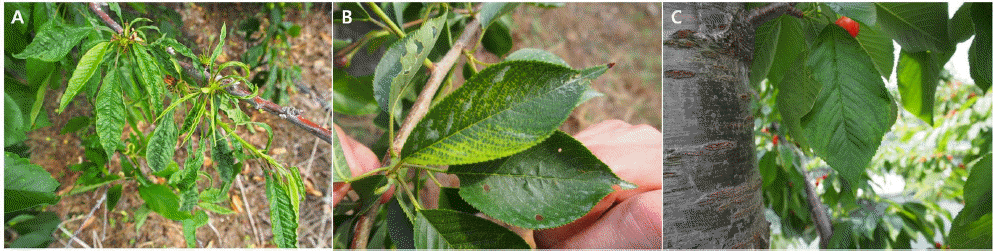
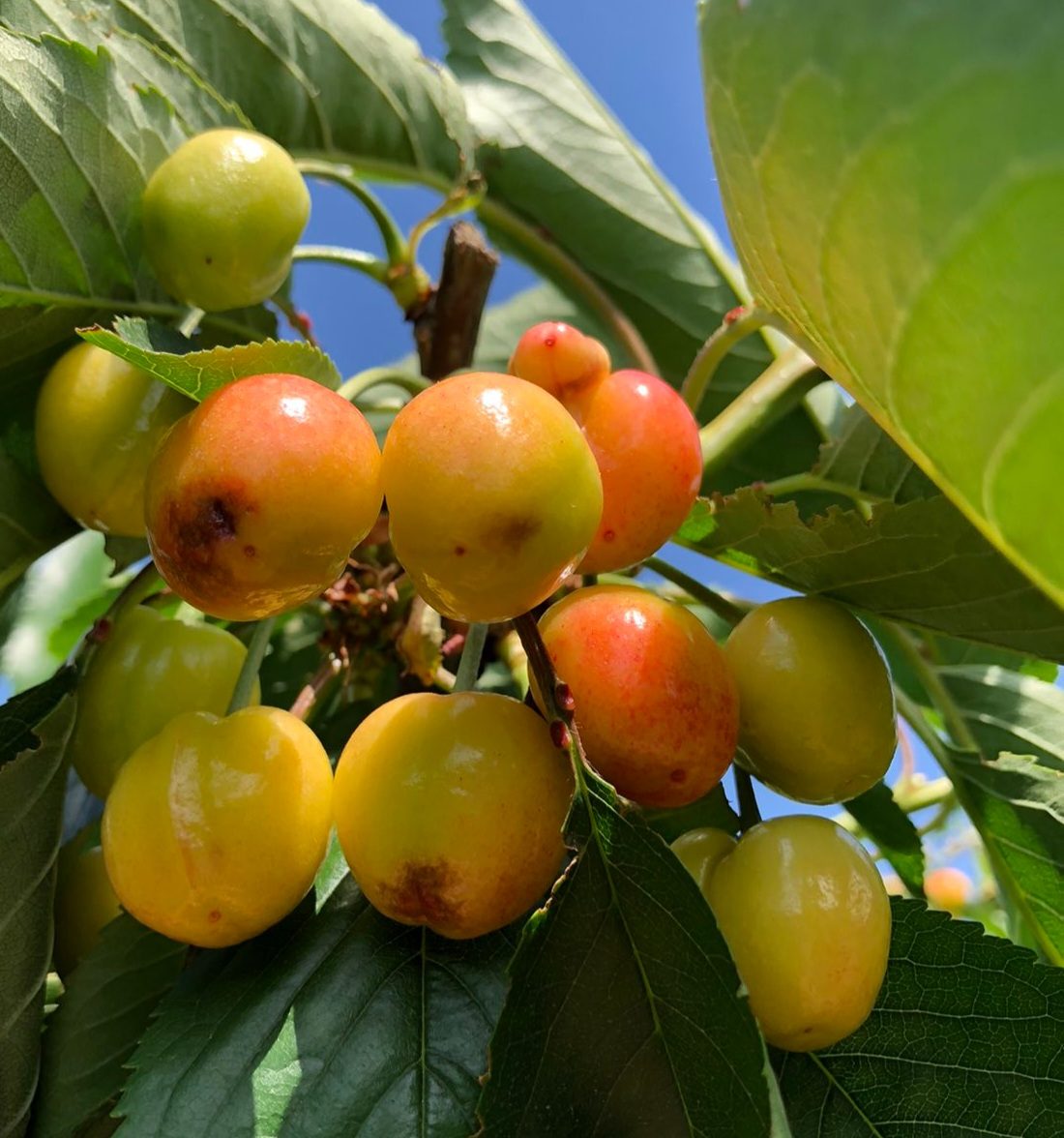
LChV-1 (Little cherry virus 1) appeared for the first time in British Columbia in 1933; it is possible that it passed into Greece with propagation material from Canadian cultivars. It causes extensive little cherry: the fruits are tasteless and of low quality. On the leaves it causes yellow discolourations late in summer, while some leaves acquire a red colour as well. A slight upward rolling of the leaf may also appear.
Little cherry disease is caused not by one virus but by two, which belong to different genera of the family Closteroviridae. The distinction has direct consequences for what the grower has to do.
- LChV-1, genus Velarivirus. It is transmitted only by grafting and by infected propagation material. No vector has been identified. Consequently, if the holding has LChV-1, the disease does not spread on its own from tree to tree. It arrived with the young trees.
- LChV-2, genus Ampelovirus. It is transmitted by at least two species of mealybugs (Hemiptera, Pseudococcidae): the apple mealybug (Phenacoccus aceris) and the grape mealybug (Pseudococcus maritimus). Therefore, here the disease spreads actively within the orchard and control of the mealybugs becomes a plant health measure, not a simple entomological detail.
The conclusion for the field: if little cherry is established, the first question to the laboratory has to be which of the two. With LChV-1, uprooting of the affected trees and replacement with certified material is enough. With LChV-2, systematic monitoring and control of the mealybugs is additionally required, otherwise the new trees will be infected again.


8. ACLSV, CVA and the “silent” viruses
A whole group of sweet cherry viruses rarely gives impressive symptoms on its own. That does not make them innocent, it makes them difficult.
ACLSV, Apple chlorotic leaf spot virus
Genus Trichovirus, family Betaflexiviridae. Despite its name, it is not a virus of apple alone: it infects stone fruits very widely. In sweet cherry it is often latent, the tree carries it without an evident symptom.
Its importance is apparent in the mixed infections: together with PDV and PNRSV it takes part in the heaviest pictures of chlorosis and necrosis of the foliage. It is also one of the viruses tested for obligatorily in certified propagation material.
CVA, Cherry virus A
Genus Capillovirus, family Betaflexiviridae. It is among the most widespread viruses of sweet cherry worldwide and is considered to a large extent latent: on its own it usually gives no economically significant symptoms.
The problem appears when it coexists with others. It has been documented that combined infection of CVA with LChV-1 or LChV-2 gives rolling, deformation and discolouration of the foliage, symptoms that neither of the two would give on its own to the same degree.


9. Cherry rasp leaf virus (CRLV)
This virus stands apart from all the preceding ones for one reason: it is the only one transmitted through the soil.
CRLV belongs to the genus Cheravirus, family Secoviridae, order Picornavirales. It is transmitted by grafting, but mainly by the dagger nematodes of the genus Xiphinema, specifically X. americanum sensu stricto, X. californicum and X. rivesi.
Why this is important in diagnosis: as happens with all virus diseases transmitted by nematodes, the symptoms do not appear scattered but in localised foci within the block, which enlarge radially, in the shape of a circle, year after year. Where a “patch” of sick trees is seen to grow outwards every year, the soil is suspect, and the analytical examination has to include a soil sample for nematodes as well.

10. What has been found in Greece
Greece stands in 7th place worldwide in cherry production, with approximately 81,600 tonnes from 16,100 hectares in the year 2019. Despite the size of the crop, systematic virological surveys remain few.
1. The virus CLV-1 is already here, and indeed widely. Analysis of samples from eight sweet cherry trees of Northern Greece by high-throughput sequencing revealed the presence of divergent isolates of cherry latent virus 1 (CLV-1), a trichovirus that had first been detected in a sweet cherry sample imported into the USA from Georgia. A small-scale survey that followed confirmed the presence of CLV-1 in 47 of the 151 sweet cherry samples examined, that is, in roughly one out of three.
The Greek isolates were 94.8–98.6% similar to one another, but only 81.7–82.4% similar to the original isolate from Georgia. They therefore constitute a distinct, Greek group of isolates. The finding has a practical consequence as well: the diagnostic protocols designed on the basis of the Georgian isolate may not detect the Greek ones.
2. New records continue to emerge. In 2020 the first report of cherry virus Turkey on sweet cherry in Greece was published. The picture is therefore not closed, every time modern sequencing is applied to Greek samples, something is located that was not known to be present.
CNRMV and CRMV, as was mentioned, have not been officially recorded in Greece. Given the continuous import of propagation material, however, the absence of an official record is not equivalent to absence of the pathogen, it is equivalent to absence of systematic testing. The photographs of chapter 6 show symptoms compatible with the rusty mottle group in Greek sweet cherry orchards; the official recording of a pathogen requires molecular identification and publication, which has not taken place.
11. Diagnosis, when, what and how sampling is done
The conclusions above are owed to macroscopic monitoring of the affected plants over a period of three years, as well as to comparison of the symptoms with those of the literature. Safe diagnosis of virus diseases is made only through the recognised laboratories of the country.
The viruses of stone fruits have an uneven distribution inside the tree and a strong seasonal fluctuation of their titre. One branch may carry a high load and the one next to it almost none. If the sample is taken in the wrong season or from the wrong tissue, the laboratory will answer “negative” for a tree that is infected.
- When: spring is the best season of the year for detection of the sweet cherry viruses.
- Which tissue: the most suitable samples are petals, whole flowers, buds in active growth and young shoots. Mature summer leaves are the worst choice.
- From where: from many points of the same tree and not from one branch, so that the uneven distribution is offset.
As regards the method: classical ELISA is cheap but clearly less sensitive. For PNRSV in leaves, immunocapture with nested PCR (IC-RT-PCR / nested PCR) improved detection by three orders of magnitude in comparison with DAS-ELISA. Wherever the result carries weight, mother trees, nurseries, purchase of material, a molecular method is what is required.
12. What is done in practice
Before planting, everything is decided here
- Certified propagation material, with documents. It is the only measure with proven effectiveness. The certificate is requested and it is kept.
- A soil sample for nematodes where planting takes place on a block with a history of fruit trees, especially if foci of stunted trees had been observed.
- Removal of the wild Prunus from the boundaries of the holding. They act as reservoirs of inoculum and as sources of infected pollen.
Within the existing orchard
- Marking of the suspect trees. The symptoms of virus diseases do not appear every year with the same intensity. The suspect trees are marked and monitored for at least three seasons, as was done in the present survey too.
- Uprooting, not pruning. A confirmed infected tree is not “cleaned” by pruning. If the infection is severe and the tree has become unproductive, uprooting is the only solution, together with replacement by certified material.
- Disinfection of the tools on moving from tree to tree, especially in winter pruning and in grafting.
- Monitoring of mealybugs and thrips. They are not simply “secondary” insects: they are the vectors that carry LChV-2 and infected pollen respectively.
- Scions are never taken from the holding’s own trees without laboratory testing, however healthy they may look. A latent virus is not visible.
Remark: there is no chemical or biological control of virus diseases. Every product advertised as a “virus cure” has no scientific basis. The only tools are healthy propagation material, hygiene of the holding and control of the vectors.
13. Sources
- Chatzicharisis, I. and Kazantzis, K. Institute of Deciduous Fruit Trees of Naoussa, ELGO “Dimitra”. Record of the virus diseases of stone fruits and routes of transmission.
- Identification of divergent isolates of cherry latent virus 1 in Greek sweet cherry orchards. Archives of Virology (2023). Source for the presence of CLV-1 in 47/151 Greek samples, the genetic divergence of the Greek isolates and the production data of Greece.
- Cherry (Prunus spp.), Prunus Necrotic Ringspot. Pacific Northwest Plant Disease Management Handbook. Source for transmission through pollen and the role of thrips.
- Pollen-borne ilarviruses of peach: biology, ecology, and disease management. Journal of Integrated Pest Management 15(1):23. Review of the biology of PNRSV and PDV, of transmission by pollen and seed and of the losses of peach stunt disease.
- Examining the effects of Prunus necrotic ringspot virus (PNRSV) and Prune dwarf virus (PDV) on peach pollen health. PhytoFrontiers. Source for the effect of the two viruses on pollen health.
- Little Cherry Disease, WSU Tree Fruit, Washington State University. Source for the little cherry complex of LChV-1 / LChV-2 / X-disease phytoplasma.
- Pest categorisation of Little cherry pathogen (non-EU isolates). EFSA Journal. Source for the classification of LChV-1 (Velarivirus) and LChV-2 (Ampelovirus), and for the mealybugs Phenacoccus aceris and Pseudococcus maritimus as vectors of LChV-2.
- Genomic analyses of cherry rusty mottle group and cherry twisted leaf-associated viruses reveal a possible new genus within the family Betaflexiviridae. The work on which the establishment of the genus Robigovirus was based.
- Genus: Cheravirus, ICTV Report. Classification of Cherry rasp leaf virus.
- EPPO Datasheet: Cheravirus avii (CRLV). Source for transmission by the nematodes Xiphinema americanum, X. californicum and X. rivesi.
- Cherry rasp leaf virus, UC IPM, University of California. Source for the circular expansion of the foci within the block.
- Immunocapture RT-PCR combined with nested PCR greatly increases the detection of Prunus necrotic ringspot virus in peach. Journal of Virological Methods. Source for the difference in sensitivity against DAS-ELISA.
- Rott, M. and Jelkmann, W. 2011. Cherry necrotic rusty mottle and cherry rusty mottle viruses. In: Virus and Virus-Like Diseases of Pome and Stone Fruits, chapter 26. APS Press.
- Sánchez, R.P., Corts, R.M., Benavides, P.G. and Sánchez, M.Á.G. 2015. Main viruses in sweet cherry plantations of Central-Western Spain. Scientia Agricola 72(1):83–86. doi:10.1590/0103-9016-2014-0140
- Park, C.Y., Park, J., Lee, G., Yi, S.-I., Kim, B.H., Eom, J.S. et al. 2018. Development of a multiplex RT-PCR for the simultaneous detection of three viruses in cherry plants. Research in Plant Disease 24(3):233–236.
- Zong, X., Wang, W., Wei, H., Wang, J., Yan, X., Hammond, R.W. and Liu, Q. 2015. Incidence of sweet cherry viruses in Shandong province, China, and a case study on multiple infection with five viruses. Journal of Plant Pathology 97:61–68.
- Managing little cherry virus, Agriculture Victoria, Australia.
- Commission Implementing Directive (EU) 2014/98, on the requirements concerning the propagating material of fruit plants and the regulated non-quarantine pests.
Related articles
The white Mediterranean snail in tree crops
Theba pisana is native to the Mediterranean, not invasive, so there is no eradication programme to wait for. Identification, life cycle, the damage in tree crops, the single approved target in the Greek register, and why the nematode Phasmarhabditis killed the snail only at five times the label rate.
The Meda sweet cherry series
Six club varieties selected for at least 35 to 40 days of post-harvest life, for sea freight to China. Ripening, size, sugars and S genotypes as published, the two pairs that cannot pollinate each other, chilling figures with no model stated, and the fact that every measurement comes from covered plantings outside Greece.
Chilling hours: the three models and when each one tells the truth
Chilling Hours, Utah Chill Units or Dynamic Chill Portions, what each measures, which suits which climate and season, why a chill portion does not convert into hours, and how the divergence between the three is read. The calculation itself lives in a separate tool.