
Pests and diseases of kiwifruit (upd. 03/09/2026)

Savvas Pastopoulos, Agronomist MSc, Pastopoulos Agricultural Ltd, Neos Mylotopos, Pella
Crop protection in kiwifruit has changed radically within a decade. Copper has lost part of its effectiveness against bacterial canker within the Prefecture of Pella itself, a decline syndrome has appeared that kills vines within a single season and is not caused by what everyone assumed, and a polyphagous insect has entered the country whose damage cannot even be seen from the outside. This article assembles the picture as it stands today, with the figures and their sources.
1. What has changed and what it means in practice
The list of pathogens and pests of kiwifruit has not changed much. What has changed, and changed radically, is the weight of each of them and, in three cases, the very cause to which the symptoms were attributed. Almost the whole of the difference is concentrated in four points.
| Subject | What was believed | What holds today |
|---|---|---|
| Bacterial canker | Copper as the main pillar of control | Documented copper resistance in local strains. The weight shifts to prevention and hygiene [2] |
| Vine dieback | Attributed to Phytophthora | A recognised decline syndrome, with Phytopythium oomycetes on waterlogged soil. Phytophthora accounts for under 1% [3] |
| Botrytis | A storage problem, to be solved in the coolstore | Infection occurs at flowering and stays latent until harvest [4] |
| Brown marmorated stink bug | Absent from the Greek crop | Established, with damage in Pieria and Imathia and damage that is not visible externally [6] |
All four lead to the same conclusion: the interventions move earlier in the year. The fate of the coolstore is decided at flowering, the fate of the root system is decided in the survey before planting, and the fate of bacterial canker is decided at pruning, not in the spray that follows.
2. Bacterial diseases
2.1 Bacterial canker, Pseudomonas syringae pv. actinidiae
This is the most serious disease of the crop worldwide. It was first isolated in Japan in 1984 and formally described in 1989 [9], appeared in Italy and Korea in 1992, caused serious destruction in Italy from 2008 and reached New Zealand in 2010 [11]. Biovar 3 is the one that drove the pandemic; in New Zealand the cost was estimated at 330 to 400 million euros for the period 2012 to 2021 [2]. In Greece it was officially recognised in 2014, in the Prefecture of Pella.
Why it is so difficult
- It lives on and inside the plant without symptoms. A vine can be infected and look healthy. The bacterium has been found on other species too, even on peach [11].
- A long incubation period. Time passes between infection and symptom, so by the time the canker shows, the infection is already old.
- Systemic movement. It moves within the plant through both parts of the vascular bundle, preferentially through the xylem and secondarily through the phloem [15], and can travel from the canopy to the roots or the reverse, fairly quickly [11]. In a trial in which a single shoot was inoculated, the bacterium moved 138 cm downwards in four months and only 14.5 cm upwards, so downward movement is far faster than upward [15]. That is precisely why removal of the affected part has to be done immediately and well below the visible margin.
Points of entry
Stomata and leaf trichomes, lenticels on woody and herbaceous shoots, pruning cuts, flowers, wounds from animals or wind, and harvest wounds [11]. It attacks every part of the plant.
Recognition by season
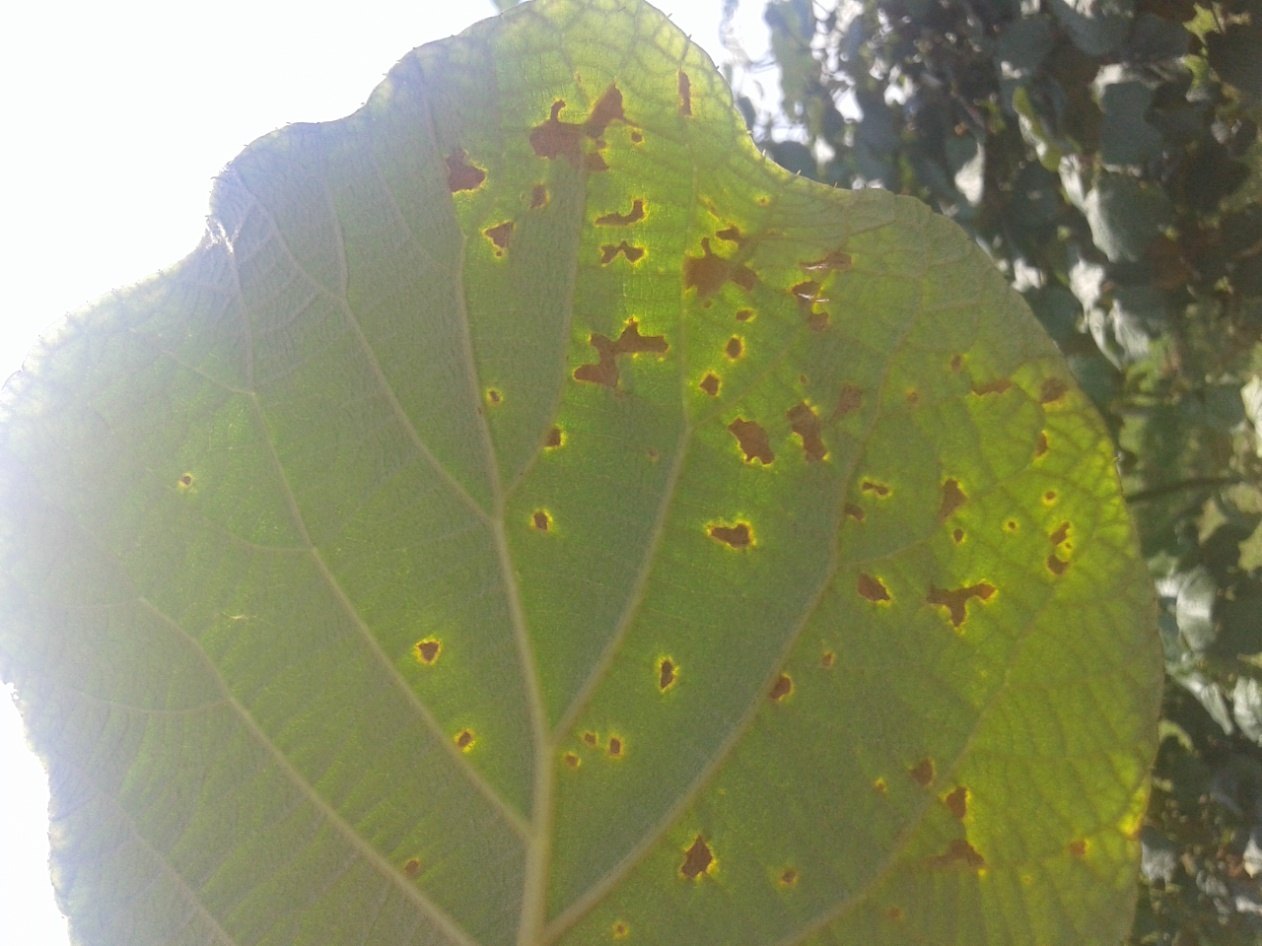
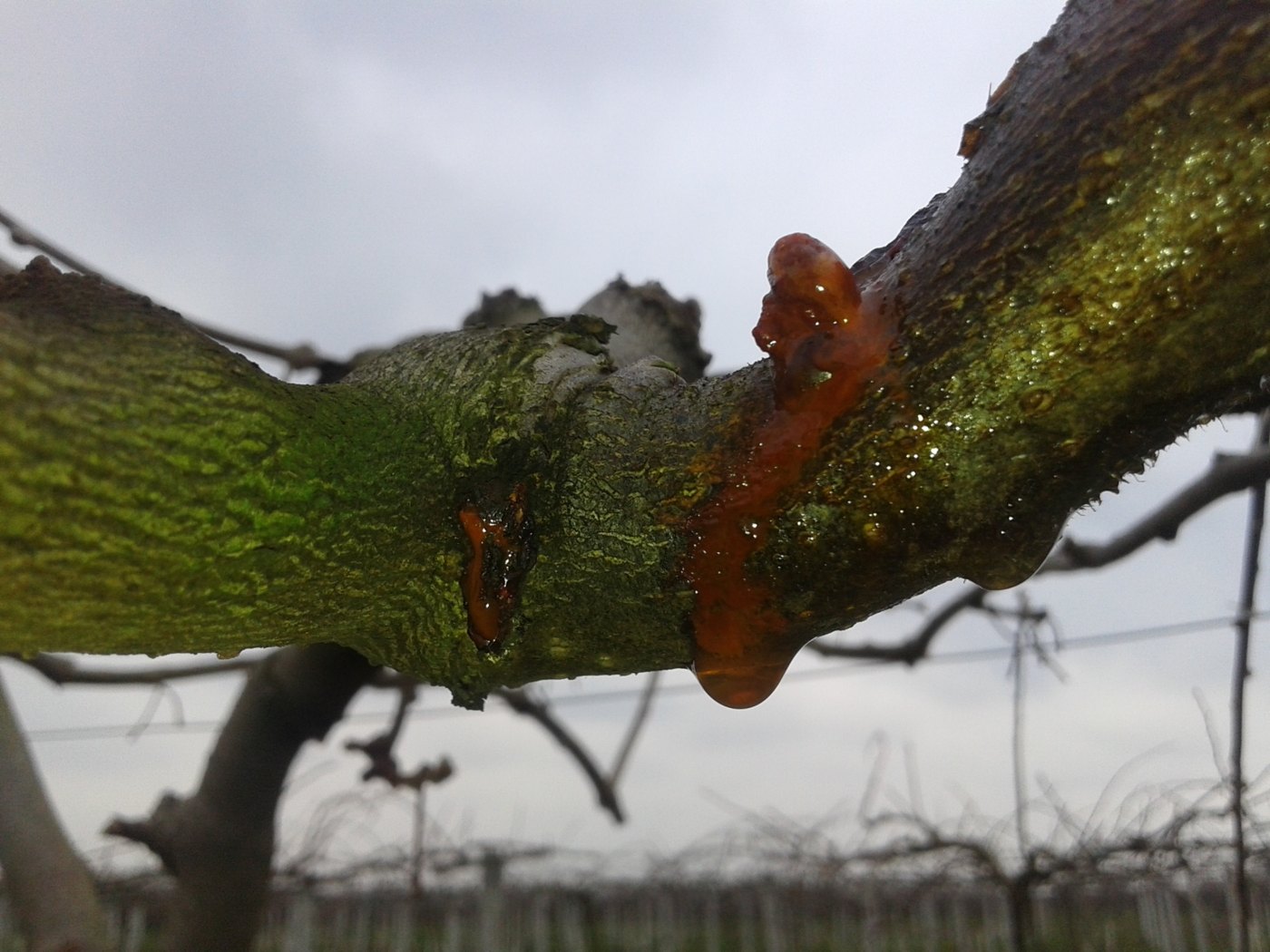
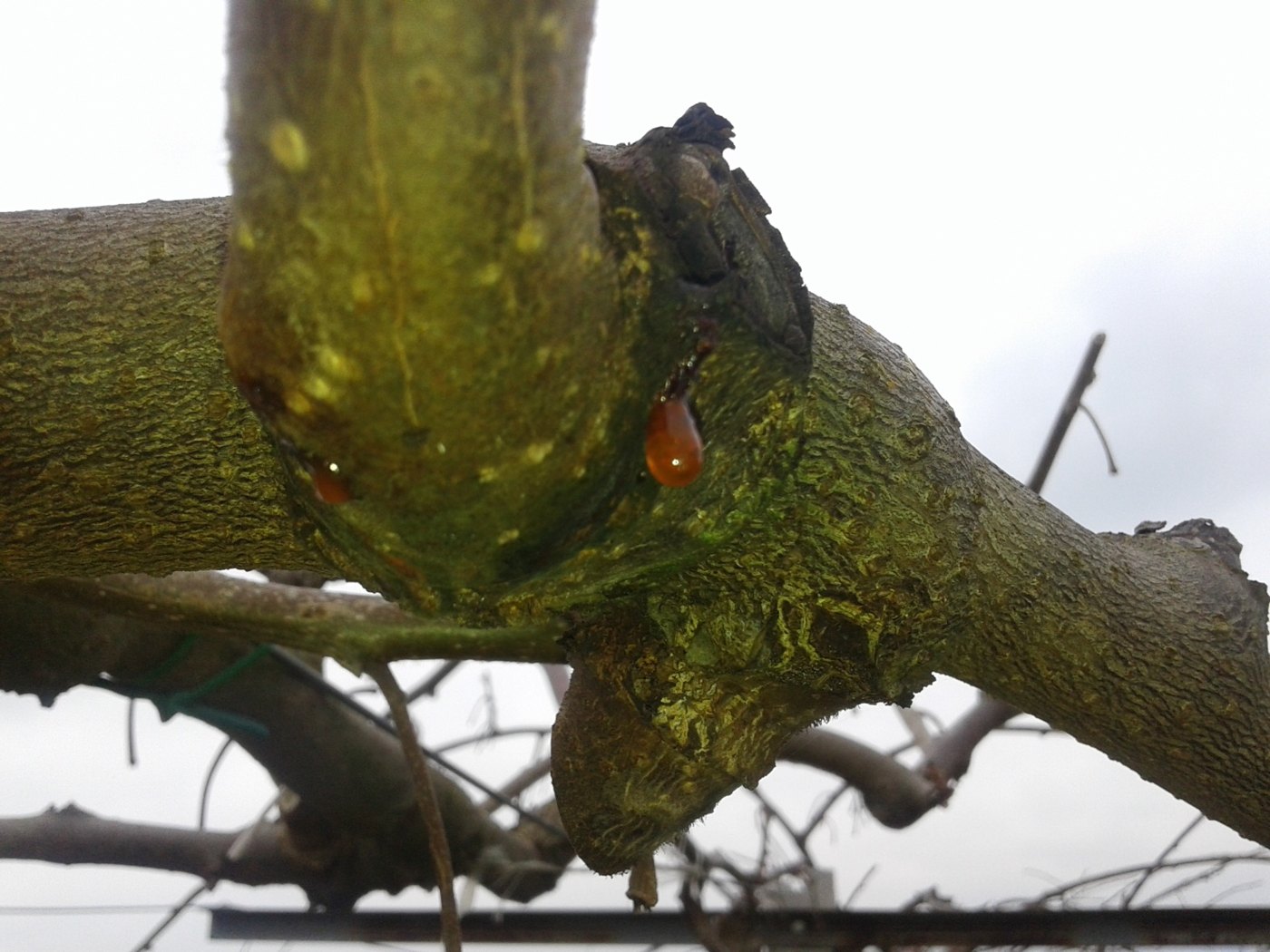
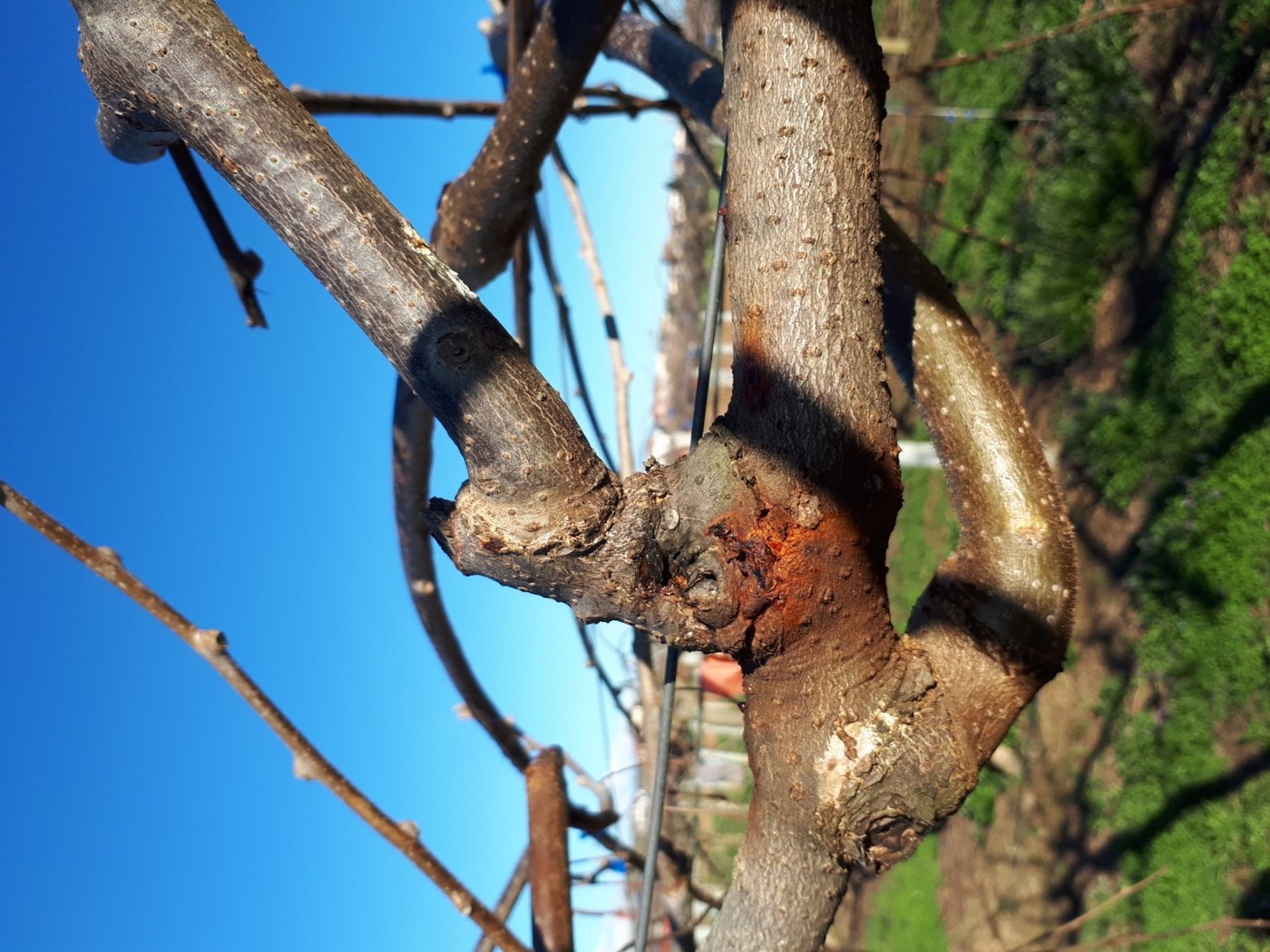
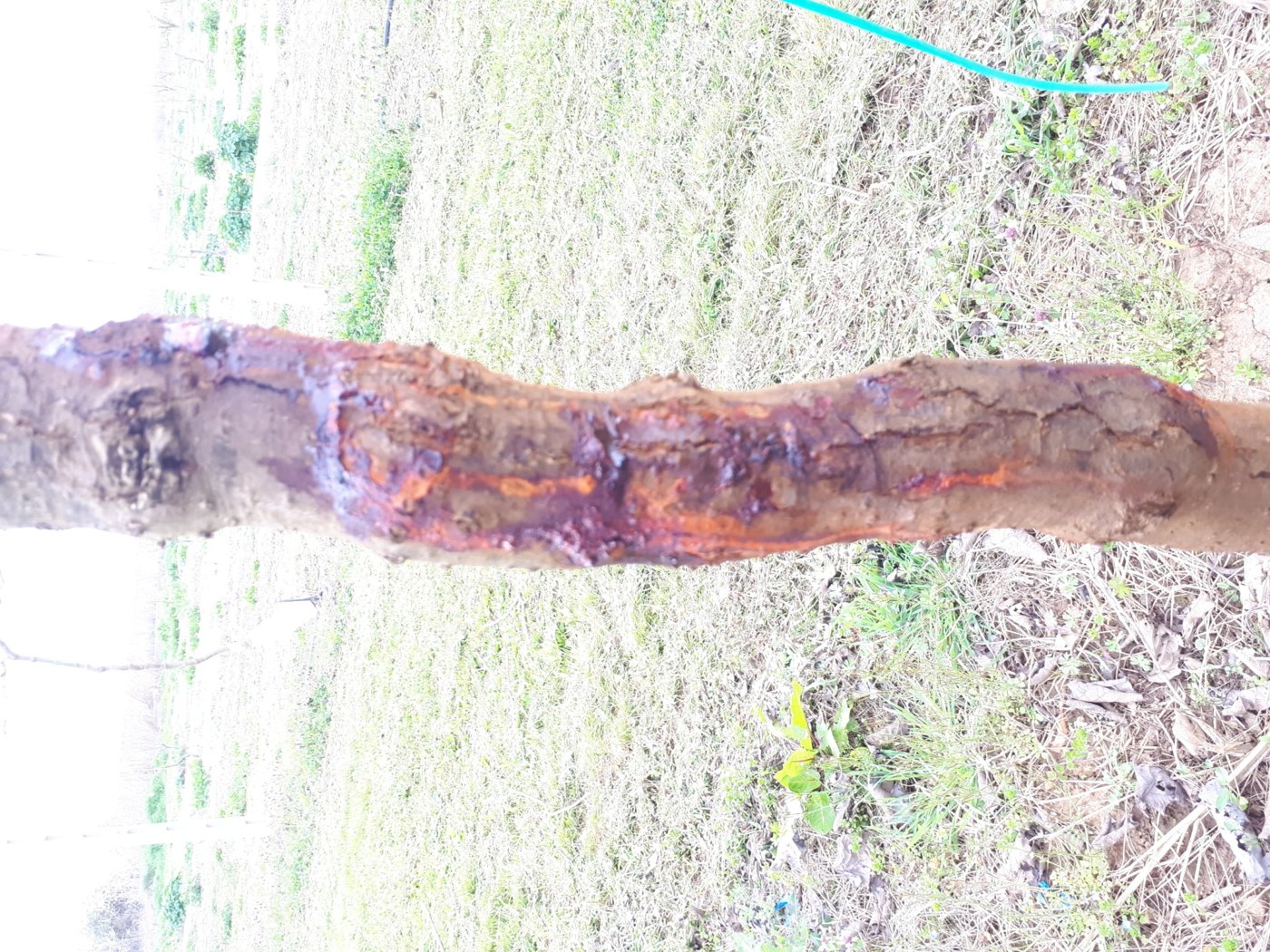
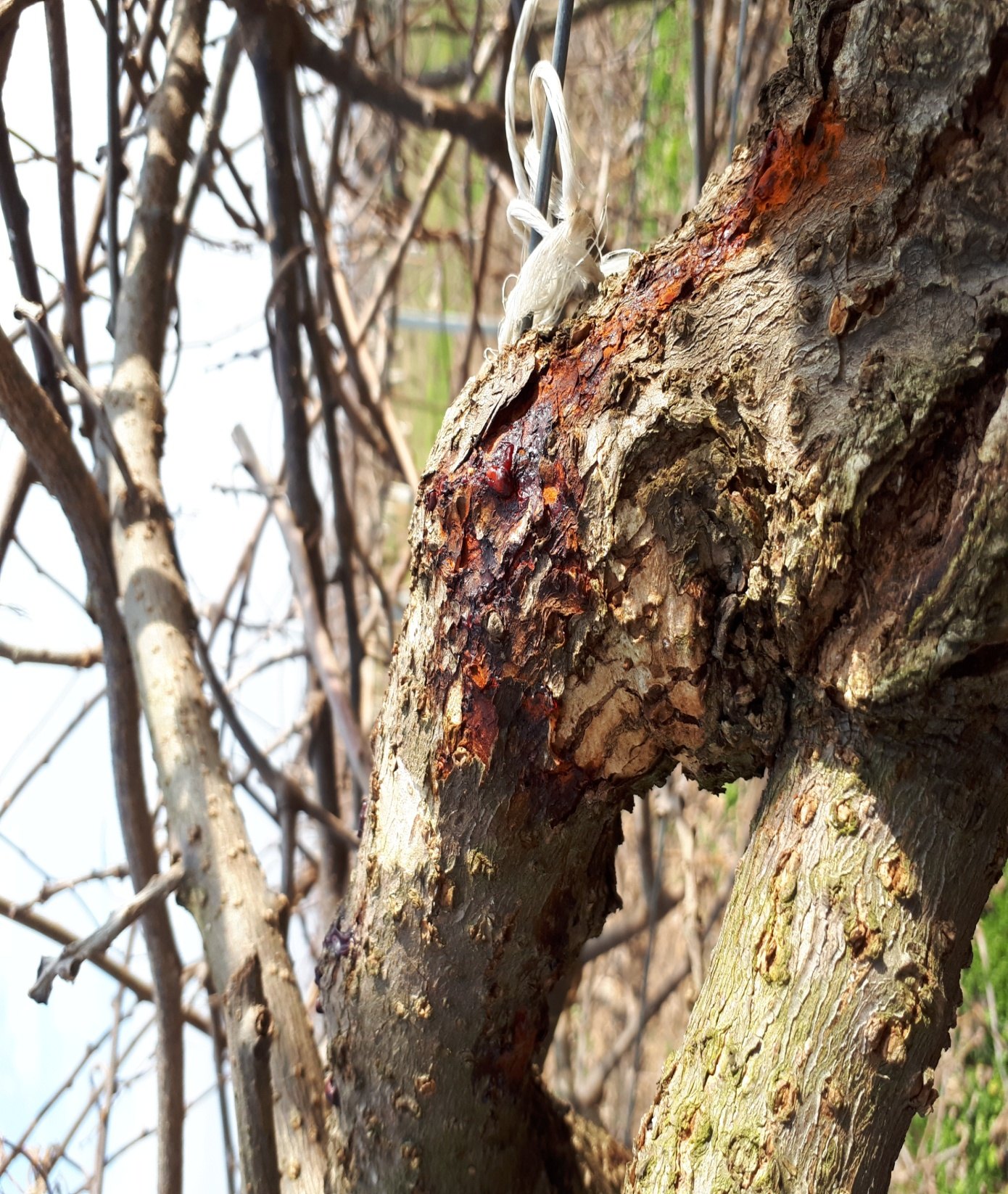
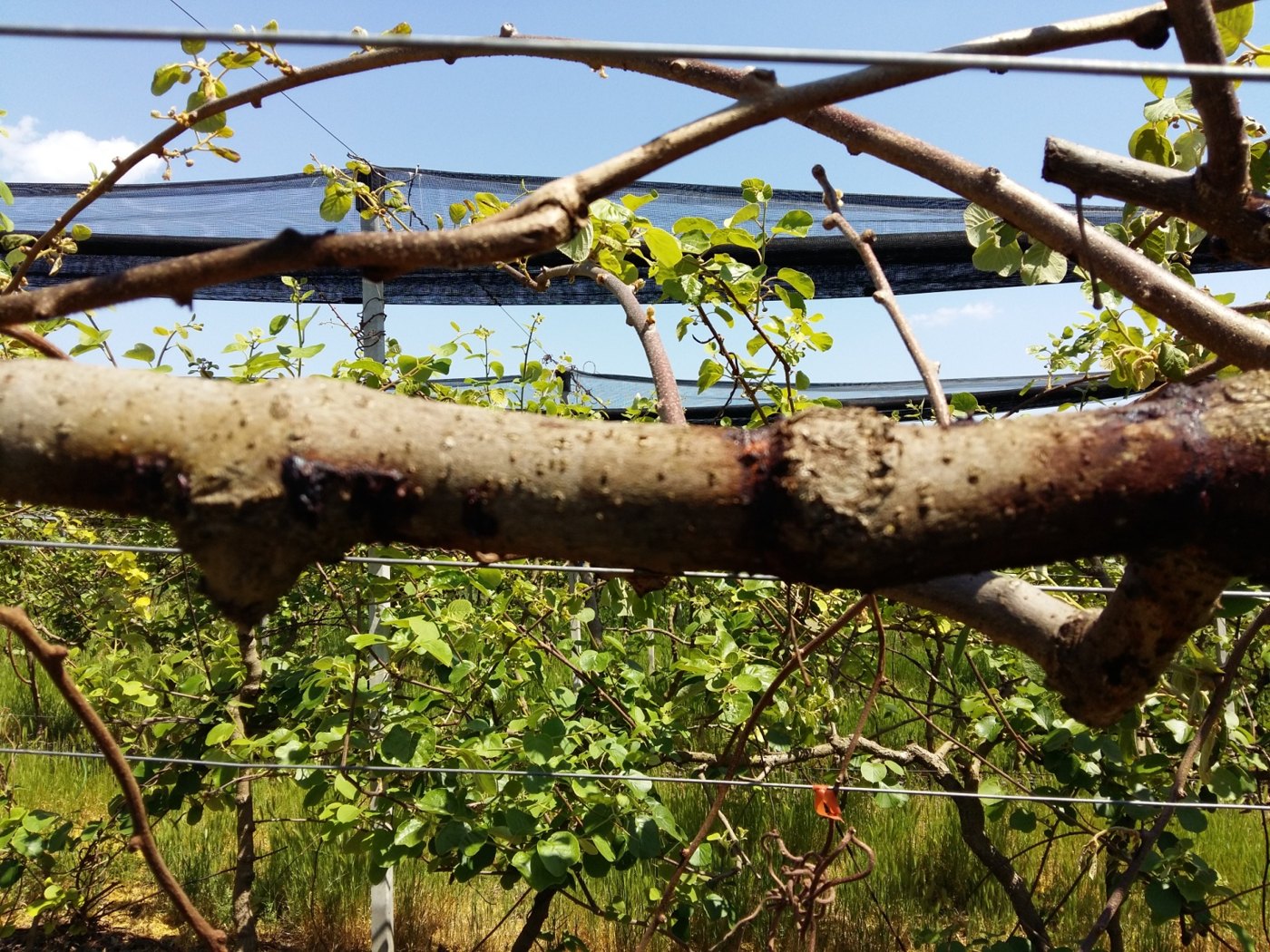
A study published in January 2025 examined 22 strains of the pathogen from kiwifruit orchards in the Prefecture of Pella, from the infected area of Mylotopos [2]:
- All the strains grew at a copper concentration of at least 200 µg/mL, that is 0.8 mM.
- Two strains, 9.1%, survived even at 400 µg/mL, that is 1.6 mM.
- In four strains, 18.2%, resistant colonies were found within the wider population, meaning there are resistant subpopulations that every spray selects for and favours.
- In six strains, 27.3%, the minimum bactericidal concentration was above 400 µg/mL: in more than one strain in four from Mylotopos, copper does not kill the bacterium.
The conclusion is not that copper is abolished. It remains the most important preventive tool available and it reduces symptoms without eliminating them. The conclusion is that it is not enough on its own, and that raising the dose to “break through” the resistance is a mistake: it selects for the resistant strains and accumulates copper in the soil.
The weight shifts to a programme rather than repetition of the same thing: orchard hygiene, avoidance of wounding, alternation with defence activators and antagonistic microorganisms. Treated in detail in the article Bacterial canker of kiwifruit.
Prevention, the measures that genuinely work
- Restricting movement within the orchard. No unnecessary walking through, no vehicles entering, no visitors without protective measures.
- Disinfecting tools at every vine. Pruning shears carry the bacterium within seconds.
- Pruning in dry weather, never ahead of rain. Fresh cuts are open doors.
- Avoiding unnecessary foliar sprays. Every pass of the sprayer is also a route for carrying inoculum.
- Protection from wind damage and hail. Windbreaks are a crop protection measure, not just a microclimate one.
- Balanced nitrogen fertilisation: excessively soft growth is more susceptible.
- Certified planting material, checked before planting.
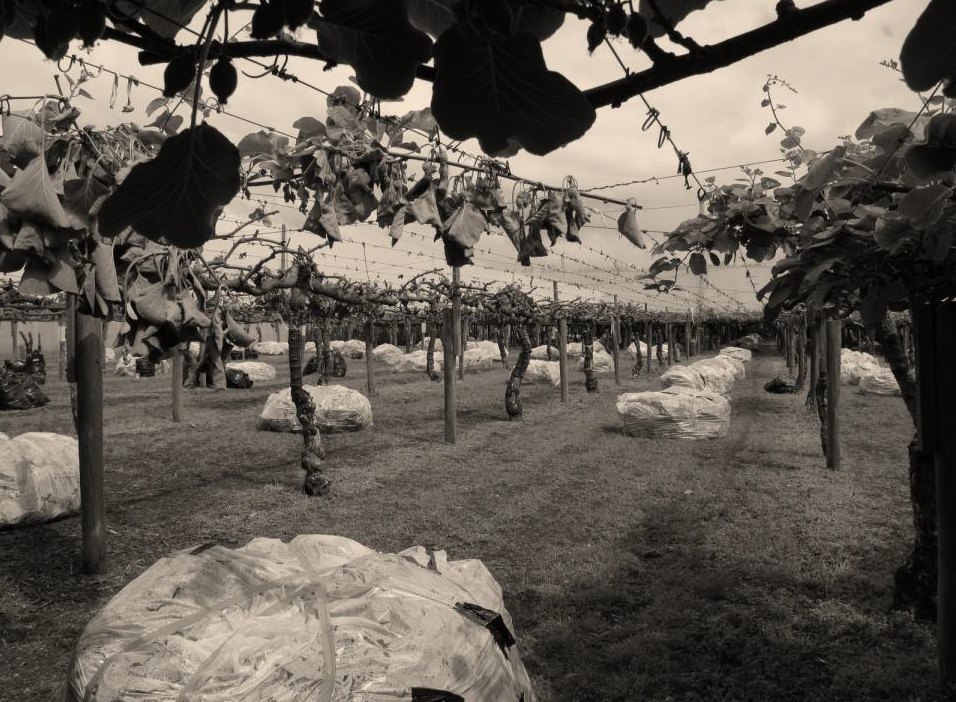
The subject is treated separately in the article Bacterial canker of kiwifruit.
2.2 Crown gall, Agrobacterium tumefaciens
It produces galls on the crown and the roots, at first soft and pale, hardening and splitting over time. It enters through wounds, mainly from grafting in the nursery and from tools. In young plants it restricts growth; in mature plants it rarely kills, but it is a permanent doorway for secondary rots. There is no cure once it is established. Control is entirely preventive [1].
2.3 Other bacteria
Pectobacterium carotovorum subsp. actinidiae causes soft rot with a characteristic foul smell, wherever there is injury and excessive moisture. Pseudomonas species other than the canker pathogen, such as P. viridiflava, produce leaf spotting and flower necrosis that are easily confused with canker [1]. Distinguishing them requires laboratory identification and matters in practice, because it leads to different management.
3. Diseases of the root and the wood
3.1 Vine decline syndrome, the big reversal
First described in Italy in 2012, it is characterised by collapse of the root system and irreversible wilting of the canopy. Vines collapse rapidly from the appearance of the first above-ground symptoms and do not recover in later seasons [3].
For years the dieback was attributed to Phytophthora. Modern research shows something else: Phytophthora species were found consistently rare, below 1% relative abundance in all sample types [3].
The organisms consistently associated with the symptoms are oomycetes of the genus Phytopythium, chiefly P. vexans, along with P. chamaehyphon, P. helicoides and P. litorale [3] [7]. P. vexans appears significantly enriched both in the roots and in the soil of symptomatic vines.
The trigger, however, is not the fungus, it is the water. Accumulation of water in the soil and the hypoxic conditions it creates are the factors that set off the syndrome [3]. The pathogen finds the ground prepared; it does not prepare it.

That changes the order of priority of the measures. Drainage comes before any product: raised planting rows, drainage of the low points, avoidance of an impermeable horizon beneath the root zone, and irrigation that does not keep the soil saturated. The subject is developed in the article Kiwifruit vine decline syndrome.
3.2 Phytophthora, crown rot
It remains a real problem, particularly on heavy, poorly drained soils. The oospores attack by contact, primarily the trunk and secondarily the roots, and survive in the soil for many years. The Greek literature reports up to 13 years for oospores and up to 6 years for chlamydospores [11]. A block with a history of Phytophthora remains dangerous for years, and one or two fallow seasons do not solve the problem. To infect and spread they need high soil moisture. Frequent irrigation and heavy rainfall make the problem worse.
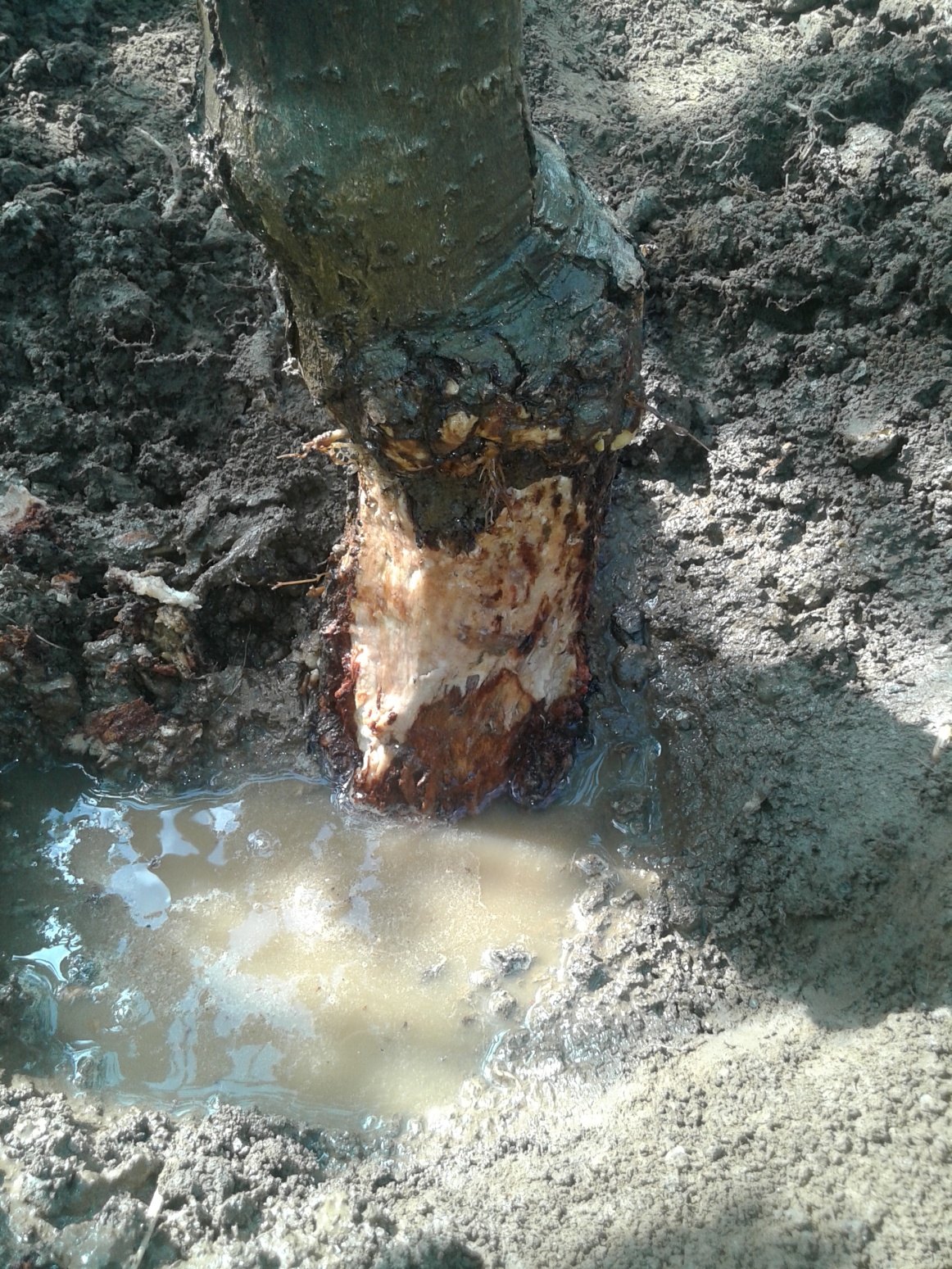
How it is distinguished from vine decline syndrome: Phytophthora has a slow progression, with stunting, pale foliage and small fruit before total dieback, and it is usually localised at particular low points rather than sweeping along rows [11].
Prevention: healthy plants, avoidance of deep planting and of soil pulled away from the crown, planting on ridges, no wetting of the trunk during irrigation, rational irrigation.
3.3 Root rots
Caused mainly by Armillaria mellea, with Rosellinia necatrix also involved [1]. They cause generalised stunting, small leaves and small fruit, and in young plants they can produce apoplexy, sudden collapse.
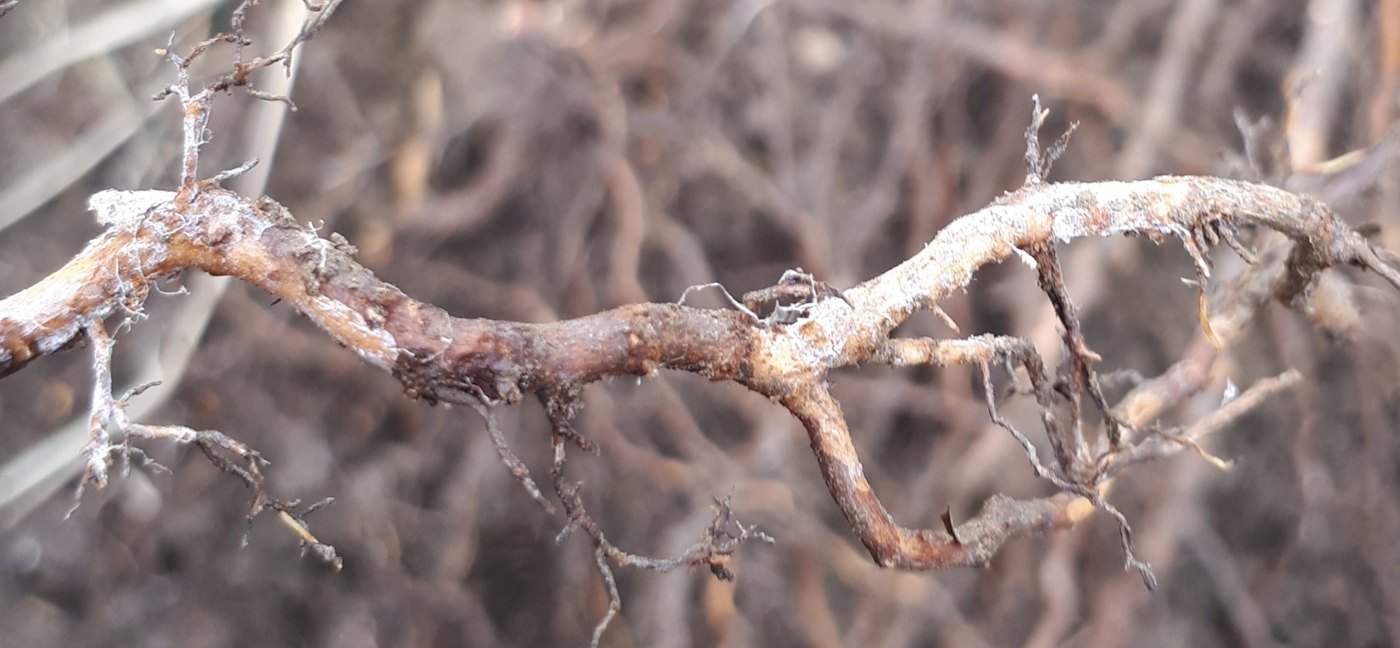
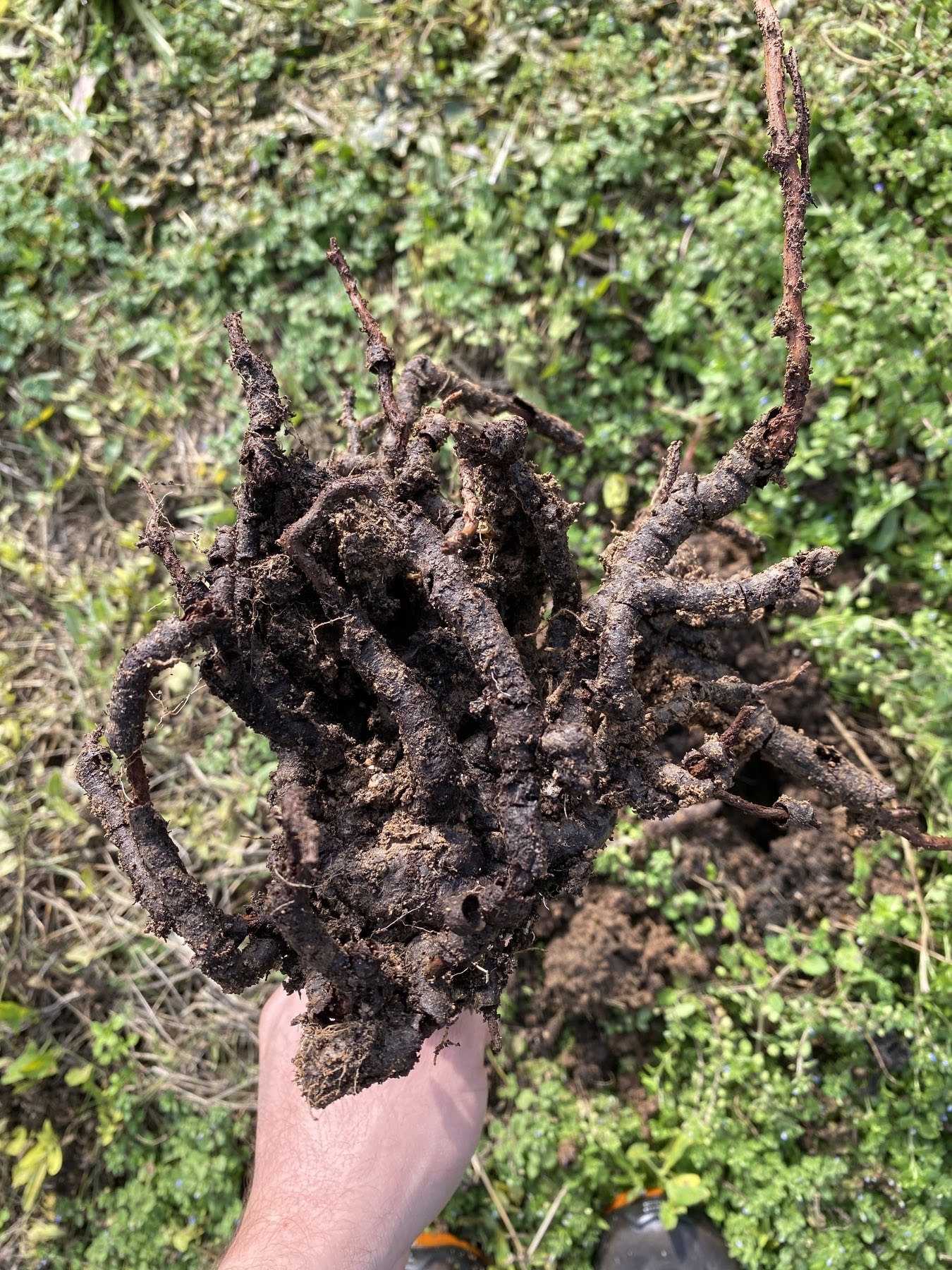
It appears typically on land that was previously woodland or carried old trees, because the fungus survives for years on roots left in the soil. Prevention is complete removal of the old roots before planting.
3.4 Esca, wood rot
A complex of fungi, not a single fungus. In kiwifruit the main roles appear to be played by Phaeoacremonium aleophilum and Fomitiporia punctata, the latter having been isolated in Greece as well from decaying kiwifruit wood [1] [11]. A caution about confusion: Fomitiporia mediterranea, often cited in connection with esca, is the main white-rot fungus of grapevine; in kiwifruit the documented species is F. punctata. It is a very serious disease that substantially shortens the life of an orchard. The vines live infected for several years before collapsing, and that is what makes early recognition difficult.
When and how it appears
The visible symptoms appear in late summer, July to August: large necrotic patches on the leaves, usually asymmetric, spreading rapidly through the plant. Premature leaf fall follows, usually from mid-August depending on the severity of the attack, and then softening and drop of the fruit [11].
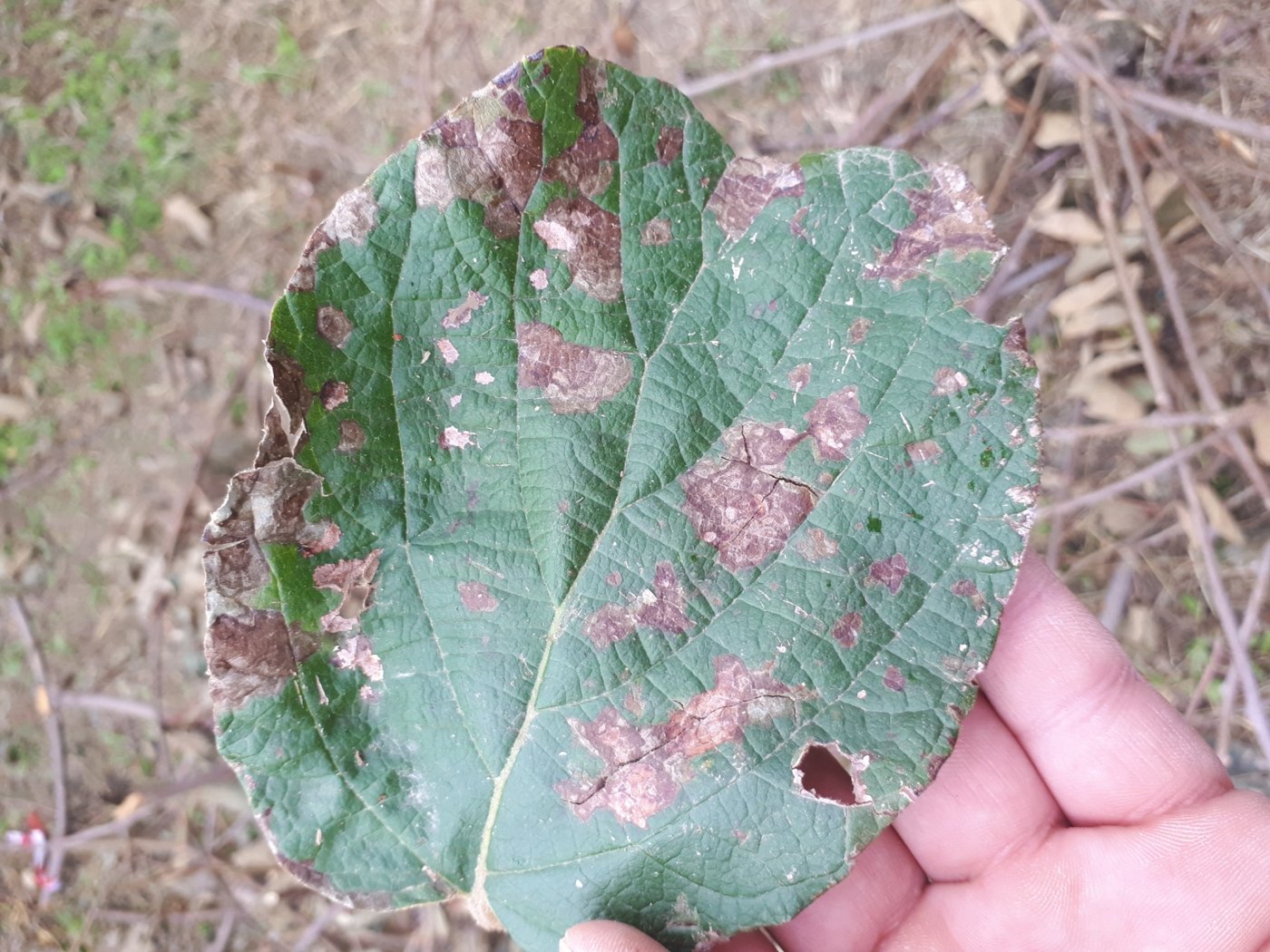
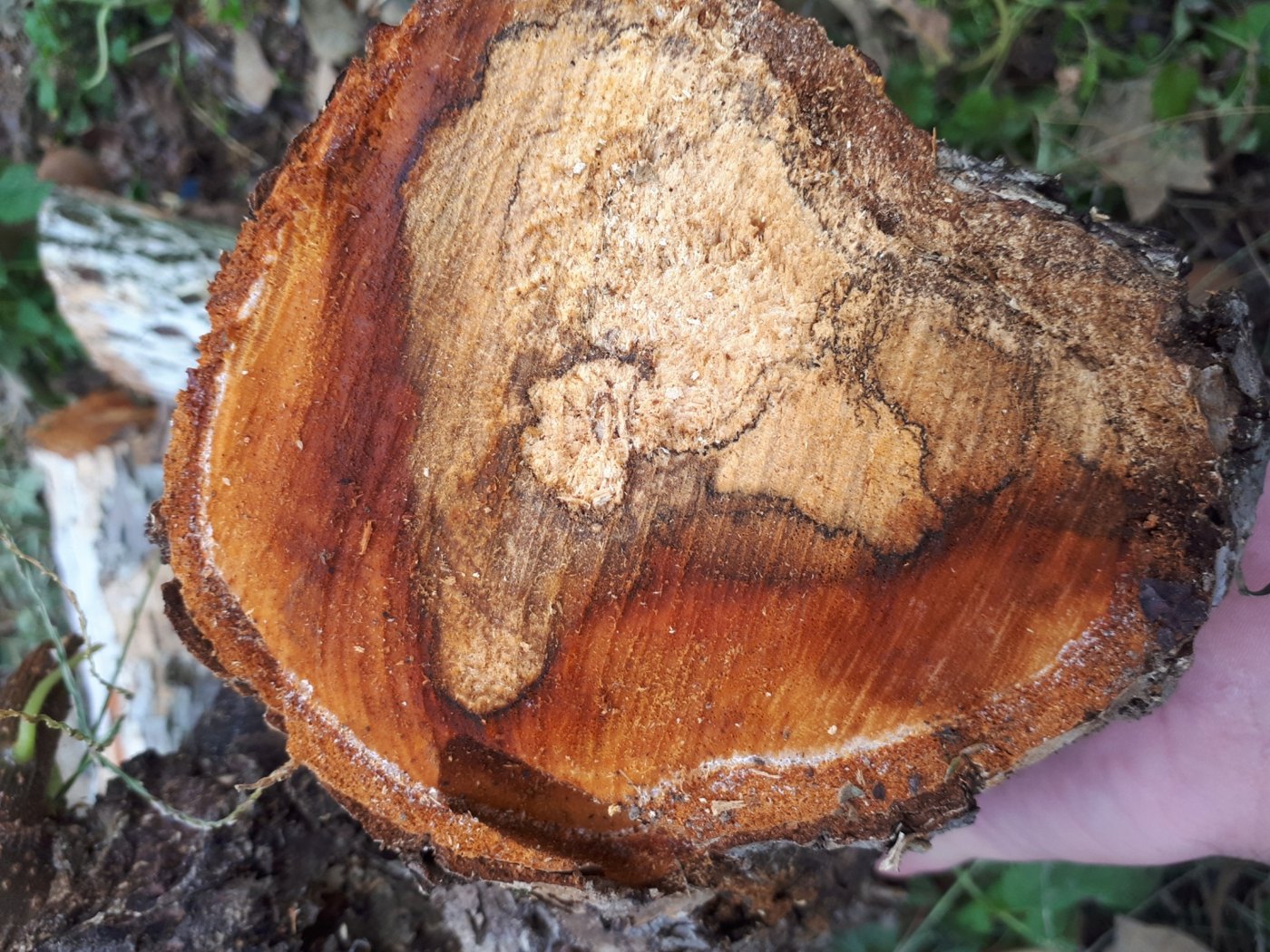
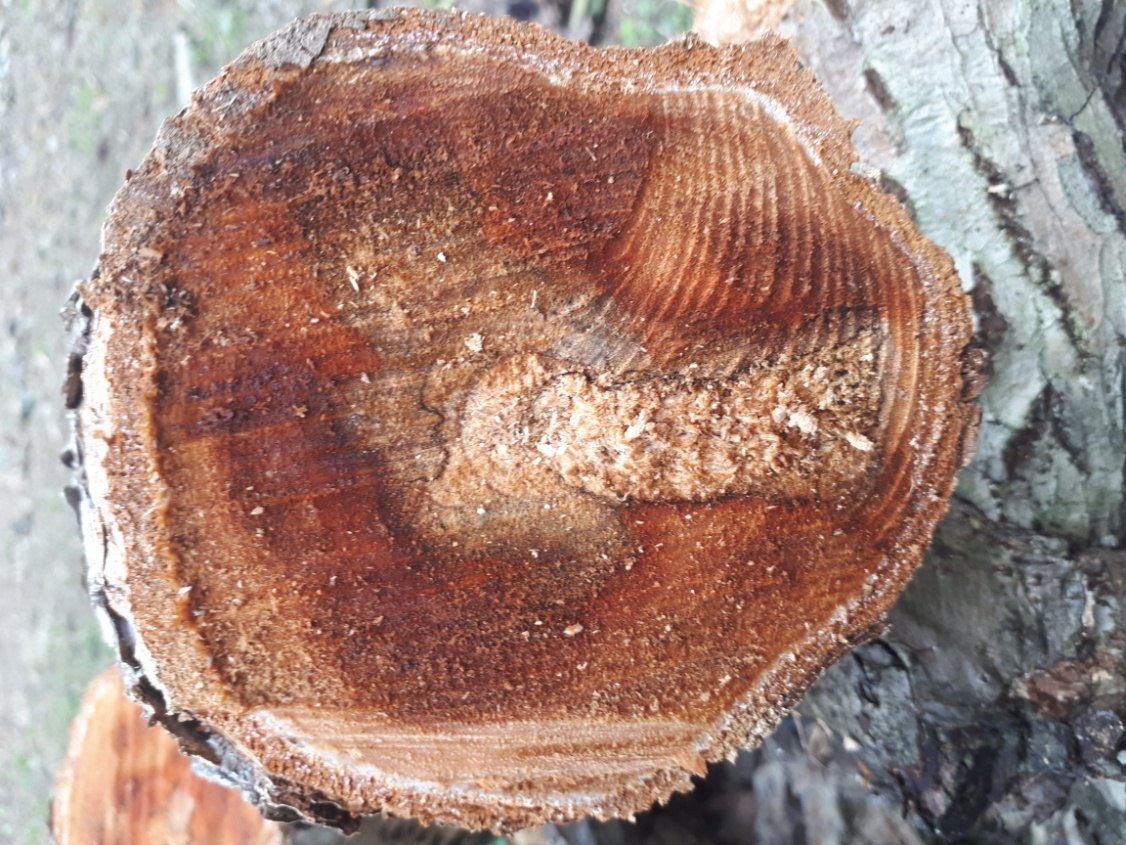
Transmission: mechanical means, shears, saws, summer pruning, especially on the scaffold limbs, overhead sprinkler irrigation, animals and rodents, wind and rain [11].
Analysed in the article Esca-like disease in kiwifruit.
3.5 Nematodes
Root-knot nematodes produce galls on the roots and a gradual decline that resembles nutrient deficiency. They are covered in the pest section and in the article Nematodes in kiwifruit.
4. Diseases of the fruit and the foliage
4.1 Botrytis, the disease that starts five months before it shows
Botrytis cinerea is the main cause of storage losses, in the form of stem end rot. The critical piece of knowledge, and the point at which most programmes fail, is when the infection takes place.
The fungus colonises the petals and the anthers during flowering and petal fall, and remains latent inside the fruit until it ripens and is harvested [4] [5].
In an experimental study on ‘Hayward’, the incidence of latent infection at harvest proved to be the best predictor of postharvest stem end rot, with a correlation coefficient greater than 0.8 [4]. That is, the fate of the coolstore is decided in the field, in May.
The infection conditions, as given in the Pacific Northwest handbook of the United States: a temperature between 14 and 25 °C combined with at least six hours of wetness [5]. No published Greek equivalent was found, so the six-hour threshold serves as an order of magnitude and not as a model calibrated for the region. Rain during petal fall is the decisive factor.
From mid fruit development onwards, the main source of inoculum becomes the wind-damaged shoots that senesce inside the canopy; they act as an inoculum bridge to the green, senescing and dead leaves [5]. Every piece of dead material left hanging on the pergola is a nursery.
What that means in practice
- An open canopy. Pruning and leaf removal that speed up drying reduce the hours of wetness, which is the variable that determines infection.
- Removal of petals stuck to the young fruit after flowering, where that is practically feasible. It is the substrate the fungus starts from.
- A clean pergola. Removal of broken and dead shoots during the summer.
- Careful handling at harvest. Every wound and every knock opens a route for the rot.
- Rapid cooling after harvest, and avoidance of moisture condensing on the fruit.
- No fruit left on the ground or on the plants after harvest [11].
4.2 Sclerotinia rot, Sclerotinia sclerotiorum
It attacks mainly the flowers and passes from there to the young fruit and the shoots, causing flower necrosis and rot or superficial scarring of the fruit [1]. A characteristic feature is the black sclerotia, the shape and size of a grain, inside the affected tissue. It is favoured by cool, wet weather during flowering, that is by the same conditions as botrytis. The distinction is made from the sclerotia, which botrytis does not form in that manner.
4.3 Botryosphaeria and Phomopsis
Botryosphaeria dothidea and Phomopsis actinidiae cause fruit rots that appear mainly in storage, as well as shoot necrosis [8]. Like botrytis, they infect early and appear late. Management is largely identical: orchard hygiene, removal of dead wood, careful handling.
4.4 Leaf spots
Alternaria alternata and Stemphylium botryosum produce spotting that appears mainly on stressed foliage, after extreme heat, water stress or nutrient deficiency [1]. They rarely justify treatment in their own right; they are an indicator that something else is wrong in the orchard.
5. Viruses
A number of viruses have been detected in Actinidia: viruses of the genus itself such as Actinidia virus A, B, X and Actinidia virus 1, Citrus leaf blotch virus, Cherry leaf roll virus, Pelargonium zonate spot virus and Actinidia yellowing ringspots virus, as well as broader-host-range viruses such as alfalfa mosaic virus and cucumber mosaic virus [13].
Their practical significance is not in spraying. None of these viruses currently causes economically significant losses in the Greek crop, and none of them can be cured. Their significance lies elsewhere: they are transmitted in the planting material, and one infected batch of cuttings establishes the problem for the whole life of the planting. The only defence is certified material from an inspected nursery, the same measure that protects against bacterial canker and against crown gall.
Sources: 13
6. Insects and other pests
6.1 Brown marmorated stink bug, Halyomorpha halys
An alien species that established itself recently and today causes some of the most serious fruit damage. It is polyphagous. It feeds on more than 170 plant species, and moves between woodland, uncultivated land and orchards [14]. In Greece, attack on kiwifruit was officially recorded in 2018, while damage has also been documented on peach and olive in northern Greece [14]; native parasitoids of the insect have already been found in the country [6].
| Item | Data |
|---|---|
| Adult | About 17 mm long, shield-shaped with five angles, underside pale grey to off-white [12] |
| Eggs | White to pale green, in groups of 20 to 30 on the underside of the leaves; hatching in 3 to 7 days depending on temperature [12] |
| Fecundity | About one egg mass a week, up to 400 eggs per female over the season [12] |
| Generations in the region | Two overlapping generations a year. Three years of pheromone-trap monitoring in four kiwifruit orchards in Imathia and Pieria (2021 to 2023) confirmed two generations, with a matching pattern in the second-instar nymphs [14] |
| Emergence from overwintering | April, and not May. That is when the traps go out [14] |
| Catch peaks | Two: late July to mid-August and late September. The second coincides with the kiwifruit harvest [14] |
| Diapause | The adults enter diapause from late October, aggregating in buildings and sheltered places [12] |
| Aggregation | Governed by an aggregation pheromone, which is what makes monitoring with pheromone traps possible [12] |
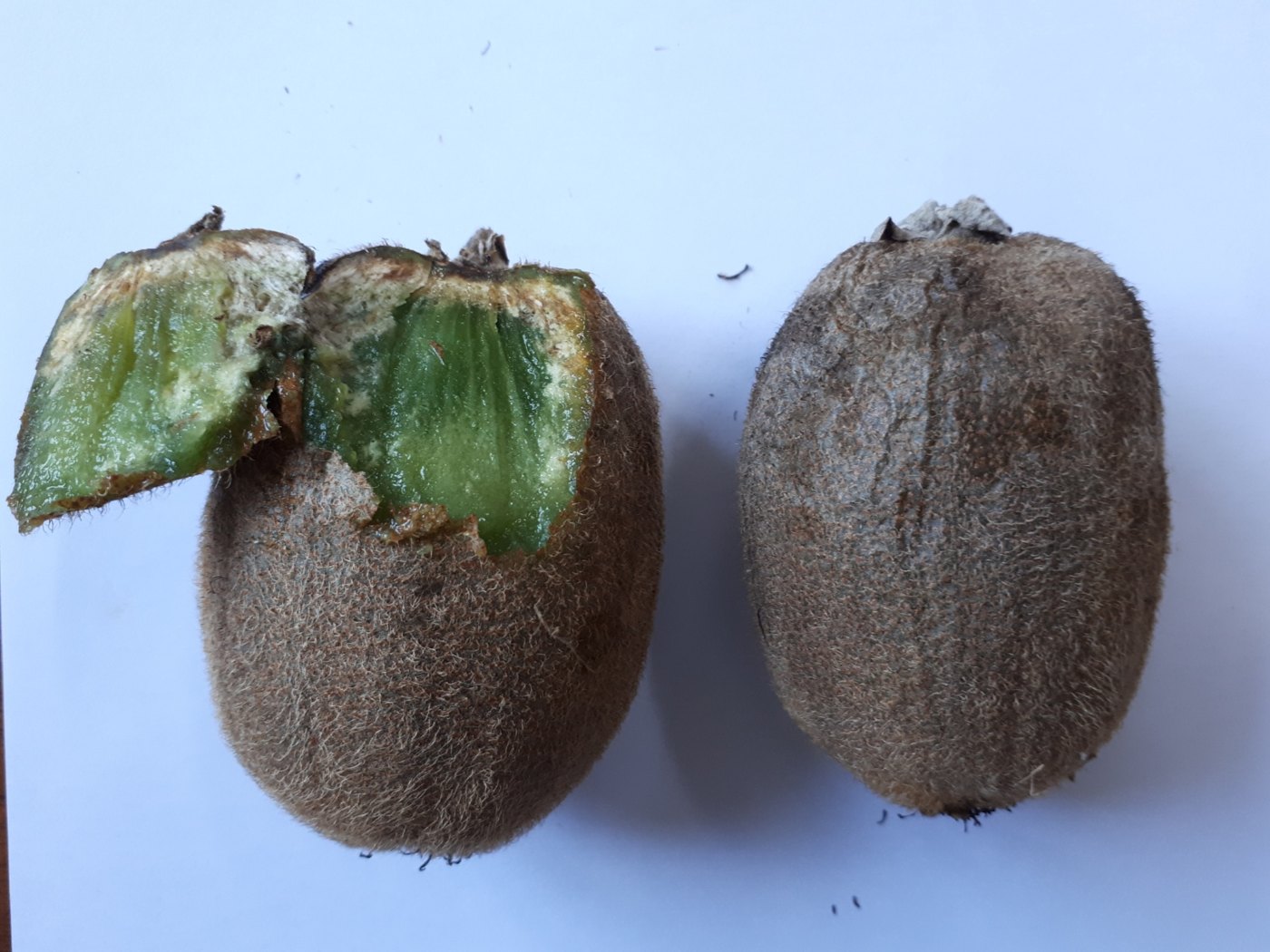
Practical measures: aggregation pheromone traps from April, placed preferably on the perimeter of the block, because the attack starts around the edges, especially on the sides bordering woodland or uncultivated land [14]. That allows perimeter rather than whole-block treatments in the early stages. Sample fruit cutting follows near harvest, when the second catch peak also falls.
Indiscriminate use of broad-spectrum insecticides is counterproductive: native parasitoids of the insect have already been recorded in Greece [6], and such a spray wipes them out. The subject is treated separately in the article The brown marmorated stink bug, BMSB, Halyomorpha halys.
6.2 White peach scale, Pseudaulacaspis pentagona
It settles on the shoots and the fruit and is a serious problem, both because of the direct feeding and because infested fruit is rejected at grading.
The insect has three generations a year in the lowlands of Central Macedonia. It overwinters as a mated female, with the eggs protected under the scale [11]:
- 1st hatch: late April
- 2nd hatch: late June
- 3rd hatch: late August
Why those dates matter. The scale protects the immobile stage; the only period when the insect is genuinely vulnerable is the mobile crawler stage, immediately after hatch. Treatment outside that window gives little return, whatever active substance is used. Hatch is detected by monitoring the infested shoots around the dates above, not by the calendar.

6.3 Nematodes
Microscopic organisms that attack the roots and cause galls. The dominant species in kiwifruit is Meloidogyne hapla, a species of cool and temperate regions that is already active at a soil temperature of 8.8 °C, a fact that determines when a treatment is meaningful. The plants are stunted and chlorotic, with small leaves and the look of nutrient deficiency, often the look of nitrogen deficiency [11]. It is precisely this resemblance that leads to the commonest mistake: increasing fertilisation for a problem that is not nutritional. The plant cannot absorb, not cannot find.
Testing once a year, with soil and root sampling. Care with inadequately composted organic materials and with infected plant material, which are the main routes of introduction into a clean block [11]. The subject is developed in the article Nematodes in kiwifruit.
6.4 Metcalfa pruinosa and other pests
Metcalfa pruinosa produces abundant waxy secretions and honeydew, resulting in sooty mould on leaves and fruit. It rarely justifies treatment in its own right, but it downgrades the commercial appearance. Drosophila suzukii is also recorded on kiwifruit [1], but the tough skin restricts it, and interest focuses on damaged or over-ripe fruit. Rodents and hares strip bark around the circumference in young plantings, resulting in ring girdling and death of the plant.
7. Differential diagnosis in the field
Most management errors come not from choosing the wrong measure but from wrong identification. The table below gathers the points that genuinely distinguish one from another.
| Picture | What distinguishes it | Most likely cause |
|---|---|---|
| Canopy wilting while the block is irrigated | Rapid collapse, roots with no new white rootlets, low or poorly drained spots | Vine decline syndrome |
| Slow stunting with small fruit, pale foliage | Brown discoloration at the crown with a sharp margin against healthy tissue | Phytophthora |
| Stunting with white fans under the bark of the root | The root bark separates easily, faint mushroom smell | Root rot |
| Stunting with galls on the roots, look of nitrogen deficiency | Swellings on the root, not rot; does not respond to fertiliser | Nematodes |
| Dieback of a limb from a specific point upwards | A canker girdling the limb, brick-red to red exudates | Bacterial canker |
| Small angular leaf spots with a yellow halo | The halo is strong and shows clearly against the light | Bacterial canker |
| Large asymmetric necrotic leaf patches, July to August | Rapid spread, premature leaf fall from mid-August, white rot in the cut wood | Esca |
| Rot in storage, from the stem end | Glassy discoloration of the flesh, grey mould on the surface | Botrytis |
| Damage visible only when the fruit is cut | Sunken corky lesions beneath the skin, with no rot | Stink bug feeding punctures |
| Galls on the crown and the roots | At first soft and pale, hard and split over time | Crown gall |
8. Monitoring calendar
| Period | What is checked | Why then |
|---|---|---|
| Winter, dormant period | Pruning in dry weather, disinfection of tools, removal of dead wood, small cuts | The cuts are the main point of entry for the bacterium and for the wood fungi |
| March | A sweep of every scaffold limb for cankers and exudates | Cankers are most visible before they are covered by the new growth |
| Late April | First hatch of white peach scale | Only the mobile crawler is vulnerable |
| Flowering and petal fall | Hours of wetness and temperature; recording of rain | This is where the botrytis of the coolstore is decided, not in winter [4] |
| April | Setting out pheromone traps for the brown marmorated stink bug, on the perimeter of the block | That is when the adults emerge from overwintering; by May it is already late [14] |
| Late June | Second hatch of white peach scale | A second window of vulnerability |
| July to August | A sweep of the foliage for large asymmetric patches; clearing of broken shoots | The period when esca appears [11] and when the botrytis inoculum bridge forms [5] |
| Late August | Third hatch of white peach scale; first stink bug catch peak; sample fruit cutting for feeding punctures | Stink bug damage is not visible externally [14] |
| Before and during harvest | Careful handling, rapid cooling, no fruit left on the ground | Every wound activates the latent infections |
| After harvest | Removal of fruit residues from the plants and the ground | They are the overwintering substrate of the rot pathogens [11] |
9. Where the authorised products are found
This text names no trade names and no active substances, and that is deliberate. Authorisations change constantly: active substances are withdrawn, doses are revised, and a recommendation that was correct last year may be illegal today. Any text that lists products ages badly and leads to error.
The check is made every time in the register of authorised plant protection products, searching by crop and by pest. For Greece, that is fyto.plantprotect.gr [10]; in other countries, the corresponding national register. The crop, the specific pest, the dose, the maximum number of applications and the pre-harvest interval are always checked.
- Register of authorised plant protection products, search by crop and pest
- Maximum residue levels (MRL), to be checked before export
- Agricultural warnings, the bulletins of the regional centres
- Field area measurement and satellite vegetation indices
10. The key points
What to take away
- Copper is no longer a solution for bacterial canker. All 22 Pella strains withstand 200 µg/mL [2]. The weight moves to prevention, hygiene and the avoidance of wounding.
- The decline is not Phytophthora. It is Phytopythium oomycetes on soil that has become saturated with water [3]. Drainage comes before any product.
- The botrytis of the coolstore is decided at flowering. Latent infection at harvest predicts stem end rot with a coefficient above 0.8 [4].
- The brown marmorated stink bug is not visible from the outside. The traps go out in April, it has two generations, and the second peak coincides with harvest. The only timely assessment of the damage is sample fruit cutting [14].
- White peach scale can only be hit at the crawler stage, late April, late June, late August in the lowlands of Central Macedonia [11].
- Every case of wilting is diagnosed with the spade, not by eye in the canopy.
- Pruning carries more crop protection weight than any other operation of the year. Dry weather, clean tools, small cuts.
11. Sources
The numbers in the text refer to the list below.
- [1] Di@gnokiwi, Maladies, ravageurs et désordres du kiwi. Ephytia, INRAE, in collaboration with BIK and GIS Fruits; draws on the CTIFL monograph Le Kiwi and updated literature. Source for crown gall, the secondary bacteria Pectobacterium carotovorum subsp. actinidiae and Pseudomonas viridiflava, Rosellinia necatrix, sclerotinia rot with flower necrosis and fruit scarring, the leaf spots caused by Alternaria and Stemphylium, the lower growth limit of botrytis at 1 °C, and Drosophila suzukii on kiwifruit.
- [2] Copper Resistance in Pseudomonas syringae pv. actinidiae Strains from the Prefecture of Pella, Northern Greece, and a Comparison of the Effectiveness of Several Commercial Products to Control It (2025). Agriculture 15(2):157. Source for the 22 Pella strains, the growth of all of them at 200 µg/mL copper, the two strains at 400 µg/mL, the resistant subpopulations in four strains, biovar 3 and the cost of 330 to 400 million euros in New Zealand.
- [3] Soil, rhizosphere, and root microbiome in kiwifruit vine decline, an emerging multifactorial disease (2024). Frontiers in Microbiology 15:1330865. Source for the first description of the syndrome in Italy in 2012, the relative abundance of Phytophthora below 1%, the enrichment of Phytopythium vexans in roots and soil, and the role of waterlogging and hypoxia as the trigger.
- [4] Postharvest Incidence of Stem End Rot in «Hayward» Kiwifruit Is Related to Preharvest Botrytis cinerea Colonization of Floral Parts and Latent Infection (2020). Plant Disease. Source for colonisation of the floral parts during flowering and for latent infection at harvest as the best predictor of stem end rot, with a correlation coefficient greater than 0.8.
- [5] Kiwifruit (Actinidia spp.), Gray Mold. Pacific Northwest Plant Disease Management Handbook. Source for the infection conditions, a temperature of 14 to 25 °C with at least six hours of wetness, and for the role of wind-damaged shoots as an inoculum bridge in mid fruit development.
- [6] First Report of Native Parasitoids of Halyomorpha halys (Hemiptera: Pentatomidae) in Greece (2021). Insects 12(11):984. Source for the presence of the insect in the kiwifruit-growing areas of Pieria and Imathia and for the existence of native parasitoids in Greece.
- [7] Pathogenicity of Phytopythium chamaehyphon: A New Player in Kiwifruit Vine Decline Syndrome of Actinidia chinensis var. deliciosa «Hayward» in Italy (2021). Plant Disease. Source for the identification of Phytopythium vexans, P. chamaehyphon, Phytopythium helicoides and Phytopythium litorale from symptomatic vines.
- [8] Diagnosis and Integrated Management of Major Fungal Fruit Rots on Kiwifruit in Korea (2018). Research in Plant Disease 24(2):113. Source for the fruit rots caused by Botryosphaeria dothidea and Phomopsis, which infect early and appear in storage.
- [9] Takikawa, Y. and co-workers (1989). Identification and description of Pseudomonas syringae pv. actinidiae as the cause of bacterial canker of kiwifruit in Japan. Source for the first formal description of the pathogen, following its appearance in 1984.
- [10] Database of authorised plant protection products, with data from the Greek Ministry of Rural Development and Food. Source for checking the authorisations by crop and pest, the doses, the maximum number of applications and the pre-harvest interval.
- [11] Pastopoulos, S. (2022). Diseases and pests of kiwifruit, identification and control. Presentation to growers, Pastopoulos Agricultural Ltd, Neos Mylotopos, Pella. Source for the historical development of the bacterium, the points of entry and its systemic movement, the Greek Ministry protocol with removal of 40 centimetres, the phenology of esca in July and August and its modes of transmission, the survival time of Phytophthora oospores, and the three generations of white peach scale with the hatch dates in the lowlands of Central Macedonia. The photographic material in Figures 2 to 12 comes from the same source, from kiwifruit orchards in the region.
- [12] Holthouse, M. C., Alston, D. G., Spears, L. R. and Petrizzo, E. (2017). Brown Marmorated Stink Bug [Halyomorpha halys (Stål)]. Utah State University Extension and Utah Plant Pest Diagnostic Laboratory, Ent-144-17. Source for the length of 17 mm, the groups of 20 to 30 eggs hatching in 3 to 7 days, the up to 400 eggs per female, diapause from late October and reactivation in April and May, the aggregation pheromone and the nature of the fruit damage.
- [13] Advances in and Prospects for Actinidia Viruses (2022). Plant Disease. Source for the list of viruses detected in Actinidia and for the characterisation of Cherry leaf roll virus, Pelargonium zonate spot virus and Actinidia yellowing ringspots virus as the most pathogenic for the crop.
- [14] The brown marmorated stink bug, BMSB, Halyomorpha halys. Pastopoulos Agricultural Ltd, a synthesis of the Greek research with sources Damos, Soulopoulou and Thomidis (2020) and Thomidis and co-workers (2021). Source for the more than 170 host plant species, the official record of kiwifruit attack in Greece in 2018, and for the three-year monitoring of 2021 to 2023 with pheromone traps in four kiwifruit orchards in Imathia and Pieria: emergence from overwintering in April, two catch peaks in late July to mid-August and in late September, confirmation of two overlapping generations, and the start of the attack around the perimeter of the block.
- [15] Donati, I., Cellini, A., Sangiorgio, D., Vanneste, J.L., Scortichini, M., Balestra, G.M. and Spinelli, F. (2020). Pseudomonas syringae pv. actinidiae: ecology, infection dynamics and disease epidemiology. Microbial Ecology 80:81-102. Source for the systemic movement of Psa occurring preferentially in the xylem vessels and secondarily in the phloem, and for the movement of 138 cm downwards against 14.5 cm upwards in four months after a single shoot was inoculated.
This text is informative and does not constitute a recommendation for application. Trade names and active substances are deliberately not given, because authorisations change. Plant protection products are used solely on the basis of the national authorisations and the label of each product, with the crop, the pest, the dose, the maximum number of applications and the pre-harvest interval checked in the relevant register, in Greece, the authorisations database.
For every foliar spray: application to plants carrying fruit can cause marking of the fruit and scorching of the foliage. A prior test on a limited number of plants is required, with the same product and the same dose, and a wait of 5 to 7 days before general application. Spraying is done in the late afternoon or early morning, never in extreme heat and never on foliage under water stress.
Every intervention is carried out at the user's own responsibility, following an on-site assessment by a licensed agronomist. On suspicion of bacterial canker, the competent authority is notified immediately; in Greece, the relevant Directorate of Rural Economy and Veterinary Services. Pastopoulos Agricultural Ltd accepts no liability for the use of the information in this text.
Related articles
Copper nanoparticles for kiwifruit bacterial canker
A Chinese study compared three copper nanomaterials with a conventional bactericide. On the plate they needed concentrations at least sixty four times lower. On the plant the control efficacies fell into the same range…
Training kiwifruit: T-bar and pergola
The architecture of the kiwifruit vine and why both training systems follow from it. T-bar and pergola with their dimensions, advantages, costs and a comparison in numbers. Training from the day of planting: planting high, a first season for the root with tipping at one metre, cutting back low the following spring and taking the trunk up in the second season, leaders, winter and summer pruning, males and the support structure. Three diagrams, a table of mistakes, and the gaps that remain for Greece. A field observation from Giannitsa on planting distances.
Chilling hours: the three models and when each one tells the truth
Chilling Hours, Utah Chill Units or Dynamic Chill Portions, what each measures, which suits which climate and season, why a chill portion does not convert into hours, and how the divergence between the three is read. The calculation itself lives in a separate tool.