
Bacterial canker of kiwifruit (Psa)
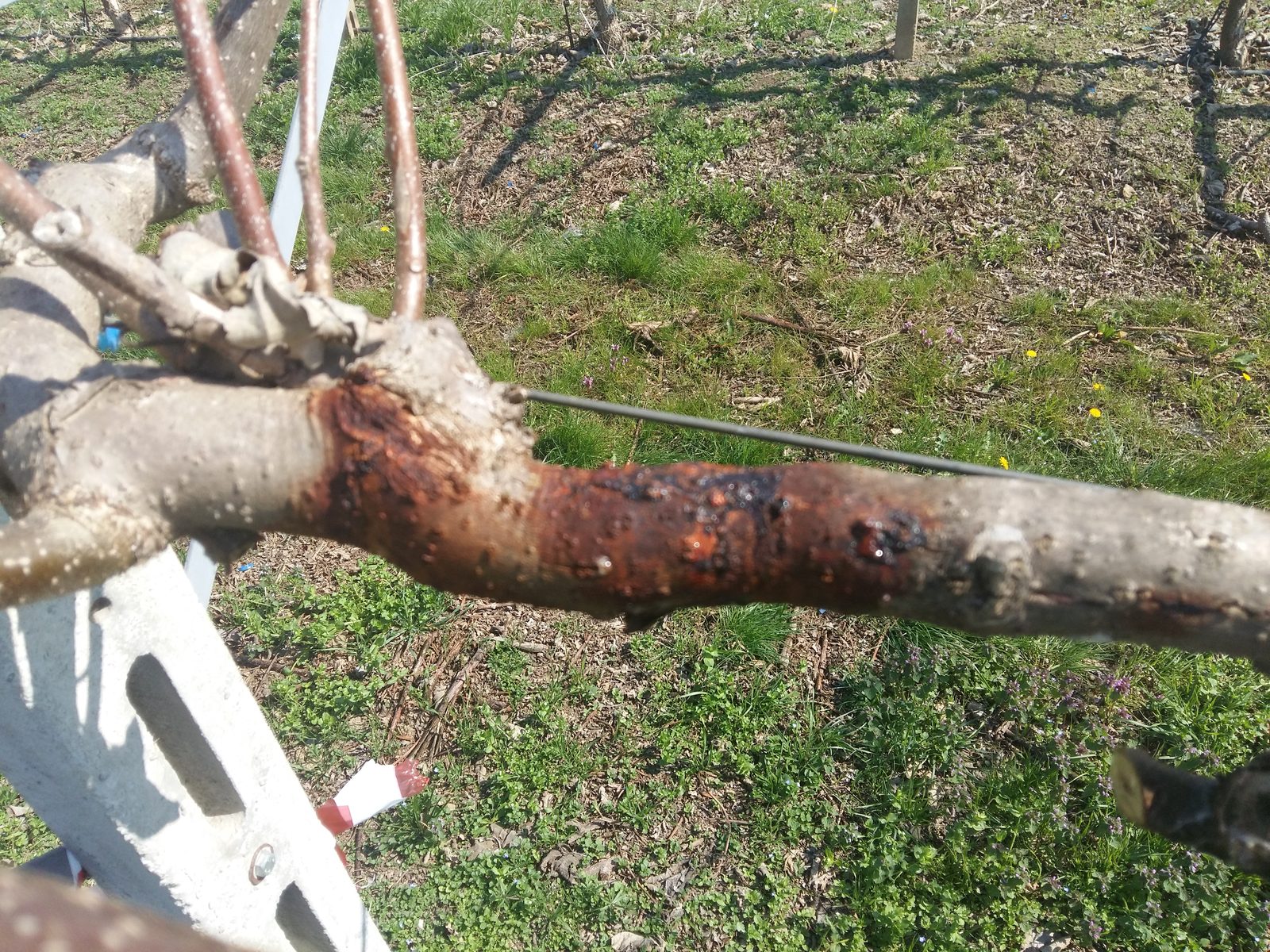
Kiwifruit leader with an extensive canker and bacterial exudate, March 2017. The reddish fluid running from the split in the bark is a dense suspension of living bacteria and is the main source of inoculum for the whole orchard in spring.
Savvas Pastopoulos, Agronomist, Pastopoulos Agronomic P.C.
Bacterial canker of kiwifruit is the most serious disease of the crop worldwide. It cannot be cured. Whatever is done, it is done before infection, and success depends on how well the biology of the pathogen is understood and how faithfully orchard hygiene is observed. This article draws on our published work of 2020 and on experience from the orchards of Giannitsa, northern Greece, from 2014 to the present, updated with the international literature, the current EU framework and the products currently approved in Greece.
- What it is and why it differs from everything else
- The pathogen and the four biovars
- Which plants it attacks, and how badly
- The disease cycle through the year
- The symptoms, season by season
- How it spreads and where it enters
- Temperature and weather: when infections happen
- Pruning wounds
- Fertilisation and irrigation: the most common mistakes
- Diagnosis and what to do with a suspected case
- What changed in the legal framework
- Copper
- Copper resistance in the Pella region
- Plant defence activators
- Biological products
- Annual protection programme
- Managing an orchard that is already infected
- What to retain
- Sources
1. What it is and why it differs from everything else
Bacterial canker of kiwifruit is caused by Pseudomonas syringae pv. actinidiae, referred to in the international literature and in everyday conversation among growers as Psa. It is a Gram-negative, obligately aerobic bacterium, occurring singly, in pairs or in short chains, and moving by one to three polar flagella [1][14][21].
Its difference from the familiar diseases is fundamental and needs to be understood before going further. In fungal diseases there are systemic fungicides that act curatively: a spray after infection can stop its progress within a window of some hours or days. With bacterial canker there is no curative intervention. Every available means is preventive and acts only on the plant surface or by preparing its defences. Once the bacterium is inside the tissues, no product reaches it.
The second essential difference is that Psa moves systemically within the plant, through the xylem vessels [21][22]. It does not stay where it entered. It has been found a metre away from the point of initial infection within six months [1]. This changes cutting practice radically: when removing an infected shoot, the cut must be made well below, into apparently healthy tissue, because the visible canker is only the part of the infection that has had time to express itself.
The third difference is economic and explains why the world panicked. In Italy, between 2010 and 2012, more than 2,000 hectares of kiwifruit were uprooted or cut back. Estimated losses ran to €20,000 per hectare per year in production, €50,000 per hectare for the lost planting investment and €15,000 per hectare for destroying the plants to stop the spread, with orchard yield reductions of 10% to 50% [2].
2. The pathogen and the four biovars
Psa was first isolated in 1984 in Japan and formally described in 1989 by Takikawa and co-workers. China followed in 1983 and Italy in 1992, where for sixteen whole years it caused no particular problems. In 2008 everything changed: the first major epidemic broke out in the Lazio region and spread immediately to northern Italy. In 2010 it appeared in France, Portugal and New Zealand, in 2011 in Spain, Australia and Chile, and in 2014 in Greece [1][2].
The reason the same bacterium was of no consequence for decades and then became a pandemic lies in its genetics. The pathogen falls into four groups, called biovars or pathotypes in the literature, differing radically in aggressiveness [10].
| Group | Toxin | Aggressiveness | Where found |
|---|---|---|---|
| Psa 1 | Phaseolotoxin | Moderate, systemic | Japan, Italy 1992. More aggressive on Hayward |
| Psa 2 | Coronatine | Moderate, systemic | Korea |
| Psa 3 often as Psa-V or biovar 3 | Neither of the two | High, systemic | Responsible for the pandemic in Italy and New Zealand. More aggressive on yellow-fleshed cultivars |
| Psa 4 now P. syringae pv. actinidifoliorum | not reported | Low, not systemic | Causes leaf spots only, no cankers |
The fourth group was reclassified in 2015 as a separate pathovar, Pseudomonas syringae pv. actinidifoliorum, precisely because it was shown not to cause the same disease [11]. This has direct practical significance: leaf spots without cankers and without exudate do not automatically mean disaster. It may be the far milder actinidifoliorum, or even a completely different Pseudomonas species. This is why laboratory identification is not a luxury.
3. Which plants it attacks, and how badly
The highest susceptibility is in Actinidia chinensis, that is, the yellow-fleshed cultivars. In New Zealand the cultivar Hort16A was literally flattened: within less than three years of the first detection, the disease had been found on more than 1,400 orchards, that is 52% of the country's total area, and by March 2014 on 11,084 hectares, that is 81% [2]. The country organised a coordinated national research response, with collaboration between ZESPRI, KVH, Plant & Food Research and the responsible ministries [17].
Actinidia deliciosa, to which the green-fleshed Hayward, Tsechelidis and Greenlight belong, is also attacked, but with less intensity [1][14][22]. Infection of the Greek cultivar Tsechelidis has been documented and published [18].
Field experience yields three observations not easily found in the books:
- Males are more susceptible than females and show symptoms earlier [22][23]. In particular, males of the cultivar Matua are infected more easily than those of Tomouri [1]. Surveys start with the pollinisers.
- The age of the orchard counts more than is generally assumed. Young plants, young shoots and young leaves are the most susceptible parts. A young orchard collapses, while a very old one shows symptoms only on the arms, without the central trunk being easily attacked, and goes on producing without a large reduction [1].
- The bacterium is not confined to kiwifruit. In China it was isolated from three wild plants of other genera, Setaria viridis, Alternanthera philoxeroides and Paulownia tomentosa, growing under or near infected kiwifruit orchards. These strains were pathogenic both on the same plants and on kiwifruit [24]. The weed flora and the hedgerows around the orchard are not neutral.
Sources: 1 2 14 17 18 22 23 24
4. The disease cycle through the year
The pathogen is active all year round, but behaves entirely differently by season. Understanding this cycle means understanding when to intervene.
Winter
Latent period. The bacterium multiplies inside the plant tissues, in the bark of infected shoots, with nothing visible. In warm and wet spells of winter, cankers appear and bacterial exudate begins.
Spring, the critical period
In the Giannitsa region this phase starts around mid-February, peaks by the end of March and stops with bud break [1]. Buds, flowers and young leaves are attacked. The pathogen is spread through pollen, one of the main infection pathways in the field, and moves systemically [14][22]. Symptoms: failure of buds to break, appearance of cankers, exudate from cankers and buds, first leaf spots.
Summer
Slowdown. At temperatures above 20 °C the disease is restricted, and from 25 °C it essentially stops, while the plant forms callus tissue around the cankers. What remains visible are the necrotic leaf spots and the shoot dieback from spring infections.
Autumn
Infection of the woody tissues through pruning cuts and through wounds of human origin, mainly from harvest. Infections also occur through leaf scars after leaf fall [2]. The symptoms, shoot wilting or dieback, will appear later.
The practical conclusion is that infections and canker formation happen earlier than most people assume, late in autumn or in winter, while the exudate seen in February is the consequence of infections that took place months before. In autumn the lenticels and buds are the main colonisation sites of the bacterium [1][21]. Anyone starting protection in spring has already lost half the battle.
5. The symptoms, season by season
First phase: the exudates, winter and early spring
From the cankers, the pruning cuts and the buds of infected shoots, a viscous fluid is secreted, initially white and later red or brick-coloured [14][21]. On buds there is usually a single drop hanging, and the bud often dies [1].
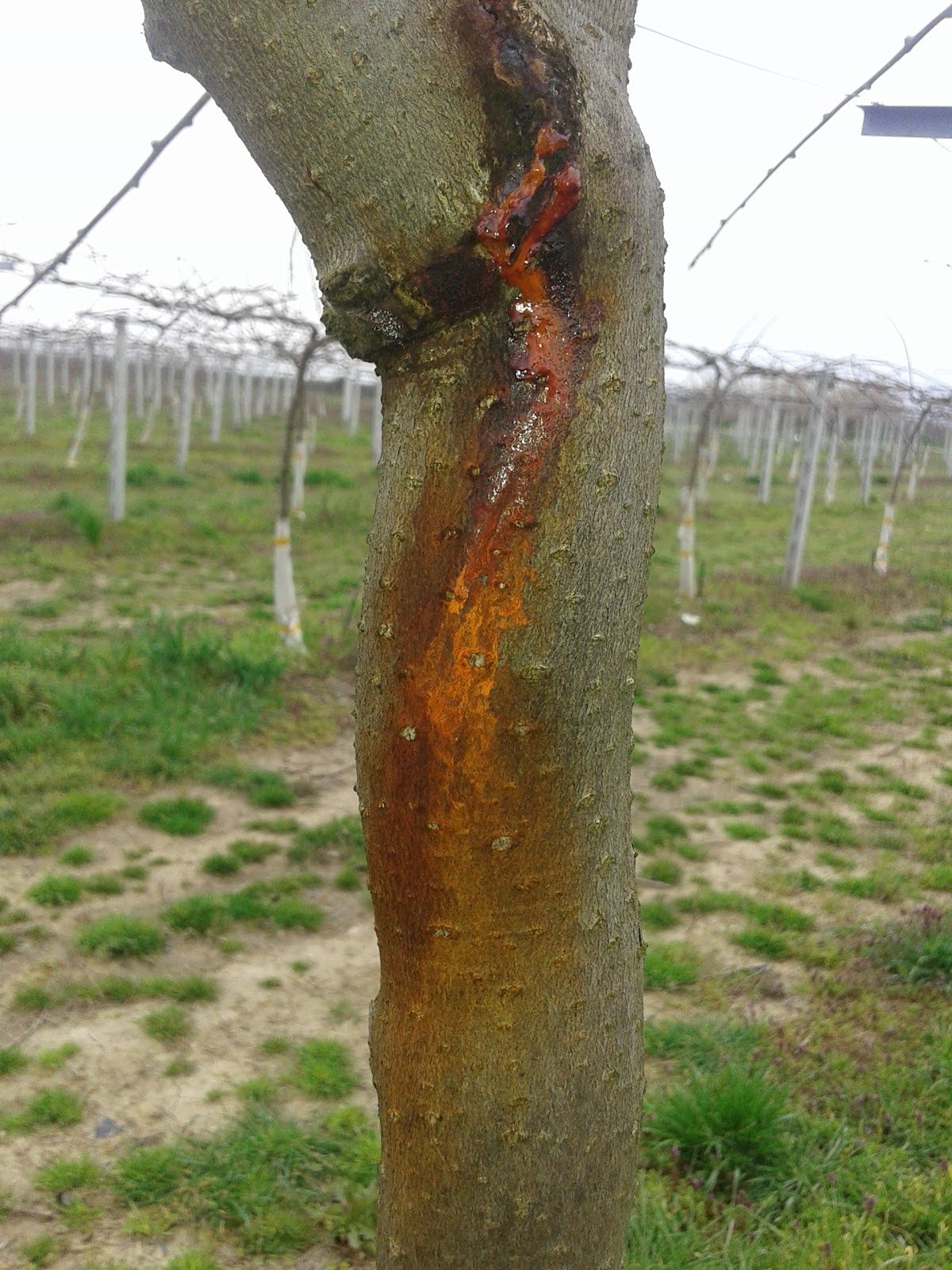
Canker on the trunk of a young plant with the characteristic red exudate running downwards. A split in the bark runs along the canker, and beneath it the phloem of the inner bark is discoloured brown.
In the canker area there is a brown discoloration of the phloem beneath the epidermis, as well as a red discoloration of the lenticels [1]. The anatomical sequence is clear: the phloem is the first to die, cambial dieback follows, and the xylem is affected last, where narrower vessels and tyloses were measured [20]. That second sign is a useful diagnostic marker that many people walk past.
Second phase: the leaves, May to August
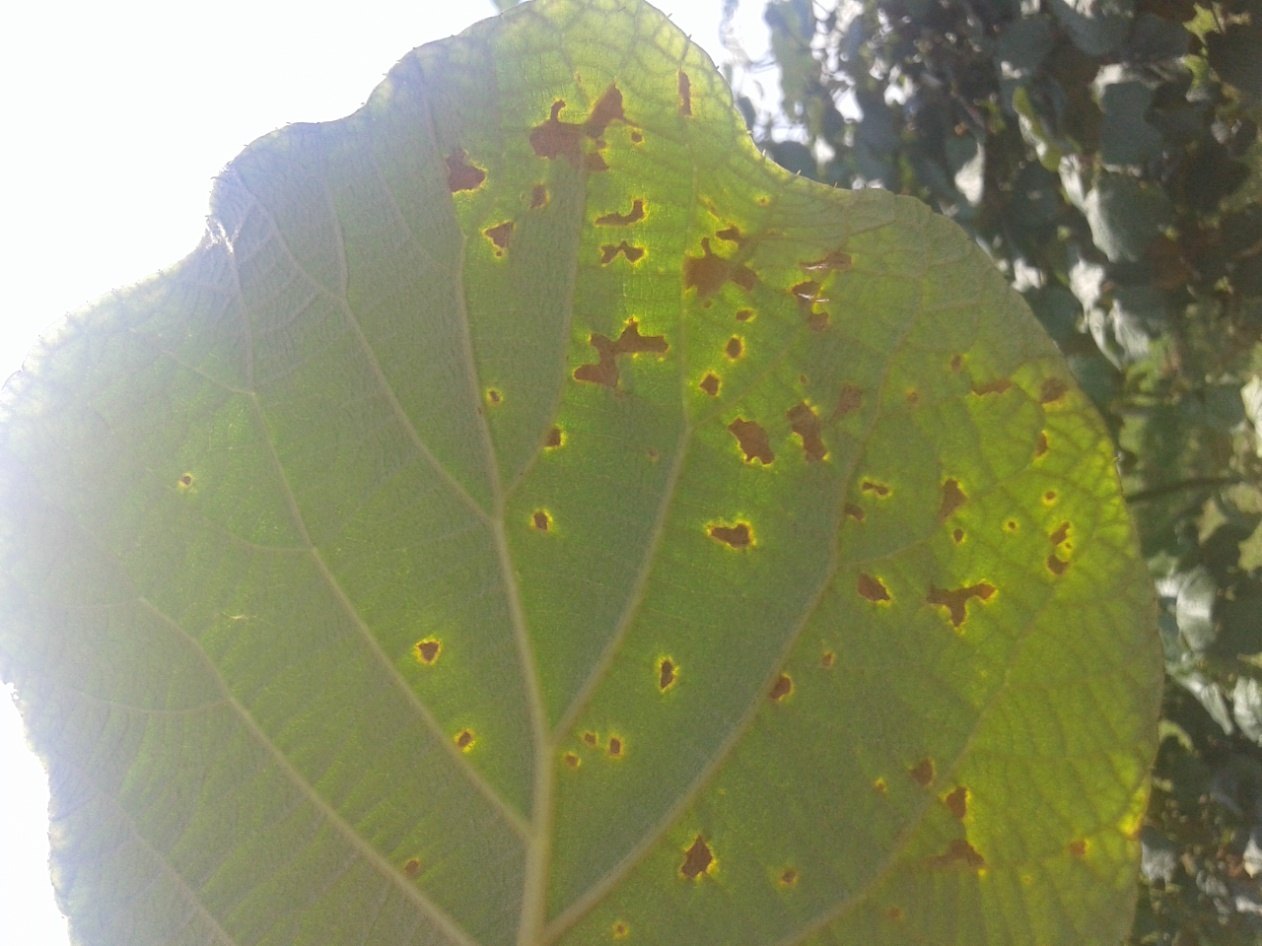
Asymmetric necrotic spots appear, small at first, surrounded by a yellow halo [14][21]. The halo is caused by the toxins the bacterium produces, phaseolotoxin or coronatine depending on the biovar [1][21]. In periods of heavy rainfall the spots enlarge, coalesce and kill larger areas of the leaf.
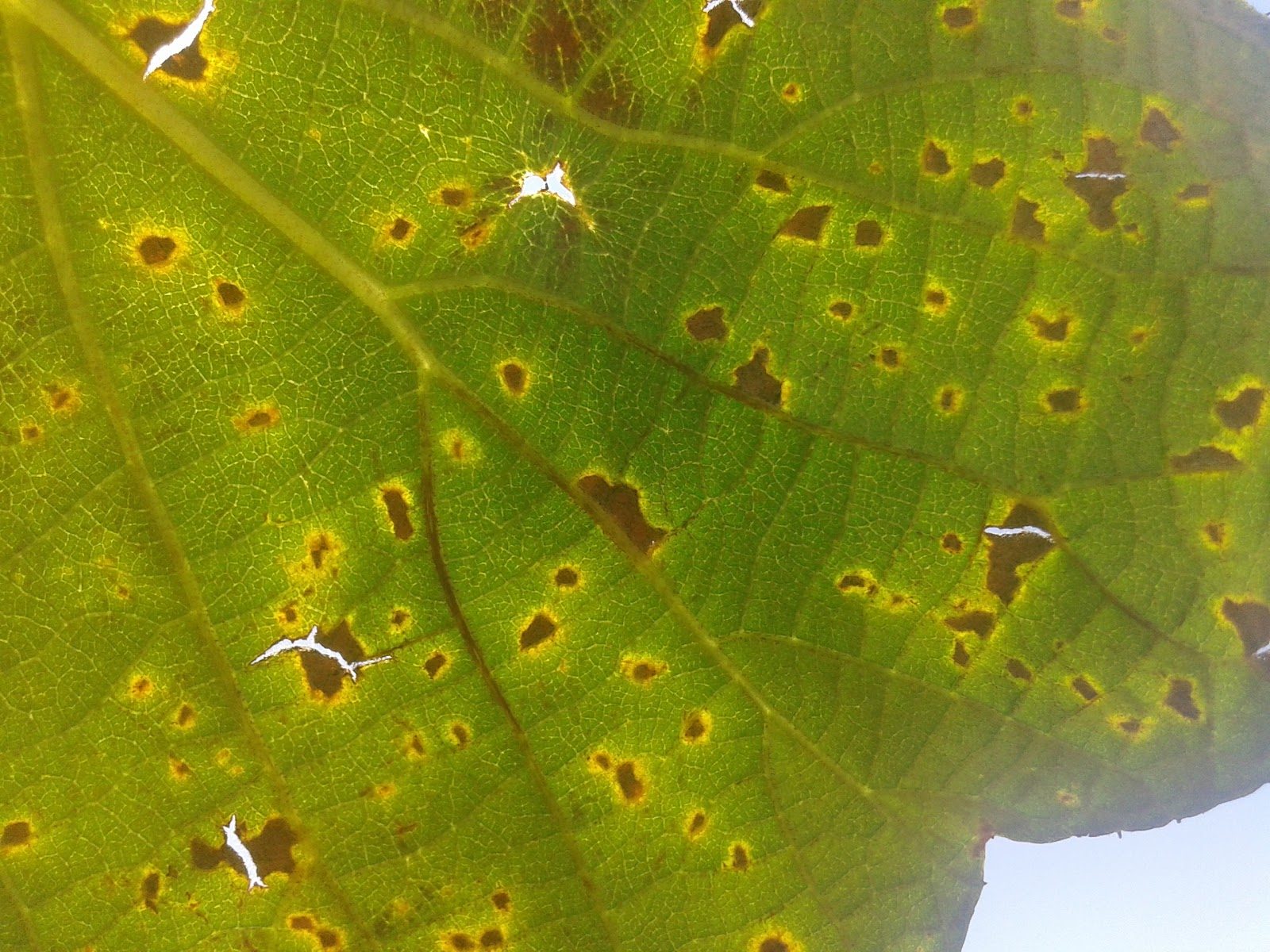
The classic leaf symptom, photographed with the light behind. The spots are angular and asymmetric, bounded by the veins, and surrounded by a clear yellow halo. Shooting against the light is the easiest way to see the halo in the field.
One finding should govern behaviour: there is a strong correlation between the number of infected leaves in spring and summer and the number of cankers that will appear the following winter [1]. The leaves are not merely a cosmetic problem. They are a forecast.
If rain or high relative humidity prevails before flowering, the young buds are attacked too. The sepals turn brown and flower drop may follow [1]. Flower buds and flowers darken, dry and fall [14].
Third phase: the dieback
At the end of the second phase the infected shoots dehydrate and wilt completely. If the infection is on the trunk of a young tree, the plant dries from the point of infection upwards, while vigorous growth emerges low down, below the point of infection [1]. This frantic production of suckers from the base while the top dies back is one of the most characteristic pictures of the disease at an advanced stage.
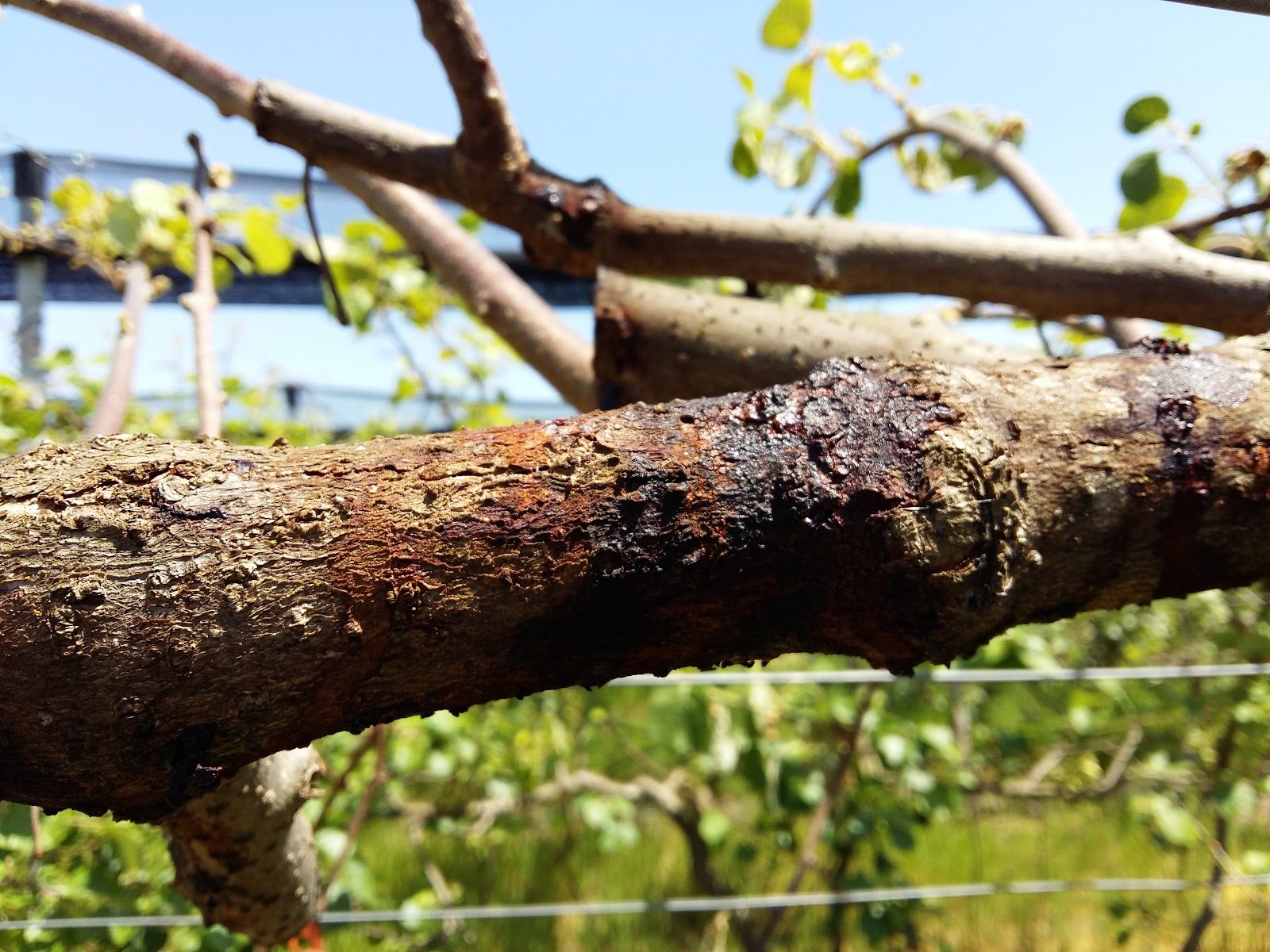
Extensive canker along a leader, with dark wet exudate. The section beyond the canker has already lost its vitality. The removal cut must be made well below the visible boundary, because the bacterium has gone ahead inside the xylem vessels.
6. How it spreads and where it enters
The routes of transmission are all of the possible ones. The detail matters, because each route of spread corresponds to a measure that can be taken.
| Route of spread | Weight | What to do |
|---|---|---|
| Wind and rain | Principal | Not controllable. It determines spray timing |
| Staff, clothing, footwear | High | Clean clothing, disinfection when moving between orchards |
| Pruning tools | High | Disinfection with alcohol or 10% bleach solution |
| Machinery, bins, vehicles | High | Thorough disinfection |
| Pollen | High | Controlled origin, certificates |
| Bees | Moderate | Care over the origin of the hives |
| Insects and animals | Secondary | not reported |
| Propagation material | Critical | Certified material only |
Bees deserve detail, because they are often underestimated. Researchers found that the bacterium survives on bees for up to two weeks, and that it is transferred even to hive bees that never visited an infected plant [9]. The origin of hives brought in for pollination is therefore a plant health matter, not only a beekeeping one. The same applies to artificial pollination with purchased pollen.
From personal observation in the Giannitsa orchards: the common house fly moves over the wet exudate of the cankers, becoming a carrier and transferring the bacterium to other plants [1].
As regards entry points, the bacterium enters through leaf stomata, broken trichomes, lenticels of the woody tissues, flowers, and every wound: pruning, hail, frost or harvest [1][21][22]. The plant, in other words, is full of open doors.
7. Temperature and weather: when infections happen
Here is the key to spray timing. The optimum temperature for development and infection in new shoots is 12 to 18 °C [3][2]. Temperatures above 20 °C do not favour further infection, and from 25 °C symptoms are entirely restricted and the plant forms callus tissue over the cankers [1][2][21].
This explains why the disease is a problem of spring and autumn and not of summer, and why autumn is more dangerous than it looks: temperatures fall back into the critical window exactly at the time when harvest is creating wounds.
Wind, rain and hail are not merely means of transport: they simultaneously create the wounds through which the bacterium enters. This is why the New Zealand recommendation explicitly includes a spray after a serious wind, rain or hail event [4].
8. Pruning wounds
This section deserves more attention than any other, because it overturns a very widespread belief.
At Plant & Food Research in New Zealand an study was carried out precisely to answer the question how long a pruning cut stays susceptible. Young Hort16A vines were pruned at different intervals, from 0 to 64 days before artificial inoculation. Inoculation was with a 10-microlitre drop of a suspension of 10⁹ bacteria per millilitre, placed on the exposed cut surface.
The plants were infected at every pruning time. Seven weeks after inoculation, characteristic necrotic spots developed on inoculated and non-inoculated shoots for all pruning times. There was no statistically significant effect of time [6].
- The timing of pruning is critical. Prune in dry weather and in a period of low inoculum pressure.
- A copper spray immediately after pruning is not optional.
- Never prune in rain, in fog, or when the plants are wet.
- Tool disinfection is done per plant in an orchard with a history, not once a day.
The first signs of infection appeared on shoots inoculated within 24 hours of cutting, about five weeks after inoculation: death of the terminal bud, failure of leaves to expand and rapid collapse of the shoot [6]. Five weeks of silence, in other words. By the time the symptom is visible, the infection is already a month old.
An equivalent risk applies to every other mechanical wound, such as girdling [6].
Sources: 6
9. Fertilisation and irrigation: the most common mistakes
Nutrition and water are where the most common management mistakes are made in a kiwifruit orchard facing Psa. Nitrogen fertilisation, in rate and in form, is named together with pruning time (section 8) among the most critical management points in the field [2]. Excessive nitrogen fertilisation increases the plant's susceptibility, and the advice to avoid it is common to the international literature and to official guidance [14][21][23]. This is not a vague good-practice recommendation but a specific mechanism.
Nitrogen
Excessive nitrogen fertilisation produces vigorous, tender growth, which is precisely the most susceptible tissue for infection [1][21]. At the same time, dense growth reduces ventilation and light within the orchard and creates the high relative humidity that favours the pathogen [1]. For this reason the Psa-V best practice guide of Kiwifruit Vine Health in New Zealand calls for nitrogen inputs to be managed so as to avoid excess canopy growth, for medium- to low-vigour wood to be retained, and for a flat, open canopy with no more than four leaf layers [23]. Excess nitrogen therefore favours the disease in two ways, by producing both susceptible tissue and a favourable microclimate.
Water
Excessive irrigation contributes to excessive growth and to high relative humidity within the orchard [1]. The second common mistake concerns the way water is applied. Wetting the foliage with overhead irrigation increases the risk of infection wherever inoculum is present, and for that reason drip irrigation is preferred over sprinklers [14][23]. In Italian orchards an irrigation pipe touching the shoots was found to help the bacterium colonise them [21], while recirculating water from infected orchards for drip irrigation and drawing water from local basins were associated with higher disease incidence [22].
The opposite extreme is also a mistake. Water stress increases disease risk, so vines, and young vines above all, are irrigated through dry periods, while excessive water or poorly drained soils lead to waterlogging that stresses the vine again [23]. The irrigation programme aims at a balance between growth and cropping, not at maximum growth.
10. Diagnosis and what to do with a suspected case
There are other Pseudomonas species that attack kiwifruit and cause similar symptoms. Similar lesions on buds, flowers and leaves are produced by P. syringae pv. syringae, P. syringae pv. actinidifoliorum and P. viridiflava [11][14]. Many symptoms attributed to Psa turn out to come from other, far more harmless pathogens [1]. Identification is done only by a specialist laboratory.
In Greece, identification is carried out by the bacteriology laboratory of the Benaki Phytopathological Institute [1][16]. Internationally, molecular methods are used: rep-PCR, 16S rDNA sequencing, duplex-PCR, nested PCR/RFLP and quantitative real-time PCR [2].
- Notify the plant protection authority immediately so that a sample can be collected for identification.
- Move nothing. Suspect plants or plant parts are cut up and packed on the spot in hermetically sealed bags and destroyed. Moving them within or outside the orchard is prohibited.
- Disinfect thoroughly every tool used, and the support structure that carried the infected plant.
- Single-use protective equipment. Head covering and gloves are destroyed after use. Thorough hand washing follows.
Surveys must be targeted by season: late February and March, look for cankers with red exudate; in April and May, and through the summer, look for leaf spots [1]. The Benaki Phytopathological Institute has issued guidelines for macroscopic inspection [16].
11. What changed in the legal framework
Today Pseudomonas syringae pv. actinidiae is listed as a Regulated Non-Quarantine Pest (RNQP) in Annex IV of Regulation (EU) 2019/2072, in Parts D and M, in relation to propagating material of ornamental plants and to fruit plants and propagating material of the genus Actinidia [12].
What the change means in practice. The move from "quarantine" to RNQP does not mean the problem has been downgraded. It means the Union has recognised that the pathogen is already established and that regulation shifts from eradication to control of the quality of propagating material. In practice, the weight falls even more heavily on what is planted: the material purchased must come with the prescribed certificates, and the nursery has a clear obligation.
12. Copper
Copper remains the most important preventive means. It acts on the bacterial cell wall: it forms complexes that destroy the cell's proteins and disrupt enzyme function, killing the bacterium [1][4].
How effective it actually is
The classic study by Serizawa and co-workers, in 1989, on seven-year-old vines in Japan, with three applications at seven-day intervals, gave the following:
| Treatment | Infected leaves | Reduction |
|---|---|---|
| Control, untreated | 44.1% | not reported |
| Copper, hydroxide 270 ppm | 15% | 66% |
| Antibiotics, streptomycin 200 ppm or kasugamycin 50 ppm | 4 to 7% | 84 to 91% |
Source: Serizawa and co-workers, 1989, as cited in the review by Jeyakumar and co-workers [4]. The antibiotics are quoted only for comparison of efficacy. The use of antibiotics for plant protection is prohibited in Greece and in the European Union [1][4].
Note the figure: copper reduces symptoms by roughly two thirds, not to zero. It is a tool for reducing pressure, not a shield.
When it is applied
Based on New Zealand experience, the recommendations place copper sprays immediately after winter pruning, at bud break, and two and four weeks later, preferably ahead of a significant rain event. Post-bloom sprays are recommended only in high-risk situations, that is after a serious wind, rain or hail event. Applications follow after harvest and at leaf fall, so that the bacterium cannot enter through harvest wounds or leaf scars [4].
Max and co-workers stress that the sprays after harvest and during winter are the most important for limiting infections, since these also disinfect the wounds of human origin [1].
The two problems with copper
First, resistance. Copper-resistant Psa strains have been reported, with minimum inhibitory concentrations from 2.25 to 3.0 mM [4]. Nakajima and co-workers showed that the genetic basis of copper resistance is similar to that of P. syringae pv. tomato [5]. The mechanism consists of three different systems, and additional genes conferring maximum resistance have also been identified [4]. The same researchers have also shown streptomycin resistance, through genes analogous to strA and strB.
Second, phytotoxicity and accumulation. Excessive use causes copper to accumulate in the soil and selects for resistant strains [1]. The resistance genes copA and copB have been found in the Psa genome, and after repeated sprays with copper products the bacterium also acquired copR and copS, which confer maximal resistance [21]. Cases of phytotoxicity with leaf curling and chlorosis have been reported [1][4]. In addition, Goodwin and McBrydie reported that applying copper products during pollination significantly affected yield [4].
13. Copper resistance in the Pella region
The copper section noted that resistant strains have been recorded internationally. The Greek study shows how far the phenomenon has advanced in this particular region. The findings, using Cazorla's criterion which classes as resistant any strain with a minimum inhibitory concentration above 0.8 millimolar:
| Finding | Strains | Percentage |
|---|---|---|
| Growth at 200 μg/mL copper sulphate, above 0.8 mM | 22 of 22 | 100% |
| Growth even at 400 μg/mL, above 1.6 mM | 2 | 9.1% |
| Colonies from resistant cells, that is resistant subpopulations | 4 | 18.2% |
| Minimum bactericidal concentration above 400 μg/mL | 6 | 27.3% |
The last figure is the most worrying. In more than one in four of the Mylotopos strains, copper does not kill the bacterium even at 400 micrograms per millilitre [19].
What the field showed
The same work tested products in two commercial kiwifruit orchards, in fourteen-year-old plantings, over two years, with all products at 2 millilitres per litre [19]:
- The copper products did not fully control the disease. IONIC CONCENTRATED COPPER, MAGNA BLUE and CUPROFIX ULTRA failed to control Psa, which the researchers attribute precisely to the resistance they had measured. In the second orchard, indeed, no treatment reduced spots per leaf in the first year, and only in the second year did the copper products show some reduction.
- The defence activators performed. BION, with acibenzolar-S-methyl 50%, MICONIC, NUTRI BIOCLEAN and the experimental BAR significantly reduced symptom severity. The percentage of infected leaves was significantly reduced by BION, MICONIC and NUTRI BIOCLEAN in both years.
- None eliminated the disease. The researchers are clear: the products reduced symptom severity, they did not remove it.
- Do not rely on copper alone. In this region its effectiveness is already reduced. It remains useful, particularly in winter sprays and on cuts, but it is not enough.
- Give weight to defence activators. This is the category that showed consistent results under local conditions, against local strains.
- Do not raise the copper rate to "break" the resistance. It does not work that way: it increases phytotoxicity and soil accumulation, and pushes even harder in favour of the resistant strains.
- Alternate modes of action. Copper, defence activators and antagonistic microorganisms in a programme, not the same thing over and over.
14. Plant defence activators
The second category consists of products that do not kill the bacterium but activate the plant's systemic acquired resistance, known as SAR. They induce the production of defensive metabolites, so that the plant is prepared when the pathogen arrives. Plants treated with an activator react more rapidly or more strongly to attack [1][25].
The main active substance internationally is acibenzolar-S-methyl, known as ASM. It belongs to the benzothiadiazoles and mimics the action of salicylic acid, which the plant itself produces in response to infection [1][2]. On the basis of glasshouse studies, ASM is considered one of the most effective activators for improving kiwifruit tolerance to Psa [2].
In Greece today it is not ASM that is on the market for kiwifruit but two other activators, COS-OGA and laminarin. The currently approved products should be checked in the approvals database [15], because approvals change. Those approvals are valid in Greece only; in every other country the corresponding national register applies.
15. Biological products
The third category comprises antagonistic microorganisms and their products. The approach is not new in agriculture, having been applied since 1929, but for Psa it is a field of active research [1].
The combination that outperforms its parts
De Jong and co-workers, in 2019, examined the combined use of ASM with the fungus Aureobasidium pullulans strain CG163 [8]. The results in reducing leaf symptoms:
| Treatment | Symptom reduction |
|---|---|
| Aureobasidium pullulans CG163 alone | 40% |
| ASM alone | 55% |
| ASM together with CG163 | 75% |
The combined application therefore returned more than either did separately [1][8]. The message is that no single means is sufficient and that the strategy has to be combinatorial.
Trichoderma at the root
Hill and co-workers, in 2015, worked with endophytic Trichoderma strains isolated from the roots of healthy vines in areas of high Psa presence. These fungi colonise the surface and the interior of the root, release metabolites and induce systemic resistance [7].
The striking finding: a single inoculation with Trichoderma early in the plant's development had a significant effect on health and survival, and established a strong endophytic community in the root that contributed to Psa control even when the plants were older [7]. At the end of the trials, the roots of inoculated plants contained significantly more Trichoderma strains than the controls.
Therefore, the moment of planting is an opportunity that does not return. Inoculating the young plant in the nursery or in the planting hole pays for years.
16. Annual protection programme
Putting all of the above together, the annual programme takes the following shape. It is a framework for thinking, not a recipe: timing is adapted to the region, the cultivar and the course of the weather, and is finalised by an agronomist.
| Period | Objective | Actions |
|---|---|---|
| After harvest and at leaf fall | Protection of harvest wounds and leaf scars | Copper. Among the most important sprays of the year [1] |
| Winter pruning | Stop pruning from becoming an entry point | Prune in dry weather; disinfect tools; copper immediately after; remove and destroy infected parts with a margin of healthy tissue |
| Mid-February to end of March | Detection of cankers with red exudate | Thorough inspection of every plant [1] |
| Bud break | Protection of the young tissues | Copper at bud break and two and four weeks later [4]; defence activators before favourable conditions |
| Flowering | Avoid transmission through pollen | Controlled origin of pollen and hives; care with copper products during pollination [4] |
| April to August | Foliage monitoring | Inspections for leaf spots; biologicals and activators at intervals |
| After hail, strong wind or heavy rain | Closing the wounds | Copper as a high-risk situation [4] |
| All year | Hygiene | Disinfection, clean clothing, entry control, signage |
17. Managing an orchard that is already infected
If the orchard is positive, the objective changes: entry is no longer being prevented, the aim is to limit spread and keep the orchard productive.
Staff hygiene
- Entry and exit with hygiene measures observed, always with clean clothing and footwear.
- Disinfection whenever staff move from one orchard to another.
- Use of protective equipment, gloves and head covering, and thorough hand washing after work.
Machinery and materials
- Thorough disinfection with alcohol or 10% bleach solution.
- Movement of plant material out of the holding is prohibited, except for harvested fruit.
- The pathogen survives in the soil for a long period [1]. It has been detected in 40% of soil samples associated with fine roots and survives for up to six months on fallen leaves and pruning debris [22]. It spreads within and between orchards through plant material, sap and soil, so anything that comes into contact with the soil, tools and bins, is disinfected, and pruning tools preferably between vines [1][23].
Communication with the authorities
Notifying the authorities is not optional and is not against the grower's interest. It is an obligation, and at the same time the only route to reliable identification and to a coordinated regional response.
- The regional plant protection service. The first point of contact for any suspected case. The service collects the sample and forwards it for identification [1].
- Benaki Phytopathological Institute, Bacteriology Laboratory. The competent laboratory for official identification of the pathogen in Greece. It has also issued the guidelines for macroscopic inspection [1][16].
- The Ministry of Rural Development and Food. It has issued good-practice orchard hygiene guidelines for protecting kiwifruit holdings, which must be followed without deviation [1]. The same database is where the currently approved products are checked [15].
Organising the orchard
- Perimeter signage prohibiting entry to those without business there.
- Regular and thorough inspection of every plant at the stages when symptoms appear.
- Immediate destruction of confirmed cases on the spot, without movement.
18. What to retain
The eight points
- There is no cure. Everything done is preventive and must precede infection.
- Pruning cuts stay susceptible for at least 64 days, in a New Zealand study on young Hort16A vines [6]. Prune in dry weather and spray immediately after.
- The risk window is 12 to 18 °C with moisture. Above 25 °C the disease stops [1][3].
- Summer leaf spots predict winter cankers [1]. Count them.
- Nitrogen and water are plant protection. Excess in either works in the pathogen's favour [2].
- Copper reduces, it does not eliminate: from 44% to 15% infected leaves in a 1989 study in Japan [4]. And it selects resistant strains if overused.
- Combination pays. An activator together with an antagonistic microorganism gave 75% against 55% and 40% separately [8].
- For a suspected symptom, the authorities and the official laboratory. No self-diagnosis and no movement of material [16].
This disease is not beaten with a spray. It is beaten with a system: clean propagating material, strict hygiene, correct pruning timing, rationalised nutrition and irrigation, regular inspection, and sprays based on the weather forecast rather than the calendar. It demands a thorough knowledge of the pathogen's biology and regular monitoring of weather conditions, so that the dangerous periods are correctly anticipated [1].
19. Sources
The numbers in the text refer to the list below.
- [1] Pastopoulos, S. (2020). Bacterial canker of kiwifruit, an update on the progress of the disease in Greece (in Greek). Georgia - Ktinotrofia, issue 8/2020:32-37, AgroTypos. Source for the progress of the disease in Greece since 2014, the timing of the phases in the Giannitsa region, the differential susceptibility of males and females, the behaviour of old orchards and the personal observations 2014-2020.
- [2] Donati, I., Buriani, G., Cellini, A., Mauri, S., Costa, G. and Spinelli, F. (2014). New insights on the bacterial canker of kiwifruit (Pseudomonas syringae pv. actinidiae). Journal of Berry Research 4(2):53-67. Source for the Italian economic figures (€20,000, €50,000 and €15,000 per hectare), the spread in New Zealand (1,400 orchards, 52%, 11,084 hectares, 81%), infection through leaf scars, the role of pruning time and nitrogen fertilisation.
- [3] Serizawa, S. and Ichikawa, T. Epidemiology of bacterial canker of kiwifruit 4. Optimum temperature for disease development of new canes. Annals of the Phytopathological Society of Japan. Source for the optimum temperature for development and infection in new shoots, 12 to 18 °C.
- [4] Jeyakumar, P., Anderson, C.W.N., Holmes, A. and Miller, S. Optimising copper sprays on kiwifruit: a review. Fertilizer & Lime Research Centre, Massey University, and PlusGroup Horticulture Ltd, New Zealand. Source for the Serizawa 1989 results (control 44.1%, copper 15%, antibiotics 4-7%), the copper spray programme, the 2.25-3.0 mM minimum inhibitory concentration in resistant strains, the three resistance systems, the effect of copper products on pollination, and the ZESPRI reservation about biologicals.
- [5] Nakajima, M., Goto, M. and Hibi, T. (2002). Similarity between Copper Resistance Genes from Pseudomonas syringae pv. actinidiae and P. syringae pv. tomato. Journal of General Plant Pathology 68(1):68-74. Source for the genetic basis of Psa copper resistance and its similarity to the tomato pathovar.
- [6] Vanneste, J.L. (ed.). Proceedings of the 1st International Symposium on Bacterial Canker of Kiwifruit (Psa), Mt Maunganui, New Zealand. Acta Horticulturae 1095, ISHS. Plant & Food Research paper on the risk of summer pruning. Source for the 0 to 64 day study: infection at every pruning time with no statistically significant difference, inoculation with 10 microlitres of a 10⁹ bacteria per millilitre suspension, first symptoms about five weeks later.
- [7] Hill, R., Stark, C., Cummings, N., Elmer, P. and Hoyte, S. (2015). Use of Beneficial Microorganisms and Elicitors for Control of Pseudomonas syringae pv. actinidiae in Kiwifruit (Actinidia spp.). Acta Horticulturae 1095:137-144, ISHS. Source for the endophytic root Trichoderma, the effectiveness of a single inoculation early in development, and the establishment of a strong endophytic community that also acts in older plants.
- [8] De Jong, H., Reglinski, T., Elmer, P., Wurms, K., Vanneste, J.L., Guo, L.F. and Alavi, M. (2019). Integrated Use of Aureobasidium pullulans Strain CG163 and Acibenzolar-S-Methyl for Management of Bacterial Canker in Kiwifruit. Plants 8(8):287. Source for the 75% symptom reduction with the combination, against 55% with ASM alone and 40% with CG163 alone.
- [9] Pattemore, D.E., Hoyte, S.M., McBrydie, H.M. et al. (2011). Survival of Pseudomonas syringae pv. actinidiae and P. s. pv. syringae bacteria on honey bees and in beehives. Plant and Food Research report to Zespri Group Ltd, Ref: VI1255. Source for the survival of the bacterium on bees for up to two weeks and its transfer to hive bees that never visited an infected plant.
- [10] Chapman, J.R., Taylor, R.K., Weir, B.S., Romberg, M.K., Vanneste, J.L., Luck, J. and Alexander, B.J.R. (2012). Phylogenetic relationships among global populations of Pseudomonas syringae pv. actinidiae. Phytopathology 102(11):1034-1044. Source for the division of global Psa populations into biovars and their phylogenetic relationships.
- [11] Cunty, A., Poliakoff, F., Rivoal, C., Cesbron, S., Fischer-Le Saux, M., Lemaire, C., Jacques, M.A., Manceau, C. and Vanneste, J.L. (2015). Characterisation of Pseudomonas syringae pv. actinidiae (Psa) isolated from France and assignment of Psa biovar 4 to a de novo pathovar: Pseudomonas syringae pv. actinidifoliorum pv. nov. Plant Pathology 64(3):582-596. Source for the reclassification of Psa 4 as a separate pathovar causing leaf symptoms only, without cankers.
- [12] Commission Implementing Regulation (EU) 2019/2072 of 28 November 2019, establishing uniform conditions for the implementation of Regulation (EU) 2016/2031 as regards protective measures against pests of plants. Source for the listing of P. syringae pv. actinidiae as a Regulated Non-Quarantine Pest (RNQP) in Annex IV, Parts D and M, for Actinidia propagating material.
- [13] Commission Implementing Regulation (EU) 2020/885, as regards measures to prevent the introduction into and the spread within the Union of Pseudomonas syringae pv. actinidiae. Source for the replacement of Implementing Decision (EU) 2017/198 and for the requirements concerning live pollen and Actinidia plants for planting.
- [14] EPPO Global Database, Pseudomonas syringae pv. actinidiae (PSDMAK), EPPO Datasheet. Datasheet last updated 2 June 2021. Source for the current categorisation of the pathogen and its global distribution, for the morphological features of the bacterium, the colour of the exudate, the chlorotic halo of the leaf spots, the darkening and fall of buds and flowers, the greater susceptibility of A. chinensis, pollen as a dispersal pathway, the other pseudomonads that cause similar lesions, the explicit statement that fruits and seeds are not a pathway, the avoidance of excessive nitrogen fertilisation because it increases susceptibility, and the preference for drip over sprinkler irrigation.
- [15] Greek Ministry of Rural Development and Food, Plant Protection Products Database. Data retrieved 20 August 2026. Source for the products approved in Greece on kiwifruit targeting bacterial infections, the active substances, rates and pre-harvest intervals.
- [16] Benaki Phytopathological Institute, Guidelines for macroscopic inspection for Pseudomonas syringae pv. actinidiae (in Greek). Source for the inspection, sampling and identification procedure in Greece, and for the role of the bacteriology laboratory.
- [17] NZ Psa Research, Collaboration between ZESPRI, KVH, Plant & Food Research, MPI, MSI and the NZ industry. Source for the organisation of New Zealand's national research response to the epidemic.
- [18] Balestra, G.M., Renzi, M. and Mazzaglia, A. (2011). Occurrence of bacterial canker caused by Pseudomonas syringae pv. actinidiae in kiwifruit plants of cv. Tsechelidis. Journal of Plant Pathology 93. Source for the documented infection of the Greek cultivar Tsechelidis.
- [19] Thomidis, T., Pagoulatou, M.G., Alexandridis, E., Mpalantinaki, E. and Goumas, D.E. (2025). Copper Resistance in Pseudomonas syringae pv. actinidiae Strains from the Prefecture of Pella, Northern Greece, and a Comparison of the Effectiveness of Several Commercial Products to Control. Agriculture 15(2):157. Source for the copper resistance of the 22 Psa strains from Mylotopos, Pella (100% growth at 200 μg/mL, 9.1% at 400 μg/mL, 18.2% resistant subpopulations, 27.3% with MBC above 400 μg/mL), for the failure of copper products to control the disease in the field, and for the significant symptom reduction by the defence activators BION, MICONIC, NUTRI BIOCLEAN and BAR.
- [20] Renzi, M., Copini, P., Taddei, A.R., Rossetti, A., Gallipoli, L., Mazzaglia, A. and Balestra, G.M. (2012). Bacterial canker on kiwifruit in Italy: anatomical changes in the wood and in the primary infection sites. Phytopathology 102(9):827-840. Source for the anatomical sequence of the infection, that is necrosis of the phloem, then cambial dieback and finally infection of the xylem, and for the reduction in vessel size and the presence of tyloses.
- [21] Scortichini, M., Marcelletti, S., Ferrante, P., Petriccione, M. and Firrao, G. (2012). Pseudomonas syringae pv. actinidiae: a re-emerging, multi-faceted, pandemic pathogen. Molecular Plant Pathology 13(7):631-640. Source for the morphological features of the bacterium, its systemic movement from the leaf to the young shoots through the petiole and the xylem, the very high susceptibility of A. chinensis, the leaf spots with a chlorotic margin, the whitish to orange ooze, the entry points (stomata, hydathodes, lenticels, buds and wounds from pruning, frost and hail), lenticels and buds as the main colonisation sites in autumn, the increased susceptibility caused by excessive nitrogen fertilisation, the irrigation pipe touching the shoots, the copper resistance genes copA, copB, copR and copS, and the reduced multiplication at very high temperatures.
- [22] Donati, I., Cellini, A., Sangiorgio, D., Vanneste, J.L., Scortichini, M., Balestra, G.M. and Spinelli, F. (2020). Pseudomonas syringae pv. actinidiae: Ecology, Infection Dynamics and Disease Epidemiology. Microbial Ecology 80(1):81-102. Source for migration mainly through the xylem vessels, the greater susceptibility of yellow- and red-fleshed cultivars and of male plants, contaminated pollen as one of the main infection pathways in the field, the entry points (stomata, trichomes, leaf and fruit abscission scars, pruning cuts, flowers), detection in 40% of soil samples associated with fine roots, survival for up to six months on fallen leaves and pruning debris, and the higher disease incidence when irrigation water is recirculated from infected orchards or drawn from local basins.
- [23] Kiwifruit Vine Health. Psa-V Best Practice Guide. Kiwifruit Vine Health Incorporated, New Zealand. Source for managing nitrogen inputs to avoid excess canopy growth, retaining medium- to low-vigour wood, the flat open canopy with no more than four leaf layers, avoiding overhead irrigation because leaf wetness increases infection risk, irrigating through dry periods to avoid vine stress, particularly in young vines, waterlogging from excessive water or poor drainage, the greater susceptibility of male vines, spread through plant material, sap and soil, and sanitising tools between vines.
- [24] Liu, P., Xue, S., He, R., Hu, J., Wang, X., Jia, B., Gallipoli, L., Mazzaglia, A., Balestra, G.M. and Zhu, L. (2016). Pseudomonas syringae pv. actinidiae isolated from non-kiwifruit plant species in China. European Journal of Plant Pathology 145(4):743-754. Source for the isolation of 11 Psa strains from wild Setaria viridis, Alternanthera philoxeroides and Paulownia tomentosa under or near infected orchards, pathogenic both on these plants and on kiwifruit.
- [25] Reglinski, T., Vanneste, J.L., Wurms, K., Gould, E., Spinelli, F. and Rikkerink, E. (2013). Using fundamental knowledge of induced resistance to develop control strategies for bacterial canker of kiwifruit caused by Pseudomonas syringae pv. actinidiae. Frontiers in Plant Science 4:24. Source for the mechanism of induced resistance, the more rapid or stronger response of activator-treated plants, and the significant reduction of disease on A. chinensis seedlings with ASM applied one week before artificial inoculation.
This article is general technical information and not individualised agronomic advice or an instruction for application. Plant protection products are used exclusively in accordance with national approvals and the label of each product, which always prevails. Any rates mentioned are indicative, as recorded in the official database on the date of retrieval, and do not constitute a recommendation for application. Approvals change. The approvals referenced here are valid in Greece only; in every other country the corresponding national register applies.
Every foliar spray on trees carrying fruit carries a risk of fruit marking and leaf burn. A prior test on a limited number of trees is required, with the same product and the same rate, and a wait of five to seven days before general application. Spraying is done in the late afternoon or early morning, never in a heatwave and never on foliage under water stress.
The final decision on any intervention is taken following an on-site assessment by a licensed agronomist and responsibility for application rests solely with the user. For a suspected case, the competent regional plant protection authority must be notified.
Related articles
Copper nanoparticles for kiwifruit bacterial canker
A Chinese study compared three copper nanomaterials with a conventional bactericide. On the plate they needed concentrations at least sixty four times lower. On the plant the control efficacies fell into the same range…
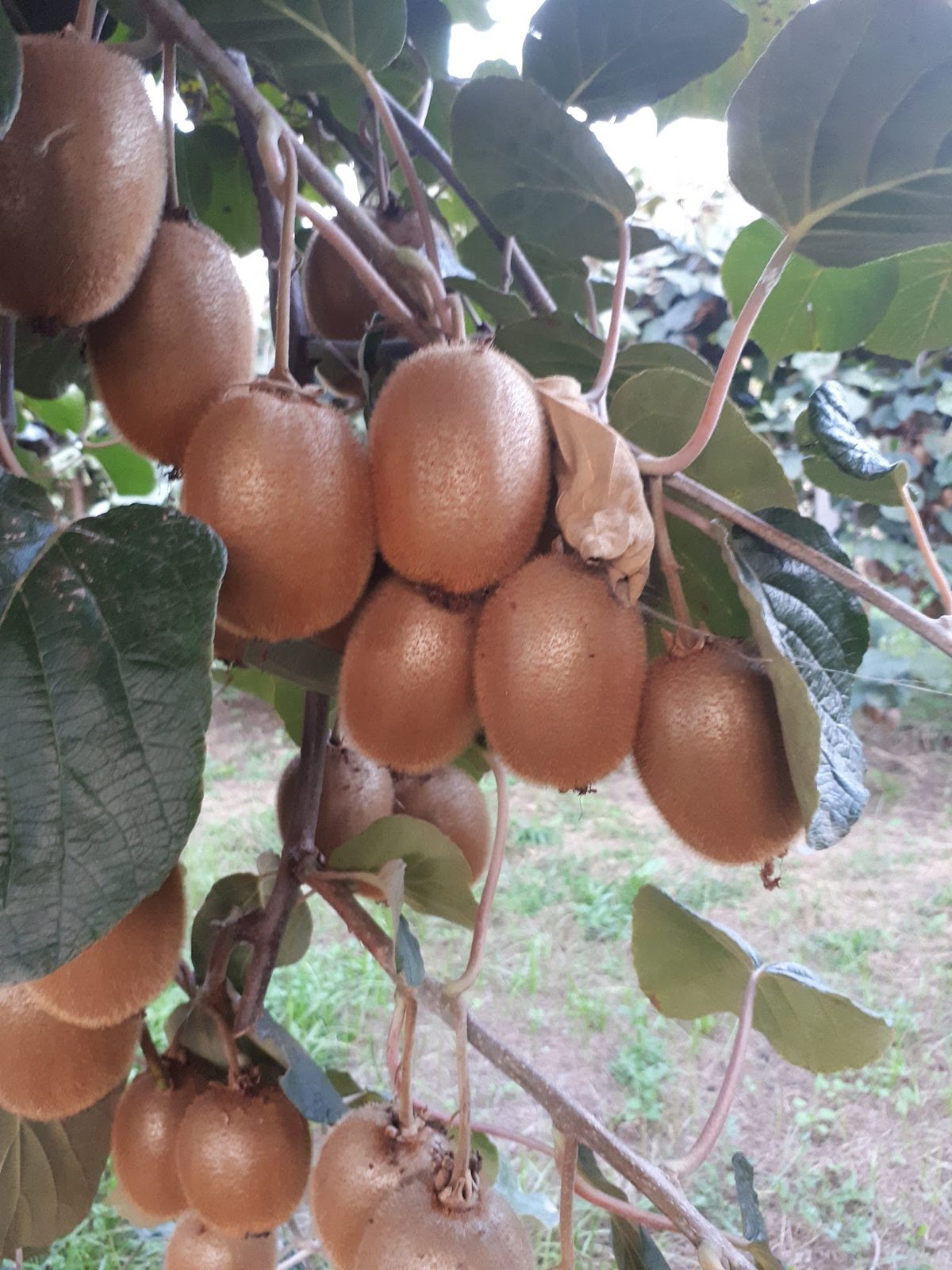
Training kiwifruit: T-bar and pergola
The architecture of the kiwifruit vine and why both training systems follow from it. T-bar and pergola with their dimensions, advantages, costs and a comparison in numbers. Training from the day of planting: planting high, a first season for the root with tipping at one metre, cutting back low the following spring and taking the trunk up in the second season, leaders, winter and summer pruning, males and the support structure. Three diagrams, a table of mistakes, and the gaps that remain for Greece. A field observation from Giannitsa on planting distances.
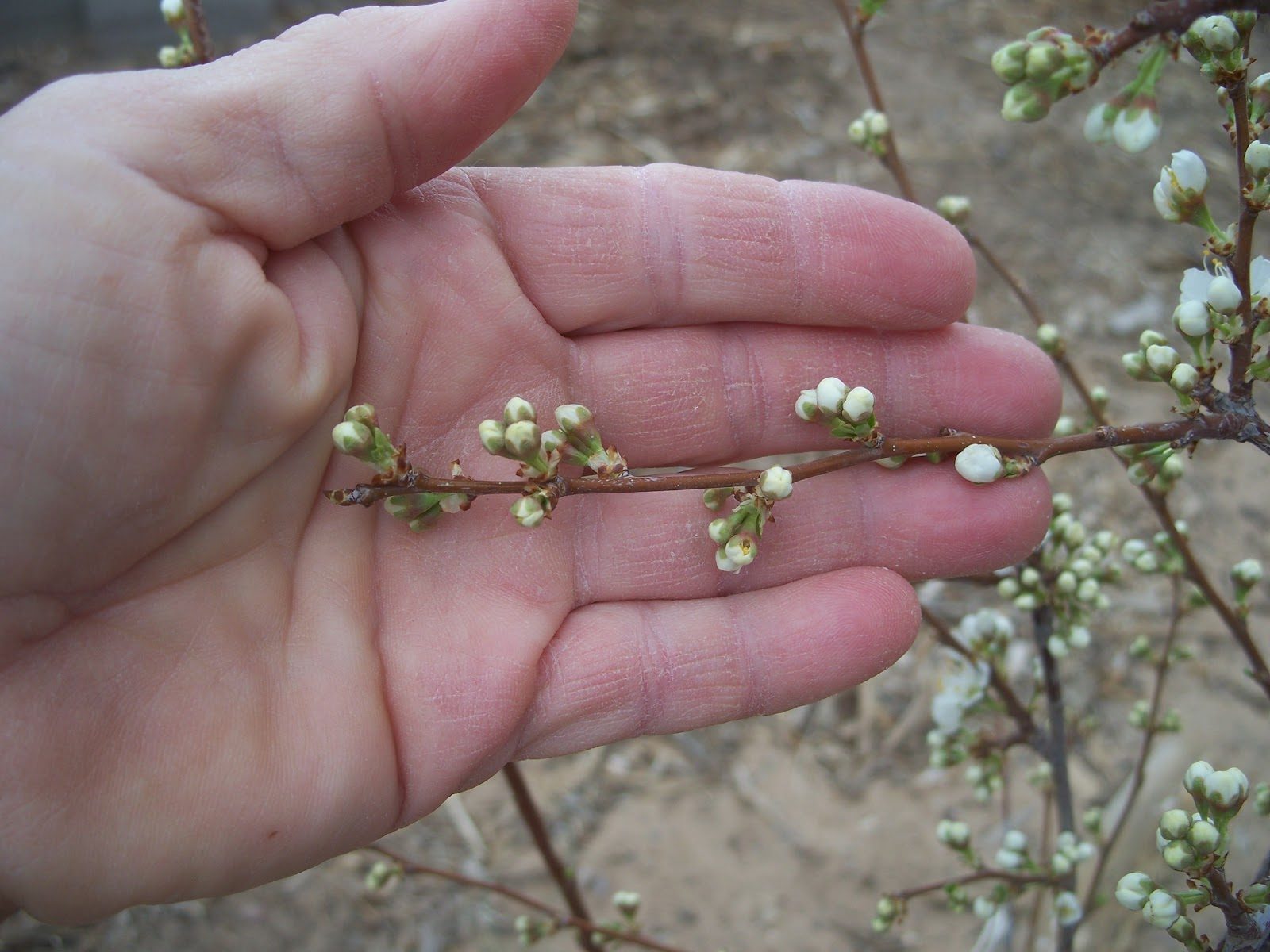
Chilling hours: the three models and when each one tells the truth
Chilling Hours, Utah Chill Units or Dynamic Chill Portions, what each measures, which suits which climate and season, why a chill portion does not convert into hours, and how the divergence between the three is read. The calculation itself lives in a separate tool.