
Iron deficiency in fruit trees: bicarbonate, chelates and what actually works

Savvas Pastopoulos, Agronomist, Pastopoulos Agronomics
Lime-induced chlorosis is the most misunderstood nutritional problem in our orchards. It is not caused by a shortage of iron in the soil, iron is among the most abundant elements in the earth's crust [1], and in chlorotic leaves total iron is found to be equal to or higher than in green ones [25]. It is caused by the fact that the calcareous soil and the irrigation water do not let the tree use it [1]. The distinction is not theoretical: it decides whether money goes on something that works or on something that will precipitate out within a fortnight.
soils of Pella
field observation
and above, acidification
is considered [5]
chelated in EDTA
at pH 7.5 [7]
does a foliar spray green [18]
The band of 7.5 to 8.5 is a field observation from the calcareous holdings of Pella, in Greece, taken from soil analyses carried out by this office, and does not come from a foreign source. No published Greek distribution of pH values for the district was found during the check of the sources. The other three figures are documented in the corresponding sections.
- The paradox: the soil has iron
- The real culprit is bicarbonate
- When it strikes, the six conditions
- Diagnosis: what it is confused with
- The irrigation water, what is measured
- The chelate forms and pH
- Rates, and a serious correction
- How it is applied through fertigation
- The foliar spray, what it does and what it does not
- What does not work, and why
- The permanent solution is the rootstock
- Sources
1. The paradox: the soil has iron
The place to start is the finding that overturns the common assumption. On calcareous soils, and in plants showing chlorosis, the iron concentration in the roots is several times higher than in the leaves. The tree has taken iron up. It simply does not send it, and does not use it, where it is needed [1].
The same is seen from the other side, inside the leaf. In crops grown on carbonate-rich soils, chlorotic leaves hold a concentration of total iron equal to or greater than that of green, healthy leaves, and this is attributed to the alkalinisation that physiologically inactivates iron in the leaf apoplast [25]. In kiwifruit on calcareous soil it was recorded explicitly that symptoms appear despite moderate to high iron concentrations in the leaf [32].
The critical step that blocks is not the availability of iron in the soil but its uptake from the root apoplast into the cytoplasm [1].
2. The real culprit is bicarbonate
Calcareous soil contains calcium carbonate. When that meets water and carbon dioxide, it produces bicarbonate ions. These are the real mechanism of the damage, and they act at two levels:
- In the soil, they hold the pH high and stable. Iron precipitates as insoluble hydroxide and becomes unavailable.
- Inside the tree, and this is the substantive part. Bicarbonate is transported in the xylem and alkalinises the xylem sap and the leaf apoplast. At high apoplastic pH the reduction of ferric to ferrous iron is suppressed, and that reduction is a necessary precondition for iron to enter the mesophyll cells [2].
This interpretation is not old and superseded. The inactivation of iron in the leaf apoplast through alkalinisation is still put forward as the prevailing explanation for chlorotic leaves holding as much iron as green ones [25], and high bicarbonate concentrations are described as the main reason for the inactivation of iron in the apoplast [28]. In kiwifruit, indeed, the pH of the leaf tissue was found to correlate negatively with chlorophyll concentration [32].
That the culprit is the bicarbonate ion itself and not simply the high pH has been tested experimentally. In nutrient medium, high pH without bicarbonate produced no symptoms in either of two pear rootstocks; the addition of bicarbonate produced chlorosis in quince A [29].
Put simply: the tree is holding the iron but has no key to unlock it. And the key is locked by bicarbonate.
3. When it strikes, the six conditions
Chlorosis does not appear uniformly. Specific conditions trigger it, and almost all of them have to do with how much carbon dioxide accumulates in the soil:
| Condition | Why it makes things worse |
|---|---|
| Soil pH above 7 | Iron precipitates. Availability is lowest between pH 7.5 and 8.5 [26], and a rise of one pH unit can reduce the solubility of iron compounds a thousandfold [25] |
| High active calcium carbonate | The reservoir that feeds bicarbonate continuously. The critical level quoted for susceptible species is 10% active calcium carbonate, the FAO threshold [25]; calcareous soils are alkaline precisely because they hold free calcium carbonate [26] |
| Over-irrigation or poor drainage | Saturated soil traps carbon dioxide and drives bicarbonate sharply up. Symptoms recede once it dries [3]. Over-irrigation keeps the soil saturated and reduces air exchange with the root zone [26] |
| Cold, wet soil in spring | The deficiency is made worse by cold, wet spring soils [26] and by frequent spring rain or prolonged soil moisture [30]. Low temperature increases the solubility of carbon dioxide in the soil, and therefore bicarbonate [25] |
| Poor aeration of the rhizosphere | Excess carbon dioxide leads to the formation of bicarbonate [25]. Conversely, holding soil moisture at an optimal level reduces soil bicarbonate by increasing gas exchange in the rhizosphere [28] |
| Over-fertilisation, phosphates above all | High phosphorus concentrations in the soil form insoluble iron phosphates [25]. On model calcareous substrates with lupin and sorghum, raising the phosphorus rate lowered SPAD values, because adsorbed phosphate covers the surface of the iron oxides and reduces their solubility [27] |
The claim was searched for in the literature and no source supporting it was found. The sources that were found say the opposite.
A review of 2022 records that farmyard manure, poultry manure, peat and sludge have been proposed for the correction of chlorosis symptoms [25]. An extension guide from Wyoming, in the USA, states that heavy soils low in organic matter are more prone to iron deficiency than those with more organic matter [26]. And in "Huangguan" pear on quince A on calcareous soil in China, manure application raised the available iron of the soil from 8.00 to 11.31 mg/kg, with the conclusion that manure should be the first choice for relieving chlorosis on such soils [28]. In the same vein, the Italian work that also supplies the iron rate used in this article examined the use of compost to manage iron nutrition in pear on calcareous soil [14].
The table row was replaced by what is actually documented: poor aeration of the rhizosphere and the accumulation of carbon dioxide. Organic matter, where it does not destroy aeration, is not the enemy.
Sources: 3 4 14 25 26 27 28 30
4. Diagnosis: what it is confused with
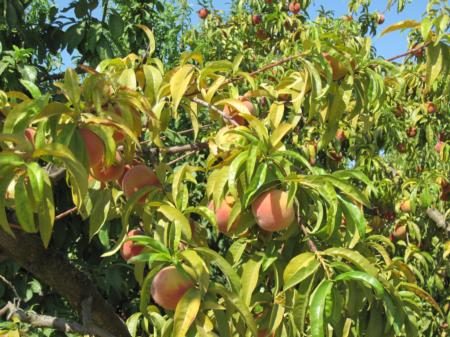
The diagnostic key is which leaves turn yellow. Iron is an immobile element within the plant: new growth cannot draw it from the older leaves. The rule is a general one and holds for every element: the immobile ones, zinc, iron, copper, manganese, boron, calcium, sulphur, show first on the young leaves, while the mobile ones, nitrogen, phosphorus, potassium, magnesium, show first on the older ones [21].
| Deficiency | Where it appears | Appearance |
|---|---|---|
| Iron | Young leaves, at the shoot tips | Interveinal chlorosis of the new leaves, with the veins distinctly green; then complete chlorosis and bleaching of the new leaves, with stunted growth [21] |
| Magnesium | Older leaves, low in the canopy | Interveinal chlorosis on the older leaves, moving towards the younger ones as the deficiency deepens [21] |
| Manganese | Young leaves, the same position as iron, and this is where the confusion arises | Interveinal chlorosis of the new leaves but with green retained next to the veins, and later grey or brown necrotic spots within the chlorotic areas [21] |
| Zinc | Young leaves | Interveinal chlorosis with green next to the veins, short internodes and small leaves in a rosette [21] |
The one confusion that the eye cannot settle: manganese also gives interveinal chlorosis on the young leaves. The distinguishing feature is that with manganese a band next to the veins stays green and necrotic spots appear later within the yellow; with iron the yellow reaches the vein and ends in bleaching [21]. Where the distinction decides an intervention, leaf analysis is made.
5. The irrigation water, what is measured
This is the point that is almost always skipped, and it is among the most decisive. Borehole water in this district carries bicarbonate. Every irrigation is a fresh dose of the agent that causes the problem.
A water analysis is asked for explicitly on bicarbonate, carbonate, pH and electrical conductivity. The threshold is not a single one, and that deserves to be said plainly instead of giving one figure as though it were law. Guidance for fruit and nut crops in California places the decision point at 2 meq/L: above that, acidification of the water towards pH 6.5 is considered [5]. An irrigation water quality guide from the University of Arkansas gives an optimum range of 0.5 to 0.8 meq/L and an upper limit of 2.4 meq/L (150 ppm) [11], while the corresponding Colorado guide sets the limit of 200 mg/L, roughly 3.3 meq/L, as the point at which the analysis needs correcting for alkalinity [12], that last limit concerns the sodium hazard and not lime-induced chlorosis, and is given only as an order of magnitude for when a water is regarded as loaded.
| Bicarbonate in the water | Assessment |
|---|---|
| 0.5 – 0.8 meq/L | The optimum range [11]. Lower values are not a problem for iron, but the water then has little buffering capacity |
| 0.8 – 2 meq/L | Borderline. Monitoring, and care with irrigation |
| Above 2 meq/L | This is where acidifying the water begins to make sense [5]. Above 2.4 meq/L the water also exceeds the upper limit of the Arkansas guide [11] |
Where bicarbonate is high, acidifying the irrigation water is one of the few measures that attacks the cause rather than the symptom. It is done by controlled addition of acid to the system, with measurement, and it has a second benefit: it clears the emitters of calcium carbonate deposits.
6. The chelate forms and pH
A chelating agent is a molecule that wraps around the iron and keeps it soluble. Every chelate, however, holds only up to a certain pH, above that it releases the iron and the iron precipitates [6]. What matters is not that it breaks abruptly at one point, but how much iron stays chelated at the pH of the particular site.
| Form | Stable to pH | What stays chelated at pH 7.5 | Where it fits |
|---|---|---|---|
| Fe-EDDHA | 9 [6]; the ortho-ortho isomer is given with a range of 4 to 10 [8] | 100% [7] | The substantive option for our calcareous soils, and the one that is available everywhere. It does not precipitate in the emitters |
| Fe-HBED | 12, with a range from 4 [8] | Not given by the sources that were checked | Greater stability still than EDDHA. Less widely available commercially in Greece |
| Fe-DTPA | 7.5 [6] | 50% [7] | Only for slightly alkaline soils. Above 7.5 it destabilises |
| Fe-EDTA | 6.5 [6]; another source gives 4 to 6.3 [8] | 2.5% [7] | Only acid or neutral soils. On soils like ours it is money thrown away |
| Iron sulphate | not reported | not reported | Not a chelate. In the soil it precipitates almost immediately |
The figure that counts in practice is the third column. At pH 7.5, that is, on the mildest of our calcareous holdings, Fe-EDTA keeps 2.5% of its iron chelated. The remaining 97.5% is powder that precipitates [7]. Above pH 7.2, EDTA and DTPA rapidly lose their effectiveness [9].
Two products can both state "Fe-EDDHA 6%" and be of completely different value. What counts is the percentage of the ortho-ortho isomer. In soil application, the fraction that remains in solution ranks racemic ortho-ortho first, then meso ortho-ortho, then the rest, and ortho-para last, independently of the properties of the soil; the ortho-para and the remaining fractions are removed and for that reason perform less well, particularly on clay soils [10].
Where the figure is to be asked for, though. Regulation (EU) 2019/1009 obliges the label to state "chelated by…", with the name of the chelating agent and the quantity of the chelated micronutrient as a percentage by mass [13]. The words "ortho-ortho", "o,o-EDDHA" and "isomer" appear nowhere in the regulation. So the legal declaration says how much iron is chelated, not with which isomer. The ortho-ortho percentage is asked for from the certificate of analysis of the product, and a product that does not supply it is not bought. The regulation does set one threshold worth knowing: for solid micronutrient fertilisers, at least 80% of the water-soluble micronutrient must be chelated [13].
7. Rates, and a serious correction
Here a piece of honesty is needed that the technical leaflets lack: a scale of rates by tree age does not exist in any published experimental work. What circulates as such comes from manufacturers' instructions. What does exist is measured rates in particular crops and countries, and these deserve to be given exactly as they were measured.
| Crop and country | Rate of elemental iron | What was measured |
|---|---|---|
| Abbé Fétel pear on quince BA 29, Italy soil pH 7.66, active lime 73.8 g/kg, 2,198 trees per hectare | 1.65 g Fe per tree per year as Fe-EDDHA, in two spring applications | Gives the rate per tree and the planting density together, which allows conversion to an area basis [14] |
| Chlorotic peach orchard, Spain | 0.6 to 2.4 g Fe per tree (10, 20 and 40 g of 6% product) | The lowest rate gave the greatest increase in chlorophyll, 21% above the control, with leaf area increased by at least 25% [15] |
| Satsuma mandarin, China chlorotic orchards at pH 7.74 against 6.99 in the healthy ones | 4.8 g Fe per tree as Fe-o,o-EDDHA 6%, in a single application in April | As the only micronutrient fertiliser, at a density of 1,200 to 1,500 trees per hectare [16] |
From the figures of the Italian work comes the only per-area value that rests on a real planting density: 1.65 g × 2,198 trees = 3.63 kg Fe per hectare, or roughly 60 kg of 6% product per hectare [14]. These values hold for that particular density and do not transfer unchanged to a wider or a closer planting.
The difference is not an error in either of them: different species, different soil, different severity of chlorosis, different density. That is exactly why there is no such thing as "the rate", there is the rate for the particular site, after analysis. Anyone presenting a single figure per hectare as universal has not read a second paper.
The rates by age that follow are kept as practical direction and not as a documented recommendation. They do not come from experimental work, and that is stated here explicitly instead of being hidden behind a citation.
| Tree size | Fe-EDDHA 6% product per tree, per year | Applications |
|---|---|---|
| Young, 1–3 years | 15 – 35 g | 1 – 2 |
| In full growth, 4–10 years | 35 – 70 g | 2 – 3 |
| Mature, over 10 years | 70 – 120 g | 2 – 3 |
| Per hectare, indicative | 6 – 120 kg of product (≈0.36 – 7.2 kg of elemental Fe) derived from the rows above, at 400 to 1,000 trees per hectare | not reported |
Timing
- First application shortly before bud swell. The iron must be in the rhizosphere before the new growth starts, because it is that growth which will turn yellow. Extension leaflets place the application "in early spring, as the buds begin to swell" [17], and the Italian work split the rate into two spring applications [14]. Applications late in the season are less likely to pay off [9].
- Second at the start of fruit development.
- Third only if chlorosis appears on the new leaves.
Waiting until the yellow shows and intervening then means that photosynthetic capacity has already been lost for that flush of growth.
8. How it is applied through fertigation
- Pre-dissolving in a separate tank, never directly into the system.
- Sequence, in quarters of the irrigation time. The documented practice is not given in minutes but as a fraction of the cycle: irrigation with clean water in the first quarter, injection during the two middle quarters, flushing with clean water in the last quarter [22]. The recommendation then adapts to each system instead of a figure being copied from a foreign holding. The actual travel time of the water in the system is determined with a dye test [22].
- Flushing of at least 10 to 20 minutes after every injection period, and complete removal of the fertiliser from the lateral lines before the system is shut down [22] [23].
- Away from light, and the figure is a large one. In measurements on nutrient solutions, Fe-DTPA lost more than 90% of its soluble iron within 96 hours of exposure to light, and within 72 hours when the temperature rose to 40 °C; irradiance counts for more than temperature, and filtering out wavelengths below 454 nm eliminated photodegradation entirely [24]. A covered tank, and the solution is not left standing in the sun from one day to the next.
- Where several materials are injected, the acid goes in first, and the metal micronutrients must be chelated so that they do not precipitate; the injections are made separately and simultaneously, not mixed in the same tank [22].
9. The foliar spray, what it does and what it does not
There is a finding here that every grower should know before spraying, because it explains all the disappointments.
In a field trial on peach on calcareous soil in Spain, researchers applied iron sulphate to half of each leaf only, dipping the distal half of the marked leaves in the solution for two seconds. The treated half greened up strongly, with an increase in iron and in all the photosynthetic pigments. The other half of the same leaf stayed yellow [18].
The concentration of the solution in that trial was 2 mM iron sulphate with 0.1% of a non-ionic organosilicone wetter, in two applications four weeks apart [18]. The application was made by dipping and not by spraying, so that the area receiving the iron could be delimited exactly. In extension leaflets from the USA the concentrations given for tree crops are a 0.1% solution with a sticker [30] and a 0.5% iron sulphate solution [31]. No published Greek concentration for foliar iron application on fruit trees was found, and the concentration of each application is set by the label of the product.
What that means in practice
- Iron does not move. Not even within the same leaf, let alone towards the new growth.
- It greens only where the droplet lands. Coverage must therefore be complete, and in practice it never is.
- Every new leaf that emerges after the spray emerges yellow. That is why the application is repeated; extension leaflets give an interval of roughly 10 to 21 days [30] and state explicitly that repeats may be needed for as long as the symptoms persist or new growth continues [31]. A fixed number of repeats per season is given by none of the sources that were checked.
- On pear, the conclusion was explicit: foliar fertilisation is not a good alternative for full control of chlorosis, only a supplementary technique alongside a soil-applied chelate [18] [34].
Iron sulphate leaves marks on the fruit, the drawback is stated explicitly in an extension leaflet for fruit crops [30], and causes scorch on the foliage, particularly in heat and strong sunlight [31]. In the same trial, necrosis was recorded near the boundary of the treated area [18]. The risk exists with the chelates and with compound products too, to a lesser degree.
Before any foliar application on trees carrying fruit, a test on a few trees comes first, with a wait of at least 5 to 7 days before the whole holding is sprayed. The test is made with the rate and the product of the final application, under the same conditions. The interval of 5 to 7 days does not come from published work; it is a safety practice of this office and is stated as such. Spraying is always done in the late afternoon or early in the morning, never in a heatwave, and never with the canopy under water stress; the recommendation for the late afternoon or a cool cloudy day is documented [31].
If a foliar spray is needed all the same, as immediate relief in severe chlorosis until the soil application takes effect, for instance, the choice between a chelated form and iron sulphate is not decided on effectiveness. In a trial of foliar application on chlorotic pear, no treatment gave full recovery, and iron sulphate had a regreening effect similar to that of Fe(III)-DTPA [34]. The chelate costs more: the extension leaflets give the chelate as partial control of chlorosis in the foliage and iron sulphate as the cheaper option with some effect [31].
What is documented against iron sulphate is not the gentleness of the chelate but two specific drawbacks of the salt: the marking of the fruit [30] and the necrosis recorded at the boundary of the treated area [18]. No published comparison showing the chelated form to be gentler on the foliage than iron sulphate was found, and the preference for the chelate on trees carrying fruit is kept here as field practice because of the risk of marking, not as a finding from the literature.
Whatever the product, spraying is done in the late afternoon or on a cool cloudy day, so that scorch of the foliage is avoided [31].
10. What does not work, and why
- Iron sulphate in the soil. "Soil applications of iron alone are ineffective because the iron that is added is quickly converted to these unavailable solid forms" [9]. It is the commonest waste of money on this subject.
- Fe-EDTA on alkaline soil. The same outcome, at greater cost: at pH 7.5 barely 2.5% of its iron stays chelated [7].
- Sulphur to lower the pH on calcareous soil. Theoretically correct, practically unachievable. The Colorado guidance is categorical: the approach "is only worth considering on soils free of calcium carbonate", and where the irrigation water is hard "the calcium carbonate in the water neutralises any acidifying effect" [9]. Put another way, the site is refilled with carbonate at every irrigation.
- More irrigation. It makes the problem worse: soil moisture raises bicarbonate in the rhizosphere [3].
- Expecting a permanent fix from the chelates. They are annual maintenance, not a cure: a soil-applied chelate "may give a quick response", but the effect "lasts from less than one season to two years" [9]. The following year the soil is the same soil.
11. The permanent solution is the rootstock
The only measure that settles the problem for good is taken before planting. Tolerance of lime-induced chlorosis is determined mainly by the rootstock, that is what sits in the calcareous soil and what regulates the use of iron by the scion [2]. It is not the rootstock's business exclusively, however: in the one rootstock-by-cultivar trial that was checked, the cultivar also had a clear effect [20]. The combination decides, and the question put to the nursery is about the pair, not about the rootstock alone.
| Species | What applies |
|---|---|
| Peach, apricot, almond | The hybrid GF-677 (peach × almond) has high tolerance of iron deficiency and is the most widely used rootstock for calcareous soils. It shows a distinctly greater capacity to transport and accumulate iron than susceptible rootstocks [19] |
| Pear | This is where the real risk lies. Quince rootstocks are susceptible on calcareous soils. Pear rootstocks differ substantially between themselves in tolerance of calcium carbonate, and the same trial shows that the cultivar grafted onto them counts as well [20], a specific question is required before the order is placed, about the combination and not about the rootstock alone. It should be noted that this work does not include quince; the susceptibility of quince is documented by [2] and [29]. In a controlled trial, bicarbonate produced chlorosis in quince A and lowered the extractable ferrous iron of the leaf, while in the vigorous rootstock Pyrus betulifolia it raised it [29]. On calcareous soil in China, the same combination of "Huangguan" pear on quince A was used precisely as a model of a chlorotic orchard [28] |
| Kiwifruit | Kiwifruit suffers from lime-induced chlorosis when it is grown on calcareous soil, and the symptoms appear despite moderate to high iron concentrations in the leaf [32]. In a pot trial, the addition of 10 mM bicarbonate produced chlorosis symptoms in both of the genotypes that were tested, with Hayward taking the greater damage to the photosystem and Tomuri holding up better in iron mobilisation at the root [33]. No commercial kiwifruit rootstock with documented tolerance, available on the Greek market, was found, there is, however, a published evaluation of eleven Actinidia genotypes for tolerance of bicarbonate [35], so the field is not empty, it has simply not reached the nursery yet. Until it does, the choice is made at the planting site |
The three rows do not carry the same weight of evidence, and that deserves to be said. For the stone fruits there is a rootstock with assessed tolerance, GF-677 [19]. For pear there are comparisons between rootstocks [20] [29]. For kiwifruit there is documented susceptibility of the species [32], differences between genotypes [33] and a comparative evaluation of eleven genotypes for tolerance of bicarbonate [35], but no commercial tolerant rootstock on the Greek market.
12. Sources
The numbers in the text refer to the list below. Where only the abstract and not the full text was used, this is stated explicitly.
- [1] Mengel, K. (1994). Iron availability in plant tissues, iron chlorosis on calcareous soils. Plant and Soil 165:275–283. The classic reference. Source for the finding that iron in the roots of chlorotic plants is several times that in the leaves, and that the critical step is uptake from the apoplast, not availability in the soil.
- [2] Zhao, Y., Liu, S., Li, F., Sun, M., Liang, Z., Sun, Z., Yu, F. and Li, H. (2023). The low ferric chelate reductase activity and high apoplastic pH in leaves cause iron deficiency chlorosis in «Huangguan» pears grafted onto quince A grown in calcareous soil. Scientia Horticulturae 310:111754, DOI 10.1016/j.scienta.2022.111754. Source for the mechanism inside the leaf: the reduced availability of iron in the leaves, caused by the lower activity of ferric chelate reductase and the higher apoplastic pH, leads to chlorosis. Source also for the finding that the same scion, "Huangguan" pear, developed chlorosis on calcareous soils of northern China on quince A but not on Pyrus betulifolia, that is, that the rootstock regulates the use of iron by the scion. Abstract.
- [3] Zuo, Y. et al. (2007). Bicarbonate concentration as affected by soil water content controls iron nutrition of peanut plants in a calcareous soil. Plant Physiology and Biochemistry. Source for the direct relationship between soil moisture and bicarbonate, and for the recession of the symptoms once the soil drains. A pot experiment on peanut, not on a tree crop; the mechanism is a soil mechanism and transfers, the magnitude of the response does not.
- [4] The effect of sprinkler and drip irrigation on lime-induced chlorosis of citrus. Source for the finding that more frequent sprinkler irrigation increased chlorosis while drip reduced it.
- [5] Iron Deficiency in Fruit and Nut Crops in California. Progressive Crop Consultant, 1 July 2019. Source for the decision point of 2 meq/L of bicarbonate in irrigation water, above which acidification towards pH 6.5 is considered, and for the mechanism whereby bicarbonate reacts with the hydrogen ions released by the root and prevents the increase in iron availability. A trade publication, with no named author and not peer-reviewed; for that reason the threshold is given together with the two university limits of [11] and [12] and not on its own.
- [6] Hershkowitz, J.A., Dey, M.G., Heins, R. and Bugbee, B. (2025). Fertigation with Fe-EDTA, Fe-DTPA, and Fe-EDDHA Chelates to Prevent Iron Chlorosis of Sensitive Species in High-pH Soilless Media. HortScience 60(3). Source for the iron-binding limits of each chelate: Fe-EDDHA to pH 9, Fe-DTPA to pH 7.5, Fe-EDTA to pH 6.5; also for the finding that up to pH 6.5 all three prevented chlorosis, while above pH 7.2 only Fe-EDDHA was effective. A trial in soilless medium, USA. Full text.
- [7] Liu, G., Hanlon, E. and Li, Y. Understanding and Applying Chelated Fertilizers Effectively Based on Soil pH. UF/IFAS Extension, EDIS HS1208, University of Florida. Source for the proportion of iron that remains chelated at each pH: at pH 6.0 the ratio is 1.0 for all three chelates, while at pH 7.5 it is 1.0 for EDDHA, 0.5 for DTPA and only 0.025 for EDTA. Full text.
- [8] Lozano-González, J.M., Lucena, J.J. and López-Rayo, S. (2025). A pyoverdine-based iron biochelate from bacterial secretions as an effective fertilizer under alkaline conditions. Frontiers in Plant Science 16:1675837. Source for the pH stability ranges of Table 1: EDTA 4 to 6.3; ortho-ortho EDDHA 4 to 10; HBED 4 to 12. Full text.
- [9] Iron Chlorosis of Woody Plants. CMG GardenNotes #223, Colorado Master Gardener Program, Colorado State University Extension. Source for the finding that EDTA and DTPA rapidly lose their effectiveness above pH 7.2 to 7.5, and that applications late in the season are less likely to pay off. Full text. Data from Colorado, USA.
- [10] Schenkeveld, W.D.C., Reichwein, A.M., Temminghoff, E.J.M. and van Riemsdijk, W.H. (2007). The behaviour of EDDHA isomers in soils as influenced by soil properties. Plant and Soil 290(1):85–102. Source for the ortho-ortho isomer: the order of the fraction that remains in solution is racemic ortho-ortho, meso ortho-ortho, the rest, ortho-para, independently of the properties of the soil; the ortho-para and the remaining fractions are removed and perform less well in soil application, particularly on clay soils. Abstract.
- [11] Irrigation Water for Greenhouses and Nurseries. University of Arkansas System, Division of Agriculture, FSA6061. Source for the optimum range of bicarbonate in irrigation water, 0.5 to 0.8 meq/L, and for the upper limit of 2.4 meq/L, that is, 150 ppm. Full text.
- [12] Irrigation Water Quality Criteria. Colorado State University Extension. Source for the finding that above 200 mg/L of bicarbonate, that is, roughly 3.3 meq/L, or a pH above 8.5, the water analysis requires correction for alkalinity (adjusted SAR index). That limit was set for the sodium hazard, not for lime-induced chlorosis, and is used here only as an order of magnitude. Full text.
- [13] Regulation (EU) 2019/1009 of the European Parliament and of the Council of 5 June 2019 laying down rules on the making available on the market of EU fertilising products. EUR-Lex. Source for the obligation of the label (Annex III, Part II) to state "chelated by…", with the name or the abbreviation of the chelating agent and the quantity of the chelated micronutrient as a percentage by mass; and for the negative finding that the terms "isomer", "o,o-EDDHA" and "ortho-ortho" appear nowhere in the text of the regulation. Full text.
- [14] Sorrenti, G., Toselli, M. and Marangoni, B. (2012). Use of compost to manage Fe nutrition of pear trees grown in calcareous soil. Scientia Horticulturae 136:87–94. The source that gives the rate per tree and the planting density together: 1.65 g Fe per tree per year as Fe-EDDHA, in two spring applications, on Abbé Fétel pear on a quince BA 29 rootstock, in Italy, on a soil of pH 7.66 with active lime of 73.8 g/kg and a density of 2,198 trees per hectare. From these comes the figure of 3.63 kg Fe per hectare. Full text.
- [15] Gil-Ortiz, R. and Bautista-Carrascosa, I. (2005). Response of leaf parameters to soil applications of iron-EDDHA chelates in a peach orchard affected by iron chlorosis. Communications in Soil Science and Plant Analysis 36(13):1839–1849. Source for the rates of soil injection in a peach orchard affected by iron chlorosis in Spain: 10, 20 and 40 g of Fe-EDDHA 6% product per tree, that is, 0.6 to 2.4 g of elemental iron; and for the finding that the lowest rate gave the greatest increase in chlorophyll, 21% above the control, with leaf area increased by at least 25%. Abstract.
- [16] Huang, H., Hu, C.X., Tan, Q., Hu, X., Sun, X. and Bi, L. (2012). Effects of Fe–EDDHA application on iron chlorosis of citrus trees and comparison of evaluations on nutrient balance with three approaches. Scientia Horticulturae 146:137–142. Source for the rate of 4.8 g Fe per tree as Fe-ortho-ortho-EDDHA 6%, in a single application in April, on Satsuma mandarin in China; for the pH of 7.74 in the chlorotic orchards against 6.99 in the healthy ones; and for the statement that the high bicarbonate concentration and the pH of calcareous soils are the two main factors in the low availability of iron. Full text of the methods through the publisher's page.
- [17] Iron Chlorosis on Trees. Kansas State University, Horticulture Resource Center. Source for the recommendation of an EDDHA chelate on any soil with a pH above 7.2 and for the timing "in early spring, as the buds begin to swell". Full text.
- [18] El-Jendoubi, H., Abadía, J. and Abadía, A. (2014). The effects of foliar fertilization with iron sulfate in chlorotic leaves are limited to the treated area. A study with peach trees grown in the field. Frontiers in Plant Science 5:2. The critical experiment: on field peach trees, iron was applied to half of each leaf only and only the half that received it greened up. Source also for the concentration of the solution (2 mM FeSO4 with 0.1% organosilicone wetter, dipping of the distal half for two seconds, a second application four weeks later), for the necrosis near the boundary and for the conclusion on pear that foliar application is only a supplementary technique. The correction of the word "sprayed" to "applied" was made once the methods text was found to describe dipping and not spraying; the conclusion of the experiment does not change.
- [19] Comparative transcriptome and physiological analyses reveal key factors in the tolerance of peach rootstocks to iron deficiency chlorosis. 3 Biotech (2021). Source for the tolerance of GF-677 and for its greater capacity to transport and accumulate iron compared with susceptible rootstocks.
- [20] Effect of lime concentration on pear's rootstock/scion combinations. Horticultural Science (Prague), 2019. Source for the differences in tolerance between pear rootstocks at high concentrations of calcium carbonate.
- [21] Diagnosing Nutrient Deficiencies. Integrated Pest Management, University of Missouri, Missouri Environment and Garden. Source for the rule of mobile and immobile elements, "for elements that are immobile in the plant, such as zinc, iron, copper, manganese, boron, chlorine, nickel, calcium and sulphur, symptoms appear first on the younger leaves, while for mobile ones such as nitrogen, phosphorus, potassium and magnesium they are expressed first on the older leaves", and for the four descriptions of symptoms in the table: iron (interveinal chlorosis of the new leaves and then complete chlorosis or bleaching, with stunted growth), magnesium (interveinal chlorosis on the older leaves moving towards the younger ones), manganese (interveinal chlorosis of the new leaves with green next to the veins and later grey or brown necrotic spots) and zinc (interveinal chlorosis with green next to the veins, short internodes, small leaves, rosette). Full text.
- [22] Wang, Z., Culumber, C.M. and Bali, K.M. (2024). Application of chemical materials (Chapter 12). In: Microirrigation for Crop Production, Elsevier, pp. 359–387. Source for the sequence of fertigation: the injection begins after the first quarter of the irrigation time, injection during the two middle quarters, flushing with clean water in the last quarter; flushing of at least 10 to 20 minutes after every injection period; determination of the actual travel time with a dye test; injection of the acid first where several materials are injected; and for the requirement that the metal micronutrients be chelated with EDTA, DTPA or EDDHA so that they do not precipitate, with separate simultaneous injections. Full text.
- [23] Haman, D.Z. Causes and Prevention of Emitter Plugging in Microirrigation Systems. UF/IFAS Extension, EDIS AE032/BUL258, University of Florida. Source for the maintenance of the system: calcium carbonate is the commonest constituent of the deposits; a rise in pH or in temperature reduces the solubility of calcium and leads to precipitation; water with a pH above 7 and appreciable quantities of these minerals can plug the emitters; preventive acid injection targets a pH slightly below 7.0; and the recommendation that all the fertiliser be flushed from the lateral lines before the system is shut down. Full text.
- [24] Albano, J.P. and Miller, W.B. (2001). Photodegradation of FeDTPA in Nutrient Solutions. I. Effects of Irradiance, Wavelength, and Temperature. HortScience 36(2):313–316. Source for the photodegradation of iron chelate in solution: a loss of more than 90% of the soluble iron within 96 hours of exposure to light at an irradiance of 250 or 500 µmol per square metre per second at 20 °C, and within 72 hours at 40 °C; the irradiance has a far greater effect than the temperature, and doubling the irradiance doubles the rate; removing the wavelengths below 454 nm with a filter eliminated the photodegradation. Full text. The measurement was made in a hydroponic nutrient solution with Fe-DTPA; it is carried over here as an order of magnitude of the risk for an injection tank exposed to light, not as a measurement on Fe-EDDHA.
- [25] Mehrotra, R., Verma, R.K. and Pal, A. (2022). Iron deficiency chlorosis in aromatic grasses, A review. Environmental Challenges 9:100646. Source for the factors that make lime-induced chlorosis worse: a rise of one pH unit reduces the solubility of iron compounds by up to a thousandfold; a critical level of 10% active calcium carbonate for susceptible species according to FAO (1973); high soil moisture and excess carbon dioxide produce bicarbonate; low temperature increases the solubility of carbon dioxide and therefore the bicarbonate and the severity of the chlorosis; high phosphorus concentrations form insoluble iron phosphates. Source also for the finding that chlorotic leaves on carbonate-rich soils hold total iron equal to or greater than healthy ones, because of physiological inactivation in the apoplast; and for the negative finding that farmyard manure, poultry manure, peat and sludge are cited as means of correcting chlorosis. Full text. A review centred on aromatic grasses; the points used here concern the chemistry of the soil and the physiology of iron in general, not that particular group of crops.
- [26] Panter, K. and Hilgert, C. (2017). Iron Deficiency Chlorosis in Wyoming. University of Wyoming Extension, B-1097R. Source for the findings that the availability of iron is lowest between pH 7.5 and 8.5 and rises as the pH falls; that the deficiency is made worse by cold, wet spring soils; that over-irrigation keeps the soil saturated and reduces air exchange with the root zone; that calcareous soils are alkaline because of free calcium carbonate; and that heavy soils with low organic matter are more prone than those with more organic matter. Full text. Data from Wyoming, USA.
- [27] Sánchez-Rodríguez, A.R., del Campillo, M.C. and Torrent, J. (2013). Phosphate aggravates iron chlorosis in sensitive plants grown on model calcium carbonate–iron oxide systems. Plant and Soil 373:31–42. Source for the finding that raising the phosphorus rate lowered SPAD values in lupin and sorghum on model substrates of calcium carbonate and iron oxides, and for the mechanism: iron uptake is affected adversely by phosphorus because the solubility of the iron oxides falls as their surface becomes covered with adsorbed phosphate. Abstract and description of the methods. The species are herbaceous (lupin, sorghum) on model substrates, not fruit trees in the field; for that reason they are named within the sentence.
- [28] Zhao, Y., Li, H., Sun, M., Liang, Z., Yu, F., Li, F. and Liu, S. (2021). Effects of Soil Aeration and Fertilization Practices on Alleviating Iron Deficiency Chlorosis in «Huangguan» Pears Grafted onto Quince A in Calcareous Soils. Horticulturae 7(7):172. Source for the view that high bicarbonate concentrations are held to be the main reason for the inactivation of iron in the leaf apoplast; that holding soil moisture at an optimal level reduces the bicarbonate of the soil by increasing gas exchange in the rhizosphere; and for the finding that manure application raised the available iron of the soil from 8.00 to 11.31 mg/kg and was proposed as the first choice for relieving chlorosis in "Huangguan" pear on quince A on calcareous soil in China. Full text, open access.
- [29] Zhao, Y., Chen, Y., Liu, S., Li, F., Sun, M., Liang, Z., Sun, Z., Yu, F., Rengel, Z. and Li, H. (2023). Bicarbonate rather than high pH in growth medium induced Fe-deficiency chlorosis in dwarfing rootstock quince A (Cydonia oblonga Mill.) but did not impair Fe nutrition of vigorous rootstock Pyrus betulifolia. Frontiers in Plant Science 14:1237327. Source for the finding that bicarbonate and not high pH explains the iron deficiency: high pH without bicarbonate gave no symptoms in either of the two rootstocks, while bicarbonate produced chlorosis in quince A, lowering the extractable ferrous iron of the leaf, and raised it in the vigorous rootstock Pyrus betulifolia. Full text, open access. The authors themselves consider it unlikely that precipitation of ferric iron in the apoplast through high pH is the main cause in quince A; for that reason the work is not used here as a source for the mechanism of the apoplast.
- [30] Iron Chlorosis (Deficiency). Utah State University Extension, IPM Fact Sheets, fruit crops. Source for foliar application on fruit trees: a 0.1% solution with a sticker, repeated at an interval of roughly 10 to 21 days, and for the statement that the drawback of the foliar spray is that marking of the fruit can be caused. Source also for the finding that iron deficiency is made worse by frequent spring rain or prolonged soil moisture. Full text. Data from Utah, USA.
- [31] Koenig, R. and Kuhns, M. Control of Iron Chlorosis in Ornamental and Crop Plants. Utah State University Extension, AG-SO-01 (revised 2010). Source for the findings that chelates give only partial control of chlorosis when they are applied to the foliage, while a 0.5% iron sulphate solution gives some effect and is cheaper; that repeats of the foliar sprays may be needed for as long as the symptoms persist or new growth continues; and for the recommendation that spraying be done in the late afternoon or on a cool cloudy day so that scorch of the foliage is avoided. Full text.
- [32] Tagliavini, M., Scudellari, D., Marangoni, B. and Toselli, M. (1995). Acid-spray regreening of kiwifruit leaves affected by lime-induced iron chlorosis. In: Iron Nutrition in Soils and Plants, Springer, Dordrecht. Source for the findings that kiwifruit (Actinidia deliciosa) suffers from lime-induced chlorosis when it is grown on calcareous soil and that the symptoms appear despite moderate to high iron concentrations in the leaf; and for the negative correlation of the pH of the leaf tissue with chlorophyll concentration. Abstract.
- [33] Primo-Capella, A., Catalá-Senent, L., Forner-Giner, M.Á. and Martínez-Cuenca, M.R. Phenomenon responses of two kiwifruit genotypes to calcareous and iron treatment in pot experiments. Horticulture, Environment, and Biotechnology 67(2):395–410. Source for the finding that the addition of 10 mM bicarbonate in pot culture produced chlorosis symptoms in both of the kiwifruit genotypes that were tested, with the damage to the photosystem more pronounced in "Hayward", while "Tomuri" held up better in iron mobilisation at the root and in photosynthetic activity. Abstract and conclusions. A pot experiment, Spain; it concerns kiwifruit genotypes and not rootstocks.
- [34] Álvarez-Fernández, A. et al. (2004). Foliar fertilization to control iron chlorosis in pear (Pyrus communis L.) trees. Plant and Soil 263:5–15. Source for the findings that no foliar treatment gave full recovery from iron chlorosis in pear, that iron sulphate had a regreening effect similar to that of Fe(III)-DTPA, and that foliar fertilisation cannot be regarded as a good alternative for full control of chlorosis but only as a supplementary technique alongside soil application of a chelate. Abstract.
- [35] Chen, X. et al. (2023). Comparative evaluation of bicarbonate tolerance in Actinidia genotypes. Plant Physiology and Biochemistry 194. Source solely for the fact that a published comparative evaluation of eleven Actinidia genotypes for tolerance of bicarbonate exists, that is, that the field of kiwifruit rootstocks has research data even if it has no commercial product. Abstract.
The rates given are indicative, drawn from the international literature, and are not a recommendation for application. The final rate is set after analysis of the soil and the irrigation water and an on-site assessment by a licensed agronomist. Fertilisers and soil amendments are used according to what is stated on their label.
Any foliar spray on trees carrying fruit carries a risk of marking on the fruit and scorch on the foliage. A prior test on a limited number of trees is required, with a wait of at least 5 to 7 days before the general application. The test is made with the rate and the product of the final application, and the spray is applied in the late afternoon or early in the morning.
The fertiliser and plant protection approvals referred to on this site are issued by the Greek Ministry of Rural Development and Food and are valid in Greece only; they do not apply in other countries. Label instructions and national approvals always take precedence.
This is informational and educational material. Every intervention is made at the user's own responsibility. Pastopoulos Agronomics accepts no liability for any damage arising from the use of the information here.
Related articles
Nutrient antagonisms and synergies, with a per-element tool
The arrow diagram in every fertiliser leaflet does not stand up scientifically. The antagonisms are real, but they act on two separate levels, in the soil and inside the plant, and the same element can be antagonistic on one and synergistic on the other. With a tool showing the documented relationships of each element.
Zeolite in agriculture: what is documented and what is not
It is a cation exchanger, it holds ammonium and potassium, not nitrate. The rates that work are tens of tonnes per hectare, not hundreds of kilos. And erionite is a Group 1 carcinogen.
Leonardite in agriculture: properties, rates and what the law says
Leonardite is oxidised lignite with up to 85% humic acids, but pH below 3, up to 6% sulphur and almost no phosphorus. What the analyses and meta-analyses show, where it delivers and where it does not, and what Regulation (EU) 2019/1009 and the organic farming rules require.