
Cherry leaf spot (Blumeriella jaapii): diagnosis, cycle and timing
Savvas Pastopoulos, Agronomist MSc, Pastopoulos Agronomics, Neos Mylotopos, Pella, Greece
Cherry leaf spot is a common disease of wet regions, particularly where susceptible cultivars are grown. It occurs worldwide and appears every year, but most often in wet summers. In Greece it is one of the principal causes of early defoliation in cherry.
Updated edition, September 2026. Added: microscope diagnosis with photographs of the conidia, the temperature and wetness-hours table, the comparison between sweet and sour cherry, and numbered sources.
- The pathogen and its correct names
- Why a leaf disease costs this much
- Symptoms in the field
- Distinguishing it from shot hole
- Diagnosis under the microscope
- The disease cycle
- Exactly when infection occurs
- Sweet cherry or sour cherry
- Cultural measures, the cheapest tool
- The timing of treatments
- Resistance, the great threat
- Where the authorised products are listed
- The key points
- Sources
1. The pathogen and its correct names
The disease is caused by an ascomycete that appears in the literature under three different names. The confusion is understandable, but it is worth clearing up, because it affects what a search returns.
- Blumeriella jaapii (Rehm) Arx, the teleomorph, that is the sexual stage of the fungus, the one that forms apothecia and produces ascospores. It is the currently accepted name of the species and the one used today in the international literature [2].
- Phloeosporella padi (Lib.) Arx, synonym Cylindrosporium padi, the anamorph, the asexual stage, which forms acervuli and produces the conidia seen as white masses on the lower leaf surface [2].
- Coccomyces hiemalis, an older name for the teleomorph, found in literature before the 1960s [1].
For the grower, the Greek common name «kylindrosporiosi» derives from the anamorph, Cylindrosporium, and is firmly established. For searching the more recent scientific literature, however, the terms that work are Blumeriella jaapii and the international term cherry leaf spot, with Cylindrosporium padi the results are few and old.
Where it occurs and on which cultivars
The disease is particularly severe on sour cherry (Prunus cerasus), but it also attacks sweet cherry (Prunus avium). Beyond these two species, hosts also include apricot, plum and various wild Prunus species [2], a point that matters, because a neglected wild cherry or plum on the boundary of the holding acts as a permanent inoculum reservoir.
From our experience in this region, the cultivars that prove most susceptible are Lapins, Skeena, Sweet Early and Samba.
2. Why a leaf disease costs this much
It is easy to underrate a disease that does not touch the fruit. The mechanism of the damage is indirect, however, and for that reason insidious. Cherry leaf spot does not destroy this year's crop; it destroys the factory that would have made next year's.
The tree loses its foliage in August, exactly when it should be accumulating carbohydrates and organic nitrogen for the winter. The consequences run in a chain:
- The reserves of the scaffolds, trunk and roots are emptied, precisely the substances that will feed the following spring's bloom [4].
- Cold acclimation of the flower buds is delayed. The tree enters winter unprepared and the buds become more vulnerable to frost [5].
- The result is reduced bloom and reduced fruit set for two years, not one [5].
In addition, the trees often attempt to flush again during autumn and some flower out of season. That second growth consumes whatever reserves were left and does not have time to harden off before the frosts.
The same chain explains why a tree that defoliated early shows, the following winter, scaffold dieback and cold injury that appears unrelated to anything: it entered dormancy with empty reserves [4].
3. Symptoms in the field
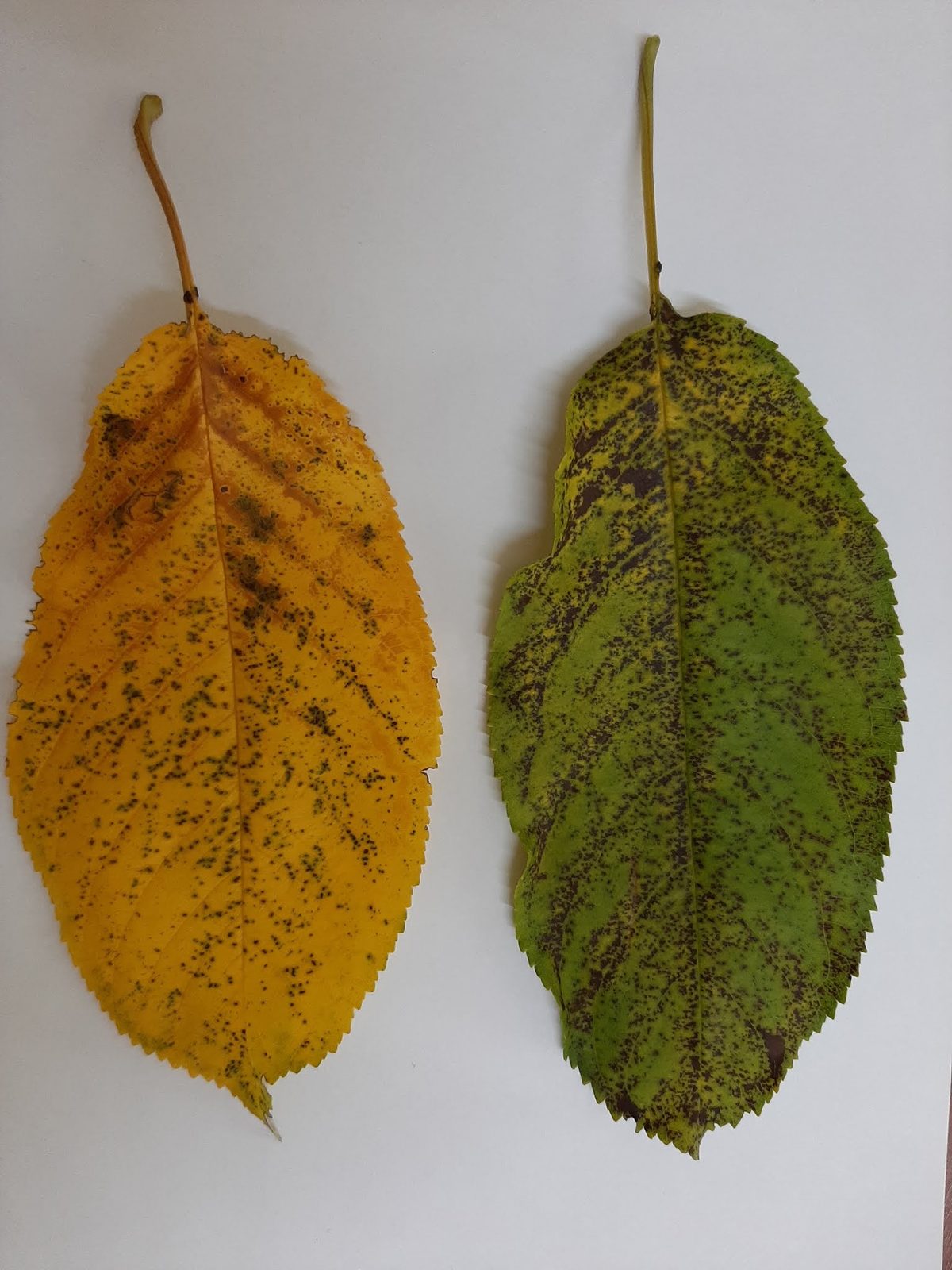
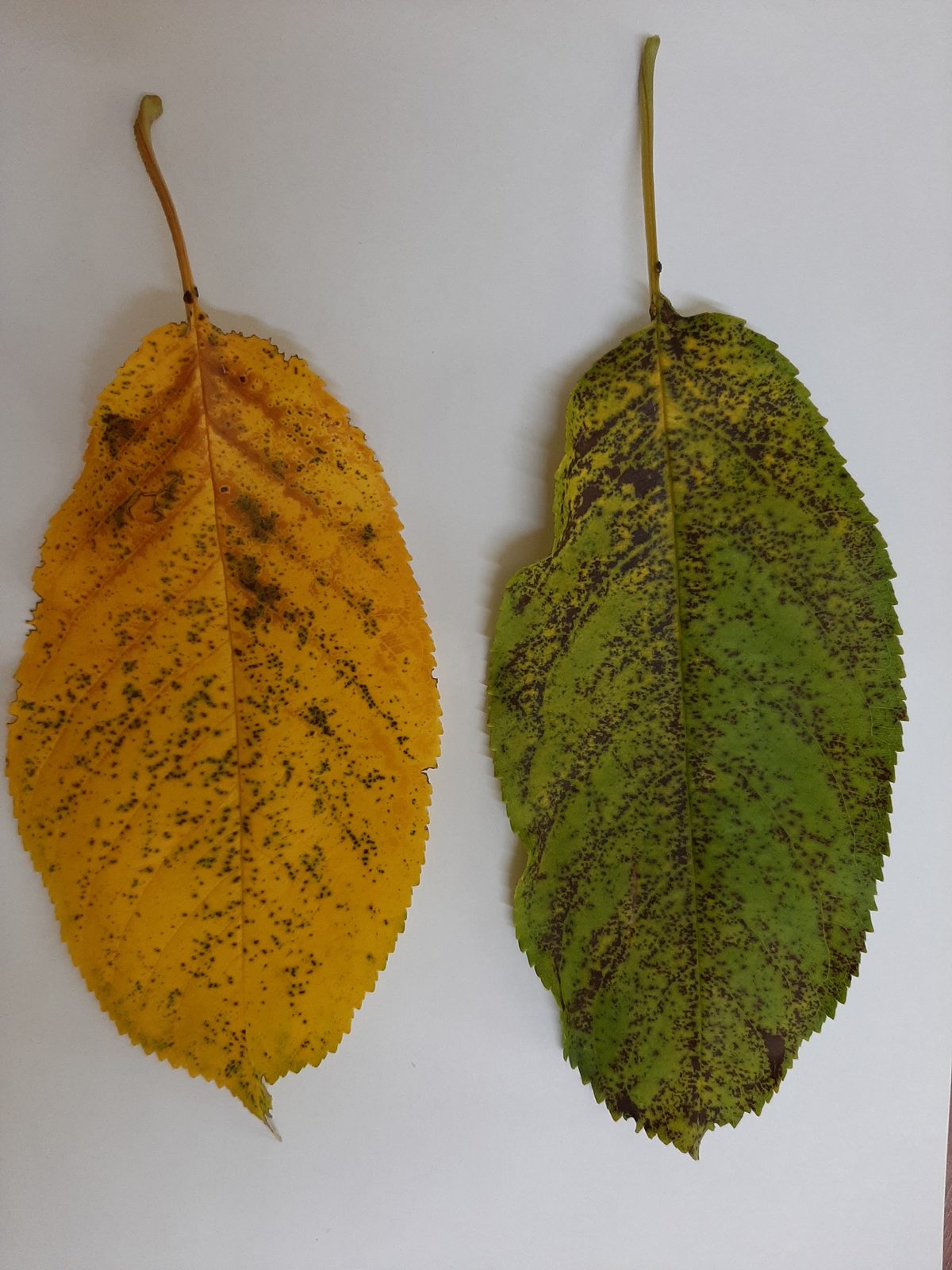
Symptoms appear first on the upper leaf surface, in early summer, as small circular dark spots. The spot enlarges, turns brown or purple, and becomes necrotic from the centre outwards [1].
Through the summer the spots multiply and enlarge slightly. In very heavy infections they coalesce into larger necrotic areas, although most remain discrete.

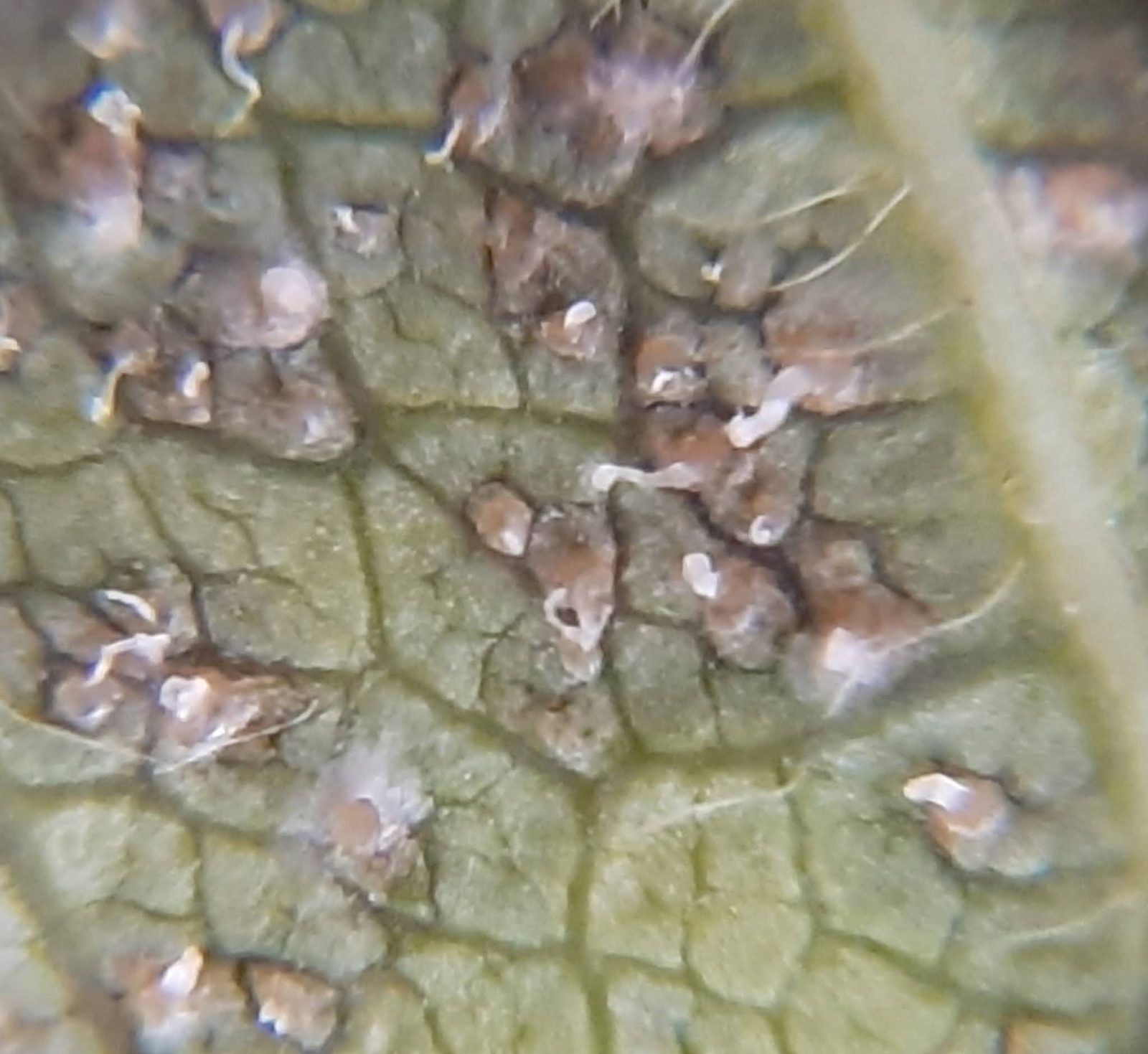

The lower surface is where the diagnosis is decided
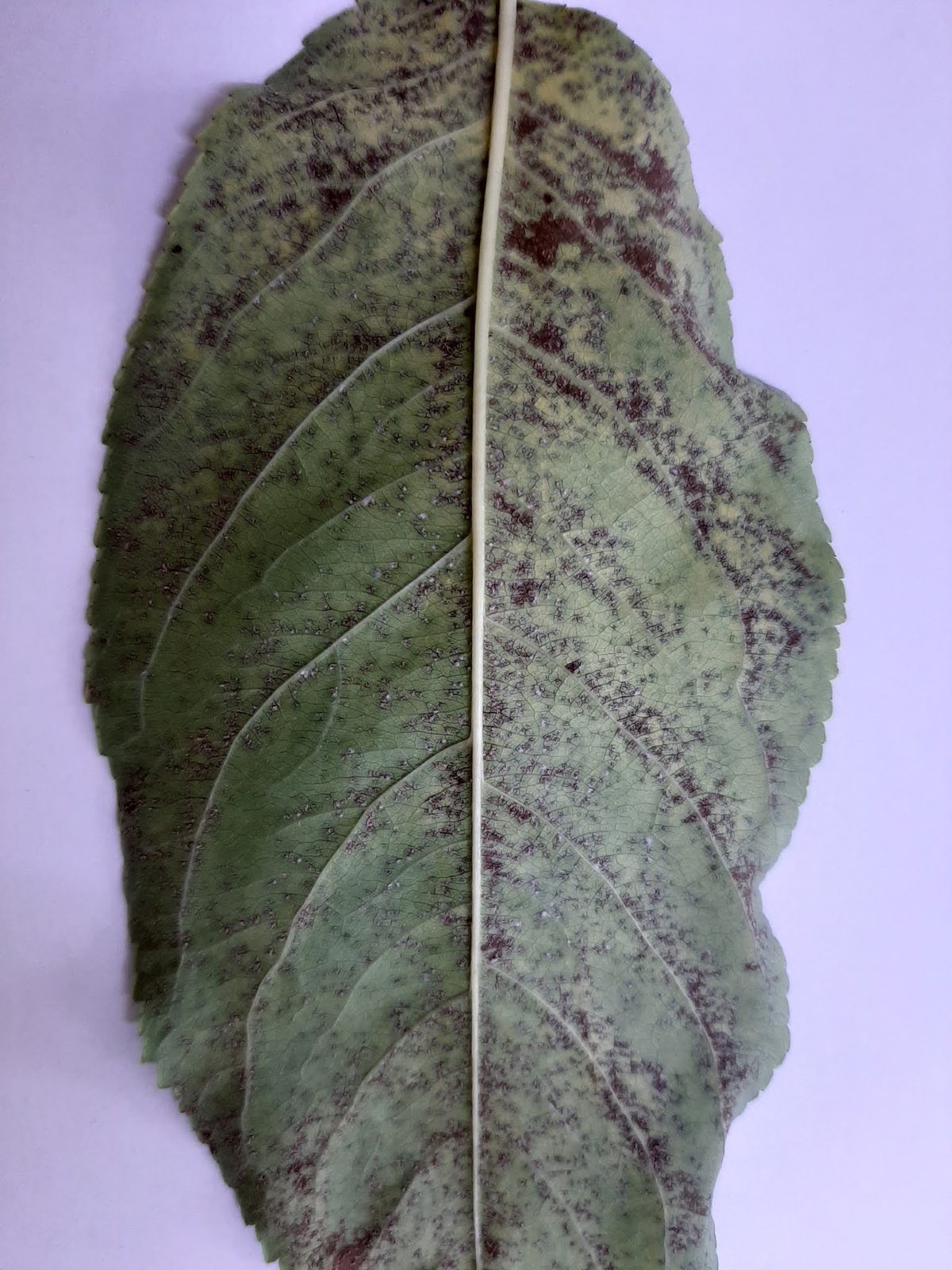
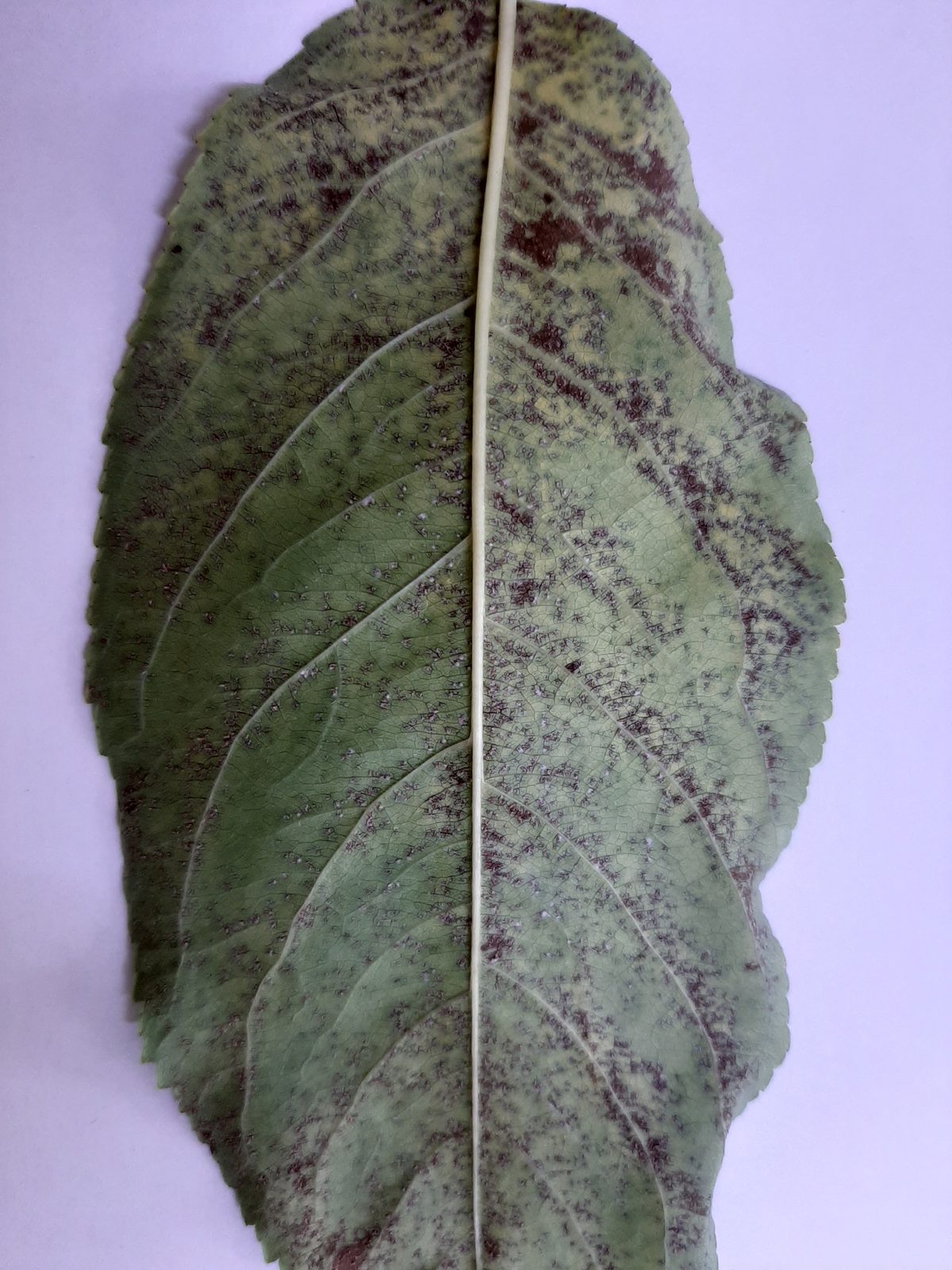
The white conidial masses on the lower surface. They appear towards the end of summer, directly beneath the spots. This is the safest feature, because no other cherry pathogen gives the same picture [3].
The «green island» effect. As the leaf yellows, the area around each spot stays green while the rest of the tissue has already lost its chlorophyll. The leaf comes to look like a yellow map with green islands. This happens because the fungus keeps the tissue around it alive in order to feed, delaying senescence locally.
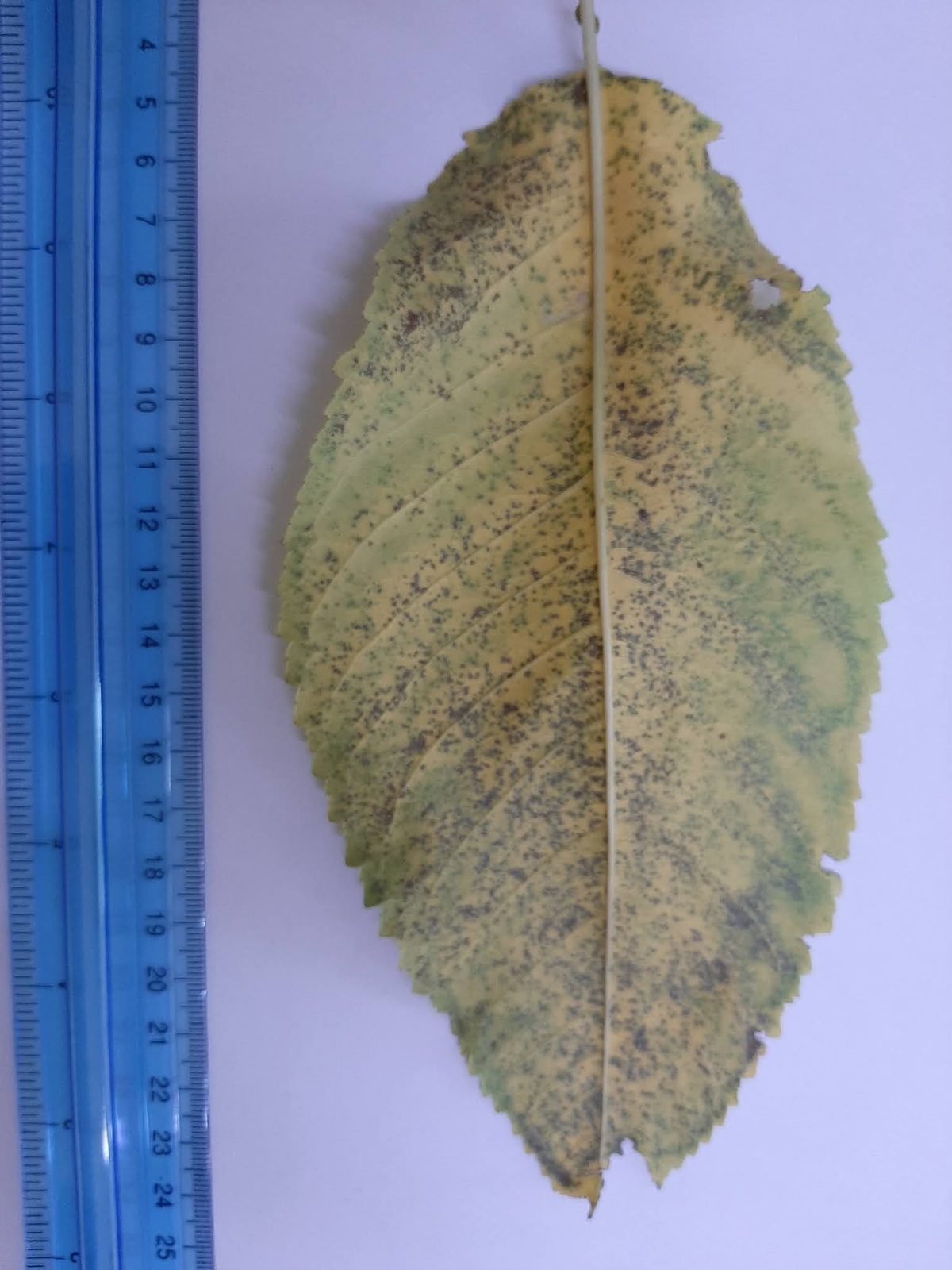
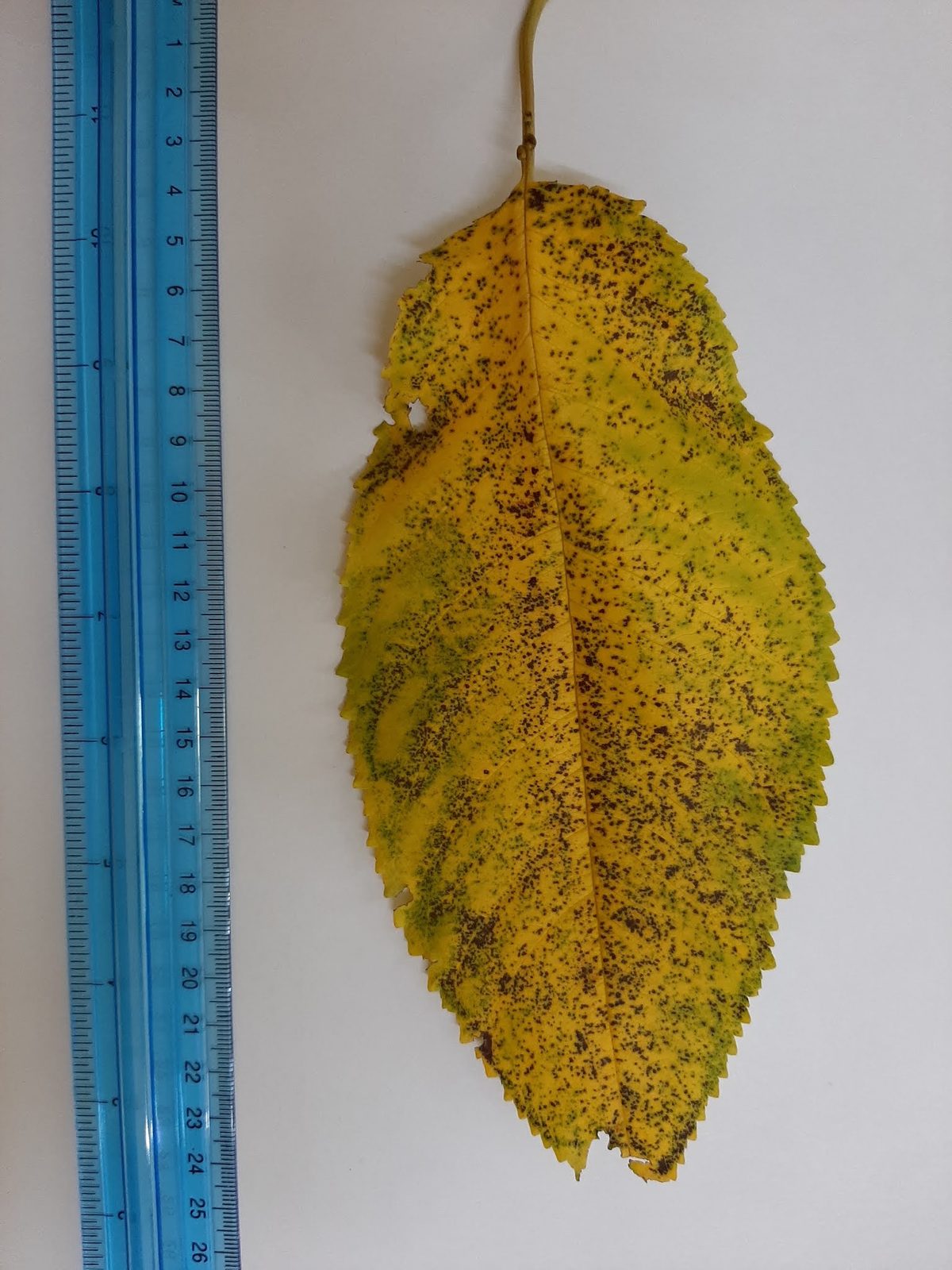
Symptoms peak around the end of August, when most leaves yellow and fall to the ground.
4. Distinguishing it from shot hole
Confusion with shot hole (Wilsonomyces carpophilus) is very common, because both diseases produce leaf spots and both can end in holes.
| Feature | Cherry leaf spot | Shot hole |
|---|---|---|
| Initial lesion size | Very small, under 1 mm, and enlarging slowly | Larger from the outset |
| Lower surface | White to cream conidial masses beneath the spots, at the end of summer | No comparable masses |
| Yellowing | Pronounced, with the «green island» effect around the spots | Less characteristic |
| Fruit infection | Rare | Frequent, with characteristic pitting and gummosis |
| Shoot infection | Not a feature | Frequent, with cankers |
5. Diagnosis under the microscope
When the field picture is not enough, confirmation is easy even with a simple microscope. The shape of the conidium is unambiguous and leaves no room for doubt.
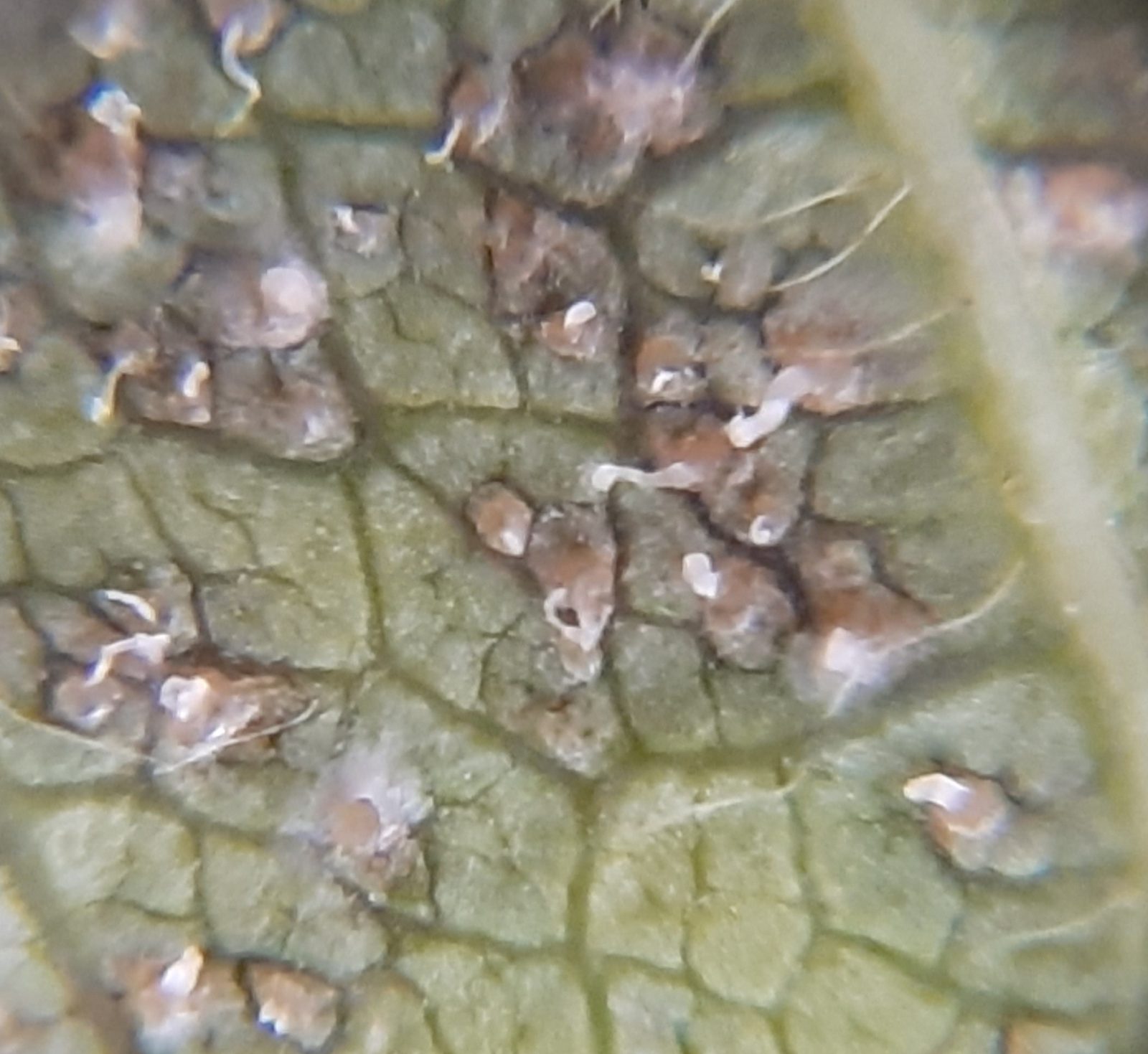
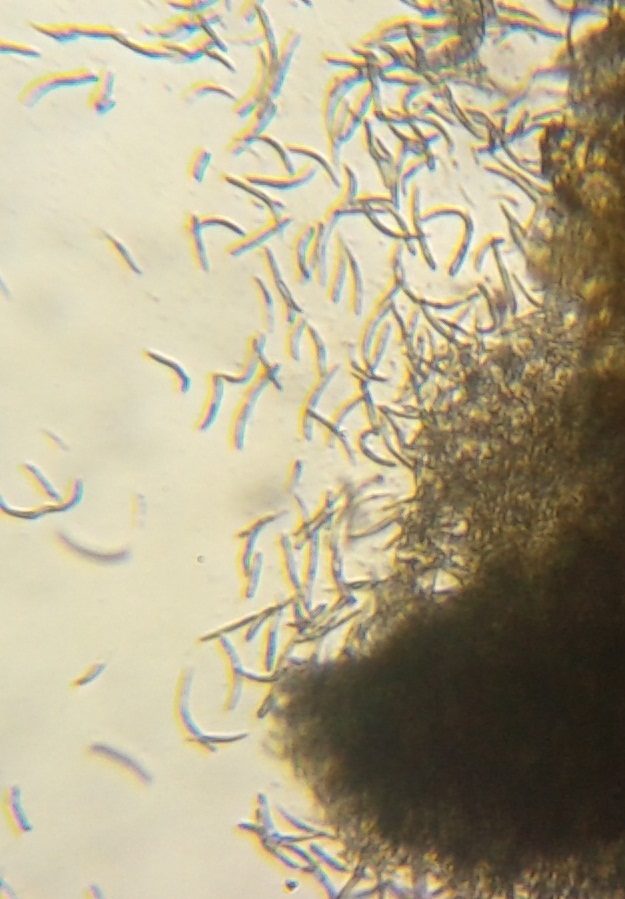
Scrape with a scalpel or needle from the whitish mass on the lower surface, place in a drop of water on a slide, add a coverslip. No staining is needed. The conidia are clearly visible at 100 to 400 times magnification.
The sample is taken from a fresh lesion on a leaf still on the tree and in wet weather. On a dry leaf, or one that has fallen to the ground, the conidia have usually been washed away.
6. The disease cycle
Winter, where the pathogen hides
The fungus overwinters on the fallen infected leaves on the ground. There it forms apothecia, the sexual fruiting structures, inside which the asci and ascospores mature. The fallen leaves are the only significant source of primary inoculum [1]. Next year's inoculum is beneath the trees, not on them, and that is the great opportunity, as will become clear below.
This is where the commonest mistake in managing the disease is made.
Ascospore release begins at petal fall and lasts 6 to 8 weeks [1]. Note the wording: it does not begin six weeks after bloom, it lasts six to eight weeks, starting from petal fall.
The difference matters in practice. Anyone who waits six weeks after bloom before starting has lost the entire primary infection period and is spraying onto leaves that are already infected.
Spring, the primary infections
- Ascospores are forcibly ejected from the apothecia during rain and carried by wind and water to the young leaves. Below 8 °C ejection is minimal [6].
- Infection takes place through the stomata, on the lower leaf surface. This is why covering the lower surface during spraying matters so much.
- Rain, or even a few hours of morning dew, is enough for the spores to germinate and infect, how many hours exactly is shown in the table in the next section.
- Leaves become susceptible as soon as they unfold and stay susceptible through the whole growing season, although susceptibility declines as the leaf matures.
Summer, the secondary infections
As soon as the first spots form, acervuli develop within them and produce conidia. These are splashed by raindrops onto neighbouring leaves and start a new cycle. Every new lesion produces thousands of conidia [1]. The disease is therefore self-feeding through the summer: the more lesions, the more conidia, the faster the spread in every wet period.
The incubation period
From penetration until the spots become visible:
- Five days, under wet conditions and temperatures of 15 to 20 °C
- Up to fifteen days, when rain and dew are absent and the temperature is lower [1]
In practice this means that when the spots become visible, infection took place one to two weeks earlier. Observing symptoms is always information that has arrived late.
7. Exactly when infection occurs
Infection requires continuous leaf wetness. How much wetness depends on temperature. The table below comes from the data of Eisensmith and Jones at Michigan State University and gives the minimum hours of wetness for conidial infection on sour cherry [1].
| Mean temperature | Minimum hours of wetness | Risk assessment |
|---|---|---|
| 8 °C | 28 | Practically impossible |
| 10 °C | 19 | Only in prolonged rain |
| 12 °C | 12 | Possible over a rainy 24 hours |
| 14 °C | 8 | Real |
| 15 °C | 7 | High |
| 16 to 17 °C | 6 | High |
| 17 to 20 °C | 5 | The fungus optimum |
| 21 °C | 6 | High |
| 23 °C | 9 | Moderate |
| 25 °C | 14 | Low |
| 27 °C | 28 | Practically impossible |
Hours are counted from the start of the rain. The values were converted from degrees Fahrenheit. Similar requirements are assumed to apply to ascospores.
The curve is a valley, not a slope. The fungus needs less water at 17 to 20 °C and progressively more the further conditions move from that range, in either direction.
So the dangerous period in our region is not the summer. It is May and June, and again September: that is when temperatures of 15 to 20 °C coincide with rain and long-lasting morning dews. A rainy May night at 18 °C needs only five hours to produce an infection.
Sources: 1
8. Sweet cherry or sour cherry
The difference in susceptibility between the two species is large and often ignored.
| Species | Susceptibility | Typical picture |
|---|---|---|
| Sour cherry (Prunus cerasus) | Very high | Intense yellow chlorosis, early and massive leaf fall, shot-holed leaves, defoliation by midsummer |
| Sweet cherry (Prunus avium) | Substantially lower | Leaves yellow, but their fall is less usual [5] |
There is a genetic dimension as well: resistance to cherry leaf spot is under active study and regions of the sour cherry genome that control it have been identified [7]. When choosing new plantings, the susceptibility of the cultivar and the rootstock is a parameter worth asking the supplier about.
9. Cultural measures, the cheapest tool
Because the whole of the primary inoculum is in the fallen leaves, every action that accelerates their decomposition before bud break directly reduces next year's pressure. It is the cheapest and the most underrated measure.
The leaf litter
| Measure | How it works | Note |
|---|---|---|
| Removal and destruction of the fallen leaves in late autumn | Directly removes the substrate on which the apothecia form | Realistic on small areas and in garden orchards, difficult in commercial plantings [1]. Composting is acceptable, provided the leaves have decomposed completely before spring |
| Shredding the leaves | Speeds up decomposition and reduces the time available for the fungus to complete its apothecia | Done with a flail mower or mulcher, together with the prunings. The smaller the pieces, the faster the soil micro-organisms work |
| Urea on the leaf litter after leaf fall | Speeds decomposition and at the same time changes the composition of the saprophytic micro-organisms, preventing the cycle from being completed | A 5% solution reduced the initial inoculum by 77.2% the following May [8] |
Applying urea to the fallen leaves is not intended to feed the tree. It works through two different mechanisms, both of them against the inoculum.
First, it accelerates decomposition. The nitrogen in the urea feeds the micro-organisms that break the leaf down, lowering the carbon-to-nitrogen ratio of the leaf material. The leaf disintegrates far faster, and with it the substrate on which the fungus would have formed its apothecia.
Second, it acts directly on the pathogen. The work of Green and co-workers showed that urea has a direct effect on Blumeriella jaapii, as well as on the composition of the microbial community developing in the decomposing leaves. The measured result, in Danish work on cherry leaf litter, was a 77.2% reduction in the initial inoculum the following May [8]. The figure refers to a humid oceanic climate, where the fallen leaf decomposes slowly; under Greek conditions decomposition is faster and the margin for improvement is probably smaller, although it has not been measured.
Timing: the application is made after leaf fall, targeting the carpet of leaves on the ground and not the tree. It does not replace the spring treatments, but it reduces the load with which the season begins. The rate and timing are set after assessment by an agronomist, so that there is no conflict with the nutrition programme.
The canopy microclimate
Anything that dries the foliage faster reduces the hours of wetness, and hours of wetness are the variable that determines whether infection occurs:
- Pruning that opens the canopy, so that sun enters and air circulates [1]
- Site selection with sunshine, good air movement and drainage, in new plantings
- Drip irrigation rather than overhead. Overhead irrigation adds hours of wetness exactly where they should not be added
- Irrigating early in the morning rather than in the evening, so that the foliage does not stay wet all night
- Managing the vegetation in the rows, which holds humidity close to the ground
- Removal of wild Prunus from the boundaries of the holding, which act as a permanent inoculum reservoir
Monitoring
A simple temperature and humidity sensor inside the canopy, logging every fifteen minutes, makes it possible to measure the actual hours of wetness per rain event and compare them against the table in section 7. It is the difference between guessing and knowing.
10. The timing of treatments
The programme does not start after harvest
The belief that treatments for cherry leaf spot are made after harvest is very widespread. Postharvest applications are indeed useful, but they are not the backbone of the programme, and on their own they do not protect the crop.
That approach leaves the entire primary infection period uncovered, from petal fall and for the following six to eight weeks. By the time harvest arrives, the infections have already occurred and the spots have simply not yet appeared.
The framework as the international literature defines it
- First application at petal fall. This is the moment ascospore ejection begins and at the same time there are now unfolded, susceptible leaves [3].
- Second application at shuck fall.
- Third application two weeks later.
- Continuation through the summer according to rainfall, since secondary conidial infections continue in every wet period.
- Postharvest applications: useful in wet seasons, aimed at keeping the foliage into late autumn so that the tree's reserves can be filled.
Covering the lower surface. Infection occurs through the stomata, which in deciduous trees are almost exclusively on the lower leaf surface. A spray that wets only the upper side leaves the point of entry uncovered.
Treatments are preventive. Once the spot appears, the fungus is already inside the tissue. Because symptoms take 10 to 15 days to show, by the time they are visible infection occurred one to two weeks earlier. The decision is taken from the wetness events, not from the symptoms, and the treatment precedes the rain rather than following it.
11. Resistance, the great threat
Blumeriella jaapii is one of the pathogens with the worst record of developing fungicide resistance. This is not a theoretical risk but a documented reality with recorded control failures in the field.
- Sterol demethylation inhibitors, FRAC group 3. Practical resistance was documented as early as 2005. In a Michigan orchard, disease control collapsed after eight years of exclusive use of the same group, and in later work resistance was detected in 99.7% of the isolates examined [11].
- Succinate dehydrogenase inhibitors, FRAC group 7. Widespread resistance to three active substances of the same group was recorded in commercial Michigan orchards, in surveys from 2016 to 2019, with practical failures in the field [10].
- FRAC group U12. It remains among the most effective options, yet orchard isolates show reduced sensitivity compared with reference isolates. For that reason it is always recommended in combination and never on its own [3].
The conclusion is clear: exclusive use of a single group leads to failure within a few years, and once efficacy is lost it does not come back.
The resistance management rules
- Alternate or mix FRAC groups, that is different modes of action [3].
- At most two applications from the same group per year.
- Include multi-site products in the programme, which carry a very low resistance risk because they hit many biochemical targets at once.
- Watch for double counting: if a group 7 substance is used for another purpose within the season, it counts towards the two-application limit.
Copper products are indeed effective against the disease, but they are not recommended during the growing season because of phytotoxicity to both fruit and foliage [12].
On the fruit copper causes surface discolouration, brown blotching and roughening of the skin, damage that immediately downgrades market appearance. On the foliage it causes necrotic spots and marginal scorch, which in severe cases lead to leaf fall, that is, to exactly the damage the treatment is meant to prevent.
The risk increases with high temperatures, with humidity that prolongs drying time, and with young tender growth. Copper has its place in the winter programme and during dormancy, not in the treatments from petal fall onwards.
12. Where the authorised products are listed
This article does not recommend products, active substances or rates. Authorisations change constantly and differ by country and by crop. A list published today may be misleading in two or three years, and the reader who finds it later has no way of knowing that it has gone stale.
The plant protection products authorised for cherry in Greece, with their rates, pre-harvest intervals and application stages, are held in the authorisation database of the Greek Ministry of Rural Development and Food, searching by the crop «ΚΕΡΑΣΙΑ» and the target cherry leaf spot [9]. That database is valid for Greece only; in every other country the national authorisations apply. The choice is made in consultation with an agronomist, taking care that the programme meets the FRAC rotation rules described above.
13. The key points
Eight conclusions
- The diagnosis is decided on the lower surface. Whitish masses within the spots mean cherry leaf spot. Under the microscope, hyaline conidia, cylindrical and slightly curved.
- The inoculum overwinters on the fallen leaves, not on the tree. That is also where the cheapest battle is fought.
- Ascospore ejection begins at petal fall and lasts six to eight weeks, it does not begin six weeks after bloom.
- Five hours of wetness at 17 to 20 °C are enough. Above and below that range, the fungus needs far more water.
- The dangerous periods are May, June and September, not the summer.
- When the spots are visible, infection happened one to two weeks earlier. Symptoms are always information that has arrived late.
- 5% urea on the leaf litter after leaf fall reduced the initial inoculum by 77.2% in Danish work [8]; no Greek measurement was found.
- A heavy infection on sweet cherry is a warning bell, because the species is relatively resistant.
- VPD: vapour pressure deficit, the same logic of wetness and microclimate, from the other side
- Cherry rootstocks, a detailed guide
- Plant protection products authorised in Greece, searchable by crop and target, in Greek
14. Sources
The numbers in the text refer to the list below.
- [1] Ellis, M.A. (2016). Cherry Leaf Spot. Ohio State University Extension, PLPATH-FRU-40. The principal source: symptom development and lesion size, identification of the fungus and of the older name Coccomyces hiemalis, overwintering on fallen leaves, apothecium formation at petal fall, ascospore ejection over six to eight weeks, penetration through the stomata of the lower surface, an incubation period of five to fifteen days, and the temperature and wetness-hours table of Eisensmith and Jones.
- [2] Blumeriella jaapii (cherry leaf spot). CABI Compendium. Source for the taxonomic position, the imperfect stage Phloeosporella padi, the host range, and the statement that this is the most important fungal leaf disease of cherry worldwide.
- [3] Cherry (Prunus spp.), Leaf Spot. Pacific Northwest Plant Disease Management Handbook, Oregon State University / Washington State University / University of Idaho. Source for the differential diagnosis from other leaf spots, the timing of treatments from petal fall, the cultural measures and the resistance management rules.
- [4] Cherry Leaf Spot. West Virginia University Extension. Source for the link between early defoliation and poor carbohydrate reserves, inadequate winter preparation, and susceptibility to winter injury and dieback.
- [5] Early Fall Defoliation in Sweet Cherry. Washington State University Tree Fruit. Source for the delay in flower bud acclimation and the reduced bloom and fruit set over two years, and for the substantially lower susceptibility of sweet cherry compared with sour cherry.
- [6] Cherry leaf spot. A consolidated description of the disease cycle. Source for the 16 to 20 °C optimum for dispersal and for the observation that below 8 °C ascospore ejection is minimal.
- [7] Genetic architecture of cherry leaf spot (Blumeriella jaapii) resistance in sour cherry (Prunus cerasus L.). Source for the existence of a genetic basis for resistance and for the identification of genomic regions controlling it.
- [8] Green, H., Bengtsson, M., Duval, X., Pedersen, H.L., Hockenhull, J. & Larsen, J. (2006). Influence of urea on the cherry leaf spot pathogen, Blumeriella jaapii, and on microorganisms in decomposing cherry leaves. Soil Biology and Biochemistry 38:2731-2742. Source for the 77.2% reduction in initial inoculum the following May, from a 5% urea solution applied to the leaf litter after leaf fall, and for the effect on the composition of the saprophytic fungi.
- [9] Plant Protection Products Database, Greek Ministry of Rural Development and Food. The only valid source for which products are permitted on cherry in Greece, at what rate and with what pre-harvest interval.
- [10] Resistance to Boscalid, Fluopyram and Fluxapyroxad in Blumeriella jaapii from Michigan: Molecular Characterization and Assessment of Practical Resistance in Commercial Cherry Orchards. Source for the documented resistance of pathogen populations to three FRAC group 7 active substances and for the practical failures in commercial orchards, over 2016 to 2019.
- [11] Proffer, T.J., Berardi, R., Ma, Z., Nugent, J.E., Ehret, G.R., McManus, P.S., Jones, A.L. & Sundin, G.W. Occurrence, distribution, and PCR-based detection of resistance to sterol demethylation inhibitor fungicides in populations of Blumeriella jaapii in Michigan. Phytopathology. Source for the collapse of control after eight years of exclusive FRAC group 3 use and for the detection of resistance in 99.7% of the isolates examined.
- [12] Integration of copper-based and reduced-risk fungicides for control of Blumeriella jaapii on sour cherry. Plant Disease 91(3):294. Source for the phytotoxicity of copper products during the growing season, on fruit and on foliage.
- Photographs: archive of Pastopoulos Agronomics, from orchards in our region. The foliage photographs were taken in September, the microscope observations in wet mounts from fresh lesions.
This article is general technical information and not individual agronomic advice. It contains no recommendation of plant protection products, commercial formulations or rates. The references to FRAC groups and to copper are made solely in the context of the discussion of resistance and phytotoxicity, and not as a proposal for application.
Plant protection products are used solely on the basis of the national authorisations and the product label [9]. The label always overrides every other source of information.
The urea application referred to concerns the fallen leaf litter after leaf fall and not a spray on the tree. Every treatment is carried out at the user's own responsibility, following on-site assessment by a licensed agronomist. Pastopoulos Agronomics accepts no liability whatsoever for damage or loss of production arising from application of this information without individual technical guidance.
Related articles
The white Mediterranean snail in tree crops
Theba pisana is native to the Mediterranean, not invasive, so there is no eradication programme to wait for. Identification, life cycle, the damage in tree crops, the single approved target in the Greek register, and why the nematode Phasmarhabditis killed the snail only at five times the label rate.
The Meda sweet cherry series
Six club varieties selected for at least 35 to 40 days of post-harvest life, for sea freight to China. Ripening, size, sugars and S genotypes as published, the two pairs that cannot pollinate each other, chilling figures with no model stated, and the fact that every measurement comes from covered plantings outside Greece.
Chilling hours: the three models and when each one tells the truth
Chilling Hours, Utah Chill Units or Dynamic Chill Portions, what each measures, which suits which climate and season, why a chill portion does not convert into hours, and how the divergence between the three is read. The calculation itself lives in a separate tool.