
Foliar sprays: the time of day, the reactions in the tank and the mixing order

Savvas Pastopoulos, Agronomist MSc, Pastopoulos Agronomics, Neos Mylotopos, Pella, Greece
A foliar spray is not decided by the product but by three things that are not printed on the label: the hour it was made, what happened inside the tank, and the order in which the materials went in. The same product, at the same rate, can work or do nothing at all, depending on whether the droplet stayed liquid on the leaf or dried out in ten minutes.
1. What foliar fertilisation does and does not do
Foliar application bypasses the soil. That makes sense precisely when the soil is not working: cold wet soil in spring, hot dry soil in summer, high pH, salinity, and for the elements that are fixed quickly, such as phosphorus, potassium and the trace elements [1].
There are two conditions, however, and they are absolute. First, the element has to be taken up by the leaf. Second, it has to be phloem mobile, otherwise it stays where it landed and never reaches the fruit or the bud [1], which in practice means it helps only locally, in the leaf itself. Calcium is the classic example of an element that is not redistributed, which is why its foliar application is judged on entirely different grounds from that of nitrogen or potassium. The subject is treated separately in the article Calcium and postharvest physiology in sweet cherry.
One quality point concerns urea specifically: biuret, a by-product of manufacture, is phytotoxic to foliage. The trials in the review used low-biuret urea, with up to 0.25% biuret and a nitrogen content of 46% [1]. That figure is a property of the product, stated by the manufacturer, so it is checked before purchase and not at the tank.
Sources: 1
2. Where the nutrient enters the leaf
A leaf is not a sponge. Its surface is covered by the cuticle, a waxy layer that exists precisely to stop water moving, in either direction. Four routes remain: the cuticle itself, its imperfections and fissures, the stomata, and secondarily the trichomes and lenticels [2].
For years the stomata were assumed to take no part, because water does not easily enter so narrow a pore. That has been overturned: the stomatal route can be as important as the cuticular one [3], and uptake is higher from the abaxial surface of the leaf, where most of the stomata are [2].
Leaf age matters as well. As the leaf matures the cuticle thickens and uptake of some elements is compromised [1]. The young foliage of spring does not behave like the hardened foliage of August.
3. The time of day
This is where the main question is answered, and the mechanism is single and simple: the nutrient moves into the leaf only for as long as the droplet stays liquid. Once the water has evaporated, the salt crystallises on the cuticle and transfer stops. Whatever stayed outside, stays outside.
From the moment it leaves the nozzle, the droplet loses water. That has two opposite effects. One is favourable: evaporation raises the concentration of the solution, and since concentration is the driving force of penetration, the rate of uptake rises with it [3]. The other is fatal: if evaporation runs to completion, the droplet dries and uptake falls to zero. The aim is for evaporation to stop short of completion, and what decides that is the relative humidity of the air.
High humidity → slow drying → more time as a liquid droplet → greater uptakeThe recommendation in the literature is clear: the suitable period for foliar feeding is early in the morning or after sunset, when the stomata are fully open [2]. The same work notes that at high relative humidity the drying of the applied solution becomes slow, and hydration also improves cuticular permeability [2]. Humidity therefore works twice in favour of the spray, once on the droplet and once on the barrier itself.
3.1 Why does the night finally give a better result?
The old explanation was that stomata close at night, so a night application loses the stomatal route. The data show something more interesting. In an experiment measuring nocturnal conductance, leaves in aerosol-free air showed a continuous decrease of about 20% through the night, while leaves exposed to ambient aerosols or treated with a phosphorus solution kept a constant or increasing conductance [5]. Electron microscopy found salt crusts on the stomatal rims, and the authors' reading is that soluble nutrients on the leaf surface may stimulate the plant to keep stomata open at night [5].
In plain words: the fertiliser left on the leaf, provided it stays liquid, appears to maintain the very route through which it will pass.
3.2 The reasons for avoiding the middle of the day
Midday in a Greek summer brings four disadvantages together, and none of them is fixed by a higher rate.
- Humidity is at its daily minimum. The droplet dries before it can deliver.
- Canopy temperature is at its maximum. A concentrated solution on a hot leaf is the classic recipe for scorch.
- Stomata close under water stress. One of the two routes of entry is restricted.
- Spray quality drops. Fine droplets evaporate in the air and drift before they ever reach a leaf.
Spraying trees carrying fruit can cause marking of the fruit and scorching of the foliage. The aim, as the literature puts it, is the rate that corrects or prevents the deficiency without causing leaf scorch [3], and phytotoxicity arises from the high osmotic potential and pH of the solution, which affect photosynthesis and stomatal opening [6].
A prior trial on a limited number of trees is required, with the same product and the same rate, and a wait of 5 to 7 days before general application. Spraying is done in the late afternoon or early in the morning, never in a heatwave and never on foliage under water stress.
4. The point of deliquescence
The time of day acquires a number through a concept called the point of deliquescence. It is the relative humidity at which a hygroscopic material can sorb enough water to dissolve and form an aqueous solution [4]. Below that value the salt dries and crystallises. Above it, it stays liquid.
Every salt has its own value, and the differences are enormous.
| Salt | Point of deliquescence | What it means in the field |
|---|---|---|
| Calcium chloride, CaCl₂ | 32% [4] | Stays liquid under almost any Greek condition, even at midday |
| Ammonium nitrate, NH₄NO₃ | 61% [3] | Will not dry out completely as long as humidity stays above 61% |
| Ammonium sulphate, (NH₄)₂SO₄ | 80% [3] | Dries at any humidity below 80%, that is on almost any daytime hour |
| Potassium sulphate, K₂SO₄ | 97% [4] | Stays liquid only near saturation, in practice only in dew |
| Sodium chloride, NaCl, for comparison | 75% [4] | Common table salt, which goes damp on a humid day |
The values in the table are physico-chemical constants of the salts and do not depend on the country. What differs in Greece is the relative humidity of the air, which in the lowlands of Macedonia falls at midday far lower than in the countries where the experiments were run. The practical consequence is that the Greek application window is narrower, not wider.
5. What happens inside the tank
A spray liquid is not a mixture, it is a solution, and inside a solution ions react. Two reactions recur constantly in practice, and both produce a precipitate that settles out, blocks the filters and removes the nutrient from solution.
Sources containing calcium, phosphorus and sulphate should not be mixed together [7]. Two insoluble precipitates form:
Calcium phosphate, from mixing calcium nitrate with phosphorus-containing materials. Calcium sulphate, that is gypsum, from mixing calcium nitrate with magnesium sulphate or potassium sulphate [7].
The solution in fertigation systems is two separate concentrate tanks: calcium, iron and half of the potassium nitrate in one, the rest of the macronutrients and micronutrients in the other [7]. In a spray tank, where there is only one vessel, the same logic simply means that these materials do not go into the same spray.
5.1 The role of pH
The pH of the spray solution changes three things at once: whether the nutrient stays in solution, how easily it crosses the cuticle, and whether the chelates hold. The values measured for maximum uptake are specific, and low.
| What is sprayed | Optimum pH | Where it was measured |
|---|---|---|
| Urea | 5.4 to 6.6 [6] | Apple leaves |
| Urea | 5.5 to 6.0 [6] | Citrus |
| Iron solutions | around 5 [6] | Iron-containing products generally |
| Calcium | 3.3 to 5.2 [6] | Apple leaves |
Urea, and why two values are given. On apple leaves the optimum was measured at 5.4 to 6.6 and on citrus at 5.5 to 6.0 [6]. The two ranges overlap almost entirely, so the practical reading is simple, a mildly acid tank around 5.5 to 6.0 serves both. What matters is not the overlap but the difference, because it shows that the optimum is not a constant of the element, it is a pairing of element and species. For a crop with no measured value, the span of those two rows is the starting point and not the answer.
Iron, where pH decides two things at once. The optimum for iron solutions is around 5 [6]. Here the value does not concern uptake alone, it also concerns whether the iron is still in a soluble form by the time it leaves the nozzle. That is why iron is the element for which adjusting pH pays back most, and at the same time the one on which the calcareous water of section 5.2 does the most damage, since it raises the pH before anything else has a chance to happen.
Calcium, the lowest and the widest range. The optimum was measured at 3.3 to 5.2 [6], clearly lower than all the rest. That range coincides with the one in which calcium stays in solution and does not precipitate with phosphates and sulphates, as described above [7]. In other words, with calcium an acid adjustment does not only serve penetration, it also keeps the element in solution. To that is added the constraint of section 1, that calcium is not redistributed in the phloem, so it benefits only the tissue it landed on.
No single value serves every element. The four rows of the table span from 3.3 to 6.6. There is no one tank pH that is optimal for everything, and every mixture is a compromise. That is one more reason, beyond the precipitates, why many materials in one pass work less well than few.
Where acidification stops. There is a lower limit too, and the chelates set it. EDDHA and HBED are stable from pH 3.5 upward [7], so for an iron spray the working window runs from about 3.5 to 5. Below that the molecule holding the metal begins to break down itself, and the acidification turns against its own purpose.
The same source adds the caveat, which is worth as much as the values: pH alone is not that predictive of penetration, because it depends on the nutrient and on the plant species [6]. Adjusting pH is a necessary condition, not a sufficient one.
With iron chelates, pH decides whether the molecule holds the metal at all. EDDHA is stable from pH 3.5 to 9.0 and HBED from 3.5 to 12.0 [7], while the weaker chelates break down much earlier. The subject is developed in the article Iron chelates: which form at which pH.
5.2 Water is not a neutral ingredient
The water in the tank brings its own chemistry. Fertilisers influence the pH of the mixture, and hard water makes mixing more difficult [8]. In calcareous water, which is the rule in Macedonia, the calcium and magnesium of the water itself take part in the precipitation reactions of the previous paragraph without any calcium having been added by the grower.
6. Mixing order
The order is not a formality. Each formulation type needs a different time and different conditions to disperse, and when it goes in out of sequence it never disperses properly.
In sequence, with continuous agitation
- Water. The tank is filled half full, or three quarters when the carrier is a liquid fertiliser [9].
- Agitation begins and is maintained throughout [9].
- Water conditioners, antifoams and compatibility agents, before the pesticides [9].
- Water-soluble bags, allowed to dissolve completely before anything else follows [9].
- Wettable powders and water-dispersible granules [9][8].
- Liquid flowables, the SC, FL, SE, CS and EW formulations [9].
- Emulsifiable concentrates, the EC and OD formulations [9].
- Solutions, liquid fertilisers and micronutrients [9].
- Activator surfactants after the pesticides, and drift retardants last [9].
The mnemonic in circulation for the core of this sequence is W-A-L-E-S: wettable powders, agitate and adjuvants, liquids, emulsifiable concentrates, surfactants [8].
For the plant protection products that go into the same spray solution, what applies is written on the label and in the authorisation in force. In Greece that is checked in the Greek plant protection approvals database, which is updated and changes. Greek approvals are valid in Greece only.
7. The points that remain open
Three gaps were found while this text was written, and they are recorded as they are instead of being filled with foreign figures.
- No Greek recommendation on the hours of the day was found. The official Greek agricultural warning bulletins that were checked give weather conditions, that is dry weather and a minimum temperature for winter applications, but set no hours of the day [10]. The application window given here follows from the mechanism, not from a national instruction.
- There are no published points of deliquescence for compound commercial products, which contain mixtures of salts, adjuvants and often hygroscopic additives. The values in the table are for pure salts.
- The behaviour of mixtures cannot be predicted theoretically. The sources themselves accept that the performance of a combination cannot be predicted without empirical testing [6]. That is why every new combination is tried first on a small scale, before it goes across the whole holding.
8. Sources
The numbers in the text refer to the list below.
- [1] Lovatt, C. J. (2013). Properly timing foliar-applied fertilizers increases efficacy: a review and update on timing foliar nutrient applications to citrus and avocado. HortTechnology 23(5):536–541. Source for: the soil conditions under which foliar application is worthwhile; the requirement that the element be taken up by the leaf and be phloem mobile; the low-biuret urea, up to 0.25% biuret, used in the trials; the fact that the thick waxy cuticle of mature leaves compromises uptake of some elements. Full text used. The work covers citrus and avocado in California, and its rates do not transfer.
- [2] Ishfaq, M., Kiran, A., Rehman, H. et al. (2022). Foliar nutrition: potential and challenges under multifaceted agriculture. Environmental and Experimental Botany, doi:10.1016/j.envexpbot.2022.104909. Source for: the routes of entry, that is the cuticle, its imperfections and fissures, the stomata, the trichomes and the lenticels; the higher efficacy of the abaxial leaf surface; the recommendation to apply early in the morning or after sunset, when the stomata are fully open; the fact that at high relative humidity drying is slow and hydration improves cuticular permeability. The verbatim extracts as quoted on the ScienceDirect topic page were used, not the full text.
- [3] Eichert, T. (2013). Foliar nutrient uptake, of myths and legends. Proc. VIIth International Symposium on Mineral Nutrition of Fruit Crops, Acta Horticulturae 984, ISHS. Source for: ammonium nitrate not drying out completely as long as relative humidity stays above 61% and ammonium sulphate drying below 80%; evaporation raising solute concentration and with it the driving force of penetration; the stomatal route being potentially as important as the cuticular one; the statement that the aim is the dose that corrects without causing leaf scorch. Full text used.
- [4] Tredenick, E. C., Stuart-Williams, H. and Enge, T. G. (2022). Materials on plant leaf surfaces are deliquescent in a variety of environments. Frontiers in Plant Science, doi:10.3389/fpls.2022.722710. Source for: the definition of the point of deliquescence as the relative humidity at which a hygroscopic material sorbs enough water to dissolve; the values 32% for calcium chloride, 75% for sodium chloride and 97% for potassium sulphate; the fact that humidity in the boundary layer above the leaf may exceed the ambient value by up to 35 points. Full text used, open access.
- [5] Vega, C., Chi, C.-J. E., Fernández, V. and Burkhardt, J. (2023). Nocturnal transpiration may be associated with foliar nutrient uptake. Plants 12(3):531, doi:10.3390/plants12030531. Source for: the decrease of about 20% in nocturnal stomatal conductance in aerosol-free leaves, against constant or increasing conductance in leaves exposed to aerosols or treated with a phosphorus solution; the salt crusts on stomatal rims; the interpretation that soluble nutrients on the leaf surface may keep stomata open at night. Full text used, open access.
- [6] Fernández, V., Sotiropoulos, T. and Brown, P. H. (2013). Physico-chemical properties of spray solutions, chapter 3 of Foliar Fertilization: Scientific Principles and Field Practices. International Fertilizer Industry Association, Paris. Source for: the optimum pH of 5.4 to 6.6 for urea on apple and 5.5 to 6.0 on citrus, around 5 for iron solutions and 3.3 to 5.2 for calcium on apple; the explicit caveat that pH alone is not that predictive of penetration; the surface tension of 20 to 25 mN/m of organosilicone surfactants; phytotoxicity from high osmotic potential and pH; the statement that the performance of a combination cannot be predicted theoretically without empirical testing. Full text of the chapter used.
- [7] Langenhoven, P. (2017). Taking care of plant nutrition in your high tunnel: fertilizer and nutrient solution mixing tips. Vegetable Crops Hotline, Purdue University Extension, 22 June 2017. Source for: the rule that calcium, phosphorus and sulphate sources should not be mixed together; the formation of calcium phosphate from calcium nitrate with phosphorus-containing materials and of calcium sulphate from calcium nitrate with magnesium sulphate or potassium sulphate; the two-tank system; the stability ranges of the chelates, EDDHA 3.5 to 9.0 and HBED 3.5 to 12.0. Full text used. It covers greenhouse fertigation, and is carried over here only as solution chemistry.
- [8] University of Arkansas Division of Agriculture, Cooperative Extension Service. Assessing pesticide-fertilizer compatibility, the jar test, FSA-2166. Source for: the W-A-L-E-S sequence; the position of wettable powders and water-dispersible granules within it; the observations that fertilisers influence the pH of the mixture and that hard water makes mixing more difficult. Full text used.
- [9] Sprayers101, University of Guelph. Sprayer loading and the jar test. Source for: the expanded loading order of the tank, from water and agitation through to drift retardants; filling half full, or three quarters when the carrier is a liquid fertiliser; water conditioners before the pesticides and activator surfactants after. Full text used.
- [10] Hellenic Ministry of Rural Development and Food, Regional Centre of Plant Protection, Quality and Phytosanitary Control of Volos. Agricultural Warnings, Stone Fruit number 1, 7 February 2025 (in Greek). Source for: the only explicit Greek recommendation found on application conditions, namely dry weather and a minimum temperature for winter applications, and for the finding that the bulletin sets no hours of the day. Full text of the bulletin used.
This text describes mechanisms and methods. It is not a recommendation to apply anything, it proposes no rates and it proposes no combinations. The figures come from published work carried out abroad, on other species and under conditions other than Greek ones, and are given as indicative.
Every foliar spray carries a risk of marking the fruit and scorching the foliage. A prior trial on a limited number of trees is required, with the same product and the same rate, and a wait of 5 to 7 days before general application. Spraying is done in the late afternoon or early in the morning, never in a heatwave and never on foliage under water stress.
Plant protection products are used solely on the basis of the authorisations of the Hellenic Ministry of Rural Development and Food and the instructions on the label. Those authorisations are valid in Greece only and do not apply in any other country. Correct mixing replaces neither the label nor the authorisation in force.
Every intervention is carried out under the responsibility of the user, after an on-site assessment by a licensed agronomist. Pastopoulos Agronomics accepts no liability for the use of the information in this article.
Related articles
Attapulgite: what it actually does to soil, at what rate, and what its use costs
A Greek mineral with a specific surface area of 220 m2/g and an exchange capacity of 57 meq/100 g. What the field trials on sandy soils showed, why the rate threshold is 6,000 kg per hectare, what the IARC fibre classification means, which particle grade for which use, and why the rise in pH is the main argument against it on Mediterranean calcareous soils.

Boron in olive: foliar and soil application, rates and the toxicity threshold
The nutrient with the narrowest safety margin: 35 ppm separate sufficiency from toxicity. How boron moves inside the olive through mannitol, what the July leaf analysis shows, foliar and soil rates worked out per hectare, the trials that found no benefit, and a tool that separates deficiency from toxicity.
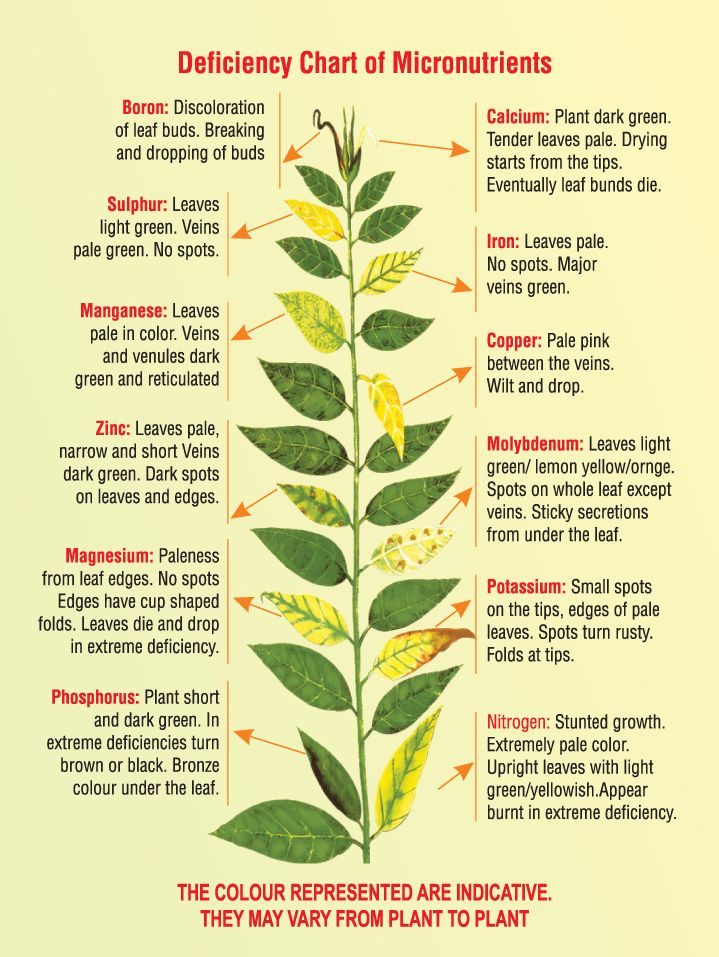
Nutrient deficiencies: what leaves show, with a symptom ranking tool
A yellow leaf does not say which element is missing. The mobility rule, the three exceptions that break it in fruit trees, a tool that ranks hypotheses from the position and form of the symptom, and why for iron the leaf analysis does not work.