
The right time to feed bearing trees
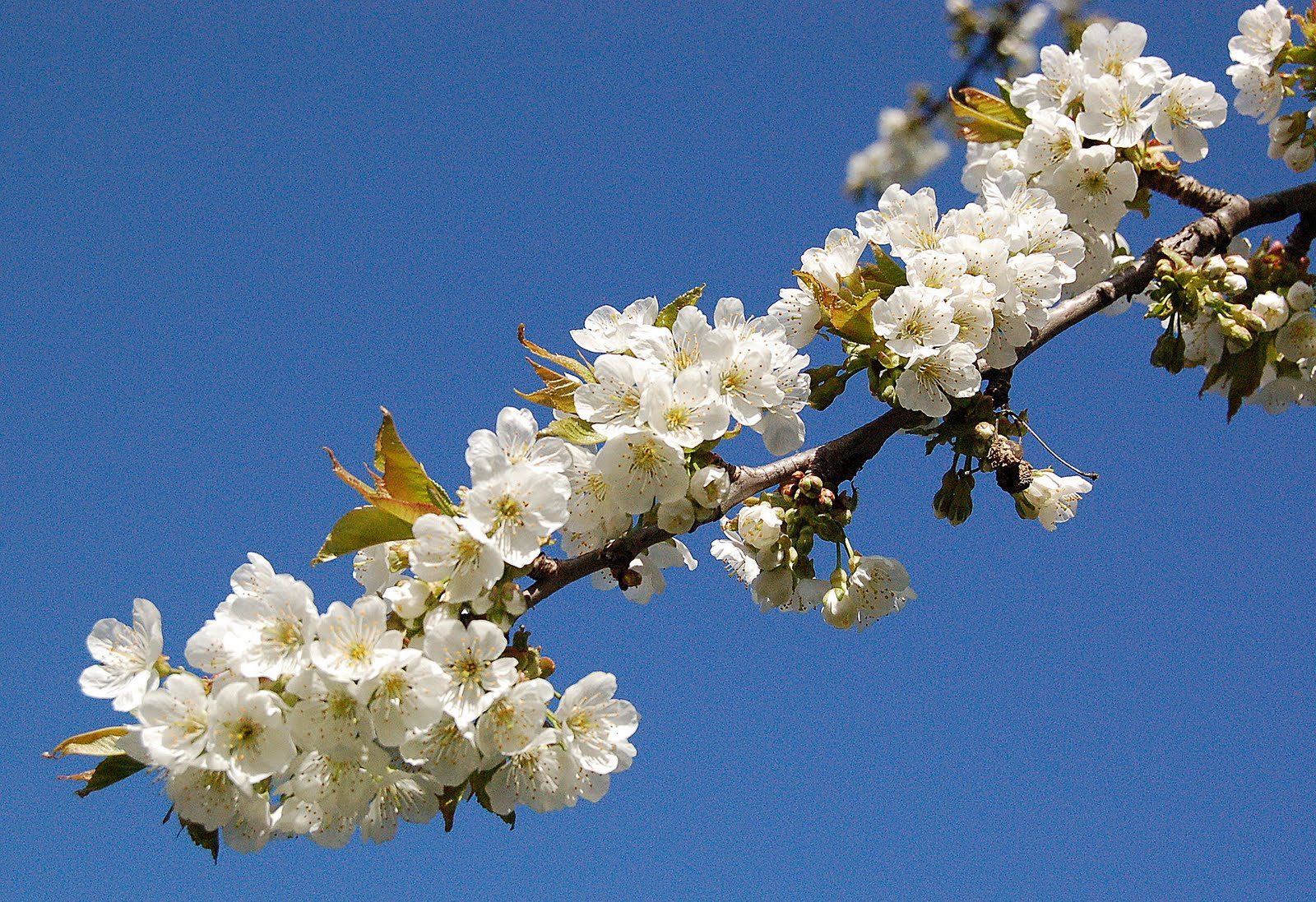
That question is hard to answer with a single date or a single rate. Every species has its own timing and its own requirement for each element. Earlier articles set out the methods and the requirements for particular crops. A nutrition specialist has to weigh up the soil type, the degree of leaching, the demand of the tree in both timing and quantity, the expected yield and the degree to which certain elements become fixed — and only after solving that awkward equation decide on the rate and the timing for each element.
What is certainly wrong is the pattern of recent years, with applications made in December and January. First, the nitrogen supplied in most compound fertilisers will leach into the deeper soil layers with the winter and spring rains; the first uptake of nitrogen from the soil normally takes place in late March (peach, apricot, plum) or mid-April (kiwifruit, walnut, apple, cherry). Second, outside the pH 6–7 range phosphorus is almost completely immobile in the soil and is fixed there in forms the plant cannot use. And finally, potassium becomes bound to the soil colloids within the first seven weeks after application, holding an equilibrium with the soil solution. In practice, apart from nitrogen the leaching losses of the other elements are negligible (potassium does leach on sandy soils); they are stored in the soil, but in forms not available to the plant. As the plant takes elements out of the soil solution, partially available reserves are released to restore that equilibrium.
Most bearing trees have a substantial requirement for nitrogen, potassium and calcium, a smaller one for phosphorus, sulphur and magnesium, and they need the micronutrients to be present. At bud break and in the first weeks that follow, nitrogen, phosphorus and calcium are essential; as the fruit ripens the potassium requirement rises; and finally, after harvest, the tree lays down the reserves it will need the following year — a process for which nitrogen is again essential.
In conclusion, as a general rule the base dressing should be applied in late winter or early spring. Having estimated the expected crop, 50–70% of the nitrogen should go on in the base dressing (followed by irrigation) and the remainder after harvest. Phosphorus should be applied in the base dressing or, where the irrigation system allows fertigation, before bloom (for example as 12-61-0). Potassium should be split into two or three applications: 40% in the base dressing and the rest about a month before harvest, in soluble crystalline form through the irrigation system. The base dressing charges the soil's potassium batteries, while the fertigations act as a top-up of potassium in the soil solution during the period of peak demand, until they too become fixed.
Feeding trees in early winter is therefore money thrown away. The one exception is severe soil potassium deficiency, below 80 mg/kg; in that case generous quantities of potassium should go on early in the winter so that there is time for them to be incorporated. Superphosphate may likewise be applied and incorporated into the soil before planting.
None of this will work properly, of course, in a field with low organic matter and a low cation exchange capacity. The only route to sustainable production is keeping the soil in good condition. Applying well-rotted manure or crop residues, and organic matter in the form of leonardite, is necessary on most farms in this country. Picture a factory whose machinery is never serviced and is left to rust: the same thing happens to your soil.
Related articles
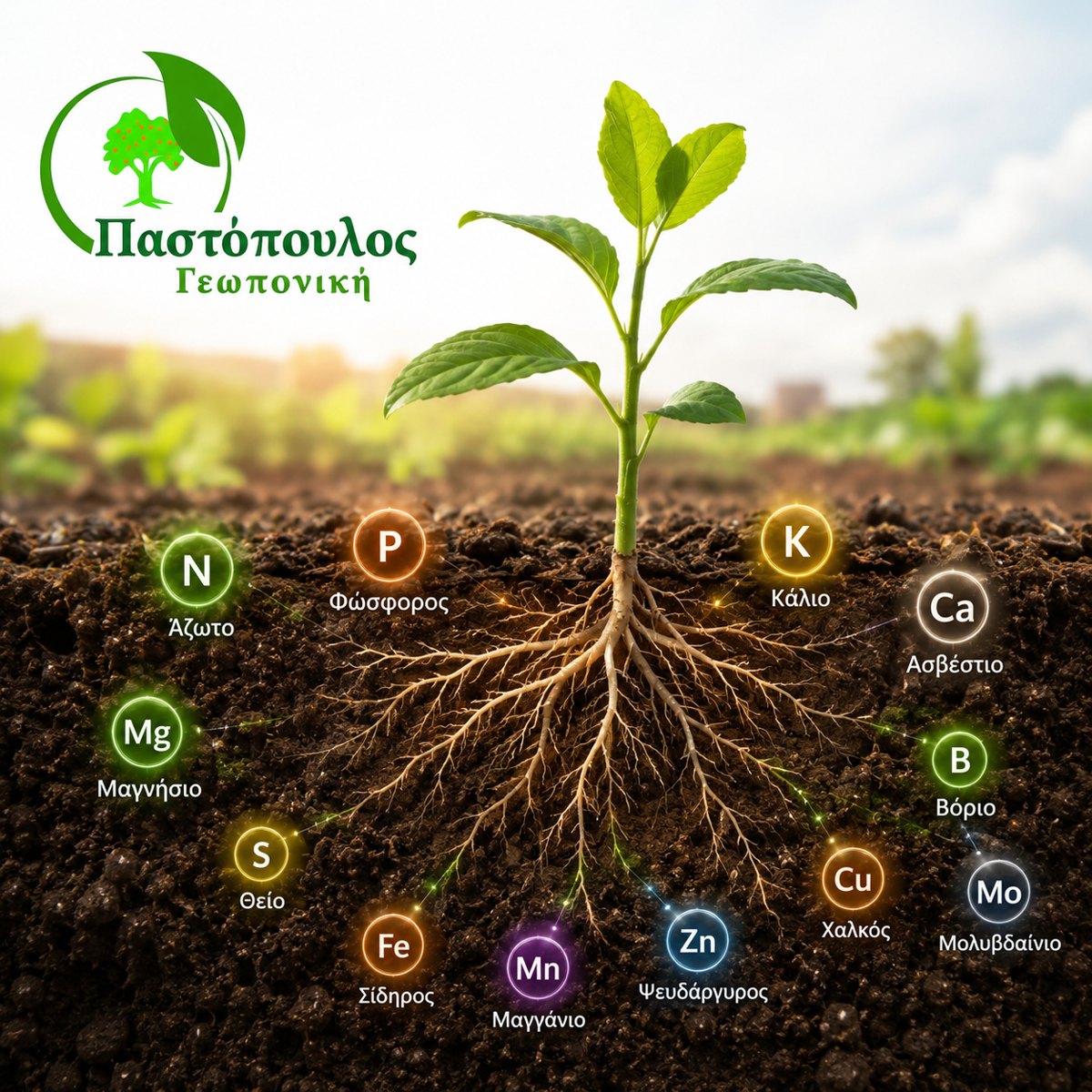
Nutrient antagonisms and synergies — with a per-element tool
The arrow diagram in every fertiliser leaflet does not stand up scientifically. The antagonisms are real, but they act on two separate levels — in the soil and inside the plant — and the same element can be antagonistic on one and synergistic on the other. With a tool showing the documented relationships of each element.
Zeolite in agriculture: what is documented and what is not
It is a cation exchanger — it holds ammonium and potassium, not nitrate. The rates that work are tens of tonnes per hectare, not hundreds of kilos. And erionite is a Group 1 carcinogen.
Leonardite in agriculture: properties, rates and what the law says
Leonardite is oxidised lignite with up to 85% humic acids — but pH below 3, up to 6% sulphur and almost no phosphorus. What the analyses and meta-analyses show, where it delivers and where it does not, and what Regulation (EU) 2019/1009 and the organic farming rules require.