Phytoplasmas are prokaryotic, single-celled plant pathogens. They occur
worldwide and cause a wide range of plant diseases and very large economic losses in cropping (X-disease, ESFY, Candidatus Phytoplasma spp.). Phytoplasmas, like mycoplasmas, belong to the class Mollicutes and lack a cell wall. That single difference separates them from other prokaryotes such as the bacteria. Their cytoplasm is bounded by a cell membrane alone.
Phytoplasmas colonise the phloem. The symptoms they cause are varied and can be grouped into stunting, proliferation and chlorosis. According to Tzamos, the principal symptoms are:
1. Yellowing (icterus)
2. Little leaf
3. Phyllody
4. Shortened internodes
5. Stunting of the plant
6. Enlarged buds
7. Excessive shoot proliferation, giving the «witches' broom» symptom
8. Virescence, or greening of the flowers
9. Reduced yield
10. Premature ageing and death of the plant.
As noted above they colonise the phloem, and they are transmitted mainly by insects of the families Cicadellidae, Cixiidae and Psyllidae (Tzamos, E., 2004. Plant Pathology. Stamoulis, Athens). They can also be carried in planting material, which makes buying clean stock a precondition for the success of an orchard.
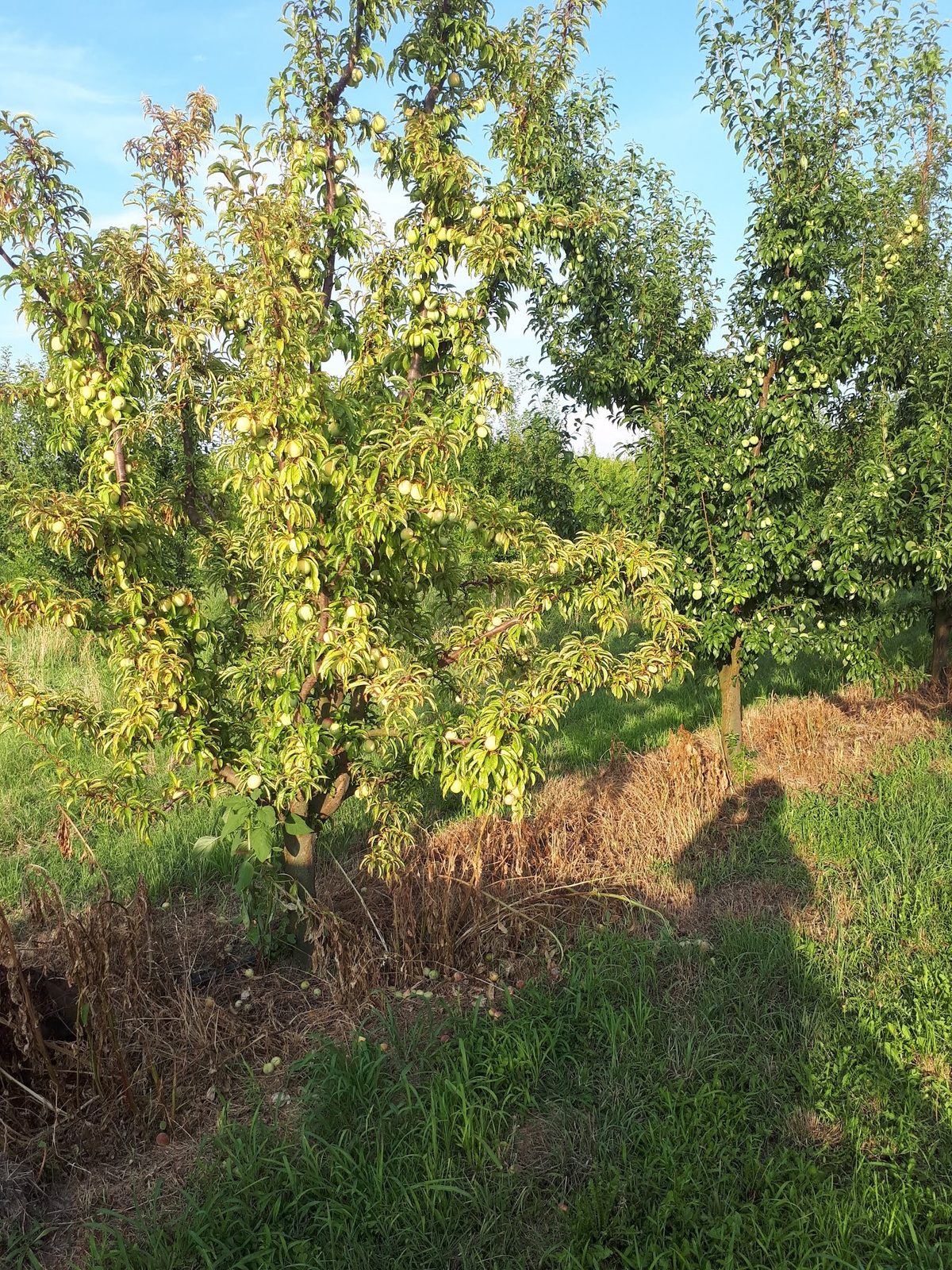
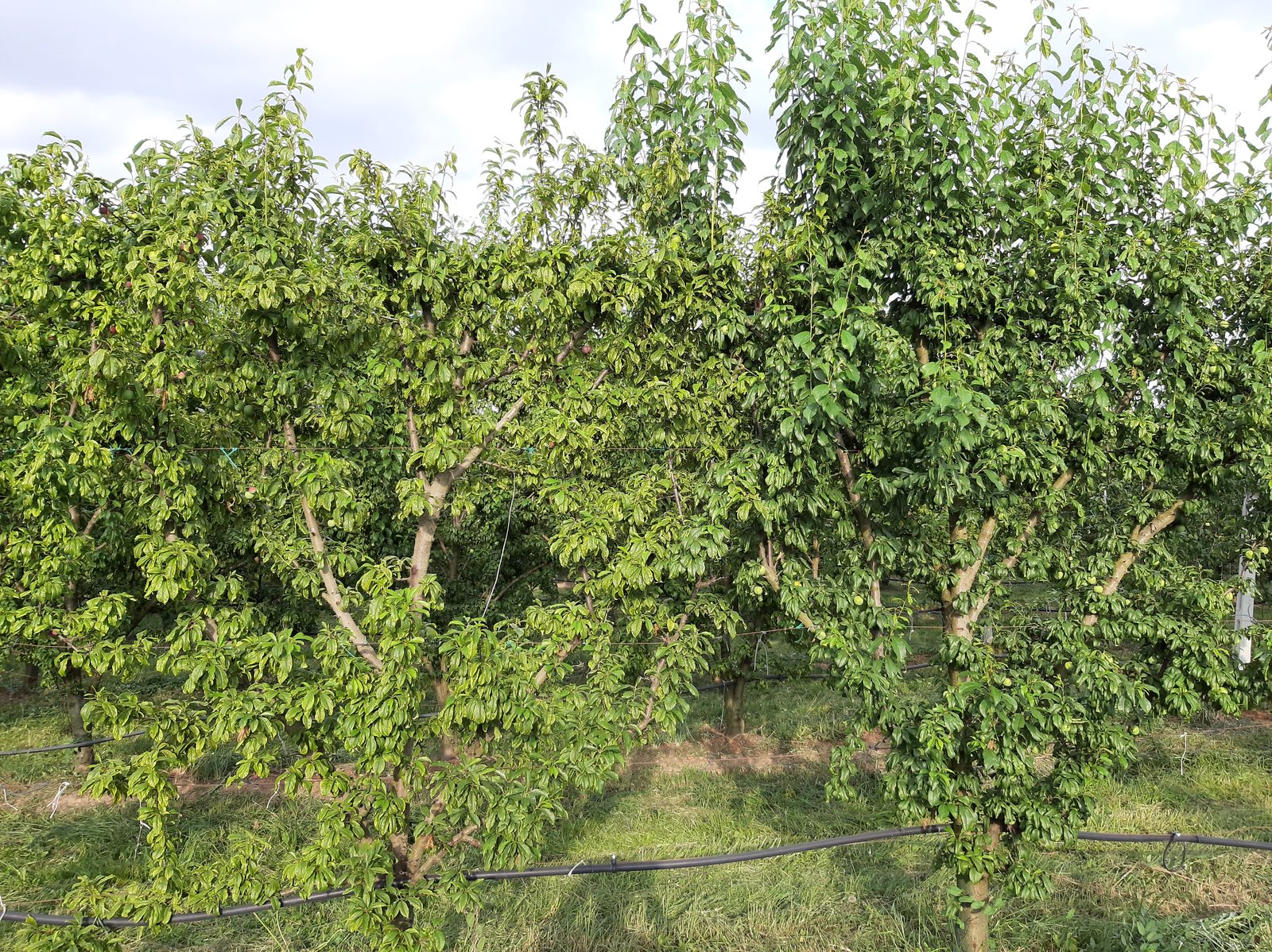
Figure. On the left, a tree infected with the disease; on the right, a healthy tree.
In Greece these diseases are common and cause heavy losses in fruit orchards. The main pathogen is 'Candidatus Phytoplasma prunorum'—the agent of European Stone Fruit Yellows (ESFY)—with the psyllid Cacopsylla pruni as its main vector. All stone fruit species are susceptible. The problems seen most often are in plum, apricot and peach. As the photograph shows, the tree on the left is infected. Affected trees are stunted and chlorotic and usually break dormancy early in winter, flowering in February. In young trees whole plants may die back. Discolouration of the xylem vessels may also be seen.
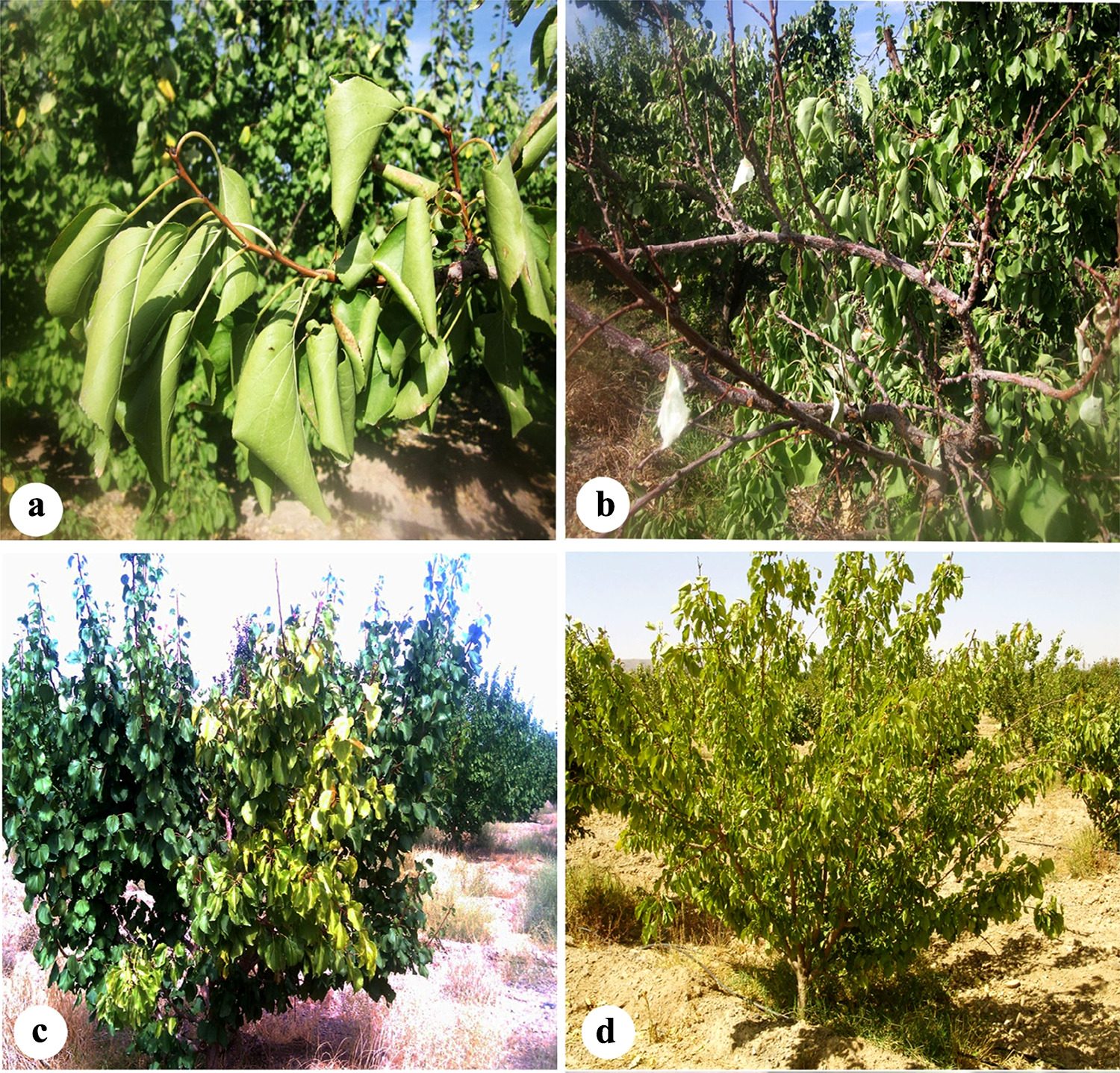
Phytoplasma infection in apricot. Pictures of this kind are a common sight in commercial orchards.
Phytoplasmas cannot be cured. Obtaining healthy planting material and grubbing out diseased trees without delay are the most important protective measures. Diagnosis must be carried out in a specialist laboratory only. In some cases soil-applied copper appears to help trees in the earliest stage of infection; even so, attempting a cure is not advised — replanting is.
The arrow diagram in every fertiliser leaflet does not stand up scientifically. The antagonisms are real, but they act on two separate levels — in the soil and inside the plant — and the same element can be antagonistic on one and synergistic on the other. With a tool showing the documented relationships of each element.
It is a cation exchanger — it holds ammonium and potassium, not nitrate. The rates that work are tens of tonnes per hectare, not hundreds of kilos. And erionite is a Group 1 carcinogen.
Leonardite is oxidised lignite with up to 85% humic acids — but pH below 3, up to 6% sulphur and almost no phosphorus. What the analyses and meta-analyses show, where it delivers and where it does not, and what Regulation (EU) 2019/1009 and the organic farming rules require.