
Peach fruit deformation disease: the Greek chronicle and the Chinese evidence
Savvas Pastopoulos, Agronomist, Pastopoulos Agronomics
Five years after the first scattered symptoms at Ampelies, Giannitsa, deformation of peach fruit has become the most serious open question in the area. This article brings together the whole chronicle with dates and file numbers, and exactly what the virological analyses showed and what they ruled out.
It also includes something that has not circulated in Greek. After an exhaustive search of Chinese scientific papers, I found that the same phenomenon has been recorded in China since 1972 and has been studied in depth, with field studies, re-inoculations and histology. That material is published exclusively in Chinese and remains effectively unknown here. The Chinese experience does not prove identity with the Greek problem, but it does give a map that is available from nowhere else.
This is a case study from a specific area of northern Greece, and the regulatory references are Greek. Approvals of plant protection products are valid in Greece only; in any other country the corresponding national register applies.
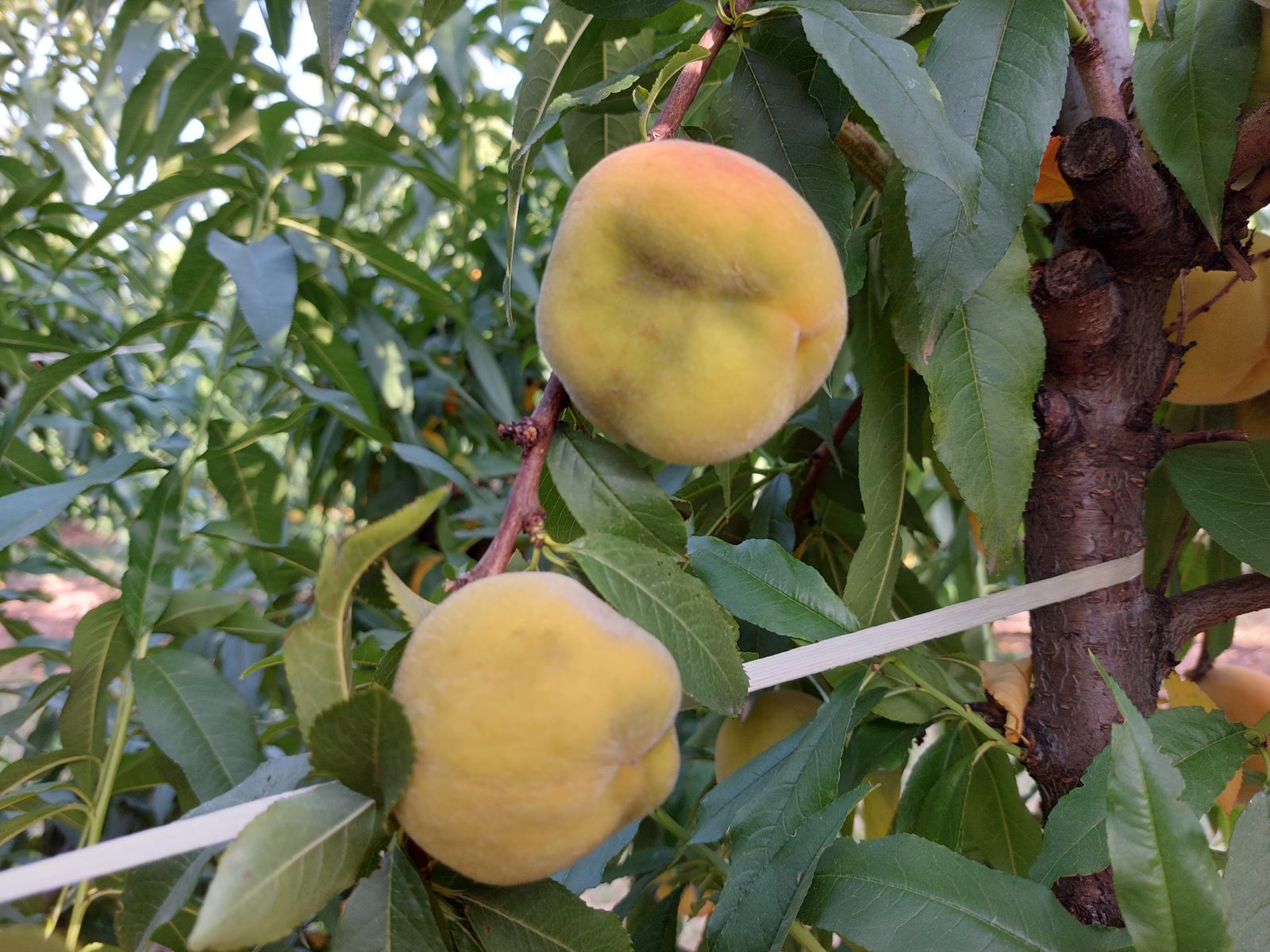
at Ampelies
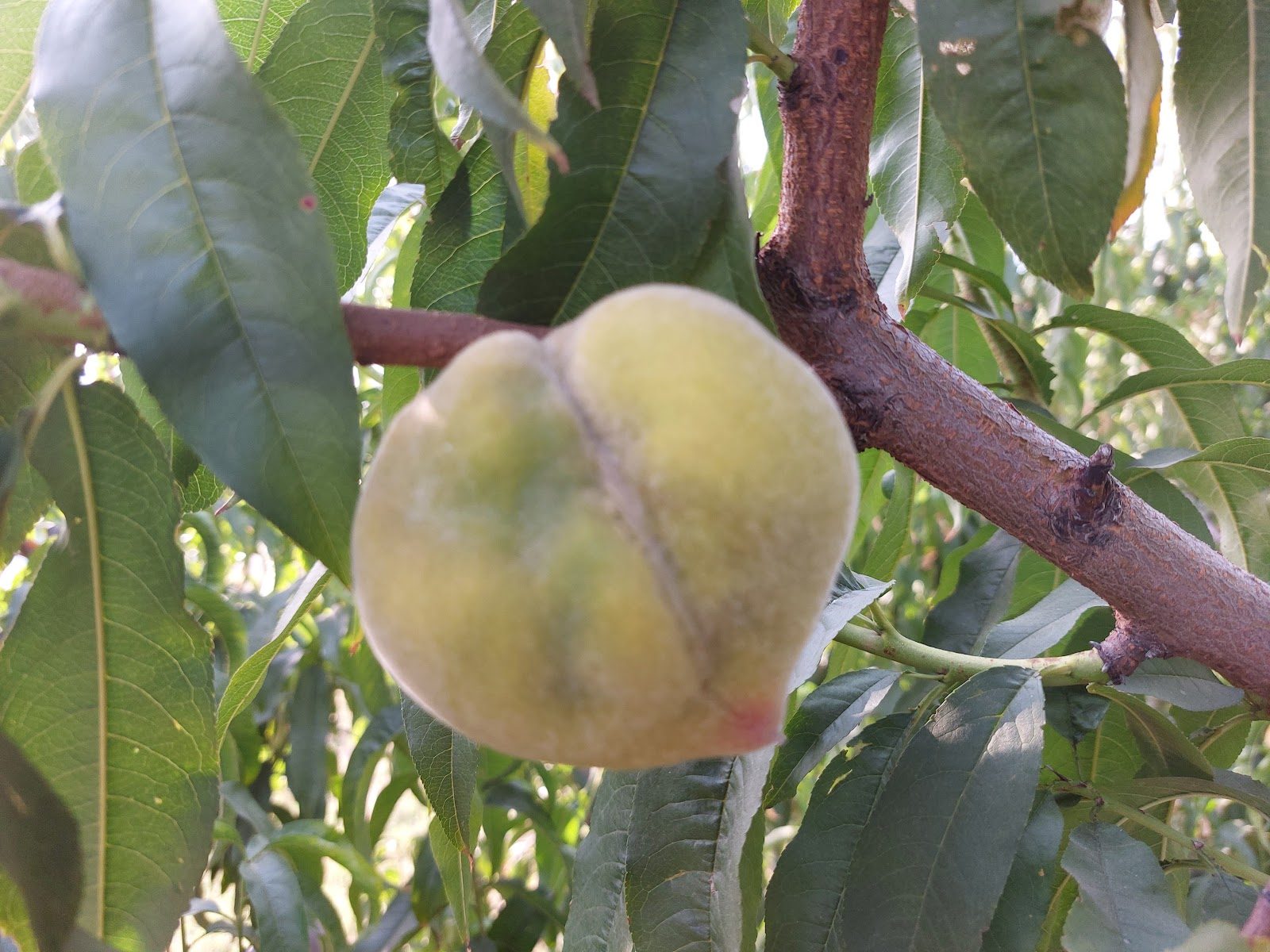
official analyses
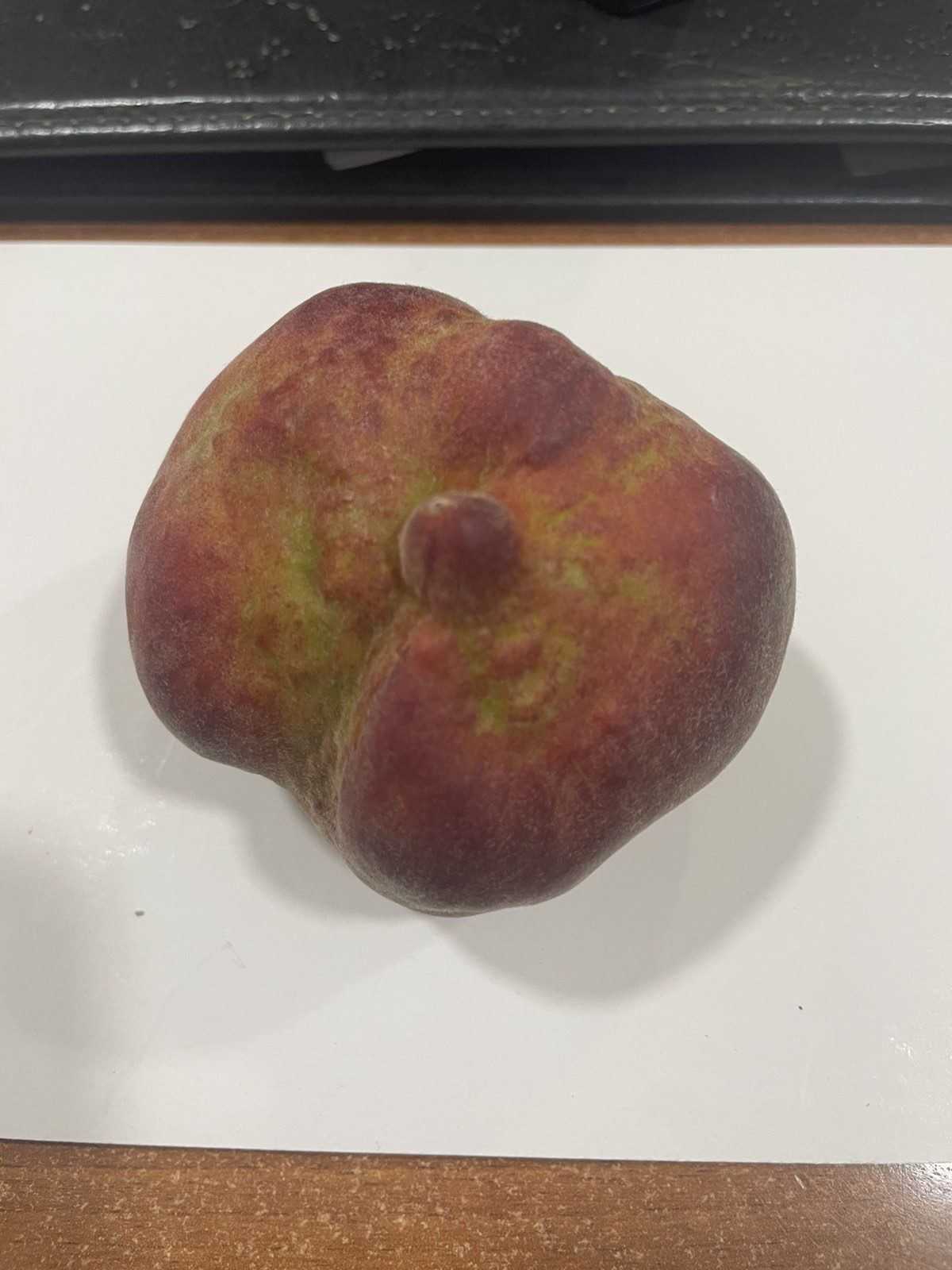
in China
in a Chinese orchard
with mites in the buds
- The Greek chronicle, step by step
- What the virological analyses showed and ruled out
- The mite, the main cause of the problem, the official positions
- The Aristotle University study: the mite in the buds of all 18 affected orchards
- China: fifty years with the same phenomenon
- The mite and what exactly it does
- The annual cycle, the key to timing
- The numbers from the Chinese studies
- How it is managed in China
- Similarities, differences, and what is not known
- What remains unanswered
- Sources
1. The Greek chronicle, step by step
Summer 2021, the first signs Scattered symptoms appear for the first time on peach fruit of the cultivar Andros, in orchards in the ALAN area at Ampelies, Giannitsa. Because the symptoms are scattered and confined to just two orchards, they are initially attributed to an insect or to a non-parasitic cause.
2022, the first spread The problem covers all the trees of the original orchards and moves into new orchards around them. A sample is sent to the Benaki Phytopathological Institute. The reply, report 1481 of 6/10/2022, gives no clear diagnosis.
2023, the escalation In the first orchards there is total loss of production, from abscission of flower and vegetative buds and severe deformation of the fruit that remains. The surrounding orchards produce deformed fruit. New samples go to the Institute with an explicit request for virus testing.
Late July 2024, recognition of the mite Examining affected fruit and buds closely, I recognised the presence of a mite and reported it. In the same period, the samples that had been sent to Benaki were arriving at the same finding.
5 September 2024, the press release of the Regional Unit of Pella The most detailed public statement of the whole case. It was presented the day before, on 4/9/2024, at a special meeting with a Working Group of Agronomists at the prefecture, and was communicated to the Deputy Regional Governor of Pella and to the Director General of Agricultural Economy of the Region of Central Macedonia. It brings together six virological analysis reports and two entomological-acarological reports from the Institute [1]. Its main points are set out in detail below.
17 to 18 September 2024, the first official recommendation against mites The Ministry issues ref. 10086/278395 of 17-09-2024, and the Regional Unit of Pella circulates it on 18/09. Here it is stated explicitly that on examination of deformed fruit by the Institute, with samples from Larissa, Imathia and Pella, mites of the genus Eriophyes sp. were found [2].
September to October 2024, the Aristotle University study The Plant Pathology and Entomology Laboratories of Aristotle University examine 1,440 shoots and 5,760 buds from 18 orchards with deformation and 18 without. Eriophyidae mites are found in the buds of all 18 affected orchards, while the viruses show no correlation. Details in section 4 [17].
11 August 2025, «it is not a virus» The Region of Central Macedonia publishes an announcement from the Directorate of Agricultural Economy of the Regional Unit of Imathia. The text is the clearest to that date: without final results and with the Institute's research still in progress, «the conclusion is that it is not a virus but in all probability the result of infestation by a mite of the genus Eriophyes (Acari: Eriophyidae), which attacks the buds of the new growth» [3].
14 May 2026, the May advice The Directorate of Agricultural Economy of Pella, after orchard inspections, recommends a spray with wettable sulphur or an approved acaricide, with particular attention to bearing orchards adjoining abandoned trees or orchards [4].
1 and 31 July 2026, the mite on the fruit Sampling on 1 July finds an Eriophyes population on the fruit. The advice of 31 July recommends an intervention after harvest, to reduce the population migrating towards the season's buds, particularly in blocks with a high proportion of deformed fruit. The same is recommended for apricot blocks with deformation not attributable to plum pox virus [5].
What the press release of 5 September 2024 actually said
Because it is the fullest public document of the case and is rarely read in full, its substantive points are set out here [1].
A. The six virological analyses of the Institute's Virology laboratory
| Institute report | Sampling area | What was found and what it means |
|---|---|---|
| Report 1104 21-08-2023 | Ampelies, Giannitsa | PPV, PNRSV, NSPaV, TiRSaV and PLMVd. NSPaV is reported for the first time in Greece; TiRSaV for the first time worldwide in peach and for the first time in Europe. Both are judged to be of no particular significance for the problem |
| Report 1504 17-11-2023 | Neos Mylotopos, Arnissa | By HTS and RT-qPCR: PPV, PNRSV, ACLSV, CGRMV, PLMVd. The three PLMVd isolates belong to the phylogenetic group of latent strains, that is, strains that cause no symptoms |
| Report 1946 12-12-2023 | Ampelies, Giannitsa | A 9-year-old Everts tree without deformation symptoms carried PPV, PNRSV and PLMVd. The viral load was exactly the same as in the symptomatic neighbouring orchards |
| Report 1925 12-12-2023 | Naoussa (institutional controls) and Ampelies | Symptomatic and asymptomatic samples carried the same pathogens at similar concentrations |
| Report 1534 12-07-2024 | Ampelies and Giannitsa-Archontiko | Quantification in five symptomatic and five asymptomatic fruit of Everts and Katerina. In Katerina no statistically significant difference. In Everts, PPV was found higher in the asymptomatic fruit |
| Report 1572 05-08-2024 | Milia, a village of Almopia | PPV and PLMVd in fruit and leaves. No secure association with the deformation |
B. The two acarological examinations of the Entomology-Acarology laboratory
| Institute report | Area | Finding |
|---|---|---|
| Report 1535 08-07-2024 | Ampelies and Giannitsa-Archontiko | Sample D1A: Eriophyes on 8 of 10 fruit, 1 to 3 individuals per fruit. Sample D2A: on 4 fruit. Samples D1B and D2B: none at all. There were also fruit with symptoms and no mite on them |
| Report 1571 18-07-2024 | Milia, a village of Almopia | Eriophyes on almost 100% of the fruit, with 3 to 20 individuals per fruit. Individuals were also found inside the buds of the current season's growth, in the terminal bud and in those of the leaf axils |
C. What the Institute recommended
- For the mites: a spray the following year early in spring, at bud break and the formation of new growth. Products are always used according to the approvals in force from the Ministry.
- A hygiene measure: after pruning, the cut wood should not remain in the block or in adjacent peach blocks and should, if possible, be destroyed, so that the mite is not carried and spread through it.
- For the viruses: it is noted that in agricultural practice there is no curative measure. Management is exclusively preventive, certified propagation material, resistant cultivars and rootstocks, mineral oil treatments in the first three years, disinfection of pruning tools (indicatively with a 0.5% NaOCl bleach solution for one minute), destruction of the water shoots that aphids prefer, and avoidance of budwood from untested trees.
Video 1. Footage from an orchard in the area. The picture in the field says more than any description, note the extent of the infestation within a single tree and how uniformly it is distributed across the fruit.
2. What the virological analyses showed and ruled out
The analyses did find viruses, they are simply not the ones responsible for the picture on the fruit.
The Institute's results of 17/5/2023 (report 626) and 30/5/2023 (report 640) showed the presence of two agents:
| What was found | What it means |
|---|---|
| Plum pox virus (PPV, sharka) | It has always been present in these cultivars, over the fifteen years the trees have stood there. It is not a new finding and does not coincide in time with the problem |
| Peach latent mosaic viroid (PLMVd) | It can cause deformation. It is not confirmed, however, that it alone can cause destruction on this scale |
The results were forwarded to the Quality and Phytosanitary Control Department of the Regional Unit of Pella, which in consultation with the Institute proceeded to further genetic testing to search for unknown viral pathogens. In the autumn 2023 briefing, the answer was that no clear conclusion on the aetiology could be reached.
- PPV was present for fifteen years without this picture. Something changed in 2021, and it was not PPV.
- PLMVd is very widespread in stone fruit and usually latent. It does not on its own explain why this broke out now and here.
- The pattern of spread does not fit a virus. In orchards next to an affected one, the extension is gradual, starting from the line of contact and moving inwards. That is the pattern of a crawling organism or a short-range wind-carried vector, not of randomly distributed infected budwood.
- The genetic testing for unknown viral pathogens found nothing.
- And critically: the official position of the Imathia agricultural directorate in 2025 is categorical that this is not a virus [3].
3. The mite, the main cause of the problem, the official positions
From September 2024 onwards the official line changes direction. The sequence of wordings also shows the degree of certainty at each moment:
| Date | Authority | Wording |
|---|---|---|
| 17 to 18/9/2024 | Ministry / Regional Unit of Pella | Eriophyes sp. mites were found in samples from Larissa, Imathia, Pella, «which may possibly cause or contribute» |
| 11/8/2025 | Imathia agricultural directorate | «It is not a virus but in all probability the result of infestation by a mite of the genus Eriophyes» |
| 2026 | Pella agricultural directorate | Sampling confirms a population on the fruit; seasonal spray advice is issued |
Something that confuses many people has to be stated here, because the two problems appeared in the area at about the same time and are discussed together: dead shoots are an entirely different problem from blind shoots and deformed fruit.
Dead shoots are a fungal disease. They are caused by the fungus the literature calls Fusicoccum amygdali / Phomopsis amygdali, and under current nomenclature Diaporthe amygdali. Its picture is characteristic and recognisable: oval reddish-brown cankers centred on a bud or a leaf scar, which enlarge, acquire a necrotic centre with a purple halo, girdle the shoot and kill everything above the canker. On the lesion, black pycnidia, the fungus's fruiting bodies, are visible with a hand lens [7]. The fungus is recorded in Greece on peach [9].
The difference of practical importance is the timing of infection. The fungus enters through petiole scars during leaf fall in autumn and through bud scale scars and flowers in spring. That is why autumn sprays during leaf fall reduced cankers by 45 to 63% in field trials in the United States [8]. The mite, by contrast, attacks the buds in spring at bud break. Two different enemies, two different intervention windows, two different categories of product.
4. The Aristotle University study: the mite in the buds of all 18 affected orchards
The most complete Greek evidence to date comes from a joint study by the Plant Pathology and Applied Zoology and Parasitology (Entomology) Laboratories of the School of Agriculture, Aristotle University of Thessaloniki, published in the Greek journal Georgia - Ktinotrofia in October 2024 [17]. It examined the two candidate causes in turn, viruses and the mite, on separate samples.
First part: the viruses, once again
In early June 2024 the Plant Pathology Laboratory collected more than 230 samples of fruit and leaves from 27 orchards in Pella and Imathia, from symptomatic and apparently healthy trees aged 2 to 26 years. They were tested by RT-PCR, real-time RT-PCR and high-throughput sequencing (HTS), which detects every virus in a sample, even unknown ones [17].
| Pathogen | What was found | What it means |
|---|---|---|
| PPV, PNRSV | High frequency in both deformed-fruit and healthy trees; PPV in particular was absent from some symptomatic trees | Not correlated with the deformation |
| PLMVd (viroid) | Equally frequent in trees with and without deformed fruit, and absent from some symptomatic trees | Not required for the deformation to appear; genetic analyses of particular genotypes are under way |
| CGRMV, ACLSV, and by HTS NSPaV, PBNSPaV, APCLSV, PaLV | CGRMV fairly often, ACLSV at low frequency, the others in few trees | No relation to the symptoms |
| Phytoplasma Candidatus Phytoplasma prunorum | Not detected in any sample | Ruled out |
| PcMV (peach mosaic virus) | Not detected, nor any other virus that could be transmitted by the mite | The US precedent (section 10) is not confirmed here |
The Aristotle University plant pathologists reach the same conclusion as the Benaki Institute (section 2): none of the viruses found appears to be directly linked to the deformation [17].
Second part: the mite inside the bud
In September 2024, peach shoots from orchards with deformed fruit in the Neos Mylotopos area near Giannitsa were sent to the Entomology Laboratory. Individuals of the family Eriophyidae were found under the scales of the buds, shoots and flowers [17]. A systematic comparison followed:
| Item | What was done |
|---|---|
| Orchards | 18 with deformed fruit and 18 without, in the villages of Plagiari, Lakka and Drosero near Giannitsa |
| Cultivars | Andross, Catherina, Everts, Fercluse (clingstone), Sweet Scarlet, Morsiani 90 (nectarines), UFO 4, Sweet Dream (table); trees 6 to 9 years old |
| Sample | Per orchard 10 random trees, 4 shoots of about 20 cm per tree, 4 buds per shoot: 1,440 shoots and 5,760 buds in total |
| Method | Buds were opened with fine forceps and the mites counted under a stereoscope at 30× magnification; leaves were also examined |
| Result | Orchards with deformation | Orchards without deformation |
|---|---|---|
| Orchards with mites in the buds | 18 of 18, without exception | 2 of 18; the growers had seen no symptoms, probably because the population was very small |
| Shoots with mites in the buds | About 80 to 100% per orchard | Zero in 16; about 40% and 20% in the two exceptions |
| Mean number of mites per shoot | 10.3 to 53.0 | Zero, and 1.7 and 2.5 in the two exceptions |
| Mites on the leaf surface | None | None |
The shoot percentages are read from the paper's charts and are approximate; the mean mite numbers are as stated in the text [17].
Shoots from orchards in Imathia with no deformation yet were also examined: no Eriophyidae were found in any bud. Earlier research in Imathia had recorded another species of the family, Aculus fockeui, in buds and leaves, but without causing fruit deformation [17]. So «an eriophyid» on peach is not enough; the link concerns this particular bud mite.
What kind of mite, and how it causes the damage
- Size. 150 to 250 micrometres, invisible to the naked eye [17].
- Genus. According to the team's data it is a species of the genus Eriophyes; confirmation of the species is pending [17].
- Where it lives. Exclusively or mainly inside the buds, like E. insidiosus. Active all year, with limited activity in winter. The bud protects it from desiccation and sunlight and gives it undifferentiated tissue to feed on [17].
- How it spreads. Mainly by wind: when a bud dries out, the individuals move to the surface and disperse to new buds [17]. This fits the spread from the contact line into the field (section 2).
- How it causes the damage. It feeds with two stylets and salivary secretions that can kill cells and deform plant parts. The damage probably happens inside the bud and shows the following year, when the bud opens and fruit sets [17].
- Short internodes. On many shoots of affected trees the internodes were shorter, i.e. the buds closer together. The same symptom, together with fruit deformation, is described for E. insidiosus in Mexico [17]. It is an additional sign that can be recognised at pruning.
What the team proposes
Control trials to confirm the mite's role: pilot applications at different timings, with substances of specialised acaricidal action, aimed at the mites inside the buds before new growth breaks, evaluated by sampling buds before and after treatment [17]. Any product is used only on the basis of the Greek Ministry's approvals, which are valid in Greece only.
Sources: 17
5. China: fifty years with the same phenomenon
The Chinese record is the fullest available, because there the phenomenon is not new, it has been studied for decades, with field studies, re-inoculations and histology.
1972, Hebei First appearance of the fruit deformation disease in Qian'an county, Hebei province. The cause is unknown [11].
1988, the identification The affected area in Hebei reaches 400 hectares. Zheng Youxian and co-workers publish the identification of the cause as an eriophyid mite [12].
1988 to 1991, Xinjiang The disease spreads into the Xinjiang region, where it is recorded as peach «shrivelling disease» [11].
2000s, Gansu New foci in the orchards of the city of Lanzhou, Gansu province. In the Anning district about 600 hectares of fresh peaches are grown and the infestation covers over 30% of the area [10].
2009 to 2011, the systematic studies Two two-year surveys at Gansu Agricultural University provide the numerical data and the histology [10] [13].
The common names of the disease in Chinese are 猴头果 (houtouguo), «monkey-head fruit», and 疙瘩桃 (gedatao), «lumpy peach», names that describe exactly what is seen here as well.
6. The mite and what exactly it does
In the Chinese literature the causal agent is identified as Eriophyes catacardiae Keifer, in Chinese 下心瘿螨. It is an eriophyid mite, that is, from the same family as those found in the Greek samples.
| Character | Measurement |
|---|---|
| Body length | 198 to 210 μm |
| Width | 50 to 65 μm |
| Colour | Pale yellow |
| Rostrum | ~25 μm, angled downwards |
| Legs | Two pairs, at the front of the body |
On the fruit
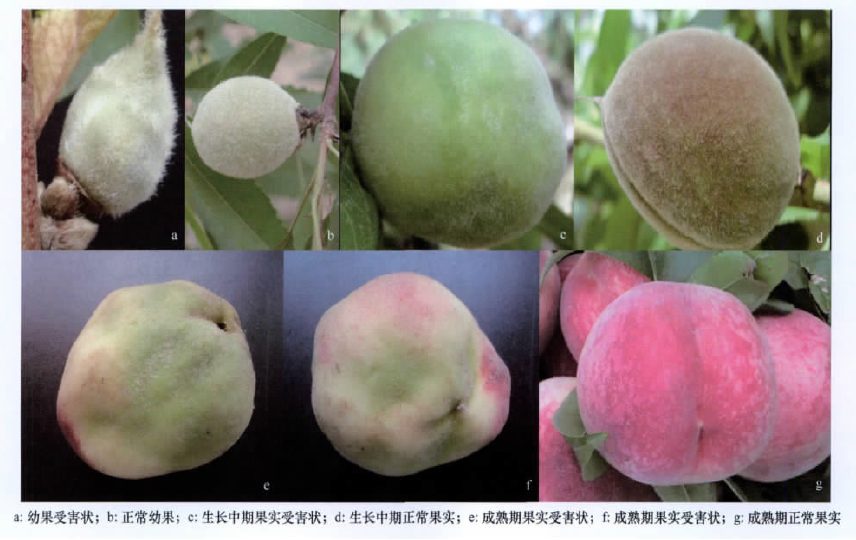
- After petal fall, irregular dark green spots appear on the small fruit.
- As the fruit grows, the down at the affected points turns brown, and the area shows delayed growth with a sunken, concave form.
- At the final stage the fruit is misshapen, unevenly coloured, in a «monkey-head» form. The affected flesh remains deep green.
- Under severe infestation the flesh becomes woody and the fruit inedible.
- Where infestation occurs during swelling: cracks on the surface, some deep and long.
In the buds, this is where the next year is decided
This is the part that connects directly with the bud abscission and blind shoots described in the Greek orchards:
- Affected buds become dry, shrivelled, thin, and cling tightly to the shoot.
- The scales increase by one or two layers and gradually lignify, so the bud is tightly wrapped and struggles to open.
- In histological section, the leaf primordia are damaged; in severe cases they are entirely absent and the bud permanently loses the ability to break.
- Within the scales and between the young leaves, large numbers of feeding mites are found.
- Vegetative buds are attacked more than flower buds.
- Affected flower buds bloom with a delay of about 10 days; some petals wither and drop before they even open.
- A characteristic picture under heavy infestation: trees «with fruit but no leaves», or trees that flower and never come into leaf.
Video 2. Mites inside the bud scales. This is where the mite lives and overwinters, sheltered under the scales, and it is the reason a summer fruit does not show it while a bud does.
7. The annual cycle, the key to timing
If there is one thing to take from this whole article, it is this. The cycle explains why the damage seen in May was decided the previous summer.
| Period | Where the mite is | What it means |
|---|---|---|
| Winter | Overwinters as an adult female inside the bud scales. In Greece, however, it appears that it can also reproduce during winter (personal observations) | Protected. Hard to reach with a spray |
| Late March to early April | Emergence from overwintering. Peak emergence around 25 March in the Chinese measurements. In Greece this appears to coincide exactly with bloom, the population appears to have already reached significant levels by bloom, and the mite enters inside the flower (personal observations) | The most vulnerable point of the cycle, while the mite is moving exposed. Once it gets into the flower, however, the window closes, which is why the intervention is judged to belong before full bloom |
| Bloom | Movement into the floral organs and the ovary | This is where the fruit is infested |
| Late May | On the fruit | Peak expression of symptoms. The damage is already done |
| Late July | Return to the buds to lay eggs | Colonisation of next year's buds begins. In autumn many of those buds drop to the ground (personal observations) |
8. The numbers from the Chinese studies
How large the damage becomes
| Index | 2009 | 2010 |
|---|---|---|
| Mean percentage of deformed fruit, across 10 orchards | 40.30% | 73.65% |
| Mean severity index | 17.05 | 38.26 |
| Worst orchard | 46% | 86% |
That is, the mean nearly doubled within one year. The authors note the reason explicitly: the disease had first been detected in Lanzhou five years earlier, but because the cause was unknown and no timely control was applied, in the last two years the incidence sharpened [10].
What proportion of the buds is affected, according to the Chinese data
| Year | Mean percentage of buds infested | Maximum |
|---|---|---|
| 2010 | 52.9% | 62.4% |
| 2011 | 61.9% | 76% |
Sources: 13
What happens to the fruit at cell level
Measurements on three cultivars showed that the infestation is not simple surface deformation, the metabolism of the fruit changes:
| Index | Change in the affected fruit |
|---|---|
| Soluble sugars | Decrease, up to 76.96% in one cultivar |
| Soluble proteins | Increase of 66.16% |
| Free amino acids | Increase of 64.95% |
| Free proline | Increase of 111.57% |
| Catalase activity | Increase of about 53% |
| Flesh cell diameter | 58 μm against 102 μm in healthy fruit |
| Trichome density | 4.5 against 3.5 thousand hairs per cm² |
| Trichome length | 170 against 110 μm |
The numbers in the table say four things, and each is worth reading on its own.
First, the fruit is under stress. The rise in free proline of 111.57% and in catalase activity of about 53% is the classic biochemical signature of stress. Proline accumulates when the cell is struggling to hold its water, and catalase rises when there is an oxidative load to neutralise. The affected fruit is therefore not merely deformed at the surface, it reacts like tissue under strain.
Second, the direction of metabolism changes. Soluble sugars fall, by up to 76.96% in one cultivar, while soluble proteins rise by 66.16% and free amino acids by 64.95%. The fruit stops acting as a sink for carbohydrate and fills with nitrogen compounds instead. The flavour is not lost because the fruit is deformed, it is lost because the sugar is missing.
Third, the flesh cells never reach full size. Their diameter stays at 58 μm against 102 μm in healthy fruit, that is about 57% of the diameter. Since volume varies with the cube of the diameter, the cell holds roughly one fifth of the volume it would otherwise have: 0.57 cubed gives 0.18. The flesh is built from far less mass, and that is why the fruit stays small, ripens late and tastes poor however good it looks.
Fourth, the surface changes too. Trichome density rises from 3.5 to 4.5 thousand hairs per square centimetre and trichome length from 110 to 170 μm. It is a detail that does not show in a photograph but does show to the touch, and it is useful on the grading line: affected fruit is noticeably hairier and rougher than the fruit next to it.
9. How it is managed in China
The Chinese sources converge on four lines of action, with timing the critical element:
Preventive
- Avoid taking budwood and rootstocks from affected trees.
- Disinfect pruning tools.
Cultural
- An open canopy form for better light inside the tree.
- Immediate removal of affected fruit.
- Removal of thin, dry branches at winter pruning.
Biological
- Release of predatory mites during bloom.
Chemical, the timing, not the product
The Chinese sources name specific products, which there is no point in reproducing here: the approval regime in China bears no relation to the Greek one, and an active substance used there may not be permitted at all on peach here. Product choice is made solely on the basis of the approvals of the Greek Ministry for the particular crop and the particular pest, and, outside Greece, of the corresponding national register.
What does transfer, and has real value, is the matching of treatments to phenological stages, because the order of the stages follows from the biology of the mite. The dates do not transfer: Lanzhou lies in a continental climate at high altitude, and the time of emergence from overwintering has not been measured in the Greek production areas. The stages are:
- Autumn, after leaf fall, or at the pink bud tip stage.
- Immediately after petal fall, with one or two treatments.
10. Similarities, differences, and what is not known
The comparison is only useful if it is made honestly. Both sides follow.
The similarities are striking
- Fruit deformation with sunken, dark green areas that do not colour.
- Bud abscission and blind shoots, buds that do not break.
- Irregular, delayed flowering.
- Gradual spread from one orchard to the neighbouring one.
- In both cases, eriophyid mites in the samples.
- In both cases, years of confusion before identification, with the search running in the wrong direction.
The differences and the gaps, which have to be stated
- In Greece identification is only to genus level. The announcements say Eriophyes sp., not a particular species. It has not been confirmed that this is the Chinese species.
- The species is not fully documented for us. The name Eriophyes catacardiae Keifer, 1962 (Chinese 下心瘿螨) appears consistently in the Chinese literature and is included in species lists for the genus. It has not, however, been possible to retrieve the original species description, that is, Keifer's original scientific publication in which the mite was first described and named, and where the morphological characters distinguishing it from related species are set out.
- The Chinese sources do not report synergy with a virus or viroid, they describe purely mechanical and feeding damage by the mite. In Greece, by contrast, the national stone fruit growers' body reports that the mites also transmit PLMVd [6]. If that were so, the Greek phenomenon could be a mite-and-viroid complex. The Aristotle University data, however, do not support it: PLMVd was just as frequent in trees without deformation and was absent from some symptomatic trees (section 4) [17].
- There is a documented precedent for such synergy: in the United States, peach mosaic virus (PcMV) is transmitted by the eriophyid Eriophyes insidiosus [15]. The idea is not exotic.
- How it arrived here is not known. Eriophyids are among the most successful invasive species precisely because their size makes them hard to detect and easy to move through the global trade in plant material [16].
11. What remains unanswered
It would be dishonest to close the article as if the matter were settled. It is not.
- Which species exactly? The Aristotle University team places it in the genus Eriophyes and awaits confirmation of the species [17]. Without taxonomic identification to species level, it is not known whether this is a species described in the literature or something new for the area.
- Is it the mite alone, or together with PLMVd? The answer changes the strategy: if there is synergy, clean propagation material takes on double importance.
- How effective are the approved acaricides against this species, under these conditions? There are no published Greek efficacy trials.
- What is the exact date of emergence from overwintering here? The Chinese measurements give late March for Lanzhou and Xinjiang. In this region it has not been measured, and spray timing depends precisely on it.
- Which cultivars are less susceptible? Symptoms are recorded on Andros, A37, Katerina, Everts and on table cultivars, but without comparative evaluation. So far, the cultivars A37 and Andros appear to be the most susceptible. In addition, several apricot cultivars may be affected, reinforced by the fact that the July 2026 advice from the Pella directorate extends the recommendation to apricot blocks with deformation not attributable to plum pox virus [5]. A comparative record by cultivar is needed, because future plantings depend on it.
12. Sources
The numbers in the text refer to the list below. Greek-language official announcements are marked as such.
- [1] Regional Unit of Pella (5/9/2024). Press release, Actions to resolve the problem of the unknown disease in peach and nectarine crops. In Greek. The most detailed public source. It reproduces verbatim the six virological analysis reports and the two entomological-acarological reports of the Benaki Institute, with file numbers, sampling areas, findings, conclusions and recommendations.
- [2] Regional Unit of Pella (18/9/2024). Guidance on the control of mites of the genus Eriophyes sp. in stone fruit crops, following Ministry document ref. 10086/278395 of 17-09-2024 and the press release of 5/9/2024. In Greek. Source for the finding of Eriophyes sp. mites by the Institute in samples from Larissa, Imathia and Pella, and for the full seasonal package of measures.
- [3] Region of Central Macedonia, agricultural directorate of the Regional Unit of Imathia (11/8/2025). Announcement on the phenomenon of deformed peach fruit. In Greek. The most categorical official statement: this is not a virus but in all probability an infestation by a mite of the genus Eriophyes attacking the buds of the new growth. Also the source for the recommendation of wettable sulphur and other acaricides.
- [4] Pella agricultural directorate (14/5/2026). May advisory on the control of Eriophyes mites in the peaches and nectarines of the Regional Unit of Pella. In Greek. Source for the recommendation of wettable sulphur or an approved acaricide and for the point about neighbouring abandoned orchards.
- [5] Pella agricultural directorate (31/7/2026). July 2026 advisory. In Greek. Source for the sampling of 1 July 2026 that found an Eriophyes population on the fruit, for the recommendation of a post-harvest treatment, for the extension of the recommendation to apricot, and for the service's contact numbers.
- [6] National Interbranch Organisation for Peach (2026). Briefing on dead and «blind» shoots, protection guidance. In Greek. Source for the distinction between dead and blind shoots, for the link between Eriophyidae mites and transmission of PLMVd, and for the programme with abamectin, beneficial predators, restraint with pyrethroids, sulphur products and lime sulphur.
- [7] Michigan State University, Integrated Pest Management, Fusicoccum canker (constriction canker). Source for the symptomatology of the dead-shoot disease: oval reddish-brown cankers centred on a bud or leaf scar, a necrotic centre with a purple halo, girdling and death of the shoot above the canker, and black pycnidia on the lesion.
- [8] Seasonal Availability of Inoculum for Constriction Canker of Peach. Phytopathology 91(11): 1109-1115, and Effect of Fungicides, Application Timing, and Canker Removal on Incidence and Severity of Constriction Canker of Peach, Plant Disease 86(7): 721. Source for the finding that infections occur through petiole scars in autumn during leaf fall and through bud scale scars and flowers in spring, and that autumn sprays during leaf fall reduced cankers by 45 to 63%. That is, a timing entirely different from that of the mites.
- [9] First Report of Phomopsis amygdali Causing Fruit Rot on Peaches in Greece. Plant Disease 90(12): 1551. Documentation that the fungus is present and recorded in Greece on peach. Note that the taxonomy of the pathogen has been revised: the same pathogen appears in the literature as Fusicoccum amygdali, Phomopsis amygdali and, under current nomenclature, Diaporthe amygdali.
- [10] Li Shijuan, Xu Bingliang, Liang Qiaolan, Zhang Wenli, Wu Bumei (2011). Occurrence of deformed peach and its effects on peach physiol-biochemical indexes (桃畸果病的发生及对桃果实生理生化指标的影响). Plant Protection (植物保护) 37(5): 139-143. DOI: 10.3969/j.issn.0529-1542.2011.05.026. In Chinese. Source for infestation rates of 40.30% in 2009 and 73.65% in 2010 with a maximum of 86%, for the timing of emergence from overwintering in late March with a peak on 25 March, and for all the changes in the physiological and biochemical indices.
- [11] History of spread in China: first appearance in 1972 in Qian'an county, Hebei; ~400 hectares by 1988; extension into Xinjiang in 1988-1991; new foci in Lanzhou, Gansu in the 2000s. As summarised in the introduction of the 2014 study [13] and in the Chinese agricultural sources [14].
- [12] Zheng Youxian, Liu Chunde, Shi Zhanshan et al. (1988). The causal agent of peach deformed fruit disease and its control. China Fruits (4): 17-19. In Chinese. The first identification of the cause.
- [13] Zhang Mingzhen, Xu Bingliang, Li Shijuan (2014). Pathogen determination and microscopic tissue observation in affected peach buds and fruit in the Anning district of Lanzhou. Gansu Agricultural University. In Chinese. The fullest study. Source for bud infestation rates of 52.9% in 2010 and 61.9% in 2011 with a maximum of 76%, for the morphometry of the mite, for the histology of the buds with destruction of the leaf primordia, for the cell diameter of 58 against 102 μm, for the trichome data, and for the re-inoculation trial that produced symptoms at 9 days.
- [14] Chinese agricultural and encyclopaedic sources on the disease 桃瘿螨畸果病, among them Baidu Baike. In Chinese. Source for the detailed annual cycle, the symptomatology on shoots and leaves, the «fruit but no leaves» phenomenon, and the timing of the recommended interventions. Note that these are secondary sources. The products they name relate to the Chinese approval regime and are not reproduced.
- [15] Biology of the Transmission of Peach Mosaic Virus by Eriophyes insidiosus (Acari: Eriophyidae). Plant Disease 82(12): 1371. Source for the documented precedent of a peach virus transmitted by an eriophyid mite.
- [16] Navia, D., Ochoa, R., Welbourn, C. and Ferragut, F. (2010). Adventive eriophyoid mites: a global review of their impact, pathways, prevention and challenges. Experimental and Applied Acarology 51: 225-255. DOI: 10.1007/s10493-009-9327-2. Source for the high potential of eriophyids as invasive species, because their small size makes them hard to detect and easy to move through global trade.
- [17] Maliogka, V.I., Orfanidou, C., Vasileiou, N., Georgousi, M., Lotos, L., Katis, N.I. (Plant Pathology team), Kovaios, D., Floros, G., Kokkari, A., Kopriti, E. and Koulousis, N. (Entomology team) (2024). Peach fruit deformation: a close association with the presence of Eriophyidae mites in buds (in Greek). Georgia - Ktinotrofia, issue 10/2024, pp. 22-26. School of Agriculture, Aristotle University of Thessaloniki. Full text. Source for the virological tests on more than 230 samples from 27 orchards (PPV, PNRSV, PLMVd, CGRMV, ACLSV, HTS, absence of phytoplasma and PcMV), the comparison of 18 orchards with and 18 without deformation at Plagiari, Lakka and Drosero near Giannitsa (1,440 shoots, 5,760 buds), the presence of mites in all affected orchards and the means of 10.3-53.0 mites per shoot, the absence of mites from leaves and from buds in Imathia, Aculus fockeui, the mite's biology, the short internodes, and the proposal for acaricide trials before bud break.
Plant protection products are used only on the basis of the approvals of the Greek Ministry of Rural Development and Food and according to the label: approved crops, rates, maximum number of applications, re-entry intervals and pre-harvest intervals. Outside Greece the corresponding national register applies. The references to active substances from the Chinese sources record foreign practice and are not a recommendation for application.
Every spray on trees carrying fruit risks marking the fruit and scorching the foliage, particularly with sulphur products and at high temperatures. A prior test on a limited number of trees and a wait of at least 5 to 7 days before general application are required.
This is informational and educational material summarising published announcements of authorities and scientific work. It is not individual agronomic advice. The aetiology of the phenomenon remains under investigation by the competent services. Every intervention is made at the user's own responsibility, following on-site assessment by a licensed agronomist. Pastopoulos Geoponiki L.P. accepts no liability for any damage arising from use of the information here.
Related articles

The dry shoot disease of peach
Dead annual shoots with the leaves still attached, buds that fail to break, and since 2021 an epidemic on the plain of Giannitsa. The cause is the fungus Diaporthe amygdali. In detail: the distinction from the blind shoot, the fusicoccin that kills the shoot, the entry points at leaf fall, the susceptibility of ten clingstone cultivars and the year’s programme.

Peach diseases and pests: identification from symptoms, with a diagnostic tool
Brown rot, leaf curl, shot hole, scab, rust, bacterial spot and canker, Armillaria, Phytophthora, Diaporthe amygdali, plum pox, and the pests: peach twig borer, oriental fruit moth and summer fruit tortrix with degree-days from orchards in Pella, spider mites, Comstock mealybug, flat-headed root borer, goat moth. A tool that compares field symptoms against the profiles of 33 causes, with photographs and the one feature that separates them.
Chilling hours: the three models and when each one tells the truth
Chilling Hours, Utah Chill Units or Dynamic Chill Portions, what each measures, which suits which climate and season, why a chill portion does not convert into hours, and how the divergence between the three is read. The calculation itself lives in a separate tool.