
Reducing rain cracking in sweet cherry
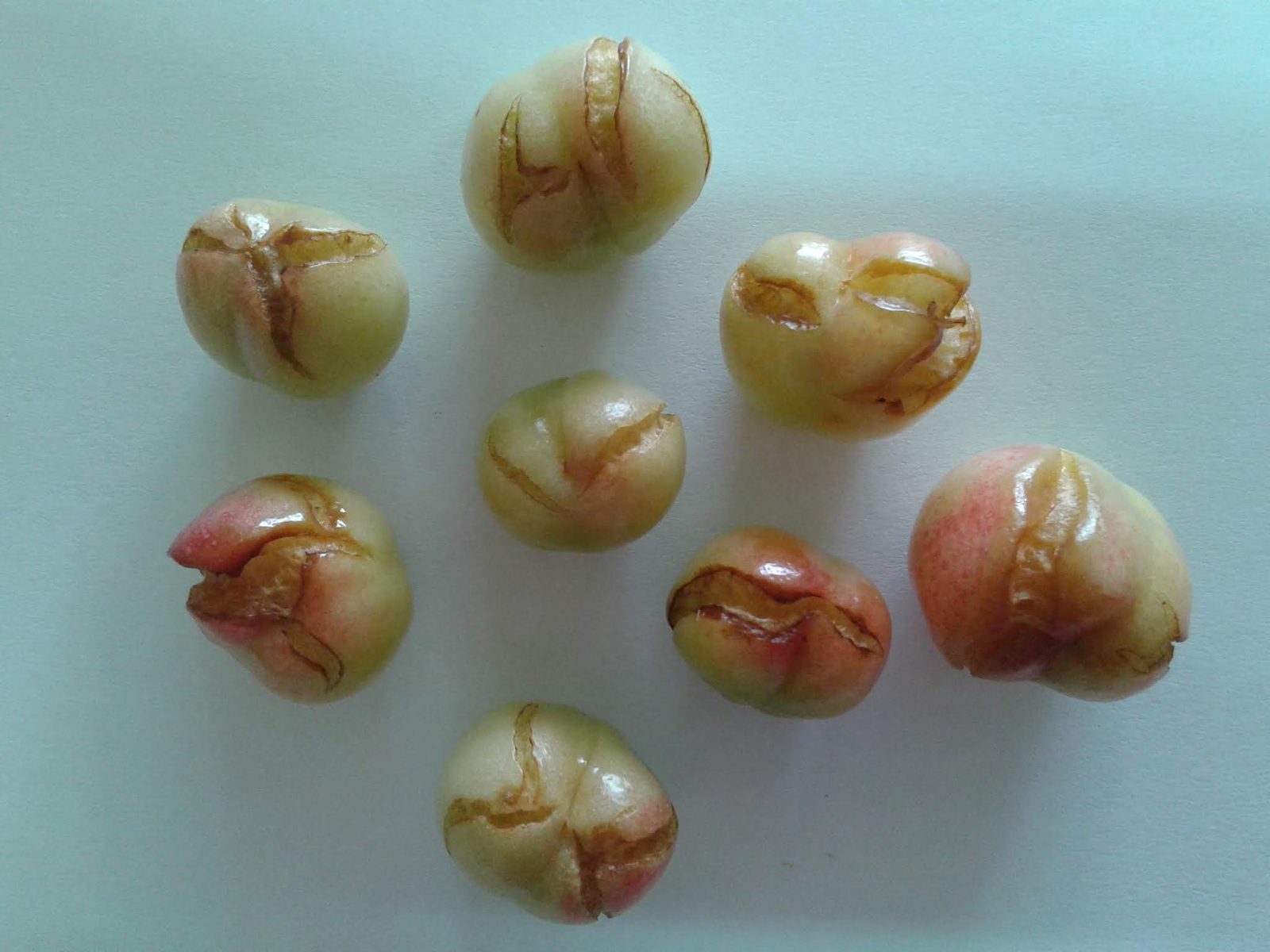
Savvas Pastopoulos, Agronomist MSc, Pastopoulos Agronomics, Neos Mylotopos, Pella, Greece
One of the most serious problems in sweet cherry growing is the high sensitivity of certain cultivars to rain-induced fruit cracking. Heavy rain during ripening causes extensive splitting in the fruit of most cultivars. There is at present no way of excluding cracking altogether; certain applications can nevertheless raise the resistance of the fruit and so reduce the final loss. These applications, of course, only work up to a certain depth of rainfall.
1. Three different kinds of cracking
The first step in any serious approach is to stop speaking of «cracking» as though it were a single phenomenon. There are three, with different causes, a different genetic basis and a different response to control measures.
| Type | Where it appears and what causes it | Heritability |
|---|---|---|
| Apical cracking (pistillar-end) |
At the tip of the fruit, where the stigma once was. This is where the cuticle is thinnest and where the floral scar forms a structural weakness. It is associated with a droplet sitting directly on the apex. | 0.608 to 0.905 very high |
| Stem-end cracking (stem-end) |
In the cavity around the pedicel. Water stands there for hours after rain, and this is also where the xylem route of the pedicel ends. | 0.575 to 0.742 high |
| Side cracking (side) |
On the cheeks of the fruit. It is the most purely mechanical of the three: it arises from strain in the cuticle over an expanding surface. | 0.354 to 0.557 moderate |
2. The mechanism, what actually happens
The traditional explanation is familiar to everyone: rainwater enters the flesh through the skin, the fruit swells, internal pressure rises and the fruit finally «bursts like a balloon». That explanation is intuitive, has been taught for decades, and is not confirmed by the experimental data.
Measurement showed something that overturned the model: the ripe cherry fruit, at stage III, has low turgor. And, most critically of all, turgor did not rise when the fruit took up water, nor fall when it transpired.
If pressure does not rise when water enters, then it cannot be that pressure which splits the fruit. The paper that stated this explicitly carries a title to match: «Rain cracking in sweet cherries is not due to excess water uptake but to localized skin phenomena».
The practical consequence is considerable: any measure aimed simply at «getting less water into the fruit overall» cutting irrigation a few days before rain, for instance, is addressing the wrong problem. What matters is not total volume but what happens locally, over a few square millimetres of surface.
The «zipper» model
The explanation that now prevails is a different one, and it begins long before the rain.
Step 1, The cuticle stops thickening, the fruit keeps growing
During stage III, when the fruit is expanding rapidly, cuticular mass stays essentially constant. The same quantity of waxes and cutin has to cover a surface that keeps growing. The result is increasing strain in the cuticle, like a membrane stretched over a balloon that is being inflated without any material being added.
Step 2, Microcracks appear
Once strain exceeds its strength, the cuticle fails locally and microcracks form. They are not visible to the naked eye and are not damage in themselves. They are, however, entry points: water passes through them without meeting the cuticular barrier. The critical point is that the microcracks are already present before it rains. The fruit arrives at the rain either primed to crack or not.
Step 3, Local failure and propagation
Water entering through a microcrack reaches the cells immediately beneath it. Those cells burst, and their vacuolar contents, rich in sugars and organic acids, spill into the apoplast, the space between cells. There they act osmotically and draw in still more water, which bursts the next cells in turn. The crack «unzips», running from a microscopic starting point to ever greater length.
- Swelling of the cell walls. In ripe fruit the cell walls swell on contact with water. That swelling weakens the middle lamella, the «glue» holding cells together, and makes them easier to separate.
- The flesh is not homogeneous. The osmotic potential of flesh cells differs from point to point within the same fruit. This spatial heterogeneity determines where absorbed water is directed, and explains why the same fruit cracks at one particular place and not another.
3. The second route for water: the pedicel
Rainwater does not enter only through the fruit surface. There is a second route, and it is systematically underrated.
The permeability of the pedicel surface to water is five times that of the fruit surface. Nor is that all: the apoplast of the fruit and the xylem of the pedicel remain hydraulically connected even after the abscission layer has formed.
What this means in the field: water standing in the stem cavity is not merely cosmetic. It is the fastest route by which water enters the fruit. For that reason every practice that dries the fruit quickly after rain, air blowers, helicopters where they are used, an open canopy that lets air through, pays back out of all proportion to its cost. It does not reduce the rain; it reduces the number of hours the water stays on the fruit and in the stem cavity.
4. Cultivar susceptibility
The most susceptible cultivars are all the early ones, together with Giant Red, Tsolakeika and others. By contrast, Sabrina, Samba, Canada Giant, Summit, Grace Star and Regina, among others, are considerably more resistant.
The ranking from international trials agrees with our own experience on the main points. Regina is among the most resistant cultivars worldwide, while Kordia, Lapins and Hedelfingen also show some tolerance.
One observation deserves attention: Sweetheart, regarded in some regions as a safe choice because it is late, showed the highest cracking susceptibility in trials. Lateness on its own is no guarantee, it merely reduces the chance that ripening will coincide with the spring rains.
5. Calcium
Foliar calcium applications substantially improve the postharvest storage life of sweet cherry fruit and flesh firmness. More specifically, two to three calcium applications are enough for a good result.
Calcium is the most studied treatment for cracking and at the same time the most misunderstood, because published results range from large to nil. In trials on the cultivar 0900 Ziraat calcium chloride reduced the laboratory cracking index by 62%, an immersion index and not a measurement of damage in the field, while in other trials the effect was negligible.
The difference is not random, it is a matter of timing. The applications that worked were those placed early: in trials, CaCl₂ applied at 39 and 62 days after full bloom reduced the incidence of cracking in thinned trees. Applications made only close to harvest did not achieve the same. The reason connects with section 2: calcium has to be already incorporated into the cell walls and middle lamella before the critical expansion begins, so that it can reinforce cell-to-cell cohesion. A spray on the eve of the rain has no time to play that part.
On firmness and storage the data are distinctly more consistent: early calcium chloride sprays improved firmness at harvest, firmness after cold storage and the modulus of elasticity of the fruit.
6. Silicon
Silicon increases the elasticity of the cherry skin, reducing the proportion of cracked fruit. Applications are made from petal fall onwards; some products, however, may leave white spotting on the fruit. In recent years calcium silicate has also become available, covering the requirement for both silicon and calcium. Application can also be made through the soil.
The figures in wider circulation, a 15% reduction in cracking and a 9% increase in firmness against the control, come from trials by a manufacturer of a foliar silicon product, not from independent published work. They are recorded here with that reservation stated openly. The documentation that stands up to scrutiny is the soil-applied work that follows.
As regards soil application, referred to above: trials with 1% potassium silicate applied to the soil every 3 weeks from bloom gave consistently firmer fruit in the cultivar Bing, in trials in the United States (409 against 386 g·mm⁻¹ for the control). The size of the difference is moderate but real and consistent, and the soil route bypasses the problem of white spotting on the fruit entirely.
7. Glycine betaine and L-proline
This combination is well suited to reducing the osmotic stress caused to plants by environmental conditions. A glycine betaine product with L-proline at a rate of 1.5 kg per tonne of spray solution, applied at the change of colour to yellow and repeated 10 days before harvest, substantially reduced cracking in several of the cultivars on which it was tested. The same application also markedly increases frost tolerance during the flowering period.
Glycine betaine is a quaternary ammonium compound that accumulates inside cells and stabilises cellular structures, maintaining membrane integrity under abiotic stress through osmoregulation. That mechanism fits the model in section 2 exactly: if the cells beneath a microcrack hold without bursting, the «zipper» never starts.
The available data indicate that increasing the rate significantly reduces the proportion of cracked fruit, and that efficacy rises as ripening advances, meaning the timing described above, with the second application close to harvest, agrees with the literature. In a trial on the cultivar Skeena comparing calcium, gibberellic acid, abscisic acid, salicylic acid, glycine betaine and Ascophyllum nodosum extract, the two most effective treatments for raising yield and reducing cracking were the seaweed extract and abscisic acid.
8. Gibberellin
Gibberellin applied at the change of colour from green to yellow markedly increases fruit size (by roughly 1 mm), flesh firmness and resistance to rain-induced cracking. One study reports that in the cultivar 0900 Ziraat cracking increased rather than decreased. It does, however, delay ripening by 3 to 6 days.
- Stage: the application is placed at the transition from light green to straw yellow. This is exactly the stage described above.
- Rate: the established recommendation in British Columbia, where the practice is applied systematically, is a single spray at 20 ppm at the straw-yellow stage.
- Repetitions: there is no benefit from multiple applications over a single one. In a three-year trial, yield was affected neither by one application at 20 or 30 ppm, nor by two or three weekly applications at 10 ppm. Raising the rate or the number of sprays adds cost and risk without a corresponding return.
What is gained and what is lost: the fruit is consistently firmer and larger, can be harvested later, and titratable acidity is higher. Colouring is delayed, which has to be taken into account when the market wants deep colour on a particular date.
9. Rain covers and nets
All the applications above reduce the damage by some percentage. One measure alone changes the order of magnitude of the problem: keeping the water off the fruit entirely.
Plastic rain covers are the most effective method of controlling cracking. Covering the trees from three weeks before harvest and throughout it significantly reduced cracking in 4 trials out of 5.
And a second, equally important benefit: the same covers also significantly reduced fruit rots. In Greek orchards specifically, a study by Thomidis and Exadaktylou recorded a significant reduction in rots on covered fruit in 6 out of 8 trials, the principal fungi being Monilinia laxa and Botrytis cinerea. That reduction translates into fewer fungicide sprays, meaning the cover recovers part of its cost from plant protection as well.
The drawbacks are real and have to be weighed: high installation cost, higher temperature and humidity under the cover, which can damage leaves and fruit and raise disease risk, and poorer fruit colouring from reduced light. Even so, the assessment in the literature remains that a covering system is the profitable option for reducing rain-induced cracking.
10. Irrigation and nutrition
What makes sense in irrigation
- Stability, not deprivation. The aim is not to make the tree thirsty before the rain. It is to avoid abrupt swings in soil moisture, which cause waves of rapid fruit expansion and therefore sharp increases in cuticular strain.
- Monitoring by measurement. Irrigation has to be set from soil moisture readings during the critical periods and according to the susceptibility of the cultivar, not by the calendar.
- Late preharvest deficit irrigation. This has been studied as a tool in combinations such as Regina on Gisela 6. It is a technique that requires measurement and experience; applied blind, the cost in fruit size can exceed the benefit.
11. How susceptibility is measured
The established laboratory method is the Christensen method: fruit is immersed in water and the percentage that cracks is recorded at set intervals. The resulting cracking index is the basic tool for comparing cultivars in the international literature.
Care is needed in interpretation, however: the method does not adequately simulate real field conditions, immersed fruit receives water from every side and continuously, which is not what rain does. A Greek research group (Michailidis and co-workers) proposed, for precisely this reason, a complementary method using rainfall simulation. So, the statement that a cultivar «has a cracking index of X» is a relative ranking, not a prediction of what will happen in a particular orchard.
12. The overall strategy
Ranked by effectiveness
- Cultivar choice at planting. With heritability up to 0.9 for apical cracking, no application corrects a wrong cultivar choice in a wet region.
- Cover or net, where the economic scale of the holding allows it. It is the only measure that changes the order of magnitude of the loss, and it reduces rots and sprays as well.
- Rapid drying of the fruit after rain. Low cost, high return, because of the fivefold permeability of the pedicel.
- Early calcium applications, with timing more important than rate.
- Silicon, preferably through the soil so as to avoid white spotting.
- Osmoprotectants at colour change and close to harvest.
- Gibberellin, on prescription, tested first on a limited area for each cultivar.
- Steady irrigation and correct nutrition as the foundation for all of the above.
13. Sources
- Sweet cherry fruit cracking mechanisms and prevention strategies: A review. Scientia Horticulturae. General review of mechanisms and measures.
- Rain cracking in sweet cherries is not due to excess water uptake but to localized skin phenomena. Journal of the American Society for Horticultural Science 141(6):653. The paper that overturned the classical osmotic model.
- Sweet cherry fruit: ideal osmometers? Frontiers in Plant Science. Source for the low turgor of ripe fruit and the absence of any turgor response to water uptake.
- Factors influencing fruit cracking: an environmental and agronomic perspective. Frontiers in Plant Science (2024). Description of the «zipper» model and the role of microcracks.
- Swelling of cell walls in mature sweet cherry fruit: factors and mechanisms. Planta. Source for cell-wall swelling and the weakening of the middle lamella.
- Spatial heterogeneity of flesh-cell osmotic potential in sweet cherry affects partitioning of absorbed water. Horticulture Research. Source for the heterogeneity of the flesh.
- Xylem, phloem, and transpiration flows in developing sweet cherry fruit. Trees. Water flows in the developing fruit.
- Water uptake through sweet cherry fruit pedicels: influence of fruit surface water status and intact fruit skin. Acta Agriculturae Scandinavica B. Source for the fivefold permeability of the pedicel and for the hydraulic connection between apoplast and xylem.
- Multi-year analyses on three populations reveal the first stable QTLs for tolerance to rain-induced fruit cracking in sweet cherry. Horticulture Research. Source for the three cracking types, the heritability values and the QTL on linkage group 2 of Regina.
- Detection of breeding-relevant fruit cracking and fruit firmness QTL in sweet cherry. Frontiers in Plant Science. Source for the ranking of cultivar susceptibility, Regina and Sweetheart among them.
- Cracking susceptibility of full-sibs of a cross of a cracking-tolerant and cracking-susceptible sweet cherry: relation to cuticle characteristics, microcracking and calcium. The link between cuticle, microcracks and calcium.
- Effect of preharvest calcium treatments on sweet cherry fruit quality. Comparison of calcium caseinate, chloride, hydroxide and nitrate on the cultivar 0900 Ziraat. Source for the 38-66% reduction in the cracking index and specifically for the 62% figure for calcium chloride.
- Calcium sprays and crop load reduction increase fruit quality and postharvest storage in sweet cherry. Agronomy 12(4):829.
- Enhancing cracking resistance and post-harvest quality of sweet cherries through calcium and potassium-based foliar treatments. Horticulturae 11(1):30.
- Effects of soluble potassium silicate soil drenching on sweet cherry fruit quality. Acta Horticulturae 1020. Source for the 1% potassium silicate soil application and the firmness values in the cultivar Bing.
- Prevention of cherry fruit cracking using soluble potassium silicate, Washington Tree Fruit Research Commission.
- Gibberellic acid increases fruit firmness, fruit size, and delays maturity of «Sweetheart» sweet cherry. Journal of the American Pomological Society. Source for the 20 ppm at the straw-yellow stage and for the absence of benefit from multiple applications.
- The effect of gibberellic acid applications on the cracking rate and fruit quality in the «0900 Ziraat» sweet cherry cultivar. The study in which cracking increased.
- Foliar application of calcium and growth regulators modulate sweet cherry tree performance. Plants 9(4):410. Comparison of calcium, GA₃, ABA, salicylic acid, glycine betaine and Ascophyllum nodosum extract on the cultivar Skeena.
- Effect of a plastic rain shield on fruit cracking and cherry diseases in Greek orchards. Crop Protection (2013). Greek data on rain covers, the reduction in rots and the reduction in fungicide use.
- Use of a plastic rain shield reduces fruit decay and need for fungicides in sweet cherry. Plant Disease 87(5):523.
- Orchard net covers improve resistance to cherry cracking disorder. Foods 12(3):543.
- Understanding and preventing sweet cherry fruit cracking, Oregon State University Extension, EM 9227.
- Sweet cherry fruit cracking: follow-up testing methods and cultivar-metabolic screening. Plant Methods 16:51. Greek work (Michailidis and co-workers) on the limits of the Christensen method and the complementary rainfall-simulation method.
- Effect of late preharvest deficit irrigation on physiological and agronomical responses in «Regina»/Gisela 6 sweet cherry.
Related articles
The white Mediterranean snail in tree crops
Theba pisana is native to the Mediterranean, not invasive, so there is no eradication programme to wait for. Identification, life cycle, the damage in tree crops, the single approved target in the Greek register, and why the nematode Phasmarhabditis killed the snail only at five times the label rate.
The Meda sweet cherry series
Six club varieties selected for at least 35 to 40 days of post-harvest life, for sea freight to China. Ripening, size, sugars and S genotypes as published, the two pairs that cannot pollinate each other, chilling figures with no model stated, and the fact that every measurement comes from covered plantings outside Greece.
Chilling hours: the three models and when each one tells the truth
Chilling Hours, Utah Chill Units or Dynamic Chill Portions, what each measures, which suits which climate and season, why a chill portion does not convert into hours, and how the divergence between the three is read. The calculation itself lives in a separate tool.