
Walnut anthracnose: diagnosis and control

Savvas Pastopoulos, Agronomist MSc, Pastopoulos Agronomics, Neos Mylotopos, Pella, Greece
Anthracnose is the most important fungal disease of walnut foliage wherever the species is grown, and field observation in Greek orchards finds it almost everywhere. It can cost the whole crop, and dealing with it calls for knowledge not only of crop protection but of nutrition and prevention as well.
The plant protection approvals discussed here are European Union approvals of active substances, plus, where named, the register of the Greek Ministry of Rural Development and Food, which is valid in Greece only. Approval of an active substance at Union level says nothing about whether a given crop is on the label in any particular country. Rates in this text are given per hectare.
1. Walnut as a crop
Walnut (Juglans regia L.) is grown worldwide both for the nut and for its timber. Genetic analysis of 91 Eurasian populations showed that after the last glacial period the species survived in near-isolated stands in Asia, and that its present distribution in Europe arose from the combination of spread out of multiple refugia, in the Balkans, in Anatolia and in western Europe, with human transport over the last five thousand years [19].
According to the production figures of the Food and Agriculture Organization for 2023, Greek production of walnuts in shell was about 39,600 tonnes, placing the country eleventh worldwide. In Europe, Türkiye leads with about 360,000 tonnes, Ukraine with about 106,000 and Romania with about 58,000 [20]. The widely repeated statement that Greece holds first place in Europe is not supported by the figures; the country is a significant but not a leading producer, and the volume has indeed risen sharply after the large plantings of the last decade.
Why the nut is worth growing
The nuts are used mainly as a dried nut, in confectionery and in oil production. The kernel contains about 65% fat, while protein content ranges from 13.6 to 18.1 grams per 100 grams of dry matter. The omega-3 fatty acid, alpha-linolenic acid, makes up about 8 to 14% of total fat, while the most abundant fatty acid is linoleic acid [18].
The nut also contains melatonin, at a mean concentration of 3.5 nanograms per gram. In a feeding experiment on rats, eating walnuts raised serum melatonin and, with it, the total antioxidant capacity of the blood [17]. The frequently repeated claim that walnut melatonin "regulates sleep" is not supported by that work, which measured no sleep parameter at all.
2. The pathogen and its correct name
Walnut is attacked by a range of diseases. Alongside anthracnose, European walnut orchards record cankers and branch dieback caused by fungi of the family Botryosphaeriaceae: in French orchards the recently emerging dieback is attributed to a complex of fungi, dominated by Diaporthe eres, in which the only two Botryosphaeriaceae species are Botryosphaeria dothidea and Neofusicoccum parvum, together with Colletotrichum fioriniae, C. godetiae and Fusarium juglandicola; the symptoms include shoot necrosis, defoliation, cankers and fruit necrosis [12]. A separate and entirely different problem is walnut blight, caused by Xanthomonas arboricola pv. juglandis [13], which is covered in a separate article.
The anthracnose fungus attacks the leaves, the fruit and the young shoots of the current season's growth, where it forms greyish-brown lesions [5], and it overwinters in fallen leaves and fruit [2].
The disease appears in the literature under three different names, and this causes confusion:
- Marssonina juglandis (Lib.) Magnus, the anamorph (asexual) stage, the one that produces the conidia.
- Gnomonia leptostyla (Fr.) Ces. & De Not., the teleomorph (sexual) stage, the one that produces the ascospores.
- Ophiognomonia leptostyla (Fr.) Sogonov, the currently accepted name.
The transfer to the genus Ophiognomonia was made by Sogonov and co-workers in 2008, in their revision of the leaf-inhabiting genera of the Gnomoniaceae; the reference isolate CBS 844.79 came from Juglans regia in Switzerland [8]. The EPPO database today records Ophiognomonia leptostyla (Fries) Sogonov as the preferred name and lists, among the synonyms, Gnomonia leptostyla, Gnomonia juglandis and Marssonina juglandis [7]. Under the present rule of one fungus, one name, the correct name is Ophiognomonia leptostyla, and it is the name used by the handbook of the north-western states of the USA as well [2]. The two older names lead mostly to work published before 2010.
3. Economic importance and the size of the losses
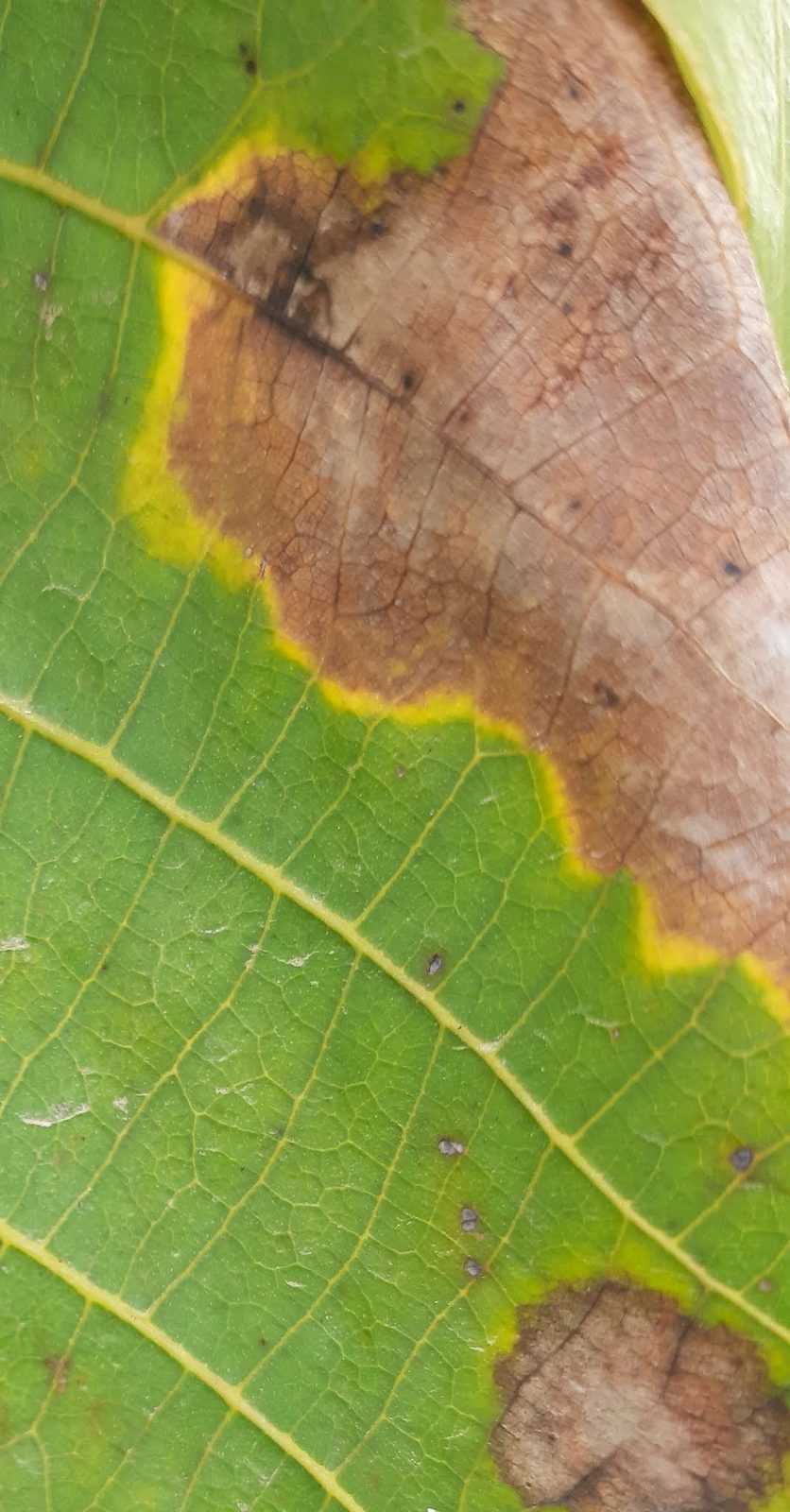
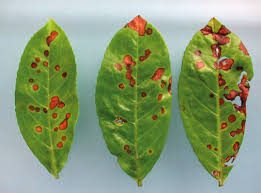
The main symptoms are necrotic lesions on leaves and fruit, often surrounded by a yellowish halo [3]. The disease causes early defoliation: the leaflets yellow, turn brown and fall prematurely, leaving the trees almost bare by August [6].
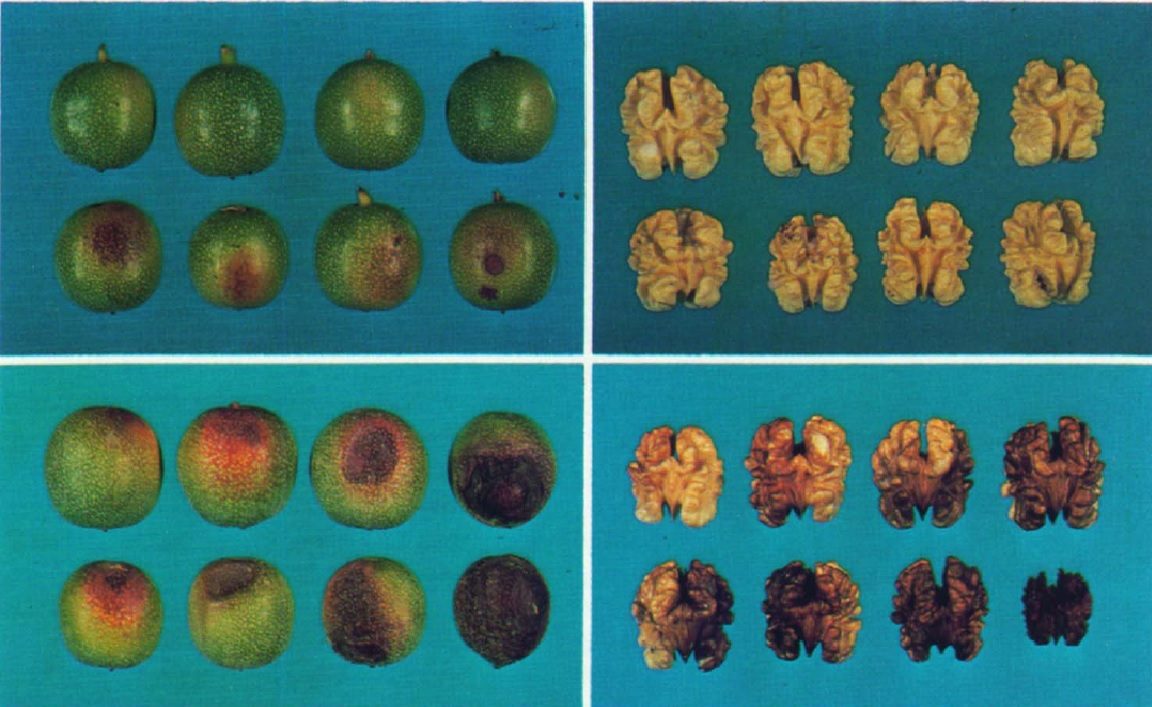
The mechanism of the damage is indirect and direct at once. The necrotic lesions reduce the photosynthetic surface and lead to poorly filled kernels or to nut drop, while under heavy attack even tree death is reported [10]. In North America it is noted that leaves infected early in the season are precisely those that matter most for photosynthesis during the critical period of nut filling, while the fungus can also attack the nut directly, giving a shrivelled and darkened kernel [4].
4. Symptoms and differential diagnosis
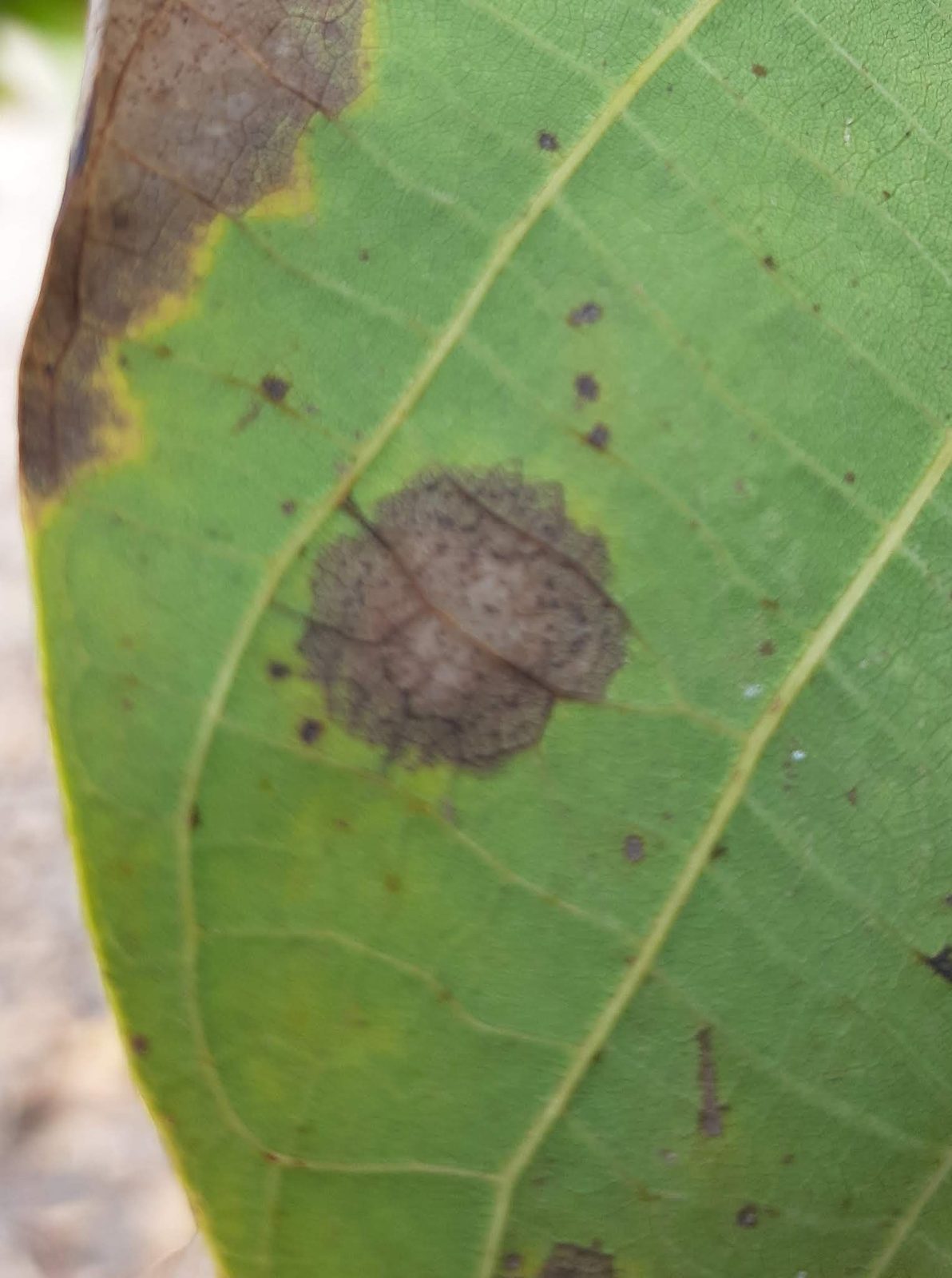
Symptoms appear mainly on leaves and fruit, more rarely on shoots. On the leaflets, circular to irregular, brown to black necrotic lesions form, often surrounded by a yellowish halo. In Illinois, USA, their mean size is given as about 5 millimetres [3]; in the north-western USA a wider range is recorded, from about 1.6 to 19 millimetres (1/16 to 3/4 inch in the source) [2], while in Tennessee lesions of 5 to 13 millimetres (0.2 to 0.5 inch in the source) are reported [5]. The lesions coalesce into extensive necrotic areas; the leaves yellow and heavy defoliation follows [6].
On young shoots greyish-brown lesions form, and on the green husk small blackish, slightly sunken specks [5].
The two diseases are often confused, but they have a different pathogen, a different overwintering site and a different timing of intervention.
In walnut blight (Xanthomonas arboricola pv. juglandis) the bacterium overwinters mainly inside the dormant buds, the lesions on the young nut are black and slightly sunken and appear at the blossom end, while on shoots it gives black lesions. Rain disperses the bacterium, cultivars with early budbreak are hit harder, and control rests on protective sprays of buds, flowers and developing nuts every 7 to 10 days in the wet springs of California [13]. In anthracnose, by contrast, the inoculum lies in the fallen leaves on the ground and treatments begin as the foliage develops [1].
The details of walnut blight are developed in the separate article on Xanthomonas arboricola pv. juglandis.
What the fungus looks like under the microscope
The acervuli appear as small black pustules on the older lesions, mainly on the underside of the affected leaves [3]. According to the measurements of Sharma and Sharma, as recorded by the 2017 review, the conidia measure 15 to 26 × 2 to 5 µm and the ascospores 15 to 19 × 4 to 5 µm [9]. The brown perithecia form on the fallen leaves, where the fungus also overwinters [3].
5. Biology, temperatures and moisture
The temperature values that circulate for walnut anthracnose come almost entirely from laboratory experiments outside Greece. They are set out here with their country and their conditions, precisely because they do not transfer unchanged to the orchard.
Ascospore production was recorded at 10 °C, while maturation of the perithecia is inhibited by heat; at 20 °C the perithecia remain immature [9]. That value agrees with North America: in Illinois, USA, the forcible discharge of ascospores from the perithecia has its optimum at 10 °C (50 °F in the source) [3].
In culture on an oat medium, growth of the fungus was greatest at 22 °C and sporulation at 26 °C [9]. These are in vitro values; they do not correspond to spray thresholds.
| Factor | Value | Where and how it was measured | Source |
|---|---|---|---|
| Onset of ascospore production | 10 °C | Laboratory measurements, as recorded by a review from India | [9] |
| Optimum ascospore discharge | 10 °C | Illinois, USA, on Juglans nigra | [3] |
| Optimum mycelial growth | 22 °C | Laboratory culture on an oat medium | [9] |
| Optimum sporulation | 26 °C | Laboratory culture on an oat medium | [9] |
| Relative humidity for leaf infection | above 95% | Controlled laboratory conditions, after Black and Neely, not a Greek measurement | [9] |
| Temperature range without effect on severity | 10 to 32 °C; below 10 °C severity falls markedly | Controlled laboratory conditions, after Black and Neely, not a Greek measurement | [9] |
| Minimum duration of free moisture on the leaf for infection | more than 6 hours, with dispersal by rain droplets required | Illinois, USA, on Juglans nigra | [3] |
| Release of more than 80% of the ascospores | 80% relative humidity for 24 hours, 10 to 20 °C, with wind | Qazvin province, Iran | [9] |
In artificial inoculations in Iran, the macroscopic brown lesions appeared 16 days after inoculation and the acervuli 24 days after inoculation, that is about eight days later [9]. In glasshouse experiments in Illinois, USA, the lesions developed on the leaf surface after about two weeks [9].
In practice, inspecting the orchard for anthracnose is worthwhile about two to three weeks after a prolonged period of leaf wetness; earlier than that the infection has already taken place but does not show. The frequently quoted "12-day rule" does not follow from any of the sources checked and is not used here.
6. The disease cycle
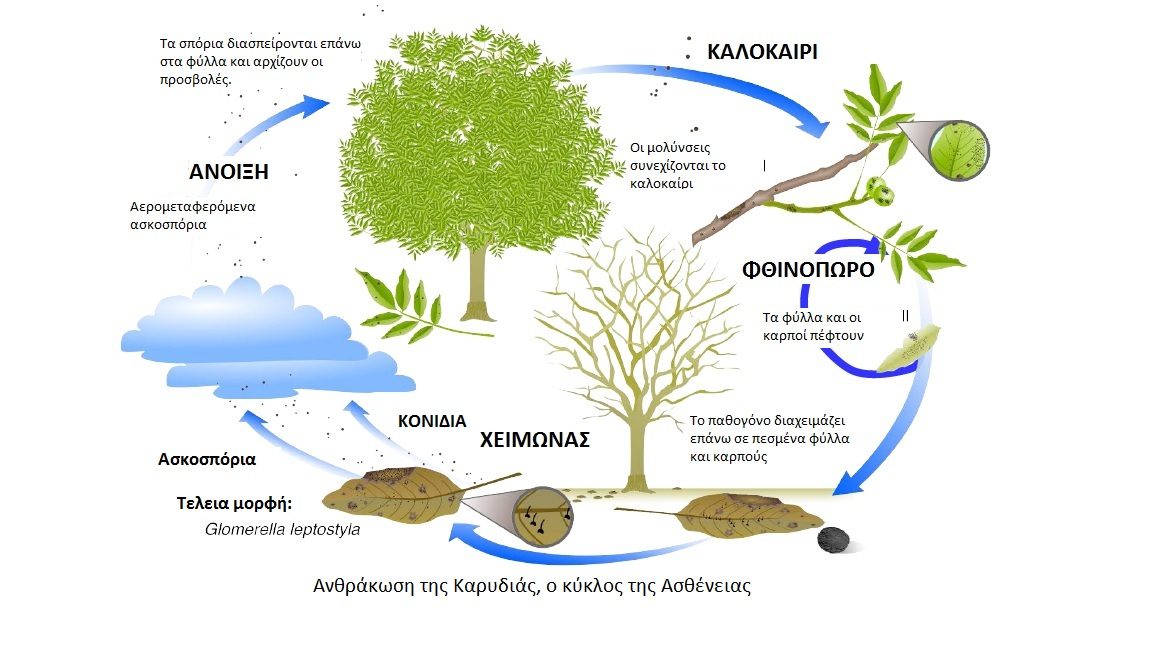
The pathogen overwinters in the fallen leaves on the ground, as perithecia [3], as well as in fallen nuts and in cankers on the previous season's shoots [2]. In spring, with the rains, the ascospores are forcibly discharged from the perithecia and carried to the new growth [2].
The timing differs by region and has to be read with its geography. In northern California mature ascospores are produced up to early April and, with the spring rains, infect first the leaflets and later the shoots and nuts [1]. In Illinois the ascospores cause infections from late April to early June [3], and in black walnut plantations of the north-central zone of the USA the primary infections are placed from May to early June [4]. No published record of the timing for Greek conditions was found, so the dates above do not transfer as a Greek calendar.
From that point onwards there follows continuous production of conidia within the lesions, dispersed by rain droplets and wind, giving successive secondary infections. In Illinois the secondary infections continue from late June into the autumn [3]; in North America more generally they are recorded throughout the summer [4]. The older leaves in the lower and inner part of the canopy are attacked more severely first, and they are also the first to fall [4], while heavy defoliation peaks in late summer, with the trees almost bare by August [6].
At the cellular level the fungus follows a hemibiotrophic strategy: it first grows biotrophically between the epidermal cells, about 72 to 96 hours after infection, and then switches to necrotrophic growth within the mesophyll cells [10].
7. Cultivar susceptibility, and where Chandler stands
Susceptibility differs sharply between cultivars, and the rankings that have been published do not agree with one another. That in itself is important information: how a cultivar behaves depends on local conditions and on the inoculum pressure.
In Bulgaria, an evaluation of walnut cultivars for anthracnose gave disease severity from 4.9% to 62.4%, and only one cultivar was rated resistant: Chandler. Five cultivars were slightly susceptible, while the rest were susceptible to highly susceptible [9].
In California, however, trials in the Hollister area ranked Serr and Payne as the most susceptible, Howard and Tulare as the least susceptible, and Hartley and Chandler as intermediate [1].
Field observation in Greek orchards finds Chandler occupying the greater part of the new plantings; no published statistical distribution of cultivars for Greece was found. Even with the Bulgarian evaluation in its favour, resistant does not mean immune: in seasons with prolonged wetness and in orchards with a high inoculum load Chandler is attacked, and the Californian ranking shows exactly that.
Another evaluation showed that the cultivars Ser, Vina, Hartley, Ronde de Montignac, Lara and Franquette have moderate to weak resistance, while Pedro was classed among the susceptible ones [9].
8. Cultural control
Managing the disease is a complex business that calls for knowledge of crop protection, of nutrition and of prevention.
Choosing the site
Sites with high relative humidity or high soil moisture are prone to the disease. Because leaf infection requires relative humidity above 95% in the laboratory experiments of Black and Neely [9] and free moisture on the leaf surface for more than six hours in Illinois [3], anything that shortens the wetness period, planting distance, row orientation, pruning, reduces the risk. Planting in positions with good air circulation is named explicitly as a control measure [3].
Plant residues determine the inoculum
Removing or destroying the fallen leaves directly reduces the inoculum that will overwinter: it is there, in the leaves on the ground, that the perithecia form which will give the spring ascospores [3]. The recommendation is that fallen leaves be collected and composted or burned [3], while removal of the leaf litter around the trunk [5] and of the fallen nuts is also mentioned, together with removal of infected shoots where that is practical [2].
Where removal is not practical, the alternative is cultivating the soil after leaf fall, which incorporates the infected leaves and speeds their decomposition [4]. No specific depth of incorporation is given in the sources checked, so the figure of "10 to 15 centimetres" that circulates is not repeated here.
Leaf nitrogen content is an important parameter for disease severity, but the relationship runs the opposite way from the one often assumed.
Neely, in the paper with the telling title "Total leaf nitrogen correlated with walnut anthracnose resistance", measured total leaf nitrogen from 2.14% to 4.13% in glasshouse experiments with Juglans nigra seedlings in Illinois, USA, and found that the number of anthracnose lesions falls as leaf nitrogen content rises (R = 0.719). The same paper reports that the glasshouse results confirmed earlier field experiments, in which nitrogen fertilisation reduced the severity of the disease [11].
The extension recommendations say the same. In the north-central zone of the USA it is reported that nitrogen applications in April and June reduce infection and at the same time increase tree growth [4], while the handbooks of the north-western states [2] and of Illinois [3] list adequate nitrogen nutrition among the control measures. Those dates apply to the USA and do not transfer unchanged to a Greek fertilisation calendar.
In practical terms, adequate nitrogen fertilisation is part of the control, not a cause of worsening. Note, however, that this applies specifically to anthracnose. Fertilisation has to be adequate, not excessive, and set by leaf analysis.
9. Chemical control
Chemical control of the disease rests on preventive applications, on the logic of protecting the new foliage ahead of the rains. In California the sprays begin when the leaf reaches about half its final size and are repeated every 2 to 3 weeks [1]; in Tennessee the recommendation for the start is the same, early in spring with the leaflets at half their final size [5]. No published spray programme for Greek conditions, with a number of applications, was found; the number of sprays is set by the course of the rains, by the orchard's history and by the approved labels.
The regulatory picture has changed substantially since 2019 and older lists of active substances no longer hold:
- Mancozeb: its approval was not renewed in the EU by Regulation (EU) 2020/2087 of 14 December 2020 [21], and the PPDB records it today as not approved [28]. The General Court of the EU dismissed the action for annulment on 29 October 2025 (case T-742/20 RENV) [22]. The applicants brought an appeal before the Court of Justice on 26 December 2025 (case C-869/25 P), which is pending; the appeal has no suspensory effect, so the non-renewal applies today as well. It is no longer used.
- Captan: the approval was renewed by Regulation (EU) 2024/2186 of 3 September 2024, in force from 1 November 2024 to 31 October 2039, but with new restrictions: application only outside the flowering period of the crop and in the absence of flowering weeds, use of equipment that reduces exposure, and enhanced operator protection measures because of a high skin sensitisation potential [23]. In the PPDB the recorded uses concern pome fruit, stone fruit, grapevine, soft fruit and almond; walnut is not on the list [27].
- Copper compounds: they remain approved as candidates for substitution and are subject to the restriction in the Annex to Regulation (EU) 2018/1981: only uses are approved that lead to a total application of up to 28 kg of copper per hectare over seven years [24]. The approval, which was due to expire on 31 December 2025, was extended by Implementing Regulation (EU) 2025/1489 of 24 July 2025, which replaces the expiry date with 30 June 2029 [25].
- Dithianon: it is approved in the EU with expiry on 31 January 2027, but its recorded uses concern scab and other foliar diseases on apple, pear, grapevine and currant, with no mention of walnut [26].
None of the above substances was confirmed as approved for walnut in Greece through the sources checked. Approval at EU level concerns the active substance; use on a particular crop is approved nationally. Before any application, the list of approved plant protection products of the Greek Ministry of Rural Development and Food has to be checked, where the products are looked up by crop together with the rates and pre-harvest intervals in force [31]. No product rate is given in this article, precisely because the rate in force is checked there each time.
Trials with other active substances have been carried out abroad. A Polish paper of 1991 reports that products based on mancozeb, dithianon, flusilazole and copper limited anthracnose, while a Bulgarian paper of 2003 tested copper products, mancozeb and vinclozolin together with systemics such as fenarimol, thiophanate-methyl, hexaconazole and benomyl [9]. Those lists are old and are not options today: benomyl, for instance, is recorded in the PPDB as not approved, withdrawn from the EU in 2011 [30], as is mancozeb now [28]. Older published efficacy trials do not substitute for a current approval.
As a general direction, the handbook of the north-western states notes that copper hydroxide products are not specifically registered for the disease but have proved effective on walnut, and it recommends mixing or alternating fungicide groups to avoid the development of resistance [2]. The source gives no seasonal placement for the copper products.
Sources: 1 2 5 9 21 22 23 24 25 26 27 28 29 30 31
10. Conclusion
Anthracnose is the most important fungal disease of walnut foliage and can cost a large part of the crop: the only quantitative estimate found, from Iran, speaks of losses of 60 to 80% [9]. In field experience, very few Greek orchards escape attack.
Chandler, which field observation finds dominant in Greek plantings, was rated resistant in the Bulgarian evaluation [9] but no better than intermediate in the Californian one [1], and against blight it appears clearly more exposed than Franquette [14]. There is therefore no cultivar that allows complacency.
The good news is that two of the strongest tools cost almost nothing: destroying or incorporating the fallen leaves, which removes the overwintering inoculum [3] [4], and adequate nitrogen nutrition, which in the experiments reduces the number of lesions [11]. Both act before the sprayer need be opened at all.
11. Sources
The numbers in the text refer to the list below. Where only the abstract was used and not the full text, this is stated explicitly.
- [1] UC Statewide IPM Program. Anthracnose, Walnut. UC IPM Pest Management Guidelines. University of California. Source for overwintering in the fallen leaves, for the production of mature ascospores up to early April in northern California, for the susceptibility ranking of cultivars in the Hollister area (Serr and Payne most susceptible, Howard and Tulare least, Hartley and Chandler intermediate) and for the spray programme beginning at half leaf size and repeated every 2 to 3 weeks. Full text.
- [2] Pacific Northwest Plant Disease Management Handbook. Walnut (Juglans spp.), Anthracnose. Oregon State University and collaborating universities. Source for the accepted name Ophiognomonia leptostyla, the size range of the lesions, overwintering in fallen leaves, nuts and shoot cankers, the forcible discharge of ascospores with the spring rains, and the recommendations on removing leaves and nuts, adequate nitrogen nutrition and alternating fungicide groups. Full text.
- [3] Pataky, N. R. (1987). Fungal Leaf Spots of Black Walnut. Report on Plant Disease No. 600. University of Illinois Extension, Department of Crop Sciences. Source for the mean lesion size of 5 millimetres with a yellowish halo, the acervuli as black pustules on the underside, overwintering as perithecia in the fallen leaves, the optimum ascospore discharge at 10 °C, the timing of infections in Illinois (ascospores from late April to early June, conidia from late June into the autumn), the requirement for more than 6 hours of free moisture and dispersal by rain droplets, and the measures of collecting and destroying the leaves, good air circulation and nitrogen fertilisation. Full text.
- [4] Mielke, M. E. and Ostry, M. E. Leaf Spot Diseases of Black Walnut, pp. 128 to 133. USDA Forest Service, St. Paul, Minnesota. Source for the primary infections by ascospores in May to early June, the secondary infections by wind-borne conidia throughout the summer, the importance of early infected leaves for photosynthesis during nut filling, the incorporation of infected leaves by cultivating the soil after leaf fall, and the reduction of infection by nitrogen applications in April and June. Full text.
- [5] Onufrak, A., Klingeman, W. and Hadziabdic, D. (2022). Identification and Management Recommendations of Common Fungal Diseases of Eastern Black Walnut. W 1101. University of Tennessee Extension. Source for the dimensions of the lesions on the leaflets (5 to 13 millimetres), the greyish-brown lesions on young shoots, the small blackish specks on the husk, the removal of leaf litter and the start of sprays with the leaflets at half their final size. Full text.
- [6] Penn State Extension. Walnut Anthracnose. Pennsylvania State University. Source for the sequence of yellowing, browning and early defoliation, for the trees being almost bare by August, and for the fruiting bodies along the veins on the underside. Full text.
- [7] EPPO Global Database. Ophiognomonia leptostyla (GNOMLE). European and Mediterranean Plant Protection Organization. Source for the valid name Ophiognomonia leptostyla (Fries) Sogonov, its taxonomic position and the list of synonyms, which includes Gnomonia leptostyla, Gnomonia juglandis and Marssonina juglandis. Full text.
- [8] Sogonov, M. V., Castlebury, L. A., Rossman, A. Y., Mejía, L. C. and White, J. F. (2008). Leaf-inhabiting genera of the Gnomoniaceae, Diaporthales. Studies in Mycology 62:1 to 77. Source for the transfer of the species to the genus Ophiognomonia as a new combination and for the reference isolate CBS 844.79 from Juglans regia in Switzerland. Abstract and list of new combinations.
- [9] Hassan, M. and Ahmad, K. (2017). Anthracnose Disease of Walnut, A Review. International Journal of Environment, Agriculture and Biotechnology 2(5):2319 to 2327. A review which reports, with its original references, the laboratory values for temperature and humidity (onset of ascospore production at 10 °C and thermal inhibition of the perithecia after Fayret and Parguey; maximum growth at 22 °C and sporulation at 26 °C on an oat medium after Matteoni and Neely; leaf infection above 95% relative humidity and severity unaffected between 10 and 32 °C after Black and Neely; release of more than 80% of the ascospores at 80% relative humidity for 24 hours at 10 to 20 °C with wind after Hashemi in Qazvin province, Iran), the incubation time of Dastjerdi and co-workers in Iran (lesions at 16 days, acervuli at 24 days from inoculation), the appearance of lesions after about two weeks after Neely, the losses of 60 to 80% in Iran after Saremi and Amiri, the cultivar evaluation in Bulgaria of Arnaudov and Gandev with severity of 4.9 to 62.4% and Chandler as the only resistant one, the cultivar ranking of Salahi and Jamshidi, the dimensions of conidia and ascospores after Sharma and Sharma, and the fungicide lists of the older trials in Poland and Bulgaria. Full text.
- [10] Khelghatibana, F., Javan-Nikkhah, M., Safaie, N., Sobhani, A., Shams, S. and Sari, E. (2023). A reference transcriptome for walnut anthracnose pathogen, Ophiognomonia leptostyla, guides the discovery of candidate virulence genes. Fungal Genetics and Biology 169:103828. Source for the hemibiotrophic infection strategy, with biotrophic growth between the epidermal cells 72 to 96 hours after infection and subsequent necrotrophic growth in the mesophyll, and for the mechanism of damage through reduced photosynthesis, poorly filled kernels and nut drop. Abstract and introduction.
- [11] Neely, D. (1986). Total leaf nitrogen correlated with walnut anthracnose resistance. Arboriculture & Urban Forestry (Journal of Arboriculture) 12(12):312 to 314. Source for the range of total leaf nitrogen of 2.14 to 4.13% in Juglans nigra seedlings in a glasshouse in Illinois, USA, for the fall in the number of lesions as nitrogen rises (R = 0.719) and for the confirmation of earlier field experiments in which nitrogen fertilisation reduced the severity of the disease. Full abstract.
- [12] Belair, M., Picot, A., Lepais, O. et al. (2024). Genetic diversity and population structure of Botryosphaeria dothidea and Neofusicoccum parvum on English walnut (Juglans regia L.) in France. Scientific Reports 14:19817. Source for the recently emerging dieback disease of walnut in French orchards being attributed to Botryosphaeria dothidea and Neofusicoccum parvum, with shoot necrosis, defoliation, cankers and fruit necrosis. Full text, open access.
- [13] UC Statewide IPM Program. Walnut Blight, Walnut. UC IPM Pest Management Guidelines. University of California. Source for the distinction from walnut blight: the pathogen Xanthomonas arboricola, overwintering mainly inside the dormant buds, the black slightly sunken lesions at the blossom end of the young nut, the greater damage in cultivars with early budbreak, the protective sprays every 7 to 10 days in wet springs and the particular timing in Chandler. Full text.
- [14] Susceptibility to Xanthomonas arboricola pv. juglandis of the walnut cultivars, Chandler and Franquette: with and without chemical treatment in Argentina (2024). FAVE Sección Ciencias Agrarias 23:e0023. Source for Chandler showing greater blight severity on leaves and nuts than Franquette in Argentina (Valle Inferior de Río Negro, seasons 2016/17 and 2017/18), irrespective of protective sprays with copper products and mancozeb. Abstract.
- [15] Ramos, D., Brown, L., Uriu, K. and Marangoni, B. (1978). Water stress affects size and quality of walnuts. California Agriculture 32(10). Source for the comparison of nuts from irrigated and non-irrigated trees in California and for insufficient soil moisture altering the normal seasonal maturation of the nut. Abstract; the older download link of the journal led to an unrelated article and was replaced by the DOAJ record.
- [16] Djoussé, L., Pankow, J. S., Eckfeldt, J. H., Folsom, A. R., Hopkins, P. N., Province, M. A., Hong, Y. and Ellison, R. C. (2001). Relation between dietary linolenic acid and coronary artery disease in the National Heart, Lung, and Blood Institute Family Heart Study. American Journal of Clinical Nutrition 74(5):612 to 619. Source for the higher intake of both alpha-linolenic and linoleic acid being inversely associated with the prevalence of coronary artery disease in 4,584 participants in the USA, with the two fatty acids acting synergistically. Full abstract.
- [17] Reiter, R. J., Manchester, L. C. and Tan, D. X. (2005). Melatonin in walnuts: influence on levels of melatonin and total antioxidant capacity of blood. Nutrition 21(9):920 to 924. Source for the mean melatonin concentration of 3.5 nanograms per gram of walnut and for the rise in serum melatonin and in the antioxidant capacity of the blood in a feeding experiment on rats; the work measured no sleep parameter. Full abstract.
- [18] Fatima, T., Showkat, U. and Hussain, S. Z. (2018). Nutritional and health benefits of walnuts. Journal of Pharmacognosy and Phytochemistry 7(2):1269 to 1271. Source for the kernel fat content of about 65%, for protein of 13.6 to 18.1 grams per 100 grams of dry matter and for alpha-linolenic acid making up about 8 to 14% of total fat, with linoleic acid as the most abundant fatty acid. Full text.
- [19] Pollegioni, P., Woeste, K., Chiocchini, F., Del Lungo, S., Ciolfi, M., Olimpieri, I. et al. (2017). Rethinking the history of common walnut (Juglans regia L.) in Europe: Its origins and human interactions. PLOS ONE 12(3):e0172541. Source for the species being grown both for the nut and for its timber, for survival in near-isolated stands in Asia after the last glacial period and for the present European distribution as the result of spread out of multiple refugia in the Balkans, Anatolia and western Europe combined with human transport over the last five thousand years. Full text, open access.
- [20] Walnut Production by Country, a compiled table of the "Crops and livestock products" data of the Food and Agriculture Organization for 2023. Source for Greek production of walnuts in shell of about 39,600 tonnes in 2023 and eleventh place worldwide, as well as for the volumes of Türkiye, Ukraine and Romania which lead in Europe, figures which do not support the claim that Greece is the leading European producer. Full table.
- [21] Commission Implementing Regulation (EU) 2020/2087 of 14 December 2020 concerning the non-renewal of the approval of the active substance mancozeb. EUR-Lex. Source for the non-renewal of the approval of mancozeb in the EU and for the date of the act. Official act.
- [22] General Court of the European Union (Fifth Chamber), judgment of 29 October 2025, case T-742/20 RENV, UPL Europe Ltd and Indofil Industries (Netherlands) BV v European Commission. Source for the dismissal of the action for annulment against Regulation (EU) 2020/2087, that is for the non-renewal of mancozeb not having been annulled and continuing to apply. Text of the judgment.
- [23] Commission Implementing Regulation (EU) 2024/2186 of 3 September 2024 renewing the approval of the active substance captan. EUR-Lex. Source for the approval period from 1 November 2024 to 31 October 2039 and for the conditions in the annex: application outside the flowering period of the crop and in the absence of flowering weeds, use of equipment that reduces exposure, and operator protection measures because of a high skin sensitisation potential. Official act.
- [24] Commission Implementing Regulation (EU) 2018/1981 of 13 December 2018 renewing the approval of the copper compounds as candidates for substitution. EUR-Lex. Source for the condition in the annex that only uses are approved which lead to a total application of up to 28 kg of copper per hectare over seven years, for the initial approval period from 1 January 2019 to 31 December 2025 and for the designation of the copper compounds as candidates for substitution. Official act.
- [25] Commission Implementing Regulation (EU) 2025/1489 of 24 July 2025 extending the approval periods of certain active substances. EUR-Lex. Source for the copper compounds being among the active substances whose approval period was extended. Official act.
- [26] Pesticide Properties DataBase (PPDB). Dithianon. Agriculture and Environment Research Unit, University of Hertfordshire. Source for dithianon being approved under Regulation 1107/2009 with expiry on 31 January 2027 and for its recorded uses concerning apple, pear, grapevine and currant, with no mention of walnut. Full record.
- [27] Pesticide Properties DataBase (PPDB). Captan. University of Hertfordshire. Source for captan being approved with expiry on 31 October 2039 and for the list of recorded uses (pome fruit, stone fruit, grapevine, soft fruit, almond), which does not include walnut. Full record.
- [28] Pesticide Properties DataBase (PPDB). Mancozeb. University of Hertfordshire. Source for mancozeb being recorded as not approved under Regulation 1107/2009, its inclusion having expired. Full record.
- [29] Pesticide Properties DataBase (PPDB). Copper II hydroxide. University of Hertfordshire. Source for copper hydroxide being approved as a fungicide and bactericide with approval expiring on 30 June 2029. Full record.
- [30] Pesticide Properties DataBase (PPDB). Benomyl. University of Hertfordshire. Source for benomyl being not approved, withdrawn from the EU in 2011, an example of an active substance that appears in older trials but is not an option today. Full record.
- [31] Greek Ministry of Rural Development and Food, Directorate for the Protection of Plant Production. Lists of Plant Protection Products and Biocides. Source for the fact that the search for products approved in Greece by crop, with the rates and pre-harvest intervals in force, is made in the official search database of the Ministry, where the rate is checked each time before any application. Official page carrying the address of the search database. In Greek, and valid in Greece only.
- [32] Psatha, P. (2026). Interview with Charalampos Psarogiannis, agronomist of the "GAIA DOMOKOU" agricultural cooperative and doctoral candidate of the University of Thessaly, on walnut anthracnose. Agrotypos, 6 October 2026. Source for the kernel discolouration following a sharp drop in temperature and for the 15 to 20 day difference in maturation between kernel and husk. An unpublished field observation, without laboratory confirmation, as the observer himself describes it. Full text of the interview. In Greek.
This text is informative and educational in character. It does not replace on-site agronomic assessment, nor does it constitute a prescription for applying plant protection products. Approvals of active substances, rates and pre-harvest intervals change and differ by country and by crop; the instructions on the label and the national approvals always prevail.
The approvals of the Greek Ministry of Rural Development and Food referred to here are valid in Greece only and say nothing about what is permitted in any other country. Pastopoulos Agronomics accepts no liability for the use of the above information.
Related articles
Pests and diseases of walnut: identification from the symptoms, with a diagnostic tool
Twenty causes, each with the one feature that separates it in the field: anthracnose and blight that produce the same lesion, brown apical necrosis, the pests of the nut, mites and aphids, the branch dieback complex, the cankers of the trunk, blackline at the graft union and the quarantine risk. With a tool that compares the symptoms against the profile of every cause, and two foreign recommendations that are illegal in the European Union today.
Walnut blight, Xanthomonas arboricola pv. juglandis
An aggressive disease that can take more than half the crop. The correct name of the pathogen, overwintering inside the dormant buds and why that load can be measured, the brown apical necrosis and vertical oozing canker forms, the per-tree risk scale counted in June, and the prayer-stage timing that is usually missed by ten days.
Walnut cultural practice: establishment, spacing, irrigation and nutrition
Establishment decisions lock in the yield ceiling for forty years. In detail: the soil specifications, rootstock choice by problem, lateral bearing, why Chandler is protandrous and what that means for the pollinizer, the rule of 112 kg per hectare for each 1% of light intercepted, irrigation by stem water potential, the nitrogen and potassium budgets, and the three findings that overturn common practice.