
Walnut blight, Xanthomonas arboricola pv. juglandis
Savvas Pastopoulos, Agronomist MSc, Pastopoulos Agronomics, Neos Mylotopos, Pella, Greece
Walnut blight is an aggressive and destructive disease of the crop. Losses in certain cultivars can reach 50% [4], while in northern California the damage on unsprayed trees can exceed 50% [13]. In Greece the pathogen is recorded as present in the EPPO database [2].
Where this article refers to the approvals of the Greek Ministry of Rural Development and Food, or to the agricultural warning bulletins of its regional centres, those are valid in Greece only and say nothing about what is permitted in any other country. Approval of an active substance at Union level does not mean a given product is authorised for walnut anywhere in particular.
Doses of copper are stated per hectare, as the Union legislation states them. Figures measured abroad carry the country inside the sentence, because almost none of this literature was produced under Greek conditions. No product dose is given anywhere in this article, since the Greek bulletins themselves give none.
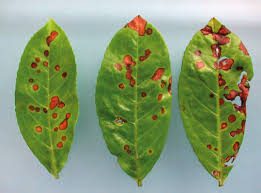
1. The pathogen and its correct name
The disease is caused by the Gram-negative bacterium Xanthomonas arboricola pv. juglandis. The bacterium infects the flowers, the fruit, the leaves and the shoots [3] [7].
In the EPPO database the accepted scientific name is Xanthomonas arboricola pv. juglandis, with the code XANTJU and the authority "(Pierce) Vauterin, Hoste, Kersters & Swings". Xanthomonas campestris pv. juglandis (Pierce) Dye is recorded there explicitly as a synonym, together with Pseudomonas juglandis and Xanthomonas juglandis [1]. The old name comes from Dye's approved list of bacteria of 1978 [4], and the same synonymy is noted in the Pacific Northwest plant disease management handbook [18].
The address of this article keeps the old name, because it is already indexed and changing it would break links. Throughout the text the name in force is used, and the modern literature is cited under the name in force.
The Greek agricultural warning bulletins of the Ministry also use the name in force [7] [8].
2. The cycle of the disease
The pathogen overwinters chiefly inside the dormant buds [3], as well as in infected buds and catkins [18]. Infected buds darken, turn black and die, while those with the highest bacterial populations are also the most likely to express blight as soon as spring growth begins [18].
Infections occur mainly in spring. Frequent and prolonged rains shortly before bloom, during bloom and for about two weeks afterwards lead to severe outbreaks of the disease, and it is in exactly that interval that the fruit is at its most susceptible [18].
Under controlled conditions in Spain, the optimum temperature range for infection of walnut by the bacterium was found to be from 20 to 30 °C, with an experimental maximum at 25 °C. At 10 to 15 °C three hours of wetness are enough for infection to occur, though with low symptom severity, while at 25 °C six to nine hours of wetness are enough for moderate severity [14].
These figures come from Spanish studies on walnut plants and not from a Greek orchard. No published Greek wetness threshold was found.
Damage in late-leafing cultivars depends to a large extent on how far the overwintering inoculum population climbed up the bud scales, and the initial inoculum of the dormant buds can be used to predict the subsequent severity of the disease [15].
The practical application in California: collection of 50 to 100 buds per block of the orchard and submission to a microbiology laboratory for assessment [3]. The detailed protocol calls for 100 dormant shoots with a thick terminal bud, from which the laboratory takes a subsample of 30 terminal buds and cultures them on a growth medium; the sampling is done from December to early April, and for late cultivars up to the moment the buds begin to open [15].
The role of the male flowers
Pollen is recognised as a route of transmission of the pathogen. Living pathogenic bacteria such as Xanthomonas arboricola pv. juglandis have repeatedly been isolated from pollen, and pollen released from infected catkins plays a part in its dispersal; infected pollen is carried on the wind and is deposited on any young developing part of the tree [9].
The same Greek review notes that infections depend on pollen especially in orchards planted with cultivars whose catkins emerge before the female flowers, such as Chandler, and that the cultivars Chandler and Vina show significant susceptibility to the pathogen [9]. That has a direct practical consequence for the timing of the first spray, as analysed below [3].
3. The symptoms
The disease attacks the flowers, the fruit, the shoots and the leaves [7].
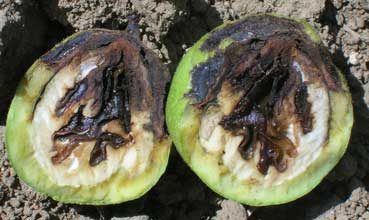
On the fruit
- Infected fruit develop, while still young, black, slightly sunken spots at the blossom end. This is the form known internationally as end blight [3].
- As the fruit matures, more spots develop on its sides: the side blight form [3].
- On the fruit the spots are also described as black, slimy and of varying size, able to penetrate the green husk and the shell [18]. In the Greek bulletin, young fruit are described as showing small, water-soaked, sunken spots which enlarge and darken [7].
On the flowers, the shoots and the leaves
- On the catkins, parts of the flower turn black. The female flowers are the most susceptible organ: the browning starts at the stigma, develops into necrosis and leads to flower drop [7].
- On the shoots, black, slightly sunken spots are found [18], described in the Greek bulletin also as black spots 2.5 cm long or longer [7].
- On the leaves, small brown spots with a yellow-green halo appear, which later coalesce and deform the blade [7]. Foliar infections appear initially as spots of a reddish-brown colour [18].
- Infected buds darken, becoming dark brown or black, and soon die [18].
4. The other two forms: BAN and vertical canker
The same bacterium is also involved in two further expressions, which in practice are confused with "plain" blight and lead to wrong decisions.
The symptoms begin as a brown spot at the stylar end, that is at the apex of the fruit where the flower was, and extend as the internal tissue rots. This is a complex: tissues with BAN consist most often of simultaneous infection by the blight bacterium, which failed to pass the shell and reach the kernel, and by a complex of fungi including Alternaria spp., Fusarium spp., Aspergillus niger, Colletotrichum sp. and Phomopsis sp. [16].
The practical consequence: when an orchard drops fruit despite correct copper sprays, the cause is not self-evidently the bacterium, nor a failure of the copper. The fungal part of the complex requires different handling [16], which makes laboratory identification the safe next step.
5. The disease triangle
Three conditions are necessary for a disease to be expressed: (1) the presence of the pathogen, (2) a susceptible host and (3) suitable weather conditions. This is known in plant pathology as the disease triangle. Reducing the contribution of each side of the triangle is what management of the disease aims at.
As to the pathogen, its presence in Greece is recorded in the EPPO database as "present, no details", alongside more than twenty other European countries; in France, Italy and Serbia it is recorded as widespread [2].
As to the host, the options are limited: Chandler, which predominates in the new Greek plantings, is among the cultivars with significant susceptibility to the pathogen, together with Vina [9]. No published Greek figure for the share of area by cultivar was found; the predominance of Chandler is recorded here as an observation from practice, without a number. The weather cannot be controlled, but it can be forecast, and it is on that forecast that the spray programme is built.
How long the fruit stays susceptible
Susceptibility is not constant through the season. In the Spanish studies, young leaves and immature fruit were extremely susceptible: fruit collected at fruit set showed the maximum symptom severity, while severity fell by half when the age of the fruit increased by 30 days after fruit set [14]. That, together with the finding that the critical rains are those shortly before, during and for about two weeks after bloom [18], explains why the weight of protection falls at the start of the growing season and not in summer.
6. Prediction: how the load is measured
Models for predicting the severity of the disease have been developed abroad. The best known is XanthoCast, which uses three temperature ranges and sums the wetness periods for each of them in order to model the risk; its index is a seven-day cumulative index, based on temperature and leaf wetness, ranging from 0 to 35 [17].
In Greece, where that programme is not available, the epidemiological load of the following year can be estimated by counting the infected fruit in the month of June [3].
The University of California scale refers to infected fruit per tree, and not to a total over several trees. Sampling on a number of trees and calculation of the average per tree [3] [17]:
| Infected fruit per tree | Risk for the following year |
|---|---|
| Fewer than 50 | Low |
| 50 to 150 | Moderate |
| 150 and above | High |
This is a scale calibrated in Californian walnut orchards. No corresponding Greek calibration was found published, so the thresholds serve as an order of magnitude and not as a Greek threshold.
The second method, more accurate but also more expensive, is the collection of 50 to 100 buds per block of the orchard in winter and laboratory measurement of their bacterial load [3]. That sampling also serves as a check on the programme itself: it shows whether the bacterial populations are rising or are being suppressed sufficiently by the sprays [15]. In orchards with a history of the disease and with access to a plant pathology laboratory, the cost is justified.
7. Control and its limits
Complete cure of the disease is impossible. The disease exists and will continue to exist in the orchards of Greece. The extent of the attack differs from year to year, according to the sprays, the grower's handling and the weather.
The six active substances cited internationally, and what applies here
| Active substance | Status | What is documented |
|---|---|---|
| Copper hydroxide | Approved in Greece for walnut blight | It is named explicitly among the approved active substances in the bulletin of the Greek Ministry for the crop [7]. It is subject to the limit on copper compounds [5]. |
| Copper oxychloride | Approved in Greece for walnut blight | It is named explicitly in the same bulletin [7]. It is subject to the limit on copper compounds [5]. |
| Copper oxide | A copper compound; it is not named in the bulletin's list for blight (it is named there for walnut anthracnose) | The bulletin's list for walnut blight gives copper hydroxide and copper oxychloride, not copper oxide [7]. The approval in force for each product is checked each time in the database of the Greek Ministry. |
| Bordeaux mixture | A copper compound; it is not named in the bulletin's list for blight (it is named there for walnut anthracnose) | As above [7]; it is subject to the same Union limit on copper [5]. |
| Kasugamycin | An antibiotic registered in California; it is not named among the substances approved for walnut in Greece | The UC IPM guidelines give a limit of two applications per year, with the note that approval for four was pending, a pre-harvest interval of 100 days and a recommendation to tank-mix with mancozeb or with a fixed copper product [3]; a report of the California Walnut Board states that a new label of 2022 allows up to four applications per season, with rotation of mode of action after two [11]. It is absent from the Greek list of active substances for walnut blight [7]. |
| Mancozeb | Non-renewal of approval in the Union | The approval was not renewed by Commission Implementing Regulation (EU) 2020/2087. Member States withdrew authorisations by 4 July 2021 and any grace period expired at the latest on 4 January 2022. The reasons: classification as toxic for reproduction category 1B and endocrine disrupting properties [6]. |
The limits on copper in the European Union
By Commission Implementing Regulation (EU) 2018/1981 the approval of copper compounds was renewed as candidates for substitution, with 1 January 2019 as the date of approval. The specific provision sets a maximum of 28 kg of copper per hectare over a period of 7 years. Member States may in particular decide to set a maximum annual application rate not exceeding 4 kg of copper per hectare. The same regulation requires that the quantities authorised, in doses and in number of applications, do not exceed the minimum necessary to achieve the intended effect [5].
The duration of the approval: the 2018 regulation set 31 December 2025 as the expiry date [5]. The approval was extended: Commission Implementing Regulation (EU) 2025/1489 of 24 July 2025 replaces, in Part E of the Annex to Regulation 540/2011 and in row 10, "Copper compounds", the expiry date with 30 June 2029 [19]. The limit of 28 kg per seven years did not change. Approvals do change, however, and the position in force is checked in the active substance database of the European Commission and in the approvals database of the Greek Ministry before any programme.
Resistance to copper is documented
Copper resistance is common in the walnut orchards of the Sacramento Valley and has been found in a few orchards of the San Joaquin Valley [3]. An annual report of the California Walnut Board states that strains with high resistance to copper, of the order of 100 ppm metallic copper equivalent and above, continue to be detected at several sites, while no resistance was detected to mancozeb or to mixtures of copper with mancozeb [11], mixtures which, as noted above, are no longer available in the European Union [6].
The resistance also has genomic documentation: the complete genome of the copper-resistant strain 417 has been published, isolated from an infected walnut fruit of the cultivar Chandler at Chico, California, and consisting of a single chromosome of 5.2 million base pairs; the authors attribute the selection of resistant strains to the extensive use of copper of recent decades [10].
No Greek data exist. No published Greek work was found which tests the sensitivity of Greek strains of the pathogen to copper. The above are Californian data and do not transfer silently to a Greek orchard; they do, however, serve as a warning for a crop which in Greece relies almost exclusively on copper [7].
Surfactants and adjuvants
According to the guidelines of the University of California, the use of surfactants does not increase the effectiveness of copper products [3]. Older trials in northern California reported a benefit from the addition of a penetrating adjuvant, but within a mixture of copper with a mancozeb product and with the aim of deeper penetration between the bud scales [13], a combination which is not available in the European Union after the non-renewal of mancozeb [6]. The difference between the two statements is exactly that, and it should not be read as a general recommendation to add adjuvants to copper products.
8. The spray programme
Applications have to be based on an integrated programme for containing the disease, built on the list of approvals in force and on the phenology of the particular year.
Winter, reduction of inoculum
- Removal of infected twigs and limbs at pruning, wherever that is practically feasible [18]. Given that the bacterium overwinters in buds and catkins [18], those parts are taken out of the orchard.
- Bud sampling from December to early April, where there is access to a laboratory, so that it is known whether the populations are rising or being suppressed [15].
- Avoidance of irrigation that wets the foliage: low sprinklers or microsprinklers that do not wet the trees, or drip irrigation [18].
Bud break, the most critical period
- In Greece, the bulletin of the Ministry states that the sprays start with the onset of growth, at stage B, and continue until the end of fruit set every 7 to 15 days [7] [8].
- In California, the first spray is placed when 30 to 40% of the buds reach the "prayer stage" [3], the moment when the terminal leaflets are just unfolding and stand upright and pressed together. Trials in northern California showed that the first sprays after bud break, when the new leaves are just beginning to unfold, give the greatest reduction in populations of the pathogen [13].
- The most susceptible growth stage is the bloom of the female flowers, stage E, during which the Greek bulletin recommends a dose lower than the one otherwise recommended, to avoid reducing the germination of the pollen grains [7] [8].
Spring and summer
- In prolonged wet springs, protective applications at intervals of 7 to 10 days are necessary [3]; the Greek bulletin gives a range of 7 to 15 days until the end of fruit set [7]. In years or districts with less rain the intervals widen, on the basis of the weather forecast.
- The choice of dose is made with the Union limit on copper constantly on the table: the regulation requires explicitly that the quantities authorised, in doses and in number of applications, do not exceed the minimum necessary [5].
- Every year in June the infected fruit per tree are counted, so that the load which will pass into the following winter is known [3].
9. Conclusion
Knowledge of the cycle of the disease and a correct estimate of the pathogen's load raise the probability that the sprays will succeed, because they allow the sprays to be tied to phenology and to the weather forecast. Reduction of the bacterial population on the buds in winter is essential, precisely because the initial inoculum of the dormant buds predicts the subsequent severity of the disease [15].
Even so, when the rains are frequent and prolonged shortly before, during and for about two weeks after bloom, the outbreaks are severe [18] and the young fruit is at its maximum susceptibility [14]. Spring weather remains the decisive factor in how far the symptoms are expressed in the orchard.
A strategy that rests exclusively on copper has two visible limits: the Union limit of 28 kg per hectare over seven years and the classification of copper compounds as candidates for substitution [5], and the documented resistance of the pathogen to copper where the selection pressure lasted for decades [3] [10]. Both argue for starting the new season with the lowest possible bacterial load, because after bloom the margins are minimal.
10. Sources
The numbers within the text refer to the list below. Where only the abstract and not the full text was used, this is stated explicitly.
- [1] EPPO Global Database. Xanthomonas arboricola pv. juglandis (XANTJU). European and Mediterranean Plant Protection Organization. Source for the scientific name in force, the authority "(Pierce) Vauterin, Hoste, Kersters & Swings", the code XANTJU and the listing of Xanthomonas campestris pv. juglandis (Pierce) Dye as a synonym. Full text.
- [2] EPPO Global Database. Xanthomonas arboricola pv. juglandis, World distribution. Source for the recording of the pathogen in Greece as "present, no details" and for its characterisation as widespread in France, Italy and Serbia. Full text.
- [3] Walnut Blight, UC IPM Pest Management Guidelines: Walnut, UC ANR Publication 3471, Statewide Integrated Pest Management Program, University of California. The principal source for management in California: overwintering in the dormant buds, end blight and side blight, sampling of 50 to 100 buds per block, the June risk scale (below 50, 50 to 150, 150 and above infected fruit per tree), the "prayer stage" at 30 to 40% of the buds, the timing at 30 to 40% of the catkins for Chandler-type cultivars with the note of 7 to 10 days, the intervals of 7 to 10 days, copper resistance in the Sacramento and San Joaquin valleys, the absence of any gain in effectiveness from surfactants, and the restrictions on kasugamycin (two applications per year, 100 days pre-harvest interval, tank mix with mancozeb or fixed copper). Full text.
- [4] California Department of Food and Agriculture. Pest Rating Proposal: Xanthomonas arboricola pv. juglandis. Source for the statement that losses in certain cultivars can reach 50%, for the origin of the name X. campestris pv. juglandis in Dye's approved list (1978) and for the inclusion of Greece in the world distribution. Full text.
- [5] Commission Implementing Regulation (EU) 2018/1981 of 13 December 2018 renewing the approval of the active substances copper compounds, as candidates for substitution. EUR-Lex. Source for the maximum of 28 kg of copper per hectare over a period of 7 years, for the option of Member States to set a maximum annual rate not exceeding 4 kg per hectare, for the requirement that the minimum necessary quantities not be exceeded, for the classification as candidates for substitution and for the dates of approval (1 January 2019) and expiry (31 December 2025). Full text.
- [6] Commission Implementing Regulation (EU) 2020/2087 of 14 December 2020 concerning the non-renewal of the approval of the active substance mancozeb. EUR-Lex. Source for the non-renewal of mancozeb in the Union, for the withdrawal of authorisations by 4 July 2021, for the expiry of any grace period at the latest on 4 January 2022 and for the reasons (toxic for reproduction category 1B, endocrine disrupting properties). Full text.
- [7] ΥΠΑΑΤ, Περιφερειακό Κέντρο Προστασίας Φυτών, Ποιοτικού & Φυτοϋγειονομικού Ελέγχου Βόλου. Γεωργικές Προειδοποιήσεις, Καρυδιά, 19 March 2024 (Greek Ministry of Rural Development and Food, Regional Centre for Plant Protection, Quality and Phytosanitary Control of Volos, Agricultural Warnings, Walnut; document in Greek). The Greek official source: the list of the six active substances approved for walnut blight (Bacillus amyloliquefaciens QST 713, copper hydroxide, copper oxychloride, fosetyl-Al, laminarin, potassium phosphonates), the start of sprays at stage B and their continuation until the end of fruit set every 7 to 15 days, the reduced dose at stage E to protect pollen germination, the description of symptoms on catkins, female flowers, fruit, shoots and leaves, and the distinction of blight from anthracnose (Gnomonia leptostyla). These approvals are valid in Greece only. Full text.
- [8] ΥΠΑΑΤ, Περιφερειακό Κέντρο Προστασίας Φυτών, Ποιοτικού & Φυτοϋγειονομικού Ελέγχου Βόλου. Γεωργικές Προειδοποιήσεις, Ακρόδρυα Νο 6, 18 March 2025 (the same Greek service, Agricultural Warnings, Nut Crops No. 6, walnut; document in Greek). Source for the confirmation, in a more recent bulletin, of the same spray timing and of the reduced dose at stage E, for the use of the name in force of the pathogen by the Greek service, and for the recommendation that only plant protection products approved for the crop be used. Full text.
- [9] Manthos, I., Sotiropoulos, T. and Vagelas, I. (2024). Is the Artificial Pollination of Walnut Trees with Drones Able to Minimize the Presence of Xanthomonas arboricola pv. juglandis? A Review. Applied Sciences 14(7):2732. ELGO-DIMITRA and University of Thessaly. A Greek work; source for the recognition of pollen as a route of transmission of the pathogen, for the isolation of living bacteria from pollen, for the role of pollen from infected catkins in wind dispersal, and for the significant susceptibility of the cultivars Chandler and Vina. Full text.
- [10] Pereira, U.P., Gouran, H., Nascimento, R., Adaskaveg, J.E., Goulart, L.R. and Dandekar, A.M. (2015). Complete Genome Sequence of Xanthomonas arboricola pv. juglandis 417, a Copper-Resistant Strain Isolated from Juglans regia L. Genome Announcements 3(5):e01126-15. Source for the genomic documentation of copper resistance: complete sequencing of strain 417 from an infected fruit of the cultivar Chandler at Chico, California, a single chromosome of 5.2 million base pairs, and attribution of the selection of resistant strains to the extensive use of copper. Full text.
- [11] Adaskaveg, J.E., Förster, H., Thompson, D., Cary, D., Dandekar, A., Brown, P. and Leslie, C. (2021). Epidemiology and Management of Walnut Blight. California Walnut Board. Source for the detection of strains with high resistance to copper, of the order of 100 ppm metallic copper equivalent and above, at several sites, and for the absence of resistance to mancozeb and to mixtures of copper with mancozeb. Full text.
- [12] Hajri, A., Meyer, D., Delort, F., Guillaumès, J., Brin, C. and Manceau, C. (2010). Identification of a genetic lineage within Xanthomonas arboricola pv. juglandis as the causal agent of vertical oozing canker of Persian (English) walnut in France. Plant Pathology 59(6):1014-1022. Source for vertical oozing canker: sampling in 79 orchards and nurseries in France and grouping of the VOC strains into a set clearly distinct from the strains isolated from blight symptoms, that is a separate genetic lineage within the same pathovar. Abstract only (CIRAD Agritrop record).
- [13] Buchner, R.P., Gilles, C., Olson, W.H., Adaskaveg, J.E., Lindow, S.E. and Koutsoukis, R. (2010). Spray timing and materials for walnut blight control in northern California, USA. Acta Horticulturae 861:457-464. Source for the finding that in northern California the damage on unsprayed trees can exceed 50%, that the first sprays after bud break, at the "prayer stage", give the greatest reduction in populations of the pathogen, and that the benefit from a penetrating adjuvant was reported within a mixture of copper with a mancozeb product. Abstract only (ISHS record).
- [14] Moragrega, C. and Llorente, I. (2023). Effects of Leaf Wetness Duration, Temperature, and Host Phenological Stage on Infection of Walnut by Xanthomonas arboricola pv. juglandis. Plants 12:2800. Source for the infection thresholds, from studies in Spain: optimum range 20 to 30 °C with an experimental maximum at 25 °C, three hours of wetness sufficient at 10 to 15 °C with low severity, six to nine hours at 25 °C for moderate severity, and a halving of severity when the fruit ages by 30 days from fruit set. Full text.
- [15] Milliron, L., Buchner, R.P. and Lindow, S.E. Walnut Blight Bud Sampling. Sacramento Valley Orchards, University of California Cooperative Extension. Source for the bud sampling protocol: 100 dormant shoots with a thick terminal bud, a subsample of 30 terminal buds on a growth medium, the period from December to early April, and for the statement that the initial inoculum of the dormant buds can be used to predict the subsequent severity of the disease and as a check on the adequacy of the sprays. Full text.
- [16] Reyes, C. and Michailides, T. (2023). 2023 brown apical necrosis (BAN) and late-season walnut blight. Sacramento Valley Orchards, University of California Cooperative Extension. Source for the composition of the brown apical necrosis complex: simultaneous infection by the blight bacterium, which did not reach the kernel, and by a complex of fungi including Alternaria spp., Fusarium spp., Aspergillus niger, Colletotrichum sp. and Phomopsis sp., and for the onset of symptoms at the stylar end. Full text.
- [17] Predicting and Managing Walnut Blight. West Coast Nut, 24 June 2020. Source for how XanthoCast works: three temperature ranges with summation of the wetness periods for each, and a seven-day cumulative index of temperature and leaf wetness on a scale from 0 to 35; also a second independent statement of the three June risk categories. Full text.
- [18] Walnut (Juglans spp.), Blight. Pacific Northwest Plant Disease Management Handbook. Source for the explicit mention of the old name as a synonym, for overwintering in infected buds and catkins, for the finding that frequent and prolonged rains shortly before, during and for about two weeks after bloom cause severe outbreaks, for the description of symptoms on foliage, shoots, buds and fruit, and for the cultural measures (removal of infected twigs, irrigation that does not wet the foliage). Full text.
- [19] Commission Implementing Regulation (EU) 2025/1489 of 24 July 2025 amending Implementing Regulation (EU) No 540/2011 as regards the extension of the approval periods of certain active substances. EUR-Lex. Source solely for the extension of the approval of copper compounds: in Part E of the Annex to Regulation 540/2011, row 10, "Copper compounds", the expiry date of the approval is replaced by 30 June 2029. Full text.
This text is informative and educational in character. It does not replace an on-site agronomic assessment, nor does it constitute a prescription for the application of plant protection products. The approvals of active substances, the doses and the pre-harvest intervals change and differ by country and by crop; the instructions on the label and the national approvals always prevail. The approvals and the agricultural warning bulletins of the Greek Ministry of Rural Development and Food that are cited here are valid in Greece only and say nothing about what is authorised in any other country; in every other country the national register of that country applies.
Spraying trees that are carrying fruit can cause staining of the fruit and burning of the foliage: a prior test on a limited number of trees, with the same product and the same dose, and a wait of 5 to 7 days before general application are required. Spraying is done in the late afternoon or early in the morning, never in a heatwave and never on foliage under water stress. Pastopoulos Agronomics bears no responsibility for the use of the above information.
Related articles
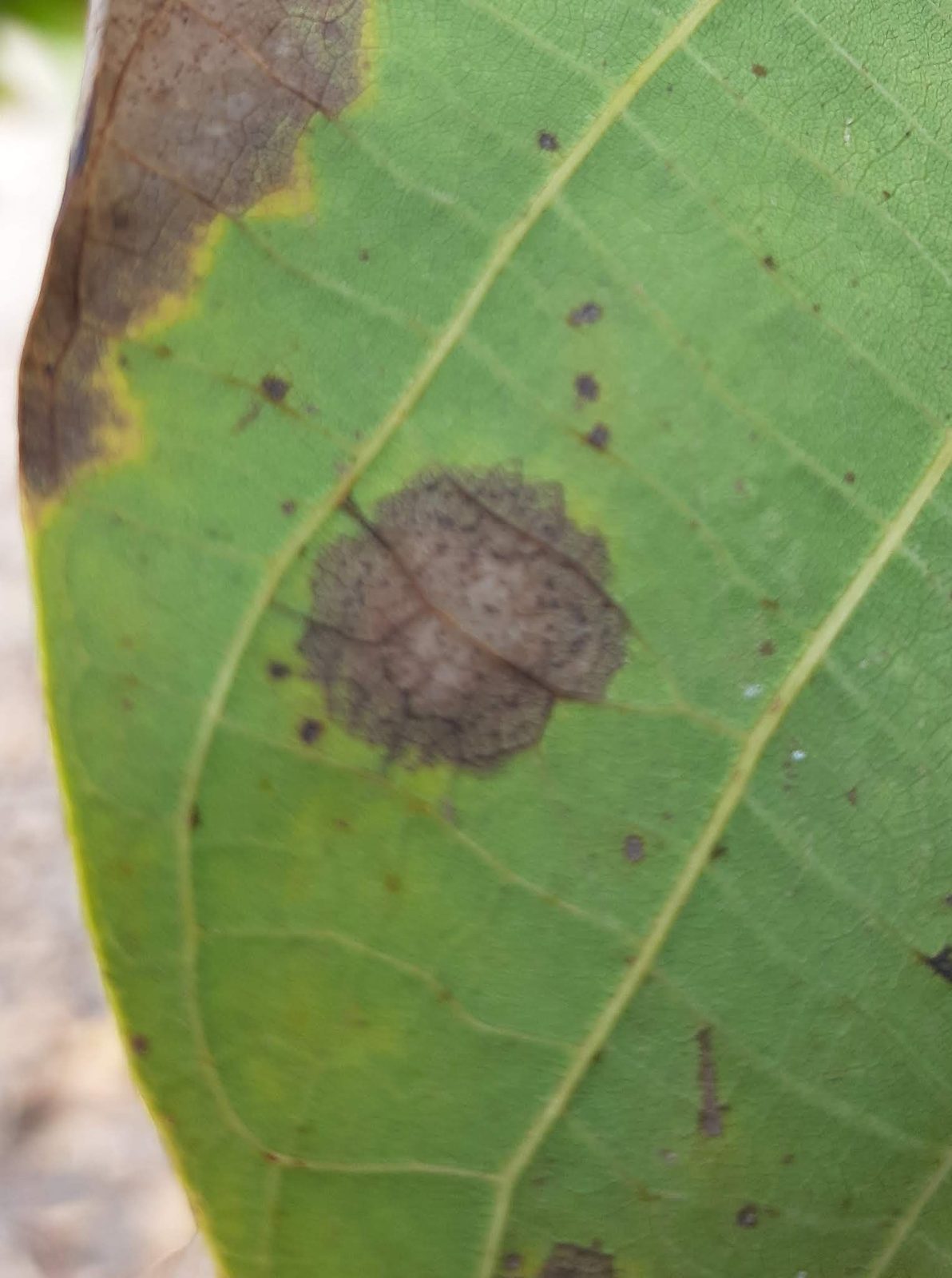
Pests and diseases of walnut: identification from the symptoms, with a diagnostic tool
Twenty causes, each with the one feature that separates it in the field: anthracnose and blight that produce the same lesion, brown apical necrosis, the pests of the nut, mites and aphids, the branch dieback complex, the cankers of the trunk, blackline at the graft union and the quarantine risk. With a tool that compares the symptoms against the profile of every cause, and two foreign recommendations that are illegal in the European Union today.

Walnut anthracnose: diagnosis and control
The most important fungal disease of walnut in Greece, found on almost every holding and capable of taking the whole crop. The correct name of the pathogen, the scale of the losses, differential diagnosis, the temperatures and humidity it needs, cultivar susceptibility and where Chandler stands, and the cultural measures without which the sprays do not hold.
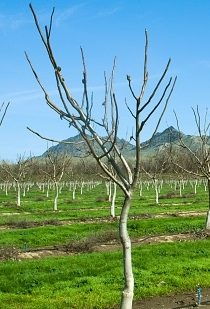
Walnut cultural practice: establishment, spacing, irrigation and nutrition
Establishment decisions lock in the yield ceiling for forty years. In detail: the soil specifications, rootstock choice by problem, lateral bearing, why Chandler is protandrous and what that means for the pollinizer, the rule of 112 kg per hectare for each 1% of light intercepted, irrigation by stem water potential, the nitrogen and potassium budgets, and the three findings that overturn common practice.