
Sweet cherry varieties: an empirical assessment, 4th update 2021
Savvas Pastopoulos, Agronomist MSc, Pastopoulos Agronomics, Neos Mylotopos, Pella, Greece
For 9 consecutive seasons the behaviour and the productivity of sweet cherry varieties have been observed in the area of Giannitsa. The area southwest of Mount Paiko is well suited to sweet cherry growing. What follows is an empirical assessment of each variety, together with the breeder and the holder of the rights for each one.
Figures in this article are given per hectare. One hectare equals 10 stremmata, the unit used in Greece.
How the assessment was made
The assessments were made on farms on the slopes of the mountain, at an altitude of 70–120 metres. The varieties are planted on the rootstocks MaxMa 14, CAB 6P, Gisela 12 and Gisela 6.
The varieties monitored are: Early Bigi® (Bigisol®, elsewhere Bigarreau Argot), Early Lory®, Nimba®, Bigarreau Burlat, Rita, Tsolakeika (Τσολακέικα), Sabrina®, Rocket®, Precoce Bernard, Cristalina®, Canada Giant®, Samba®, Sunburst, Brooks, Grace Star®, Big Star®, Summit, Ferrovia, Regina, Sweet Aryana® (2018), Sweet Gabriel® (2021), Sweet Saretta® (2021) and Giant Red®.
The data that follow come from personal observations and from the observations of the growers advised here. They represent a general tendency in the behaviour of the varieties, and significant differences may occur between other areas, or even between farms in the same area, because of the many factors that intervene in the productive process of the trees.
These are not the results of an official experimental evaluation. Pastopoulos Agronomics accepts no liability whatsoever for the use of this information in decisions on planting, rootstock choice or pollinisers.
Table, ripening order at a glance
The table below gives the ripening order, while the detailed descriptions that follow are alphabetical, so that any particular variety can be found quickly.
| Variety | Ripening season | Self-fertility |
|---|---|---|
| Rita | 3 days before Early Bigi | No |
| Early Bigi® | 5 days before Burlat | No |
| Precoce Bernard | Together with Early Bigi | No |
| Early Lory® | 1–2 days after Early Bigi | No |
| Nimba® | 2–4 days after Early Bigi | No |
| Royal Tioga® | Burlat season | Yes |
| Narana | Burlat season | No |
| Sweet Aryana® | 5 days after Burlat | Partly |
| Pacific Red® | Sweet Aryana season | Yes |
| Sabrina® | 7 days after Burlat | Yes |
| Rocket® | 8 days after Burlat | No |
| Giant Red® | Early to mid-early | No |
| Tsolakeika | Around 14 May | Partly |
| Cristalina® | After 15 May | No |
| Grace Star® | 18–30 May | Yes |
| Canada Giant® | 20–30 May | No |
| Summit | Late May to early June | No |
| Big Star® | Lapins season | Yes |
| Sweet Saretta® | Mid-June | Yes |
| Regina | Very late | No |
The varieties in detail
Big Star®
The variety Big Star is a self-fertile, late and very high yielding variety that ripens in the Lapins period. The fruit is kidney-shaped, of large size and susceptible to rain cracking.
The variety sets fruit excessively and is not advisable on dwarfing rootstocks. It often shows fruit drop shortly before ripening, which is not a problem, since the number of fruits is always excessive. It requires strict pruning and heavy fertilisation for a good crop of good quality to be obtained.
Although its fruit is larger than that of Lapins, Big Star is not an equivalent replacement for it, because of its susceptibility to cracking.
Breeder / rights: University of Bologna (Università di Bologna), Department of Agricultural and Food Sciences, DISTAL. It belongs to the "Star" series of S. Sansavini and S. Lugli. Official plant variety rights page, UNIBO
The observations above are empirical, from the area of Giannitsa. Pastopoulos Agronomics accepts no liability for their use in planting decisions.
Canada Giant® (variety "Sumgita")
The variety Canada Giant is not self-fertile and is productive, and it usually requires two pollinisers (Ferrovia, Regina and Summit) and a very good presence of bees during flowering, particularly on the MaxMa 14 rootstock. It flowers around 30 March to 6 April.
The fruit is of very large size, 32 millimetres, and heart-shaped, while the stem is long. It ripens from 20 to 30 May. It shows relative resistance to rain cracking. However, it does not hold particularly well on the tree, since it softens slightly if it ripens fully.
It is a semi-upright variety that is also easily trained to an open vase. The stem is fairly long, which makes harvesting easier.
Breeder / rights: Summerland Research Station, Agriculture and Agri-Food Canada (British Columbia, Canada). It arose from the cross Van × Sam. Rights management: Summerland Varieties Corp. summerlandvarieties.com
The observations above are empirical, from the area of Giannitsa. Pastopoulos Agronomics accepts no liability for their use in planting decisions.
Cristalina® (variety "Sumnue")
The variety Cristalina is not self-fertile and is of low productivity on the MaxMa 14 rootstock. Planting it on semi-dwarfing rootstocks, however, makes it quite productive. It has early flowering and requires 2 pollinisers.
The fruit is heart-shaped, very large and very tasty. The variety has high tolerance of rainfall and does not crack easily. Ripening usually takes place after 15 May.
Planting this variety on the Gisela 6 rootstock is recommended wherever that is possible. It is an upright and vigorous tree; it needs no fertilisation, or reduced fertilisation, in the first 5 years in order to come into bearing. After that it requires fertilisation in line with the expected crop.
Breeder / rights: Summerland Research Station, Agriculture and Agri-Food Canada. The cross was made by Karl Lapins in 1967 and the variety was released by Frank Kappel in 1997. Rights management: Summerland Varieties Corp. summerlandvarieties.com
The observations above are empirical, from the area of Giannitsa. Pastopoulos Agronomics accepts no liability for their use in planting decisions.
Early Bigi® (variety "Bigisol", also known as Bigarreau Argot)
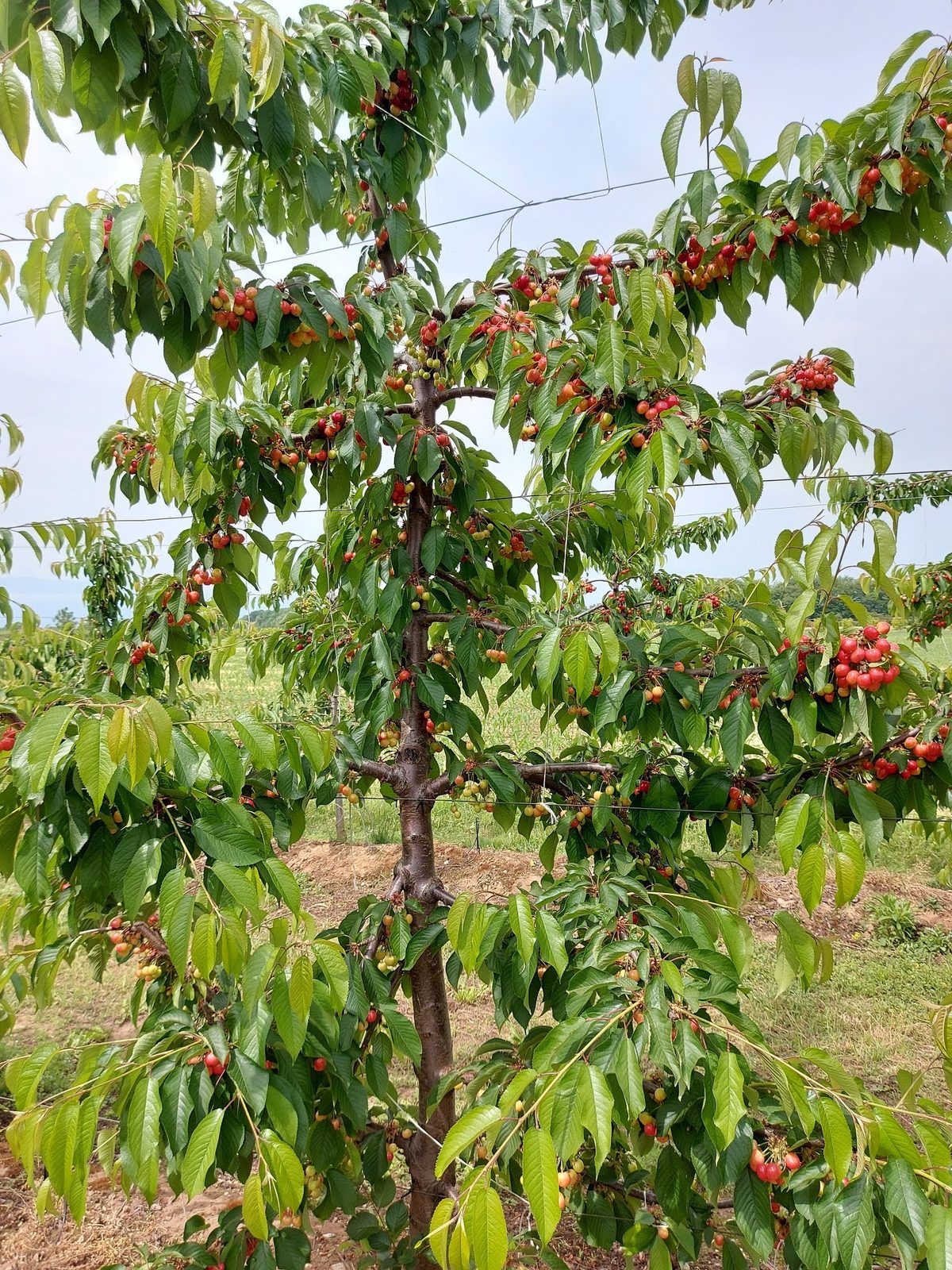
Early Bigi is a variety that is not self-fertile and ripens 5 days before Bigarreau Burlat. In 2018 it ripened on 2 May, in 2019 on 1 May and in 2020 on 11 May, while in earlier years it has also been harvested on 30 April. If it is fertilised excessively after flowering, there is a serious possibility that ripening will be delayed.
Its flowering is early and begins after 20 March. It requires 2 pollinisers in the orchard (Samba, Lory Bloom, Tsolakeika, Lapins). The variety does not tolerate heavy rainfall during the ripening period, because it is susceptible to cracking. It is also susceptible to softening of the fruit (watery flesh) when there is heavy rain at ripening, or late nitrogen and potassium fertilisation.
A major advantage of the variety is its stable fruit set and its rapid entry into production. However, on farms with dense planting in an open vase there is a fruit set problem, owing to poor aeration and light and to the vigour shown by the trees.
Its maximum productivity ranges from 7,000 kg/ha in an open vase (CAB 6P), 14,000 kg/ha in a palmette (MaxMa 14) and 16,000 kg/ha in a spindle (Gisela 6). The variety is weaker in fruit size when it is overloaded, because the trees are stressed and produce small fruit. The problem is solved through correct assessment of the expected crop and stricter pruning. Under normal conditions the size is from 27 to 32 millimetres and the weight 8–10 grams.
It is regarded here as the most worthwhile very early sweet cherry variety. It is superior to Early Lory, as it has a more stable crop. Many nurserymen also refer to it as Bigarreau Argot.
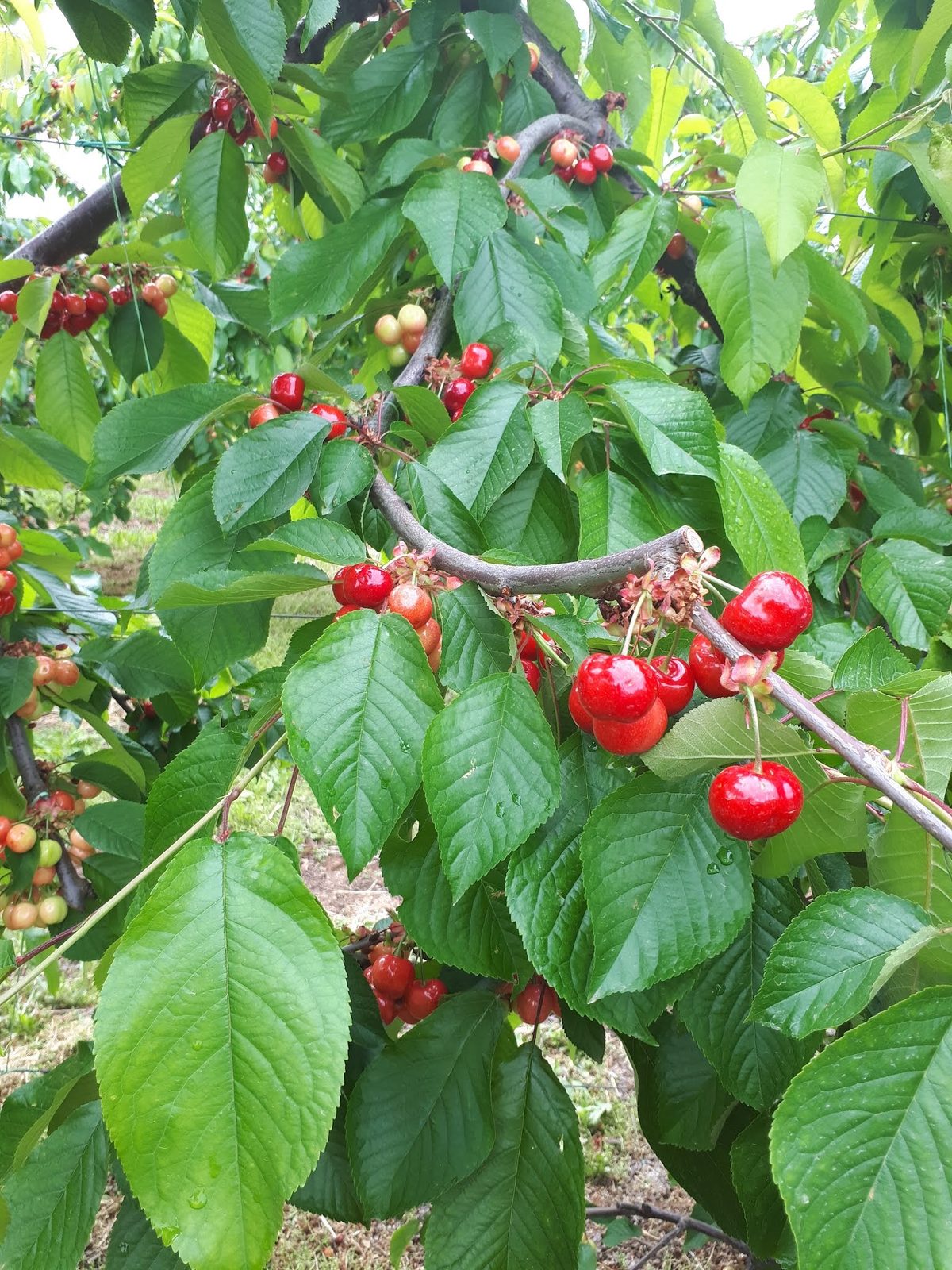
Breeder / rights: Pierre Argot, France. Distribution and rights management in Europe: Star Fruits (France). star-fruits.com
The observations above are empirical, from the area of Giannitsa. Pastopoulos Agronomics accepts no liability for their use in planting decisions.
Early Lory® (variety "Rivedel", also known as Earlise®)
The variety Early Lory, which accounts for most of the new plantings, was assessed positively. It is a large-fruited variety (27–34 millimetres) for its season, ripening 1–2 days after Early Bigi.
On the MaxMa 14 and Gisela 6 rootstocks it sets fruit satisfactorily; however, it is more unstable than Early Bigi. It has early flowering (20 March) and is pollinated by Lory Bloom. On the other rootstocks it needs correct management of fertilisation and pruning for its crop to be increased. It requires good pollination and a strong presence of bees during flowering.
The fruits, at the pink stage, are susceptible to cracking, and also to softening when they are ripe, in the presence of rainfall. In cases of overcropping the variety produces small fruit.
It is susceptible to many virus diseases, such as Little Cherry Virus 1 (LChV-1), which causes small fruit, and Prunus Dwarf Virus (PDV), which causes dwarfing.
Breeder / rights: Pierre Argot, France (cross Starking × Burlat, 1977). Registered in the European register as "Rivedel" since 1995. Distribution: Star Fruits (France). EARLISE® Rivedel variety sheet, Star Fruits
The observations above are empirical, from the area of Giannitsa. Pastopoulos Agronomics accepts no liability for their use in planting decisions.
Giant Red® (variety "Mariant")
The variety Giant Red was released a good many years ago, with limited plantings because of the many problems it has.
It produces kidney-shaped fruits of very large size (34 millimetres), sweet and very susceptible to rain cracking. The fruits do not have sufficient colouring, while they also show surface browning if they are harvested earlier.
The variety is susceptible to bacterial canker and to PDV; for that reason it has the appearance of a distressed tree in summer.
Breeder / rights: Marvin Nies, private breeding programme, California (USA). Registered with a United States plant patent in 1995 and in the Community plant variety register as "Mariant" since 2007.
The observations above are empirical, from the area of Giannitsa. Pastopoulos Agronomics accepts no liability for their use in planting decisions.
Grace Star®
The variety Grace Star is self-fertile and productive. The fruit is kidney-shaped, of very large size, 32–34 millimetres, with a long stem and good tolerance of cracking. Ripening occurs from 18 to 30 May.
When the variety is planted on the CAB 6P and MaxMa 14 rootstocks, it shows strong, upright growth and a significant delay in coming into bearing. It requires particularly poor nitrogen fertilisation and light pruning.
On the Gisela 6 rootstock, by contrast, the variety comes into production very quickly, but the formation of double fruits is observed at a rate of up to 30%. A relative susceptibility of the variety to bacterial canker of stone fruits has been observed.
Breeder / rights: University of Bologna (Università di Bologna), by S. Lugli and S. Sansavini, selection "DCA BO 84.703.003", "Star" series. Registered in the European register of protected varieties. Official plant variety rights page, UNIBO
The observations above are empirical, from the area of Giannitsa. Pastopoulos Agronomics accepts no liability for their use in planting decisions.
Narana
The variety Narana is an early variety with good quality characteristics and moderate tolerance of rain cracking. It is considered a replacement for Burlat, as it ripens in the same season. It is awaited in Greece.
Breeder / rights: Julius Kühn-Institut, Institute for Breeding Research on Fruit Crops, Dresden-Pillnitz (Germany), the German state sweet cherry breeding programme. julius-kuehn.de
The observations above are empirical, from the area of Giannitsa. Pastopoulos Agronomics accepts no liability for their use in planting decisions.
Nimba® (variety "SMS 290")
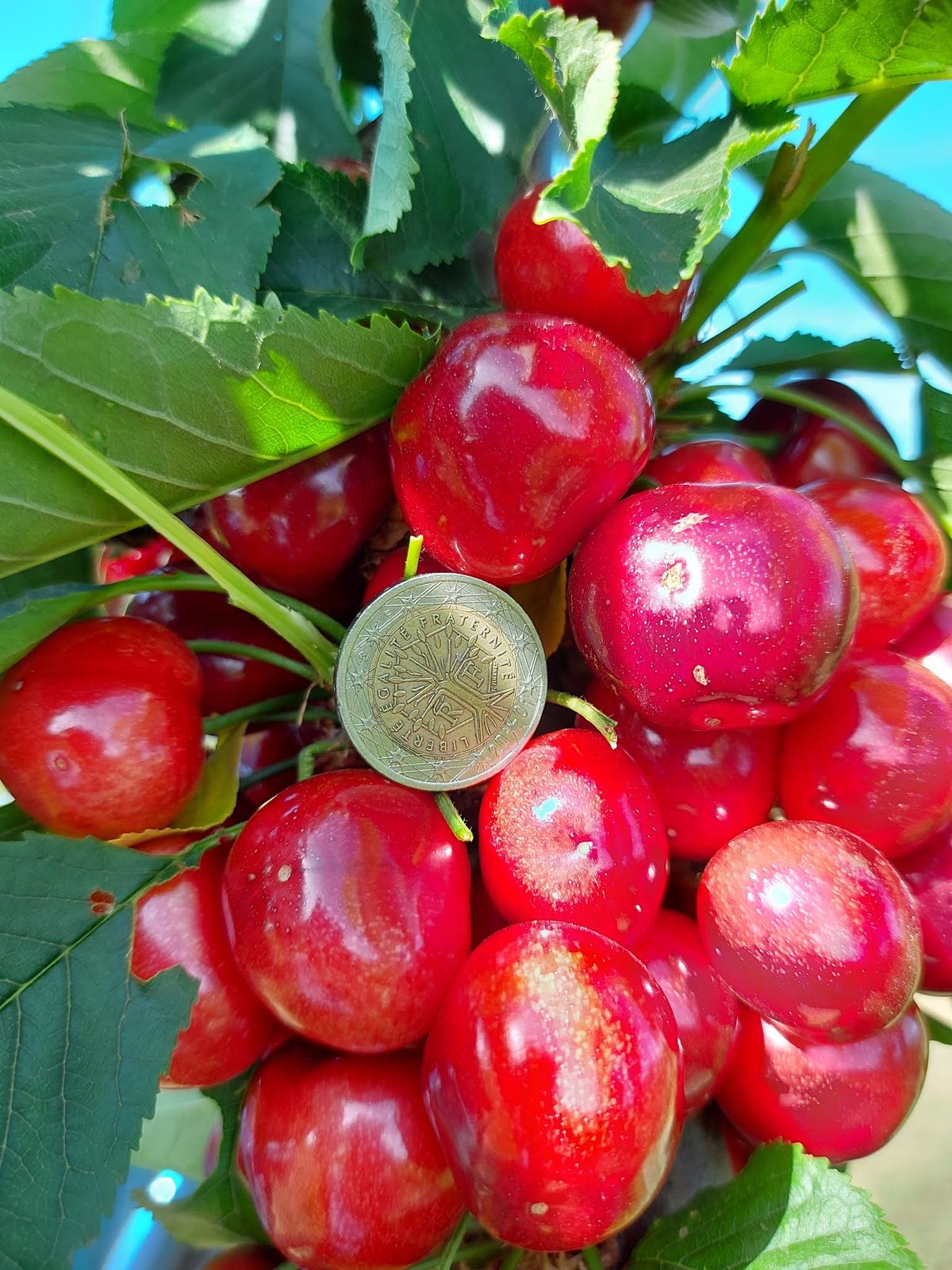
The variety Nimba is a new early variety that ripens 2–4 days after Early Bigi (Burlat season). It has an impressive kidney-shaped fruit of large size, 32 millimetres. In flavour it surpasses all the early varieties.
Its resistance to rain cracking is similar to that of Early Bigi. It comes into production quickly and sets fruit satisfactorily on the Gisela 6 rootstock, where it was tested. It shows no susceptibility to foliage diseases in summer.
It is regarded here as the most effective replacement for Burlat. It is pollinated by Pacific Red. Its main drawback is the tendency of the fruit to soften when it is fertilised or irrigated regularly. Even so, it is firmer than the other early varieties.
Breeder / rights: SMS Unlimited LLC, California (USA). Exclusive editor and rights manager in Europe since 2010: COT International (France). Variety sheets, COT International
The observations above are empirical, from the area of Giannitsa. Pastopoulos Agronomics accepts no liability for their use in planting decisions.
Pacific Red® (variety "SMS 291")
The variety Pacific Red is new, self-fertile and productive. It is large fruited when the crop load is normal. It has moderate tolerance of cracking.
Planting it on dwarfing rootstocks is not advisable, since it produces small fruit because of an excessive load. In general terms it is a good variety for the grower, because of its stable cropping.
It falls behind Sweet Aryana in quality, which ripens in the same season. The weight of the fruit is 9–10 grams. It holds well on the tree and its fruit is very firm.
Breeder / rights: SMS Unlimited LLC, California (USA). Editor and rights manager: COT International (France). Variety sheets, COT International
The observations above are empirical, from the area of Giannitsa. Pastopoulos Agronomics accepts no liability for their use in planting decisions.
Precoce Bernard
The variety Precoce Bernard ripens together with Early Bigi and is smaller in size. It has the same behaviour in fruit cracking as the other early varieties.
It has not been planted much, while some growers complain of a fair number of double fruits. The variety is small fruited and cannot compete with the other early varieties.
Breeder / rights: An old French variety (Bigarreau Précoce Bernard), free of plant breeders' rights.
The observations above are empirical, from the area of Giannitsa. Pastopoulos Agronomics accepts no liability for their use in planting decisions.
Regina
The variety Regina is a very late variety that is not self-fertile. It is productive on semi-dwarfing rootstocks and requires 2 pollinisers, Ferrovia and Kordia. It flowers 1 April to 7 April.
It produces large and firm fruits. It is the most resistant variety to rain cracking. It has been observed that, if it ripens fully, the fruit separates from the stem. It is also susceptible to PDV. The variety is recommended on dwarfing rootstocks wherever that is possible.
Breeder / rights: Jork Fruit Research Station (Esteburg), Germany. Cross Schneiders Späte Knorpelkirsche × Rube in 1957, selection "Jork 57/201", with Karl-Heinz Tiemann as breeder; released in 1998. esteburg.de
The observations above are empirical, from the area of Giannitsa. Pastopoulos Agronomics accepts no liability for their use in planting decisions.
Rita
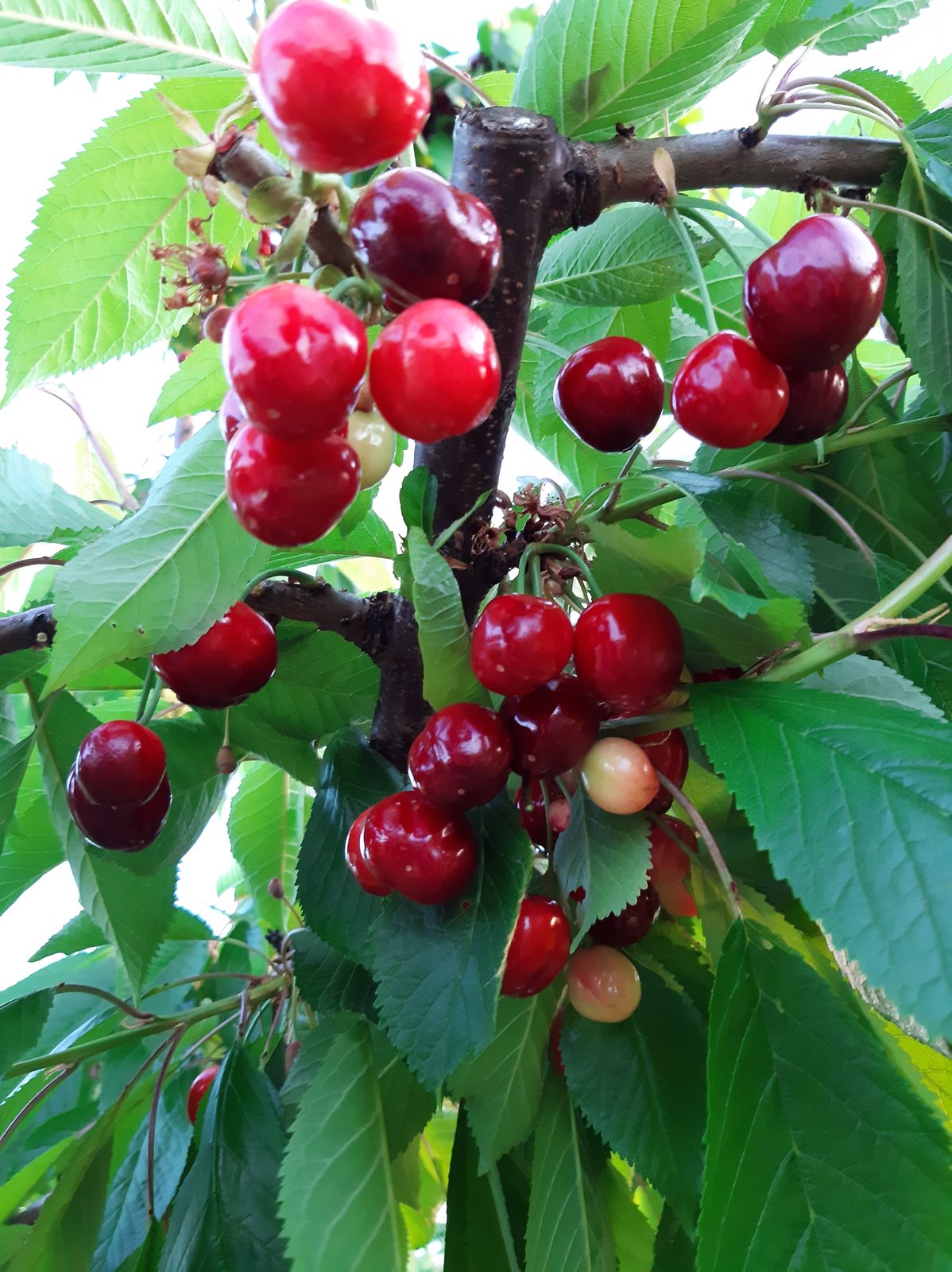
The variety Rita is the earliest of all. It ripens 3 days before Early Bigi (27 April 2019) and is medium fruited, 7–8 grams; its fruit is elongated.
The variety is very susceptible to rain cracking. It has shown no double fruits so far. It requires good bee flight at flowering for satisfactory fruit set to be achieved.
The only notable feature of the variety is its ripening season. If ripening is delayed, then commercially it has no hope against the quality of the other early varieties. In most years it crops excessively, with the result that its ripening is delayed and the other early varieties catch up with it.
Breeder / rights: Újfehértó Research Station, Hungary, the Hungarian sweet cherry breeding programme. Released in 2004.
The observations above are empirical, from the area of Giannitsa. Pastopoulos Agronomics accepts no liability for their use in planting decisions.
Rocket® (variety "SMS 22")
Rocket is an oversized cherry that easily exceeds 32 millimetres and 12 grams. The fruit is heart-shaped, tasty and moderately resistant to rain cracking.
The variety has a significant fruit set problem, even on the Gisela 6 and Gisela 12 rootstocks. The breeder proposes the variety Frisco as a polliniser, which is the better variety of the two.
Rocket is not recommended for extensive plantings, because of its low productivity so far in this area. In other areas it may perhaps behave better.
Breeder / rights: SMS Unlimited LLC, California (USA). Editor and rights manager: COT International (France). Variety sheets, COT International
The observations above are empirical, from the area of Giannitsa. Pastopoulos Agronomics accepts no liability for their use in planting decisions.
Royal Tioga®
The variety Royal Tioga is a new, revolutionary variety that will change everything known so far about the cherry. It ripens in the Burlat period and its fruit is enormous for its season, 32–34 millimetres.
Its flowering is in the first fortnight of March, and it is self-fertile. The variety has moderate tolerance of rain cracking and shows the appearance of double fruits at a rate of around 15%.
It is in effect the first self-fertile variety that will ripen before 10 May. Among the drawbacks of the variety is the formation of double fruits in some years.
Breeder / rights: Zaiger's Genetics (Gary Neil Zaiger), Modesto, California (USA). Protected by the United States plant patent USPP 22,779. Plant patent USPP22779P3
The observations above are empirical, from the area of Giannitsa. Pastopoulos Agronomics accepts no liability for their use in planting decisions.
Sabrina® (variety "SUMN314CH")
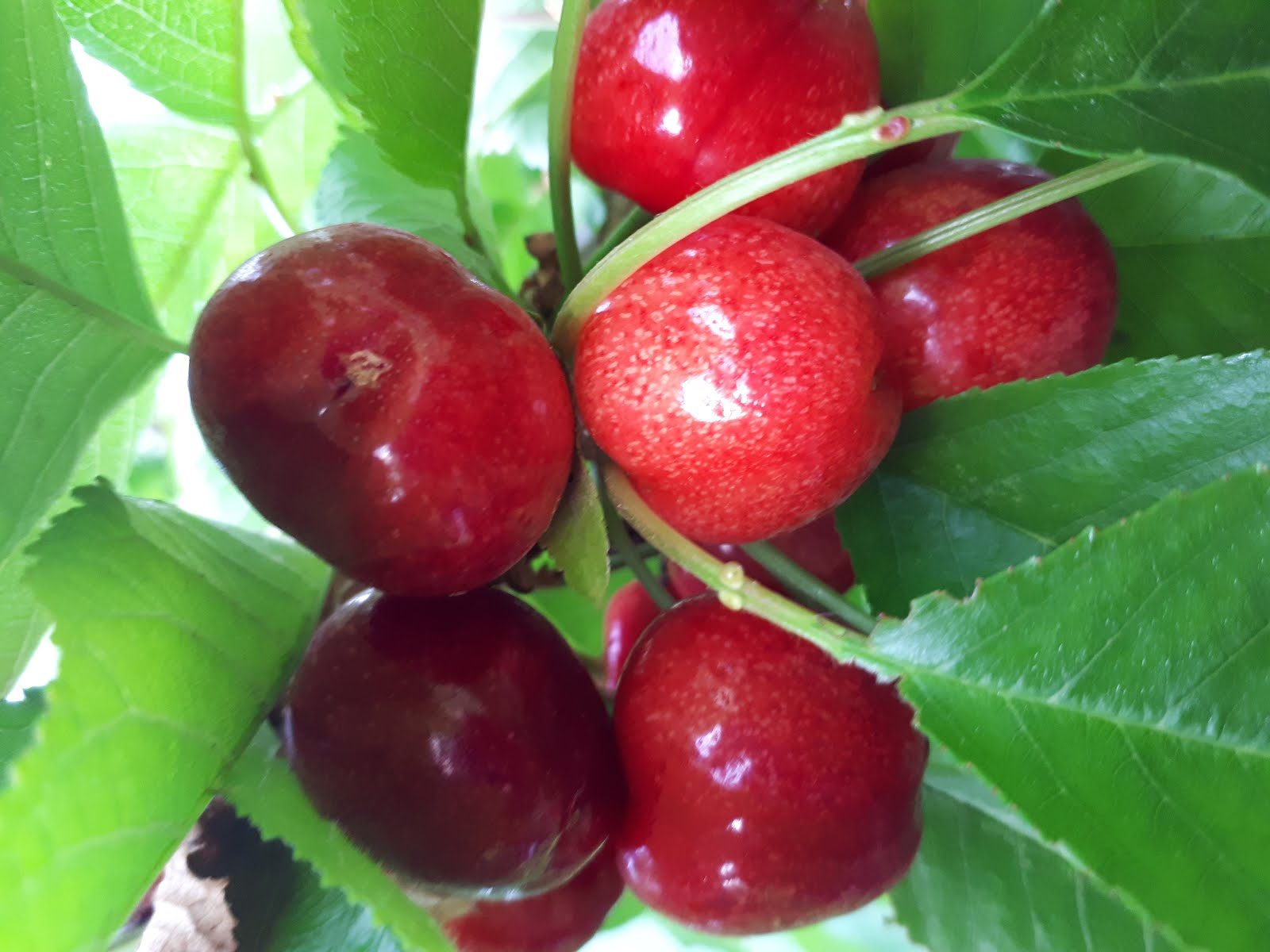
The variety Sabrina is mid-early and self-fertile. It ripens 7 days after Bigarreau Burlat. It has a large fruit size, up to 34 millimetres, and good resistance to cracking, while it does not produce double fruits.
The variety is slow to come into bearing on the MaxMa 14 and CAB 6P rootstocks (5–7 years), while on Gisela 6 it starts from the 3rd year; there is, however, great instability in cropping. It has early flowering (23 March) and requires no pollinisers.
It has no particular drawbacks, other than a short stem on the fruit, which means more difficult harvesting. It has been reported by growers that, in periods of heavy rainfall close to ripening, a triangular hole forms on the lower surface of the fruit.
Breeder / rights: Summerland Research Station, Agriculture and Agri-Food Canada. Editor and holder of the exploitation rights in Europe: International Plant Selection (IPS, France). Sabrina® variety sheet, IPS
The observations above are empirical, from the area of Giannitsa. Pastopoulos Agronomics accepts no liability for their use in planting decisions.
Summit
The variety Summit is an old variety that is not self-fertile. It is productive on dwarfing and semi-dwarfing rootstocks, but it requires the presence of pollinisers (Ferrovia).
The fruit is heart-shaped, of large size, 32 millimetres, with very good tolerance of cracking. It has a short stem and shows a slight susceptibility to brown rot (Monilinia). It ripens in late May to early June.
It can be harvested in 2 passes, but it does not hold well on the tree; as soon as it darkens sufficiently, it softens. It is regarded here as one of the best late varieties for planting on the Gisela 6 rootstock, because it produces a large, tasty, heart-shaped cherry that is resistant to rain cracking.
Breeder / rights: Summerland Research Station, Agriculture and Agri-Food Canada (British Columbia). Because of its age it is no longer protected by plant breeders' rights. summerlandvarieties.com
The observations above are empirical, from the area of Giannitsa. Pastopoulos Agronomics accepts no liability for their use in planting decisions.
Sweet Aryana® (variety "PA1UNIBO")
The variety Sweet Aryana is a new Italian variety. It has mid-early flowering and is probably partly self-fertile. The fruit is kidney-shaped, of very large size, 32 millimetres, and crisp.
In this assessment it is a variety susceptible to fruit cracking from rain; however, with particular treatments this problem is reduced. Conversely, when it crops very little because of weather conditions, it shows cracking of the fruit even without notable rain.
It ripens 5 days after Burlat. The variety shows unexplained necrotic spots on its leaves in summer, probably due to shot hole or to some virus disease, such as Prunus Necrotic Ringspot Virus (PNRSV).
Breeder / rights: University of Bologna (Università di Bologna), "Sweet" series. Protected by plant breeders' rights in the EU, the United Kingdom, the USA, Canada, Chile, Argentina, Peru, South Africa, Australia, New Zealand, Turkey and Azerbaijan. Official variety sheet PA1UNIBO* Sweet Aryana®
The observations above are empirical, from the area of Giannitsa. Pastopoulos Agronomics accepts no liability for their use in planting decisions.
Sweet Saretta® (variety "PA5UNIBO")
Sweet Saretta is a new variety of the "Sweet" series with significant characteristics. It ripens in mid-June on the plain of Giannitsa.
Its fruit is enormous, at a normal crop load, sweet and attractive. Although in Italy it is reported as susceptible to rain cracking, nothing of the kind has been observed here in Greece so far.
Flowering is at the end of March. The variety is self-fertile. Planting it is recommended wherever an extension of the harvest period is sought.
Breeder / rights: University of Bologna (Università di Bologna), "Sweet" series. Protected by plant breeders' rights in the EU, the United Kingdom, the USA, Canada, Chile, Argentina, Peru, South Africa, Australia, New Zealand, Turkey and Azerbaijan. Official variety sheet PA5UNIBO* Sweet Saretta®
The observations above are empirical, from the area of Giannitsa. Pastopoulos Agronomics accepts no liability for their use in planting decisions.
Tsolakeika (Greek variety)
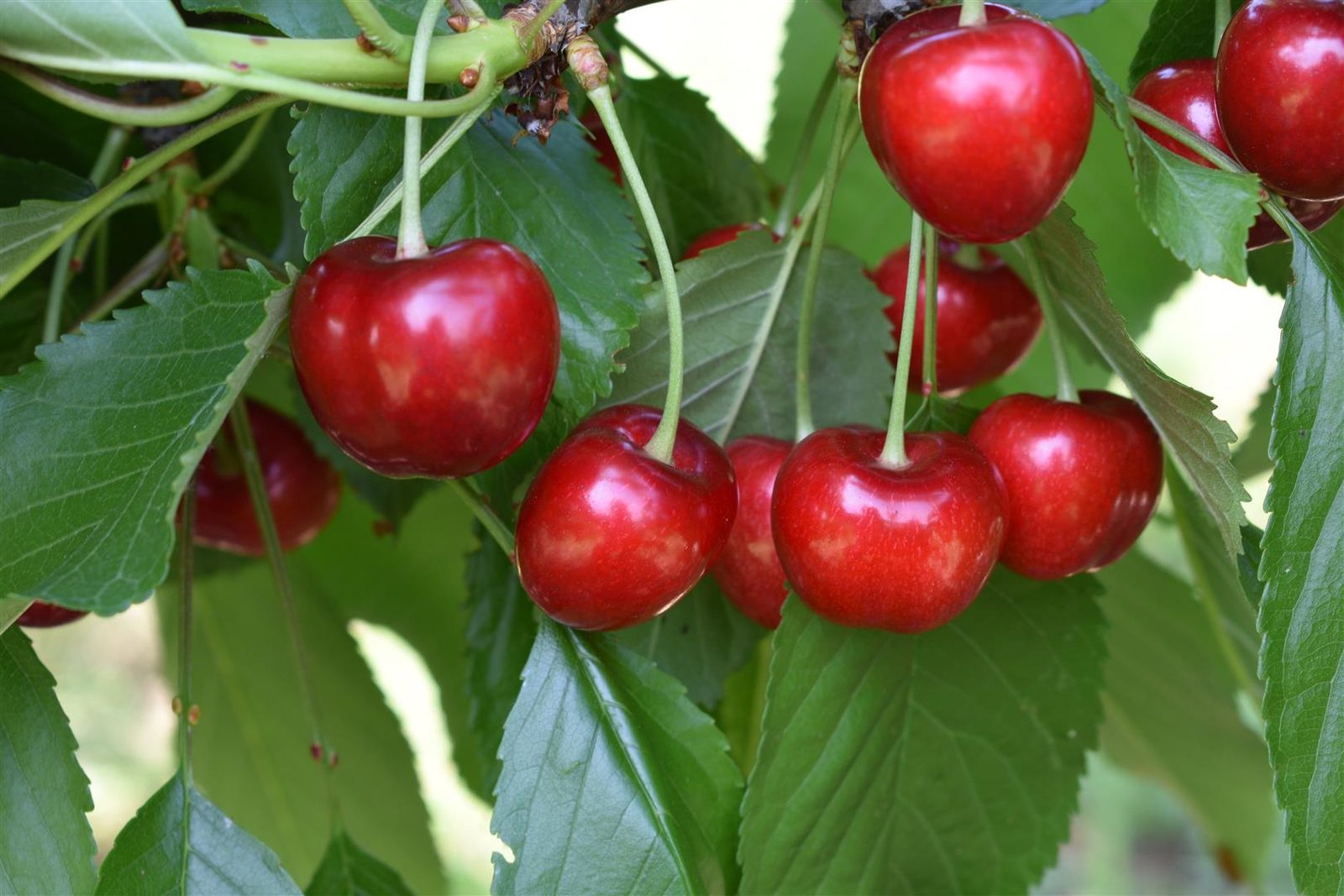
Tsolakeika is a Greek variety with very good characteristics. It is partly self-fertile, but it combines excellently in pollination with Giant Red, Early Lory and Lapins.
Although a chance seedling, it has superior characteristics to many foreign varieties on whose creation a great deal of money was spent. It ripens in a very good period for the area, around 14 May, with a very large fruit size and moderate flavour, while it is moderately susceptible to rain cracking. The stem is long and does not separate easily from the fruit.
If the variety is stressed by drought in summer, it shows double fruits the following year. Its greatest drawback is its susceptibility to bacterial canker of stone fruits. The management of bacterial canker requires less pruning and a fair number of copper sprays. Nitrogen fertilisation is best kept at low levels.
The variety is recommended for plantings trained as a classic open vase, because it has a spreading habit with rapid entry into production. Planting on dwarfing rootstocks is to be avoided, because cropping will be excessive.
Breeder / rights: Greek variety, a chance seedling. It is not protected by plant breeders' rights and has no official rights holder.
The observations above are empirical, from the area of Giannitsa. Pastopoulos Agronomics accepts no liability for their use in planting decisions.
Other varieties in the comparison
The varieties below are present on the farms that are monitored and are used as reference points or as pollinisers, without a separate assessment having been recorded for them. They are listed with the details of their breeder, for the sake of completeness.
| Variety | Breeder / rights holder |
|---|---|
| Bigarreau Burlat | Léonard Burlat, France. An old reference variety for the ripening season, free of rights. |
| Brooks | University of California, Davis (Paul E. Hansche). Cross Rainier × Burlat, 1969; released in 1984. Variety sheet, UC Davis Foundation Plant Services |
| Ferrovia | A chance seedling from Turi, province of Bari (Apulia, Italy). An old variety, free of rights. History of the variety |
| Samba® ("Sumste") | Summerland Research Station, Agriculture and Agri-Food Canada. summerlandvarieties.com |
| Sunburst | Summerland Research Station, Agriculture and Agri-Food Canada. summerlandvarieties.com |
| Sweet Gabriel® ("PA3UNIBO") | University of Bologna, "Sweet" series. Official variety sheet |
| Frisco® | SMS Unlimited LLC, California. Editor: COT International. Proposed as a polliniser for Rocket. Variety sheets, COT International |
| Lapins | Summerland Research Station, Agriculture and Agri-Food Canada (Karl Lapins). summerlandvarieties.com |
Sources
- Personal field observations, Pastopoulos Agronomics, area of Giannitsa, 9 growing seasons.
- The Plant Variety Rights, Università di Bologna, DISTAL. Official catalogue of the "Star" and "Sweet" series.
- New sweet cherry cultivars developed at the University of Bologna, S. Lugli & S. Sansavini, Acta Horticulturae 667, International Society for Horticultural Science.
- Summerland Varieties Corp, rights management for the varieties of the Summerland Research Station (Agriculture and Agri-Food Canada).
- Sweet cherry improvement at Summerland, Canada, Acta Horticulturae 622, ISHS.
- Variety sheets, COT International, exclusive editor of the varieties of the SMS Unlimited programme (California).
- EARLISE® Rivedel, Star Fruits, France.
- Sabrina®, International Plant Selection (IPS), France.
- Cherry tree named 'Royal Tioga'plant patent USPP 22,779, Zaiger's Genetics.
- Prunus cultivar: Brooks, Foundation Plant Services, University of California, Davis.
- Development of new sweet cherry varieties at the Julius Kühn-Institut in Dresden-Pillnitz, on the variety Narana.
- New varieties and selections of the Hungarian cherry breeding program, Acta Horticulturae 1020, ISHS. On the variety Rita.
The assessment of the varieties presented here is empirical. It is based on field observations made under the specific conditions of the area of Giannitsa, in the regional unit of Pella, northern Greece, over 9 growing seasons, and it is not the outcome of an official experimental trial.
The behaviour of a variety changes with the soil, the rootstock, the climate and the management applied. A variety that performs well in one orchard may behave differently in another, even within the same area, so the figures and the ripening dates given here are indicative and are not transferable as they stand to other growing conditions.
Plant protection products are used only in accordance with their official approvals and their label, the approved crops, doses, application intervals, pre-harvest intervals and safety precautions. The approvals of the Greek Ministry of Rural Development and Food are valid ONLY in Greece; in every other country only the approvals of the competent national authority of that country apply.
Every choice of variety, rootstock or polliniser, and every intervention in the orchard, is made under the responsibility of the user, following an on-site assessment by a licensed agronomist. Pastopoulos Agronomics accepts no liability for any use of this information.
Related articles
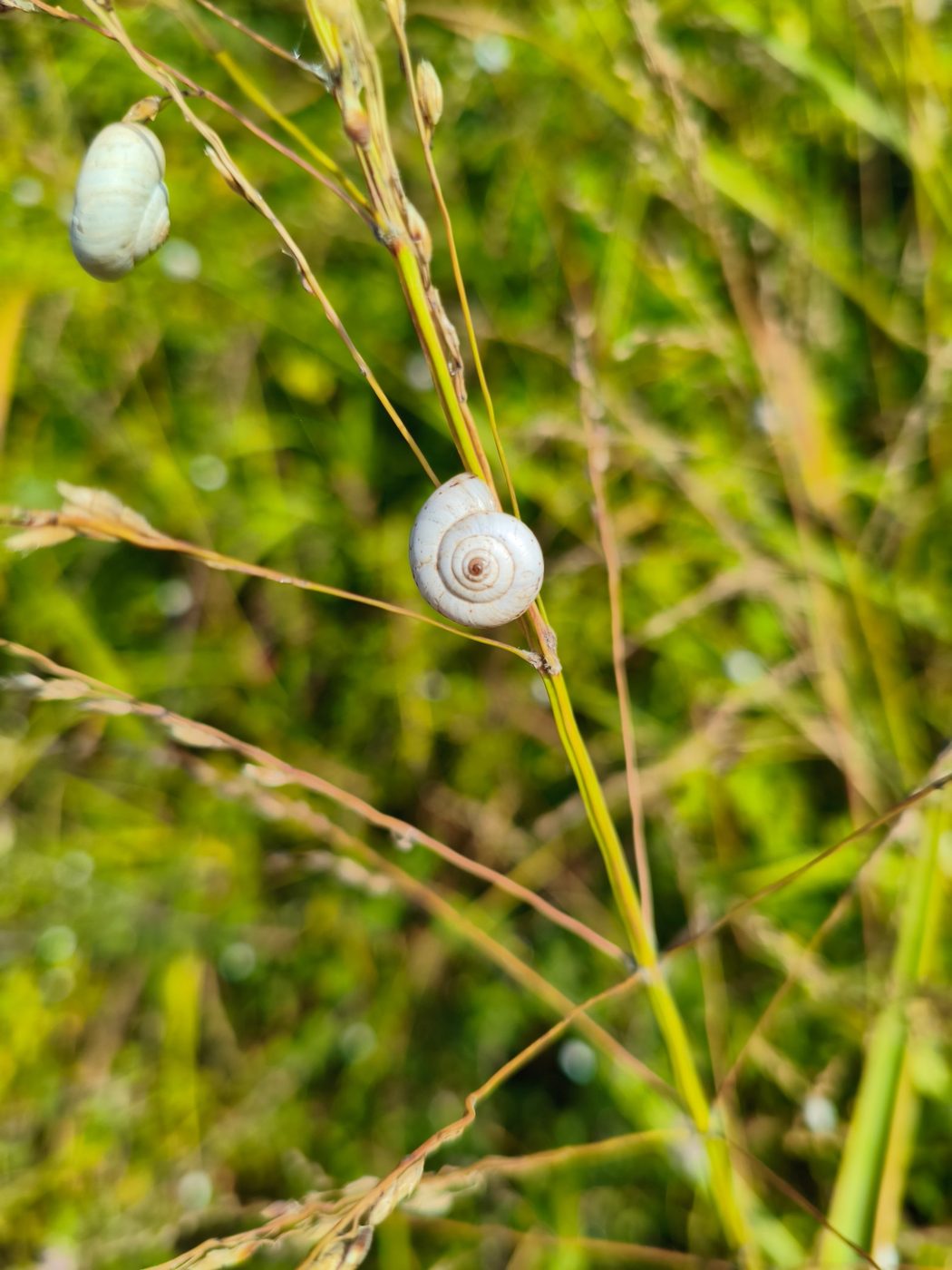
The white Mediterranean snail in tree crops
Theba pisana is native to the Mediterranean, not invasive, so there is no eradication programme to wait for. Identification, life cycle, the damage in tree crops, the single approved target in the Greek register, and why the nematode Phasmarhabditis killed the snail only at five times the label rate.
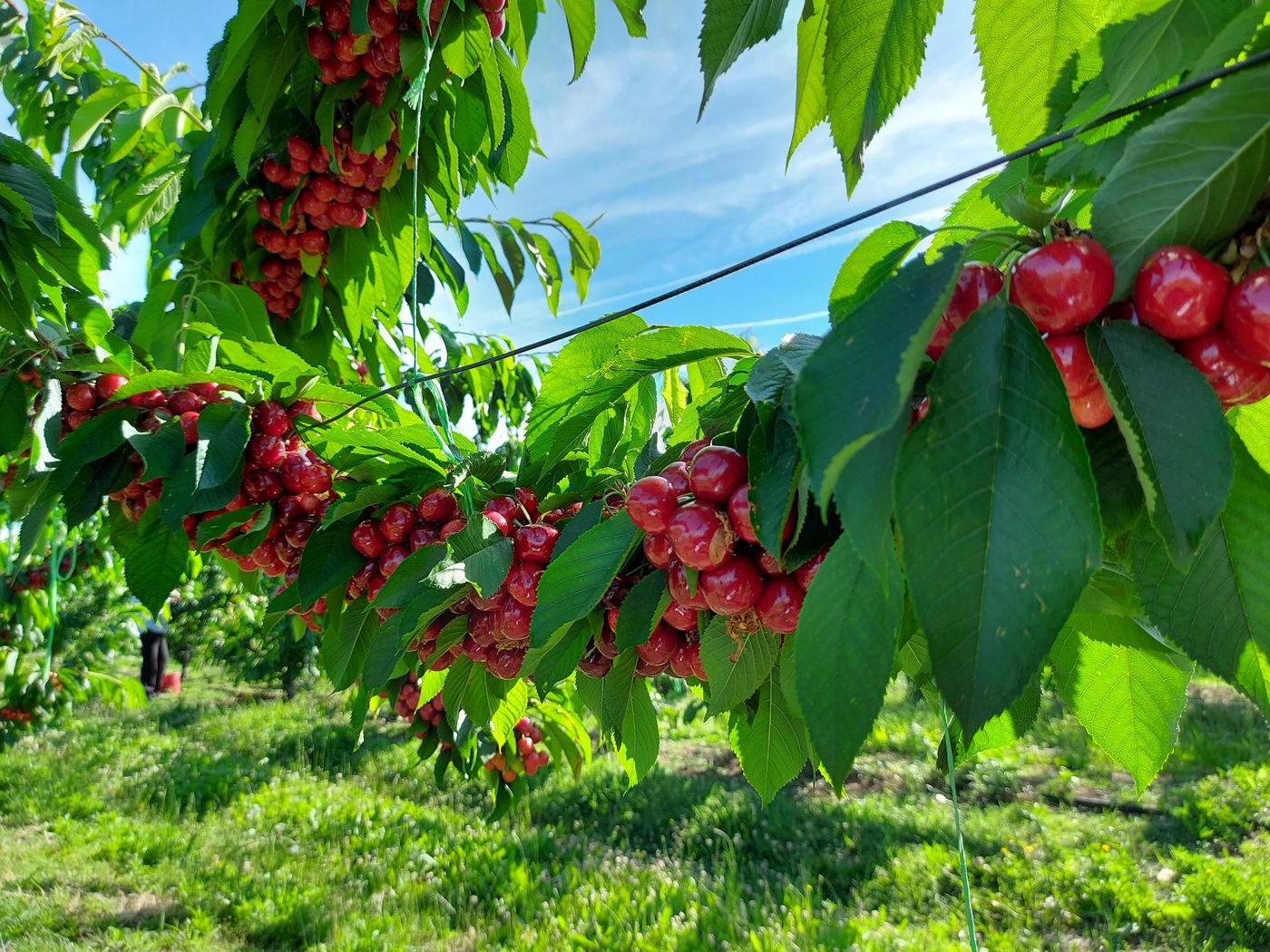
The Meda sweet cherry series
Six club varieties selected for at least 35 to 40 days of post-harvest life, for sea freight to China. Ripening, size, sugars and S genotypes as published, the two pairs that cannot pollinate each other, chilling figures with no model stated, and the fact that every measurement comes from covered plantings outside Greece.
Chilling hours: the three models and when each one tells the truth
Chilling Hours, Utah Chill Units or Dynamic Chill Portions, what each measures, which suits which climate and season, why a chill portion does not convert into hours, and how the divergence between the three is read. The calculation itself lives in a separate tool.