
Pests and diseases of brassica vegetables: cabbage, cauliflower, broccoli, Brussels sprouts

Savvas Pastopoulos, Agronomist MSc, Pastopoulos Agronomics, Neos Mylotopos, Pella, Greece
Cabbage, cauliflower, broccoli and Brussels sprouts are the same species, Brassica oleracea, in four different botanical varieties, and they share almost all of their pests and diseases. This means that a mistaken rotation or an infected seed lot is paid for four times over. The text that follows collects the documented figures for each causal agent, separates what has been measured from what is merely recommended, and states explicitly where the international literature gives no answer for Greek conditions.
Every dose and application rate below is expressed per hectare. The Greek original uses the stremma, the unit in everyday use in Greek agriculture, and the figures have been converted for this version: 1 hectare = 10 stremmata, so a rate per stremma is ten times the corresponding rate per hectare. Where a published source states a rate in lb per acre, that figure is kept unchanged in parentheses next to the metric value.
- The scope of the text: the four Brassica oleracea vegetables and the pests they share
- Downy mildew (Hyaloperonospora brassicae): epidemiology, diagnostic criteria and genetic resistance
- Alternaria leaf spot: differential epidemiology of Alternaria brassicae and A. brassicicola and seed transmission
- Sclerotinia rot (Sclerotinia sclerotiorum): conditions for carpogenic germination and the limits of cultural measures
- Blackleg and phoma stem canker: the Plenodomus lingam and P. biglobosus complex
- Fusarium yellows (Fusarium oxysporum f. sp. conglutinans): temperature dependence and the limits of resistance
- Clubroot (Plasmodiophora brassicae): soil factors, spore longevity and the measured effect of liming
- Black rot (Xanthomonas campestris pv. campestris): seed transmission and survival of the inoculum
- Six further diseases with a documented footprint in Greece
- Virus diseases: the mode of transmission and why it dictates the strategy
- Lepidoptera: thermal requirements, action thresholds and resistance status
- Aphids and whiteflies: host chemical defence, polyphagy and resistance
- Cabbage root fly (Delia radicum): soil degree-days, sampling thresholds and the role of Greek summer soil temperatures
- Beetles and sawflies: flea beetles, weevils and telling a sawfly larva from a caterpillar
- Thrips tabaci in cabbage: intraplant distribution and the limits of visual sampling
- Non-parasitic nutritional disorders: molybdenum, calcium and boron
- Differential diagnosis: pairs of causes that are confused and the distinguishing feature
- Beneficial organisms and low-risk products: measured percentages and their limits
- Which targets have an approved solution in Greece, and where the active substances are looked up
- Documentation methodology and the limits of the data
- Sources
1. The scope of the text: the four Brassica oleracea vegetables and the pests they share
The text covers the vegetables of the group: cabbage, cauliflower, broccoli and Brussels sprouts. All four are the same species, Brassica oleracea, in four different botanical varieties: cabbage is var. capitata, cauliflower is var. botrytis, broccoli is var. italica and Brussels sprouts are var. gemmifera, and each has its own code in the EPPO database [94]. Oilseed rape, radish and rocket are left outside, although they are mentioned wherever the literature on them is the only available source of figures, and in those cases this is stated explicitly.
The shared identity of the four crops has three practical consequences. The first is that rotation counts the group as a whole, not each crop separately: a cauliflower after a cabbage is not a rotation. The second is that the cruciferous weeds of the field, shepherd's purse, charlock, wild radish and mustard, act as reservoirs for exactly the same pathogens and insects. The third is that one infected seed lot or one infected nursery distributes the problem to every crop on the holding at the same time.
There is also a difference that should not be lost. Cauliflower and broccoli are harvested as floral tissue, that is as a curd or an inflorescence. This exposes them to pests that have no interest at all in cabbage, the most characteristic being the pollen beetle Brassicogethes aeneus [67]. Conversely, cabbage and Brussels sprouts form a closed head, and this anatomy hides two problems that are invisible from the outside: thrips damage [73] and calcium-related tipburn [87].
2. Downy mildew (Hyaloperonospora brassicae): epidemiology, diagnostic criteria and genetic resistance
Current nomenclature and what was revised
The valid name for downy mildew of cultivated brassicas is Hyaloperonospora brassicae (Gäum.) Göker, Riethm., Voglmayr, M. Weiß & Oberw. The old Peronospora parasitica ceased to apply when the genus Peronospora was split, and in 2009 the name Hyaloperonospora parasitica was restricted to strains attacking shepherd's purse and a few other hosts, expressly excluding the cultivated cabbages [1].
Epidemiological parameters
The optimum temperature range for downy mildew is 8 to 16 °C, and the spores infect seedlings within three hours of contact with the leaf [4]. A California extension factsheet gives daytime temperatures of 20 to 24 °C combined with high relative humidity, fog, drizzle or heavy dew as favourable [3]. That the two ranges do not coincide is not a contradiction: the first concerns the optimum growth of the pathogen, the second the field conditions that precede an epidemic.
The speed of the cycle is the real problem. In a controlled experiment, at 22/17 °C the plants showed symptoms 48 hours after artificial inoculation, with abundant sporulation at 72 hours. At 14/10 °C the same plants showed nothing before 5 days, and sporulation came at 7 days [2]. The full cycle of sporulation, germination and re-infection is completed in four to five days [5]. In a nursery with overhead watering, this means that one focus becomes a generalised infection within a single week.
The damage to young plants is recorded as destruction of 40 to 90% of the seedlings, with total loss of the crop in heavy attacks [3]. The inoculum can be carried as contamination on the seed surface, but there is no evidence that the pathogen enters the interior of the seed [3].

Differential diagnosis in the field
Beneath the yellowish, angular lesion on the upper surface there is a fine white to greyish down, like a powder that has settled, and it is found only on the lower side. The closest disease is white rust (Albugo candida), which produces raised white blisters that burst and release a chalky dust. Downy mildew does not break the epidermis; the down sits on top of it.
Measures with documented efficacy
Genetic resistance is the only measure with a measured performance. In a screen of 154 Brassicaceae genotypes, the resistant ones gave a disease index of 6.6% and 9.0%, against 83.7% and 95.5% in the highly susceptible ones [6]. In cauliflower specifically, genotypes with a disease index below 1 were identified, and segregation in the F2 in a 3:1 ratio indicates monogenic dominant resistance [7]. Monogenic resistance means rapid incorporation into cultivars, but also easier collapse once a new race appears.
A two to three year rotation away from brassicas, removal of residues and cruciferous weeds, and morning rather than evening irrigation are recommended by every extension service, but none of the sources checked gives a percentage reduction [5]. On irrigation timing in particular there is an easy misunderstanding: the published finding that irrigation at 04:00 instead of 20:00 reduced infection by 58% concerns white rust, not downy mildew, and does not transfer.
3. Alternaria leaf spot: differential epidemiology of Alternaria brassicae and A. brassicicola and seed transmission
The two species responsible and how their requirements differ
Two different Alternaria species with different requirements act on brassicas, and confusing them leads to a wrong risk assessment. The major taxonomic revision of the genus [8] did not change the names of these two species, but it clarified their limits.
| Parameter | Alternaria brassicae | Alternaria brassicicola |
|---|---|---|
| Sporulation temperature | 18 to 24 °C | 20 to 30 °C |
| Relative humidity threshold | 91.5% and above | 87% and above |
| Survival on the seed | about 5 months | up to 12 years on cabbage seed |
| Main hosts | Brassicaceae more widely, oilseed rape and mustard | mainly Brassica oleracea |
| Route of entry | through stomata as well | mainly direct penetration, rarely through stomata |
The values in the table come from the plant protection handbook of the Pacific Northwest universities [9]. Both species are recorded by EPPO as present in Greece, no details [94]. For the vegetable brassicas of this group, the prevailing species is A. brassicicola, which needs less humidity, tolerates more heat and lives on the seed for twelve years.

Parameters with direct bearing on management
The minimum leaf wetness duration for infection is four hours at 18 °C, and severity increases as wetness approaches twelve hours [9]. Four hours is less than one night with dew, and this explains why the disease appears in fields where it never rained.
Seed transmission has been measured precisely in a Dutch study on organic seed production. In 139 samples of basic seed, 89 carried internal infection, with a mean of 4.9% infected seeds. In 112 commercial lots, 96% were contaminated, with a mean of 18% infected seeds. Up to 500 conidia per seed were found as external contamination [10].
Hot water treatment of the seed
The published recommendation is water at 50 °C for 15 to 30 minutes [9]. In a comparative trial of non-chemical methods on cabbage seed, two regimes were examined, 50 °C for 30 minutes and 53 °C for 10 minutes. All treatments significantly reduced the number of plants with symptoms, but the heat treatments also tended to reduce the number of plants that emerged. Aerated steam proved more effective overall than hot water [11].
The publication gives no eradication percentage for the pathogen, only a percentage of healthy plants. In practice this means that heat treatment is always carried out first on a small sample of the lot, with a germination check, and only afterwards on the whole of it.
4. Sclerotinia rot (Sclerotinia sclerotiorum): conditions for carpogenic germination and the limits of cultural measures
The name Sclerotinia sclerotiorum (Lib.) de Bary remains unchanged. What has advanced is the understanding of how infection begins, and that is what management rests on.
The two preconditions for infection: a sclerotium in the top 2 to 3 centimetres and dead tissue to colonise
The first constraint is depth. Sclerotia produce apothecia only from a depth of 2 to 3 centimetres. Those lying deeper do not germinate carpogenically [13]. The second constraint is that ascospores cannot infect healthy tissue directly: they must first colonise dead or senescent tissue saprotrophically [13]. In brassicas this tissue is usually the fallen petals and the senescent lower leaves.
Carpogenic germination occurs between 5 and 25 °C, but only when soil water potential is −100 kPa or higher, that is in moist soil. At 26 to 29 °C germination is minimal or nil [12]. At the optimum of 15 to 20 °C, stipes appear after 20 to 27 days and apothecia after 27 to 34 days [12]. For Greek conditions this places the risk in autumn, winter and early spring, and not in summer.
The remaining figures: sclerotia survive three years and more in the soil [14], with reports of up to eight years [13]. The host range exceeds 400 plant species [13], a fact that sharply limits the value of rotation, since weeds also serve as hosts. One apothecium releases up to two million ascospores, functions for five to ten days, and the majority of the spores land within 100 to 150 metres of the source [14].


Differential diagnosis in the field
Inside it is hollow and full of hard black lumps, like mouse droppings, embedded in white cotton. No other brassica pathogen produces these black sclerotia. The closest visual confusion is bacterial soft rot: that one is watery, slimy and foul-smelling, whereas Sclerotinia rot is dry, white, cottony and odourless.
5. Blackleg and phoma stem canker: the Plenodomus lingam and P. biglobosus complex
Revision of the nomenclature and the two-species complex
The formula "Leptosphaeria maculans with the imperfect stage Phoma lingam" no longer applies, for two independent reasons. The first is the abolition of dual nomenclature for the perfect and imperfect stages, which led to the reclassification of the phoma-like anamorphs [15]. The second is that this is not one species but a complex of two species with very different aggressiveness.
- Plenodomus lingam (EPPO code LEPTMA), formerly Leptosphaeria maculans. This is the aggressive species, the one associated with destructive cankers at the base of the stem [16].
- Plenodomus biglobosus (EPPO code LEPTBG), formerly Leptosphaeria biglobosa. This is the mild species, associated with less damaging lesions on the upper part of the stem [16].
EPPO records Plenodomus lingam as present in Greece, with the entry "Present, no details" [21]. The record, however, derives from data that predate the separation of the two species, when the same code covered the whole complex. Which of the two species is actually present in Greece, at the level of molecular identification, has not been published. For comparison, in Hungary the identification of 308 isolates from the 2017 to 2021 period gave 51.3% P. lingam and 48.7% P. biglobosus [17].
Epidemiological parameters
The relationship between temperature and wetness duration has been measured precisely and it is striking. At 20 °C with 48 hours of wetness the result is one infection per four spores. At 8 hours of wetness, 300 spores are needed for one infection, that is efficiency falls seventy-five fold [18]. The incubation period ranges from 15 days at 8 °C to 5 days at 20 °C [18].
On residues, pseudothecia mature at temperatures of 5 to 20 °C, and the maturation time falls from 58 days at 5 °C to 22.2 days at 15 °C. A critical finding: on residues wetted once a day no pseudothecium formed at all, whereas three water sprays per day shortened the maturation time relative to two [19]. The frequency of wetting counts for more than the total amount.
Infected residues produce pycnidiospores for three to five years, and the ascospores travel at least 10 kilometres on the wind [22]. This explains why spatial isolation reduces but does not eliminate the risk.
Seed transmission exists but is of low efficiency, and the real problem lies elsewhere. In Canadian oilseed rape lots, the individual seeds carried 0.24% L. maculans, while the foreign material removed in cleaning reached 31% [20]. The measure that follows is not seed disinfection but cleaning of the lot.
Differential diagnosis in the field
The dead area is speckled with microscopic black dots like pepper, the pycnidia, arranged inside the lesion. No other brassica disease places black dots inside the lesion. In addition, blackleg ends with a canker at the base of the stem that splits and blackens, and the plant leans or breaks at the crown. The closest confusion is black rot, which gives a yellow V shape from the leaf edge inwards with blackened veins, without any dots at all.
Sources: 15 16 17 18 19 20 21 22
6. Fusarium yellows (Fusarium oxysporum f. sp. conglutinans): temperature dependence and the limits of resistance
The name Fusarium oxysporum f. sp. conglutinans remains unchanged. What has changed concerns the races and the limits of resistance.
Temperature dependence of the disease
Fusarium yellows is the opposite of downy mildew. It is almost completely suppressed when mean soil temperature is below 16 °C, and it is most severe at 27 to 29 °C. Development is inhibited again at 32 to 35 °C [24]. Symptoms appear two to four weeks after transplanting, and in certain cultivars in soil at 24 to 29 °C the plants can die within two weeks [25].
The monogenic dominant type A resistance is extremely effective against race 1, but its effectiveness falls as soil temperature rises from 14 to 20 °C, and it becomes ineffective at 22 and at 24 °C [23]. Type B resistance breaks above 25 °C [25].
In Greek summer and early autumn cabbage, where soil temperature systematically exceeds 22 to 25 °C, the note "resistant cultivar" in the seed company's catalogue is not a guarantee. The same cultivar that holds in an autumn planting can collapse in a summer one.
The conducting tissue consists of the xylem and the phloem, which together make up the vascular bundles. The bundle therefore has two parts, and distinguishing them is not pedantry: it determines which pathogen is being looked for and in which tissue.
- Xylem. Carries water and mineral elements from the root up to the leaves. This is where the vascular wilts and the vascular bacterial diseases move, and where the brown or black ring of the cross-section appears.
- Phloem, the sieve tissue. Carries the products of photosynthesis downwards. This is where aphids and the other sucking insects feed, where phytoplasmas establish, and the reason why calcium is not redistributed within the plant.
The term vascular bundle is used only where both parts are meant together, never as a synonym for the xylem. Wherever a symptom is described below, the tissue is named explicitly rather than referred to by the generic word for vessels.
Differential diagnosis in the field
The xylem is clearly brown and forms a ring, while the surrounding tissue is healthy and white. The phloem is not discoloured: the fungus is a pathogen of the xylem. Above ground, the plant frequently yellows on one side only and the leaves twist towards that side, in hot weather and hot soil.
The distinction from black rot is stated clearly in the literature: in Fusarium yellows the necrosis begins internally and appears first in the lower parts of the plant, whereas in black rot it starts from yellow lesions at the leaf margins and advances inwards. The decisive criterion is that in black rot the veins turn black and not brown [25].
7. Clubroot (Plasmodiophora brassicae): soil factors, spore longevity and the measured effect of liming
The name Plasmodiophora brassicae Woronin remains valid, and EPPO records the pathogen as present in Greece, no details [94]. What has changed is the systematic placement: it is not a fungus but a protist, and it is classified in the Rhizaria [26]. The difference is not theoretical. It explains why no fungicide makes sense against it, and why the only measures that work are soil measures and hygiene.
Soil pH and temperature
The disease is favoured in acid soils. Incidence and severity are highest below pH 6.5, while the risk is low above pH 7.0. In field experiments in western Oregon, adequate control was not achieved before the pH reached 7.0 or higher [27]. Germination of the resting spores requires a soil temperature of at least 14 °C, and the fastest development occurs at 23 to 26 °C [27], with a review giving 20 to 25 °C [28].
Spore longevity and the measured performance of the measures
The resting spores can live up to 20 years, although most die within 5 to 7 years. The half-life is about 3.6 years [27]. An independent source gives a viability of 10 years and more [30]. In practice, an infested plot is not cleaned up by a rotation of a few years.
| Measure | Measured performance | Source |
|---|---|---|
| Liming from pH 5.2 to 5.5 up to 7.2 | severity −34 to −36%, spores −48 to −80%, yield +70 to +98% | [28] |
| Liming, Oregon field trial | infection −44 to −71%, severity −74 to −90% | [27] |
| Hydrated lime, field scale | up to −91% severity, but ineffective in environments favourable to the disease | [29] |
| Two year break without a host | spores down to −90%, then a plateau | [29] |
| Resistant cultivars | collapse of resistance within four years of introduction | [29] |
The resistant cultivars are in the majority monogenic and specific to a particular pathotype, and for that reason their resistance is not durable [28]. In Canada, collapse of resistance has been observed within four years of the introduction of new cultivars [29].

Differential diagnosis in the field
They have no insect exit hole and, at the start, no rot [30]. This separates them from the galls of Ceutorhynchus pleurostigma, which contain a larval chamber and a hole. Above ground the plant shows stunting, yellowing and wilting in the heat of the day that recedes in the evening, that is the typical picture of a root system that is not working. The secondary rot comes later.
In the approvals database of the Greek Ministry of Rural Development and Food there is no entry at all targeting clubroot or Plasmodiophora brassicae in cabbage, cauliflower, broccoli or Brussels sprouts [93]. Management is exclusively cultural: pH, drainage, disinfected nursery substrate, control of soil movement by machinery and footwear, and control of the cruciferous weeds.
8. Black rot (Xanthomonas campestris pv. campestris): seed transmission and survival of the inoculum
Xanthomonas campestris pv. campestris is the disease in the photograph that opens the article, and the most serious bacterial disease of brassicas worldwide. The name remains unchanged. Globally races 1 and 4 predominate, with their relative frequencies differing by geographical region [31].
The seed infection threshold
Favourable conditions and ports of entry
The bacterium enters the plant mainly through the hydathodes at the leaf margin, and secondarily through wounds caused by machinery, insects, animals, rain, irrigation and wind [31][33]. Entry from the margin is precisely why the symptom takes the form of a V with its apex towards the centre of the leaf.
The favourable conditions are mean temperatures of 25 to 30 °C with sufficient rainfall or heavy dew [33], and the optimum growth range is given as 26.7 to 30 °C [35]. At low temperatures the infection often remains latent [31], that is the seedling leaves the nursery without a visible symptom and expresses it in the field. The lethal temperature for the bacterium is 40 °C [33].
Survival of the inoculum between two crops
Here there is a difference of one order of magnitude that determines management. In bare soil the bacterium survived 4 to 7 days under field conditions, and under controlled conditions 14 days at 20 °C but only 4 days at 30 °C. In cauliflower residues, however, it survived 255 days [34]. The authors themselves conclude that the soil is not a significant source of inoculum. Other sources give survival in soil of 40 to 60 days and in infected residues up to two years [35], as well as the finding that fresh residue piles two weeks old are more dangerous than old ones four months old [31].
The conclusion is practical: the target is not soil disinfection but the elimination of plant residues, and in particular a ban on piles of fresh residues next to a new planting.
Hot water treatment of the seed and its temperature margin
The bacterium dies at 40 °C [33], while the treatment is carried out at 50 to 52 °C, that is at a temperature close to the tolerance limit of the embryo. The published regimes are 52 °C for 30 minutes, which gave the best result, and 50 °C for 20 minutes for cauliflower [33], or 50 °C for 15 to 30 minutes with an explicit requirement for drying and a germination check afterwards [35]. No treatment is completely effective [31].
Differential diagnosis in the field
The V always starts from the margin, because that is where the hydathodes are [31][33]. Blackening of the xylem is decisive: a cut through the stem shows a dark to black xylem ring. Black rot is a systemic vascular disease and movement of the bacterium within the xylem is essential for the disease to develop [31]. Without black veins it is not black rot. The photograph at the start of the article shows the symptom at its most critical moment, in the seedlings in the tray, before they have even gone out to the field.
The measures with documentation: certified seed below the threshold of 0.03% [32], hot water treatment with the regimes above, a three year rotation with simultaneous control of the cruciferous weeds [35], and elimination of the residues. For the copper products no published percentage reduction of incidence was found, and copper acts protectively on the leaf surface, not inside the xylem where the bacterium moves.
9. Six further diseases with a documented footprint in Greece
The eight diseases of the preceding chapters are the ones that decide the season in the field. They are not, however, the only ones described in the international literature for brassicas [95]. The question that matters is which of the remainder actually concern Greek production.
Each candidate disease passed two independent checks. First, a search of the EPPO Global Database for the current identity of the pathogen and for its distribution data [94]. Second, a search of the approvals database of the Greek Ministry of Rural Development and Food for an approved target under that name in cabbage, cauliflower, broccoli or Brussels sprouts [93].
Both checks have limits, and they are stated explicitly. EPPO maintains distribution data only for organisms it tracks as regulated or otherwise notable, so the absence of a distribution page does not mean the pathogen is absent from Greece. And the existence of an approved target on a product label is a regulatory footprint, that is, an indication that the competent authority recognises the problem in that crop, not a published record of an outbreak.
One disease of the handbook was excluded by this criterion: white rust or white blister (Albugo candida, EPPO code ALBUCA). It corresponds to no approved target in any of the four crops [93] and has no distribution data in EPPO [94]. It appears here only as a differential diagnosis for downy mildew in chapter 2.
| Disease | Pathogen and EPPO code | Regulatory footprint in Greece |
|---|---|---|
| Ring spot | Neopseudocercosporella brassicae, MYCOBR | Target «Μυκοσφαιρέλλα» in 7 outdoor crops |
| Powdery mildew | Erysiphe cruciferarum, ERYSCR | Target «Ωίδιο» in 8 crops, outdoor and greenhouse |
| Verticillium wilt | Verticillium dahliae, VERTDA, and V. longisporum, VERTLO | Target «Βερτισιλλίωση» in 8 crops. V. dahliae is recorded by EPPO as present in Greece, «Present, no details», with a separate entry for Crete |
| Rhizoctonia diseases: damping-off, wirestem, bottom rot | Rhizoctonia solani, teleomorph Thanatephorus cucumeris, RHIZSO | Targets «Ριζοκτόνια» in 12 crops, «Σηψιρριζία» in 4 and «Τήξεις σπορείων» in the cabbage seedbed |
| Gray mold | Botrytis cinerea, teleomorph Botryotinia fuckeliana, BOTRCI | Target «Βοτρύτης» in 12 crops |
| Phytophthora storage rot | Phytophthora brassicae, formerly P. porri, PHYTBC | Target «Φυτόφθορα» in 8 crops, with no species given on the label |
Label targets are written at genus level or as a common name. «Μυκοσφαιρέλλα» and «Φυτόφθορα» do not specify a species, so their assignment to the pathogens in the column is the most likely one, not a confirmed one.
Ring spot, and the name change that makes the literature hard to find
The pathogen was known for decades as Mycosphaerella brassicicola, with the asexual stage Asteromella brassicae. The current name in EPPO is Neopseudocercosporella brassicae (Chevallier) S.I.R. Videira & P.W. Crous, under the same code MYCOBR and with seven further synonyms [94]. A literature search made under a single one of these names returns a fraction of what exists.
The disease is common in cool moist areas, and severe problems are associated with intensive cropping [95]. The optimum range for infection is 16 to 20 °C, symptoms appear 10 to 14 days after infection, and severe disease is associated with prolonged wet periods of 7 to 14 days. Mature pseudothecia form after four consecutive days at 100% relative humidity, which can be as early as three weeks after the initial infection [95].
Two points have direct practical weight. The fungus requires briefer periods of leaf wetness than Alternaria, so a programme tuned to Alternaria leaf spot may leave it uncovered. And the infection continues in storage, where it penetrates several leaf layers of the head [95].
Differential diagnosis in the field
A hand lens on the dead area of the lesion
The pseudothecia are very small black specks, densely packed and arranged in concentric rings. That is where the name of the disease comes from. The closest confusion is phoma leaf spot from chapter 5, which also places black specks inside the lesion, but those are brown pycnidia, widely spaced and irregularly arranged, with no ring [95]. Symptoms are found first on the oldest leaves.
Powdery mildew, the only disease of the group that needs no water
Erysiphe cruciferarum is an obligate pathogen and appears as small, radiating, superficial colonies of white mycelium 5 to 15 mm in diameter, which are removed by rubbing the leaf surface. That last point is the field criterion: what comes off on the fingers is powdery mildew, what stays is not [95].
The epidemiological peculiarity is that the conidia do not require free water to germinate, while germ-tube growth requires 98 to 100% relative humidity [95]. Powdery mildew is therefore the only disease in this text that advances without rain and without leaf wetness, provided air humidity is high at night. In northern Europe the main period of activity runs from July to October, with wide variation between seasons.
Two further points. There is physiological specialisation: isolates from turnip will not infect Brussels sprout and the reverse, so powdery mildew on a neighbouring crucifer does not automatically mean risk. And severity is far greater in swede and turnip than in the four vegetables of this text, where infections have limited effect on yield and quality [95]. In some areas the problem is worse on greenhouse-grown crucifers, which is consistent with the Greek database holding powdery mildew approvals for greenhouse crops as well [93].
Verticillium wilt, and the criterion that separates it from Fusarium
Verticillium wilt of brassicas is caused by Verticillium dahliae and V. longisporum. Symptoms appear three to four weeks after transplanting in cauliflower. The older, lower leaves turn yellow and wilt, with one side of the leaf more severely affected than the other, then turn brown and drop, often as the plant approaches maturity [95].
Both vascular wilts discolour the xylem. The distinction is the colour: in Fusarium yellows the discoloration is tan to brown, while in Verticillium wilt it is black, and microsclerotia can be detected in the vascular tissue. Black rot from chapter 8 also blackens the xylem, but its discoloration is found in the upper, less woody parts of the plant [95]. Three diseases, one cut, two distinguishing features: colour and position.
Rhizoctonia: damping-off, wirestem and bottom rot
Rhizoctonia solani produces no asexual spores and is not specific to crucifers. On brassicas it causes three different pictures, appearing at different stages [95].
- Damping-off. Attack on the seed or the seedling before emergence, or on the root and hypocotyl shortly after. The stem in contact with the soil darkens, becomes water-soaked to brown, is girdled, and the seedling falls over.
- Wirestem. In older seedlings the infection is confined to the outer tissues of the hypocotyl. When the outer tissue decays, only the fibrous inner xylem remains, like a wire. Plants wilt, turn purple, and in cabbage specifically blue, remain stunted and may break off at the soil line. Transplanted crucifers are subject only to this phase, not to damping-off.
- Bottom rot. Once head formation begins, the petioles of the lower leaves in contact with the soil develop dark brown, oval lesions. Secondary decay organisms follow and make them soft and watery.
Field identification is made from the mycelium itself: it is coarse and holds soil particles that dangle from the diseased stem [95]. Over the bottom rot lesions it forms a web of mycelium and sclerotia.
Two parameters change the planning. The pathogen is favoured by warm soil, 25 to 30 °C, but causes damage at much lower temperatures when seedling growth is slow, meaning the risk is not a matter of temperature but of how long the seedling stays susceptible. And the anastomosis groups differ: AG2-1 on young plants and at lower temperatures, AG4 on mature plants and in warmer conditions [95]. Finally, cauliflower is more susceptible than cabbage or Brussels sprouts.
Gray mold, the disease that does not start on its own
On brassicas gray mold is generally of minor importance in the field, because the infected older leaves are removed at harvest. It becomes serious in two situations: when the crop has already suffered other damage, that is spray burn, a nutrient deficiency or weather damage, and in storage, particularly on white cabbage [95].
Symptoms are brown blotches on leaves or stems, from 1 to 2 centimetres up to very large areas, with a soft watery rot in which the tissues disintegrate if handled. Gray fungal growth appears in tufts near the centre of the lesion, or generally over the cauliflower head [95].
The diagnostic that counts
Gray mold is almost always associated with senescence or physical damage to the tissue. When it is found on tissue that had no prior damage, the question is not how to control gray mold but what caused the damage. The logic is exactly that of Sclerotinia rot in chapter 4, where the ascospores need dead tissue to colonise first.
Storage rot caused by Phytophthora brassicae
The pathogen was listed as Phytophthora porri, the same as the leek pathogen. Separation showed it to be a distinct species that infects only brassica plants and is genetically and morphologically distinct from the allium pathogen [95].
Its importance is mainly post-harvest, and the scale is not small: in Europe losses in stored white cabbage reach 50% [95]. In the field it causes leaf spots that are grey or black, water-soaked, 5 to 20 mm in diameter, resembling gray mold or bacterial soft rot. Savoy cabbage is especially susceptible, because its furrowed leaves retain water for longer than smooth ones. In stored white cabbage the picture is a firm brown rot extending from the stem base into the leaves.
The time to expression depends on storage temperature: symptoms appear within two weeks at 20 °C, but may take several weeks at 0 to 2 °C. Spread within the storage bin is usually limited [95].
Harvest under dry field conditions. Careful handling of the heads. Heads go into store free of soil and mud. Disinfection of the cutting knives when they become dirty. Leaf spots appear in the field after heavy rain, an indication that the inoculum travels up from the soil by splashing [95]. The problem, in other words, is not created in the store; it is carried into it.
10. Virus diseases: the mode of transmission and why it dictates the strategy
Revision of the nomenclature of the two viruses
The International Committee on Taxonomy of Viruses imposed binomial nomenclature on virus species, and both viruses that concern brassicas changed name [39].
| Common name | New species name | Family |
|---|---|---|
| Turnip mosaic virus (TuMV) | Potyvirus rapae | Potyviridae |
| Cauliflower mosaic virus (CaMV) | Caulimovirus tessellobrassicae | Caulimoviridae |
The acronyms TuMV and CaMV remain in use for the viruses, not for the species.
Virus acquisition time and its consequences for chemical control
TuMV is transmitted in a non-persistent manner by at least 89 aphid species, among them Myzus persicae and Brevicoryne brassicae, and it has the widest known host range of any potyvirus, at least 318 species in more than 43 families of dicotyledons [36]. CaMV is transmitted by more than 27 aphid species, in a non-circulative manner, and is retained for a few hours in the aphid's stylets [38].
In plant to plant transmission experiments with single aphids, the acquisition time for TuMV was two minutes of superficial probing [37]. No contact insecticide kills an aphid within two minutes. A spray therefore does not prevent transmission of the virus. It only prevents colony establishment, which is a different problem.
The measures that make sense are physical and temporal: isolation of the seedbed from aphids with a cereal barrier or an insect-proof net, disinfection of tools and equipment, eradication of the cruciferous weeds that act as reservoirs outside the growing season, and clean propagating material [38].
The scale of the damage from CaMV: incidence can easily exceed 70% and yield losses can reach 20 to 50% [38]. Its reservoirs include cultivated and wild Brassicaceae, with the weeds being known sources outside the growing season [38].
Criteria for recognition and their limits
Both viruses give mosaic, vein clearing, chlorosis and stunting [38], and they are visually indistinguishable from each other. What separates them from nutrient deficiencies and fungal attacks is the pattern in the field: random, scattered individual plants, with a bias towards the field margins and towards the cruciferous weeds, never in patches of uniform shape and never along the irrigation lines. This follows directly from transmission by passing aphids. Definitive identification requires a laboratory, with ELISA or RT-PCR.
No published Greek record of the two viruses in brassica vegetables was found, and EPPO holds no distribution dataset for either. The section is kept short for that reason: the figures cited are international, and the only thing that transfers safely is the principle that follows from the two-minute acquisition time, namely that for virus diseases the answer is physical and preventive rather than chemical.
11. Lepidoptera: thermal requirements, action thresholds and resistance status
Plutella xylostella: thermal requirements, resistance and thresholds
It is the most important brassica pest worldwide, and the reason is not the damage per larva but the speed with which it develops resistance.
Three independent studies give different values. The most frequently cited is 312.5 degree days above a lower threshold of 6.3 °C for the full cycle from egg to adult [40]. A second study gives thresholds per stage, 3.76 °C for the egg, 4.79 °C for the larva and 4.21 °C for the pupa, with a cumulative thermal sum of 118 degree days for the three stages [41]. A third, recent study gives a lower threshold of 8.74 °C and a total thermal sum of 426.68 degree days, with an optimum temperature of 29.6 to 32.7 °C [42].
The safe formulation is that the lower thermal threshold ranges from 3.8 to 8.7 °C depending on the population and the methodology, and the thermal sum of one generation from about 312 to about 427 degree days. A number of generations for Greece or the Mediterranean has not been published, and none is given here.
Resistance is the real issue. The international susceptibility testing protocol covers thirteen different modes of action, from the carbamates and the organophosphates to the diamides [45]. The first documented development of resistance to Bacillus thuringiensis in field populations was published in 1990 for P. xylostella in Hawaii, with LC50 and LC95 values 25 to 33 times higher than in susceptible laboratory populations [43]. Spinosad was introduced in 1997, and after about two and a half years of commercial use in Hawaii, six out of twelve field populations had a toxicity ratio greater than 100 [44].
Action thresholds differ radically between sources. The California extension service states explicitly that no economic thresholds have been developed for the species there [46]. Wisconsin gives thresholds as a percentage of infested plants for the lepidopteran complex as a whole, which expressly includes the cabbage white as well.
| Crop and stage | Threshold, infested plants |
|---|---|
| Seedbed, all crops | 10% |
| Cabbage, transplanting to cupping | 30% |
| Cabbage, cupping to early head | 20% |
| Cabbage, early head to harvest | 10% |
| Broccoli and cauliflower, transplanting to first head | 50% |
| Broccoli and cauliflower, from head formation onwards | 10% |
The values come from a University of Wisconsin factsheet [47] and have not been validated for Greek conditions. Their logic, however, transfers directly: while the plant is in leaf growth it tolerates damage, whereas from the moment the marketable organ forms the tolerance falls to one tenth.
Pieris brassicae and Pieris rapae: separated by the form of oviposition
Pieris brassicae is recorded by EPPO as present in Greece, no details [94], and both species are named targets of Greek authorisations in the four crops [93]. They are told apart in the field by the form of egg laying, documented by three independent sources. P. brassicae lays in groups, in compact yellow egg batches: 40 to 100 eggs per batch [48], with reports of up to 200 eggs [49]. P. rapae lays single eggs, scattered [48][49]. Correspondingly, the young larvae of P. brassicae feed in groups, while those of P. rapae are solitary [49].
The practical consequence is the timing of treatment. An egg batch of one hundred eggs gives one hundred larvae on one plant, and they stay together in the first instars. That moment, with the larvae concentrated and small, is also the only moment when Bacillus thuringiensis works well. Two weeks later the same larvae are dispersed, large and difficult.
The number of generations and the total fecundity per female for either species were not documented in this research, and are not given.
Mamestra brassicae: nocturnal activity and establishment inside the plant
Depending on the climate it has one to three generations a year. The females lay their eggs in regular batches of up to 70 to 80 eggs, mainly on the lower leaf surface, and overwintering takes place in the pupal stage [50].
The nearly fully grown larvae hide in the soil during the day and enter the plants to feed at night. The decisive element is that from the fifth instar onwards the larvae become negatively phototactic and move into the heart of the plant [50].
This explains two things that the grower sees and does not understand. First, why the damage grows while no caterpillar is visible at the morning inspection. Second, why spraying fails at the end: from the fifth instar the larva is inside the head, where no spray liquid reaches, and the damage is already irreversible. Treatment makes sense only in the early instars.
Which generation is the destructive one is not documented explicitly in any of the sources checked. What is documented is that the critical variable is not the generation but the larval instar.
Autographa gamma: migratory behaviour and presence in Greece
Brassicas are among the hosts in which it causes economically significant damage, the species is native to the Mediterranean, from where it migrates towards northern Europe, and its presence in Greece is documented [51]. It has 2 to 5 generations a year, and the larvae are defoliators that open holes in the leaves and eventually skeletonise them [51].
The diagnostic element is the migratory behaviour itself: the adults appear suddenly and in numbers, with a population size that changes dramatically from year to year [51]. A field that was clean can be found with a population within a few days, with nothing in its history to announce it in advance.
Sources: 40 41 42 43 44 45 46 47 48 49 50 51
12. Aphids and whiteflies: host chemical defence, polyphagy and resistance
Brevicoryne brassicae: sinigrin stored in the haemolymph, myrosinase in a separate compartment, and the selective undermining of natural regulation by ladybirds

Brevicoryne brassicae is more than an aphid of brassicas. It has developed a chemical defence system that copies that of its host. It takes up glucosinolates from the plant and stores them in the haemolymph, while it produces myrosinase itself, which it keeps in a separate compartment, in the sarcoplasm of the non-flight muscles of the head and thorax. As long as the aphid is intact the two do not meet. When a predator breaks it, the enzyme finds the substrate and volatile isothiocyanates are released, that is the same mustard oil bomb that the plant uses, but inside the insect's body. The sinigrin content of the haemolymph was measured at 290 nmol [52].
The effect on predators has been measured and it is selective. First instar larvae of the two-spot ladybird (Adalia bipunctata) did not survive at all when fed on aphids from Brassica nigra or from a diet with 0.2% sinigrin, whereas their survival was high on aphids from a diet without sinigrin [53]. The seven-spot ladybird (Coccinella septempunctata) survives even at 1% sinigrin, but with a reduced growth rate and a delay up to the second instar [53]. In a comparison of apterous with alate aphids, survival of A. bipunctata was 0% against 83.3% [52].
The conclusion for management concerns the predators and them alone. The same chemistry that hinders the ladybirds works the other way round for the parasitoid: in a test with Diaeretiella rapae and the hoverfly Episyrphus balteatus, the glucosinolate concentration in the aphid correlated negatively with the performance of the predator and positively with the performance of the parasitoid, while the parasitoid preferred the ecotype with the highest emission of volatile breakdown products and the predator the one with the lowest [54]. The experiment was carried out on Arabidopsis thaliana ecotypes and not on cultivated brassicas, and the positive correlation for the parasitoid may be due to the greater weight of the aphids with the highest glucosinolate concentrations [54]. The practical consequence is not that biological control is ruled out, but that it changes which natural enemy exerts it, and the ladybirds are not that one.
The uptake is selective as well: the aphid specifically accumulates sinigrin at high concentrations while preferentially excreting the structurally similar progoitrin, and the probability of infestation falls as progoitrin in the plant increases [52].
Myzus persicae: polyphagy, virus transmission and resistance
It is polyphagous with a host range of more than 400 species in 40 plant families, it transmits more than 100 plant viruses, and at least seven independent resistance mechanisms have been described in the species [55]. At the time of the review by Ali et al., the arthropod resistance database recorded 483 cases of resistance to 84 active substances for the species [56]. It is documented as transmitting both of the viruses that concern brassicas, cauliflower mosaic virus and turnip mosaic virus [56].
For Greece there is a twenty year dataset. A Greek group has studied the species for more than twenty years, on peach and tobacco, not on brassicas, and documents the persistence of moderate to high levels of resistance in multiple chemical groups, with the mechanisms R81T in the nicotinic acetylcholine receptor, kdr, esterase mechanisms and MACE [57].
Aleyrodes proletella: diagnostic features, resistance and status in Greece
It is distinguished from the two other whiteflies of vegetables by a feature visible with a simple hand lens: two pairs of black spots on the forewings. The adult is about 1.5 mm with a wingspan of about 3 mm [59]. Neither the glasshouse whitefly (Trialeurodes vaporariorum) nor Bemisia tabaci carries spots on the wings.
The damage is mainly qualitative. It rarely reduces yield, but the immobile immature stages and the honeydew, on which sooty mould develops, soil and downgrade the marketable produce [59]. On a cabbage or broccoli head this means rejection.
Resistance is documented on two fronts. Resistance to pyrethroids was found in samples from England in the 2009 to 2011 period [59]. For the cyclic ketoenols, which act on acetyl-CoA carboxylase, a target-site mutation known as A2083V in the Bemisia tabaci numbering, that is A2084V in A. proletella, was found in 49 populations from eight European countries. The resistance ratios were 56 to more than 72 fold for spiromesifen and 16 to more than 56 fold for spirotetramat, with the highest allele frequency in the Netherlands and then in Germany [58]. Greece is not among the eight countries of that study, and no published resistance data from Greek populations were found. The species is nonetheless recognised as a target in the country: the authorisation database of the Greek Ministry carries entries that name Aleyrodes proletella as the target on cauliflower and broccoli [93], which is indirect but Greek documentation of its presence and economic significance.
Other documented data: 2 to 5 generations a year in the United Kingdom, overwintering as adult females in sheltered positions, and tolerance of −20 °C for short periods and −5 °C for several days [59]. In the Czech Republic, the first eggs on brassica vegetables are found around 20 May and the mass migration of the adults takes place between 6 June and 2 August [60]. The dates concern the Czech Republic and do not transfer to Greece; what is useful is the structure: one concentrated invasion period, within which the crop is vulnerable.
Numerical action thresholds for the cabbage whitefly have not been published, and monitoring is done with yellow sticky traps [59].
Sources: 52 53 54 55 56 57 58 59 60
13. Cabbage root fly (Delia radicum): soil degree-days, sampling thresholds and the role of Greek summer soil temperatures
Soil degree-days and sampling thresholds
Its phenology rests on thermal sums of soil temperature, and the depth of measurement is not arbitrary.
The reference study sets a base of 4 °C instead of the 6 °C used by most authors, the start of accumulation on 1 February, and shows that emergence time is predicted more accurately from degree days at a depth of 6 centimetres, which is the mean overwintering depth of the pupae, than from air degree days. For 50% emergence, 179 ± 8 soil degree days or 230 ± 10 air degree days above 4 °C were required. The males emerge 25 to 50 degree days before the females, and a further 60 to 170 degree days intervene before peak activity in the new crops [61].
A European source gives, on a base of 6 °C, about 80 degree days for the female's eggs to mature after emergence and about 500 degree days for a full generation from egg to adult [62].
The threshold is disputed and both positions are presented. The American recommendation is sampling of 25 plants in groups of 2 to 5, and application of a soil drench two to three days after a mean of one egg per plant is established [63]. The British source states explicitly that there are no reliable action thresholds for the cabbage root fly [62]. A validated economic threshold with published documentation was not found.
Soil temperatures exceeding 35 °C in the first 5 to 7 centimetres kill the eggs, and at high soil temperatures there is no reason to treat for this pest [63]. Under Greek conditions these temperatures are reached easily from May onwards. This radically changes the importance of the pest relative to northern Europe, and places the risk in the spring and the late autumn plantings, not in the summer ones.
Contarinia nasturtii appears frequently in the northern European and North American literature, and is noted here for that reason without further analysis. It is not a Union regulated pest: in the EPPO database the only listing worldwide is on the A1 list of OIRSA for Central America, from 1992 [64]. EPPO holds no distribution dataset for the species, so it records neither presence nor absence in Greece [64], and the authorisation database of the Greek Ministry contains no entry targeting the species in any of the four crops [93]. Where its damage is described, it is meristematic rather than foliar, with twisting of the heart leaves and corky scars and no chewing holes [65].
14. Beetles and sawflies: flea beetles, weevils and telling a sawfly larva from a caterpillar
Phyllotreta spp.: susceptibility of waxy versus glossy leaves, which thresholds apply and which do not transfer, and presence in Greece
The adults feed on leaves and stems leaving small round shot holes. Heavy attack can kill seedlings, and moderate attack can delay maturity, reduce yield or render the crop unmarketable [66]. The second diagnostic element is behavioural: the adults jump when disturbed, and this makes counting difficult [66].
There is a considerable difference in susceptibility according to the foliage. The crops with waxy leaves, that is cabbage, broccoli and kale, are less attractive and the damage is confined to the leaf margins as the plant matures. The crops with glossy leaves are far more attractive, are damaged over the whole leaf surface and remain susceptible from planting to harvest [66].
The widely circulated threshold of "25% of the cotyledon area" is an action threshold for oilseed rape and does not transfer to vegetables. The only threshold found for vegetable brassicas is, on young plants, one adult per plant or 10% mean leaf damage, with the explicit reservation that there is no fixed economic threshold that applies to all crops, because they differ greatly in susceptibility and attractiveness [66]. That value is an extension service recommendation, without primary experimental documentation.
For Greece, EPPO records Phyllotreta cruciferae as present, no details [94], and the authorisation database of the Greek Ministry carries entries targeting Phyllotreta spp. and P. nemorum in the four crops [93]. No published list of the species occurring in Greek crops was found.
Brassicogethes aeneus, formerly Meligethes aeneus
It is the main pest of oilseed rape, but it also has documented importance in vegetables, and the reason is anatomical: the curd of the cauliflower and the inflorescence of the broccoli are floral tissue.
The adults are described as occasional pests of cauliflower and broccoli, causing damage by grazing the florets. The damage usually occurs in midsummer, when the new adults leave the oilseed rape crops and move elsewhere to feed before finding an overwintering site [67]. Beyond the direct damage, the beetles hide inside the head and contaminate the packed produce.
The practical measure follows directly from the biology: proximity to oilseed rape increases the risk, and the fine insect-proof net used for the cabbage root fly excludes the adult beetles as well, provided the mesh size is small enough [67]. A quantitative threshold for vegetable brassicas has not been published, and the authorisation database of the Greek Ministry carries no entry targeting the species in any of the four crops [93]. It is mentioned because the cauliflower curd and the broccoli head are flowering tissue, and not because Greek damage data exist.
By contrast, Psylliodes chrysocephala is not documented as a pest of vegetables. The literature defines it as the main pest of winter oilseed rape in Europe, an importance it acquired especially after the ban on the neonicotinoids in the Union [68], and it is absent from the factsheets on the beetles of vegetable brassicas [67].
Ceutorhynchus spp.: two species with different types of damage
Two species have documented importance in vegetables, with completely different types of damage.
- Ceutorhynchus quadridens. The adults rasp the foliage and lay eggs inside the holes they open. The larvae mine tunnels inside the veins and the petioles, making them brittle. If they move into the main stem in large numbers they can destroy the plant, and their tunnels cause cosmetic damage in cauliflower. The cycle is one generation a year, with overwintering as an adult in the field margins [67].
- Ceutorhynchus pleurostigma. It produces round galls on the root or the base of the stem. It attacks turnip, swede, cabbage, savoy, winter cauliflower, Brussels sprouts, rape and cruciferous weeds, and the damage is more severe in late sown crops that are small at the time of attack [69].
Both produce swellings on the root. The distinction is made by cutting: the insect gall has a hollow chamber with a single white larva inside, whereas the clubroot gall is solid flesh with no cavity. This distinction is described in practical sources, but it was not found in a peer reviewed publication, and for that reason it is given as a rule of thumb and not as a documented criterion.
Athalia rosae (Hymenoptera: Tenthredinidae): telling a sawfly larva from a lepidopteran caterpillar
Athalia rosae is a hymenopteran of the family Tenthredinidae, that is it is related to the wasps and the ants, not to the butterflies. Its larva looks like a caterpillar and feeds like a caterpillar, but it is not a caterpillar [71].
| Feature | Sawfly larva | Lepidopteran caterpillar |
|---|---|---|
| Pairs of abdominal prolegs, excluding the anal pair | 6 or more | 5 or fewer |
| Crochets on the prolegs | absent | present |
| Eyes on each side of the head | one | usually six, in a C shape |
| Susceptibility to Bacillus thuringiensis kurstaki | none | yes |
Products based on Bacillus thuringiensis var. kurstaki kill only lepidopteran caterpillars and do not kill sawfly larvae [71][72]. When failure of a Bt product is reported on "caterpillars" that are skeletonising brassica leaves, the first thing to be checked is whether the "caterpillars" really are caterpillars. Counting the pairs of prolegs is done with a hand lens in the field and settles the question in ten seconds.
The biology: three generations a year, overwintering as a pupa in the soil, a first adult generation in May and June that lays up to 300 eggs in the leaf margins, hatching in 6 to 8 days, and larvae that feed at first inside the leaf and then externally on the lower surface, skeletonising it. A second generation in July and August and a third in August and September [70]. Warm conditions above 18 °C increase adult activity, and a third generation appears after hot summers [70], a point directly relevant to Greek conditions.
The adults are 7 to 8 mm long, with an orange abdomen and an orange thorax bearing two black shoulder patches, whereas other similar sawflies have an entirely black upper thoracic surface. The larvae are greenish black with a pale stripe along the side and a shiny black head, and reach 18 mm [70]. The adults feed on pollen and nectar, so their presence in flowering hedgerows gives an early warning of an imminent attack [70]. No insecticide resistance is known [70]. The threshold of 1 to 2 larvae per plant that circulates is German and concerns oilseed rape, with an explicit reservation by its own authors as to its validity [70].
15. Thrips tabaci in cabbage: intraplant distribution and the limits of visual sampling
Thrips tabaci on cabbage is not the typical thrips that silvers leaves. Its damage is bronze discolouration and a rough, corky texture on the leaves inside the head, and it can reach as much as twenty leaf layers deep, while thrips have been found in the first seventeen leaves of the head [73].
In the same study, despite the large numbers of thrips caught in the traps, the thrips observed on the heads were very few, and the correlation between trap catches and observations on the heads was nil (R² = −0.003). The authors conclude explicitly that inspection of the heads is not indicative of the population inside them [73].
Consequently, reliable diagnosis requires a cut through the head on a sample of plants, and the population is assessed with traps rather than by visual inspection.
A numerical economic threshold for the species on cabbage has not been published. The published practice rests on presence or absence, with treatment timed at the start of head formation, that is when the ball of leaves reaches about 7.5 centimetres [73]. The logic is that after the head closes no spray liquid reaches the point where the damage occurs.
Two factors reduce the damage in a documented way. The first is the planting date in combination with the cultivar: later planting gave less damage in the ten outer layers in certain cultivars [73]. The second is earliness of harvest relative to the migration: in that particular region, by the harvest date of the early cultivar only 20% of the migrating thrips had been caught, while the remaining 80% arrived in the following month [73]. Early harvest is therefore an escape measure. A negative effect of heavy rainfall on the populations is also recorded [73].
For monitoring, the method described is blue sticky traps of about 10 × 13 centimetres, placed about 60 centimetres above the soil, that is just above the developing head [73].
Sources: 73
16. Non-parasitic nutritional disorders: molybdenum, calcium and boron
Three nutritional disorders produce pictures that are often attributed to pathogens, and two of them are not corrected by fertilisation.
Molybdenum deficiency in cauliflower, whiptail
Molybdenum is a cofactor of nitrate reductase, and for that reason its deficiency gives a picture resembling nitrogen deficiency while nitrogen is sufficient. The deficiency is aggravated at pH 5.6 and below [90]. Molybdenum is the only micronutrient whose availability increases with pH, unlike iron, manganese, zinc, copper and boron, and for that reason liming to pH 6.0 or higher can by itself correct the deficiency [89].
The diagnostic feature is that the lamina tissue degenerates and almost only the midrib remains, the leaf becomes a strap like a whip, and the leaves appear puckered or wilted [89]. The young leaves and the meristem are affected first, while the older leaves may be almost normal. This separates it absolutely from nitrogen deficiency, which starts from the old leaves.
The corrective rates are very small and converge from three independent sources on 0.14 to 0.56 kg sodium molybdate per hectare applied foliarly. More specifically: 2 to 3 ounces per acre, that is about 0.14 to 0.21 kg per hectare [89], or a quarter to half a pound per acre, that is 0.28 to 0.56 kg per hectare [90]. For the nursery seedbed, 2 pounds per acre are given, that is about 2.24 kg per hectare [90]. Sodium molybdate contains 40% molybdenum [90]. The figures are indicative: the final recommendation, the rate and the timing are set after a leaf or soil analysis and an on-site assessment, under the responsibility of a licensed agronomist.
Tipburn in cabbage: failure of calcium distribution, not deficiency
The mechanism has three steps, and each one is documented. First, calcium moves upwards exclusively in the xylem stream, with transpiration as the driving force [86]. Second, the inner leaves of the head are enclosed and do not transpire, so they do not draw xylem sap. Third, calcium is immobile in the phloem, that is in the sieve tissue of the bundle, so the outer leaves, which are full of calcium, cannot send any of it to them [86].
Therefore, however much calcium goes into the soil, there is no pathway for it to reach the point that is suffering. The literature itself states this explicitly: calcium fertilisation generally does not solve these physiological disorders [86], and foliar calcium sprays have not been shown to be effective for the control of tipburn [87], for exactly the same reason: the spray does not reach the enclosed inner leaves.
The experiment that documents the mechanism isolates a single variable. In young cabbage plants under continuous light and a constant 20 ± 1 °C, all the plants at 82 ± 3% relative humidity developed tipburn within 8 to 14 days, while no plant at 52 ± 3% showed a symptom. The symptom appeared on the ninth to twelfth leaf, over a length of 2 to 4 centimetres [85]. With the same substrate, the same calcium availability and the same temperature, incidence went from 100% to 0% with relative humidity as the only variable. The mechanism, according to the authors, is twofold: high humidity simultaneously accelerates growth, increasing calcium demand, and reduces transpiration, restricting its transport.
The analytical work that summarised the causes reaches the same point: the disorder arises from internal transport limitations and not from a shortage in the soil, and addressing the environmental factors proves more effective than direct addition of the nutrient [88]. The four aggravating factors are high atmospheric humidity, low soil moisture, high potassium and high nitrogen [87], the last two competing directly with calcium in uptake.
The diagnostic feature is that the damage remains hidden. The plant looks faultless from the outside and the necrosis lies at the margins of the inner leaves, visible only by cutting the head. No disease attacks the inner tissue exclusively while leaving the outer tissue healthy. Care is needed in the differential diagnosis: the secondary bacterial rot that follows on the necrotic inner leaves is often misread as a primary soft rot.
Hollow stem: separating growth rate from boron deficiency
Hollow stem in broccoli is due mainly to a rapid growth rate, that is to high nitrogen, wide spacing and favourable temperatures, which make the pith split. The competent extension service states it explicitly: boron application is not recommended for the prevention of hollow stem in the field [92].
| Finding on the cut surface | Cause | What is done |
|---|---|---|
| Cavity white, clean, smooth | growth rate, high nitrogen, wide spacing | restraint of nitrogen and closer spacing, not boron [92] |
| Cavity brown, corky, with cracks | boron deficiency | correction following an analysis [87] |
Boron deficiency gives split and corky stems, petioles and midribs, with hollow stems in broccoli, cabbage and cauliflower, sometimes discoloured, and brown curds in cauliflower [87]. The cork is the decisive feature: boron is a structural component of the pectins of the cell wall, and its deficiency gives tissues that split and heal with a corky scar. No pathogen produces this dry, corky, cracked texture.
In the soil, deficiency appears below 1 ppm of available boron and toxicity above 5 ppm. The factor is only five, and three independent sources agree on the same figures [91][92]. In the tissue, sufficiency is 20 to 100 ppm and toxicity above 200 ppm [91]. The safety margin for boron application is small, and excessive application or uneven mixing in the fertiliser can lead to toxicity [91]. Brassicas are sensitive to boron toxicity, with scorch at the margins of the older leaves [92].
In practice, a compound fertiliser that already contains boron, combined with a separate application, can pass from sufficiency to toxicity within one growing season, and uneven mixing creates local lethal concentrations while the field average looks normal. Boron is applied only after a soil analysis, never preventively.
The rates, converted to hectares: soil application for brassicas 1.7 to 3.4 kg boron per hectare (1.5 to 3 pounds per acre) [87][92], and foliar application of 0.22 to 0.34 kg boron per hectare (0.2 to 0.3 pounds per acre), before head formation, with a sufficient spray volume [87][91]. The foliar rate is therefore about ten times smaller than the soil rate, and in case of doubt it is the safe route, precisely because the toxicity margin is so narrow.
Spraying onto plants with a formed head or inflorescence can cause staining of the marketable organ and scorch on the foliage. A prior test on a limited number of plants is required, with the same product and the same rate, and a wait of 5 to 7 days before the general application. Spraying is done in the afternoon or early in the morning, never in a heatwave and never on foliage under water stress.
In Greece there is one further parameter. Boron leaches easily in sandy soils with low organic matter, and under conditions of low soil moisture its uptake stops [92]. In calcareous alkaline soils, very common in the country, boron is fixed and becomes less available. Both situations give deficiency symptoms without a real shortage in the soil, and for that reason the soil analysis has to be accompanied by leaf analysis.
Sources: 85 86 87 88 89 90 91 92
17. Differential diagnosis: pairs of causes that are confused and the distinguishing feature
The table collects the pairs that are confused in practice and the one feature that separates them without a laboratory.
| Looks like | But it may be | The feature that separates them |
|---|---|---|
| Downy mildew | White rust (Albugo candida) | The epidermis decides. Downy mildew leaves a fine white to greyish down sitting on top of an intact epidermis, like settled powder. White rust forms raised white blisters that burst the epidermis and release a chalky dust. A raised feel under the finger means white rust. |
| Downy mildew in seedlings | Black rot in seedlings | The leaf is turned over. In downy mildew the lesion on the upper surface is yellowish and angular, and the down is found on the lower side only. In black rot the yellowing enters from the leaf edge inwards in a V shape, the veins inside the lesion have blackened, and there is no down on either surface. |
| Blackleg | Black rot | A lens is needed on the pale lesion. Blackleg places minute black dots like pepper, the pycnidia, arranged inside the lesion, and ends in a canker at the stem base that splits, so the plant leans or snaps at the collar. Black rot gives a yellow V from the edge with blackened veins and no dots at all. No other brassica disease places dots inside the lesion. |
| Black rot | Fusarium yellows | The direction of the yellowing and a cross-section of the stem decide. Black rot starts from the leaf margin, with black veins and the xylem undiscoloured. Fusarium yellows yellows from the inside outwards and from the bottom upwards, often on one side of the plant only, and the cut shows a brown ring in the xylem. |
| Sclerotinia rot | Bacterial soft rot | The stem is split lengthwise and the mass is smelled. Sclerotinia rot gives white cottony mycelium with hard black lumps inside it, like mouse droppings, and the rot is dry and odourless. Bacterial soft rot is watery, slimy and foul-smelling, with no sclerotia at all. |
| Clubroot, galls on the root | Galls of Ceutorhynchus pleurostigma | The swelling is cut in half. In clubroot the cut shows solid flesh, with no cavity. In the insect gall there is a hollow chamber with a single white larva inside. The distinction is given as a practical rule, without a peer-reviewed publication. |
| Clubroot, wilting and stunting | Fusarium yellows | The whole plant is lifted with its root and the collar is cut. Clubroot gives galls and distortions on the root, with the xylem undiscoloured. Fusarium yellows gives a brown xylem and no galls at all. |
| Virus infection, mosaic and stunting | Nutrient deficiency or phytotoxicity | The pattern in the field decides, before any other symptom. A virus gives scattered individual plants, denser at the margins where the vectors enter, with healthy neighbours. A deficiency or a phytotoxicity gives continuous zones that follow the soil type, the slope or the irrigation line. |
| Caterpillar on a skeletonised leaf | Sawfly larva of Athalia rosae | The pairs of abdominal prolegs are counted with a lens, excluding the anal pair. The sawfly larva has six or more pairs, without crochets, and one eye on each side of the head. The lepidopteran caterpillar has five pairs or fewer, with crochets, and usually six eyes in a C shape. A second confirmation: Bacillus thuringiensis subsp. kurstaki does not kill the sawfly larva, so a spray that failed is itself an indication. |
| Plutella xylostella | Pieris rapae | The reaction to disturbance and the mark on the leaf decide. Plutella wriggles violently or drops on a silk thread and leaves windowpanes, that is grazed parenchyma with one epidermis left intact. Pieris rapae does not drop on a thread and its damage goes right through the leaf, with no windowpanes. |
| Pieris brassicae | Pieris rapae | Egg laying on the lower leaf surface decides. Pieris brassicae lays a compact batch of dozens of eggs, so the young caterpillars are found in a group on the same leaf. Pieris rapae lays single eggs, and the caterpillars are scattered. |
| Damage that grows with no visible caterpillar | Mamestra brassicae | The time of inspection and a cut through the head decide. Mamestra brassicae hides in the soil or at the base of the plant by day and feeds at night, and from the fifth instar it moves inside the head. Damage that grows with no visible caterpillar calls for an inspection at dusk and a cut through the head, not one more foliar spray. |
| Cabbage aphid | Myzus persicae | The host range and the surface of the body decide. Brevicoryne is a brassica specialist, with a grey-blue waxy dust covering the colonies. Myzus persicae is polyphagous, is found on dozens of unrelated crops and does not carry the waxy dust. |
| Whitefly | Aleyrodes proletella | The forewings decide, with a simple lens. Aleyrodes proletella carries two pairs of black spots on the forewings, on an adult of about 1.5 mm. Neither the glasshouse whitefly (Trialeurodes vaporariorum) nor Bemisia tabaci carries any wing spots. |
| Browning inside the head | Thrips or tipburn | The head is cut and the number of layers reached is counted. Thrips give a rough, corky texture over many successive leaf layers. Tipburn gives necrosis confined to the margins of the inner leaves, with no corkiness. |
| Hollow stem | Growth rate or boron deficiency | The stem is cut across and the surface of the cavity is judged. A fast growth rate gives a cavity that is white, clean and smooth, and boron has no place there. Boron deficiency gives a cavity that is brown, corky and cracked, together with corky petioles and midribs. |
Similar pictures arise from different causes, symptoms change with the cultivar, the age and the season, and two problems can coexist on the same plant. The table gives directions, not a diagnosis. For quarantine organisms the diagnosis is made only by the competent authority.
18. Beneficial organisms and low-risk products: measured percentages and their limits
Parasitoids with measured parasitism rates
Diadegma semiclausum is the specialist parasitoid of Plutella xylostella larvae, and a Greek population is documented. In a comparative evaluation of three European populations, from France, Greece and the Netherlands, the Greek population had the highest parasitism success, both on its local host and on novel hosts: 65.7 ± 13.5% on the local host and 47.5 ± 13.5% on the novel ones. It also had the most balanced sex ratio, with 57.4% females, against 95.7% males in the Dutch population [74].
The percentages come from laboratory and semi-field work under quarantine conditions, and the authors themselves warn that extrapolation of the results to field conditions must be done with care [74]. A measured rate of natural parasitism in a Greek brassica field has not been published. What is documented is that the organism is present in the country and that its population performs well.
Two further findings of the same study are directly useful. The first is thermal: parasitism correlated positively with maximum ambient temperature and fell to zero when the maximum dropped below 15 °C [74]. That is, the parasitoid works in the Greek spring and summer, and stops in the cold. The second is that the mean parasitism rate across the four brassica crops was 51.2 ± 6.3% and did not differ statistically by crop [74], that is the beneficial performs equally on cabbage, broccoli, Brussels sprouts and kale.
For the cabbage whites, the corresponding beneficial is the genus Cotesia. In field research in Massachusetts, Cotesia rubecula became the dominant parasitoid of Pieris rapae with mean parasitism of 75%, displacing the previously dominant Cotesia glomerata, which is now detected only in traces, below 1% of total parasitism [75].
For the cabbage aphid, the parasitoid is Diaeretiella rapae. It accepts all stages of Brevicoryne brassicae, and the mean number of mummies per female was measured at 42.8 [77].
Strip cropping instead of monoculture: parasitism of the lepidopteran pests roughly doubles and its consistency rises from 13% to over 60% of weeks
One of the few cultural measures with recent, quantified data is strip cropping. In a comparison of four levels of diversification in a cabbage system, on two organic holdings and over two years, the results were:
| Parasitism | Monoculture | Strip cropping |
|---|---|---|
| Pieris brassicae | 28% | 58% |
| Plutella xylostella | 10% | 25 to 30% |
| Eggs of Mamestra brassicae by Trichogramma | 1% | up to 30% |
Beyond the level, stability improved as well: the monoculture exceeded the average for the site and the year in only 13% of the weeks, against more than 60% in the strip systems [76]. The experiments were carried out in the Netherlands and do not transfer unchanged, but the direction is clear and the measure costs nothing in inputs.
Low-risk products: rates, speed of action and persistence
Bacillus thuringiensis subsp. kurstaki. In trials on cabbage under semi-controlled glasshouse conditions at 30 ± 5 °C, a temperature comparable to the Greek summer, the treatments achieved a damage reduction of 85.7 to 94.6%. Damage per plant was 81.3% in the control and fell to 14.3%, 12.7% and 3.3% with the three highest rates [78].
In the same study, the recommended rate needed 144 hours, that is six days, to reach 90% larval mortality. The authors state it explicitly: because Bt does not kill fast, the user may wrongly consider it ineffective if the treatment is assessed one or two days later [78].
There is, however, the reverse problem as well: most of the activity of Bt is lost within two to three days under field conditions [78], mainly because of solar radiation. The two together mean that Bt requires small larvae, an afternoon spray and good coverage, and that in an advanced infestation it is the wrong choice.
Spinosad. Under the same conditions and by the same group, the LD90 values against larvae at 72 and 96 hours were 0.74 and 0.59 g per litre, while against eggs they were 0.35 and 0.32 g per litre, that is spinosad is more active on the eggs than on the larvae [79]. For comparison, the corresponding values for Bt kurstaki against larvae were 4.01 to 11.02 g per litre [78], that is one order of magnitude higher in the required product concentration. The comparison is indicative, since the products are of a different nature.
Azadirachtin. In field experiments on cauliflower, the action thresholds differed according to the product: with an azadirachtin product the threshold was 0.55 P. xylostella larvae per plant, against 0.30 with a synthetic one, while for Brevicoryne brassicae it was 50 individuals per plant for both [80]. The higher threshold for the botanical product is explained by its different mode of action, which includes deterrence of egg laying as well. The authors warn explicitly that the exact threshold values have regional limits.
Entomopathogenic nematodes. Against the cabbage root fly, the triple combination of a bacterium, the nematode Steinernema feltiae and the fungus Metarhizium brunneum reduced both insect survival in the glasshouse and damage in the field by 50% each [81]. The test crop was radish, not cabbage. As to application technique, spraying the nursery trays gave better placement of the nematode than a soil drench, and only the high rate of 200,000 infective juveniles per plant temporarily reduced the number of larvae around the roots. Nematode pathogenicity remained high for up to five weeks after application and fell to control levels after four to seven weeks. The same study admits explicitly that the efficacy does not yet reach commercial standards [82].
Insect-proof nets: efficacy and limitations in a hot climate
In a summer crop of Brassica rapa subsp. chinensis, nets of three mesh sizes reduced aphid populations by 50.84% with the coarsest and by up to 80% with the two finer ones, while infestations by Pieris rapae and Plutella xylostella were eliminated completely under the two finer ones. Above-ground biomass weight increased by 63.94 to 67.91% relative to the uncovered control [83].
A published experiment on cabbage in West Africa addressed exactly this: permanent cover with an insect-proof net under tropical conditions causes overheating and excessive shading. The solution tested was cover at night only, with the net removed during the day. The number of marketable cabbages with the untreated net was significantly higher than with foliar insecticide sprays, and the net income per 100 square metres was 247 dollars with the net, 149 with insecticides and 117 in the control [84].
This is the most relevant finding for the Greek summer, and it changes the way cover is planned.
The nets also have two documented limitations. The first is that the cabbage root fly can lay eggs through the net or on it where it touches the crop, and the larvae reach the plants from below [62]. The second is that the flea beetles continue to feed through the net at the contact points [67]. And the timing is critical: the cover goes on before egg laying begins, and it is not used on a field that carried brassicas the previous year, because the pupae left in the soil will emerge under the net [63].
Sources: 74 75 76 77 78 79 80 81 82 83 84
19. Which targets have an approved solution in Greece, and where the active substances are looked up
The foreign studies cited above frequently mention active substances that are not permitted in the Union or that have no approval for the particular crop in Greece. The table that follows shows which targets have and which do not have an approved solution, as it stands in the approvals database of the Greek Ministry of Rural Development and Food [93].
Names of active substances inside an article go stale: approvals expire, are withdrawn, new ones are added, and the crops each one covers change. That is why the table does not list them. The search is made by crop and by target, with the rates, the products, the parties responsible for placing them on the market and the pre-harvest interval, in the approvals tool that is updated from the official Ministry file: fyto.plantprotect.gr. The site is in Greek and the approvals are valid in Greece only. Every treatment is checked there before it is made, and the product label always prevails.
| Target | Crops with an entry in the database |
|---|---|
| Downy mildew | mainly cauliflower and broccoli, with some of the entries on cabbage as well |
| Alternaria leaf spot | all four crops |
| Sclerotinia rot | all four crops |
| Black rot and bacterial diseases | cabbage, cauliflower, broccoli |
| Fusarium and soil-borne pathogens | all four crops, with differences by target |
| Clubroot | none |
| Cabbage white and foliage-feeding larvae | all four crops, with differences by entry |
| Brevicoryne brassicae | all four crops, with differences by entry |
| Myzus persicae and other aphids | all four crops, with differences by entry |
| Aleyrodes proletella | mainly cauliflower and broccoli |
| Thrips | all four crops, with differences by entry |
| Flea beetles | all four crops, with differences by entry |
| Cabbage root fly | cauliflower and broccoli, and cabbage for some of the entries |
| Ceutorhynchus | cabbage, cauliflower and broccoli, with differences by entry |
| Cutworms and noctuids | all four crops, with differences by entry |
- For clubroot there is nothing. This is not an omission of the table, it is the reality of the database. Management is exclusively cultural.
- For Sclerotinia rot there is a single entry, and it is a biological product. The weight falls on ploughing, drainage and rotation.
- For the lepidoptera there is a wealth of options, and that is a trap. Precisely because there are many active substances, rotation of modes of action is feasible and obligatory. Given that P. xylostella has developed resistance to thirteen modes of action [45] and to spinosad within two and a half years [44], repetition of the same active substance within the same growing season is the surest route to failure.
The full and updated list of products, rates, pre-harvest intervals and application stages per crop is held in the database fyto.plantprotect.gr. Valid in Greece only.
20. Documentation methodology and the limits of the data
Every figure in the text is accompanied by a reference, and every source in the list states exactly what it documents and whether the full text or only an abstract was read. This is not academic formality, it is the precondition for a reader to be able to check whatever concerns them.
There are points where the literature gives no answer, and these are stated explicitly in the text instead of being covered over with generalities. The most important are: the number of generations of the diamondback moth in Greece, the action thresholds for the cabbage moth, the cabbage aphid and the cabbage whitefly, the species-level identification of the Greek blackleg isolates, the presence or absence of the cabbage whitefly and the swede midge in Greece, and measured natural parasitism in a Greek field. Where the Greek datum is missing, a foreign one is used with its origin stated explicitly.
The thresholds given come from North American and northern European extension services and have not been validated for Greek conditions. They serve as an order of magnitude and as a logic, not as a rule. Transferring them requires local observation: the same number of larvae per plant does not mean the same thing in a cool autumn and in a heatwave, nor on a cabbage sold by weight and a broccoli sold by appearance.
Finally, three figures are worth retaining, because they change decisions before the crop has even started. The 0.03% of infected seeds that suffices for a black rot epidemic means that the quality of the lot is judged in the laboratory and not by eye. The 3.6 years half-life of clubroot resting spores means that an infested plot is not cleaned up by one season of respite. And the two minutes that an aphid needs to transmit the virus mean that for the virus diseases the spray is not the tool; the net and clean seed are.
21. Sources
The numbers in the text refer to the list below. Each source states exactly what it documents and whether the full text or only an abstract was used.
- [1] Göker, M., Voglmayr, H., García-Blázquez, G. and Oberwinkler, F. (2009). Species delimitation in downy mildews: the case of Hyaloperonospora in the light of nuclear ribosomal ITS and LSU sequences. Mycological Research 113:308–325. Source for the restriction of the name Hyaloperonospora parasitica to the shepherd's purse strains and the establishment of H. brassicae for the cultivated brassicas. Bibliographic citation through secondary sources only; the original was not read.
- [2] Mohammed, A.E., You, M.P. and Barbetti, M.J. (2018). Temperature and plant age drive downy mildew disease epidemics on oilseed Brassica napus and B. juncea. European Journal of Plant Pathology 151(3):703–711. Source for the incubation and sporulation time at 22/17 °C against 14/10 °C. Full text.
- [3] California Department of Food and Agriculture (2025). Pest Profile: Hyaloperonospora brassicae. Source for the favourable conditions of 20 to 24 °C with high humidity, for the destruction of 40 to 90% of young plants, and for seed contamination without internal entry. Full factsheet read.
- [4] Agriculture Victoria (Australia). Downy mildew of brassicas. Source for the optimum range of 8 to 16 °C and for seedling infection within three hours. Full page read.
- [5] UMass Extension Vegetable Program, University of Massachusetts Amherst. Brassicas, Downy Mildew. Source for the cycle of sporulation, germination and re-infection in four to five days and for the two year rotation. Full page read.
- [6] Mohammed, A.E., You, M.P., Banga, S.S. and Barbetti, M.J. (2019). Resistances to downy mildew (Hyaloperonospora brassicae) in diverse Brassicaceae. European Journal of Plant Pathology 153(3):915–929. Source for the screen of 154 genotypes and the disease indices of 6.6 to 95.5%. Full text.
- [7] Singh, S., Kalia, P. and Sharma, S.R. (2022). New sources of downy mildew resistance in cauliflower. European Journal of Plant Pathology 163(4):813–826. Source for the monogenic dominant resistance in cauliflower and the 3:1 segregation in the F2. Abstract only.
- [8] Woudenberg, J.H.C., Groenewald, J.Z., Binder, M. and Crous, P.W. (2013). Alternaria redefined. Studies in Mycology 75:171–212. Source for the taxonomic revision of the genus Alternaria. Abstract only.
- [9] Pacific Northwest Plant Disease Management Handbook, Oregon State University, Washington State University and University of Idaho. Seed Crop, Crucifers, Alternaria Diseases and Cabbage and Cauliflower. Source for the relative humidity thresholds of 91.5% and 87%, the temperature ranges of the two species, the four hour minimum wetness, the twelve years of survival on the seed and the hot water treatment at 50 °C. Full read.
- [10] Köhl, J. and van der Wolf, J. (2005). Alternaria brassicicola and Xanthomonas campestris pv. campestris in organic seed production of Brassicae: epidemiology and seed infection. Plant Research International B.V., Wageningen, Note 363. Source for the seed infection rates of 4.9% and 18%, the 500 conidia per seed, and the production of conidia for 12 and 23 weeks. Full text.
- [11] Amein, T., Wright, S.A.I., Wikström, M., Koch, E., Schmitt, A., Stephan, D., Jahn, M., Tinivella, F., Gullino, M.L., Forsberg, G., Werner, S., van der Wolf, J. and Groot, S.P.C. (2011). Evaluation of non-chemical seed treatment methods for control of Alternaria brassicicola on cabbage seeds. Journal of Plant Diseases and Protection 118(6):214–221. Source for the heat treatment regimes of 50 °C for 30 minutes and 53 °C for 10 minutes and for the reduction in germination. Full text.
- [12] Clarkson, J.P., Phelps, K., Whipps, J.M., Young, C.S., Smith, J.A. and Watling, M. (2004). Forecasting sclerotinia disease on lettuce: toward developing a prediction model for carpogenic germination of sclerotia. Phytopathology 94(3):268–279. Source for carpogenic germination at 5 to 25 °C with a water potential of −100 kPa and for the time to apothecium formation. Full text.
- [13] Boldizsár, Z.A., Vörös, L., Kabato, W.S., Kukorelli, G. and Molnár, Z. (2026). A comprehensive review of white rot caused by Sclerotinia sclerotiorum. Agronomy 16(7):688. Source for germination only from a depth of 2 to 3 cm, for the inability of the ascospores to infect healthy tissue, for the more than 400 hosts and for survival of up to eight years. Full text.
- [14] Government of Saskatchewan, Ministry of Agriculture. Sclerotinia. Source for survival of three years and more, the two million ascospores per apothecium, dispersal over 100 to 150 m, the threshold of 45% infected petals and the yield loss equal to half the incidence. Full factsheet read.
- [15] de Gruyter, J., Woudenberg, J.H.C., Aveskamp, M.M., Verkley, G.J.M., Groenewald, J.Z. and Crous, P.W. (2013). Redisposition of phoma-like anamorphs in Pleosporales. Studies in Mycology 75:1–36. Source for the reclassification into the genus Plenodomus. Abstract only.
- [16] Fitt, B.D.L., Brun, H., Barbetti, M.J. and Rimmer, S.R. (2006). World-wide importance of phoma stem canker on oilseed rape. European Journal of Plant Pathology 114(1):3–15. Source for the difference in aggressiveness between the two species and for the losses of 56 million euro in the United Kingdom. Full text.
- [17] Bagi, B., Palkovics, L. and Petróczy, M. (2023). Phylogenetic analysis of Plenodomus lingam and Plenodomus biglobosus isolates in Hungary. Journal of Plant Diseases and Protection 130:875–882. Source for the ratio of 51.3% against 48.7% in Hungary. Abstract only.
- [18] Biddulph, J.E., Fitt, B.D.L., Leech, P.K., Welham, S.J. and Gladders, P. (1999). Effects of temperature and wetness duration on infection of oilseed rape leaves by ascospores of Leptosphaeria maculans. European Journal of Plant Pathology 105(8):769–781. Source for one infection per four spores at 20 °C with 48 hours of wetness against one per 300 spores at 8 hours, and for the incubation period of 15 to 5 days. Full text.
- [19] Naseri, B., Davidson, J.A. and Scott, E.S. (2009). Maturation of pseudothecia and discharge of ascospores of Leptosphaeria maculans on oilseed rape stubble. European Journal of Plant Pathology 125(4):523–531. Source for pseudothecium maturation from 58 days at 5 °C to 22.2 days at 15 °C and for the importance of wetting frequency. Abstract only.
- [20] Amarasinghe, C.C., Zhang, X. and Fernando, W.G.D. (2016). Detection of Leptosphaeria maculans and Leptosphaeria biglobosa in canola seed lots and dockage. Plants 5(1):12. Source for the infection of 0.24% on the seed against up to 31% in the cleaning dockage. Full text.
- [21] EPPO Global Database. Plenodomus lingam (LEPTMA), Distribution. Source for the entry "Present, no details" for Greece. Full page read.
- [22] Canola Council of Canada. Blackleg, Canola Encyclopedia. Source for the production of pycnidiospores for three to five years from the residues and for the transport of ascospores over at least 10 kilometres. Full page read.
- [23] Bosland, P.W., Williams, P.H. and Morrison, R.H. (1988). Influence of soil temperature on the expression of yellows and wilt of crucifers by Fusarium oxysporum. Plant Disease 72:777–780. Source for the collapse of the monogenic type A resistance at 22 and 24 °C soil temperature. Abstract only.
- [24] University of Illinois Extension. Report on Plant Diseases No. 901: Fusarium Yellows of Cabbage and Related Crops. Source for the suppression below 16 °C, the maximum severity at 27 to 29 °C, the population increase without a host and the list of the five strains. Full factsheet read.
- [25] Cornell University, Cornell Vegetables. Fusarium Yellows of Cabbage and Related Crops. Source for plant death within two weeks in hot soil, for the limit of type B resistance at 25 °C, and for the distinction from black rot on the basis of black against brown veins. Full factsheet read.
- [26] Hittorf, M., Letsch-Praxmarer, S., Windegger, A., Bass, D., Kirchmair, M. and Neuhauser, S. (2020). Revised taxonomy and expanded biodiversity of the Phytomyxea (Rhizaria, Endomyxa). Journal of Eukaryotic Microbiology. Source for the placement of Plasmodiophora brassicae in the Rhizaria and not in the fungi. Bibliographic details only; the publisher's page was not accessible, volume and pages NOT DOCUMENTED.
- [27] Heinrich, A.L., Stone, A., Sullivan, D.M., Myers, J. and Peachey, E. (2016). Integrated Clubroot Management for Brassicas: nonchemical control strategies, EM 9148. Oregon State University Extension Service. Source for pH 6.5 and 7.0, the 14 °C minimum for germination, the 23 to 26 °C of fastest development, the half-life of 3.6 years and the liming percentages in Oregon. Full text.
- [28] Xu, X., Wu, C., Zhang, F., Yao, J., Fan, L., Liu, Z. and Yao, Y. (2025). Comprehensive review of Plasmodiophora brassicae: pathogenesis, pathotype diversity, and integrated control methods. Frontiers in Microbiology 16:1531393. Source for germination at pH 5 to 7, for the occurrence of the disease even at pH 8.0, for the liming percentages and for the monogenic character of the commercial resistant cultivars. Full text.
- [29] Botero-Ramírez, A., Kirk, B. and Strelkov, S.E. (2024). Optimizing clubroot management and the role of canola cultivar mixtures. Pathogens 13(8):640. Source for the collapse of resistance within four years, for the reduction of spores by up to 90% after a two year break and for the limits of hydrated lime. Full text.
- [30] UC Statewide IPM Program, University of California ANR. Clubroot, Cole Crops, UC IPM Pest Management Guidelines. Source for the viability of the resting spores of ten years and more, for the appearance of the galls and for the control of movement of infested soil. Full page read.
- [31] Vicente, J.G. and Holub, E.B. (2012). Xanthomonas campestris pv. campestris in the genomic era is still a worldwide threat to brassica crops. Molecular Plant Pathology 14(1):2–18. Source for the predominance of races 1 and 4, for entry through the hydathodes, for latent infection at low temperatures, for survival of 40 and 20 days in the soil and for the greater danger of fresh residue piles. Full text.
- [32] Schaad, N.W., Sitterly, W.R. and Humaydan, H. (1980). Relationship of incidence of seedborne Xanthomonas campestris to black rot of crucifers. Plant Disease 64:91–92. Source for the finding that 0.03%, 0.07% and 0.14% of initially infected plants gave a high incidence, while 0.01% did not. Abstract only.
- [33] Liu, Z., Wang, H., Wang, J., Lv, J., Xie, B., Luo, S., Wang, S., Zhang, B., Li, Z., Yue, Z. and Yu, J. (2022). Physical, chemical, and biological control of black rot of brassicaceae vegetables: a review. Frontiers in Microbiology 13:1023826. Source for the mean temperatures of 25 to 30 °C, the lethal temperature of 40 °C, the ports of entry and the heat treatment regimes of 52 °C for 30 minutes and 50 °C for 20 minutes. Full text.
- [34] Silva Júnior, T.A.F., Silva, J.C., Gonçalves, R.M. et al. (2020). Survival of Xanthomonas campestris pv. campestris associated with soil and cauliflower crop debris under Brazilian conditions. European Journal of Plant Pathology 156(2):399–411. Source for survival of 4 to 7 days in field soil, 14 days at 20 °C, 4 days at 30 °C and 255 days in cauliflower residues. Abstract only.
- [35] UMass Extension Vegetable Program, University of Massachusetts Amherst. Brassicas, Black Rot. Source for the threshold of 0.03% infected seeds, for the optimum range of 26.7 to 30 °C, for the heat treatment at 50 °C for 15 to 30 minutes with a germination check, for survival of 40 to 60 days in the soil and up to two years in the residues, and for the three year rotation. Full factsheet read.
- [36] Walsh, J.A. and Jenner, C.E. (2002). Turnip mosaic virus and the quest for durable resistance. Molecular Plant Pathology 3(5):289–300. Source for non-persistent transmission by at least 89 aphid species and for the host range of at least 318 species in more than 43 families. Full text.
- [37] Berthelot, E., Ducousso, M., Macia, J.-L., Bogaert, F., Baecker, V., Thébaud, G., Gallet, R., Yvon, M., Blanc, S., Khelifa, M. and Drucker, M. (2019). Turnip mosaic virus is a second example of a virus using transmission activation for plant-to-plant propagation by aphids. Journal of Virology 93(9):e01822-18. Source for the acquisition time of two minutes in plant to plant transmissions with single aphids. Full text.
- [38] Bak, A. and Emerson, J.B. (2020). Cauliflower mosaic virus (CaMV) biology, management, and relevance to GM plant detection for sustainable organic agriculture. Frontiers in Sustainable Food Systems 4:21. Source for transmission by more than 27 aphid species, for retention of a few hours in the stylets, for incidence above 70% and losses of 20 to 50%, and for the weed reservoirs. Full text.
- [39] EPPO Global Database. Potyvirus rapae (TUMV00) and Caulimovirus tessellobrassicae (CAMV00). Source for the new official species names of the two viruses. Full pages read.
- [40] Marchioro, C.A. and Foerster, L.A. (2011). Development and survival of the diamondback moth as a function of temperature. Neotropical Entomology 40(5):533–541. Source for the 312.5 degree days above a lower threshold of 6.3 °C. Full text.
- [41] Ngowi, B.V., Tonnang, H.E.Z., Mwangi, E.M., Johansson, T., Ambale, J., Ndegwa, P.N. and Subramanian, S. (2017). Temperature-dependent phenology of Plutella xylostella. PLoS ONE 12(3):e0173590. Source for the per stage thresholds of 3.76, 4.79 and 4.21 °C and the thermal sums of 22.4, 58.5 and 37.1 degree days. Full text.
- [42] Ahmad, T. and Ansari, M.S. (2026). Characterization of thermal limits and degree day of diamondback moth Plutella xylostella. International Journal of Tropical Insect Science 46(2):1229–1238. Source for the lower threshold of 8.74 °C, the 426.68 degree days and the optimum temperature of 29.6 to 32.7 °C. Abstract only.
- [43] Tabashnik, B.E., Cushing, N.L., Finson, N. and Johnson, M.W. (1990). Field development of resistance to Bacillus thuringiensis in diamondback moth. Journal of Economic Entomology 83(5):1671–1676. Source for the first published record of Bt resistance in field populations, with LC50 and LC95 values 25 to 33 times higher. Abstract only.
- [44] Baxter, S.W., Chen, M., Dawson, A., Zhao, J.-Z., Vogel, H., Shelton, A.M., Heckel, D.G. and Jiggins, C.D. (2010). Mis-spliced transcripts of nicotinic acetylcholine receptor α6 are associated with field evolved spinosad resistance in Plutella xylostella. PLoS Genetics 6(1):e1000802. Source for the introduction of spinosad in 1997 and for the six out of twelve populations with a toxicity ratio above 100 after two and a half years. Full text.
- [45] Insecticide Resistance Action Committee. Susceptibility Test Method 018, Plutella xylostella larvae. Source for the thirteen modes of action covered by the susceptibility testing protocol. Full page read.
- [46] UC Statewide IPM Program, University of California ANR. Cole Crops, Diamondback moth. Source for the fact that no economic thresholds have been developed in California, for the V shape of the prolegs and for the "windowpanes" in the leaf. Full page read.
- [47] Delahaut, K. (2004). Diamondback Moth, University of Wisconsin-Madison Garden Facts XHT1031. Source for the thresholds as a percentage of infested plants per crop and stage. Full text.
- [48] Davies, C.R. and Gilbert, N. (1985). A comparative study of the egg-laying behaviour and larval development of Pieris rapae and P. brassicae. Oecologia 67(2):278–281. Source for the egg batches of 40 to 100 eggs of P. brassicae against single eggs of P. rapae. Abstract only.
- [49] Griese, E., Pineda, A., Pashalidou, F.G., Pizarro Iradi, E., Hilker, M., Dicke, M. and Fatouros, N.E. (2020). Plant responses to butterfly oviposition partly explain preference performance relationships on different brassicaceous species. Oecologia 192(2):463–475. Source for egg batches of up to 200 eggs and for the group feeding of the young larvae. Full text of the preprint and publisher's abstract.
- [50] CABI. Mamestra brassicae (cabbage moth), CABI Compendium. CAB International, Wallingford. Source for the one to three generations, the egg batches of up to 70 to 80 eggs, the hiding in the soil by day, the entry into the heart of the plant from the fifth instar and the overwintering as a pupa. Full factsheet read; the revision year was not documented.
- [51] USDA-APHIS-PPQ (2025). Autographa gamma, CAPS Pest Datasheet, version 2. Source for brassicas as hosts of economic importance, for the native status in the Mediterranean, for the 2 to 5 generations and for the documented presence in Greece. Full text.
- [52] Kazana, E., Pope, T.W., Tibbles, L., Bridges, M., Pickett, J.A., Bones, A.M., Powell, G. and Rossiter, J.T. (2007). The cabbage aphid: a walking mustard oil bomb. Proceedings of the Royal Society B 274(1623):2271–2277. Source for the localisation of myrosinase in the head and thorax muscles, for the 290 nmol of sinigrin in the haemolymph, for the selective uptake and for the nil survival of Adalia bipunctata on apterous aphids against 83.3% on alate ones. Full text.
- [53] Pratt, C., Pope, T.W., Powell, G. and Rossiter, J.T. (2008). Accumulation of glucosinolates by the cabbage aphid Brevicoryne brassicae as a defense against two coccinellid species. Journal of Chemical Ecology 34(3):323–329. Source for the nil survival of Adalia bipunctata at 0.2% sinigrin and for the survival of Coccinella septempunctata up to 1% with a reduced growth rate. Abstract only.
- [54] Kos, M., Houshyani, B., Achhami, B.B., Wietsma, R., Gols, R., Weldegergis, B.T., Kabouw, P., Bouwmeester, H.J., Vet, L.E.M., Dicke, M. and van Loon, J.J.A. (2012). Herbivore-mediated effects of glucosinolates on different natural enemies of a specialist aphid. Journal of Chemical Ecology 38(1):100–115. Source for the negative correlation between the aphid glucosinolate concentration and the performance of the predator Episyrphus balteatus and the positive correlation with the performance of the parasitoid Diaeretiella rapae, for the opposite preference of the two natural enemies with respect to the emission of volatile breakdown products, and for the note by the authors that the positive correlation may be due to the greater body weight of the aphids. Abstract only. The experiment was carried out on Arabidopsis thaliana ecotypes, not on cultivated brassicas.
- [55] Bass, C., Puinean, A.M., Zimmer, C.T., Denholm, I., Field, L.M., Foster, S.P., Gutbrod, O., Nauen, R., Slater, R. and Williamson, M.S. (2014). The evolution of insecticide resistance in the peach potato aphid, Myzus persicae. Insect Biochemistry and Molecular Biology 51:41–51. Source for the more than 100 transmitted viruses, the host range of more than 400 species in 40 families and the seven independent resistance mechanisms. Abstract and excerpts of the main text.
- [56] Ali, J., Bayram, A., Mukarram, M., Zhou, F., Karim, M.F., Hafez, M.M.A., Mahamood, M., Yusuf, A.A., King, P.J.H., Adil, M.F., Ma, Z. and Shamsi, I.H. (2023). Peach potato aphid Myzus persicae: current management strategies, challenges, and proposed solutions. Sustainability 15(14):11150. Source for the 483 recorded cases of resistance to 84 active substances according to the APRD database and for the transmission of cauliflower mosaic virus and turnip mosaic virus. Full text.
- [57] Margaritopoulos, J.T., Kati, A.N., Voudouris, C.Ch., Skouras, P.J. and Tsitsipis, J.A. (2021). Long-term studies on the evolution of resistance of Myzus persicae to insecticides in Greece. Bulletin of Entomological Research 111(1):1–16. Source for the twenty year Greek monitoring and for the R81T, kdr, esterase and MACE mechanisms. The data concern peach and tobacco, not brassicas. Abstract only.
- [58] Müller, V., Maiwald, F., Lange, G. and Nauen, R. (2024). Mapping and characterization of target-site resistance to cyclic ketoenol insecticides in cabbage whiteflies, Aleyrodes proletella. Insects 15(3):178. Source for the A2083V mutation in the Bemisia tabaci numbering, that is A2084V in A. proletella, for the resistance ratios of 56 to more than 72 and 16 to more than 56, and for the 49 populations in eight countries not including Greece. Full text.
- [59] Collier, R. and Springate, S. Cabbage whitefly, HDC Factsheet 10/14, Horticultural Development Company, United Kingdom. Source for the two pairs of black spots on the forewings, the size of 1.5 mm, the 2 to 5 generations, the overwintering as adult females, the tolerance of −20 and −5 °C, the qualitative nature of the damage, the resistance to pyrethroids and the absence of numerical thresholds. Full text.
- [60] Holý, K. and Kovaříková, K. (2024). Spring abundance, migration patterns and damaging period of Aleyrodes proletella in the Czech Republic. Agronomy 14(7):1477. Source for the first eggs around 20 May and the mass migration between 6 June and 2 August in the Czech Republic. Abstract only.
- [61] Collier, R.H. and Finch, S. (1985). Accumulated temperatures for predicting the time of emergence in the spring of the cabbage root fly, Delia radicum. Bulletin of Entomological Research 75(3):395–404. Source for the base of 4 °C, the start of accumulation on 1 February, the measurement depth of 6 centimetres and the 179 ± 8 soil degree days for 50% emergence. Abstract only.
- [62] Agriculture and Horticulture Development Board. Pest insects in brassica crops: fly pests. Source for the about 80 degree days of egg maturation and the about 500 degree days per generation above 6 °C, for the explicit statement that there are no reliable thresholds, and for the limitation of egg laying through the net. Full page read.
- [63] Hazzard, R. Cabbage Root Maggot, UMass Extension Vegetable Program, University of Massachusetts Amherst. Source for the sampling of 25 plants and the threshold of one egg per plant, for the killing of the eggs at soil temperatures above 35 °C, and for the rule that a net is not used on a field that carried brassicas the previous year. Full factsheet read.
- [64] EPPO Global Database. Contarinia nasturtii (CONTNA), Categorization. Source for the fact that the only listing is on the A1 list of OIRSA from 1992, with no Union listing at all, and for the absence of a distribution tab. Full page read.
- [65] Stratton, C.A., Hodgdon, E.A., Zuckerman, S.G., Shelton, A.M. and Chen, Y.H. (2018). A single swede midge larva can render cauliflower unmarketable. Journal of Insect Science 18(3):24. Source for the fact that a single larva renders cauliflower unmarketable in 52% of cases, irrespective of the age of the plant. Abstract only.
- [66] UMass Extension Vegetable Program, University of Massachusetts Amherst. Brassica Flea Beetles. Source for the threshold of one adult per plant or 10% leaf damage on young plants, for the explicit absence of a fixed economic threshold, for the difference between waxy and glossy leaves and for the fact that the adults jump when disturbed. Full factsheet read.
- [67] Agriculture and Horticulture Development Board. Pest insects in brassica crops: beetles. Source for Brassicogethes aeneus as an occasional pest of cauliflower and broccoli grazing the florets, for the migration from oilseed rape, for the damage of Ceutorhynchus quadridens in the veins and petioles, and for the limitation of the nets with regard to the flea beetles. Full page read.
- [68] Li, Z., Costamagna, A.C., Beran, F. and You, M. (2024). Biology, ecology, and management of flea beetles in Brassica crops. Annual Review of Entomology 69(1):199–217. Source for the characterisation of Psylliodes chrysocephala as the main pest of winter oilseed rape in Europe. Abstract only.
- [69] Gratwick, M. (1992). Turnip gall weevil. In: Gratwick, M. (ed.) Crop Pests in the UK, chapter 42. Springer, Dordrecht. Source for the round galls on the root and the base of the stem and for the list of the crops attacked. Chapter abstract only.
- [70] Agriculture and Horticulture Development Board. Turnip sawfly biology and impact on vegetable brassicas and oilseed rape. Source for the three generations, the up to 300 eggs, the hatching in 6 to 8 days, the increased activity above 18 °C, the third generation after hot summers, the description of adults and larvae, and for the German oilseed rape threshold. Full page read.
- [71] Boggs, J. (2019). Is it a sawfly larva or a caterpillar? Buckeye Yard and Garden onLine, Ohio State University Extension. Source for the counting of the abdominal prolegs and for the fact that Bt kurstaki products do not kill sawfly larvae. Full page read.
- [72] Maccini, R. Conifer Sawflies, University of New Hampshire Cooperative Extension. Source for the six or more pairs of prolegs without crochets, for the single eye on each side, and for the inactivity of Bt products on the Hymenoptera. Full page read.
- [73] Blatt, S., Ryan, A., Adams, S. and Driscoll, J. (2015). Onion thrips in cabbage on Prince Edward Island: observations on planting date and variety choice. SpringerPlus 4:430. Source for the damage up to 20 layers deep, for the thrips in the first 17 leaves, for the nil correlation between catches and visual observations, for the decision on presence and absence at the 7.5 centimetre stage, for the effect of planting date and for the blue trap method. Full text.
- [74] Desurmont, G.A., Gols, R., Bon, M.-C., Kashefi, J., Blanchet, A., Coelho, B., Guermache, F., Kerdellant, E., Menouillard, M. and Lara, R. (2025). Evaluation of three European populations of Diadegma semiclausum as potential biological control agents for Plutella xylostella in the USA. Journal of Pest Science 98:2567–2580. Source for the Greek population with a parasitism success of 65.7 ± 13.5% and 47.5 ± 13.5%, for the sex ratio of 57.4% females, for the mean parasitism rate of 51.2 ± 6.3% with no difference by crop, and for parasitism falling to zero below 15 °C. The data are laboratory and semi-field data. Full text except the final conclusions.
- [75] Van Driesche, R.G. (2008). Biological control of Pieris rapae in New England: host suppression and displacement of Cotesia glomerata by Cotesia rubecula. Florida Entomologist 91(1):22–25. Source for the mean parasitism of 75% by Cotesia rubecula and for the displacement of C. glomerata below 1%. Abstract only.
- [76] Bolletta, G., Nikou, G., Puspitasari, R.H.P., Bianchi, F.J.J.A. and Poelman, E.H. (2026). Higher and more stable biological control of multiple herbivore species in diversified strip cropping systems. Journal of Applied Ecology 63(5):70381. Source for the increase of parasitism of Pieris brassicae from 28% to 58%, of Plutella xylostella from 10% to 25 to 30%, of the eggs of Mamestra brassicae from 1% to 30%, and for the stability of 13% against more than 60% of the weeks. Abstract only; the digital identifier was not documented.
- [77] Zhang, W.Q. and Hassan, S.A. (2003). Use of the parasitoid Diaeretiella rapae to control the cabbage aphid Brevicoryne brassicae. Journal of Applied Entomology 127(9–10):522–526. Source for the mean number of 42.8 mummies per female parasitoid. Abstract only.
- [78] Legwaila, M.M., Munthali, D.C., Kwerepe, B.C. and Obopile, M. (2015). Efficacy of Bacillus thuringiensis var. kurstaki against diamondback moth eggs and larvae on cabbage under semi-controlled greenhouse conditions. International Journal of Insect Science 7:IJIS.S23637. Source for the damage reduction of 85.7 to 94.6%, for the damage of 81.3% in the control against 3.3 to 14.3% in the treatments, for the 144 hours to 90% mortality at the recommended rate and for the loss of activity within two to three days in the field. Full text.
- [79] Legwaila, M.M., Munthali, D.C., Obopile, M. and Kwerepe, B.C. (2014). Effectiveness of spinosad against diamondback moth eggs and larvae on cabbage. International Journal of Insect Science 6:IJIS.S12531. Source for the LD90 values of 0.74 and 0.59 g per litre against larvae and 0.35 and 0.32 g per litre against eggs. Abstract only.
- [80] Shah, F.M., Razaq, M., Ali, Q., Shad, S.A., Aslam, M. and Hardy, I.C.W. (2019). Field evaluation of synthetic and neem-derived alternative insecticides in developing action thresholds against cauliflower pests. Scientific Reports 9:7684. Source for the action thresholds of 0.55 P. xylostella larvae per plant with azadirachtin against 0.30 with a synthetic product, and for the 50 Brevicoryne brassicae individuals per plant, with an explicit reservation about regional limits. Abstract only.
- [81] Spescha, A., Weibel, J., Wyser, L., Brunner, M., Hess Hermida, M., Moix, A., Scheibler, F., Guyer, A., Campos-Herrera, R., Grabenweger, G. and Maurhofer, M. (2023). Combining entomopathogenic Pseudomonas bacteria, nematodes and fungi for biological control of a below-ground insect pest. Agriculture, Ecosystems and Environment 348:108414. Source for the 50% reduction in insect survival and in damage with the triple combination, on radish. Abstract only.
- [82] Beck, B., Spanoghe, P., Moens, M., Brusselman, E., Temmerman, F., Pollet, S. and Nuyttens, D. (2014). Improving the biocontrol potential of Steinernema feltiae against Delia radicum through dosage, application technique and timing. Pest Management Science 70(5):841–851. Source for the superiority of spraying the nursery trays over a soil drench, for the rate of 200,000 infective juveniles per plant, for the retention of pathogenicity for up to five weeks and for the explicit admission that the efficacy does not reach commercial standards. Abstract only.
- [83] Wang, X., Xia, Y. and Wu, S. (2026). Green insect-proof nets mitigate pest stress and augment pak choi performance. Agronomy Journal 118(1):70278. Source for the aphid reduction of 50.84 to 80%, for the complete elimination of infestations by Pieris rapae and Plutella xylostella under the finer nets and for the biomass increase of 63.94 to 67.91%. Abstract only; the digital identifier was not documented.
- [84] Martin, T., Assogba-Komlan, F., Houndete, T., Hougard, J.M. and Chandre, F. (2006). Efficacy of mosquito netting for sustainable small holders' cabbage production in Africa. Journal of Economic Entomology 99(2):450–454. Source for cover at night only as an answer to overheating and shading in a hot climate, and for the net income of 247, 149 and 117 dollars per 100 square metres. Abstract only.
- [85] Palzkill, D.A., Tibbitts, T.W. and Struckmeyer, B.E. (1980). High relative humidity promotes tipburn on young cabbage plants. HortScience 15(5):659–660. Source for the 100% incidence at 82 ± 3% relative humidity against 0% at 52 ± 3%, at the same 20 ± 1 °C, with appearance on the ninth to twelfth leaf within 8 to 14 days. Abstract with full numerical results.
- [86] Kabir, M.Y. and Díaz-Pérez, J.C. (2025). Calcium route in the plant and blossom-end rot incidence. Horticulturae 11(7):807. Source for the transport of calcium exclusively in the transpiration stream, for its immobility in the phloem and for the explicit finding that calcium fertilisation generally does not solve these physiological disorders. Full text.
- [87] Johnson, G. (2020). Calcium and boron deficiencies in brassica crops, Weekly Crop Update, University of Delaware Cooperative Extension. Source for the definition and the location of tipburn inside the head, for the ineffectiveness of foliar calcium, for the four aggravating factors, for the symptoms of boron deficiency and for the soil and foliar boron application rates. Full factsheet read.
- [88] Saure, M.C. (1998). Causes of the tipburn disorder in leaves of vegetables. Scientia Horticulturae 76(3–4):131–147. Source for the conclusion that the disorder arises from internal transport limitations and that management of the environmental factors is preferable to addition of the nutrient. Abstract only.
- [89] Schulte, E.E. (1992). Soil and Applied Molybdenum, Publication A3555, University of Wisconsin-Extension. Source for the correction of the deficiency by liming to pH 6.0 and above, for the sufficiency range of 0.5 to 5.0 ppm in vegetables, for the association of whiptail with cauliflower and for the foliar rates. Full text.
- [90] Oregon State University, College of Agricultural Sciences. Cauliflower, Oregon Vegetables. Source for the aggravation of molybdenum deficiency at pH 5.6 and below, for the foliar rates and the seedbed rate, and for the 40% molybdenum content of sodium molybdate. Full page read.
- [91] Johnson, G. (2015). Boron deficiencies and toxicities in vegetable crops, Weekly Crop Update, University of Delaware Cooperative Extension. Source for the sufficiency of 20 to 100 ppm and toxicity above 200 ppm in the tissue, for deficiency below 1 ppm and toxicity above 5 ppm in the soil, and for the explicit warning about the small safety margin and uneven mixing. Full factsheet read.
- [92] UMass Extension Vegetable Program, University of Massachusetts Amherst. Boron Deficiency. Source for the explicit recommendation that boron not be applied for the prevention of hollow stem in the field, for the same soil and tissue limits, for the sensitivity of brassicas to boron toxicity and for leaching in sandy soils. Full factsheet read.
- [93] Greek Ministry of Rural Development and Food, plant protection product approvals database, data version of 4 September 2026, as published at fyto.plantprotect.gr. Source for the finding, by target and crop, of which targets have and which do not have an approved solution in Greece, as summarised in chapter 19, and for the finding that there is no entry at all targeting clubroot. Full read of the database.
- [94] EPPO Global Database. Plasmodiophora brassicae (PLADBR), World distribution and the list of organisms recorded in Greece, and the pages of the four crops: cabbage, var. capitata, BRSOL, cauliflower, var. botrytis, BRSOB, broccoli, var. italica, BRSOK and Brussels sprouts, var. gemmifera, BRSOF. Source for the names of the four botanical varieties of Brassica oleracea and for their codes, and for the “Present, no details” entries for Greece for Plasmodiophora brassicae, Alternaria brassicae, Alternaria brassicicola, Pieris brassicae and Phyllotreta cruciferae. Full page read. Note that an EPPO country list is not exhaustive for non-regulated organisms, so the absence of a species from it is not evidence of absence from the country.
- [95] Koike, S.T., Gladders, P. & Paulus, A.O. (2007). Vegetable Diseases: A Colour Handbook. Manson Publishing, London, 448 pages. Full text of the Brassicaceae chapter, pages 155 to 199. Source for the symptoms, temperatures, durations and diagnostic features of the six diseases of chapter 9, and for the distinction between Verticillium wilt and Fusarium yellows based on the colour of the vascular discoloration. The photographs of the handbook are not reproduced here.
- [96] Bugwood Image Database System, Center for Invasive Species and Ecosystem Health, University of Georgia. Source of the five symptom photographs in this text, image numbers 5077016 and 5077024 by David B. Langston, 1436127 from the Clemson University and USDA Cooperative Extension slide series, and 5531523 and 5531525 by Cesar Calderon, USDA APHIS PPQ. All five are made available under a Creative Commons Attribution 3.0 licence, and the photographer credit accompanies each image within its caption, as the licence requires.
Plant protection products are used exclusively in accordance with the approvals of the Greek Ministry of Rural Development and Food and with the product label. The active substances mentioned in chapter 19 are given as information on what exists in the approvals database on the date stated, and they do not constitute a recommendation for application. Approvals, rates, pre-harvest intervals and application stages change, and they are always checked against the updated database before any treatment. The approvals of the Greek Ministry of Rural Development and Food are valid in Greece only and do not apply to any other country, where the national approvals of that country apply instead.
The action thresholds, the thermal sums and the efficacy percentages cited come from foreign literature and have not been validated for Greek conditions. The nutrient rates are indicative and the final rate is determined after soil analysis, leaf analysis and on-site assessment by an agronomist.
Every foliar spray onto plants with a formed head or inflorescence carries a risk of staining of the marketable organ and scorch on the foliage. A prior test on a limited number of plants is required, with the same product and the same rate, and a wait of 5 to 7 days before the general application. Spraying is done in the afternoon or early in the morning, never in a heatwave and never on foliage under water stress.
Identification from symptoms is probabilistic and not certain. Similar pictures arise from different causes, two problems can coexist, and for quarantine organisms the diagnosis is made only by the competent authority. Errors or omissions in the data cited are not excluded.
Every treatment is carried out at the user's own responsibility, following an on-site assessment by a licensed agronomist. Pastopoulos Agronomics bears no responsibility for the use of the information in this article.
Read also
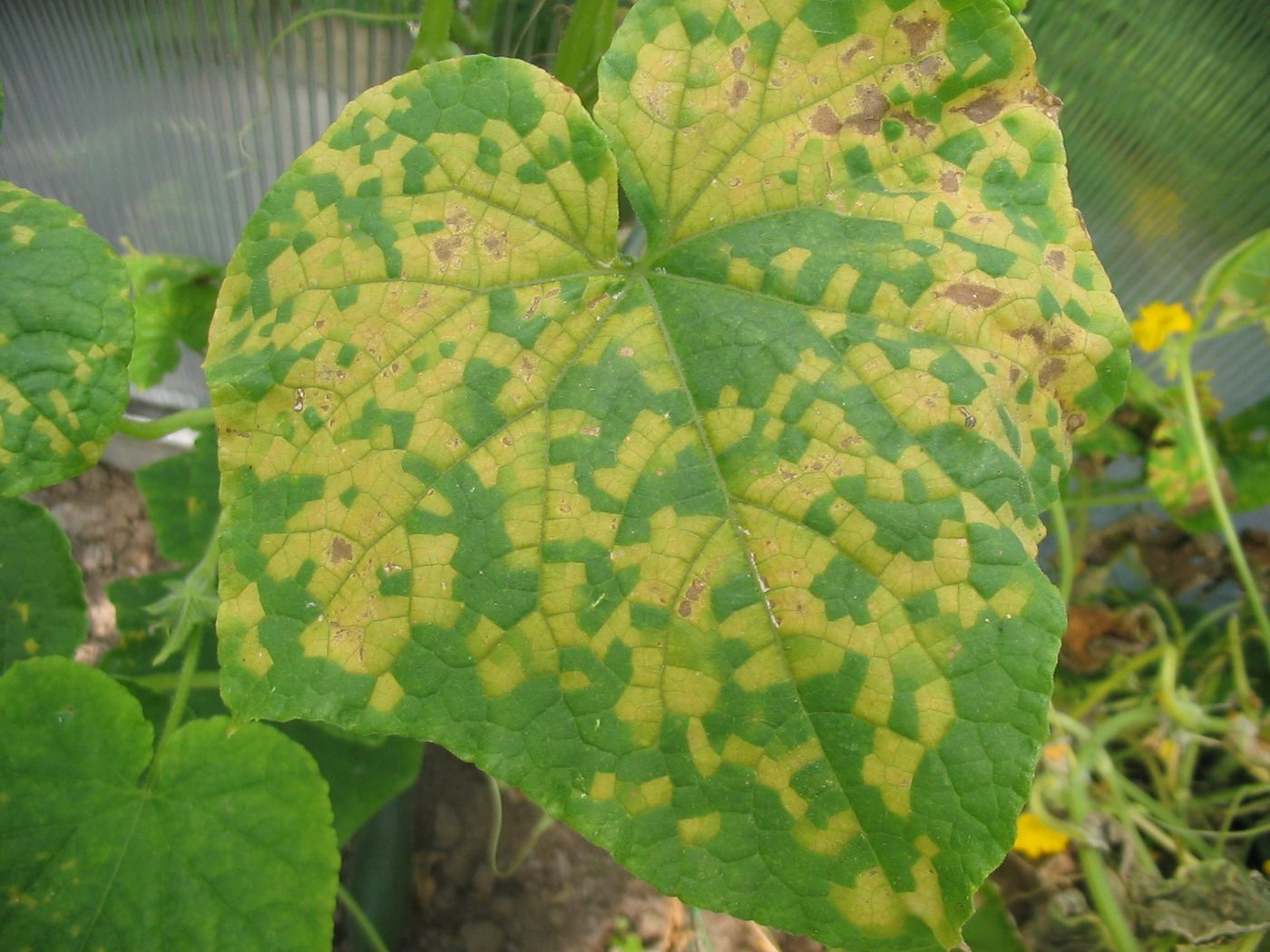
Pests and diseases of cucumber in Greece and Europe: symptom description, epidemiology and quarantine status
Downy mildew, powdery mildew with two causal agents and opposite temperature optima, scab, anthracnose, Didymella with a one-hour free-water limit, Botrytis, Sclerotinia. The two fusarium diseases of cucumber: f.sp. radicis-cucumerinum, described in Heraklion with an optimum of 17 degrees and stopping at 32, and fusarium wilt, which starts where that one stops. Pythium, Phytophthora and angular leaf spot. The aphid-borne and the whitefly-borne viruses, with the three criniviruses that cannot be separated without a laboratory, CYSDV in 49.9% of Greek samples, CVYV absent from Greece but present in Cyprus and Türkiye, and ToLCNDV as the only Union quarantine pest, with the Greek chronology from Ileia in 2018. CGMMV, the virus that needs no insect and that stayed infective in Greek soil at 4 degrees for ten months. Whiteflies, spider mite, thrips, aphids, leafminers, lepidoptera and nematodes, with the Greek resistance data, the Ierapetra nematode populations that overcome the Mi gene, and an explicit statement for every threshold that does not exist. A table of temperature optima by season of the Greek greenhouse. Seven photographs, eighty-four references, each declared as full text or abstract only.
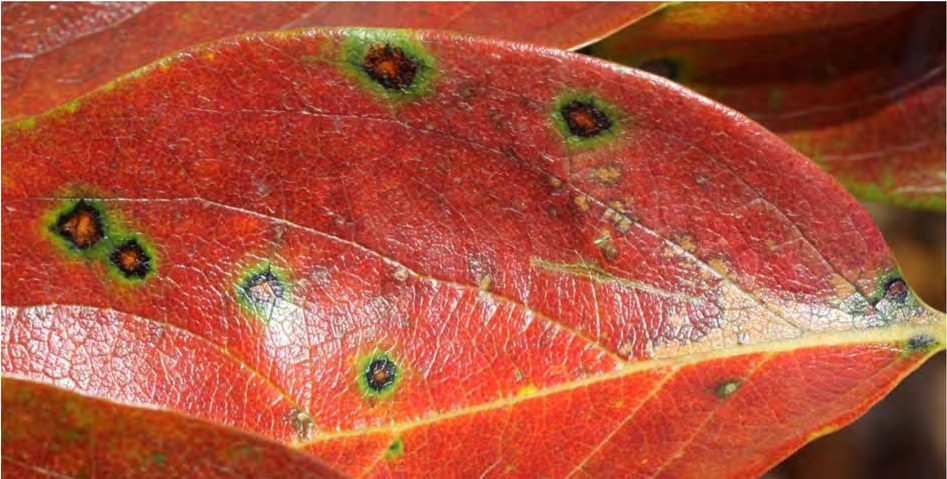
Pests and diseases of persimmon (Diospyros kaki) in Europe and Greece: epidemiology, differential diagnosis and action thresholds
Circular leaf spot (Plurivorosphaerella nawae), the pathogen that adapted to the semi-arid climate of Valencia and is not a quarantine organism, with the comparison between Spain and Korea and the role of drip irrigation. Angular leaf spot, Pestalotiopsis, anthracnose, and the twelve species of Diaporthe, Eutypella and Botryosphaeriaceae identified inside the wood. Postharvest rots: why Alternaria black spot became the limit of storage life after 1-MCP, and how extra irrigation before harvest is paid for in the cold room two months later. Crown gall, vascular wilt, root rots and phytoplasmas. Mealybugs and ants, wax scale, mussel scale, the orange spiny whitefly as a quarantine organism, fruit flies. Herbicide toxicity mistaken for a fungal leaf spot, a differential diagnosis table with fifteen pairs, action thresholds with the sampling method, and the four exotic pathogens threatening the Mediterranean. Thirteen photographs, five from Greek orchards.
The white Mediterranean snail in tree crops
Theba pisana is native to the Mediterranean, not invasive, so there is no eradication programme to wait for. Identification, life cycle, the damage in tree crops, the single approved target in the Greek register, and why the nematode Phasmarhabditis killed the snail only at five times the label rate.