
Calcium and its importance for plants
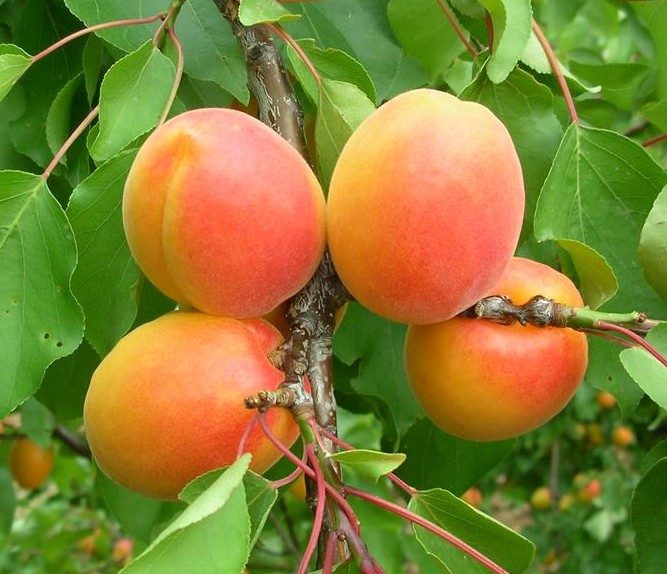
Apricot. At the moment this photograph was taken, the calcium in these fruits had been in place for months: in apricot, 83% of the final amount accumulates within the first four weeks after fruit set [1]. Everything that follows adds volume and sugars, not calcium, which is why the concentration is diluted as the fruit grows.
Savvas Pastopoulos, Agronomist MSc, Pastopoulos Agronomic P.C.
Calcium is the element with the widest gap between what growers think they are doing and what actually happens. The soils are calcareous and the fruit still cracks and softens. Five sprays go on and the analysis does not move. Calcium is applied to the soil and the tree sends it to the leaves. This article is not a list of products; it is the route of the ion from the soil solution to the cell of the fruit, with the points at which that route is cut, and with what the studies show, including the ones that showed nothing.
The second. Blossom end rot in tomato and pepper, the classic "calcium deficiency symptom", is not caused by calcium deficiency. The fall in calcium is a consequence, not a cause [8].
- The paradox: abundant in the soil, deficient in the fruit
- What calcium actually does inside the fruit
- First leg of the route: the soil and the root
- Second leg: why the phloem does not help
- The window of the first weeks
- Transpiration, and its limits
- The pedicel: the narrowing of the route
- The sixty days that close the door
- What the comparison between crops shows
- The great misconception: blossom end rot
- Bitter pit in apple and the potassium to calcium ratio
- Soil fertilisation: what the studies show, including the negatives
- Foliar sprays: how many, when, and what to expect
- The programme for the season
- What to retain
- Sources
1. The paradox: abundant in the soil, deficient in the fruit
The starting point is the observation that brings the grower into the shop: the soil analysis shows calcium in abundance, and the fruit cracks, softens or rots in store. This is not a laboratory error. It is the nature of the element itself.
Calcium differs from all the other nutrients in three ways at once, and the combined action of those three explains almost every problem.
- It moves in one direction only. It rises with the water in the xylem and is not redistributed. A leaf that has accumulated calcium does not give it back to the fruit [9][10]. Unlike nitrogen, potassium or phosphorus, there is no internal "recycling".
- It follows the water, not the need. It goes wherever the transpiration stream ends up. Leaves transpire a great deal, fruit hardly at all. The plant, in other words, sends calcium to where it is needed least.
- It has to stay outside the cell. The calcium concentration in the cytoplasm is kept extremely low, because the ion itself is a signal. This means the plant actively resists accumulating calcium exactly where it would be wanted [12].
The result is an uneven distribution. In the leaves, the concentration can reach 10% of dry weight with no toxicity problem at all [19]. In the fruit, at the moment of picking, the figures are fractions of one per cent. Two organs of the same tree, orders of magnitude apart.
2. What calcium actually does inside the fruit
It matters to understand where the calcium sits, because that explains why nothing else can replace it.
The glue between the cells
Between two neighbouring plant cells there is a layer rich in pectins, the middle lamella. The pectins carry negatively charged polygalacturonic acid groups. Calcium, as a divalent cation, binds to two such chains at once and forms a bridge [12][13].
That is the whole story of firmness. Many bridges mean tight, crisp flesh that survives transport. Few bridges mean cells that come apart easily: soft fruit, susceptible to bruising, easy prey for pathogens.
What is critical is that monovalent cations cannot do the job. Potassium has a single charge and does not bridge. Magnesium is divalent but has a different geometry and does not substitute effectively. There is no replacement.
The second, more discreet task
Beyond structure, Ca²⁺ is a secondary messenger. Sharp, controlled rises in its cytoplasmic concentration act as a signal for responses to stress and to developmental cues [12]. This is precisely why the baseline must stay low: for the signal to be heard, there must be silence.
This explains something that causes confusion: calcium is not simply "the more the better". The plant regulates strictly where it puts it.
3. First leg of the route: the soil and the root
Which calcium counts
In the soil, calcium exists in three pools, and only one of them is directly useful:
| Form | Availability | Role |
|---|---|---|
| Ca²⁺ in the soil solution | Immediate | The only form the root absorbs |
| Exchangeable Ca on the colloids | Indirect, through exchange | Replenishes the solution |
| Calcium carbonate (CaCO₃) | Very low | Long-term reservoir and pH buffer |
Here lies the explanation for Mediterranean calcareous soils. The analysis measures total calcium and produces impressive numbers, but most of it is CaCO₃ with very low solubility. Calcium deficiency symptoms in a calcareous soil are not a contradiction [13].
The competition between cations
Ca²⁺ shares the exchange sites and the membrane transporters with K⁺, Mg²⁺, Na⁺ and NH₄⁺. High concentrations of potassium or magnesium in the soil solution reduce calcium uptake [10][13].
And here is where the costly mistake is made. The grower chasing size and colour raises the potassium. Potassium does its job in the fruit, but at the same time it cuts off the calcium at the root. The same fruit that sized up nicely softens in the cold store.
Care is also needed with the form of nitrogen: ammonium fertilisation introduces NH₄⁺, which competes directly with Ca²⁺ and additionally acidifies the rhizosphere.
pH, in both directions
In acid soils calcium is leached and replaced by H⁺ and Al³⁺ on the exchange sites. In strongly alkaline soils it is abundant but locked into forms of low availability. The range where availability is best is neutral to slightly alkaline [13].
Where exactly it enters
One point is rarely mentioned and has direct practical value: calcium does not enter just anywhere along the root. It enters mainly through the apical, newly developing sections and through the areas where lateral roots emerge. The reason is anatomical: further back, the Casparian strip blocks the apoplastic route and forces the ion to pass through cells, which for calcium is difficult [10].
4. Second leg: why the phloem does not help
From the root upwards, calcium travels almost exclusively in the xylem, carried by the water flow created by transpiration and, at night or early in spring, by root pressure [9][11].
The phloem, which carries sugars from the leaves to the fruit, does not carry calcium in any meaningful quantity. And that is the central problem, because as the fruit grows, a larger and larger share of its water comes from the phloem and a smaller and smaller share from the xylem.
That transport occurs through the xylem and the apoplastic route is no longer a working hypothesis; it is a general assumption in the literature [9][11][17]. There are indications, however, that some phloem contribution cannot be entirely ruled out, particularly in certain species [4], and it will become clear below why that matters.
5. The window of the first weeks
If one thing is to be retained from this whole article, let it be this.
In an study on apricot, which followed the seasonal course of transpiration and of calcium, potassium and magnesium accumulation in the developing fruit, it was found that:
Translated into a calendar: if fruit set in apricot occurs in mid-March, the window closes around mid-April. The June calcium spray, however good, is playing for the remaining 17%.
This does not mean later applications are useless, foliar sprays work through a different, local mechanism, as shown below. It does mean that calcium strategy is a spring strategy, and that anyone starting in June has already lost.
Sources: 1
6. Transpiration, and its limits
The chain of reasoning in circulation is simple: more fruit transpiration → more xylem flow → more calcium. It is correct, but only within specific limits, and those limits have been measured.
Where it holds
In an study on Hayward kiwifruit, fruits were exposed to high and to low vapour pressure deficit, and their transpiration was measured from fruit set to 157 days after full bloom:
| Condition | Total transpiration per fruit | Correlation with Ca accumulation |
|---|---|---|
| High VPD, dry air | about 70 g H₂O | Linear, R² = 0.71 |
| Low VPD, humid air | about 16 g H₂O | Weak, R² = 0.24 |
The critical detail: calcium accumulation increases almost linearly with transpiration above 60 grams of water per fruit. In the range 5 to 60 grams, transpiration appears ineffective: there, calcium did not increase as transpiration increased [2].
That changes how the finding is read. The fruits in humid air never crossed the threshold; they stayed all season inside the 5 to 60 gram zone, where transpiration does not bring in calcium. The fruits in dry air did cross it, and from there on every extra gram of water evaporated came with proportionally more calcium.
The substantive consequence is that the benefit is not gradual but threshold-based. "A little more ventilation, a little more calcium" does not hold. If the orchard sits inside the ineffective zone, humid microclimate, dense planting, closed canopy, fruit in deep shade or inside bags, a cool and cloudy spring, a small improvement in ventilation will not show up in the fruit analysis. An order-of-magnitude change is needed to push the fruit above the threshold.
And the converse, which is equally useful: in dry, open conditions the very same intervention raises fruit calcium, because there the fruit is already on the linear part of the curve. The same effort, the same cost, an entirely different result, and this explains why the same operation "works" in one orchard and "does nothing" in the one next door.
So in humid environments the weight necessarily shifts to the other levers: root health and soil availability, irrigation stability that keeps the xylem stream uninterrupted, and early foliar sprays that bypass transpiration altogether [2].
Why the chain breaks at low transpiration
The researchers examined the water balance of the fruit and found the explanation. When VPD is low, the fraction of the xylem stream that ends in transpiration falls to 40 to 50%. The remainder, about 60% of the xylem water, is needed to support the growth of the fruit itself [2].
What it means in practice. Cultural techniques that increase fruit transpiration, opening the canopy, spring pruning, planting distances that allow air movement, avoiding excessive atmospheric humidity, pay off in dry conditions. In a humid, still spring, where transpiration stays low, the same effort returns very little, because the water that rises is consumed in growth rather than evaporated.
It has also been shown experimentally that wind speed increases fruit transpiration in kiwifruit [20], which supports the logic of canopy ventilation.
And an important reservation
In the apricot study, fruits wrapped in bags so that they could not transpire went on taking up calcium: they reached about 45% of the concentration of the controls. The authors calculated that transpiration explains 55% of the total calcium, and concluded explicitly that other factors are also at work [1].
7. The pedicel: the narrowing of the route
Between the branch and the fruit there is a point where the route narrows, and it has been measured in nine different species.
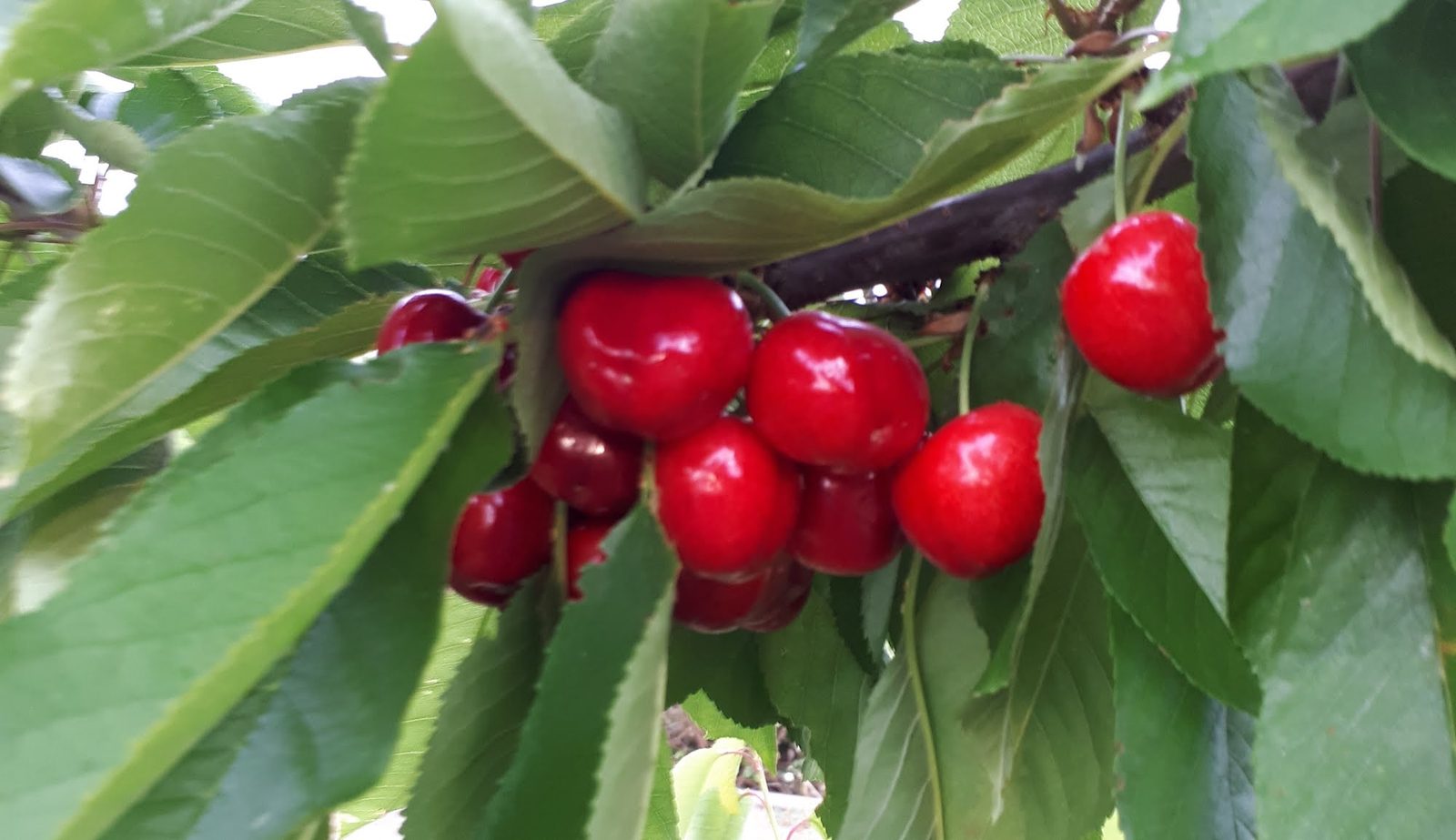
Sweet cherry. The long pedicels are the entire route of calcium to the fruit, and at the same time its narrowest point. In nine species examined, the pedicel concentrated 3 to 10 times more calcium than the fruit itself [4]. In cherry this has a practical extension: every xylem vessel interrupted or constricted in the pedicel permanently removes part of the supply, and the phloem cannot make it up.
In a cross-species study covering three litchi cultivars, two of grape, two of citrus, and one each of loquat, apple, pear, Indian jujube and longan, it was found that:
The finding is consistent, but the severity of the bottleneck differs by genotype [4]. Put another way, the cultivar being grown partly determines how much calcium gets through.
A point that needs care
The claim circulates that "the more calcium in the pedicel, the more in the fruit", as though a single strong relationship existed. The data do not support that.
In the same work, eleven separate correlation equations were calculated, one per cultivar, and the results differ widely [4]:
| Species and cultivar | Pearson coefficient | Statistical significance |
|---|---|---|
| Loquat (Ej-ZZ6) | 0.823 | Highly significant |
| Litchi (Lc-NMC) | 0.671 | Highly significant |
| Litchi (Lc-GW) | 0.614 | Highly significant |
| Citrus (Cr-MSJ) | 0.421 | Marginally significant |
| Apple (Md-TM1) | −0.092 | Not significant |
| Pear (Pp-WK) | −0.031 | Not significant |
An indicative selection from the eleven cultivars in the correlation table [4]. The slopes of the equations range from −0.04 to 0.24.
In apple and pear the correlation was practically zero. There is therefore no universal equation linking pedicel to fruit; there is a phenomenon that appears with different intensity by species. Anyone transferring an equation from litchi to apple is making a mistake.
The overall ranking is also of interest: calcium concentration was found to be highest in the pome fruits, loquat, apple, pear, followed by Indian jujube [4].
Sources: 4
8. The sixty days that close the door
Why does the influx stop? The answer is anatomical, and in kiwifruit it has been described in detail.
Around 60 days after full bloom, several changes occur in the fruit at the same time, each of which contributes to the early cessation of calcium accumulation [3]:
- The physical integrity and functionality of the fruit xylem decline. This structural degradation is observed in many species and coincides with a fall in fruit transpiration.
- The epidermal hairs die. By 60 days after bloom, all the cells of all the trichomes are dead.
- Fruit surface conductance falls, the decline starting much earlier, within the first three weeks, and continuing more gently thereafter.
Note that the same time marker appears in an entirely different crop: in apple, fruit calcium content at 60 days after full bloom is used as a predictor for bitter pit [14]. Two different species, the same critical point.
9. What the comparison between crops shows
Calcium is not a single-crop issue. The disorders its insufficiency causes in the fruit have a different name in each species, but a common root.
| Crop | How it shows | What is known |
|---|---|---|
| Apple | Bitter pit | Ca at 60 days and the K/Ca ratio as predictors [14][15] |
| Sweet cherry | Fruit cracking, softening | Foliar sprays reduce cracking, especially early [21][22] |
| Peach | Soft flesh, poor transport tolerance | Repeated applications improve firmness [23] |
| Kiwifruit | Physiological pitting, softening in storage | 60-day window, coupling with VPD [2][3][16] |
| Apricot | Postharvest losses | 83% enters in 4 weeks [1] |
| Tomato, pepper | Blossom end rot | Not primarily a calcium deficiency [8][18] |
| Raspberry | Soft, crumbly drupelets | Fertilisation did not change fruit Ca [7] |
| Litchi, longan, loquat, citrus, grape | Various | Pedicel bottleneck in all, with different intensity [4] |
The pattern that emerges is consistent: where transport is difficult, the problems appear at the most distant point of the fruit, at the tip of the tomato, in the calyx region of the apple. Those are the parts supplied last.
10. The great misconception: blossom end rot
Here something taught for decades has to be overturned.
Blossom end rot in tomato and pepper is traditionally treated as the calcium deficiency symptom par excellence, and the typical response is sprays with calcium chloride. The more recent analysis shows the causal relationship runs the other way.
What actually happens, on this reading: abiotic stresses, salinity, drought, high light intensity, heat, ammonium nutrition, increase the production of reactive oxygen species in the fruit apoplast, partly through increased NAD(P)H oxidase activity. The oxidative stress leads to cell death. Degradation of the plasma membrane and the tonoplast precedes ion leakage, and therefore calcium leakage [8].
In effect, the cell dies first, and then loses its calcium. Analysis of the damaged tissue shows low calcium, and the conclusion drawn was that low calcium killed it.
The discussion remains open in the literature and the disorder is aptly described as a "century-old problem" [18]. The revised reading is presented here because it has direct practical consequences, not because the question is definitively closed.
11. Bitter pit in apple and the potassium to calcium ratio
In apple, bitter pit is the most studied example of a calcium disorder, and it is there that predictive tools have been developed.
The concentration threshold. In the cultivar Golden Smoothee, when fruit calcium content at 60 days after full bloom exceeds 11 mg Ca per 100 g fresh weight, the appearance of bitter pit is unlikely [14].
The K/Ca ratio. In the cultivar Honeycrisp, a potassium to calcium ratio above 25 to 1 is considered the threshold beyond which bitter pit increases [15]. That ratio correlates with the disorder more strongly than the absolute calcium value.
Realism is needed, however. The literature notes that attempts to correlate leaf, peel or flesh calcium with bitter pit incidence have had limited success, mainly because of year-to-year fluctuation and the large variability within a single fruit, between fruits on the same tree, and between trees and orchards [15]. The thresholds are useful as an indication, not as a certainty.
12. Soil fertilisation: what the studies show, including the negatives
Here more care is needed than the commercial literature usually takes. The studies that did not show an effect are presented as well, because they are equally instructive.
Kiwifruit on acid soil: no increase
In a kiwifruit orchard in Galicia, north-west Spain, the country's main kiwifruit region, where the soils are slightly acid and the plants showed low calcium concentrations, a commercial biostimulant with 9.6% CaO was tested, applied to the soil and to the foliage. The application did not increase calcium concentrations [6].
Raspberry: fruit calcium did not depend on fertilisation
In a three-year study on three raspberry cultivars, with timed calcium applications to the soil and foliar, the conclusion was clear from the title of the paper itself: fruit calcium is influenced by soil and physiological factors, but not by fertiliser applications. The treatments did not change calcium concentrations in the tissues, nor yield, nor fruit quality [7].
Where soil application does work
That negative results exist does not mean soil management is useless. It means it does not work as "add calcium, fruit calcium rises". It works when it corrects a genuine limiting factor:
- When the pH is acid and liming restores availability and removes aluminium toxicity.
- When there is an extreme cation imbalance, with excessive potassium or magnesium, and correcting it releases uptake.
- When soil moisture is stable. Calcium follows the water; without continuous moisture in the zone of the new roots there is no transport.
- When it is accompanied by a healthy, actively growing root, which as shown above is the only point of entry.
It has also been observed in sweet cherry that soil application increases calcium concentration in leaves and fruit, but the young leaves take the lion's share [24], exactly what would be expected of an element that follows transpiration.
13. Foliar sprays: how many, when, and what to expect
Foliar applications bypass the whole route: root, xylem, pedicel. The calcium enters locally, from the surface. This is why they work where soil fertilisation fails, but they have their own rules.
The Greek study on Hayward
In a two-year study on Hayward kiwifruit, various preharvest foliar calcium products were tested, with the same calcium concentration in the spray solution across all treatments. The findings [5]:
- All treatments increased calcium concentration in leaves and fruit compared with the control.
- All increased flesh firmness. In one treatment the increase reached 22%.
- There was no effect on the concentrations of nitrogen, phosphorus, potassium, magnesium, boron, iron, manganese and zinc, that is, the intervention was targeted.
In kiwifruit of the cultivar Tsechelidis, an increase in calcium concentration and a small increase in firmness after foliar applications has also been recorded [25].
In stone fruit
In peach, repeated applications during fruit development increased calcium in flesh and skin and improved firmness and postharvest behaviour, without always affecting size [23]. In sweet cherry, sprays increased calcium and reduced cracking, particularly when applied early, before the functionality of the pedicel xylem degrades [21][22].
What not to expect
- Calcium does not move from the leaf to the fruit. A spray that covers only foliage does not help the fruit. The target is the fruit, and the coverage has to reach it.
- The increase is moderate. This is about improving firmness and storability, not a transformation.
- Repeat applications are needed, with the emphasis on the early stages [5][22].
14. The programme for the season
Summarising the above into a decision framework. This is not a recipe: the choices, rates and timing are determined by an agronomist, on the basis of the crop, the soil and leaf analysis, and local conditions.
| Period | Objective | Actions |
|---|---|---|
| Winter | Available Ca and a healthy root by spring | Soil analysis. pH correction where needed. Check compaction and drainage. Cation balance, not only absolute values |
| Bloom | Readiness before the window opens | Secure stable soil moisture. Restrain potassium and ammonium nitrogen |
| Fruit set to 4 weeks | The critical period, most of it enters here | First foliar sprays targeting the fruit. Steady irrigation, without extreme swings |
| Up to 60 days | Use of the remaining window | Repeat applications. Canopy ventilation, spring pruning. Avoid excessive atmospheric humidity |
| After 60 days | Management, not enrichment | Sprays now act mainly on the surface. Emphasis on irrigation stability and avoiding stress |
| Before harvest | Prediction, not correction | Analysis of fruit, not leaf, with attention to the K/Ca ratio. It sets storage priorities |
15. What to retain
The ten points
- The window is the first weeks. In apricot, 83% within 4 weeks of fruit set [1].
- At 60 days the influx stops, as the fruit xylem degrades and transpiration falls [3].
- Transpiration explains 55%, not 100%. Fruits that did not transpire reached 45% of the control [1].
- Ventilation raises fruit calcium in dry air. At low VPD the coupling of transpiration and calcium breaks [2].
- The pedicel holds 3 to 10 times more calcium than the fruit, in every species checked [4].
- There is no universal pedicel-fruit relationship. In apple and pear the correlation was practically zero [4].
- The root is the only gateway, and only the new tips. Without root growth there is no calcium [10].
- Soil fertilisation is no guarantee. In kiwifruit on slightly acid soils in Galicia and in red raspberry it did not increase fruit calcium [6][7]. Both results come from soils and crops different from the calcareous soils of Greek orchards.
- With foliar sprays, the number is what counts. Four applications gave maximum firmness, one gave nothing [5].
- Blossom end rot is not primarily a calcium deficiency, but oxidative stress [8].
Calcium nutrition is not won with the product. It is won with a healthy root that is actively growing, with a soil whose pH and cation balance do not obstruct uptake, with steady irrigation that never lets the xylem stream break, with a canopy that breathes, and with interventions made when they count, which is much earlier than is generally assumed.
16. Sources
The numbers in the text refer to the list below.
- [1] Montanaro, G., Dichio, B. and Xiloyannis, C. (2010). Significance of fruit transpiration on calcium nutrition in developing apricot fruit. Journal of Plant Nutrition and Soil Science 173(4):618-622. Source for the 83% of calcium within the first 4 weeks after fruit set in apricot, for the finding that transpiration explains 55% of total Ca, and for non-transpiring fruits reaching 45% of the control concentration.
- [2] Montanaro, G., Dichio, B., Lang, A. et al. (2015). Fruit calcium accumulation coupled and uncoupled from its transpiration in kiwifruit. Journal of Plant Physiology 181:67-74. Source for the linear correlation R²=0.71 at high VPD and R²=0.24 at low, for the ~70 and ~16 g H₂O per fruit, for the ineffectiveness of transpiration in the 5-60 g H₂O range, for the fall of the transpired fraction to 40-50%, and for ~60% of xylem water being consumed in fruit growth.
- [3] Xiloyannis, C., Dichio, B., Montanaro, G., Lang, A., Celano, G. and Mazzeo, M. (2008). Fruit morphological and physiological traits influence calcium transport and accumulation in kiwifruit. Acta Horticulturae 767:369-378. Source for the changes around 60 days after full bloom: decline in fruit xylem functionality, death of all trichome cells, and the fall in surface conductance.
- [4] Song, W., Yi, J., Kurniadinata, O.F. et al. (2018). Linking fruit Ca uptake capacity to fruit growth and pedicel anatomy, a cross-species study. Frontiers in Plant Science 9:575. Source for the pedicel Ca concentration being 3 to 10 times higher than the fruit in all species examined, for the variation of the bottleneck by genotype, for the eleven pedicel-fruit correlation equations with their coefficients, and for the highest Ca concentration being in the pome fruits.
- [5] Sotiropoulos, T., Voulgarakis, A., Karaiskos, D., Chatzistathis, T., Manthos, I., Dichala, O. and Mpountla, A. (2021). Foliar calcium fertilizers impact on several fruit quality characteristics and leaf and fruit nutritional status of the 'Hayward' kiwifruit cultivar. Agronomy 11(2):235. Source for the increase in Ca in leaves and fruit from all foliar treatments, for the firmness increase of up to 22%, for the absence of effect on the other nutrients, and above all for the finding that a single CaCl₂ spray had no significant effect while four applications gave maximum firmness.
- [6] Otero, V., Barreal, M.E., Merino, A. and Gallego, P.P. Calcium fertilization in a kiwifruit orchard. Acta Horticulturae 753. Source for the negative result in a Galician kiwifruit orchard on slightly acid soils: application of a biostimulant with 9.6% CaO, to soil and foliage, did not increase calcium concentrations.
- [7] Rojas-Barros, P., Bryla, D.R., Orr, S.T., Hardigan, M., Maupin, B. and DeVetter, L.W. (2025). Fruit calcium is influenced by soil and physiological factors but not by fertilizer applications in floricane-fruiting red raspberry. HortScience 60(10):1836-1841. Source for the absence of any effect of soil and foliar calcium applications on tissue Ca concentrations, yield and fruit quality in three red raspberry cultivars.
- [8] Saure, M.C. (2014). Why calcium deficiency is not the cause of blossom-end rot in tomato and pepper fruit, a reappraisal. Scientia Horticulturae. Source for the observation that the reduction in apoplastic water-soluble Ca appears only after symptoms are visible, for the role of abiotic stress and reactive oxygen species, and for cell death preceding ion leakage.
- [9] Saure, M.C. (2005). Calcium translocation to fleshy fruit: its mechanism and endogenous control. Scientia Horticulturae 105(1):65-89. Source for the mechanism of calcium transport to fleshy fruit and for its limited phloem mobility.
- [10] White, P.J. and Broadley, M.R. (2003). Calcium in plants. Annals of Botany 92(4):487-511. Source for uptake through the apical, newly developing root sections, for the role of the Casparian strip in restricting apoplastic movement, for competition with K⁺ and Mg²⁺, and for the relationship between transpiration and calcium supply.
- [11] Hocking, B., Tyerman, S.D., Burton, R.A. and Gilliham, M. (2016). Fruit calcium: transport and physiology. Frontiers in Plant Science 7:569. Source for the modern synthesis of calcium transport and physiology in the fruit.
- [12] Hepler, P.K. (2005). Calcium: a central regulator of plant growth and development. The Plant Cell 17(8):2142-2155. Source for the role of Ca²⁺ as a secondary messenger, for the necessity of a low cytoplasmic concentration, and for the bridges with the pectins of the middle lamella.
- [13] Marschner, P. (ed.) (2012). Marschner's Mineral Nutrition of Higher Plants, 3rd edition. Academic Press. Source for the forms of calcium in the soil, for the low availability of CaCO₃ in calcareous soils, for cation competition and for the role of pH.
- [14] Integral procedure to predict bitter pit in 'Golden Smoothee' apples based on calcium content and symptom induction. Scientia Horticulturae. Source for the threshold of 11 mg Ca per 100 g fresh weight at 60 days after full bloom, above which bitter pit is unlikely.
- [15] Physiological and environmental factors influencing bitter pit in apples. Journal of Horticultural Science and Research. Source for the 25:1 K:Ca threshold in Honeycrisp, for the strong correlation of the ratio with the disorder, and for the limited reliability of predictors given the variability within and between fruits, trees and years.
- [16] Ferguson, I.B., Thorp, T.G., Barnett, A.M., Boyd, L.M. and Triggs, C.M. (2003). Inorganic nutrient concentrations and physiological pitting in 'Hayward' kiwifruit. Journal of Horticultural Science and Biotechnology 78(4):497-504. Source for the relationship of mineral nutrients with physiological pitting in kiwifruit and for the variability observed at field scale.
- [17] Tonetto de Freitas, S. and Mitcham, E.J. (2012). Factors involved in fruit calcium deficiency disorders. In: Horticultural Reviews, ed. J. Janick, pp. 107-146. Wiley. Source for the overall review of the factors involved in fruit calcium deficiency disorders.
- [18] Blossom-end rot: a century-old problem in tomato (Solanum lycopersicum L.) and other vegetables. Molecular Horticulture (2021). Source for the overall picture of blossom end rot in tomato and other vegetables and for the fact that the question remains open.
- [19] Therios, I. (2021). Nutrition and Fertilisers (in Greek). Source for the fact that leaf calcium concentration can reach 10% of dry weight without toxicity problems.
- [20] Mazzeo, M., Dichio, B., Xiloyannis, C. and Lang, A. (2011). Fruit transpiration increases with windspeed in Actinidia deliciosa 'Hayward'. Acta Horticulturae 913:385-388. Source for the experimental evidence that wind speed increases fruit transpiration in kiwifruit.
- [21] Val, J., Monge, E., Risco, D. and Blanco, A. (2008). Effect of calcium sprays on calcium concentrations in sweet cherry fruit and cracking incidence. Journal of Plant Nutrition 31(11):1889-1905. Source for the increase in calcium concentration and the reduction in cracking in sweet cherry after foliar applications.
- [22] Wójcik, P. and Lewandowski, M. (2003). Effect of calcium and boron sprays on fruit quality and cracking of sweet cherry. Journal of Plant Nutrition 26(10):1999-2010. Source for the importance of early timing of foliar applications in sweet cherry, before the functionality of the pedicel xylem degrades.
- [23] Val, J., Monge, E., Blanco, A. and Espada, J.L. (2010). Effect of preharvest calcium sprays on calcium content and quality of peach fruit. Acta Horticulturae 868:365-372. Source for the increase in calcium in peach flesh and skin and the improvement in firmness and postharvest behaviour from repeated applications.
- [24] Matteo, M., Zoffoli, J.P., Van der Heijden, G. and Ayala, M. (2024). Calcium absorption by fruit and leaves of sweet cherry trees (Prunus avium L.) by isotope labeling. Scientia Horticulturae 329:113026. Source for the distribution of absorbed calcium between cherry leaves and fruit using isotope labelling, and for the priority of the young leaves.
- [25] Koutinas, N. et al. (2010). Effect of foliar calcium applications on fruit quality of the kiwifruit cultivar Tsechelidis (in Greek). Source for the increase in calcium concentration and the small increase in firmness in kiwifruit of the Greek cultivar Tsechelidis.
This article is general technical information and not individualised agronomic advice or an instruction for application. No product rates are given, as these differ by product, crop and stage. Fertilisers and plant protection products are used exclusively in accordance with the label and, where required, with national approvals. The label always prevails. Approvals referenced on plantprotect.gr are valid in Greece only; in every other country the corresponding national register applies.
Every foliar spray on trees carrying fruit carries a risk of fruit marking and leaf burn, and calcium salts are among the higher-risk products. A prior test on a limited number of trees is required, with the same product and the same rate, and a wait of five to seven days before general application. Spraying is done in the late afternoon or early morning, never in a heatwave and never on foliage under water stress.
The nutrition programme is determined after soil analysis and leaf or fruit analysis, following an on-site assessment by a licensed agronomist, and responsibility for application rests solely with the user. Pastopoulos Agronomic P.C. accepts no liability for any damage arising from the use of this information.
Related articles
Nutrient antagonisms and synergies, with a per-element tool
The arrow diagram in every fertiliser leaflet does not stand up scientifically. The antagonisms are real, but they act on two separate levels, in the soil and inside the plant, and the same element can be antagonistic on one and synergistic on the other. With a tool showing the documented relationships of each element.
Zeolite in agriculture: what is documented and what is not
It is a cation exchanger, it holds ammonium and potassium, not nitrate. The rates that work are tens of tonnes per hectare, not hundreds of kilos. And erionite is a Group 1 carcinogen.
Leonardite in agriculture: properties, rates and what the law says
Leonardite is oxidised lignite with up to 85% humic acids, but pH below 3, up to 6% sulphur and almost no phosphorus. What the analyses and meta-analyses show, where it delivers and where it does not, and what Regulation (EU) 2019/1009 and the organic farming rules require.