
Olive nutrition: what actually leaves the grove

Savvas Pastopoulos, Agronomist MSc, Pastopoulos Geoponiki L.P., Neos Mylotopos, Pella
The olive removes far fewer nutrients from the field than established practice assumes. Long-term studies in Spain measured exactly how much leaves with the fruit and with the prunings, and showed that in rainfed groves the element most often short is potassium. Nitrogen, applied in the largest quantities, is usually unnecessary, and in excess it degrades the oil. What follows are the real annual removals in kilos per hectare, the limits of leaf analysis, and what actually causes alternate bearing.
The Greek edition of this article works in stremmata; this English edition uses hectares throughout. 1 ha = 10 stremmata. To convert any figure below back to a per-stremma basis, divide by ten.
Fertiliser is calculated from expected yield, without leaf analysis. In Spanish groves, growers who followed that logic multiplied their fertiliser cost tenfold compared with a programme based on leaf analysis, with no increase in yield or growth at all, and with a measurable deterioration in oil quality [5].
- How many nutrients actually leave the grove
- Annual requirements in kilos per hectare
- What changes if the prunings stay in the field
- Leaf analysis and its limits
- Nitrogen, the element applied most and costing most
- Potassium, deficiencies are frequent in rainfed fields
- Boron and fruit set
- Calcium, magnesium and micronutrients
- Alternate bearing, what actually causes it
- What fertilisation can and cannot do about alternate bearing
- A programme for the year that carries a crop
- The key points
- Sources
1. How many nutrients actually leave the grove
The only quantity that must in every case be returned to the soil is the quantity taken out of it. For the olive, that quantity was measured in two long-term studies in Andalusia, on rainfed trees of the cultivar Picual, with nutrients determined separately in the fruit and in the whole of the pruning material [1].
The result overturns the common view. At a mean yield of 8.2 tonnes per hectare, the annual removals were:
| Element | kg/ha | Where it mostly sits |
|---|---|---|
| Calcium (Ca) | 57.9 | Almost entirely in the prunings |
| Nitrogen (N) | 54.4 | Split between fruit and prunings |
| Potassium (K) | 45.5 | Mainly in the fruit |
| Phosphorus (P) | 6.87 | Split |
| Magnesium (Mg) | 3.79 | Split |
| Copper (Cu) | 0.12 | Traces |
| Boron (B) | 0.11 | Traces |
| Manganese (Mn) | 0.08 | Traces |
| Zinc (Zn) | 0.05 | Traces |
Values from the experimental site at Cabra, Córdoba, a seven-year mean.
These figures agree closely with the Greek reference data, which give an uptake of 15 to 35 kg of nitrogen, 8 kg of phosphorus, up to 50 kg of potassium and 20 to 50 kg of calcium per hectare [13]. Two independent sources, with different methodologies, give the same order of magnitude. That materially strengthens the reliability of both.
The composition of the fruit
Separately from the prunings, the fruit itself contains, per tonne of fresh weight [1]:
| Element | kg per tonne of fruit | Share of the mineral fraction |
|---|---|---|
| Potassium | 4.42 | Over 50% |
| Nitrogen | 2.87 | About 35% |
| Phosphorus | 0.49 | With Ca and Mg, about 11% |
| Calcium | 0.29 | not reported |
| Magnesium | 0.16 | not reported |
More than half of the mineral content of the olive is potassium. That alone explains why potassium is the element exhausted first in a productive grove, and why it was the only one that had to be applied over the seven years of the Spanish study.
The fruit harvested, and the nutrients that left with it. The area is optional and serves for comparison with the per-hectare tables.
| Element | Element basis | Oxide basis | Fertiliser equivalent |
|---|---|---|---|
| Nitrogen | not reported | not reported | not reported |
| Potassium | not reported | not reported | not reported |
| Phosphorus | not reported | not reported | not reported |
| Calcium | not reported | not reported | not reported |
| Magnesium | not reported | not reported | not reported |
Calculated from the fruit composition in the table above: 2.87 grams of nitrogen, 4.42 of potassium, 0.49 of phosphorus, 0.29 of calcium and 0.16 of magnesium per kilo of fresh fruit [1]. It covers only what left in the crates. If the prunings are removed as well, the quantities in section 3 are added.
2. Annual requirements in kilos per hectare
The values above are on an element basis. Fertilisers, however, are sold as oxides. The conversion:
P₂O₅ = P × 2.29 · K₂O = K × 1.205 · MgO = Mg × 1.658
So for a yield of 8.2 tonnes of fruit per hectare and with the prunings removed from the field, the annual removal in fertiliser units is:
| Unit | kg/ha/year | Fertiliser equivalent |
|---|---|---|
| Nitrogen (N) | 54.4 | about 260 kg of ammonium sulphate 21-0-0 |
| Phosphorus (P₂O₅) | 15.7 | about 34 kg of superphosphate 0-46-0 |
| Potassium (K₂O) | 54.8 | about 110 kg of potassium sulphate 0-0-50 |
| Magnesium (MgO) | 6.3 | covered by a compound fertiliser containing magnesium |
The values are indicative and refer to removal, not to a fertiliser recommendation. The final rate is set after leaf and soil analysis, and after on-site assessment by an agronomist.
Checking the arithmetic
The values in the table check internally. Fruit potassium is 4.42 kg per tonne; times 8.2 tonnes per hectare gives 36.2 kg per hectare. Total potassium removal is 45.5, so the prunings contribute 9.3 kg, consistent with the finding that potassium leaves mainly with the fruit. Conversely, fruit calcium gives only 2.4 kg per hectare out of 57.9 in total, that is, 96% of the calcium leaves with the branches [1]. The two independent tables in the paper agree on every element.
Sources: 1
3. What changes if the prunings stay in the field
Here lies the largest practical difference, and it is often ignored. If the prunings are chipped and left in the grove, their whole share drops out of the calculation. Real removal is then limited to what left in the crates:
| Element | With prunings removed kg/ha | With chipping in the field kg/ha | Reduction |
|---|---|---|---|
| Nitrogen | 54.4 | 23.5 | −57% |
| Potassium | 45.5 | 36.2 | −20% |
| Calcium | 57.9 | 2.4 | −96% |
| Phosphorus | 6.9 | 4.0 | −42% |
| Magnesium | 3.8 | 1.3 | −66% |
Calculated for 8.2 tonnes of fruit per hectare, from the fruit composition in section 1.
Chipping the prunings inside the grove halves the nitrogen requirement and all but eliminates the calcium requirement. It also adds organic matter, which on the calcareous soils of Macedonia usually sits around 1% and is the real limiting factor. Burning the prunings throws that quantity away and at the same time destroys the nitrogen, which is lost to the atmosphere.
4. Leaf analysis and its limits
Leaf analysis is the only reliable method of diagnosing the nutritional status of the tree. Soil analysis is not accurate enough for the olive and serves mainly for pH, salinity and calcium carbonate [3].
Sampling
- Timing: July, or at least five to eight weeks after full bloom. Concentrations of most elements stabilise in the leaf at that point.
- Position: fully expanded, healthy leaves from the middle towards the base of current-season shoots that carry no fruit. This point matters: a fruiting shoot gives entirely different values.
- Number: about 100 leaves per sample, from 20 to 25 trees representing a uniform block of up to 10 hectares.
- Handling: washing, drying and dispatch to a laboratory. Leaves carrying spray residue give falsely high copper, zinc and manganese.
Reference values for a July sample
| Element | Deficient below | Sufficient | Toxic above |
|---|---|---|---|
| Nitrogen (%) | 1.40 | 1.50 to 2.00 | not reported |
| Phosphorus (%) | not reported | 0.10 to 0.30 | not reported |
| Potassium (%) | 0.40 | above 0.80 | not reported |
| Calcium (%) | not reported | above 1.00 | not reported |
| Magnesium (%) | not reported | above 0.10 | not reported |
| Manganese (ppm) | not reported | above 20 | not reported |
| Copper (ppm) | not reported | above 4 | not reported |
| Boron (ppm) | 14 | 19 to 150 | 185 |
| Sodium (%) | not reported | not reported | 0.20 |
| Chloride (%) | not reported | not reported | 0.50 |
Reference values for July samples, after the University of California [3], in agreement with the values used in the Spanish studies [1]. The toxicity column comes from a Californian compilation and has not been experimentally validated, as explained in section 7.
The analysis says whether something is short. It does not say how much to apply. That is precisely why the removal figures of section 1 are needed: the analysis shows the "whether" and removal gives the order of magnitude of the "how much" [1].
The critical finding on nitrogen
The 1.40% nitrogen deficiency threshold comes from work published in 1983. Later long-term measurements showed that no reduction in yield or growth was recorded in trees with lower concentrations, which moves the real deficiency limit for mature trees below 1.20% [4]. That is, a proportion of the analyses read today as "nitrogen deficiency" are in fact nothing of the kind.
5. Nitrogen, the element applied most and costing most
Over the seven years of the Spanish studies, the control trees received no nitrogen at all, because leaf analysis never indicated a need. Leaf nitrogen concentration stayed above the deficiency limit throughout, and the nitrogen balance of the grove was found to be positive: inputs from mineralisation of organic matter, from rainfall and from irrigation water more than covered the outputs [4] [6].
What over-fertilising with nitrogen costs
- Oil quality. Over-fertilising with nitrogen reduces polyphenols and hence the oxidative stability of the oil, raises free acidity and lowers oleic acid [5]. Polyphenols are the principal antioxidant of olive oil and the basis of every quality claim made for it.
- Oil biosynthesis. Recent work showed that elevated nitrogen within the fruit directly impairs oil biosynthesis [11]. The effect, in other words, is not only indirect through vegetative growth.
- Flower quality. Nitrogen status affects flower quality and ovule longevity [8], and therefore fruit set.
- Growth at the expense of cropping. Very fertile conditions cause excessive vegetative growth and weaker flowering and fruit set [3].
- Environment. Nitrate leaching to groundwater, an issue with a regulatory dimension in vulnerable zones.
In olive fertilisation, nitrogen is rarely a problem of availability and usually a problem of excess [4]. That is the exact opposite of what established practice assumes, and the evidence is not theoretical: seven years of zero nitrogen fertilisation without loss of yield.
How much nitrogen, when it is needed
When analysis shows a real deficiency, American recommendations for mature trees run from 40 to 100 pounds of elemental nitrogen per acre per year [3]. The conversion gives:
40 lb/acre = 44.8 kg N per hectare100 lb/acre = 112.1 kg N per hectare
That is, 45 to 112 kg of nitrogen per hectare. The lower end coincides almost exactly with the removal figure of 54.4 kg. The upper end is twice the removal and is justified only in young plantings building a framework, or on demonstrated deficiency.
Timing in Macedonia
Bud differentiation takes place in March and April, provided sufficient winter chilling has occurred. Base fertilisation should not be applied too early, so that frost susceptibility is not increased. At soil temperatures below 15 °C nitrogen uptake is limited and the risk of nitrate leaching is high, so in base-dressing fertilisers the proportion of nitrate nitrogen is kept as low as possible [13].
6. Potassium, deficiencies are frequent in rainfed fields
Over the seven years of the Spanish studies, potassium was the only element that had to be applied. Leaf values sat almost every year below the sufficiency limit of 0.80% but above the deficiency limit of 0.40% [1].
The reason is twofold. First, more than half the mineral content of the fruit is potassium, so every bearing year empties the store. Second, on calcareous soils potassium is fixed and becomes hard to access, which is why deficiency appears even on soils with high total potassium [9].
How it is corrected
| Method | Rate | When | Note |
|---|---|---|---|
| Soil applied, in a band | 560 to 1,120 kg of potassium sulphate per hectare | December or January | In a concentrated band just inside the canopy drip line, so that the fixing capacity of the soil is locally saturated |
| Through the drip line | 20% of the above rate | In split applications | Directly beneath the emitters |
| Foliar | 10.5 grams of potassium per litre, that is, a potassium sulphate solution of about 2.3% | Four sprays, from March to July | The concentration and the number of sprays of the Spanish rainfed studies [9] |
The rates refer to potassium sulphate containing 50% K₂O and are indicative. The conversion from the American recommendation: 500 pounds per acre equals 560 kg per hectare [3].
The concentration in the table is exactly the one used in the Spanish studies, that is, 10.5 grams of potassium per litre, which corresponds to a potassium sulphate solution of about 2.3%, in four sprays per season [9]. The University of California recommendation is lower, 1.2% potassium nitrate in a single spring spray [3].
Potassium sulphate solutions of 3% and 5% have also been applied experimentally to olive with no foliage damage reported [17]. That is not a licence for a high concentration. No source defines a maximum safe concentration of foliar potassium for tree crops, and the studies above were run under different climates. In central Macedonia the summer midday is distinctly hotter and drier, so the solution concentrates on the leaf far faster and the risk of scorching is greater.
Foliar spraying over trees carrying fruit can cause marking on the fruit and scorching of the foliage. A prior test on a limited number of trees is required, with the same product and the same rate, and a wait of 5 to 7 days before general application. Spraying is done in the late afternoon or early morning, never in extreme heat and never on foliage under water stress.
The soil rate of 560 to 1,120 kg of potassium sulphate per hectare corresponds to 280 to 560 kg of K₂O, that is, five to ten times the annual removal of 54.8 kg. This is not an annual maintenance dressing but a corrective application on demonstrated deficiency, on a soil that fixes potassium. Repeating it every year is waste. In a rainfed grove, the foliar route covers the requirement at a fraction of the cost.
Potassium and drought
Potassium regulates stomatal aperture and cell turgor. In groves with low rainfall or recurring drought, potassium sufficiency is associated with better maintenance of turgor and greater resistance to water stress [12]. In rainfed conditions, then, potassium is not only a question of yield, it is a question of surviving the season.
7. Boron and fruit set
Boron is removed in a minimal quantity, 0.11 kg per hectare per year [1], and yet it is the micronutrient of greatest practical importance in the olive. The reason is its part in pollen tube germination and in flower fertility.
Deficiency symptoms
- Deformed fruit, with the characteristic appearance described as "monkey face"
- Short shoots and dieback of tips
- Rough bark
- Leaves with a yellow band between a brown tip and a green base
The importance of foliar boron
Applying boron before bloom has significantly improved fruit set even on trees with no visible symptoms, at low but not deficient leaf boron values [3] [10]. That is, the band between 14 and 19 ppm, typically read as "marginal", is in practice a band of lost yield.
Rates
| Method | Rate | Duration |
|---|---|---|
| Soil applied | 28 to 56 kg per hectare of a product containing 14% to 20% boron, broadcast within the canopy projection | One application lasts several years |
| Foliar | A 0.05% to 0.1% borax solution, that is, 50 to 100 grams per 100 litres of spray | Within the season, before bloom |
Converted from 25 to 50 pounds per acre [3]. The values are indicative; the final rate is set after leaf analysis and on-site assessment by an agronomist.
The values in the table of section 4, that is, deficient below 14 ppm, sufficient 19 to 150 ppm and excessive above 185 ppm, come from a single Californian compilation and have been repeated unchanged ever since [3]. They do not come from a dose and response study that measured leaf boron at the moment symptoms appeared. The 185 ppm figure is therefore a reference value and not a measured toxicity limit.
The olive is classed among the species that are moderately tolerant to boron, with a limit of 2 to 4 milligrams of boron per litre in the soil solution, while peach, cherry, plum, grape and walnut sit in the sensitive class at 0.5 to 1.0 [18]. The International Olive Council gives a more conservative limit, 1 to 2 milligrams per litre in the irrigation water, and notes that in excess boron becomes toxic and can even kill, mainly young trees [19].
Boron toxicity in the olive therefore exists, but it is documented as arising from irrigation water rich in boron and from excessive soil application, not from a foliar programme at the rates in the table. In an extensive survey of commercial groves in western Turkey, under conditions similar to the Greek ones, leaf boron ranged from 8.66 to 29.33 ppm, with 85% of the samples deficient and none in excess [21]. The real problem of the Mediterranean olive is deficiency, by a wide margin.
Boron in the olive is also phloem mobile, because it travels as a complex with mannitol, and it is redistributed from mature leaves to new growth [20]. A high leaf value is therefore not permanent. What does not reverse quickly is an over-application to the soil, which stays available for years.
The practical consequence is that boron is applied in small amounts, preferably foliar when a correction is being made, and that the boron of the irrigation water is checked before anything else. Leaf analysis remains a precondition.
Foliar spraying over trees carrying fruit can cause marking on the fruit and scorching of the foliage. A prior test on a limited number of trees is required, with the same product and the same rate, and a wait of 5 to 7 days before general application. Spraying is done in the late afternoon or early morning, never in extreme heat and never on foliage under water stress.
8. Calcium, magnesium and micronutrients
Calcium. It is the element removed in the largest quantity, but almost entirely with the prunings. On the calcareous soils of the Mediterranean, calcium deficiency is rare and appears only on acid or non-calcareous soils [1]. On the Giannitsa plain, with pH usually above 7.5, calcium is not a limiting factor.
Magnesium. It is removed at fourteen times less than the major elements. A problem appears mainly as antagonism, when potassium fertilisation is excessive and displaces magnesium at the root.
Micronutrients. Copper, manganese and zinc are removed in quantities 500 to 1,000 times smaller than the macronutrients [1]. They are a problem only when they are fixed in the soil, not when they are genuinely absent. On calcareous soils with high pH, iron and zinc are fixed and correction is made foliarly or with chelated forms, never by simply raising the soil rate.
On the soils of the Spanish studies organic matter was 0.8% to 1.0% [1], values typical of northern Greece as well. Adding manure or compost is not fertilisation in the narrow sense: it improves structure, water-holding capacity and micronutrient availability, and feeds nitrogen gradually through mineralisation. It is the most underrated lever in olive nutrition.
Sources: 1
9. Alternate bearing, what actually causes it
Alternate bearing is the alternation of a year of heavy production with a year of little or none. The olive is among the species with the strongest tendency, and the phenomenon governs the economics of a grove more than any other factor.
The old explanation and the current one
The widespread explanation attributes the phenomenon to exhaustion: the tree spends its reserves in the bearing year and has nothing to give the next. That explanation is not wrong, but it is secondary.
The current picture places the main weight on hormonal inhibition of floral differentiation. The seeds inside the developing fruit produce molecular signals, of which the gibberellins are the most studied, which inhibit floral induction for the following year [14]. The mechanism works along two routes: the fruit inhibits vegetative growth, so fewer nodes capable of flowering are created, and at the same time it inhibits floral differentiation itself.
The time window
Two FLOWERING LOCUS T-type genes have been identified in olive, OeFT1 and OeFT2. Their expression in mature leaves rises from December to February, that is, immediately before inflorescence initiation [15]. This means that the decision about the following year's crop is taken during winter, and depends both on chilling and on whether fruit is still on the tree.
If the inhibitory signal comes from the seeds of the developing fruit, then the sooner the fruit leaves, the shorter the signal lasts. An early harvest, with the fruit large but still green, limits the intensity of alternate bearing, even though inhibition has already begun at that stage [14]. For the olive grower this also coincides with higher polyphenols in the oil, so the benefit is twofold.
Where nutrition comes in
Gene expression analysis in leaves from "on" and "off" years showed that nutrition metabolism has a notable part in alternate bearing, alongside hormonal control and flowering processes [14]. In the "off" year, with little fruit, the tree consumes few carbohydrates and accumulates starch, which feeds the next bearing year.
Nutrition, then, is not the cause, but it is the factor that determines how deep the dip will be. A tree entering an bearing year with an empty potassium store produces smaller fruit and exhausts itself further.
10. What fertilisation can and cannot do about alternate bearing
| Action | Effect on alternate bearing |
|---|---|
| Potassium sufficiency before and during the bearing year | Substantial. The fruit is a potassium sink; a shortage makes the fruit smaller and deepens the exhaustion |
| Early harvest | The most effective cultural intervention, because it shortens the duration of the inhibitory signal [14] |
| Fruit thinning in the bearing year | Acts on the cause, but is practically difficult and expensive in olive |
| Renewal pruning after the bearing year | Creates new shoots with flowering potential and evens out the cycle |
| Raising nitrogen fertilisation in the bearing year | Does not correct alternate bearing. It promotes growth at the expense of flowering and degrades the oil [3] [5] |
| Foliar products marketed "against alternate bearing" | There is no evidence that they override the hormonal signal from the seed |
Alternate bearing is not eliminated by fertilisation. It is a developmental mechanism of the species, with a strong genetic component, not all cultivars alternate to the same degree. What correct nutrition achieves is to narrow the amplitude of the swing, so that the "off" year is not a zero.
11. A programme for the year that carries a crop
The quantity is calculated from the expected yield of the current year, not the last one. The estimate is made after fruit set, when the crop load is visible.
A year with a crop
- Potassium: the critical requirement. Cover at least the removal, that is, 4.42 kg K per tonne of expected fruit, erring towards the upper end on calcareous soil.
- Nitrogen: only if the previous July's leaf analysis showed a value below 1.40%. Otherwise no addition.
- Boron: foliar before bloom, provided analysis showed a value below 19 ppm, that is, below the sufficiency threshold of the table in section 4.
- Harvest: as early as the market allows.
A year without a crop
- Reduced fertilisation. Without fruit, removal is limited almost entirely to the prunings. The same rate as in the bearing year is waste and feeds vegetative growth.
- Leaf analysis in July. The "off" year is the right one for measuring true nutritional status, without the distortion of crop load.
- Organic matter. The right year for manure or compost, so that it mineralises in good time.
- Renewal pruning and chipping of the prunings on site.
The minimum programme that stands up scientifically
- Leaf analysis every year, in July, from shoots without fruit.
- Potassium every year in rainfed groves, at the level of removal.
- Nitrogen only when the leaf shows below 1.40%.
- Boron only after leaf analysis, and with the boron of the irrigation water checked before any application.
- Prunings always in the field, chipped.
- Phosphorus, calcium, magnesium and micronutrients only on documented deficiency.
12. The key points
- Annual removals by the olive are limited. 54.4 kg nitrogen, 45.5 potassium and 57.9 calcium per hectare per year, at a yield of 8.2 tonnes [1].
- Over half the mineral content of the fruit is potassium, 4.42 kg per tonne. It is the element exhausted first.
- Chipping the prunings halves the nitrogen requirement and practically eliminates the calcium requirement.
- Nitrogen is usually a problem of excess, not of shortage. Seven years without nitrogen fertilisation, without loss of yield [4].
- Over-fertilising with nitrogen degrades the oil, fewer polyphenols, lower oxidative stability [5].
- Potassium deficiencies are frequent in rainfed groves, particularly on calcareous soils that fix it [9].
- Boron before bloom improves fruit set even without symptoms [3] [10]. The olive is moderately tolerant to boron, and documented toxicity comes from the irrigation water and from excessive soil application, not from a foliar programme [18] [19].
- Alternate bearing is hormonal, not primarily nutritional. The seed in the fruit inhibits the following year's flowering [14]. Fertilisation narrows the swing; it does not remove it.
- Early harvest is the most effective intervention against alternate bearing, and it raises oil quality at the same time.
- The olive fruit fly
- Fertiliser unit calculator, converts the units above into kilos of product
- Plant protection products approved by the Greek Ministry of Rural Development and Food, in Greek
13. Sources
The numbers in the text refer to the list below.
- [1] Fernández-Escobar, R. et al. (2015). Nutrient Removal from Olive Trees by Fruit Yield and Pruning. HortScience 50(3):474-478. The primary source for all the removal figures: 57.9 kg calcium, 54.4 nitrogen, 45.5 potassium, 6.87 phosphorus, 3.79 magnesium per hectare per year; the fruit composition of 4.42 grams of potassium and 2.87 of nitrogen per kilo of fresh weight; and the finding that potassium was the only element requiring application over seven years.
- [2] Rodrigues, M.A. et al. (2012). Fertilizer recommendations for olive based upon nutrients removed in crop and pruning. Scientia Horticulturae 142:205-211. Source for the methodology of calculating fertilisation from removal and for confirmation of the values in younger plantings.
- [3] University of California Cooperative Extension (2006). Fertility Management for Oil Olives. First Press 1(3):1-2. Source for the table of critical July leaf values, for the sampling procedure of 100 leaves from non-fruiting shoots, for the nitrogen rates of 40-100 pounds per acre, for the corrective potassium and boron rates, and for the observation that very fertile conditions reduce flowering and fruit set.
- [4] Fernández-Escobar, R. et al. (2009). Long-term effects of N fertilization on cropping and growth of olive trees and on N accumulation in soil profile. European Journal of Agronomy 31:223-232. Source for the seven years without nitrogen fertilisation and without loss of yield, and for the challenge to the 1.40% deficiency threshold in favour of a value below 1.20% in mature trees.
- [5] Fernández-Escobar, R. et al. (2006). Olive oil quality decreases with nitrogen over-fertilization. HortScience 41:215-219. Source for the reduction in polyphenols and oxidative stability, the rise in free acidity and the fall in oleic acid under nitrogen over-fertilisation; and for the tenfold increase in fertiliser cost without benefit.
- [6] Fernández-Escobar, R. et al. (2012). An approach to nitrogen balance in olive orchards. Scientia Horticulturae 135:219-226. Source for the positive nitrogen balance of the olive grove, that is, that inputs more than cover outputs even without fertilisation.
- [7] Fernández-Escobar, R. et al. (2009). Foliar diagnosis as a guide to olive fertilization. Spanish Journal of Agricultural Research 7:212-223. Source for the use of annual leaf analysis as a fertilisation guide and for the point that misreading it leads to fertilisation even when nutritional status is adequate.
- [8] Fernández-Escobar, R. et al. (2008). Nitrogen status influence on olive tree flower quality and ovule longevity. Environmental and Experimental Botany 64:113-119. Source for the effect of nitrogen status on flower quality and ovule longevity.
- [9] Restrepo-Díaz, H. et al. (2008). Potassium fertilization of rainfed olive orchards. Scientia Horticulturae 116:399-403. Source for the effectiveness of foliar potassium fertilisation in rainfed groves and for the appearance of potassium deficiency even on soils with high total potassium.
- [10] Effect of foliar boron application on olive fruit set and yield. Acta Horticulturae 868. Source for the improvement in fruit set from foliar boron applied before bloom.
- [11] Elevated fruit nitrogen impairs oil biosynthesis in olive (Olea europaea L.) (2023). Frontiers in Plant Science 14:1180391. Source for the direct impairment of oil biosynthesis by elevated nitrogen within the fruit.
- [12] Olive Nutritional Status and Tolerance to Biotic and Abiotic Stresses (2019). Frontiers in Plant Science 10:1151. Source for the role of nutritional status, and of potassium in particular, in the tolerance of the olive to water stress.
- [13] Therios, I. (2016). Nutrition and fertilizers. Gartaganis Publications, Thessaloniki. In Greek. Greek reference source for an uptake of 15-35 kg nitrogen, 8 phosphorus, up to 50 potassium and 20-50 calcium per hectare, and for the timing of fertilisation in relation to bud differentiation and soil temperature.
- [14] Türktaş, M. et al. (2013). Nutrition Metabolism Plays an Important Role in the Alternate Bearing of the Olive Tree (Olea europaea L.). PLOS ONE 8(3):e59876. Source for the involvement of nutrition metabolism, hormonal control and flowering processes in alternate bearing, and for starch accumulation in the "off" year.
- [15] Expression and function of FT genes in olive (2024). Frontiers in Plant Science 15:1323087. Source for the OeFT1 and OeFT2 genes and for the rise in their expression from December to February, before inflorescence initiation.
- [16] Plant Protection Products Database, Greek Ministry of Rural Development and Food. In Greek. The official source of approvals for every product referred to or implied in this article.
- [17] Mahmoud, T.S. et al. (2017). Influence of Foliar Application with Potassium and Magnesium on Growth, Yield and Oil Quality of Koroneiki Olive Trees. American Journal of Food Technology 12(3):209-220. Source for the application of 3% and 5% potassium sulphate solutions to olive with no foliage damage reported. Full text used. The work was carried out in Egypt and is not a recommendation for Greek conditions.
- [18] Grieve, C.M., Grattan, S.R. and Maas, E.V. Plant Salt Tolerance, chapter 13 of Agricultural Salinity Assessment and Management, ASCE. Source for the classification of the olive among the species moderately tolerant to boron, at 2 to 4 milligrams per litre in the soil solution, against 0.5 to 1.0 for stone fruit, grape and walnut.
- [19] Fernández-Escobar, R. Salinity, Module 2 of the World Catalogue of Olive Varieties, International Olive Council. Source for the olive tolerating 1 to 2 milligrams of boron per litre in the irrigation water and for boron becoming toxic in excess, mainly in young trees.
- [20] Liakopoulos, G. and Karabourniotis, G. (2005). Boron remobilization at low boron supply in olive (Olea europaea) in relation to leaf and phloem mannitol concentrations. Tree Physiology 25(2):157-165. Source for the redistribution of boron from mature leaves to new growth through complexes with mannitol, that is, for the phloem mobility of boron in the olive. The abstract and the principal findings were used.
- [21] Deliboran, A. et al. (2020). Determination of Nutritional Status of Olive Trees Grown in Izmir and Mugla Province in Terms of Boron and The Other Microelements. Journal of Tekirdag Agricultural Faculty 17(3):392-405. Source for leaf boron of 8.66 to 29.33 ppm in commercial groves, with 85% of the samples deficient and none in excess. Full text used.
This article is general technical information and not individual agronomic advice. Every olive grove differs in cultivar, age, soil, pH, water availability and nutritional status. The rates given are indicative and derive from foreign recommendations after unit conversion; they are not a recommendation to apply. The final rate is set after leaf and soil analysis.
Plant protection products are used solely on the basis of the approvals of the Greek Ministry of Rural Development and Food and of the product label [16]. Approvals are valid in Greece only; in other countries the corresponding national register applies. Fertilisers and foliar products must be entered in the fertiliser register.
For every foliar spray: spraying over trees carrying fruit can cause marking on the fruit and scorching of the foliage. A prior test on a limited number of trees is required, with the same product and the same rate, and a wait of 5 to 7 days before general application. Spraying is done in the late afternoon or early morning, never in extreme heat and never on foliage under water stress. For boron in particular, the margin between sufficiency and toxicity is narrow and no application is made without a prior leaf analysis.
Every intervention is made at the user's own responsibility, following on-site assessment by a licensed agronomist. Pastopoulos Geoponiki L.P. accepts no liability for damage or loss of production arising from applying this information without individual technical guidance.
Related articles
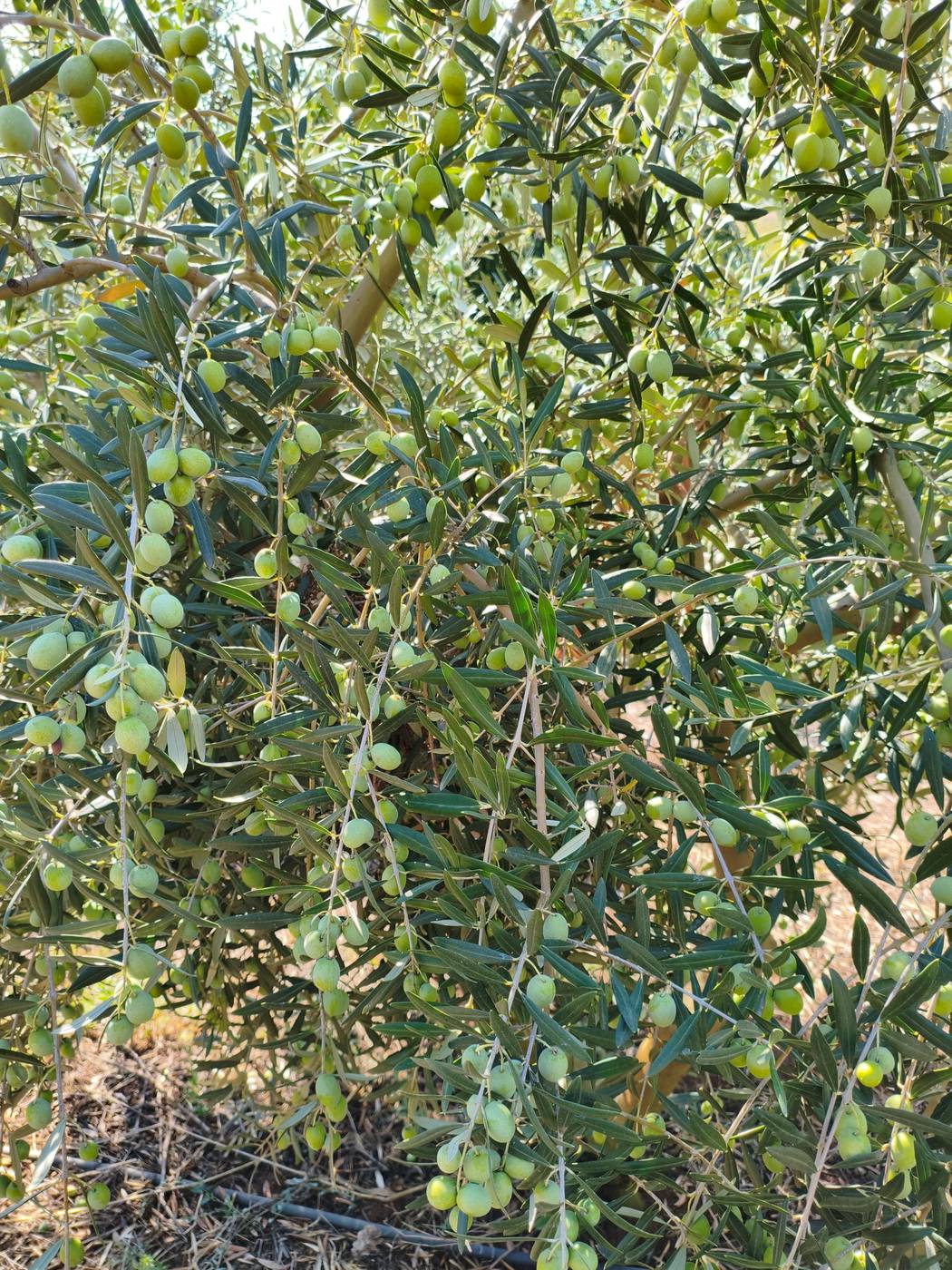
Olive dormancy
The olive keeps its leaves all winter, and that changes what the word dormancy means. What stops shoot growth in the autumn, what chilling does to the buds that will flower…
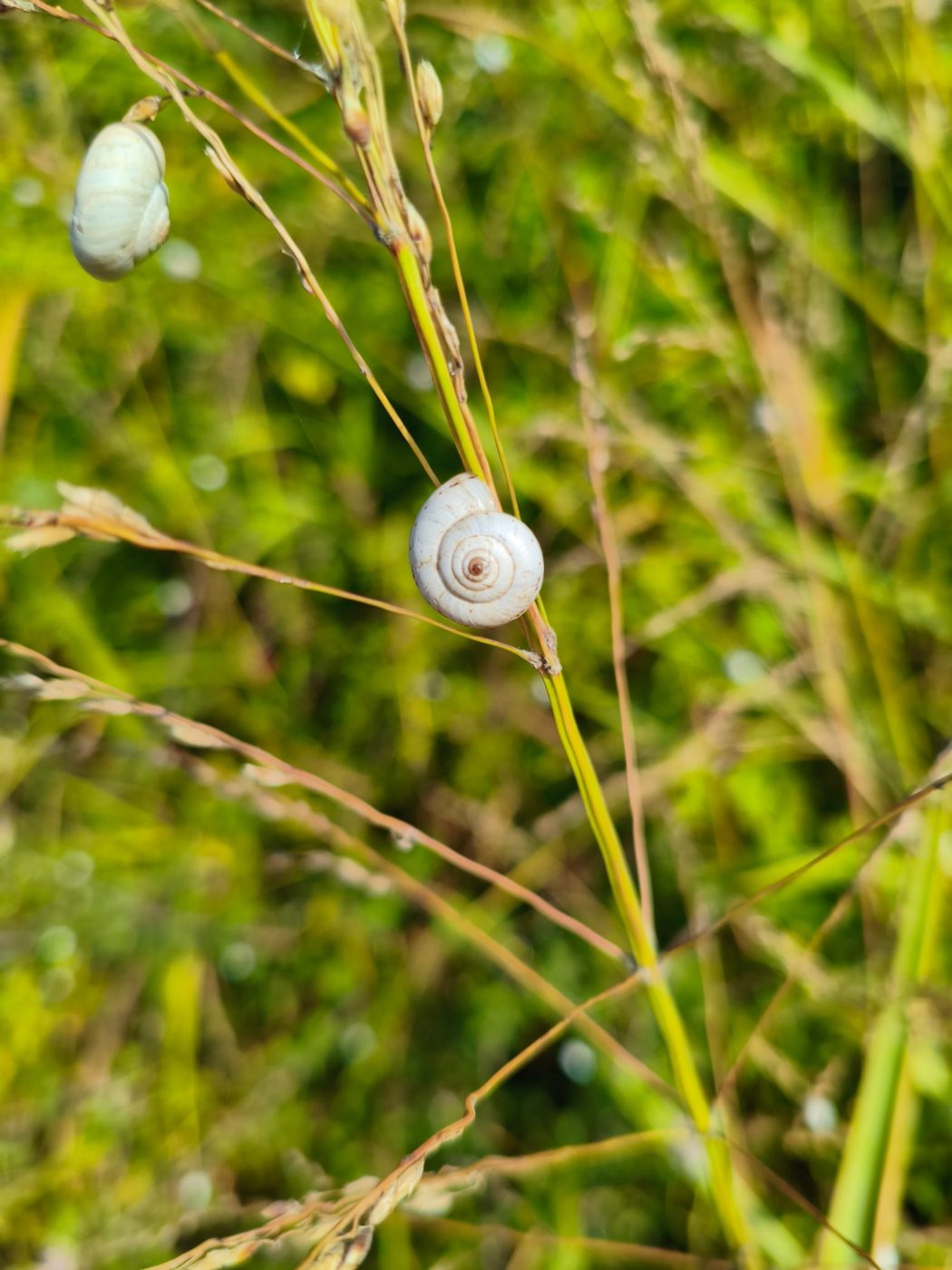
The white Mediterranean snail in tree crops
Theba pisana is native to the Mediterranean, not invasive, so there is no eradication programme to wait for. Identification, life cycle, the damage in tree crops, the single approved target in the Greek register, and why the nematode Phasmarhabditis killed the snail only at five times the label rate.
Boron in olive: foliar and soil application, rates and the toxicity threshold
The nutrient with the narrowest safety margin: 35 ppm separate sufficiency from toxicity. How boron moves inside the olive through mannitol, what the July leaf analysis shows, foliar and soil rates worked out per hectare, the trials that found no benefit, and a tool that separates deficiency from toxicity.